Buzz

EarthCam, an international company providing live streaming video and time-lapse construction cameras for corporate, tourism and government clients in major cities around the world, has added St. Paul to its roster. The live stream takes in such landmarks as the Cathedral of St. Paul, the Minnesota State Capitol and the Fitzgerald Theater, as well sunsets and rush-hour traffic.
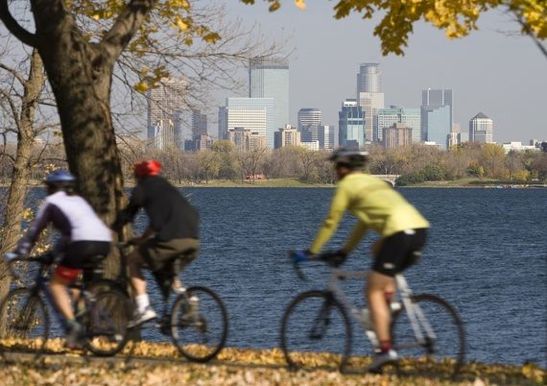
Walk Score, a Redfin company, has named Minneapolis the most bikable city in the U.S., according to an article in the Huffington Post. Minneapolis beat out even Portland, OR, and San Francisco for the honor. "With a Bike Score of 81.3. Minneapolis has a strong lead over San Francisco (75.1) and Portland (72.0)," according to the article.
Walk Score updated its 2015 Bike Score ranking for 154 U.S. cities and more than 10,000 neighborhoods. "The ranking looked at cities with populations of 300,000 or more, and used Bike Score to determine which locations are best for bikers," the article stated. "The scores are measured on a scale of 0 - 100 based on bike lanes, hills, destinations and road connectivity, and share of local workers' commutes traveled by bicycle."

The Minneapolis landscape architecture firm Coen + Partners was recently award the 16th Annual National Design Award in Landscape Architecture from the Smithsonian's Design Museum, Cooper Hewitt.
“With the reopening of the museum this past year, Cooper Hewitt is scaling new heights to educate, inspire and empower our community through design,” said Caroline Baumann, director, in a press release. “I am thrilled and honored to welcome this year’s class of National Design Award winners, all of whom represent the pinnacle of innovation in their field, with their focus on collaboration, social and environmental responsibility, and the fusion of technology and craftsmanship.”
First launched at the White House in 2000 as a project of the White House Millennium Council, the National Design Awards were established to promote design as a vital humanistic tool in shaping the world. The awards are accompanied each year by National Design Week, which this year will take place Oct. 10–18 and include a variety of public education programs, panel discussions and workshops. First Lady Michelle Obama serves as the Honorary Patron for this year’s National Design Awards.
Founded by Shane Coen in 1991, Coen + Partners works through a process of collaboration, experimentation, and questioning, to embrace the complexities of each site with quiet clarity and ecological integrity. The practice has built a distinguished body of award-winning work that is widely recognized as progressive and timeless, receiving numerous awards for landscape architecture, planning, and urban design. Coen + Partners has been recognized by the AIA, the ASLA, the GSA Design Excellence Program, and the editorial staff of such influential publications as Metropolis, Dwell, and Architectural Record. New York Times architectural critic Anne Raver has described Coen + Partners’ work as “pushing Midwestern boundaries.”

“Team OptiMN,” a group of 14 undergraduate and grad students at the University of Minnesota with diverse majors (including building science, sustainable design, construction management and business), was the Grand Award Winner of The Department of Energy’s second annual "Race to Zero" Student Design Competition. The team won for its design of the OptiMN Impact Home in North Minneapolis.
Teams competing in the “Race to Zero” challenge were asked to design cost-effective zero-energy-ready homes for mainstream builders, according to a press release announcing the award, adding that, "The winning design uses high-performance features that sharply reduce energy use, and allow for most of the remaining energy use to be offset with renewable energy." The contest is sponsored by the U.S. Department of Energy (DOE). This year, the competition involved 33 teams from 27 universities in the U.S., Canada and China. "Along with energy-efficiency, the designed homes must be comfortable and attractive as well as affordable," the release stated.
Green Homes North, one of team OptiMN's partners, plans on building 100 energy-efficient homes in North Minneapolis in the next five years. Team OptiMN made sure the home followed their guidelines. The team also partnered with Urban Homeworks to design a high performance, affordable, flexible home. Residential Science Resources was the team's energy rater partner.
Team OptiMN’s design goals centered around meeting: the DOE’s challenge to build a zero energy ready home; Urban Homework’s mission to produce equitable, dignified communities; and Green Homes North Initiative to revitalize North Minneapolis neighborhoods with affordable, sustainable and quality homes.
Minneapolis is the healthiest city in the U.S. according to Livability.com. "Minneapolis provides residents with exercise opportunities, good food choices and strong support networks to help live healthy lives," according to a Livability press release. "With this in mind, Livability.com has named Minneapolis the Top 10 Healthiest City, 2015."
The editors studied County Healthcare Rankings data and spending data from Esri to find places with quality and affordable health care. They analyzed several measures of healthy communities such as the adult obesity rate, the percent of residents with access to healthy food and other stats. Also factored in were the number of hospitals, ratio of doctors to residents and more. They also looked into city infrastructure to promote healthy living, like access to farmers markets and parks, walkability, man-made amenities such as golf courses, as well as natural amenities. Additionally factored in was data from the EPA about the environmental components of a healthy city such as clean air and water.
"With a park system covering nearly 17 percent of the city, it’s no wonder Minneapolis was named our healthiest city," according to the release. "On top of offering activities from hiking and biking to swimming, kayaking and cross-country skiing, recreational centers and health clubs provide even more indoor exercise options. Fewer than 14 percent of residents smoke, while more than 87 percent participate in physical activities on a regular basis. Minneapolis ranks well in health-care statistics, and less than 11 percent of residents are uninsured, and most get annual checkups and health screenings. Recycling, composting, and walking or biking to work is a way of life for many of the people living in Minneapolis, and the downtown farmers market makes it easy for residents to get healthy foods."
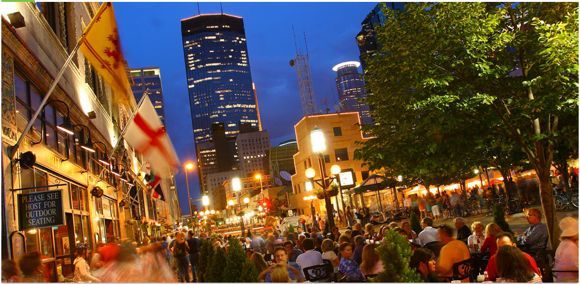
In this "golden age of American downtowns," Minneapolis is #2 out of 10 nationally, according to Livability.com.
The ranking criteria included vacancy rate, population increase since 2010, percentage of new homeowners, daytime population, project median household income, walk score, entertainment options and arts/cultural attractions.
"Young professionals between the ages of 22 and 34 are especially drawn to downtowns, where people can congregate, enjoy shopping and dining, walk, bike and, most importantly, live," according to a Livability.com press release. "With this in mind, Livability.com has named Minneapolis a Top 10 Best Downtown, 2015."
"Our editors focused on small to mid-sized cities, taking into consideration increasing housing values and populations to find cities that are growing and thriving. They looked for areas with new construction because cranes are often a great sign of economic and cultural recovery. They found downtowns with vibrant arts scenes and walkable streets. In addition, our well-traveled editors weighed in with their own opinions. The data drives our short list, but our journalistic judgment helps determine the final rankings," according to the release.
“We’re really in a new golden age of American downtowns,” says Livability editor Matt Carmichael. "Throughout cities large and small, the energy and resources focused on restoring Main Streets and urban cores is paying off.”
"Downtown Minneapolis offers a low vacancy rate, high percentage of new homeowners, walkability and an array of entertainment options. It is also surrounded by parks, lakes and rivers providing residents quick access to a variety of outdoor recreation," the release added.
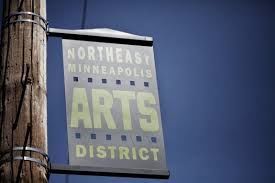
USA Today's 10 Best Readers' Choice awards includes Best Art District, which went this year to Northeast Minneapolis.
Northeast Minneapolis beat out art districts in Santa Fe, Boston, Dallas, Philadelphia and Detroit.
"Centered around the Northrup King Building," according to the USA Today 10 Best website, "the Northeast Minneapolis Arts District serves as a home or workplace to more than 400 independent artists. Studios, galleries and performance spaces occupy re-purposed industrial building, and the art scene is characterized by its many annual events, like the Northeast Minneapolis Arts Association's spring Art-A-Whirl and fall Fine Arts Show, Art Attack at the Northrup King Building in November and Casket Arts Quad's Cache open studio events, also in November."
Tuesday, February 10, 2015
The U.S. Green Building Council (USGBC) released its annual ranking of the top 10 states in the nation for LEED, the world’s most widely used and recognized green building rating system. Minnesota came in ninth.
“Minnesota has so many committed business and community leaders, policy makers and green building professionals who are using LEED to transform their built environment, producing many innovative spaces that will improve the health of our shared planet, as well as the health of the people who use those buildings every day,” says Rick Fedrizzi, CEO and founding chair, USGBC, in a press release.
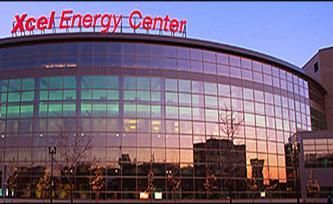
Projects in the Twin Cities with LEED include the Wells Fargo Center and Campbell Mithun Tower, both in Minneapolis and both LEED Gold; and Xcel Energy Center in St. Paul (LEED Certified).

Tuesday, January 20, 2015
According to a report conducted using data from the Western States Arts Federation, Minneapolis has moved from sixth place to fifth place in terms of its creative vitality.
The report, delivered to the Minneapolis City Council last week, shows that the city's "creative" jobs and organizations, in addition to residents' spending on books, artwork and performing-arts tickets, helped the city move up the list.
Minneapolis residents spent about $1,165 per year on the arts, the report said, compared to sports-related sales in the city amounted to about $534 million in revenue. Meanwhile, Minneapolis generated another $311 million in revenues from arts-related nonprofits. That total includes grants awarded to organizations or museums and ticket sales for those groups' events.

Tuesday, January 13, 2015
According to a recent survey by the news and culture website Vocativ, Minneapolis is sixth and St. Paul is eighth in livability for Millennials.
Factors in creating the index ranged from salary stats and employment rates to the price of a ounce of pot. "To reach our top 35, we started with the 100 most populous cities in America and used open-source Internet data to measure vital stats like salary and employment rates, and the cost of rent and utilities, as well as everyday concerns like public transportation, weather and crime," according to the website.
"We also considered lifestyle metrics such as the price of dinner at Buffalo Wild Wings and an ounce of high-quality weed—you know, the important stuff—as well as access to live music and sports."

Tuesday, January 06, 2015
Isn't it "fun" when outsiders decide which of our heralded eating establishments are "most iconic?" Still, we can't argue with Thrillist's selection of Matt's Bar for Minnesota, especially because of the Jucy Lucy. In the midst of a polar votex, the hot burger stuff with melted cheese is just the antidote for the cold.
Still, the writeup is curious. "Matt's qualifies as a restaurant because a real bar is stocked with hard liquor and is not frequented by families with kids. Most importantly, it's an iconic restaurant because Matt's invented the 'Jucy Lucy'. It's spell differently, here, because someone 'forgot to add the i', but it doesn't matter how you spell it, really, because the burgers have hot, beautiful cheese pouring out of the middle of the patty. Thank you, Minnesota."
Well, okay. You're welcome.
Wednesday, December 03, 2014
According to the personal finance site NerdWallet, Minneapolis is the fourth-best U.S. city for young entrepreneurs. To determine the ranking NerdWallet examined cities across the country, and measured such factors as access to funding (“the dollar value of commercial and industrial, or C&I, loans under $250,000 lent per capita in 2013 by banks with less than $10 billion in total assets) and opportunities for networking and mentorship.
“For those just starting a business, the right environment—surrounded by successful business leaders—is key, so we included the number of businesses for 100 residents in a city’s metro area,” Sreekar Jasthi wrote in the report. “To assess the availability of peers for networking, we included the percentage of residents in each city age 25 to 34 as well as the percentage of the population over 25 with at least a bachelor’s degree.” NerdWallet also looked at the local economies of each city, and cost-of-living or affordability.
About Minneapolis Jasthi wrote that the city “has a large population of residents age 25 to 34, who live in the Twin Cities’ business friendly environment—a place with a high number of businesses per 100 people, and a low unemployment rate. Minneapolis also ranked highly on NerdWallet’s list of the best cities for female entrepreneurs, with organizations such as Women Entrepreneurs of Minnesota offering a wealth of resources.”

Wednesday, November 12, 2014
MSP International Airport is finalizing plans for its new “arts corridor” on the C Concourse, The New York Times recently reported. Under the guidance of Robyne Robinson, one of the Twin Cities top jewelry designers, a former news anchor and Airport Foundation MSP’s arts and culture director, the new corridor will create a “gateway” to the abundant arts and culture of the cities.
“We want to make sure that when people get off the plane, they know there’s a place they can go to and get to know us and get onto their flight and have a better understanding of what Minneapolis is, so that the next time they come through, they’ll want to see some film, see some art,” Robinson said.
The corridor includes a new screening lounge that will open in November. The lounge has modular and cinema-style seating with multiple high-definition screens; rotating programs highlighting local filmmakers; and a collapsible stage for lectures or small performances, according to the article.
While commercially run movie houses are available to passengers in Korea, Hong Kong and Singapore airports, the MSP airport’s screening room is the first of its kind in the United States.

Wednesday, November 12, 2014
The Minneapolis-based Works Progress, comprised of Colin Kloecker and Shanai Matteson, is part of the State of the Art: Discovering American Art Now exhibition at Crystal Bridges Museum of American Art in Bentonville, AK. Just inside the museum’s lobby is Kloecker and Matteson’s project Water Bar.
A partnership between Works Progress and the museum, as well as scientific researchers, environmental advocates, public employees, educators and local residents, Water Bar is an interactive installation that invites visitors to sample and compare water from three local sources: Beaver Lake (Bentonville), the Illinois River (Siloam Springs), and an artesian well in Sulphur Springs.
Representatives from the Illinois River Watershed Partnership and local educational institutions are staffing the bar. In addition to serving water, they engage visitors in conversations about drinking water, where it comes from and how to protect it.
The exhibition, with Water Bar, is on view until January 19, 2015. Works Progress is also participating in a State of the Art Symposium on November 14-15 to talk about how they engage artists, designers, organizers and creative professionals to realize public art rooted in place and purpose.
“Works Progress uses place, design and the shared experience of drinking water to focus our attention on local water sources,” says Chad Alligood, curator, Crystal Bridges. “The collaboration with Works Progress and the Illinois River Watershed Partnership represents a convergence of art and advocacy that engages the community in conversations about an issue that affects all of us.”
Matteson adds that, “We hope to install a local version of the Water Bar project in 2015 that will highlight Minnesota's water resources, and are currently seeking collaborators and support.”

Wednesday, October 15, 2014
Minneapolis-St. Paul was recently named one of the top 10 innovative cities in the U.S. by CNN Money.
"From technology and infrastructure, to job creation and sustainability," the article stated, the cities included are "leading the pack when it comes to creatively solving urban issues."
About MSP, the article stated, "June saw the opening of a new light rail line between Minneapolis and St. Paul. Experts from around the country praised it as an example of transportation infrastructure done right -- it integrated the needs of the affected communities and used the new line to drive economic development."
The Twin Cities were also selected as "early adopters of programs to help immigrants start businesses, artists buy real estate, and enlist local execs in solving community problems. The Cities also get high marks for their public health efforts, including smoking cessation programs, cancer screening and efforts to create walkable communities."

Wednesday, October 08, 2014
According to a recent article in the Huffington Post, Minneapolis is #5 among "America's Top 5 Cities to Keep on Your Radar." Why? Because "Minneapolis is the new...everything," the article says.
"[I]t seems like there's always a new 'hip' neighborhood or 'it' city to visit," the article continues. "Which had us thinking about the coolest cities to visit right now. After much map-scouring and a sprinkle of savvy" HuffPost selected Minneapolis, as "the city is becoming trendier by the second. Between Minneapolis' awesome music scene, wealth of vintage stores and pro teams in pretty much every league, there is literally something for everyone."

Wednesday, October 08, 2014
Six Minnesota breweries received medals at the Great American Beer Festival (GABF) in Denver, Colorado.
Badger Hill Brewing in St. Louis Park won a gold for its White IPA, as did Steel Toe Brewing of St. Louis Park for Wee Heavy, a Scotch Ale.
Indeed Brewing Company won a silver medal in the Specialty Honey Beer category for its Mexican Honey, an Imperial Lager brewed with Mexican orange blossom honey and Amarillo hops.
Bronze awards went to Summit Brewing of St. Paul for its Extra Pale Ale; Bent Paddle Brewing Co. of Duluth for the 14° ESB; and Minneapolis Town Hall Brewery for Buffalo Bock, a wood- and barrel-age strong beer.
With 268 medals awarded in 90 beer categories covering 145 different beer styles to brewers across the country, GABF, now in its 28th year, is the largest commercial brewing competition on the world. A complete list of all the winners can be found here.

Wednesday, September 10, 2014
According to Richard Florida, co-founder and editor at large of CityLab.com, Minneapolis-St. Paul is one of the best places for recent college graduates.
The Twin Cities placed sixth among 20 metro areas studied.
Using economic and labor market data provided by EMSI, Florida and his crew ranked America's 100 largest metros based on Bureau of Labor Statistics figures on full-time regular employment for about 320 occupations that require post-secondary education. They then ranked the data using five key factors:
• Percent change in jobs requiring post-secondary education from 2010 to 2014.
• Percentage of 25-34 year olds who hold these positions.
• Average wages for these jobs requiring post-secondary education.
• Concentration of these jobs based on their "location quotient."
• Share of new jobs requiring post-secondary education that can be attributed to local economic conditions or competitiveness.
"Tech and knowledge hubs lead the pack," Florida writes. "San Francisco takes first place, followed by San Jose, the center of the Silicon Valley. Austin is third, Seattle, fourth, and Denver, fifth. Minneapolis-St. Paul, Boston, Houston, Raleigh and L.A. round out the top ten. Overall the leading metros for these highly-skilled jobs reflect the twin pillars of America’s knowledge-energy economy."

Wednesday, September 10, 2014
Minneapolis came in third in
Bicycling Magazine's 2014 list of Top 50 Bike Friendly Cities.
"Minneapolis has long been an exemplary city for cycling—it topped our rankings in 2010 and was second in 2012. Even so, before she became mayor in 2014, Betsy Hodges said the city needed even better amenities for people like her who enjoyed biking but shied from traffic," the article stated.
Last winter, Hodges called out the "the city’s 4,000-plus year-round bike commuters" and "delivered a proclamation touting the city’s progress: 19 miles of bicycle boulevards installed since 2011; one of the country’s biggest bike-share systems per resident; and learn-to-ride classes that have spread the city’s bike culture to its large Somali community."
She also stated that "by 2020, Minneapolis would install 30 more miles of protected bikeways, so people like her, and thousands of others in the city, would feel more comfortable riding their bikes."
St. Paul came in 40th in the survey, and was lauded for "doubl[ing] the number of bike commuters betrween 2005 and 2012, and in 2014 unveiled a bicycle master plan calling for a loop of off-street bike paths downtown."
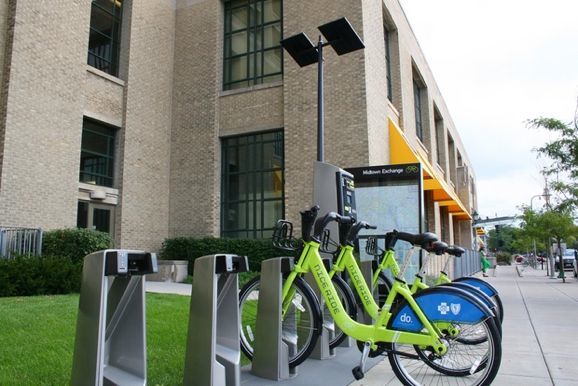
According to The Atlantic Media's CityLab web magazine, the Twin Cities' Nice Ride bike-sharing program "has become part of the fabric of Minneapolis, a once-fading city clearly on the rebound."
In her article, "This Really Might Be the Nicest Bike-Share System in the United States," Sarah Goodyear writes that Nice Ride is also one of the most successful bike-share programs in the U.S., in part because "checking out one of the system's 1,550 bikes is indeed a pleasant experience, as is riding along the city's well-developed bike infrastructure, which includes 92 miles of on-street bikeways and 85 miles of off-street paths—many of which are high-functioning commuter routes, not just recreational byways."
She also notes that "Biking around Minneapolis in the halcyon days of late spring and early summer reveals a city that feels like it's preparing for an increasingly prosperous future. Construction crews are everywhere, building new residential developments in a downtown that was long ago hollowed out by urban renewal. A brand-new light rail line has just started running between the Twin Cities, easing the commute of thousands and creating a new kind of physical connection. A grand hall originally built as the trading floor of the Minneapolis Grain Exchange is now finding new life as CoCo, a collaborative space filled with startups and entrepreneurs, some of whom have come here from bigger and more expensive cities to find a different pace and environment."
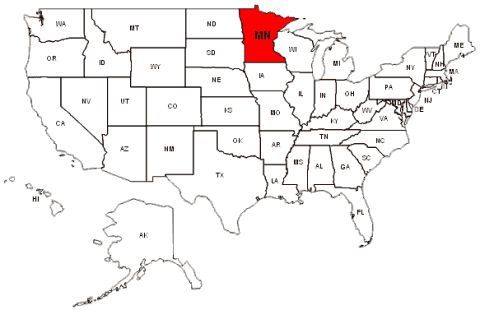
Washington state is first. Texas is second. And Minnesota is the third best place in which to make a living according to a new study by Moneyrates.com.
The state "moved up three slots from sixth last year, largely on the strength of a very low unemployment rate and excellent workplace conditions,” according to the study’s website. “The state does have a higher-than-average cost of living and tax burden, but incomes in the state are more than enough to make up for these disadvantages.”
The list accounts for each state's average salary, cost of living, unemployment rate and workplace satisfaction. The study then uses that data to rank the 10 best and worst.

According to a study just released by The Trust for Public Land, Minneapolis ranks first among the U.S.'s 60 largest cities in number and quality of city parks. The ParkScore Index placed Minneapolis far ahead of New York City, Boston, Portland and San Francisco.
The ParkScore numbers are based on three factors, according to an AP article: the percentage of residents living within a 10-minute walk from a park, median park size and the percentage of total city area dedicated to parks, and a combination of the number of playgrounds per 10,000 residents and per-capita park spending.
"The Trust says 94 percent of Minneapolis residents live within a 10-minute walk from a park, and it scores the city high for its park spending and its median park size of 6 ½ acres," according to the AP article.
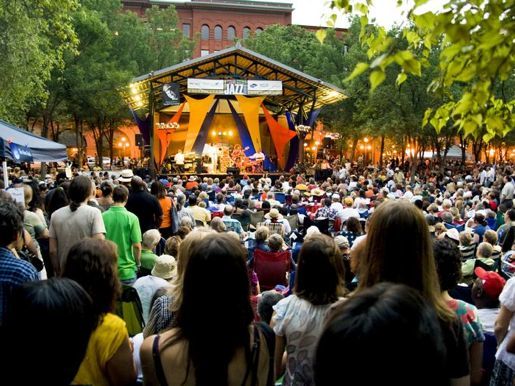
Hot on the heels of being named America's top hipster zip code by
RealtyTrac, Lowertown in St. Paul in once again being lauded as a neighborhood to watch.
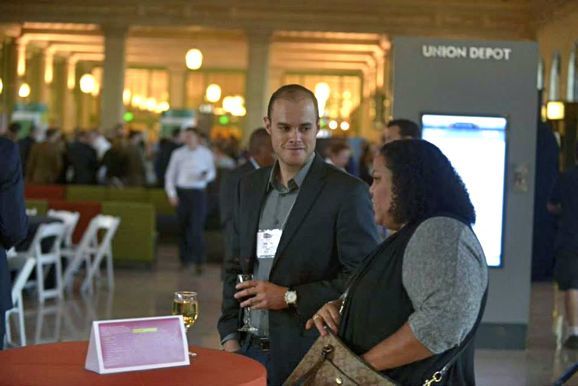
USA Today recently named Lowertown one of of "10 up-and-coming neighborhoods around the USA." "Lowertown is home to the Union Depot, served by the city's new Green Line light rail, Amtrak tgrains, and bus companies," the article notes. "Other noteworthy attributes includes the St. Paul Farmer's Market (open year-round), Mears Park, a summer-long music venue, artists lofts in restored 19th century buidlings, Nice Ride bike-share stations and great restaurants like Barrio, The Bulldog, and Heartland Farm Direct Market and Restaurant, pioneers of "Midwest modern cuisine."
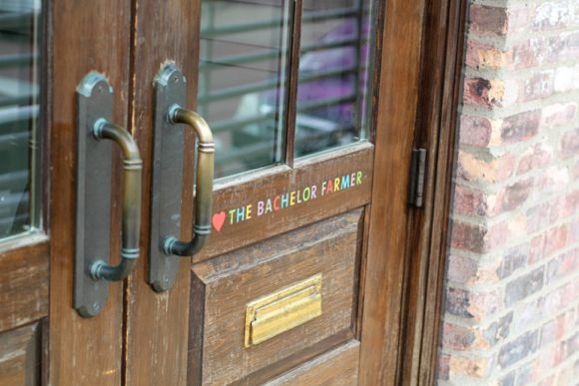
The Bachelor Farmer has been named the third best brunch in the U.S. by The Daily Meal, a national food and drink blog. The list was titled "The 30 Best Brunches in America."
"President Obama has been known to dine at The Bachelor Farmer," the listing states, "and this accliamed Minneapolis restaurant raises the bar on brunch as well."
The restaurant, the listing continues,"draws inspiration from Minnesota's Nordic heritage, and the brunch menu carries on this tradition with Smørrebrød,or Scandinavian open-faced sandwiches with such toppings as confit or oyster mushrooms. Other dishes draw inspiration from fresh, local ingredients, and the cocktails are equally exceptional."
Wednesday, April 23, 2014
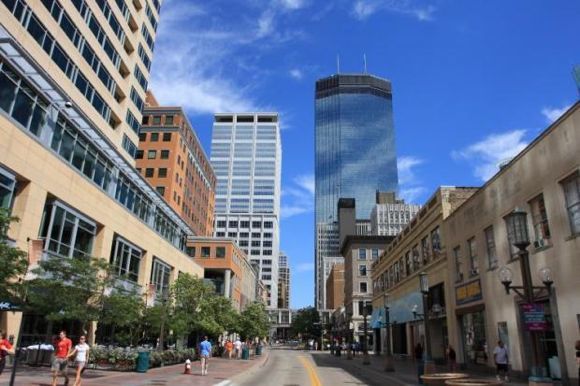
Livability.com just named Minneapolis a Top 10 Best City for News College Grads 2014. The city was placed #5 on the list, for great job opportunities, a high concentration of young professionals and a diversity of cultural amenities.
The editors of Livability.com, in compiling the list, considered such factors as the number of 25- to 34-year olds living in each city, the availability of rental properties, unemployment rates, educational attainment levels, use of public transportation and type of jobs available. The editors also worked into the mix recreational activities, nightlife and "a hip vibe," according to the website.
Also taken into account were the top-hiring industries, which, according to the National Association of Colleges and Employers, are: educational services; professional, scientific and technical services; health care and social assistance; and government.
Minneapolis, the study found, "has more than 82,000 residents here between the ages of 25 and 34, with vast job opportunities available, especially in the city’s major industries including retail, marketing and banking. Finding an apartment or rental property is relatively easy as more than 50 percent of homes in Minneapolis are rentals, and roughly five percent of them are unoccupied. The majority of Minneapolis residents spend less than 30 percent of their annual income on housing, leaving them with plenty of money to spend on the city's array of entertainment options."

Wednesday, April 09, 2014
In a somewhat backhanded way, Thrillist recently listed the Twin Cities as one of seven most underrated food cities in the United States.
"What makes a great food city isn't necessarily Michelin stars or food trucks per capita," the article states. " While NYC, LA, and Chicago have always shined brightest, and upstarts like Austin and Portland might be the kings of meals on wheels, there are a ton of cities out there where tradition and innovation mix into unique melting pots... full of melting food."
Our own Dara Grumdal, food writer extraordinaire, enthusiastically fired back in the article that "Minneapolis is underrated because everywhere in the Midwest is underrated! Oklahoma City, Omaha, Madison... We're underrated because the coasts have all the people and all the media outlets, but we have all the farms. Duh."
She also went on to praise our bread, pork, dairy...and beer, of course. "We drink beer so good you would die, like America's only real farmhouse ale, Olvalde. What does farmhouse ale mean? It means we can grow and malt barley here, on black-dirt-rich land, just like Europeans did 200 yrs ago. Here's why Minneapolis and St. Paul are the most underrated American food cities: we have the good stuff, we enjoy and support it so much we don't let our artisans export it, so you don't even know about it... and we have the time to kick back and relish it."

Wednesday, March 05, 2014
The International Committee for the Documentation and Conservation of Buildings, Sites, and Neighborhoods of the Modern Movement—better known as Docomomo—has initiated a new program, the Modernism in America Awards. Docomomo US is a nonprofit conservation organization dedicated to the modernist movement. The juried awards program honors individuals and organizations dedicated to preserving and/or renovating midcentury architecture and design.
Among the award’s inaugural recipients are the Preservation Alliance of Minnesota, The Cultural Landscape Foundation, and the Minnesota Chapter of Docomomo US for the groups’ efforts to save Peavey Plaza in Minneapolis. The groups were given the Advocacy Award of Excellence.
Designed in 1975 by M. Paul Friedberg + Partners, the plaza is located adjacent to the newly renovated Orchestra Hall. The groups collaborated to “successfully communicate Peavey Plaza’s on-going importance and prevent its demolition,” states the Docomomo website. “The Board of Directors of Docomomo US is impressed by the well-coordinated collective nature of these efforts; their outreach to a wide audience including local constituents and national interests; and their use of a combination of advocacy tools including the solicitation of pro bono design concepts by the plaza’s original landscape architect M. Paul Friedberg.”
Wednesday, February 19, 2014
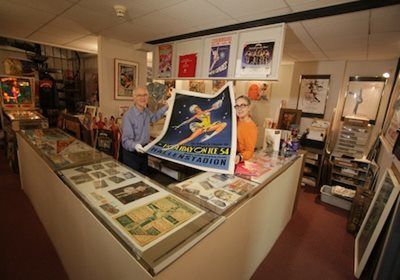
Keri Pickett, a Minneapolis photographer and author, has become a filmmaker as well. She created an ice-skating documentary titled The Fabulous Ice Age, which is now available on Netflix. The film was also featured on the front page of the arts section of The New York Times.
The film documents the history of touring ice shows, and includes interviews with former skater and producers. Pickett shot and edited the film with a four-member team for about $200,000, and worked with the Minneapolis-based post-production company Pixel Farm Digital.
Wednesday, January 22, 2014
Included in Food & Wine's 2014 list of "Best Gastropubs in the U.S." are Pat's Tap and Pig & Fiddle. "Whether they take a heavy cue from British tradition or hew more to modern American style, these top-notch pubs all have two things in common: exceptional meals and beers to match," a description accompanying the slideshow states.
Source: Food & Wine

Wednesday, January 22, 2014
Time magazine has named the Jucy Lucy, a mainstay of Matt's Bar, as one of "the most influential burgers of all time."
The burger was put on Matt's menu in 1954. "This twist on the cheeseburger—in which the cheese is melted inside the patty— ... gained national attention in 2008, thanks to a feud between two Minneapolis bars that both claim to have 'invented' it. Since then, there have been numerous imitators, proving that a little innovation and a dash of hype is all it takes to reinvigorate enthusiasm for a classic," the article states.
The Jucy Lucy is number 10 on the list.
Source: Time

Wednesday, January 15, 2014
The Lakewood Cemetery Garden Mausoleum, designed by HGA Architects and Engineers, which offices in the North Loop neighborhood of downtown Minneapolis, has earned a National AIA Honor Award. Designed by Joan M. Soranno and John Cook of HGA, the 24,500-square-foot mausoleum is buried into a hillside at the historic Minneapolis cemetery, yet was designed to maximize daylight. Clad in rough-textured gray granite and white mosaic-marble, the modernist structure's materials palette continues throughout the interior.
The entrance to the two-level mausoleum opens into a foyer and reception center with white marble floor, folded mahogany walls, and large window walls and clerestory windows. The windows provide views to the oak trees and sky, nearby Lake Calhoun, and the cemetery’s iconic chapel and monuments. Daylight through the window openings also accentuates the curves and angles of the white, sculptural ceiling.
A wide stairway processes past the foyer’s large windows and limestone wall to the lower garden level. To the west, a curved Venetian-plaster wall guides mourners to the chapel where committal ceremonies are held. The chapel's nine, deeply angled vertical windows bring in daylight. Embedded in the angled juxtaposition of the chapel's curved ceiling and wall are light slots, from which soft light emanates.
Extending east from the stairway lobby is 180-foot-long corridor connecting alternating bays or pods of six columbaria rooms (for cremated remains) and six crypt rooms (for caskets), in addition to three family crypt rooms. LED light slots every 20 feet highlight the floating ceiling planes. To the north, the chambers are inserted into the hillside. Each has a round oculus or rectangular skylight positioned in the sculptural planes of the ceiling. To the south, the crypt rooms and columbaria project into the cemetery’s landscape. Window cutouts or glass doors bring daylight in, while providing views to the historic landscape.
The mausoleum is the second National AIA Honor Award earned by Soranno and Cook. It's the fifth National AIA Honor Award for HGA.
Source: HGA

Wednesday, January 15, 2014
Photographer Alec Soth, who has a studio in the South St. Anthony Park neighborhood of St. Paul, uploaded a blizzard of images to The New Yorker's Instagram feed from New Year's Day through January 5. Uploading from @littlebrownmushroom, Soth submitted images of a poem he was typing by Wallace Stevens (titled "The Snow Man"), wintry scenes, spooky assemblages, snowmen, and houses in Frogtown.
In a December 18, 2013 blog post on The New Yorker's website, Soth and writer Brad Zeller--who run a website called The LBM Dispatch--were profiled. The writer called the duo's project of self-described "North American ramblings" a project that "recalls the documentary-style photography of days long gone."
Source: The New Yorker

Wednesday, January 15, 2014
Draft Magazine recently published its annual list of "America's 100 Best Beer Bars 2014." Republic, at 7 Corners on the West Bank in Minneapolis, and The Happy Gnome, on Selby in Saint Paul, made the list.
Draft divides its list into four sections by geography: West, Midwest, South, and Northeast. "After six years of making this annual list," the article states, "we had to rethink the definition of a top-notch beer bar. New ones are opening every second, and 'good beer bar' no longer equals a zillion taps; there’s just more to it now. We needed to walk out of these places saying, 'Now there’s a bar that really, really cares about your experience with beer.'"
Elsewhere on the Draft website, an article titled "Beertown, U.S.A.: Minneapolis/St. Paul" calls out a wide selection of micro-breweries, bars and eateries worth visiting.
Source: Draft Magazine

Wednesday, January 08, 2014
Minneapolis author Kate DiCamillo, who has won numerous awards for her books Because of Winn-Dixie and The Tale of Despereaux, is the Library of Congress' new Ambassador of Young People's Literature. "The position," according to the LIbrary of Congress website, "was created to raise national awareness of the importance of young people's literature as it relates to lifelong literacy, education and the development and betterment of the lives of young people."
The appointment is a two-year term. The selection criteria, in addition to authoring books, includes being "revered by children," a "dynamic and engaging personality," and having a "known ability to relate to children."
In a New York Times article, DiCamillo said she moved to Minneapolis on a whim and "It was the best thing I ever did." DiCamillo is the fourth author appointed to the position.
Sources: Library of Congress, New York Times
Wednesday, January 08, 2014
Among Travel+Leisure's recent selection of top 500 hotels, only the Saint Paul Hotel make the cut in Minnesota. Writing about the hotel in its prestigious list, "The World's Best Hotels 2014," T+L said that "Despite the greeting by a doorman in a top hat, there's a delightful lack of pretense at this historic luxury hotel."
The article lauded the 1910 hotel's architecture by Reed and Stem (the same architects designed Grand Central Station in New York City), English garden, restaurants and bars, and views of downtown Saint Paul and the Missisippi River. And who knew? For guests of the hotel, an on-site seamstress is at-the-ready to fix a hem or sew a button.
Source: Travel+Leisure

Wednesday, January 08, 2014
A survey conducted by Accenture, based on an online questionnaire for 500 consumers ages 18 and older in 13 U.S. cities with substantive arts communities, found Minneapolis had the largest number of donors.
"When asked what kind of financial support they make to the arts," an article on the report says, "65 percent of respondents don't make separate donations, aside from the cost of membership and attendance at events. Of that, respondents in Minneapolis (47 percent), New York (46 percent), Washington D.C. (43 percent) and Boston (43 percent) had the largest number of donors."
The survey asked respondents to weigh in on their approaches to arts philanthropy and engagement with the arts, and was part of a study examining how digital technologies can increase arts support. In an Accenture article about the study's findings, David Wilson, managing director the corporation's state and local government practice, and a Guthrie Theater board member, said, "Similar to so many organizations and businesses today, the arts are looking for new ways to connect with the millennial generation. This survey suggests that embracing new technologies and communications tools is crucial for arts organizations to remain relevant to the next generation of supporters."
Source: Accenture

Wednesday, December 18, 2013
The League of American Bicyclists recently published an analysis of bicycling in U.S. cities for 2012.
The report, “Where We Ride,” examines “changing commuting patterns and transportation choices.”
Minneapolis is listed among cities with the most bicyclists on the street.
When it comes to the number of bicycle commuters Minneapolis has, the city ranks second to Portland, the report shows.
The report also analyzes the impact of factors like population, bike/walk/transit-share programs, female bicyclists, age, college towns. and more.
One finding is that “More and more Americans are realizing that bicycling is a practical, reliable, and economical means to get to and from work -- and it’s also healthy and fun,” the report states.
Source: The League of American Bicyclists

Wednesday, December 18, 2013
Nancy Close, the founder and CEO of CKC Good Food, a St. Paul-based school-meal catering company, recently was singled out for her efforts to bring healthy food to local schoolchildren.
Close received an honorable mention at the Homegrown Heroes Awards from the Homegrown Minneapolis Food Council at a presentation at the Walker Art Center earlier this month.
“Awards honor those who help expand the community’s ability to grow, process, distribute, eat and compost more healthy, sustainable, locally grown foods,” a prepared statement from the company reads.
Sarah Reuben, a public health specialist with the Healthy Living Team in the City’s health department, nominated Close for the honor. Reuben had worked with the company to start salad bars at several Minneapolis charter schools.
Source: CKC Good Food

Wednesday, December 11, 2013
Two local corporations, 3M and Target, were included in Fortune magazine’s list of Blue Ribbon Companies, which was released last week, Twin Cities Business reports.
The Blue Ribbon list includes companies that have gotten high marks from Fortune on other lists the magazine has published throughout the year.
3M has appeared on four of Fortune's lists, as has Target. Wells Fargo, a company with strong Minnesota ties, also appeared on four Fortune lists this year.
Source: Twin Cities Business

Wednesday, December 11, 2013
This year, Minneapolis author Louise Erdrich was recognized with an American Book Award for her 14th novel, The Round House.
Erdrich’s novel, set on an American Indian reservation, tells of a teenage boy’s struggle in the aftermath of an attack on his mother.
The American Book Awards “celebrates the diversity of the country’s literature,” according to an article in the Star Tribune. The awards were established in 1980 by the Before Columbus Foundation, a nonprofit organization, founded by author-poet-playwright Ishmael Reed, that promotes multicultural literature.
A ceremony for the 34 authors who received awards took place at the Miami Book Fair International last month. Erdrich is also the owner of Birchbark Books, an independent bookstore in Minneapolis.
The awards don’t involve a cash award or individual competitive categories, the story adds.
Source: Star Tribune

Wednesday, December 04, 2013
The Minneapolis groups Rhythmic Circus (percussive dance) and Root City (funk and blues musicians) joined forces several years ago to create "Feet Don't Fail Me Now!", an evening of high-energy tap dancing and music. The groups have since toured the country with their show to popular acclaim.
Recently, the performers realized a long-held goal of gigging in New York City, off-Broadway at the Victory Theater. The New York Times called the hour-long show (which has been performed several times in the Twin Cities) a "entertaining display of music and tap-dancing skills." The publication also called out beatboxer Aaron Heaton as "practically another band on his own."
Writing in her blog Infinite Body, Eva Yaa Asantewaa called the show "wildly entertaining in the very best blue-eyes-soul kind of way," She asks "How did Ricci Milan (dancer/artist director) and Nick Bowman (dancer/executive director) manage to pack so much content and value into a single hour? Don't know, but the set list gives these performers a chance to show off their amazing vitality."
Source: The New York Times, Infinite Body

Wednesday, December 04, 2013
Minneapolis is among “20 Awesome U.S. Cities You Need to Visit in Your 20s,” according to the Huffington Post.
The article mentions that New York City and certain areas across the country, like Southern California, which has landmarks like Disneyland, might seem like obvious destinations.
“But for the cash-strapped, adventure-seeking, microbrewed-beer loving, locavore millennial, the old favorites of U.S. tourism don’t hold much appeal,” the story states.
Minneapolis is a draw for the “traveler that loves physical activity,” the article says. Besides being a top bike city, it’s known as one of the country’s most physically fit. The city also boasts plenty of parkland, restaurants, and cultural institutions. “Plus, everyone’s really nice,” the story reads.
Source: Huffington Post

Wednesday, December 04, 2013
St. Paul’s Lowertown neighborhood recently snagged headlines for recognition as America’s top hipster zip code.
The label comes from RealtyTrac, which analyzed hipster zip code markets. RealtyTrac states in its study that while it's tough to pin down what exactly a hipster is, "there’s no doubt the culture surrounding the hipster lifestyle has a major impact on local real estate markets, and mostly in a positive way.”
An influx of trendy restaurants, bars, coffee shops, and other amenities make a particular zip code stand out as hipster-ish. Such amenities translate into higher property values and rental rates, and lower vacancies and foreclosures, the study states.
“As a nascent hipster market emerges, it can be an extremely appealing target for real estate investors looking to make some quick fix-and-flip profits or to purchase rental properties that provide a steady cash flow and the promise of strong appreciation going forward,” according to RealtyTrac.
Source: RealtyTrac

Wednesday, December 04, 2013
Of the three new appointees to the National Endowment for the Arts' prestigious National Council on the Arts, two are Minneapolis arts leaders: Ranee Ramaswamy, founder and co-artistic director of Ragamala Dance, and Olga Viso, executive director of the Walker Art Center. The third appointee is Rick Lowe of Houston, Texas, founder of Project Row Houses.
The National Council on the Arts convenes three times a year to vote on funding recommendations for grants and rejections; to advise the chair on application guidelines, budget, and policy and planning directions; and to recommend to the President of the United States nominees for the National Medal of Arts. The three new appointees were confirmed by the U.S. Senate and appointed by President Barack Obama.
The appointees "bring their varied experience--ranging from contemporary art curatorship, to classical Indian dance, and creative placemaking--to help the NEA advance its mission to support artistic excellence, creativity and innovation in communities across the country," states the press release.
Ramaswamy has been a master choreographer, performer, and teacher of the South Indian classical dance form of Bharatanatyam dance since 1978. She founded Ragamala Dance in Minneapolis in 1992. Her work has been commissioned by the Walker Art Center, American Composers Forum, and the Minneapolis Institute of Arts, and has been supported by the National Dance Project and the Joyce Foundation. Ramaswamy’s tours have been highlighted by the Kennedy Center for the Performing Arts, the American Dance Festival, and the National Centre for Performing Arts in Mumbai, India. She's earned numerous regional and national awards for her work.
Prior to joining the Walker, Viso was director at the Hirshhorn Museum and Sculpture Garden – Smithsonian Institution. She was a curator at the Norton Museum of Art in West Palm Beach, Florida from 1993 to 1995, and held several curatorial and administrative positions at the High Museum of Art in Atlanta, Georgia from 1989 to 1993. She serves on the Board of Directors of the Andy Warhol Foundation for the Visual Arts, and is a member of the Association of Art Museum Directors. From 2003 to 2006, she served on the Federal Advisory Committee on International Exhibitions.
Source: National Endowment for the Arts

Wednesday, November 20, 2013
A local architect is one of 50 finalists in the “Draw Up a Chair” competition for New York City’s Battery Park.
John Dwyer’s design, titled “The Carbon Rune,” was among more than 1,500 design submissions to the contest, according to Inhabitat magazine.
A panel of world-renowned jurors sifted through the entries. The top 50 designs are now on view near the Battery Green while the winning designer will be announced later this month. The prizewinner will receive $10,000 and his or her chair will be used in the park.
The city’s park commissioner Veronica White is quoted in the piece saying, “We are proud to share the designs with the public to receive feedback since the chair is for all New Yorkers and visitors to use when they come to Battery Park.”
Source: Inhabitat

Wednesday, November 20, 2013
Until now, Saint Paul artist Chris Larson was best known nationally for his entry in Northern Spark last summer: a full-scale model of a Saint Paul house designed by architect Marcel Breuer, which he burned down outside the Union Depot.
Of the spectacle, the New York Times wrote: "Mr. Larson was planning something more than an ordinary house fire. He aspired to an inferno. To this end, he had hired a company called Hollywood Pyrotechnics Inc. to string up baggies full of denatured alcohol as an accelerant. And a custom print shop had donated a few tons of scrap paper (obsolete business cards, defective wedding invitations) to stuff the shell with kindling. 'I want to burn it so fast there’s no time to mourn it,' Mr. Larson said."
Based on that work, plus Larson's other large-scale forays into construction, art, and ritual, the 2014 Whitney Biennial recently announced that Larson will be one its artists. On the Whitney website, Donna De Salvo, chief curator and deputy director for programs at the Whitney, noted that, "Together, the 103 participants offer one of the broadest and most diverse takes on art in the United States that the Whitney has offered in many years."
Larson teaches in the art department at the University of Minnesota. His specialities are scultpure, film/video, and performance installations. More of his work can be viewed on the Magnus Muller website.
Source: Whitney Biennial website

Wednesday, November 20, 2013
The Huffington Post's "Live Well, On Location" series, which explores how people pursue health and happiness in cities and countries around the world, recently lauded the Twin Cities for a number of reasons.
In the article "What the Twin Cities Can Teach Us About Healthy Living," one of the reasons is that we're "the most active metropolitan area in the country," because "nearly 83 percent of residents were active every single day" in Minneapolis. Second, we have the "best parks in the country." The article goes on to say, "In June 2013, the Trust for Public Land ranked Minneapolis' parks as the very best in the country, beating out New York, Chicago, and San Francisco for acreage, access and, let's face it, sheer beauty."
The state's 10,000 lakes get a shout out. "'Technically the slogan is 'land of 10,000 lakes,' but everyone from Minnesota knows it's closer to 12,000,' says HuffPost editor and native Minnesotan, Jordan Turgeon. We're not just taking her word for it -- an official government survey put the number of lakes at 11,842 statewide." The Twin Cities area specifically, the article clarifies, "boasts 22 distinct lakes and the Chain of Lakes park that covers 13.3 miles of water."
And how do all those lakes make us healthier? The article states that, "While the health benefits of green space get more attention, there's evidence that blue space -- lakes, rivers, streams, and oceans -- can also have a positive influence over health and wellbeing, reported The Guardian."
Our "high wages, low rent" and leading the way in smoke-free environments are among the additional kudos. Low unemployment and being bookworms counts for a lot, as well, the article states.
Source: The Huffington Post

Wednesday, November 13, 2013
“Beer Geeks,” a locally produced and nationally broadcast TV show about craft beer, recently featured two local breweries: Indeed Brewing Company in Northeast Minneapolis and Northbound Smokehouse & Brewpub in the city’s southern quadrant, according to the Minneapolis/St. Paul Business Journal.
Both breweries are relatively new to the city. “The Minneapolis brewery episode is the 10th of the first national season,” the story states.
The episode showcases the breweries’ specialty beers, including one made with jalapeno and Fresno peppers, and an imperial smoked porter, the story adds.
Source: Minneapolis/St. Paul Business Journal

Wednesday, November 13, 2013
Recently, Flavorwire published a list of "45 Great American Indie Bookstores to Support This Holiday Season."
“No matter how bleak the news about publishing gets, independently owned bookstores are surviving, and in some cases thriving,” the story reads.
Flavorwire looked at bookstores all over the country, including Magers and Quinn, an independent bookstore in Minneapolis’ Uptown area.
“You can pretty much get whatever you want at the Twin Cities’ biggest indie, including new, used, rare, and just about any other kind of book you’d need to get through the city’s cold winter,” the piece states.
Source: Flavorwire

Tuesday, November 05, 2013
The Slingshot Guide named Sabes Jewish Community Center in Minneapolis one of 18 “leading Jewish organizations committed to fostering inclusion of people with disabilities,” a prepared statement reads.
Slingshot sifted through hundreds of finalists, evaluating organizations based on innovation, impact, leadership, and efficacy.
The Slingshot Guide is a resource to “volunteers, activists and donors looking for new opportunities and projects that, through their innovative nature, will ensure the Jewish community remains relevant and thriving,” a prepared statement reads.
The community center’s inclusion department rose to the top for its “comprehensive range of programming options that meet the needs of persons with disabilities at all stages of their lives, as well as the way that Sabes JCC embraces the inclusive model as a central component of its organizational mission,” the statement adds.
Source: SlingshotFund.org

Tuesday, November 05, 2013
Franke+Fiorella, a brand identity design firm in Minneapolis, has received three awards from the international Creativity 43 Print & Packaging Awards, according to a prepared statement from the company.
The firm, which focuses on Fortune 1000 companies, stood out for its work for clients such as Edmentum and The Mosaic Company.
Franke+Fiorella was awarded for design excellence in the Edmentum Corporate Identity Brandmark and Edmentum Brand Guidelines Brochure, and Mosaic GROW magazine from March 2013, according to company materials.
Source: Franke+Forella

Wednesday, October 23, 2013
A recent New York Times story gives a shout-out to Minneapolis dancer, Aparna Ramaswamy, who recently performed to critical acclaim in New York City, saying she "lit up Pace University's Michael Schimmel Center for the Arts.
The dance review titled, “Pleasing Deities, and the Eyes, With Storytelling Steps From India,” examines performances by four classical Indian dancers.
Ramaswamy, who is the co-artistic director, choreographer, and principal dancer of Ragamala Dance company in Minneapolis, “exuded a brisk, eager energy in her hourlong program, 'Sannidhi (Sacred Space),'" reviewer Siobhan Burke wrote. "Joined by four superb musicians, she gorgeously embodied the swooping violin; the plunking mridangam; the wailing, warbling vocals."
Source: New York Times

Wednesday, October 23, 2013
Investors.com recently reported on what some people describe as a “tech startup boom” in Minneapolis.
In three years, Coco Coworking, which now has three Twin Cities coworking spaces where entrepreneurs can share resources and ideas, has grown to include 700 members, most of which are tech startups, the story states.
CoCo has hosted over 4,000 people through its regular meet-ups just this year, according to the story.
The nonprofit Minnestar, which is also dedicated to cultivating the local tech scene, has seen an increase of over 40 percent in attendance at its MinneDemo events since 2010.
The story goes on to cite other examples of tech activity in the state. Jeff Pesek, co-founder of the Minneapolis-based website, tech.mn, which tracks the local tech scene, is quoted, saying, “There is a lot of activity here, a lot of signs that the market is evolving and blossoming.”
Source: Investors.com

Wednesday, October 16, 2013
A recent New York Times story highlights the state of the national real estate market by looking to Minneapolis.
The city’s trendy North Loop neighborhood has seen plenty of development in the last year, with new apartments filling up fast. But in other parts of the city, like the Lyn-Lake area, some people worry that “apartment construction may outpace demand,” it states.
The Twin Cities isn’t the only place where that concern is growing as more and more rental projects get underway across the country.
At the same time, demand is coming from a new group: Kelly Doran, founder of the Doran Companies in Bloomington, saw plenty of interest from Baby Boomers in a recent apartment project, early on. “Empty nesters don’t want to own anymore, don’t want to deal with repairs and don’t want to deal with financing or condo boards; they just want to pay the rent,” he’s quoted as saying, adding, “So it’s not about price, it’s about a lifestyle decision.”
Source: New York Times
Wednesday, October 16, 2013
The Greatist list of the country’s top 20 cities for people in their twenties includes Minneapolis.
Although it can be tough to gauge what specific traits make a city attractive to young people, “There are common factors such as cleanliness, park space, and efficient transit systems,” the website reads.
This time around, when the website was putting its list together, it delved even deeper, looking at other qualities, such as the ethnic and cultural diversity of a place and whether it’s pedestrian-friendly. The list draws from research from the American College of Sports Medicine and Apartment Guide.
Minneapolis is “pretty much perfect for anyone who likes to stay active,” the post states.
It’s the nation’s fittest city and it ranks highly for its park system, urban forest, bike trails and more.
Source: Greatist
Forbes Wednesday, October 09, 2013
Minneapolis-based Target Corporation ranked fifth on a list of the 25 "most inspiring" companies in the United States, according to a list compiled by management consulting firm Performance and reported in Forbes.
The company polled just under 5,000 consumers, asking them which five companies they found most inspirational, and why they chose those businesses.
Target ranked high on the list for using its profits and brand influence toward philanthropic efforts. Another top reason for Target's ranking was that the company's employees appear passionate about their work. The retailer made last year's list as well, coming in at the number three spot.
Rounding out the top five in this year's list were Microsoft, The Walt Disney Company, Walmart, and Chick-Fil-A.

Minneapolis is one of the best cities in the country for urban forests, according to nonprofit organization American Forests.
Others named in the top 10 list were Austin, Charlotte, Denver, Milwaukee, New York, Portland, Sacramento, Seattle, and Washington D.C.
These cities stood out based on a combination of six main criteria, the group noted, including accessibility of green spaces to the public, urban forest management plans, and civic engagement.
Minneapolis has nearly a million trees, and an urban tree canopy of 31 percent, American Forests reported.
The cities that were chosen are "examples of the type of dedication and leadership needed to improve the health and vitality of urban forests," said Scott Steen, American Forests CEO, in statement about the list.
"As communities across the country manage more and more for the impact of climate change and other critical environmental and social challenges, their urban forests become even more important to the health of their city," he said.
Steen added that each city on the list can serve as a role model for others in the country.

Wednesday, October 09, 2013
“Michael Gaughan’s Visual Punchlines Bring Comedy To Art,” is the headline of a recent piece from the national art magazine, Beautiful Decay.
Gaughan, a local artist, “represents a new breed of hyper-creative talents whose work spans an absurd amount of media,” the story states.
His work is characterized by intense detail, which is tough to come execute, especially in watercolor, his medium of choice. His paintings are “painstakingly rendered for the sake of humor," the story reads.
Whatever his subject matter, “Gaughan creates with an almost child-like glee. Despite the playfulness in the work, however, there is a sophistication and consistency that separates it from most. This is particularly evident in his highly-technical watercolor paintings,” the story adds.

Wednesday, October 09, 2013
A poster series from local creative agency Replace highlights the ingenuity of Minnesota scientists and inventors through history, City Pages reports.
Many people probably don’t realize that local creative types developed the first pop-up toaster, the first retractable seat belt, and the first commercial computer to use RAM, the story reads.
That was the inspiration behind “MN Invents,” the brightly colored, informative poster series that can be viewed online here.
Among the other inventions that originated with Minnesota thinkers, according to the story: handles on paper bags, a deep-sea submarine, and a remote-controlled helicopter.

DEED Wednesday, September 25, 2013
Minnesota employers added 12,200 jobs in August, pushing total jobs in the state over the pre-recessionary total recorded in February 2008, according to a recent report from the Minnesota Department of Employment and Economic Development (DEED).
The agency noted that Minnesota eclipsed that February 2008 total by 5,100 jobs, and that its current growth rate of 2.3 percent exceeds the national rate of 1.7 percent.
"August's employment numbers mark a major milestone in the recovery of Minnesota's economy," said DEED Commissioner Katie Clark Sieben in a statement. "We've now recovered all of the jobs lost during the recession, which is one of the many positive indicators pointed to continued economic growth."
The report noted that the only sector to lose jobs over the past year was manufacturing.
AdWeek Wednesday, September 25, 2013
Advertising industry publication AdWeek recently selected one "top shop" per state, factoring in notable clients, legacy, reputation, and employee count, and Minneapolis-based Fallon got the nod for Minnesota.
In choosing the agencies, the magazine noted that each top shop is "the one you can't help but admire, or envy. The one where you'd like to work—or if you're lucky, where you do work...The one that, more often than not, just gets it right."
Contenders were limited to agencies that were actually founded in their respective states, giving homegrown shops an advantage over the satellite offices of the big networks.
First established in 1981, Fallon has been notable for high-profile campaigns, as well as for spawning several other agencies in the Twin Cities, as Fallon-trained entrepreneurs start their own firms.

Wednesday, September 25, 2013
In Minneapolis, biking or walking to work is becoming increasingly commonplace, according to recent data from the U.S. Census Bureau’s American Community Survey.
The survey shows that 6.9 percent of Minneapolis residents walked to work in 2012, which was an uptick from 5.8 percent in 2011, according to city materials. Another 4.5 percent of residents biked to work, over 3.4 percent the year before.
“While these estimates are within the margin of error, they show that pedestrian and bicycle commuting in Minneapolis is holding steady and likely growing,” a city web post reads.
The city “has the second highest per capita bicycle commuting and ninth highest pedestrian commuting” of major US cities, it states.

Wednesday, September 25, 2013
Metro Transit recently added a service for commuters on its Northstar Line, which takes people between downtown Minneapolis and Big Lake during rush hours: It debuted wi-fi access on Monday, the Star Tribune reports.
The complimentary wi-fi will work on at least one train car for each trip, which will be labeled, according to the Star Tribune blog post. That will usually be the “cab car,” at the end of the train.
Metro Transit spokesperson Brian Lamb is quoted in the piece, saying, "Due to the longer distances traveled on commuter rail, Northstar service is a great match for wi-i.”
Besides wi-fi access, passengers can listen to Minnesota Public Radio’s “Sound Point,” which provides historical background about the areas the train traverses.

Online technology publication InformationWeek recently released its annual list of 250 companies that excel at utilizing information technology, and four Minnesota-based businesses got a nod.
Eden Prairie-based Virtual Radiologic came in at no. 15 on the list, with Minnetonka-based Digital River at no. 129. Capella Education Company, headquartered in Minneapolis, is at 192nd, and Ramsey-based Vision-Ease Lens squeaked in at no. 233.
The magazine looked at U.S. companies that boasted a revenue of $250 million or more, and contenders were required to complete an application that articulated their business technology strategies. Applicants even had to do an essay submission, which must have left many CEOs recalling their college application days.
In unveiling the list, InformationWeek's Editor in Chief, Rob Preston, noted that every enterprise is now a digital business, or needs to become one fast. "The organizations in our ranking are leading the way," he stated.

As the popularity of the Minnesota Cup demonstrates, innovation challenges are becoming a definite trend, and now Target is getting into the mix.
As reported by MedCity News and other news outlets, the company recently announced two contests aimed at boosting innovation in healthcare.
The Target Simplicity Challenge will reward the creators of the winning ideas $25,000 apiece, and offer them the chance to partner with Target on developing the concepts. One contest will focus on solutions that help people make positive lifestyle and preventative care choices, while the other will focus on helping people live well with chronic conditions.
MedCity News notes that Target wants small, simple ideas that can substantively solve problems outlined in the contest. The company announced the challenges at the Mayo Clinic Transform Symposium.

Wednesday, September 18, 2013
RT Book Reviews, which shares information about forthcoming titles in a column called "Forewords," recently gave a shout-out to a local author in its nonfiction category.
Margret Aldrich, who used to work for the Utne Reader magazine, “is ready to celebrate the new miniature library craze with The Little Free Library Book, a collection of stories, images, and tips,” the column reads.
Her book is expected to come out next spring, it states.
Forewords draws from the “web team’s most-anticipated upcoming releases across the genres,” just as projects are announced.

Wednesday, September 18, 2013
Amy Thielen, a Minnesotan, is leading a new TV show on the Food Network, the Minneapolis/St. Paul Business Journal reports.
The show, titled “Heartland Table,” will first air this Saturday.
“Heartland Table” features Thielen cooking at her home in Two Inlets, a rural area north of Park Rapids.
“The show gives viewers a look at the former Manhattan chef's recipes for Midwestern dishes like fried bologna, rhubarb spears and blueberry lemon pie,” the story reads.
Thielen stopped cooking professionally when she and her husband relocated to their Minnesota cabin. She turned to food writing and she even snagged a James Beard Foundation Journalism award for coverage, the story states.

Food and restaurant site The Daily Meal highlighted the importance of farmers markets in a recent feature designed to showcase them--101 Best Farmers Markets in America.
Six local markets landed on the list, with St. Paul Farmers Market coming in at the no. 5 spot. Others included Midtown Farmers Market, Kingfield Farmers Market, Northeast Farmers Market, and Fulton Farmers Market.
To get the results, the site ranked markets based on the quality, number, and variety of products sold, the availability of each vendor's background information, what people are saying online about the market, and any awards or other recognition received.
"Farmers' markets are a place where the community comes together to support each other and the sustainable practices farmers use to produce," the article notes. "Farmers are the backbone of our food supply, and we love meeting and getting to know the people who grow what we eat at our local farmers' market."
Eater Wednesday, September 11, 2013
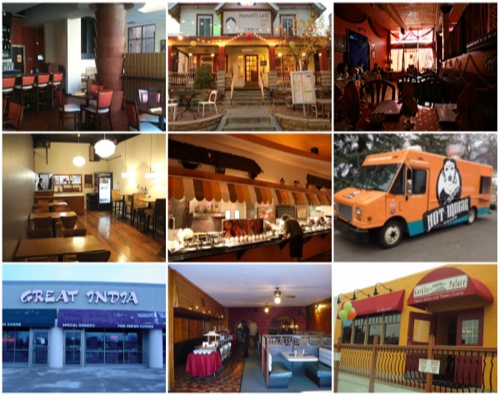
Indian and other South Asian cuisine can sometimes get overlooked in the Twin Cities food landscape, notes food-centric site Eater, but "Minneapolis has lots to offer, from the more familiar chicken tikka masala and naan to dosas, momos, and brand-new creations like the Indurrito."
From food trucks to downtown dining to suburban strip malls, superb Indian and South Asian restaurants are popping up all over the metro. The site offers a handy guide to help diners, along with suggestions for what to order at each restaurant or food truck.
Chosen as the top three on the list are Darbar India Grill, Namaste Cafe, and Gandhi Mahal. Others getting a nod include food truck Hot Indian Foods and Brooklyn Park favorite Great India. Another suburban pick, Dosa King in Spring Lake Park, got a mention for its 13 different varieties of dosas.

The October print issue of Bicycling magazine pays tribute to Minneapolis’ Midtown Greenway, a 5.5-mile bike and pedestrian path, in photos and words. Alongside a photo of a solo rider journeying down the Greenway in the wee morning hours, the piece reads, “Well-loved and heavily trafficked, the Greenway is an expressway of sorts for pedestrians and cyclists.”
The Greenway, a former railroad corridor, has a scenic trail that “bypasses streets and highways and leads to the Minneapolis Chain of Lakes to the west and the Mississippi River to the east,” it adds.

Wednesday, September 11, 2013
A local project called Nerdy Candles: For Nerds reached its fundraising goal of $5,000 on Kickstarter last month.
The project, led by Tom Lubanovic of Frostbeard Studio, centers on handmade candles inspired by video games, movies, and comics. It’s a “fun mash-up of traditional craftsmanship with geek culture,” the Kickstarter page reads.
This is the group’s second foray onto Kickstarter. In the past, the group created book-themed candles for the literary set. “It's become apparent that people really like our candles, both for smelling nice and for being... different,” the Kickstarter page continues.
The new line of candles will take inspiration from Zelda, Teenage Mutant Ninja Turtles, and Doctor Who, among other pop culture icons.

Wednesday, August 28, 2013
Pioneer Press photographer Ben Garvin recently produced a stop motion video that went viral, hitting over 1.2 million views on YouTube within only a couple of days. Garvin’s short film, titled “Magic Beard,” which was recorded with a smartphone app, has since been featured on numerous morning shows, evening news broadcasts, and websites all over the globe, including the Huffington Post. The film goes to lengths, literally, to reveal the wonders of Garvin's "magic beard." Besides the amount of time Garvin spent growing the beard, the film, which runs just a couple of minutes, took 15 hours to put together.
The Huffington Post shout-out about the film reads, “Ben Garvin's glorious stop-motion film documenting the antics of his clearly out-of-control beard validates all of our fears about facial hair.”

Wednesday, August 28, 2013
Former “Glee” actor Stephen Tobolowsky is coming to St. Paul’s Fitzgerald Theater to tape his syndicated radio show and podcast, "The Tobolowsky Files," live on Oct. 10, the Pioneer Press reports.
In the hit TV series, Tobolowsky was the glee club teacher early on. He's also appeared in many other roles on-screen, but he might be most known for his part as “the memory-challenged character who provides a key to the mystery in "Memento,”” the Pioneer Press story states.
As a part of "The Tobolowsky Files,” the actor recounts personal tales about Hollywood, life, and love, the story adds.
Health and wellness site Prevention.com identified the "25 Healthiest, Happiest Cities in America" and Minneapolis-St. Paul came in third on the list, just after San Jose and Salt Lake City.
To come up with the results, the site evaluated 100 of the nation's largest 48 cities, using measures that included farmers markets, access to green space, disease incidence, and unemployment rates.
The Twin Cities earned top scores for heart health, and abundant parks and lakes. A cardiologist at the Penny George Institute for Health and Healing noted that "people have spent decades boosting heart health by making the area more bikeable, for example, and offering cholesterol and blood pressure screenings to everyone."
The article also added that of the top 25 cities, the Twin Cities have the highest per capital number of farmers markets and among the highest access to fresh produce.

Online news and culture site The Daily Beast compiled a ranking of the "Top 15 Aspirational Cities" in the United States, and Minneapolis-St. Paul comes in at no. 10 on the list.
To determine America's aspirational hotspots, the report's authors focused on economic indicators, such as employment growth, per capita income, and unemployment. The authors also looked at demographic factors such as the movement of college-educated people into the area.
Finally, they considered quality-of-life factors like housing affordability, traffic congestion, and cultural highlights. The top three cities considered aspirational were Austin, New Orleans, and Houston.
"[G]iven current conditions and the most likely accrual of current trends, we can expect that most of the cities at the top of the aspirational rankings will remain there for some time to come," the authors note.
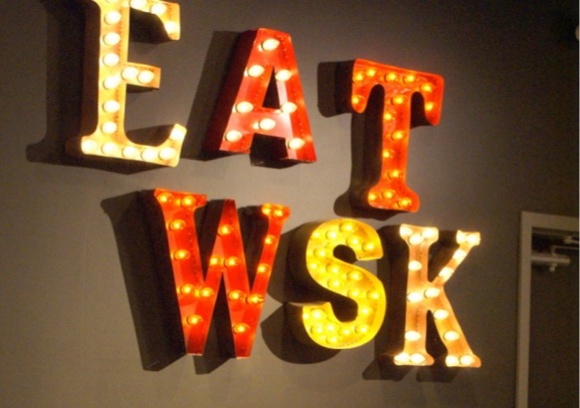
Food magazine Bon Appétit recently released its "Top 50 New Restaurants" list, and two Minneapolis eateries made the cut: World Street Kitchen and Borough.
Singled out for its cheese-grater light fixtures and mismatched flatware, Borough in the North Loop neighborhood got a nod for bringing together chefs from Travail for an eclectic menu. The magazine advised readers to opt for the cauliflower with pickled chilies and tempura-style oysters.
World Street Kitchen, near Uptown, was highlighted for its industrial look and casual style, matched with "straight-up fantastic international street food." Diners should go for the knockout rice bowls, burritos, and affordable prices.
Although neither restaurant made the magazine's subsequent Top 10 list, there were still plenty of raves for each eatery's signature dishes.

Forbes Wednesday, August 21, 2013
Business magazine Forbes notes that the U.S. economy is showing anemic wage growth and slow recovery from the recession, but the good news is that there are places with strong business climates that are fueled by low costs and educated labor forces.
With that in mind, Forbes singled out top locations in its annual list of the Best Places for Business and Careers.
Coming in at no. 23 is the Minneapolis-St. Paul area, including Bloomington. The article noted that the Twin Cities are rich with quaint neighborhoods, arts and culture, and natural resources. The median household income, the magazine notes, is about $63,000.
Duluth also got a nod, at no. 115 on the list, with a median household income of about $43,000.
Topping the list was Des Moines, Iowa, which was highlighted thanks to expansion there by major companies like Wells Fargo, Facebook, and Microsoft.
Wednesday, August 21, 2013
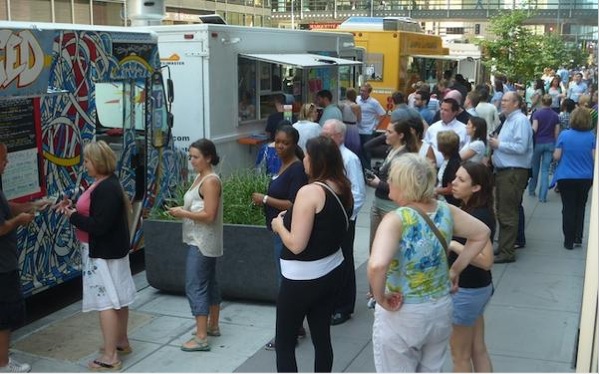
As a testimony to local food trends, a database from the Minneapolis/St. Paul Business Journal has grown to include 103 food trucks and trailers.
The database, which can be sorted by various attributes, including “most popular menu item,” also has information about food trucks’ presence on the street and on social media, a story from the Journal states.
Food truck reporter Urmila Ramakrishnan put it together. “Besides profiling dozens of food trucks, Urmila broke food truck news and found innovators, interesting people and companies that support the industry as the mobile eateries fight turf wars with established brick-and-mortar restaurants and struggle with their own popularity,” the story states.

Recently, a CNN news crew spent quite a bit of time visiting local schools and talking with area educators and advocates about the racial achievement gap, according to Minnpost.
It was for a CNN special, “Great Expectations,” which is part of the ongoing documentary series, “Black in America.” The program airs on Aug. 30.
The project, led by Soledad O'Brien, looks specifically at the education of black boys, Minnpost reports.
O’Brien raises tough questions about whether charter schools re-segregate children.
Chris Stewart, executive director of the African American Leadership Forum and a former MPS board member, who was interviewed for the show, sees the show as a way to connect people. “It’s like [O'Brien is] building this network of African-Americans nationwide who are seeing each other do good work,” he says in the piece.
Travel website and guidebook company Fodor's recently showcased the Twin Cities in its feature, "5 Reasons to Go to Minneapolis Now."
The author, Deb Hopewell, noted that the city is an ideal vacation spot thanks to its many parks, bicycling options, restaurant scene, proximity to St. Paul, and arts options.
She added that this is probably the best time of year to visit, when the summer heat starts to soften and fall is not far off (she wisely avoids mentioning winter at all).
Restaurants highlighted include The Bachelor Farmer, Piccolo, and Aster, and Hopewell points to the revitalized North Loop as a central hub for the robust local food scene.
In its annual Best Places to Live feature, Money Magazine focused on 50 small U.S. towns that are thriving economically and benefit from strong communities, ample green space, and good schools.
Coming in at fourth on the list is Chanhassen, with a population of just over 23,000 and located about 20 miles southwest of Minneapolis.
"Chanhassen was affected by Minnesota's woes during the downturn, but the town is bouncing back and taking fresh steps to improve," the article noted, pointing out that the area school district recently rolled out Wi-Fi on school buses and increased classroom tech projects. The town also beefed up commuter options, the article added.
One perk of living so close to the Twin Cities, Money stated, is that residents of Chanhassen have access to 34 parks, 90 miles of trails, and proximity to the popular Minnesota Landscape Arboretum. Even in the winter, residents know how to make the most of the area, Money added: "When below-zero wind chills set in, there's February Festival with ice-fishing contests, sledding, and cookouts."

Wednesday, August 14, 2013
Community-supported art, a takeoff on community-supported agriculture, provides locally made art to its members.
Since its start with the St. Paul-based nonprofit organization Springboard for the Arts, in collaboration with the local artists behind mnartists.org, four years ago, the concept has caught on in a number of cities across the country, the New York Times reports.
It has also taken on new forms as it has sprung up in different places, the story reads.
“The goal, borrowed from the world of small farms, is a deeper-than-commerce connection between people who make things and people who buy them,” the story reads.
It helps that many people were already familiar with the CSA model, the story points out.

Wednesday, August 14, 2013
For the second year in a row, Haberman, a Minneapolis-based full-service marketing agency, landed on Outside Magazine’s list of the top 100 workplaces nationwide, according to a prepared statement from the publication.
Haberman, which came in 36th in the list, stands out for innovative and healthy work-life balance, the statement reads.
Outside Magazine arrived at its results by looking at company benefits, compensation and policies, job satisfaction, environmental initiatives, and community outreach programs, the statement reads.
The magazine celebrates companies that “enable employees to pursue active lifestyles while also supporting their social and environmental contributions.”
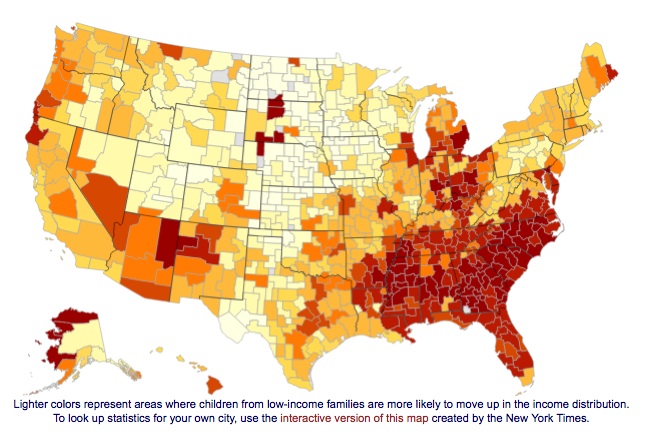
The potential for a child born in the bottom one-fifth of households by income to rise into the upper one-fifth was the subject of a major Harvard University study, called The Equality of Opportunity Project.
Researchers looked at whether tax expenditures from policies such as the Earned Income Tax Credit were effective in reaching the goal of enabling children to rise out of poverty.
The results around the nation were very mixed, the researchers noted: "We find substantial variation in mobility across areas." Looking at other additional factors such as K-12 school quality, economic and racial segregation, income inequality, and intergenerational mobility, the researchers were able to create a map of the U.S. highlighting economic mobility by state and major metropolitan areas.
In some areas, such as much of the South, upward mobility is extremely unlikely, but Minnesota fared well, according to the map. Of the 100 largest U.S. cities, Minneapolis came in at no. 18 for upward mobility. Salt Lake City was in the top spot, while Memphis was last on the list.
Food and restaurant site Eater.com recently ran a story about The 18 Essential Minneapolis Restaurants, calling the eateries a "highly elite group" that covers the entire city, spans myriad cuisines, and satisfies all of a diner's restaurant needs.
The list is continually evolving, the site notes. For example, Sen Yai Sen Lek, Pizzeria Lola, and Fika were rotated off the list "simply because their time has come," according to Eater.com. New to the list this go-round are St. Paul's Meritage, the North Loop's Borough, and Sea Salt in Minnehaha Park.
The top three on the list are all south of downtown: Broders' Pasta Bar, Piccolo, and Tilia. There are plenty of Northeast favorites as well, like Brasa Premium Rotisserie and Masu Sushi & Robata.
Not surprisingly, the comments section already contains some lively opinions about what other restaurants should be included — and which ones deserved to be kicked off the list.

“The Ultimate Long Weekend in Minneapolis” is the headline of a recent Wall Street Journal story that highlights the city’s attractions.
The scenic city “may bring to mind parkas before parks, and Vikings before biking, but Minneapolis is as sweet in summer as it is frigid in winter,” with everything from outdoor activities to cultural offerings to take in, it reads.
The story lays out a step-by-step itinerary for visitors who visit the city for a weekend. Local restaurants like Burch, Icehouse (also an entertainment venue) and Matt’s Bar get a shout-out. The American Swedish Institute, Forage Modern Workshop, and the Walker Art Center also get props, as do a number of theaters, shops, and parks.

ActiveTimes.com recently ranked the Midtown Greenway in Minneapolis as the nation’s top bike path, CBS Minnesota reports. USA Today picked up the story.
The over-five-mile-long trail sees up to 5,000 people daily. “It runs right through the center of Minneapolis with little interruption from street traffic or pedestrians,” the story reads.
On the path, ActiveTimes says, riders get views of the Mississippi River, the Chain of Lakes, and the Martin Sabo suspension bridge. And the site takes note of the fact that many people take the bike path to work.
To come up with its results, ActiveTimes evaluated “whether the path allows you to skip traffic while at the same time giving you a view of nature.”
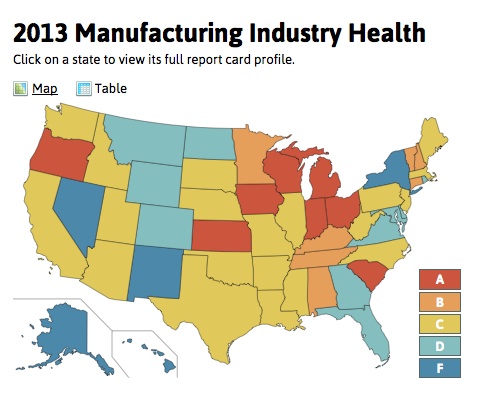
Minnesota's manufacturing scene is rife with innovation and productivity, according to a recent study.
The 2013 Manufacturing and Logistics Report Card, prepared by an economics professor at Ball State University, ranked Minnesota high on a state-by-state analysis of manufacturing climates.
The state excels when it comes to obtaining manufacturing patents and spending on research and development. Also, Minnesota's high-quality labor force put the state ahead of others in the country, giving us a competitive advantage and making Minnesota attractive for relocation.
About 10 percent of Minnesota's economy depends on manufacturing, and the abundance of local talent garnered through access to university laboratories and nonprofit research activities plays a part in the state's manufacturing strength, the study noted.
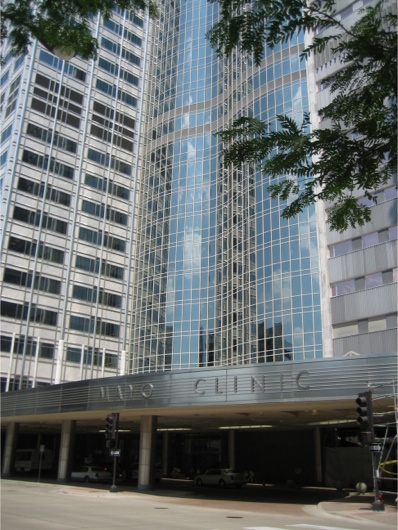
U.S. News & World Report recently released it annual Best Hospitals list, and five Minnesota hospitals were ranked high in terms of performance.
Coming in at no. 3 in the ranking, Rochester-based Mayo Clinic was highlighted in numerous categories, nabbing the "best" designation for specialties like endocrinology, gastroenterology, gynecology, and diabetes care.
The other four hospitals that made the list are Allina Abbott Northwestern Hospital, the University of Minnesota Medical Center, Allina Mercy Hospital, and St. John's Hospital.
The magazine sorted data for nearly 5,000 U.S. hospitals, looking at factors like patient safety, hospital reputation, and death rates. Only 147 hospitals were nationally ranked.
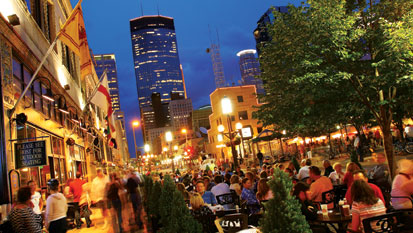
Forbes Wednesday, July 24, 2013
Minneapolis is a highly inventive city on an international level, according to a recent Forbes study.
Forbes used a metric called “patent intensity” to come up with a list of the 15 most inventive cities across the globe.
Minneapolis came in ninth place, as it produced 5.06 patent applications for every 10,000 residents, according to the magazine.
Eindhoven, in the Netherlands, topped the list, while Raleigh, North Carolina, rounded it out.

The Chronicle of Philanthropy’s recent list of the most giving Fortune 500 companies includes Wells Fargo & Company and the Target Corporation, according to Minnpost.
To get the results, the Chronicle examined last year’s charitable donations from many of the top Fortune 500 companies, the story states.
Wells Fargo, which calls San Francisco home, but has strong ties to Minnesota, led with $316 million. “Meanwhile, Wells Fargo may be poised to add new Minnesota jobs, or at least, move existing employees to a new location,” the story reads.
Target came in ninth place, having given away $147 million in cash and $77 million in products.
IHRSA Wednesday, July 17, 2013
For the sixth year, Hastings-based Anytime Fitness has nabbed the title of "world's fastest-growing fitness club" from The International Health, Racquet, and Sportsclub Association (IHRSA), an industry trade group.
The designation is based on the number of locations that Anytime Fitness added within the past year, as well as other factors like revenue and membership numbers.
The fitness behemoth opened 260 new locations in 2012, bringing its total to 2,035 clubs. It came in second in the IHRSA report for revenue growth, posting $484 million in 2012, a 33 percent increase over the previous year. The club was third on the list for number of members, reporting 1.5 million in 2012, coming in behind massive 24 Hour Fitness with 3.8 million members and Curves International, with 2 million members.
IHRSA President and CEO Joe Moore noted in a statement that the growth of Anytime Fitness indicates strong demand from consumers for "companies that meet their expectations."
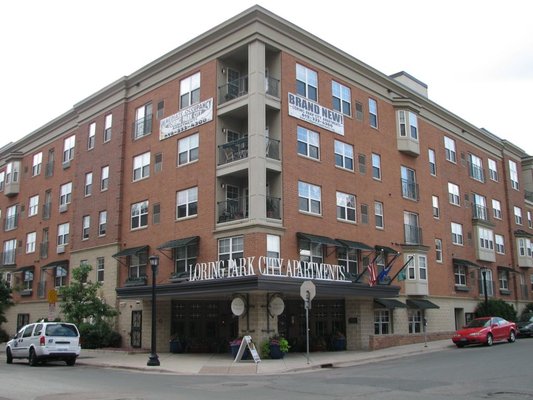
Minneapolis landed at the no. 10 spot on Apartments.com's annual list of "Top 10 Best Cities for Recent College Graduates."
Now in its sixth year, the list examines 100 U.S. cities and determines rankings based on apartment availability, affordability, unemployment rates, median income, and the percentage of single people between the ages of 25 and 29.
According to the report, Minneapolis has a high number of people falling within that age range, as well as a low unemployment rate.
The average rent for a one-bedroom apartment is just over $1,000, the report noted, which lands within the affordability range for recent college grads.
At the top of the list is Phoenix, with $708 as average rent for a one-bedroom apartment, and coming in at second and third place were Orlando and San Antonio.
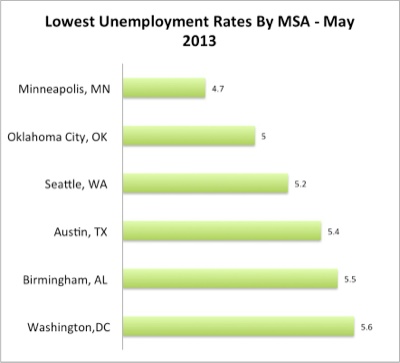
Minneapolis/St. Paul recently nabbed a headline on Slate.com. Recent information from the U.S. Bureau of Labor shows that the Twin Cities is the “lowest-unemployment big city in America,” the website states.
“It has long been the position of this blog that you should move to Minneapolis based on the high wages and low cost of living, but until recently Oklahoma City had a lower joblessness rate,” the Slate.com post reads.
The writer encourages readers to get past Minnesota winters and to see that “Now Minneapolis is both a place with high wage jobs and a place with plentiful jobs.”

The Irish Fair of Minnesota is ncluded in a list from the Travel Channel of the top seven Celtic festivals in the country.
The biggest free festival of its type in the country, the St. Paul fair “has the best of all Irish festivals--bands, beer and boiled beef--plus its own unique events: Irish Got Talent and Best Legs in a Kilt,” the website reads.
To showcase various aspects of Irish culture, games including hurling and Gaelic football take place, while vendors offer Jaffa cakes, Celtic crosses, and whiskey.
Nonprofit organization Social Science Research Council recently released a list of top states for "well-being," and Minnesota came in at number seven.
Called the American Human Development Index, the list measures three main aspects that contribute to overall well-being: access to education, standard of living, and life expectancy.
The study's authors base their data on responses from the U.S. Census Bureau and the Centers for Disease Control and Prevention.
The top three states in the study were Connecticut, Massachusetts, and New Jersey, while the bottom three were Mississippi, Arkansas, and West Virginia.
When it comes to state economies, Minnesota is the fifth fastest growing, according to data from the Bureau of Economic Analysis, the Twin Cities Business magazine reports.
The rankings are based on states' gross domestic product (GDP) from 2012.
Minnesota, which shares the ranking with California, has a GDP growth rate of 3.5 percent. The national average was 2.5 percent.
The state saw growth in the areas of manufacturing, construction, wholesale trade, finance, real estate development, and agriculture, the story states.
“Although North Dakota was described as the fastest-growing economy in 2012, its $39 billion “real GDP”--which is adjusted for inflation and incorporates a weighted average of prices for products produced within each state--was significantly smaller than Minnesota’s real GDP of $253 billion,” the story notes.
Popular local food trucks Chef Shack and Vellee Deli appeared on a recent list of the country's top food trucks, in a ranking dished up by food website The Daily Meal.
Chef Shack, a fixture on the food truck scene here and one of the first to kick off the trend, nabbed the no. 10 spot on the list while fusion cuisine purveyor Vellee Deli came in at no. 84.
The website looked at over 450 trucks from over 40 cities, and came up with the list by considering Twitter and Facebook popularity, as well as innovative menus, originality, and online reviews.
In singling out Chef Shack, the site noted that ingredients are organic when possible, and from family farms and co-ops in Minnesota and Wisconsin. Vellee Deli, meanwhile, won a spot for its blend of Asian and Mexican dishes.
Minneapolis ranked third in a recent study that looked at which cities in the country are most appealing for those who work for small businesses.
Coming in behind Denver and Boston, Minneapolis has the least amount of job competition among the 30 cities considered by the study's developer, a credit card research site called Card Hub.
Cities were ranked based on job growth, average monthly earnings for new hires, cost of living in the area, average unemployment rate, and other factors.
Companies with fewer than 50 employees comprise about half of the Minneapolis Chamber of Commerce's membership, the study noted, and "its workforce spends relatively little time on the job...the city ranks in the top 10 nationally in terms of small business vitality, industry variety, and stress."
Detroit is adding a streetcar line and it’s looking to Twin Cities developers for insights about minimizing the impact of construction on local businesses, the Pioneer Press reports.
For example, St. Paul’s Neighborhood Development Center, which provides support to minority-owned businesses in the city, is pitching in. Isabel Chanslor, a project manager with the organization, is quoted in the story, saying, "We've shared what we learned, what we did and what we could have done better.”
The organization “has been exporting its model to Detroit on a number of levels,” the story states.
Plans in Detroit include a “marketing campaign intended to remind locals that businesses along Woodward Avenue are indeed still open, much like the 'On The Green Line' campaign launched in the Twin Cities,” the story reads.
The Brooklyn Brewery, a craft brewery in New York, “is paying the Twin Cities a little visit in a big way,” a City Pages article states.
This week, the brewery is coming to the area as a part of its national MASH tour, a series of beer and food-related events plus film showings and music.
The Twin Cities is one of 11 stops in the festival that includes a “series of parties, concerts, and private diners in honor of Slow Food USA, an organization the promotes "the pleasure of food by linking it to the community and the environment."”
While in town, MASH will make its home St. Paul’s The Happy Gnome, while also visiting with a number of local restaurateurs.
Online reservation website Urbanspoon released its ranking of the country's 100 most popular family-friendly eateries, and three Twin Cities restaurants made the list.
All three are located in Minneapolis: Fogo de Chao, Pizzeria Lola, and The Anchor Fish & Chips.
Restaurants were ranked according to positive reviews from food bloggers, critics, and Urbanspoon users. The site noted that the list boasts a variety of restaurant types, from fast-casual burger joints to fine dining.
Although the restaurants on the list are kid-friendly, Urbanspoon also evaluated the needs of other family members, such as grandparents, parents, and a diner's "foodie sister and her boyfriend." Restaurants that were too noisy, ultra-fancy, and with a limited kids' menu were ruled out in favor of those with nice atmosphere, a diverse menu, and friendly service.
Grist Wednesday, June 12, 2013
"If you're a lover of outdoor urban activity, might we suggest a move to Minneapolis?" begins the story on U.S. city park systems from Grist.
The online news site cited rankings from the Trust for Public Land in its second-annual ParkScore Index. Although Minneapolis didn't appear on last year's list, the survey results were tweaked this year to include more metropolitan locations, and the city zoomed to the top, beating out larger cities like San Francisco and New York City.
In calculating the rankings, ParkScore looked at acreage of city parks, services and investment, and access. Minneapolis parks boast 15 percent of the city's overall area, with over 5,000 acres of parkland.
The New York Times featured local artist Chris Larson’s art installation that was a part of the recent Northern Spark.
For the St. Paul dusk-to-dawn art festival, Larson created a replica of Bauhaus architect Marcel Breuer’s St. Paul house. Before an audience at the festival, Larson proceeded to burn down the house. It was the festival’s main attraction.
Although Larson worked from 1961 blueprints of the house, he “made the walls and roof out of cardboard and two-by-four studs,” the story states.
Of the original, which is still standing, the story states, “Despite its heritage, the house has been neglected in books on Breuer.”
As for the burning of the replica, it may have been a statement about the architect, the design, or putting too much emphasis on one’s house--several people in the story weigh in on the significance of the pyrotechnics.
Intuit Wednesday, June 12, 2013
Recently, Intuit put together a list of the top U.S. cities for female entrepreneurs. By its calculations, Minneapolis comes in fourth place. San Francisco tops the list. It's followed by Seattle and Washington D.C., in second and third place.
In a blog post about its results, Inuit underscores that while more women are enrolled in higher education, “they still struggle to find their place in many career fields, including business and entrepreneurship.”
At the same time, a study shows that 81 percent of female entrepreneurs are “showing optimism about their business ventures,” it states.
To come up with its rankings, Intuit looked at median education levels, unemployment rates, income, population, and the percentage of women-owned businesses for 48 cities across the country.
For the third year in a row, the Twin Cities landed at the top of the list for the healthiest cities in the country, according to the American Fitness Index, a study done by the American College of Sports Medicine.
Aimed at presenting a snapshot of the state of health and fitness at the metropolitan level, the annual ranking looks at a variety of factors that drive health, including the number of farmers markets per capita, city playgrounds and parks, golf courses and tennis courts, and other recreation opportunities.
Although the Minneapolis-St. Paul area was considered to have the most areas of excellence, there were some "improvement priority areas," including the number of smokers who live here, and the lower percentage of residents who eat more than five servings of fruits or vegetables per day.
Rounding out the top five were Washington D.C., Portland, San Francisco, and Denver.
Minnetonka-based United Health Foundation recently released a study that examined the health of the country's seniors, and which states had the most community resources to support them as they age.
Minnesota came out on top, followed by Vermont, New Hampshire, Massachusetts, and Iowa.
The report is designed to provide information that can be used to inspire new and effective solutions that meet the healthcare needs of seniors, noted Reed Tuckson, senior advisor to United Health Foundation. In a statement, he said, "We are measuring senior heath in order to help improve it."
Minnesota's advantages over other states include more robust drug coverage, lower rates of hunger among seniors, higher rates of annual dental visits, and an abundance of home health care workers.
The report noted, "We want this report to be more than just an assessment of the current status of senior health. We want to promote a public discussion of the overall health of the age 65+ population that is comprehensive and balanced."
The Huffington Post recently pulled information from a Travel + Leisure survey that shows that the Twin Cities is the 6th best metro for beer nationwide.
Craft breweries are trending across the country, with more than 2,300 counted in 2012, “the highest number since the late 19th century,” the story states.
The Twin Cities jumped nine spaces in the survey this time around. “The buzziest beers seem to channel the outdoorsy, hipster vibe that voters love about Minnesota,” according to the survey.
Local breweries range in character from Indeed Brewery, which “prides itself on its retro, back-to-basics cans, while Fulton Beer offers a Russian imperial stout.”
Fulton claims its beer can hold up against the Minnesota winter, in case it's left outside.
Portland, Oregon topped the list of beer towns.
Vincent Kartheiser, an actor on the popular AMC series “Mad Men,” will return to his hometown this summer to play in the Guthrie Theater’s production of “Pride and Prejudice,” according to the Star Tribune.
Kartheiser first graced the Guthrie stage as a seven-year-old in the theater’s staging of “A Christmas Carol.” This time around, he’ll play the role of Mr. Darcy.
“Kartheiser, 35, grew up in Apple Valley and moved to Los Angeles as a teen to pursue an acting career,” the story reads. The actor became well known beginning in 2007 as the “Mad Men” character Pete Campbell, the “slimy, conniving ad executive everyone loves to hate.”
“Pride and Prejudice” marks the theater’s 50th season.
WCCO Wednesday, May 22, 2013
Given Minnesota's love of outdoor dining during the summer, choosing the best patio in the state seems like a daunting task, but WCCO viewers took up the challenge. In a recent poll, they named Psycho Suzi's in Northeast Minneapolis as the top spot for outdoor lounging.
The restaurant boasted a popular patio area in its former location just a few miles from where it now resides, but the move a few years ago created an opportunity for building an expansive patio area that's now packed in the summertime.
In an article about the results, Psycho Suzi's Shannon Weed noted that being on the Mississippi is hugely beneficial, especially since some customers cruise up to the restaurant on their boats. Also, the patio is dog-friendly.
Recently, the restaurant added a second patio level, giving it an even bigger boost of popularity.
Online residential real estate site ZipRealty released its first annual ranking of the Best Places for Families to Live and the Minneapolis area took the top spot.
The rankings were compiled by factoring each school district's "School Score" on ZipRealty, along with median price per square foot for homes in that district. The site's school scoring system measures the performance of each district based on test-score data as well as student-to-teacher ratios.
In naming the Minneapolis area best in the nation, the site singled out Westonka Public Schools for its high district rating. The site also suggested that residents are able to "hang out on Lake Minnetonka or take the kids into Minneapolis to catch a Twins game at Target Field."
In a press release on the findings, ZipRealty CEO Lanny Baker noted that people continue to relocate to the Minneapolis-St. Paul area because of affordable housing prices, quality school systems, numerous cultural activities, and a burgeoning economic sector.
ArtPlace America, a consortium of arts funders across the country, recently announced a couple of St. Paul winners in its latest round of grant awards, according to the Star Tribune.
Both the Blue Ox Mini Golf project and the Bedlam Theatre won $350,000 grants from the group in a category titled, “Using Art to Connect and Animate Communities.”
The Blue Ox will use the funds to develop an artistic 18-hole course at the old Schmidt Brewery grounds, which is being renovated for artist lofts, while Bedlam is planning a new home base near the Union Depot.
Jennifer Pennington, a spokesperson for Blue Ox, comments in the story about the funding group: “They’re really interested in funding a variety of creative placemaking efforts to spur economic development and increase vibrancy,” she says.
Source: Star Tribune
Minnesotan Amy Matthews has a new TV show focusing on home renovations, according to the Pioneer Press.
Matthews, who is “already a staple on the DIY Network,” is now bringing her home improvement savvy to HGTV, with the TV show, “Renovation Raiders,” the story states.
“Renovation Raiders,” which was filmed locally, is “a remodeling show with a fun twist.” It debuts on May 30.
In a matter of hours, a crew makes dramatic changes to a room in a house, which varies by episode.
Beforehand, “contractors work with another one of the homeowners, who is in on the big surprise, and strategically plan the remodel, being extra careful not to be caught by the unsuspecting party,” the story states.
Source: Pioneer Press
WCCO Wednesday, May 15, 2013
A recent WCCO story describes New York-based author Jennifer Keishin Armstrong’s book, Mary and Lou and Rhoda and Ted, which centers on the “Mary Tyler Moore Show.”
The 1970s TV show was set in Minneapolis.
In researching the book, Armstrong looked at a handful of places seen in the show. For example, Kowalski’s on Hennepin Avenue is where Mary shops for groceries. “The neighborhood overall also made sense for Mary, a young and single urbanite, as the Uptown area developed into an artsy enclave,” the book states.
When Moore tossed her beret into the air at 7th and Nicollet, which is marked by a statue of her character, “director Reza Badiyi captured the moment for what would become one of the most indelible TV credit sequences of all time.”
Minneapolis is a good place for anyone who’s into sports, according to the financial literacy website NerdWallet.
The website examined cities across the country, evaluating them on what sports are represented, attendance at games, ticket prices, and local sports culture.
By its criteria, Minneapolis came in in sixth place, after Dallas, Chicago, Detroit, New York, and San Francisco.
The article cites reasonably priced tickets and the fact that teams like the Vikings and the Wild, which recently went to the playoffs, have generated a lot of enthusiasm from fans.
When the Vikings play their “archrival,” the Green Bay Packers, “thousands brave the bitter cold to tailgate before these games in mid-winter.”
Minnesota has also been called the State of Hockey, “which locals make clear with attendance at Wild games over 100% this season,” the article states.
Soon, Minneapolis will host the 2014 MLB All-Star game, when the Midsummer Classic visits Target Field, it adds.
At least 24 Minnesota tech ventures raised in excess of $28 million in the first quarter of the year, according to a report from local technology site TECHdotMN.
Analyzing data from January 1 to March 31, the site compiled data from multiple sources, and noted that actual numbers are estimated to be at least 20 percent higher, based on information from investors who couldn't disclose their investment activity publicly.
In comparison, 24 companies in the same quarter last year raised $58.6 million, and while this might seem like this year is a decline in tech venture funding, last year's total was skewed by a single deal for Code 42 Software worth $52.5 million. When that deal is removed from consideration, it shows a significant rise in funding overall for tech in the state.
The Women Presidents' Organization, a peer advisory organization connecting women who own multi-million-dollar companies, released its annual list of "Top 50 Fastest-Growing Women-Owned/Led Companies," and two Minnesota enterprises made the ranks.
Coming in at number 25 is Burnsville-based Innovative Office Solutions, led by Jennifer Smith, and at number 45 is Bloomington-based eCapital Advisors, helmed by Lisa David.
The organization noted that the top 50 generated a combined total of $3.2 billion in 2012 revenues and collectively employed 24,000 people.
To be eligible for the list, companies had to be women-owned or led, privately owned, and must have reached revenues of $2 million by the end of 2012. Marsha Firestone, the organization's president, noted that this year's list is the most diverse ranking ever, with 20 states represented, and companies ranging from precious metal dealers to food service distributors.
Food and drink website The Daily Meal recently ran a feature called "The 10 Best Locavore Cities in America Right Now," and Minneapolis landed at number eight.
Each city's listing showcases a restaurant that represents a commitment to locavores (those who seek out only locally sourced food). For Minneapolis, Corner Table got the nod.
"Minneapolis has come into its own as a food city, and Corner Table epitomizes the town's focus on fresh and friendly Midwestern cuisine," the article notes, before praising the restaurant's globally inspired dishes and seasonal tasting menus.
To come up with the list, editors at the site looked at which cities had the most restaurants known for serving locally sourced ingredients. Coming in at the top of the list is Asheville, North Carolina.
Rolling Stone magazine recently identified the country's top 10 music venues, which it called "The Best Big Rooms in America."
First Avenue in Minneapolis came in at number three on the list, with a major nod toward hometown musician Prince. "Throughout the Eighties, he and the Revolution were sort of the house band here--you can see it all in the famous concert scenes in Purple Rain," the article noted.
The club was also a key staging ground for the city's punk-and-hardcore scene, the article continued, noting that bands like the Replacements, Hüsker Dü, and Soul Asylum got their start on First Avenue's no-frills stages.
The top two "best big rooms," according to Rolling Stone, are 9:30 Club in Washington, D.C., and The Fillmore in San Francisco.
Earth Policy describes various bike-sharing programs around the world in a recent post.
The post mentions Nice Ride, the bike-sharing program in Minneapolis and St. Paul, which is the second largest in the U.S. Nice Ride has 1,550 bikes at 170 stations, it states. Capital Bikeshare, which serves the Washington, D.C. area, is the biggest, with more than 1,800 bikes at 200 stations,the piece notes.
Bike-sharing programs are popping up more and more, these days. “Forward-thinking cities are turning back to the humble bicycle as a way to enhance mobility, alleviate automotive congestion, reduce air pollution, boost health, support local businesses, and attract more young people,” according to the article.
Bike-sharing systems “are being embraced by a growing number of people in the urbanizing world who are starting to view car ownership as more of a hassle than a rite of passage.”
The locally produced comedy variety show “Wits” has made it to the next level.
A number of other National Public Radio stations are picking up the MPR show, which is recorded live at the Fitzgerald Theatre in St. Paul, Kare11 reports.
“Wits” includes such well-known talent as singer Rufus Wainright and “30 Rock” alum Kristen Schall, the story states.
The show’s senior producer, Larissa Anderson, describes the winning formula for “Wits,” which mixes improv, comedy, music, and theater: "It's comedy, it's music, it's surprises; and sometimes things go off the rails, and we love it when that happens,” she says.
Personal finance website NerdWallet celebrated May's designation as Small Business Month with a report on "Best Cities to Start a Business," and Minneapolis landed on its list of top 10 cities in the nation.
Coming in at number eight, Minneapolis was lauded for strength in healthcare, manufacturing, and financial services, and was called "a growing hotspot for startups and small businesses."
The city has a very low unemployment rate of 6.3 percent, the article noted, and a highly educated population. Minneapolis business resources got a nod, including technology group MHTA, nonprofit community development association MCCD, and technical assistance groups funded by the city.
The site calculated the results based on ease of obtaining funding, business-friendly resources, local economic indicators, hiring, and affordable living. The top three cities, according to NerdWallet, are Atlanta, Raleigh, and Austin.
Food and drink website The Daily Meal recently ran an article about dining options at Twin Cities museums, highlighting three major local museums.
Although the article is titled "Minneapolis' Best Museum Food," one of the entries is Cafe Minnesota at the Minnesota History Center in St. Paul. The article notes that the cafe highlights sustainable, local ingredients, and offers self-service dining with a grill and an array of entrees.
Another notable museum dining experience, according to the site, is FIKA at the American Swedish Institute in Minneapolis. The Nordic-inspired cafe serves a seasonally inspired menu dedicated to regional ingredients, which includes smoked sturgeon with pickled beets.
The third highlight is the Walker Art Center's Gather restaurant, which also focuses on locally sourced ingredients for its globally inspired dishes.
The article notes, "As we know at The Daily Meal, a key part of any traveling experience is the food. Although food service at a museum might not be the establishment's first priority, many do cater to their guests' appetites, and they do it well."
The Minneapolis/St. Paul Business Journal reports that a Minnesota lawyer, John Levy, is teaming up with celebrity chef Andrew Zimmern on an Arizona food truck.
Levy leads the new Minnesota Food Truck Association.
The story quotes Levy as saying, “Through my friendship with Andrew and my experience as a business lawyer, I thought it would be cool on the side to have an interest in a food truck.”
The deVine Film Fest, which runs June 23, features six-second videos made by locals with the Vine app.
The film fest is a part of Comedy Corner Underground, which hosts an open mic night.
Right now, the group is accepting submissions for the film fest.
On the fest’s website, founder Andy Erikson writes, “My friends and I have loved using the Vine app immensely, and wanted a way to showcase the six-second videos made by local Minneapolis comedians and artists.”
At the film fest, the best submissions will be played several times. “There will be prizes and also some standup comedy planned for the evening. The best part is, you don’t have to be from Minneapolis to submit, nor do you have to be a trained filmmaker,” the website states.
Online service Thumbtack.com, in partnership with the entrepreneurship organization Kauffman Foundation, conducted its second annual study about business friendliness, compiling survey results from over 7,000 small business owners throughout the United States.
Minnesota received a grade of "A-" in the study, showing marked improvement over its "B" grade in 2012. Survey respondents gave high grades to the ease of starting a business in the state and overall friendliness. Zoning and training programs both received lower scores of "B-."
In terms of areas for improvement, the state's small business owners gave the state a "D+" for ease of hiring and a "C+" for regulatory issues like health and safety and the tax code.
The site also includes some comments from survey respondents, highlighting both advantages and challenges for small businesses in the state. For example, the owner of a moving company in St. Paul complained that "workman's comp in Minnesota is extremely brutal," while an entrepreneur in Cottage Grove noted: "This is a great place to start a business."
Minneapolis-St. Paul International Airport made the "World's Top 100 Airports" list, compiled by travel research firm Skytrax.
Coming in at number 71, down from 65th last year, the local airport is one of only 15 U.S. airports to make the list. The highest-ranked in the U.S. is Denver International Airport, at number 36.
Skytrax identified Singapore's Changi Airport, South Korea's Incheon International Airport, and Amsterdam's Schiphol Airport as the top three airports in the world.
The firm came up with its rankings through surveys filled out by over 12 million airline passengers over a nine-month period. The questionnaires covered almost 400 airports and asked respondents to rate aspects of service and performance, such as dining options, security procedures, baggage delivery, and cleanliness.
Next month, Peter Kelsey of the New French Bakery will be honored by the U.S. Small Business Administration (SBA) as the Small Business Person of the Year for Minnesota, according to the Star Tribune.
Kelsey, who started out modestly in 1997, “credits his success to hard work, luck and the SBA,” the story states.
In the past, he ran a small shop in the Warehouse District. “Kelsey believed bread could trump booze and a hard-rock joint,” but he needed the money to make it happen, the story states.
Luckily, others believed in him and the New French Bakery grew into the 400-person operation it is today, according to the story.
John Rimarcik, a Minneapolis restaurateur, is quoted in the story, saying that Kelsey "is just driven to be one of the best bread bakers in the United States."
The Twin Cities is in first place in the area of “wallet wellness,” according to an online company that compares credit cards, the Pioneer Press reports.
The company defines “wallet wellness” cities as those that “lead to a financially satisfying, low-stress lifestyle,” the story reads.
To evaluate the country’s 30 major cities, the company examined “factors such as rate of job growth, cost of living and average commute time. CardHub.com listed the Twin Cities above second- and third-place finishers Houston and Dallas,” the story states.
Movoto Wednesday, April 17, 2013
Given the importance of science and technology in every aspect of social and professional life, being a nerd is a great thing, and it appears that Minneapolis has plenty of that greatness.
Real estate site Movoto recently released a list of "nerdiest" cities in the country, and found Minneapolis to be the 5th nerdiest, after Atlanta, Portland, Seattle, and Sacramento. Rounding out the top ten were Boston, Las Vegas, Miami, San Jose, and Denver.
The site created the ranking by measuring the number of science museums and computer stores in each city, as well as comic book stores, video game stores, and sci-fi/fantasy conventions. Even distance to a Renaissance faire was a factor.
In his blog post, survey author Randy Nelson noted that these cities are "Nerdvana" and that when nerds eventually take over the world, their new capital will be Atlanta.
The Twin Cities brewery boom isn't going unnoticed.
Brewers Association, a craft beer organization, has released its annual list of the top 50 brewing companies in the U.S., based on 2012 beer sales volume.
Three Minnesota breweries appeared on the list: Summit Brewing Co., Cold Spring Brewing Co., and August Schell Brewing Co. Topping the craft beer list is Boston Beer Co.
Last year, craft beers took just over six percent of the total beer market, with record sales, noted Brewers Association director Paul Gatza.
In releasing the association's top brewing companies list, he noted: "Increasingly, beer lovers are turning to craft brewed beer from small and independent producers to satisfy their thirst for bold, innovative and flavor-forward beers."
A recent New York Times story titled “Quietly, Indians Reshape Cities and Reservations,” shows the impact of American Indians in Minneapolis and other major U.S. cities.
In recent years, there’s been a “largely unnoticed mass migration of American Indians, whose move to urban centers over the past several decades has fundamentally changed both reservations and cities,” it reads.
Despite major challenges such as poverty, “many view Minneapolis as a symbol of progress.”
That is, in Minneapolis, the Indian population is “more integrated than in most other metropolitan areas, and there are social services and legal and job training programs specifically focused on them.”
Also, the city also has several Native American leaders,the story states.
The Star Tribune picked up two Pulitzer Prizes on Monday for local reporting and editorial cartooning, the newspaper reports.
The story goes on to say that Brad Schrade, Jeremy Olson, and Glenn Howatt won the reporting honor for their “powerful series of reports on the spike in infant deaths at poorly regulated day-care homes, resulting in legislative action to strengthen rules.,,,Since the series ran, the number of deaths at day cares has dropped dramatically.”
Steve Sack, an editorial cartoonist, won for his “diverse collection of cartoons, using an original style and clever ideas to drive home his unmistakable point of view,” the story reads.
St. Paul-based public-private partnership Connect Minnesota recently released data from a series of residential technology assessments in the state, and found that approximately 2.1 million adults use the Internet on their cell phones or subscribe to a mobile wireless service for a laptop or tablet computer. That usage represents 51 percent of Minnesota's adult residents.
The survey was conducted to support the organization's efforts to close Minnesota's digital gap. Connect Minnesota explores the barriers to broadband adoption among various demographics as a way to boost more Internet usage.
Connect Minnesota State Program Manager Bill Hoffman noted that the research shows that mobile broadband plays an ever-increasing role in how Minnesotans get online. A previous study showed that only 39 percent of the state's adults used a mobile Internet service.
"As we look ahead, I think mobile broadband will continue to be an integral part of Minnesota's broadband landscape," Hoffman stated.
Design review firm 10 Best Design recently released its ranking of the country's top web design companies, and Minneapolis-based Artropolis won a spot on the list.
Coming in at number eight, Artopolis specializes in driving visitor purchases on e-commerce websites. Featured work on the 10 Best Design site included sites for temporary staffing firm Current Temp and restaurant company Big Thrill Factory.
10 Best Design evaluated firms based on multiple variables within its proprietary analytics system. The top three agencies were The Creative Momentum in Atlanta, Kohactive in Chicago, and Vento Solutions in New York.
City Pages has compiled a list of the top local clubs "to see bands before they break big."
"We are truly fortunate to have plenty of intimate rooms here in the Twin Cities, where local and national bands alike can find their footing in a live setting while building a solid reputation within the Minnesota music community--a rep that will follow them as they return to the area to play bigger clubs to match their rising profile," the story reads.
The Triple Rock Social Club, Turf Club and 7th St. Entry are among the most-established venues for seeing artists that have gone on to play for bigger audiences.
But the list also includes some new clubs, like the Icehouse in Minneapolis and the Amsterdam Bar & Hall in St. Paul. The Amsterdam has already "seen its fair share of breakout acts, including Cloud Nothings' rousing first local performance...and the emergence of the Girls Got Rhythm Festival."
A recent Gallup survey shows that Twin Citians "have the highest sense of personal security among Americans living in the nation’s top metro areas," the Star Tribune reports.
Of those interviewed, 80 percent of locals responded that they feel comfortable walking around at night.
That's a couple of points ahead of Denver and Raleigh, N.C., while the national average is 72 percent.
The results are compiled as a part of the Gallup-Healthways Well-Being Index, the Star Tribune story reads.
Online restaurant reservation website Urbanspoon singled out the country's most popular restaurant bars and four Minneapolis eateries landed on the list.
Bar La Grassa, 112 Eatery, George and Dragon, and Tilia were included on the list of 200 popular U.S. restaurant bars.
Urbanspoon included selections from 101 cities across 33 states, and selected the most popular based on reviews from food critics, bloggers, and Urbanspoon users. Florida claimed the most spots on the list with 31 entries, while Ohio and Missouri rounded out the top three.
In addition to selecting specific restaurant bars, Urbanspoon also noted a few trends in its results. Beer proved to be a defining feature for a number of the bars chosen, and on the liquor side, restaurants that offer specialty cocktails and house-infused spirits tended to get a place on the list.
Travel research site TravelNerd recently noted that airports are increasingly providing kid-friendly amenities to appeal to a range of travelers, and released the results of a study that highlighted the best and worst airports for kids.
Based on the number of nurseries and play areas, as well as kid-friendly activities, Minneapolis-St. Paul made the top 10, squeaking in at number nine, just ahead of Seattle-Tacoma.
"In honor of the creator of Snoopy, a Minnesota native, there is a Snoopy statue in Terminal 1 near one of two kid play areas," the article notes about the Minneapolis-St. Paul airport. "To feed the baby, head to Terminal 1 Concourse C for a private mothers room. P.S. If you forgot extra diapers, a pacifier or sippy cup, there is a vending machine with kid essentials in Terminal 1’s kid play area."
The top three airports for kid-friendly amenities are San Francisco, Portland, and San Jose. Dubbed the worst airports for kids are Atlanta, Denver, and JFK.
A St. Paul grocer landed on the cover of Wells Fargo & Company’s recently released 2012 annual report.
The annual report leads with an anecdote about Shua Xiong, owner of Golden Harvest Foods, and his conversation with a banker. Eventually, Wells Fargo helped to finance the store’s remodeling project.
Conversations like this “are also a beginning because they often lead to something more. A deeper relationship. A great idea. A way to solve a problem. That happened over the course of their relationship,” when banker Abby Ward recommended treasury management and equipment finance services to Xiong, the report states.
“Relationships like these are a Wells Fargo staple because they help our customers succeed financially," the report adds.
Efforts in St. Paul schools to serve nutritious lunches are getting props on a national level, according to the Pioneer Press.
On March 26, an official delegation comprising state and federal representatives dropped by Crossroads Elementary to see it in action.
The delegation wanted “to learn more about the district's all-out health-food kick and its bid to get a head start on stricter federal school lunch rules, announced earlier this year,” the story states.
New USDA guidelines require schools receiving federal funding to cut down on sodium and boost whole grains, an area where St. Paul schools are ahead of the curve, according to the story.
Brand consulting firm Interbrand recently released its annual list of "Best Retail Brands" in the nation, and Minnesota-based Target and Best Buy both found a spot.
Target was second on the list, just behind Walmart. The retailer's sales and revenue grew last year, and store remodels helped to freshen some locations. Also, the first City Targets opened in three cities, and many retail analysts praised the move as a new approach that could impact Target's future operations.
Best Buy ranked at number 13 on the list, and showed a steep decline in "brand value" as defined by Interbrand. In the past five years of the Interbrand list, Best Buy has usually made the top 10, and this is the first time it's dropped below that higher ranking.
Other companies in the top 10 include The Home Depot, Amazon.com, CVS, Coach, Walgreens, Sam's Club, eBay, and Nordstrom.
Forbes Wednesday, March 27, 2013
Business magazine Forbes released its ranking of "America's 100 Most Trustworthy Companies" and three Minnesota companies made the list: Hawkins, Apogee Enterprises, and Patterson Companies.
The magazine rated U.S. companies using AGR scores, a statistical method that links accounting reports with financial statements and governance to detect any fraudulent activity. Companies on the list also show positive forecasts for equity returns, and don't have any SEC enforcement actions pending. The analyst firm that provided the rankings, GMI Ratings, noted that 60 different governance and forensic accounting measures were used.
The companies on the list have "consistently demonstrated transparent and conservative accounting practices and solid corporate governance and management," Forbes noted. "They do not play games with revenue and expense recognition, or with asset valuation."
Last week, the James Beard Foundation released the names of the nominees in its various chef and restaurant award categories, in Charleston, S.C., Vita.MN reports.
Jack Riebel, the chef and co-owner of Butcher and the Boar in downtown Minneapolis, is up for best chef at these “Oscars of the food world,” according to Vita.MN.
Riebel used to work at the Dakota Jazz Club & Restaurant in Minneapolis and La Belle Vie in Stillwater, the story states.
Michelle Gayer, the chef and owner of the Salty Tart, who’s been nominated for outstanding pastry chef before, is a candidate for regional best chef.
The Current blog has a recent post about Minnesotans in the running for a couple of Independent Music Awards, in which individual songs are judged by a group of well-known artists.
Sleep Study, a pop quartet, is up for an award in the Indie/Alt. Rock category for “Flower Song,” which the post describes as “a lo-fi, driving ’70s pop cut off their debut full-length, 2012′s Nothing Can Destroy.”
Secondly, Minnesota Remembers Vic Chesnutt, a compilation, is a nominee in the Tribute Album category. Luke Redfield, a Duluth songwriter, led the project, which nonprofit Rock the Cause released. It features covers of Chesnutt songs by local performers, including Dan Wilson, Haley Bonar, Dave Simonett, and Charlie Parr.
The results of the contest will be tallied up later this summer.
Forbes Wednesday, March 20, 2013
Business magazine Forbes recently released its annual list of the world's billionaires, and five Minnesotans landed on the roster again, with no real surprises since they've been on the list in the past and are all prominent in the state's business scene.
Tying at number 316 (out of nearly 1,500 billionaires) are Barbara Carlson Gage and her sister, Marilyn Carlson Nelson, each with a net worth of $4.1 billion. The two own Carlson jointly, and saw their fortunes rise significantly over last year, when they each had a net worth of $2.5 billion.
Coming in at 395th on the list is Whitney MacMillan, one of the owners of Cargill, considered the largest private company in the United States. He has a slight increase in net worth over last year, from $3.3 billion in 2012 to $3.4 billion today.
Stanley Hubbard, chairman and CEO of Hubbard Broadcasting, is 704 on the list with $2.1 billion in net worth, while the fifth Minnesotan is Glen Taylor, majority owner of the Minnesota Timberwolves and founder of Taylor Corporation. Number 719 on the list, Taylor has a net worth of $1.7 billion.
Best Buy founder Richard Schulze also appeared on the list as he did last year, but he isn't identified as a Minnesotan this year, since a city of residence isn't listed for him. Twin Cities Business spoke with Schulze's daughter, who told the magazine that her father's primary residence is in Florida.
Personal finance and small business site NerdWallet recently released a ranking of "Top Ten Cities for Women Entrepreneurs" and Minneapolis came in at 4th place, after San Francisco, Seattle, and Washington, D.C.
"Minneapolis has the dual benefits of having a very low unemployment rate and an educated workforce," the article noted. "Additionally, women own almost a third of businesses in Minneapolis."
NerdWallet continued with a mention of the quarterly networking events held at Women Entrepreneurs of Minnesota, an organization that promotes connections among female executives in the state.
Also garnering a nod was the National Association of Women Business Owners of Minnesota, a very active organization that provides networking and other events. Nearby St. Paul got a shout-out as well, for WomenVenture, which offers loans and transitional career services to female entrepreneurs.
Other cities that landed on the list include Portland, Atlanta, Denver, and San Diego.
DC.Streetsblog.org gives a shout-out to the Twin Cities’ Nice Ride bike-sharing program in a post, “Midwest Cities Race to Adopt, and Grow, Bike-Share.”
Recently, Pittsburgh announced it was adding a similar program, while several other cities plan to follow suit.
The post goes on to say, “And of course there’s the grandaddy of them all: Minneapolis’ Nice Ride. Launched in 2010, this system currently boasts more than 1,200 bikes. Late last year, the system surpassed half a million trips.”
The post also includes a photo of a local bicyclist taking advantage of the pioneering bike-sharing program.
The Walker Art Center’s Internet Cat Video Festival was “an unparalleled and unexpected success,” according to a museum magazine piece.
The film festival turned out to be a viral success, “sparking news headlines worldwide, the festival itself saw the convergence of 10,000 people—some in costumes, others cradling kitty companions, all feline fanatics—on the Walker’s hillside one warm August evening last year,” it reads.
The festival has since led to a national tour, lots of media attention and an expanded event for next year. And a "legitimate" film festival in Austria has made a bid to host it.
Scott Stulen of the Walker is quoted, saying, “It was something unique. Also, we were very aware that we were tapping into a powerful meme, and we knew there was some interest with it.”
Bicycling in Minneapolis increased by 56 percent over the past six years, and walking by 22 percent, according to the City of Minneapolis Bicyclist and Pedestrian Count Report 2012, released on March 1st.
The figures are based on annual counts conducted every September, at 30 different locations for bicyclists and 23 locations for pedestrians. According to the report, the top locations for both activities are near the University of Minnesota, in downtown Minneapolis, and along the Midtown Greenway and Cedar Lake Trail.
Other findings from the report include an increase in the number of routes for bicycling, which has attracted new cyclists and given existing cyclists more options. Minneapolis has added over 40 miles of bikeways in just the past two years.
The ongoing collection of data about bicycling and walking is done by the city to develop a more complete picture of overall traffic behavior in our communities, the report noted.
According to data from the U.S. Census Bureau, Minnesota is becoming a top state for telecommuting, as more employees work from home.
The StarTribune reports that the Twin Cities posted the fifth-biggest increase among metro areas in workers who are based at home at least part time. According to the agency's estimates, about 82,500 people in the state telecommute part-time or full-time.
Among the states containing the top 10 metro areas in the country, Minnesota is the only state with two additional large telecommuting job areas, Mankato and St. Cloud. According to the StarTribune, the exceptionally high work-at-home numbers in those two cities may be an extension of the same phenomenon as in the Twin Cities--tech-savvy employers and, in the words of a Mankato city official, "a culture in this state where people have a good work ethic and can be trusted to work at home.”
City Parks Alliance, a national urban parks advocacy group, has set its sights on the Twin Cities for its 2017 International Urban Parks Conference.
In a prepared statement, Catherine Nagel, who heads the alliance, says the park systems demonstrate “some of the most innovative work happening today around urban park planning, design and programming and each clearly demonstrates the power of partnerships in creating and sustaining urban parks.”
The Twin Cities have two of the most established park systems in the country, the prepared statement reads. That has contributed to the Twin Cities’ reputation as “green cities.”
“Anchored by the iconic Mississippi River, the Twin Cities offer more than 350 parks and open spaces for experiential learning,” the statement adds.
St. Paul’s Community Neighborhood Housing Services recently put together its own version of the “Harlem Shake,” the music and dance video that went viral on YouTube in February.
Thousands of 30-second “Harlem Shake” videos featuring part of the song went up on YouTube every day when the Internet meme hit its peak.
In the video, staffers break out in a dance in what appears to be the office lobby.
“Our counselors are up on the latest trends,” it states on the organization’s Facebook page, adding, “It was a great team-builder.”
Three major Minnesota companies have made Fortune magazine's annual list of the world's 50 most admired companies. Target Corporation, St. Jude Medical, and 3M all won a spot, although last year's 50th place entry, General Mills, did not make the list this year.
Fortune judged companies based on the opinions of 3,800 executives, directors, and analysts, who were asked to rank companies based on attributes such as quality of products and services, global competitiveness, financial soundness, and social responsibility.
The magazine noted that 3M, at number 21 on the list, is "in the history books as one of the world's most innovative companies." Fortune pointed out that 3M is an idea-generating machine, and aims to have 30 percent of its $30 billion annual revenue come from products introduced in the last five years.
Target, at number 22, is "known for selling cheap products that don't feel, well, cheap," the magazine noted, before praising the retailer's decision to debut a new collection of stores that promise modern luxury.
For the sixth year in a row, Apple was at the top of the list, with Google coming in second place.
Adweek Wednesday, March 06, 2013
Advertising and branding industry magazine Adweek recently singled out "Five Famous Female Frontwomen," and Minneapolis-based General Mills won a spot on the list for its iconic creation, Betty Crocker.
The persona was first created in 1921, when Gold Medal Flour wanted a personalized way of responding to customer letters. Advice from "Betty" was so popular that the company created a full-blown character in 1936.
The article notes that Betty's appearance has been updated seven times since then, transforming her from "a matronly lady to one who today embodies four brand attributes: She's resourceful, committed to family, community-minded, and likes to bake."
Other frontwomen who made the list are Progressive's Flo, Mrs. Butterworth, M&M's Ms. Brown, and the Chicken of the Sea mermaid.
Minneapolis has the sixth largest arts economy in the country, according to city information.
A report from the Creative Index, which takes into account arts jobs, consumer spending, and revenue of arts organizations, shows that in Minneapolis, the arts scene “is an integral, thriving part of the local economy that has stayed steady even during tough economic times,” the city’s website states.
Go here to see the Minneapolis Creative Index data for 2013.
The index used some indicators “that have never been measured before in Minneapolis,” drilling down to the zip-code level.
Other cities that came out ahead of Minneapolis in the Creative Index include Washington, D.C., New York, Los Angeles, San Francisco and Boston.
Minneapolis outpaced the national average creative index score by 4.8 times, according to city information.
Local artist Jennifer Davis got a shout-out in the national art magazine, Juxtapoz.
Scroll through a gallery of her work on the magazine’s website.
Davis, who has shown her work all over the U.S., Canada and the U.K., studied art at the University of Minnesota.
It was during that time that she fell in love with painting and drawing, specifically. She’s continued to work in those mediums since she graduated with a B.F.A. in 1998.
“Her portraits of people and animals, acrylic paintings on panel (and sometimes paper) have a surreal candy-land exterior full of innocent charm, which only hint at an undercurrent of darker truths," says the magazine.
In a recent MarketWatch section, The Wall Street Journal named the best U.S. airports for business travelers, and Minneapolis/St. Paul International Airport made the list of favorites.
Coming in at number four out of ten, the airport was singled out for its WiFi, a fitness walking patch, postal services, and FedEx availability. The newspaper also appreciated the soothing vibe of the airport, which features quiet seating areas for reading and resting, as well as meditation. Business travelers are also likely to appreciate the airport's massage chairs, shoeshine stations, and luggage delivery services.
The Journal's top pick for business travelers was Atlanta's airport, thanks to its "minute suites" that allow travelers to nap or watch TV during long layovers. The airport also has four Brookstone stores, a currency exchange, and a spa. Rounding out the top three were Chicago O'Hare and Dallas/Fort Worth.
The University of Minnesota's recent decision to begin offering free online courses via development firm Coursera caused a nice amount of stir after the announcement. Local business and news publications highlighted the story, as well as popular technology blog TechCrunch.
A story in the Pioneer Press noted that the university is among a growing number of educational institutions that will be offering free online courses. These types of courses have attracted millions of students, the article states, and five U. of M. professors have already signed on to create the courses.
"This partnership will give people from around the world the opportunity to learn from the U's world-class faculty at a time when we are working harder than ever to increase access to higher education, reach broader audiences, and strengthen our land-grant mission," University Provost Karen Hanson told the Pioneer Press.
Fast Horse featured Public Functionary, a new nonprofit art gallery in Northeast Minneapolis, in a Q&A on its blog.
The post’s author, Jen Kreilich, was among the 230 people who contributed to the gallery’s $30,000 Kickstarter campaign.
Right now, the gallery is preparing for an event centering on building momentum for such a campaign.
Kreilich says in the post, “I can’t wait for Public Functionary to open its doors. I’m thrilled by their focus on making art more accessible, cultivating young collectors and using content to expand the experience beyond the walls of a gallery.”
Six players from the Minnesota Twins made it into Baseball America's top 100 prospects list, according to a recent Pioneer Press story.
The elite list includes third baseman Miguel Sano (No. 9) and center fielder Byron Buxton (No. 10), who “were ranked with the sport's future stars,” the story reads.
Right fielder Oswaldo Arcia (41), right-handers Alex Meyer (59) and Kyle Gibson (68), and center fielder Aaron Hicks (72) also made the list.
“All except Sano and Buxton, who received a $6 million signing bonus as the second overall pick in the 2012 draft, are in big-league camp this spring. Gibson and Hicks are considered strong candidates to make the Opening Day roster,” the story states.
Major local companies Target and ReconRobotics have landed on business and technology magazine Fast Company's recent list of "Most Innovative Companies 2013."
Given the number of technology firms on the list, Target was a surprise pick, but Fast Company noted that it scored a place at the number 10 spot (out of 50) for its ability to "shrink the big box" with a forward-thinking, half-size store that's ideal for urban environments.
The smaller footprint stores were launched in Chicago, Seattle, and Los Angeles last year, and the magazine noted the appeal of strong signage, the use of rehabbed buildings, and free WiFi.
Robot maker ReconRobotics got a nod at number 44 for "building the stealthiest robot you'll never see." The article notes that the company's strong growth--with 2012 revenue nearly four times that of 2010 — makes it an innovative company worth watching.
Forbes Wednesday, February 20, 2013
Northern Oil & Gas CEO Michael Reger was recently named one of "America's Most Powerful CEOs 40 and Under" by business magazine Forbes.
This is Reger's second consecutive year on the list, and he comes in at 15 out of 20, down two spots over last year's ranking. The 36 year-old CEO co-founded the Wayzata-based energy company in 2006 and recently, Northern has been seeing major growth from the North Dakota oil boom.
In terms of the rest of the list, Google's Larry Page ranked no. 1, with Facebook's Mark Zuckerberg and Yahoo!'s Marissa Mayer rounding out the top three. To make the list, candidates had to be a CEO at a major publicly traded company in the United States.
A new map for navigating the skyways in downtown Minneapolis is out on a website called, Skyway My Way.
The website has a map plus a searchable database of businesses within the skyway system.
This map-app differs from others in that “Searching for a location in other popular mapping applications puts you on the street, not in the skyway,” it states. “Our team of skyway gremlins have meticulously combed every nook and cranny to obtain all of the necessary information.”
The website can help people find everything from a lunch spot to a chiropractor.
The New York Times recently featured the Minnesota Orchestra, which played a concert in early February despite a lockout that’s been ongoing since October.
“The Minnesota Orchestra and its players have been locked out since Oct. 1, after they rejected management’s proposal for a 32 percent cut in base pay and refused to make a counterproposal,” the story reads.
The special concert took place at the Minneapolis Convention Center, celebrating an orchestra ensemble’s Grammy nomination for its Bis recording of Sibelius’s Symphonies Nos. 2 and 5, the story states.
“The recording is indeed superb, easily one of the best of 2012, and the concert represented it well, despite compromised circumstances,” the story adds.
Forbes Wednesday, February 13, 2013
Business magazine Forbes released its annual list of "America's Most Promising Companies," and two Minnesota businesses got nods.
Hastings-based Anytime Fitness ranked 14th on the list of 100. Forbes noted that the company's steady growth and high sales were notable, as is the franchise model's numerous locations.
Code 42 Software, based in Minneapolis, came in at 53rd on the list. The company creates cloud-based backup systems for consumers and companies, and notable clients include Google and Apple, Forbes noted.
Companies were ranked based on factors like market size, key partnerships, quality of management team, presence of investors, and demonstrated growth. The magazine considered Florida-based mobile platform developer 3Cinteractive the most promising company in the country.
The Okee Dokee Brothers, a Minneapolis-based bluegrass duo made up of Joe Mailander and Justin Lansing, recently nabbed a Grammy award for the Best Children's Album of 2012, and saw subsequent buzz from news sites like Entertainment Weekly.
The magazine's online site published an article that highlighted the award-winning and folksy "Can You Canoe?" recording, which was created after a Mississippi River trip that the musicians took in 2011.
"We were up against some really quality kids' performers," Mailander told Entertainment Weekly. "The range really represented the genre and what's going on in the industry."
The duo plan to make the recording into the first of a series, and the next album will cover a trip on the Appalachian Trail.
MPR Wednesday, February 13, 2013
The Twin Cities is among “America’s Most Literate Cities,” a just-out report for 2012 shows.
Once again, Minneapolis came in third place while St. Paul was sixth, according to MPR.
The annual report from Central Connecticut State University looks at the number of bookstores, educational achievement, Internet and library resources, the publishing business, and newspaper circulation to rank cities.
Dr. John Miller, who led the study, is quoted in the story, saying that the marks are “a large-scale portrait of our nation's cultural vitality. From this data we can better perceive the extent and quality of the long-term literacy essential to individual economic success, civic participation, and the quality of life in a community and a nation."”
The Princeton Review recently listed the University of Minnesota as a "Best Value College" for 2013, according to a prepared statement from the university.
This is the third year in a row that the university has been singled out by the publication for the distinction.
“The University’s commitment to academic excellence, financial aid availability and the overall value of an education at the U of M’s Twin Cities campus has again merited inclusion on this year’s Best Values list,” the statement reads.
The Princeton Review uses more than 30 data points related to academics, cost, and financial aid to single out schools.
This year, the publication recognized 150 schools out of 650 total.
U.S. News & World Report recently released its annual "Best Hotels" rankings, listed according to state.
Of the 272 hotels in Minneapolis and St. Paul, 16 received recognition on the list, with the rest coming in from elsewhere in the state. Rankings are based on an unbiased analysis of awards, expert recommendations, and user ratings.
Nabbing first place is Graves 601, in Minneapolis. The hotel draws a "trendy, urban crowd that aims to be at the center of the city's orbit," the news magazine notes, adding that its location across from Target Center is ideal for exploring the city, and that amenities are abundant.
Rounding out the top three are The Saint Paul Hotel, chosen for its history and comfort, and Hotel Ivy, singled out for spacious rooms and luxurious bedding.
None of the state's hotels made the top 100 in the US. The magazine determined that the best hotel in the country is Amangani in Jackson, Wyoming.
Employee survey company WorkplaceDynamics released a poll of employees at nearly 900 companies across the country, and a dozen Minnesota companies are recognized as "top workplaces" on the list.
The company surveyed businesses with at least 1,000 employees, and asked employees to rate 22 factors involved in job satisfaction, including training opportunities, company values, pay rates, and benefits, as well as work-life balance.
On the list of 150 workplaces, the top-ranked local company is the Minnesota Twins, coming in at number 11. Following that within the top 50 are Bremer Bank, Graco Inc., Mortenson Construction, and Gillette Children's Specialty Healthcare.
Quicken Loans in Detroit was named as the top workplace in the country, with The Container Store coming in second and Anadarko Petroleum Corporation at number three.
A story in the Southwest Journal highlights a documentary film, “Food for Change,” which features a number of local food cooperatives.
“The Twin Cities enjoys the greatest concentration of food co-ops in the country,” the story reads.
This fact piqued the interest of Steve Alves, a Massachusetts filmmaker.
He wound up producing “Food for Change,” which includes footage of The Wedge Natural Foods Coop and Linden Hills Co-op in Minneapolis and Eastside Food Co-op in St. Paul.
““Food for Change” was recently screened at the United Nations as part of the 2012 International Year of Cooperatives, and many local co-ops provided funding for the project,” the story reads.
Wedge membership and marketing manager Elizabeth Archerd is quoted in the story, saying, “We have such a rich history in the food co-op world, and our founders are maturing,” adding, “Their stories need to be told. ... We were on board right away.”
The Atlantic Cities ran a story in January from Richard Florida that asks, “Does Human Capital Tend to Cluster in Center Cities or the Suburbs?”
Human capital, another way to describe educated people, represents “a key factor in the growth of cities and metro regions,” the story reads.
Florida studied the way that human capital spreads out in cities and suburbs throughout the country and its impact on local economies. He used 2000 U.S. Census data to get the percentages of college grads for those areas.
Minneapolis and St. Paul are among the top 10 large metros with the most college grads in the center city, it reads. About 35 percent of the area’s residents hold bachelor’s degrees, the study found.
“Knowledge-based high tech metros top the list,” the story states.
MedCity News, an online publication focusing on medical innovation, recently singled out Minneapolis-based Clear.MD for its distinctive technology platform.
The article noted that about 35 percent of U.S. adults have gone online to diagnose a medical issue, and that Clear.MD is one of two interesting startups trying to help consumers break the "online diagnosis" habit.
The company has developed a tech platform that doctors can use to create short videos about various health topics. Clear.MD also offers a tool that users can use to find doctors close to them geographically.
With the system, patients get accurate information about a disease, a surgical procedure, or symptoms, the article states, while doctors can "rest easy knowing that patients can go home and access videos with instructions for postsurgery, for instance."
Influential industry magazine Advertising Age recently released its annual "40 Under 40" list of top executives that haven't reached their 40th birthdays yet, and two Minnesota execs made the list.
Dustee Tucker Jenkins, vice president of public relations for Target Corporation, and Michele Vig, senior director of retail marketing for Caribou Coffee, were both named as young marketing leaders who have made a mark in the client, agency, and media realms.
Jenkins joined Target in 2010, after serving in government and consulting positions. AdAge notes that the 34-year-old has developed a political-campaign-style field team that serves local Target communities.
Caribou's Vig, age 39, joined the company in 2007, and has overseen the introduction of new products such as revamped breakfast sandwiches. Her vision has been invaluable, considering that the coffee chain will be expanding its footprint in the near future.
A blog post from Bon Appetit, the culinary magazine, describes the “Return of the Tater Tot.”
“Most people forgot the Tater Tot once they graduated from the lunchroom,” writes Foodist blogger Andrew Knowlton.
But Knowlton has long kept a bag of Ore-Ida Tots on hand for late-night snacks or treats for his daughters. “They’re great baked, even better fried,” he says, adding, “And while they'll always be second to french fries, chefs are starting to show them some respect on menus.”
Some restaurants serve them traditional style, while others take them up a notch with "Totchos," Tot casseroles, he says.
Haute Dish in Minneapolis also has an “upscale version served with short ribs,” he adds.
A handful of local cultural institutions are among 105 finalists from across the country for creative placemaking grants from ArtPlace America.
The list includes Bedlam Theatre, Minnesota Public Radio and the Blue Ox in St. Paul, along with the Hennepin Theatre Trust in Minneapolis.
“The selected applicants represent the best of the 1,225 letters of inquiry from across the country,” ArtPlace’s website reads. “Finalists were chosen for their potential to transform communities through placing art and culture at the heart of portfolios of integrated strategies that drive vibrancy and diversity.”
Grant recipients will be announced in May, according to the website.
The craft beer trend has boosted the number of beer-focused bars across the country, creating a boom in the number of small-batch distilleries and avid fans.
Beer-centric magazine DRAFT put together a list of the top 100 beer bars in the country, and two Twin Cities bars were featured in the Midwest region: Happy Gnome in St. Paul and Republic with locations in 7 Corners and Calhoun Square.
The publication noted that Happy Gnome was chosen for its congenial vibe, large stone hearth, and wooden booths, not to mention a beer list with over 75 taps.
Republic's West Bank pub got a nod for its 50 taps, and wide range of local beers, including Harriet Brewing and Steel Toe Brewing.
Fortune Wednesday, January 23, 2013
Allianz Life Insurance Company of North America and the Mayo Clinic both nabbed spots on Fortune magazine's recent, annual list of "100 Best Companies to Work For."
Although both made the list last year, the Mayo Clinic showed a significant jump over its previous ranking. It's in 41st place in the current list, compared to 71st place in 2012. Allianz went the other direction, but only slightly, coming in at 59th this year, down from 51st last year.
Fortune noted that Mayo stands out for its on-site massages, as well as "stress-free zones" that let employees take a break from hectic workday schedules.
The list is compiled based on employee surveys, which cover job satisfaction areas such as hiring, pay rates, and benefit programs. This year, employees at 259 companies participated, according to Fortune.
Topping the list for the fourth time is Google, which is rich with perks like wellness centers, a seven-acre sports complex, and a roller hockey rink.
Open Table, the restaurant reservation website, recently put together a list of its top 100 picks for dining out across the country.
The Capital Grille in downtown Minneapolis and Restaurant Alma in the city’s Marcy-Holmes neighborhood both made the list, beating out thousands of other restaurants.
“Out of more than 5 million restaurant reviews submitted by OpenTable diners for more than 15,000 restaurants in all 50 states and the District of Columbia, these outstanding restaurants are the top 100 'Best Overall' restaurants in the nation for 2012,” an Open Table posting reads.
A recent feature in The New York Times centers on the Minnesota Opera’s premiere of “Doubt,” which opens January 26 and runs through Feb. 3.
According to the article, playwright John Patrick Shanley was initially skeptical of the idea of rewriting the show, which had been a play and an award-winning movie, into an opera libretto.
But it turned out to be a rewarding experience, Shanley says. “There’s a lot of feelings that could not be expressed in the play because of its austerity,” he says, adding, “But opera, even when it is austere, is as rich as chocolate cake. So that allowed me to go back and express a lot of things that I could not before and still tell the story"--a story which centers on the nature of the relationship between a Catholic proest and a young African-American boy.
Preparing for production, the Minnesota Opera hosted a number of workshops for composer Douglas J. Cuomo, Shanley, and stage director Kevin Newbury, the story states.
Newbury says of the resulting show, “It isn’t just about doubt, it’s doubt brought to life onstage. And it’s a particularly American play with all the questions about class and race and religion rolled up into one.”
Several Minneapolis and St. Paul neighborhoods made ArtPlace America’s list for 2013 of the country’s top art destinations.
Every year, ArtPlace, a consortium of national arts groups, puts together a report that pinpoints the top “art places” in 33 of the country’s largest metro areas.
Art places are those that have a “backbone of creative culture,” the ArtPlace website reads. Small local businesses and shops define these areas, which are often walkable. These are “neighborhoods where the arts are central to creating the kinds of places where people want to be.”
ArtPlace uses indicators such as the percentage of independent and arts-related businesses and organizations, walkability, and the number of people in creative professions.
In Minneapolis, Downtown West and Loring Park are on the list, while across the Mississippi River the Lowertown neighborhood is included.
Business Insider, a site covering finance, strategy, tech, and other topics, recognized CoCo as one of 17 "coolest co-working spaces in America."
The site focused on CoCo's Minneapolis space, housed on the historic trading floor of the Minneapolis Grain Exchange. The space's 20,000 square feet, unique meeting rooms, and game rooms all garnered praise, as well as CoCo's in-room beverage service and catering options.
Other co-working spaces that got a nod for coolness include Citizen Space in California, CoLab in Nashville and Orlando, The Coop in Chicago, and Jellyfish Cartel in Los Angeles.
Minneapolis is one of the top five cities for advancing in one’s career in 2013, according to Monster.com.
For those moving into a new city, a post from the website states, “it might be smart to factor wage and employment potential into your city choice.”
Monster looked at the online salary database to pull that kind of information for cities across the country.
It found that Minneapolis, rated fourth, is seeing 3.2 percent wage growth. The city “enjoys an economy that thrives on manufacturing, including electronics, medical equipment, and machinery,” while popular jobs are actuary, senior business manager, project manager, and marketing and category manager, according to Monster.
Houston topped the list, with 3.9 percent in wage growth.
The Minnesota Office of the Secretary of State reported that new business filings in 2012 represented an 18 percent increase over the previous year, and constituted the second highest number of new filings in the state's history.
Over 60,000 new businesses were filed last year. As noted by Twin Cities Business, the record was set in 2009, when the state had over 63,000 new filings. However, that increase is largely attributed to a shift in filing practices implemented by the Minnesota Department of Commerce.
"New business filings reflect Minnesota's great business climate," said Secretary Mark Ritchie in a statement. "As our economy continues to improve in 2013, new business filings will remain strong."
Minneapolis is included in a list from BillMoyers.com of a dozen cities that are “leading the way in sustainability.”
For example, the city has put a lot of effort into becoming more bike-friendly: “With over 160 miles of bikeways, 85 miles of which don’t run alongside a road, Minneapolis is among America’s greener large cities,” it reads.
But that’s not the only area where Minneapolis is getting attention for its green initiatives.
It has also worked to promote the importance of tap water as opposed to bottled water. Also, Mayor R.T. Rybak has “recently become a major advocate for his city’s tap water, arguing that it is less expensive and better for the environment than bottled water,” the article states.
Pizzeria Lola in Minneapolis recently got props from Food and Wine magazine as one of the best pizza joints in the country.
On its website, Food and Wine quotes TV star and chef Andrew Zimmern, who says,
“Yes, it’s true, Minnesota has the best pizza in America,” adding, “Better than New York City and Chicago put together.”
Although the piece acknowledges that Zimmern, a Minnesotan, could be biased, “his favorite order makes a case for thinking outside those major pizzaiola hubs: The Sunnyside is topped with guanciale and leeks that have been caramelized in the cured pork fat and finished with a hint of cream. A sprinkle of Pecorino Romano cheese and two fresh sunny-side up eggs complete the recipe,” it reads.
Thanks to Scandinavian-inspired cuisine, Minneapolis has landed on Travel + Leisure's list of the Hottest Travel Destinations of 2013.
The magazine highlighted the "foraging-and-farming ethos" of Copenhagen's famed Noma restaurant as represented at Bachelor Farmer, which has the city's first-ever rooftop garden.
Also given a nod was Fika, the American Swedish Institute's new cafe, which opened in June. One to watch, the magazine notes, will be Union, run by Noma alum Jim Christiansen.
Only 13 destinations worldwide were chosen for the list, and Minneapolis was the only U.S. city to nab a spot. Other locales that got a nod include Puerto Rico, the Philippines, Marseilles, and Nepal.
The Federal Reserve Bank of Minneapolis brought some economic sunshine to January, forecasting strong growth for the Midwest in the coming year.
The most growth is expected in North Dakota, where oil drilling continues to drive prosperity. But other states will see some robust activity as well, the Fed predicts.
The housing sector is showing signs of recovery and despite drought in many areas, agriculture is holding steady. Although there are some concerns lingering over national fiscal issues and governmental wrangles, personal income and employment are expected to grow in 2013, according to the Fed. That could drive more consumer spending.
The Fed's forecasting models show that employment will grow moderately in 2013, with stronger growth in North Dakota and Minnesota.
According to the Volunteering and Civic Life in America report, based on data from the U.S. Census Bureau, the residents of Minneapolis and St. Paul have the highest rate of volunteerism.
The report compared volunteer rates in the country's 51 largest metro areas, and found that 37 percent of Twin Cities residents volunteered in 2011.
As a state, Minnesota ranked fourth in the report, with 38 percent of residents volunteering. The top three states were Utah, Idaho, and Iowa.
In determining volunteer stats, researchers looked at the hours of contributed service, but noted that those numbers only included volunteering done through organizations. When residents were asked about doing favors for their neighbors, the rate shot up to nearly 73 percent in the Twin Cities.
Overall, the report noted that in 2011, the number of volunteers across the nation reached its highest level in five years, as 64.3 million Americans volunteered.
The Capital Grille and Restaurant Alma, both located in Minneapolis, won rave reviews from the users of the OpenTable restaurant reservation system recently, landing both eateries on the site's "Top 100 Best Restaurants of 2012" list.
OpenTable notes that the list is based on over five million reviews from the diners who use the site. Reviews for more than 15,000 restaurants were considered in compiling the list.
Although both Minneapolis restaurants lean toward fine dining, the two local favorites chosen certainly have very different approaches. The Capital Grille is part of a nationwide chain of upscale steak-and-seafood restaurants, while Restaurant Alma derives its charm from the inventiveness of its owner/chef, Alex Roberts.
As for the rest of the list, California was the big winner, with 24 restaurants represented, followed by New York.
A recent story from the Minnesota Daily highlights a Minneapolis-specific annual variety show called, “I AM MPLS,” including its future plans.
Sarah Edwards, a marketing director at the Pixel Farm creative agency, initiated the show several years ago as way to “bring together all of the different types of talent the Twin Cities offers, from rockabilly to the sophistication of the MIA,” it reads.
“It’s hard to explain what people should expect,” Edwards is quoted saying, adding, “It’s not a fashion show, and it’s not a comedy show and it’s not a music show; it’s all of those things together telling a story.”
She hopes this collaboration will happen more frequently and become “more of a hub for innovators and artistic enthusiasts to have easier access to one another,” it reads.
Already, the ”revolution-esque intent of the collaboration has the foundation to become more than just a Minneapolis project, insofar as creatives from Denver will be flying in for the production.”
A video from the Vital BMX website features bicyclists in Minneapolis.
“Insiders Eric Holley and Nick Anderson invite outsider Seamus McKeon to Minneapolis, Minnesota to hang out and ride bikes for a couple of days,” a post that accompanies the video reads.
The video features several local riders, who take the viewer on a sort of virtual city tour, via bicycle.
Bicyclists ride through downtown Minneapolis, the University of Minnesota’s Twin Cities campus, and the historic Stone Arch Bridge area.
A new group called Public Interest Design has released its first “Public Interest Design 100,” an infographic list of national design leaders--trained designers and others--who deal with public policy issues. And it includes a couple of local notables in the field.
Eric Muschler, a program officer at the locally based McKnight Foundation, has made big strides in affordable housing, while Thomas Fischer, dean of the University of Minnesota College of Design, is “one of the foremost writers and thinkers in architecture and design,” it states.
On its web site Public Interest Design describes the attention the list has already garnered: “We watched our inbox explode; literally hundreds of people have alternately described it as a “milestone” for the movement or a 'resource' or 'reference' for those in the field and working to support it,” the piece states. “But we are most heartened to have had the opportunity to recognize so many amazing people (in the U.S. alone, as a global edition will follow), doing such important work in the world.”
In a recent blog post at OnEarth.org, Andrea Northrup, who has won awards for her work to improve school lunches nationwide, talks about a strategic career move: coming to the Minneapolis Public Schools.
She works for the district, “to source local food for school meals and coordinate food, nutrition, and agricultural education for the District’s 32,000 students,” the post states.
She credits Bertrand Weber, who leads the school district’s nutrition program, with making it possible for her to do this work. “He was hired at the start of 2012 to transform MPS’s school meal program, and knew that farm-to-school had to be a part of it,” she states.
The NRDC Growing Green Young Food Leader award, which she was given last May, “is one success that helped catapult me into this next exciting chapter of my career,” she says, adding, “Things are just getting started at MPS, but do look for news and updates about the exciting changes we’re making!”
ClickZ Wednesday, December 12, 2012
Minneapolis-based Blu Dot, purveyor of modern furniture, created a Twitter-based contest that had participants scrambling for virtual seats.
Based on the children's game of musical chairs, the promotion rewarded participants for Tweeting a specific phrase that appeared on the company's microsite during a specified time. Up-and-coming band Doppio played a tune and when the music stopped, the Tweeting began.
Over a period of 10 days, the number of "spots" dwindled until one winner got a real-world chair as a prize.
As reported by online marketing publication ClickZ, the game was developed by local creative agency mono, and significantly boosted Blu Dot's number of Twitter followers.
According to a recent article in Recycling Today, Minneapolis-based Pioneer Industries International opened its eighth location at the end of November.
Pioneer is one of the largest privately owned recycling firms in the Midwest, and its newest location in Milwaukee will offer a range of processing services, including recycling of packaging materials and metal.
In addition to Minneapolis, the company has operations in Chicago, Kansas City, Oklahoma City, and other Midwestern locations.
Talking to Recycling Today about the recent expansion, the company noted that the "principles of excellent customer service, strong end-user relationships and being a true sustainability partner to its customers resonate within this new venture just as it did before."
Travel + Leisure magazine recently polled readers about their favorite cities across the country.
People ranked 35 cities according to food, people, nightlife, and more.
Survey results show that Minneapolis and St. Paul have the best ratings in public parks and outdoor access, summer, cleanliness, intelligence, and home décor and design stores.
However,the Cities are among the worst for winter, spring break, and New Year’s Eve, the article states.
Cities in different climates are starting to resemble each other in unexpected ways.
A New York Times magazine story talks about the increasing similarities between Minneapolis, Phoenix, and Baltimore: “Scientists think that cities are starting to look alike in ways that have nothing to do with the proliferation of Starbucks, WalMart, or T.G.I Fridays,” the story states.
Landscaping plays a major role in this. It’s about “the choices we make every spring when we emerge from our apartments and homes and descend on local garden centers.”
While Phoenix has more lakes today than it did in the past, Minneapolis, known for its lakes, “is becoming drier as developers fill in wetlands,” it states.
Cities are “becoming more like one another ecologically than they are like the wild environments around them.”
This, says the piece, is hopeful in that it indicates that “a sprawling metropolis built in a desert might actually offer a path toward something like sustainability.”
Digital coupon distribution is increasing quickly, according to analysis by Minneapolis-based Marx, a division of Kantar Media that tracks consumer promotions.
As reported in Supermarket News, websites monitored by Marx showed a 30.5 percent increase in digital coupon "events" during the first nine months of 2012. Those sites include several large supermarket and drug store chains.
It's likely that consumers were responding to more offers; nearly 700 manufacturers distributed digital coupon offers on the websites during the first three quarters of the year, with food categories showing the largest increase.
MSNBC Wednesday, December 05, 2012
As reported by MSNBC and several other media outlets including Good Morning America, Today, and the Huffington Post, a retiring Bemidji grocer decided to transfer ownership of three stores to his employees, beginning January 2013.
Joe Lueken, owner of Lueken's Village Foods, received multiple offers from large grocery chains as he pondered retirement, but chose to implement an employee stock ownership plan instead, giving the stores to his roughly 400 employees.
“My employees are largely responsible for any success I've had, and they deserve to get some of the benefits of that," Lueken told the Star Tribune. "You can't always take. You also have to give back."
Two Minneapolis authors recently won National Book Awards, a prestigious designation that highlights the rich literary culture in the state.
Louise Erdrich won for her novel "The Round House" and William Alexander won for his debut young adult novel, "Goblin Secrets." As noted in The New York Times, Erdrich's book centers around a teenage boy's effort to investigate an attack on his mother on a North Dakota reservation.
Speaking to the newspaper, Erdrich said the novel is about a huge case of injustice, and focuses on the violence that can happen on reservations. The Times adds that in her acceptance speech, the author noted: “If this prize means anything, it is that small stories in so-called hidden places matter because they implicate and complicate what we consider to be the larger story, which is the story of people who do have political and economic powers.”
Audit, consulting, and tax services firm Deloitte released its annual ranking of fastest-growing technology companies, and three Minnesota businesses made the list.
SPS Commerce, Knowledge Marketing, and Outsell all showed strong revenue growth over the past five years. In creating the list, Deloitte looked at both public and private companies, and considered growth from 2007 to 2011.
The Deloitte Technology Fast 500 is now in its 18th year, and is considered one of the most notable indicators of technology business health. Innovative companies in a range of industries are considered, including hardware, software, life sciences, telecom, and clean technology.
In a Minnesota 2020 blog post titled “A tale of two bike cities,” guest blogger Amber Collett compares biking in Minneapolis to Portland, Ore., where she recently relocated.
She touches on how both cities have made a name for themselves with more and more bike infrastructure and a growing cycle culture.
Bike boulevards differ from place to place, with Minneapolis having roomier lanes, she says.
Portland has more of them, plus protective boxes at traffic signals that keep bicyclists from breathing in exhaust.
She turns to Steve Clark at Bike Walk Twin Cities to find out more about how the two cities compare bike-wise. He’s quoted saying, “Minneapolis has been trying to catch up to Portland in terms of on-street facilities where certainly Portland has led the way with some of the nation’s first and finest bike boulevards and miles upon miles of bike lanes.”
That being said, visitors from Portland “quickly become very envious of our off-street trails--particularly the Midtown Greenway which is basically a freeway for bicyclists and provides separate space for walkers and joggers too.”
A recent Star Tribune story highlights art as a successful development tool in a number of St. Paul building projects.
While in the past, artists may have been viewed as “a mysterious and crazy bunch,” today they’re sought out by the city to help make development plans, the story states.
They’re seen as “innovators who can fill hard-to-adapt historic structures like the long-vacant Schmidt Brewery and turn them into vital and lively corners of the city once again,” the story reads.
Renovation plans for the Schmidt Brewery, for example, include studio, gallery, and performance space. The place is also a part of a developing Midway arts district.
Mayor Chris Coleman says in the story, “I look at every thriving city in the country and there's a thriving arts community within it,” adding, “It helps shape investment decisions. Things are enhanced.”
Travel + Leisure magazine named 13 U.S. neighborhoods as top examples of ethnic food destinations, and St. Paul's Frogtown got a nod for its Hmong specialties.
Minneapolis and St. Paul are home to 30,000 Hmong, the largest community outside of Southeast Asia, and their restaurants are clustered along University Avenue, the article says.
Also in the area is the Hmong Cultural Center, as well as a farmers market where Hmong and other Southeast Asian immigrants shop and eat, Travel + Leisure noted.
The article adds that other top neighborhoods include ones in Houston and D.C., cities that are home to large numbers of Indians and Ethiopians, respectively.
"[An] open mind and sense of adventure helps when exploring these communities, which can be a little gritty and less accessible than touristy Little Italys," the article's writer notes.
Grand View Lodge is among the top resorts in the Midwest, according to a recent round of Readers' Choice Awards from Condé Nast Traveler.
Located in the Brainerd Lakes area, the resort came in at No. 4, and was the only Minnesota resort on the list. Topping the list was the Osthoff Resort in Elkhart Lake, Wisconsin, which beat out Grand View Lodge by only about two percentage points.
The lodge, opened in 1916, sits on Gull Lake and features cottages, cabins, and a spacious main lodge, all with a log-cabin, Northwoods feel. The lodge also features a spa, championship golf course, and several restaurants.
A recent piece in the Harvard Business Review examines the local business community's stand this month against a constitutional amendment banning same-sex marriage in Minnesota.
Business leaders made the case that this piece of legislation would negatively affect everything from employee retention to workforce diversity, the article states.
Fifty current and former CEOs took out a full-page ad in the Star Tribune a week before the election this month, voicing their opposition.
“Business executives know a winning brand proposition when they see one. Which is why they stepped into the political arena this year to defend the community values that have helped make Minnesota one of the most economically vital and livable states in America,” it reads.
St. Paul resident Nicholas David has been named one of the top 12 contestants on NBC's reality TV show The Voice.
It’s quite a feat because “Getting onto The Voice means you have to rely solely on (wait for it...) your voice while a team of celeb judges decides whether or not they'll turn their chair around and offer you a spot on their team,” a City Pages story reads.
His recent performance on the show of Barry White's “You're the First, the Last, My Only” is described as "raspy, passionate, and unique."
David doesn’t fit the “usual pop-star mold,” the story goes on to say. “When most of the other singers on the show merely gush about how crazy and amazing it feels to be on The Voice's stage David talks about inspiration, his 'gal' and his kids,” it states.
Livability.com, which profiles the best places across the country to live and visit, has an entry about Minneapolis.
The site characterizes Minneapolis as “a center for business, arts and professional sports,” with Fortune 500 companies, a strong theater scene, and the Twins, Timberwolves, and Vikings. Forbes has also named it as one of the safest cities nationwide, it adds.
The city’s workforce and parks are also highlighted on the website, while local landmarks are featured in the photo gallery.
“With so much to offer, Minneapolis has received numerous accolades,” the entry reads.
St. Paul is a finalist for the Bloomberg Philanthropies’ Mayors Challenge, rising above a pool of over 300 entries.
The competition is about inspiring “American cities to generate innovative ideas that solve major challenges and improve city life,” a prepared statement from the city reads.
The city's entry was an idea to make the city’s permit review and license process accessible online.
“Permit St. Paul,” as it’s called, aims to improve customer service and results and make government more transparent, while also keeping costs down, the statement reads.
The city is up against 19 others across the country for the $5 million grand prize and $1 million runner-up awards.
AIER Wednesday, November 07, 2012
The American Institute for Economic Research (AIER) released its annual College Destination Index, and Minneapolis-St. Paul was ranked No. 6 for major metro areas, coming in behind cities like Boston, New York, and San Francisco.
The Index includes the top 75 towns and cities in the U.S., and uses factors culled from numerous governmental agencies, such as the Small Business Administration, Bureau of Labor Statistics, and the Census Bureau. The amalgamation of data provides a snapshot of each community's overall cultural and academic environment as well as employment landscape and quality of life.
In a press release about the results, AIER's Steven Cunningham noted, "The characteristics that make up a great college destination often make a location ideal for business, retirement, and tourism. A top AIER College Destinations Index ranking should be just as important to the town or city as it is to the schools located there and the families and students attending or considering them."
The popular St. Paul Farmers Market nabbed third place in a contest sponsored by American Farmland Trust, an organization focused on educating the public about the value and importance of preserving farmland.
The group collected votes from across the country, and separated farmers markets into categories by size. St. Paul is in the "large markets" category.
In another nod to Minnesota farmers, Hutchinson-based Loon Organics received honorable mention in the organization's Farmers Market Inspiration Award. Farmer Laura Frerichs was recognized for her essay, "My Love Letter to the Mill City Farmers Market."
Airports across the country are expanding their amenities in an attempt to set themselves apart from rivals, notes USA Today in a recent article about airport perks.
The story cites a survey by Airports Council International-North America, which gathered information on 89 airports in the U.S. and Canada. The survey found that hubs are featuring services that range from pet hotels and hair salons to rocking chairs and live jazz.
Minneapolis St. Paul airport got a nod for its children's play areas, indoor walking path, and salon services. In the article, airport spokesman Patrick Hogan says, "We believe if people enjoy the airport they're more likely to make connections through [here] as opposed to Chicago or somewhere else. There's a competitive advantage to providing a good airport experience quite apart from revenues."
Forbes Wednesday, October 31, 2012
On its inaugural list of America's Best Hipster Neighborhoods, financial magazine Forbes chose Minneapolis' North Loop as one of its picks.
To define "hipster," the publication searched through data on more than 250 neighborhoods in the largest U.S. cities, and looked for factors like the number of coffee shops per capita, the diversity of food trucks and farmers markets, walkability, the percentage of residents who work in artistic occupations, and the number of bars and restaurants.
The North Loop, also known as the Warehouse District, was recognized as "hipster" for its large warehouse spaces that have been converted to apartments, boutiques, and restaurants. Forbes also added: "Bike trails, a park and an arts collective also boost the hipness quotient." The North Loop came in 12th out of 20 neighborhoods.
At the top of the Forbes list was Los Angeles' Silver Lake, San Francisco's Mission District, and Brooklyn's Williamsburg.
Outside Wednesday, October 31, 2012
Recently, Outside magazine featured Minneapolis as a top biking city.
“Cold winters can’t cramp the style of Minneapolis cyclists. Quite the opposite, in fact. This tight-knit community of bicyclists is the envy of many in the North American cycling crowd,” it states.
The article cites places like One on One Bicycle Studio as gathering places for cyclists, along with Open Streets outdoor events that shut down certain intersections, celebrating the car-free lifestyle. The piece also calls attention to other bike-themed events, including brewery tours, bike messenger races, and more.
Dedicated bike lanes and trails throughout the city, along with a bike-sharing program, contribute to making the city ideal for cycling, says Outside.
On Oct. 24, the FBI recognized a nonprofit called Ka Joog, which works with local Somalis, for its community leadership efforts, according to the Pioneer Press.
A handful of years ago, young Somalis made headlines related to gang violence and “the news that dozens of young men were secretly recruited and returning to their war-torn homeland to fight alongside a terrorist group,” the story states.
Two young Somali men, Mohamed Farah and his brother, Abdifatah Farah, along with a number of their friends “vowed to do something to keep their peers from falling prey to gangs and radical teachings,” it goes on to say.
Ka Joog, which has been going since 2007, has created mentorship programs and other activities to give young Somalis access to education, music, and the arts, “while speaking out against the violence and radicalization that has claimed too many of them in recent years.”
Harvard’s Ash Center, which gives out “Bright Awards” for innovative government initiatives, recently recognized a couple of St. Paul programs, according to Minnpost.
Of 600 entries, 111 programs were given awards.
St. Paul’s initiative, called “Replicating the Blueprint for Safety,” is a comprehensive interagency guide for dealing with domestic violence-related criminal cases. It stood out, as did the “Residential Life-Safety Inspection Program,” which is about keeping residential properties safe, the article states.
Hennepin County’s “Results Only” program was also honored. The county has “increased employee productivity and morale, attracted quality applicants, and reduced costs,” through the program, which gives workers a significant amount of control over their work and evaluates them on clearly defined results, according to the article.
The Zillow Blog recently named Minneapolis as one of 20 top cities around the country for trick-or-treating.
Zillow’s survey determined where one can “get the best Halloween loot,” the article states.
Minneapolis came in 11th place, while San Francisco topped the list.
The rankings are based on median home value, walk score, population density, and crime--in short, where to get the most candy with the least amount of walking and safety risk.
Within Minneapolis, the neighborhoods of Fulton, Lynnhurst, Linden Hills, Tangletown, and Cedar-Isles-Dean provide the best experience, according to the survey.
DEED Wednesday, October 24, 2012
Minnesota employers added 5,900 jobs in September, according to the Minnesota Department of Employment and Economic Development (DEED).
The agency said the unemployment rate dropped 0.1 percent to a seasonally adjusted 5.8 percent. The nation's unemployment rate for September is 7.8 percent.
"Minnesota has recovered nearly 90,000 jobs since hitting the low point of the recession three years ago last month,” said Blake Chaffee, DEED director of communications, in a press release about the September numbers. “The labor market has been steadily improving since then, but we still have more work to do.”
In an op-ed article, New York Times food columnist Mark Bittman recently attempted to create a food labeling system that would benefit consumers rather than food companies.
In developing the system, which he proposes to replace current nutrition labels on packaged foods, Bittman turned to St. Paul-based design firm Werner Design Werks. The firm helped him create a label that "can tell a story about the three key elements of any packaged food and can provide an overall traffic-light-style recommendation or warning."
Werner Design Werks' clear and straightforward label would be a large improvement over existing labeling, Bittman believes. He notes that such a shift would help to counter obesity, a problem that "all but the most cynical agree is closely related to consumption of junk food."
Political magazine In These Times noted the 10th anniversary of the death of Minnesota Senator Paul Wellstone, who died in a plane crash on October 25, 2002.
The publication provides a profile of Wellstone and his work, with writer Peter Dreier first recalling that the senator's "fiery speeches and dogged campaigning for progressive reform earned him the title 'the conscience of the Senate.'"
The rest of the story details Wellstone's path from professor to politician, and all the controversy he encountered at each stop on his career trajectory. As well as a lengthy, comprehensive overview of Wellstone's major achievements, the profile is also a tribute to a politician whose life touched the lives of many others.
,Minnesota's startups had a strong third quarter, according to a recent report from the Minneapolis St. Paul Business Journal. The publication noted that venture capital investment in the state showed a rebound over previous quarters, with med-tech firms leading the surge.
Companies that raised large rounds include Segetis Inc., a firm specializing in sustainable chemistry solutions, and Torax Medical Inc., a medical technology company focused on treatments for digestive, incontinence, and obesity disorders.
One down note in an otherwise sunny report: $20 million of the third quarter revenue was raised by Mainstay Medical Inc., a device firm that plans to move out of the Twin Cities. Since its funding was provided by an Irish venture capital firm, the company will be relocating to Dublin.
Several local breweries fared well at the recent Great American Beer Festival in Denver, Colo.
The Minneapolis/St. Paul Business Journal states that the festival is “considered one of the most prestigious worldwide competitions for brewers.”
St. Paul’s Summit Brewing Co. received a silver medal in the Bohemian-Style Pilsener category for its Summit Pilsener, the Journal reports.
Fitger’s Brewhouse in Duluth, which is planning a Minneapolis location, achieved a bronze medal in the American-Style Sour Ale category, with its Fitger’s Framboise, and the Minneapolis Town Hall Brewery got a bronze medal in the Great American Beer Festival Pro-Am Competition, according to the Journal.
Active.com includes Minneapolis and St. Paul as number eight in its list of the top 10 running places across the country.
“Aside from ample places to train and races to run, spirited running communities add color and support the local traditions that make certain cities ideal for runners,” the website reads.
The website cites events and infrastructure such as the Twin Cities Marathon, “called the most beautiful urban marathon in the U.S.,” a 50-mile city trail system, and the Grand Rounds National Scenic Byway, and its home to the elite distance running-focused Team USA, coached by Dennis Barker.
New York City was named as the top running destination.
The architectural firm that designed stadiums for the Dallas Cowboys and Indianapolis Colts will be taking on the new $975 million Minnesota Vikings stadium, noted Sports Illustrated in a news item on the magazine's website.
Dallas-based HKS Inc. won the bid for the project, with a $34 million design contract. The stadium is due to open in 2016, and drawings of the new facility could be unveiled as early as this January or February.
According to the Sports Illustrated article, HKS is considering whether a retractable roof, wall, or window can fit within the current budget. The Vikings management is hopeful that such functionality can be part of the finished design.
Some developments that are likely to make it to the finished stadium are wider concourses, more restrooms, and a "game-day plaza" that connects the facility with surrounding neighborhoods.
Zagat Wednesday, October 10, 2012
Major restaurant, hotel, and nightclub review source Zagat recently released its annual Fast-Food Survey results, and Minnesota-based Caribou Coffee beat out some stiff competition in the quick refreshment category.
Although Starbucks was voted most popular in the category, Caribou came out as the leader in terms of service and decor. It also won the "Top Overall" prize in the category, besting competitors like Peet's Coffee and Culver's.
For the survey, Zagat took the opinions of over 10,000 voters and divided them into several categories. For top-rated fast food, for example, In-N-Out Burger won in the "large" category, but Wendy's led the "mega" category.
The local foodie website Heavy Table recently started a taproom directory for Minneapolis and St. Paul, which it plans to update regularly.
Ever since the Minnesota Legislature passed a bill in 2011 that “allows for brewers to operate an on-sale establishment on their brewing premises,” new brewing ventures have emerged all over the place, many of which include taprooms.
Dangerous Man Brewing, Indeed Brewing and 612Brew even make up a Northeast “Brew District,” the directory states.
It also includes listings for taprooms to come.
A short video on the TC Daily Planet website titled “Art Saves Lives,” from DJM film company with the help of Art Institutes International Minnesota and the Waite House, documents the making of a local youth-driven mural project.
The mini-documentary shows how a blank wall was transformed, going from the beginning of the project to the mural’s unveiling. The video also includes interviews with young artists and the project’s facilitators. They talk about how the mural beautifies the neighborhood, provides valuable personal and professional training for youth, and builds trust between teenagers and adults.
Monica Nassif Loves Minneapolis is the headline of a recent Huffington Post piece.
In a letter format, Nassif, the founder of the Caldrea company, which manufactures cleaning products and sleepwear, tells of her love affair with the city.
When she and her husband were stranded on a cold winter day years ago, she was impressed by the level of recreational activity happening around Lake of the Isles.
“We were star-struck--standing in front of the most charming lake I had ever seen--in the middle of our new city,” she says, adding that it’s a feeling that continues today.
“How can you not love a city--a major metropolitan city--with so much green space and water?” she asks.
St. Paul parks designer Don Ganje recently joined the Council of Fellows of the American Society of Landscape Architects, according to Minnpost.
ASLA describes this induction as "among the highest honors the ASLA bestows on members and recognizes the contributions of these individuals to their profession and society at large based on their works, leadership and management, knowledge, and service."
ASLA goes on to say that with Ganje’s “eye for the smallest site detail and mastery of vast public open spaces, he has the ability to make places where people feel welcome and that comfort, excite, and encourage them to interact,” adding, “He further infuses his colleagues with a passion for the highest levels of design excellence.”
Because of "excellent planning policies, high level of staff commitment to pedestrian safety and pedestrian campaigns and events," Minneapolis is a gold-level community for walking, according to Walk Friendly Communities.
As also reported in Southwest Journal, the city's extensive sidewalk network is an example of how Minneapolis is devoted to providing pedestrian facilities. Over 90 percent of streets in Minneapolis have complete sidewalks, and over 80 percent of streets have sidewalks on both sides of the street.
Walk Friendly Communities also noted the city's pedestrian street lighting, parking standards, and crosswalk practices as other indications of the walking friendliness of Minneapolis.
Businessweek released a list of "America's 50 Best Cities," and St. Paul and Minneapolis came in at no. 10 and no. 12 respectively.
"St. Paul may be the smaller of the Twin Cities, but the state capital is also cleaner and safer, if slightly behind Minneapolis in median household income," the business publication notes.
Minneapolis, meanwhile, is recognized for its parks and lakes, as well as the University of Minnesota's numerous national championships in ice hockey. The article states, "Downtown Minneapolis beats the cold with a unique network of connected buildings, with the City Center mall at its core."
As for the best cities in the rest of the country, San Francisco, Seattle, and Washington, D.C. took the top three spots.
To get the results, Businessweek teamed up with Bloomberg Rankings to evaluate data on 100 of the country's largest cities, and looked at leisure attributes, educational attributes, economic factors, crime, and air quality.
The Minneapolis-based charity Feed My Starving Children is getting closer to its goal of establishing a full-time packing center in Miami, and a recent effort to build support in the area was a success, according to a recent story in the Miami Herald.
At an event to pack meals for Haitian children, a group of nearly 500 Miami volunteers put together 25,000 rice meals in just two hours. One volunteer noted that it was a fulfilling experience, and said that it felt important to her to show her kids that "the world doesn't have opportunities like we have."
The article went on to add that the event was the first step in an effort to generate community support for the charity's efforts, and a group of volunteers was already planning another event in January. Feed My Starving Children has seven full-time sites in Minnesota, Chicago, and Arizona, and if all goes well, Miami will be its eighth.
NPR Wednesday, September 26, 2012
National Public Radio (NPR) recently highlighted a technology-based gambling tactic that's being used to help fund a new NFL stadium for Minnesota.
In its "All Tech Considered" blog, NPR noted that state residents can use approved iPads to play a digital pull-tab game, and the money will go toward financing the stadium, which is estimated to cost about $975 million.The Minnesota system is the first of its kind in the United States
The iPads are available in bars, where patrons can play at their own tables. Gamblers can place bets of either $1 or $2, and boxes at the bottom of the screen keep a running tally of cash reserves.
Recently, Artforum, a national art magazine, included a review of a local art show from Andy DuCett at the Soap Factory in Minneapolis.
The story’s writer, Jay Gabler, is also from the area.
Gabler compares the installation, called, “Why we do this” to a film.
“DuCett has created dozens of distinct spaces and assembled them in an eccentric progression that draws the viewer through the gallery with the promise of a surprise around every corner. His themes are memory and life history—specifically, the memories and history of the thirtysomething Minnesotan man he is,” the piece reads.
A recent story from the TC Daily Planet tells of a St. Paul resident’s home-crafted K'nex toy, dubbed Clockwork, which “has become a fast internet phenomenon since he released the video of it earlier this month.”
The toy has more than 40,000 pieces of K'nex--a creative construction material--plus eight motors, five lifts, a computer controlled crane and a couple of K'nex balls, according to the story.
It has attracted over a million hits on YouTube and landed on Reddit’s front page.
Its creator, Austin Granger, is quoted in the story, saying, “Every time I make one, I try to go bigger and more complex, and more ambitious than the one that came before it.”
Publishers Weekly recently reported on the Sept. 8 debut of a local literary journal called Revolver.
The new journal publishes a mix of prose, poetry, visual art, photography, and play excerpts, PW states.
Online content will be refreshed every couple of weeks, while a print edition will come out twice a year.
Revolver’s seven founding editors are part of a writing group that began meeting two years ago.
Esther Porter, a founding editor, explains that the journal came out of their monthly conversations: “We’d go out and close down bars fighting over stories, literature of all kinds. We wanted to have something to show for it.”
Reflecting the group's energy, the journal publishes pieces “that hit the brain like a bullet,” she says.
Local arts journalist Matt Peiken’s new project, MNuet, is featured in a recent blog post from Knight Arts.
Peiken intends MNuet, which launched on Sept. 4, to be an online hub for statewide classical music coverage.
He wants to create a community around classical music. Furthermore, members of MNuet will help support that.
"No media organization around here has a staff writer dedicated to covering the classical music beat any more,: says Peiken. "The coverage is all farmed out to freelancers."
While major media outlets broadcast occasional concerts, nobody's reporting on the scene, he says, adding, "You can learn about what the major players are doing, but you don’t get context, and you certainly don’t hear much from individual artists.”
For seven days, Minneapolis-based musician Mark Mallman will be perfoming one continuous song, in the back of a van, and streaming it online. The project, called Marathon IV, is so unique that USA Today recently featured it in its Popcandy section.
Kicked off on Saturday, September 15th, the 150-hour music performance features distinctive sounds from instruments like a keytar, as well as a heart-rate monitor that creates music while Mallman is sleeping.
During the project's span, the musician will be traveling as well, with stops in Chicago, Omaha, Denver, and Las Vegas. At his final destination, Los Angeles, guest musicians will join him.
AdAge Wednesday, September 19, 2012
Minneapolis creative agency Periscope recently picked up three liquor brands, according to a recent article in AdAge, the magazine covering the creative industry.
UV Vodka, Prairie Organic Vodka, and Revel Stoke Spiced Whisky--all owned by local firm Phillips Distilling--came to Periscope after a review. Phillips corporate director of marketing Katie Alvino noted in a statement that Periscope offers "an in-depth approach to brand building from consumer insights to amazing creative and campaign development."
AdAge's article pointed out that the liquor brands join a roster of Periscope clients that include Cargill and ExxonMobile. The agency has about 410 employees, with offices in Minneapolis, Toronto, Hong Kong, and Delhi.
Technology career site Dice.com highlighted a recent report from the U.S. Bureau of Labor Statistics that put Minnesota in the top five states for fastest job growth in computer systems design and related services.
Dice's managing director, Alice Hill, noted that the Minnesota High Tech Association has the goal to make the state one of the country's top five in all types of technology by 2020. Also, IT hiring in Minnesota goes beyond tech firms and includes retailers, healthcare companies, consulting firms, insurance companies, and manufacturers.
Maryland showed the strongest growth in the nation for the computer systems design sector, followed by Massachusetts, Texas, and New York. An interesting aspect of the report, Dice pointed out, was that technology powerhouses California and Washington didn't make the list of the top 10 fastest-growing states for IT jobs.
"Think it's futile to build up a massive cycling network because of frosty winter temperatures?" asks a recent news story in Winnipeg Free Press. "[Minneapolis] has proven a bit of snow and sub-zero winds don't mean a city can't be a top cycling spot."
The article notes that Minneapolis is among a handful of North American cities considered leaders in building a network of paths that encourage recreational and commuter travel. About 3.5 percent of Minneapolis residents bike to work, and the city is on track to increase that number to seven percent within the next couple of years, according to the newspaper.
Quoting Shaun Murphy, Minneapolis bicycle and pedestrian coordinator, the story added that half of the city cyclists don't ride their bikes during the winter, but there's been growing interest in winter biking. One draw is that Minneapolis works to have all bicycle trails plowed within 24 hours of a snowfall.
The Salty Tart in Minneapolis recently made a list of the top 10 bakeries around the globe from Departures magazine.
“Though it is a risky move to arrive in a new city and set up shop immediately, it paid off for pastry chef Michelle Gayer,” the story reads.
After working on Los Angeles and Chicago, the baker opened the Salty Tart in 2008 in the Midtown Global Market.
With everything from coconut macaroons to pastry cream-filled brioche to various kinds of seasonal tarts, “The bakery was an instant hit,” the article states.
Forbes Wednesday, September 12, 2012
For the second year in a row, Ecolab Inc. in St. Paul and General Mills Inc. in Golden Valley made Forbes magazine’s list of 100 of "The World's Most Innovative Companies."
Ecolab came in 31st, while General Mills was number 50.
The leading companies were Salesforce.com, Alexion Pharmaceuticals, and Amazon.com, according to Forbes.
To get its results, the magazine used the “Innovation Premium,” which measures “how much investors have bid up the stock price of a company above the value of its existing business based on expectations of future innovative results,” the article states.
Furthermore, companies on the list “must have $10 billion in market capitalization, spend at least 2.5% of revenue on R&D and have seven years of public data,” it reads.
According to the U.S. Department of Transportation, the Minneapolis/St. Paul airport ranks third in the country in on-time arrivals, coming in just behind Salt Lake City and Charlotte, and narrowly edging out Phoenix and Las Vegas. The Twin Cities airport also came in third for on-time departures, behind Salt Lake City and Portland.
Commenting on the report, the Associated Press (AP) noted that travelers "still have to put up with packed planes, rising fees and unpredictable security lines," but nearly 84 percent of domestic flights arrived within 15 minutes of their scheduled time during the first half of 2012. That's the best performance since the government started keeping track in 1988, AP noted.
Also in the report: U.S. airlines are doing a better job of handling bags. Lost, damaged or delayed bag claims are at a record low.
Inc Wednesday, August 22, 2012
Inc. magazine released its annual list of fastest-growing private companies in the United States and seven Minnesota companies made the list.
Highest-ranking at no. 71 was Plymouth-based GarbageMan, a firm that franchises environmentally conscious garbage and recycling services. Also on the list is Code 42 Software (see our previous coverage
here), a Minneapolis-based developer of data protection and backup software.
Other Minnesota companies that made the list were MetroSpec Technology, DefySupply.com, Erickson Builders & Co., Intuitive Technology Group, and aimClear.
Despite a tough economic environment, the magazine noted, the median three-year growth of this year's list was a remarkable 1,436 percent--the highest rate in the list's 31-year history. Topping the list was payment processor Unified Payments, which reported a three-year growth rate of nearly 25,000 percent. Other prominent brands on the list include Facebook, Yelp, and Chobani.
The Minneapolis-based Game Informer magazine is the country’s third-highest-circulation periodical, the Minneapolis/St. Paul Business Journal reports.
While so many other print publications have reported declining sales in recent years, “Game Informer's circulation grew more than any U.S. publication in the past year,” surpassing Better Homes and Gardens in growth, and trailing only two AARP publications in total circulation, according to the Business Journal, which cites Bloomberg Businessweek data.
In terms of circulation growth, he second-place national magazine is Family Circle.
Part of the magazine’s success has to do with its connection to the Texas-based GameStop company, the article states.
Recently, The Atlantic magazine recounted in print how Medtronic came to be the major company it is now, after beginning in a garage in Northeast Minneapolis, Fridley Patch reports.
The Atlantic writer, Monica Smith, visited local landmarks while gathering information on the Fridley-headquartered international company.
“Her research was part of a Smithsonian Institution exhibit called Places of Invention that's now in development. It focuses on seven areas of the United States, including Minnesota's 'medical alley,'” the Patch story reads.
The story republishes this excerpt from the magazine story, below.
One of my favorite stories is about how young Earl [Bakken, Medtronic founder] ... was inspired to become an electrical engineer after seeing Boris Karloff's 1931 "Frankenstein" at the Heights Theatre on Central Avenue near his childhood home in Minneapolis. So in the pouring rain David [Rhees, executive director of The Bakken Museum] drove me by Earl's house and then on to the now-renovated theatre to take photos. He told me about how fun it was to help Earl celebrate his 85th birthday with a special screening of the 1931 movie there. Our next stop was at Medtronic's world headquarters where Earl still maintains an office even though he is nominally retired and lives in Hawaii. I got a kick out of seeing two Frankenstein figures on his desk.
In a recent piece, Midwest Living features Minneapolis as an ideal destination town for a two-day getaway.
“No matter what your mood, Minneapolis offers something to suit: beautiful lakes nestled among hip art communities, tree-lined trails behind modern museums, vibrant nightlife blocks from high-class cultural attractions,” the story reads.
For starters, the extensive art collections housed at the Minneapolis Institute of Arts make the museum worth a trip. “The Department of Contemporary Art shows works by living artists, and the institute’s collection of paintings spans more than five centuries,” it states.
Also, Nicollet Mall’s pedestrian-level shops, restaurants, and farmers market, and scenic Lake Calhoun are just some of the city’s many attractions, the article adds.
PedalMn.com has a short video that shows off the state’s extensive bike trails.
It goes through a number of bike paths both in urban areas and in greater Minnesota. In Minneapolis, bicyclists are followed as they careen past the scenic Chain of Lakes, the St. Anthony Main historic area, and Nicollet Mall.
Bike-friendly infrastructure, such as bike racks on buses, helps flesh out some of the reasons why the state has gotten so many props lately in this area.
The video will “will remind you why you love to get out and pedal in Minnesota,” the website states.
The number of farmers markets is growing across the country, which makes singling out just a few of them a challenging task. But the Mother Nature Network (MNN) was willing to take on the job, highlighting nine markets across the country, including the Minneapolis Farmers Market.
"Some of the produce and goods sold here are seldom seen in smaller markets (or in any other markets in the Upper Midwest, for that matter), a product of Minneapolis' diverse population," the article notes.
True food aficionados need to visit the market, MNN advises, along with other markets in Portland, Santa Fe, Madison, Hilo, HI, New Orleans, and Chicago.
Business publication Fast Company recently featured an article about how cities can foster a thriving creative class, and highlighted local nonprofit real estate developer Artspace as an ideal example.
The organization's flagship project, the Northern Warehouse in the Lowertown district of St. Paul, has been housing artists for more than 20 years, in a neighborhood that's undergone vast transformation.
This is significant, the article's writer believes: "Today, as widespread civic enthusiasm for 'creative' projects has begun to spawn skepticism, the Northern Warehouse may be one of the clearest case studies of the role of artists in rejuvenating decayed neighborhoods--and sticking around afterward."
Artspace doesn't prove that artists can power the economy of whole cities, the article notes, but it does seem to be providing an effective model for other urban centers that want to maintain a stable, thriving artistic culture.
Marketing firm Haberman made the list of best places to work in the country, as determined by Outside magazine. The publication singled out companies that "allow people to pursue ambitious careers but also spend time with their families, give back to their communities, and fulfill their passion for adventure."
Minneapolis-based Haberman was singled out for its location in the Warehouse District, as well as its distinctive employer-sponsored garden. The article noted that Haberman employees also benefit from a "wellness inferno" competition, where teams can earn weekly prizes for completing various wellness tasks like hosting a walking meeting along the Mississippi riverfront. Also noted were flexible hours and a company-endorsed "fun committee."
Outside's list of 100 best places to work includes companies of all sizes, and others that garnered the title include well-known enterprises like Patagonia, SmartWool, Trek Bicycle Corporation, and New Belgium Brewing.
Golden Valley-based General Mills recently took a step into the arena of "branded content," assisted by popular news site Huffington Post, according to an article in The Wall Street Journal.
The site, LiveBetterAmerica, is aimed at giving visitors information on healthy living, with a focus on eating more nutritious foods, and it's built on the Huffington Post technology platform. Although the site isn't directly linked to the news source, articles from Huffington's writers will appear on LiveBetterAmerica.
The move is part of a growing shift in online content that pairs publishers like Huffington with advertisers like General Mills, creating journalistic-style articles that tie to brand awareness and online advertising.
Minneapolis and St. Paul made Sherman's Travel’s recent list of the country’s top 10 places for bicycling.
“The Twin Cities emergence as a bike-friendly superstar coincided with a general plan to make the area more livable,” the story states.
The story points to the Nice Ride bike-sharing program, and to bike-themed events that happen frequently here.
Just last year, the city of Minneapolis added 37 miles of bikeways, installed hundreds of bike-specific street signs, and created a citywide bike map for the first time, the story states.
Bill Dossett, who heads Nice Ride, is quoted saying, “All of these things are happening at the same time that we’ve made this great investment in the last five years,” adding, “You bring all of that together and I think our future is very bright.”
The Anchor Fish & Chips restaurant in Minneapolis is featured in a Yahoo! Travel piece about the best seafood spots in the country.
“Crisp Alaskan cod and hand-cut fries steal the show at this traditional Irish chipper,” the piece reads. “Request a side of tangy curry sauce to layer on your fries and you're sure to tantalize your taste buds.”
The Anchor’s seafood isn’t the only thing drawing people to the small hole-in-the-wall pub, the piece points out. It also has a solid beer selection, well-executed Shepherd’s Pie, and a trendy ambience.
For those on the go, the restaurant’s food truck is a good option, adds Yahoo!
The Bachelor Farmer restaurant in Minneapolis was recently featured in the New York Times.
The modern, chic restaurant “playfully blends Scandinavian design and tradition with a handmade-food ethos and the friendly unpretentiousness of the Midwest,” the story reads.
With its unique offerings, such as roasted rutabagas and reinterpreted cinnamon rolls, the place “has given Scandinavian food a much-needed shot of adrenaline.”
Although the state hasn’t always garnered a lot of attention for its food ideas, “this Scandinavian surge is intersecting with the most avant-garde movement in food today: New Nordic cuisine,” it states.
Eric Dayton, who co-owns the restaurant, told the newspaper that the restaurant fell into the trend. “Our goal was something that was authentic to Minnesota, not necessarily authentic to Scandinavia.”
In a recent piece from Fox News, Minneapolis is recognized as a top “revival city.”
Fox explored a handful of cities that might seem under the radar or “once balanced on the economic precipice only to sustain as a stronghold for independent artists, forward-thinking entrepreneurs and corporate backers"--and looked at "how they're being transformed into unique vacation destinations,” the story states.
Minneapolis leads the nation in bicycling; it has award-winning restaurants and music venues and striking hotels, and plenty of art, the story states.
It mentions a laundry list of area destinations, including a 44-mile network of bike paths, the hard-to-get-into Marvel Bar, Eat Street Social, the Art Deco-style W Minneapolis, ArtCrank bike-inspired art and more.
State fairs aren't exactly known for their healthy food and beverages, and the Minnesota State Fair is no exception. With its cheese curds, garlic fries, and bacon-on-a-stick, the yearly event is a much-loved indulgence for thousands of visitors.
For Traveler magazine, the standout treat for this year is deep-fried cookie dough. In an article on state fairs around the country, the writer notes: "At the Minnesota State Fair, the scent of freshly baked cookies is not what it seems. These chocolate chip treats skip the oven--instead, they're coated with a sweet batter, deep-friend, and sprinkled with powdered sugar."
Other dishes showcased from state fairs include fried watermelon at the Arizona State Fair and chicken-fried bacon at the State Fair of Texas.
The Walker Art Center is renowned for its curation of compelling artworks, cutting-edge contemporary performance, and thought-provoking films. But it's generating a great deal of buzz lately for a particularly quirky offering that's distinctive in the art world: an Internet Cat Video Film Festival.
As noted in ABC News, the "festival" is really just an hour-long event, held at the center's Open Field space on August 30th.
Since organizers are still reviewing submissions, a solid lineup hasn't been announced, but ABC posited that some viral favorites could be included, such as Surprised Kitty, which had more than 64 million views on YouTube as of late July.
News stories about the festival abound, appearing in the Kansas City Star, Los Angeles Times, BBC News, and Gawker.
The Hyatt Regency in downtown Minneapolis has been re-imagined as a “hotel for locavores,” according to a recent New York Times story.
Part of the hotel’s recent $25 million renovation used area manufacturers, artisans, and artists. Its new décor “pays tribute to the city’s heritage and industry,” it states.
While the hotel is internationally known, architect Mike Suomi of Stonehill & Taylor says in the story, “We also wanted to craft a narrative that is specific to the location.”
Design touches reference timber and woolen mills while an oversized map of the Minnesota and Mississippi rivers is tied together with Post-Its, which the city is also known for.
Bon Appetit magazine recently pulled together a list of the top five soda fountains around the country.
“A band of bartender converts are stepping up to the seltzer tap, returning us to the era of phosphates and egg creams,” the story states. Eat Street Social in Minneapolis made the list.
“Sodas go toe-to-toe with craft cocktails at this lively bar,” it reads, adding that the Raspberry Rickey is a must-order.
The Twin Cities is full of incredible finds, from avant-garde desserts to haute tater tots, according to Food & Wine magazine.
In its August issue, the publication features the insights of writer Kate Krader, who visited Minneapolis on a restaurant research trip.
"I lost my heart to Minneapolis and its awesome restaurants, bars and bakeries," she writes. "Plus, it's hard not to adore a city where such good restaurants are so inexpensive, at least when you're used to New York City prices."
Krader provided short write-ups on a number of local restaurants, including Travail Kitchen & Amusements, Victory 44, The Bachelor Farmer, Haute Dish, and Tilia.
The Twin Cities are home to 18 companies in the Fortune 500, so it's little wonder that such a lengthy list of ad agencies have set up shop here, according to industry must-read magazine Advertising Age. As a bonus, Minneapolis is a "smart and artsy town," the article states.
Another unique aspect of our local ad agency scene is the breadth of new agencies and their ability to thrive, Ad Age notes. As an example, the article points to Olson, which has 330 employees in the Minneapolis office, and counts Target, Bauer Hockey, and Northwestern Mutual among its clients.
The article goes on to list other benefits to living and working here, including our fast-growing craft-beer scene, startup culture, and progressive diversity programs.
BrightScope, an investment research firm, released its second annual list of the Minneapolis-area-based companies that boast the highest-ranked 401k plans.
Twenty five companies were highlighted, including newcomers to the list like M.A. Mortenson Company, The Valspar Corporation, and American Medical Systems.
The top three companies were Fish & Richardson, Briggs and Morgan, and Leonard Street and Deinard.
"It is apparent that the companies on this list have created high quality and effective 401k plans for their employees, making each of them a standard in which all other companies in the Minneapolis area should strive to imitate," noted Dan Weeks, BrightScope founder, in a press release about the results.
Forbes Wednesday, July 18, 2012
Business magazine Forbes released its annual "Best Places for Business and Careers" list, and the Minneapolis/St Paul metro area came in at 22nd place among the nation's 200 largest metros.
Although that might seem like a low ranking, given the many "Top 10" lists that the Twin Cities makes, it's actually a boost over last year, when the area came in at 34th, and a huge jump over 2010, when the Twin Cities ranked 57th.
As the list notes, our metro area struggles with cost of business issues and job growth, but benefits from strong education and a lower cost of living than many other areas.
A recent analysis from the federal Agency for Healthcare Research and Quality shows that Minnesota boasts the best healthcare system in the country, according to the Star Tribune.
The state’s high marks came in the areas of medical clinics, hospitals, and nursing homes.
“Overall, Minnesota ranks third for care of patients with acute conditions, seventh for chronic care and 11th for preventive care,” the Star Tribune story states.
Jennifer Lundblad, president of the nonprofit organization Stratis Health, is quoted saying, “For more than five years we've had an intense collaboration among providers, health plans, state officials and others to tackle both quality and cost issues," adding, "That's hard work ... and this report confirms where we're doing well and where we still need to improve.”
The Pioneer Press reports that a local fashion designer will appear on the next season of Lifetime’s popular reality TV show, “Project Runway.”
The 27-year-old Raul Osorio describes himself as self-taught, according to the story. He’s “known for his attention to tailoring and striking a balance between feminine and masculine designs,” the story states, adding that his combination of hats, rolled-up pants and ankle boots make him a striking sight at fashion events all over town.
Four other Minnesotans have made it onto the TV show. The show’s 10th season starts on July 19.
Gallup Wednesday, July 11, 2012
Lakes, bacon-on-a-stick, dogsleds, and "Minnesota Nice"...no wonder our state has a generally joyous vibe. Now it's even got the credentials to prove it.
Minnesota ranks at number 3 in a recent list of the 10 happiest states in America, as noted by the Gallup Healthways Well-Being Index. The state came in first place for physical health (yet ranked no. 18 for healthy behavior) and also got a nod for emotional health, good work environments, and overall life satisfaction.
Hawaii residents had the highest well-being score in the nation, and West Virginia came in last. Overall, Western and Midwestern states earned nine out of 10 of the highest well-being scores, while Southern states accounted for half of the 10 lowest scores.
Lifestyle magazine Whole Living recently showcased Minneapolis as a top destination spot, in a July/August feature titled "10 reasons to love Minneapolis."
The article singled out Red Stag Supperclub and Spoonriver as must-visit eateries, with a nod toward Peace Coffee for its Fair Trade focus and cold press blend.
For activities, the magazine recommended hiking through Minnehaha Park, renting a kayak on Lake Calhoun, and visiting the Minneapolis Sculpture Garden near the Walker Art Center.
Paper Hat, Design Collective, and Moss Envy were singled out as top shopping locations, and rounding out the list was the Radisson Plaza as an eco-friendly place to stay.
A story in The Atlantic titled, “The Right to Experience Art,” discusses the “community supported art” program from St. Paul’s Springboard for the Arts.
Through the program, people can buy “shares” in local art, the same way they would buy food from local farmers through Community Supported Agriculture (CSA).
The story highlights comments from Laura Zabel, who leads Springboard.
Zabel is quoted as saying, "The art is wonderful and it's always beautiful, but the purpose of the program is to build tight relationships between artists and the community," adding, "We found this incredible audience for this project of people who care about their local economy and community but aren't necessarily from the art community."
In a recent story, Slate.com profiled a Texas library that occupies a building that had once been a Wal-Mart.
The Minneapolis-based architecture firm Meyer, Scherer & Rockcastle, Ltd., “breathed fresh life into the warehouse, about as big as two-and-a-half football fields, late last year, when they repurposed it as the country’s largest single-story public library,” it reads.
Interesting signage, reading nooks, and special spaces, such as a quiet room, several computer labs, and a bookstore and café, have redefined the place.
So much so that the McAllen Public Library won The International Interior Design Association’s 2012 Library Interior Design Awards, the story states.
The Wall Street Journal highlights a standout Minneapolis home that was locally designed. It belongs to Kaywin Feldman, who leads the Minneapolis Institute of Arts, and her husband, Jim Lutz.
The house originated as a part of the prefabricated “weeHouse” series designed by area architects Geoffrey Warner and Scott Ervin of Alchemy Architects, the story states.
The modern house has a boxy exterior and glass walls, while the couple’s art collection, midcentury furnishings, and library fill the space, the story reads.
About the white walls, which provide a neutral backdrop, Feldman says, "It's my world," adding, "Our museum is all white walls."
Reclaimed wood and renewable bamboo floors characterize the place, which has a treehouse feel.
Besides being an attractive retreat, the home is energy-efficient and doesn't require too much in the way of upkeep, according to the story.
A Reuters article titled, “Cities' efforts to make exercise easier pays off,” calls attention to Twin Cities’ efforts to help residents get in shape.
Fitness results in part from lifestyle and environmental supports, it states, adding that the American College of Sports Medicine's 2012 American Fitness Index (AFI), which ranks the country’s 50 healthiest cities, supports that theory.
Minneapolis/St. Paul has jumped to the top of the list for the second year in a row thanks to higher rates of physical activity.
The story quotes Walter Thompson, who chairs the AFI board: "When I say Minneapolis ranked No. 1, people give me an 'are you kidding me' kind of look,” who adds, "Between November 1 and April 1 they have cold and snow, but they've addressed that."
It has to do with having plenty of gyms and government investment in parks, he says in the story.
According to a Scarborough Research report, Minneapolis is among the top microbrew-drinking cities in the country.
About seven percent of adults had a microbrew within the past 30 days, putting it at 10th in the nation, tied with five other cities, including San Diego, Tucson, Austin, and Hartford.
At the top of the list were Denver and Portland, which reported that 13 percent of their adult population had sampled a microbrew within the past month.
The report notes: "Microbrews, or craft beers, are a terrific example of how localism has become trendy." Brands would do well to capitalize on the consumer loyalty that comes with rooting for the home team, or visiting neighborhood hot spots, the research firm suggests.
Connect Minnesota, a public-private partnership designed to accelerate technology in the state, released a report noting that Minnesota is strong when it comes to telework, with 22 percent of Minnesotans doing some form of it. That represents a larger share of employees than any other state surveyed.
The report also noted that the average teleworker in Minnesota saves nearly 2,000 miles per year on their commute, which lowers CO2 emissions and can boost a better work/life balance.
William Hoffman, state program manager for Connect Minnesota, says that the results of the report show that availability and adoption of high-speed broadband has wide-ranging economic and social impacts on how Minnesotans work and live. He adds: "As we continue to see providers expand their service areas to employers and employees, I believe we will continue to see telework levels increase across the state."
The Washington Post recently featured the Minneapolis restaurant the Bachelor Farmer, in its lifestyle section.
Writer Tom Sietsema describes the Nordic-themed restaurant as “homespun and stylish.”
“Cheery blue-and-white awnings welcome diners to the sprawling corner property,” along with an underground cocktail lounge that’s known as the Marvel Bar, the story states.
“Asked to define Minnesota cooking, Eric Dayton says it revolves around the simple use of a few ingredients, preferably local. “There’s a humility to the cooking” in his state, he says. The description sums up my meal in his restaurant, where nothing shouted “Look at me!” but everything reveled in good taste, right through dessert.”
KSTP Wednesday, June 20, 2012
The internationally touring 48 Hour Film Project, which gives filmmakers a deadline of two full days to put together a movie, included Minneapolis in its 125-city tour this year, KSTP reports.
As a part of the project, filmmakers had to complete everything from the writing to the editing of a movie within 48 hours, the story states.
Teams also had to work with certain genres and props and some scripted dialogue.
Standout work will be screened at the 48 Hour Film Project Filmapalooza in 2013.
Minnesota Recruiters, a network of recruiters and HR professionals, released its annual hiring and jobs survey, yielding some insights into the current jobs scene.
The survey found that hiring continues to be strongest with jobs that require a two- or four-year degree, and that moderate hiring is the theme. IT hiring seems to be a stress across the board, the report notes, and the results are similar to national trends.
Marketing continues to be in the "fewest jobs" category, but the interactive side of the industry is very strong. The most jobs tend to be in IT, sales, finance, and engineering.
CNN Wednesday, June 20, 2012
More and more airports are sympathetic to those facing long layovers, and they're adding unique amenities to keep travelers entertained, a recent CNN story notes.
The article highlights an interactive touch-screen concept at the Minneapolis-St. Paul International Airport: Digiboo kiosks, where travelers can download digital versions of more than 500 movies to watch on their laptops or table computers.
The movies can be rented or purchased, and since they're digital, there's nothing to return, according to CNN.
Other airports highlighted in the story include Schiphol in Amsterdam, Hong Kong International Airport, Zurich Airport, and Taiwan's Taoyuan International Airport.
For a look at various placemaking projects along the Central Corridor light rail line, check out this video from Minnesota 2020.
“Even before light rail construction it was sometimes difficult for folks to remember the streets around their favorite businesses. Most commuters look for landmarks, but now a lot of them are gone,” an online description of the video reads.
To counteract that, through an initiative called Irrigate Arts, local artists are creating new landmarks along University Avenue.
Recently, Kevin VanDeraa, who owns Cupcake, a Minneapolis bakery, won the Food Network’s TV show competition, “Cupcake Champions," according to a Twin Cities Business Magazine story.
As such, he took home the $50,000 grand prize.
It was his desserts inspired by the "Yo Gabba Gabba!" children’s TV show that earned the top spot.
The Twin Cities are often lauded for their friendliness to bicyclists, and a recent article in the Chicago Tribune highlights some of the top reasons for the region's reputation.
The article points out that the parks that circle Minneapolis are laced with bike paths, there's a considerable Rails-to-Trails program, and there's been increasing focus on making streets more bike-friendly.
Even the weather works to the city's benefit, the article notes. In an interview with a local bicyclist, the story pointed out that the weather is fairly good for about eight months out of the year. As for the other months, winter bicycling is on the rise as well, making the area even more amenable to bike enthusiasts.
Renowned urban expert Charles Landry recently spent time in Minneapolis and St. Paul, and shared numerous thoughts on how citizens and developers could make the area into a world-class region.
As noted in a recent article in MinnPost, Landry spoke with more than 1,000 people during his seven-day visit, and gave advice on how to increase appreciation for diversity, view community projects in a broader context, and rally behind small-scale efforts.
Writing about Landry in MinnPost, Erik Takeshita noted that the Twin Cities show up on many national "Top 10" lists, but that we shouldn't get complacent. "So, as we bask in the glory of national kudos for best this and best that, let's rededicate ourselves to making sure Minneapolis-St. Paul continues to have a place high on those lists for many years to come," he wrote.
For more on Landry's visit to the metro and his insights on our urban landscape, check out Camille LeFevre's recent
article in The Line.
Minneapolis's La Belle Vie recently was named one of the top 25 bars in America by Men's Fitness Magazine.
La Bellie Vie is one of the Twin Cities' most award-winning restaurants, the story states.
Its executive chef, Tim McKee, is a 2009 James Beard Award winner for Best Chef Midwest.
"Fittingly you can expect this posh eatery, outfitted with high ceilings and crystal chandeliers, boasts a meticulously chosen wine list, but don’t let an evening go by without sampling a drink from their French-influenced cocktail menu," the story reads.
The Parlez-Vous made with raspberry vodka, pineapple juice, cava, and topped with orange-passion fruit foam is a must-get, it says.
A recent Star Tribune story highlights University Grove, which it calls the state's "own mid-century architecture laboratory."
The New York Times has dubbed it "an architectural time capsule of modern America."
University Grove is a part of a new history crawl of sorts next month.
"University Grove, tucked into a corner next to the University of Minnesota's St. Paul campus, was sort of an early version of a planned community," the Star Tribune story states.
More recently, there's been rising interest in building from this time period.
The Minneapolis/St. Paul Business Journal recently noted a positive trend in the economy: summer jobs for teenagers.
This particular economic indicator has been ailing throughout the recession, and it's been reported that 2010 was the worst summer for teen jobs since 1949.
But analyzing data from Chicago-based outplacement consulting firm Challenger, Gray & Christmas, local reporter Jim Hammerand saw that almost 160,000 teens found summer jobs last month. That's more than twice the number of jobs added in May of last year.
The Twin Cities is already well known for its bike-friendly environment, and this week and weekend we're showing off that reputation.
As highlighted in Downtown Journal, the metro is hosting Bike Walk Week June 2 - 10, an annual cavalcade of events and activities promoting walking and bicycling. The week drew nearly 10,000 residents last year, and promoters expect a similar or better turnout this year.
One highly anticipated event is the Midtown Greenway Coalition's Greenway Glow, scheduled to start at 9 p.m. on Saturday, June 9th. The Greenway Glow features local food and beer, and a tour of Northern Spark art installations.
Seven schools in Minnesota were recognized in the U.S. News and World Report's annual Best High School rankings, receiving the magazine's highest rating, a "gold medal."
The highest-ranked was Southwest High School in Minneapolis, and others in the top category included Edina High School, St. Louis Park High School, and Minnetonka High School.
The state also had 42 schools that received silver medals, and 96 that garnered bronze.
In selecting the schools, the magazine looked at teacher-to-student ratios, proficiency in math and reading, and college readiness.
Local sushi lovers, rejoice: one of the country's top new sushi restaurants is in Northeast Minneapolis.
Masu Sushi and Robata was recognized by gourmet magazine Bon Appetit, in its debut of the BA Top 10, a monthly roundup of the best new restaurants and bars nationwide.
The magazine highlighted the restaurant's silky scallop sashimi, as well as a Firecracker roll that's packed with shrimp tempura, snow crab, cucumber, avocado, and spicy tuna. Also notable is the "tasty bowl of ramen" on the menu.
Other new sushi spots on the list included restaurants in Houston, Atlanta, Seattle, Los Angeles, and New York.
KSTP Wednesday, May 23, 2012
KSTP reports in a recent story that the state’s music scene is “experiencing a groundswell of national attention.”
The hip-hop collective Doomtree, which just got back from a national and European tour, is getting quite a bit of traction, the story states. (See this week's interview with Doomtree member Dessa
here.)
Kevin Beacham, who is a marketing specialist at Fifth Element and Rhymesayers Entertainment, states in the story that Doomtree was a favorite at the South By Southwest Music Festival in Austin, Texas, this time around.
"Last year their presence was strong, but this year they were everywhere. People from all over the world were packing these Doomtree shows to see Doomtree,” he says in the story.
A recent post from the Nieman Journalism Lab, which is a project of the national Nieman Foundation at Harvard, features a new app that Minnpost developed.
The new Bill Explorer tool allows “readers to visualize and dive into the issues that were big at the state capitol,” it states.
It’s a spinoff of other “bill-tracker applications that a number of news organizations, watchdog groups--not to mention state legislatures and Congress--have developed to give people a sense of what their elected officials are up to.”
Director of news technology Kaeti Hinck is quoted, saying that the program needs to show value for both experts and laymen. “Our primary audience is civic-minded people who care about state politics in Minnesota. A majority of our readers come to MinnPost for our politics and policy coverage--it’s our bread and butter," she says in the piece.
Fifteen companies have been named as the Healthiest Employers of the Twin Cities for 2012, according to the Minneapolis/St. Paul Business Journal.
The results come from extensive surveys about workplace wellness programs, and include factors such as access to fitness facilities, communication about wellness topics, and disease-management programs.
Companies that made the list include Target, StoneArch Creative, Syngenta, Minnesota Elevator, Great River Energy, and Accenture. The Business Journal will hold a special recognition event for the companies in mid-June.
Three Twin Cities companies have made Fortune's "Inner City 100" list of the fastest-growing urban firms in the nation.
The magazine singled out data infrastructure provider Atomic Data, bike-rack design firm Dero, and IT consultancy On-Demand Group (see The Line's coverage of On-Demand
here).
The fastest-growing inner-city company in the nation, according to Fortune, is Coyote Logistics, a Chicago-based transportation firm.
Companies were ranked by compound annual growth rate based on their revenue over a five-year period between 2006 and 2010. The survey was part of the Initiative for a Competitive Inner City, a project designed to examine urban economies and spur economic development in cities.
Walk Score, which rates U.S. cities for bikeability via its Bike Score rubric, recently gave Minneapolis top billing for its bicycle infrastructure.
Next in the lineup are Portland, San Francisco, Boston, and Madison, according to Bike Score.
“Bike Score is based on bike infrastructure (lanes and trails), hills, destinations and road connectivity, and the number of bike commuters,” the website states.
Scores are tallied “based on thousands of votes on hundreds of ideas from the Walk Score community,” it states.
The Pioneer Press reports that the food truck scene in the Twin Cities “shows no sign of petering out.”
It cites the Orange County Register, which used information from the Roaming Hunger website to assert that the fastest-growing food truck cities are Philadelphia, Raleigh, N.C., and Minneapolis-St. Paul.
At this time, 2,300 gourmet food trucks and carts can be found across the country, it states.
Ross Resnick, who is behind Roaming Hunger, is quoted, saying, "We're adding over 150 trucks to the site every month.”
Minneapolis joins Hangzhou, China and Amsterdam as cities that could serve as models for better bicycling policies, believes a columnist for Valley Courier, a newspaper in Colorado.
The article notes that in addition to the extensive bikeway system in Minneapolis, the area is also home to the founders of Bike Fixtation (see previous coverage in The Line
here), a new kind of vending machine that dispenses bike accessories and patch kits.
"We could learn something from these models," the article notes. "[W]e'd save a lot of money and a lot of gas, while dropping the pounds that weigh us down."
A new study puts Minneapolis-St. Paul into a list of the five top cities for women residents.
The research was done as part of a project, "Measure of America," from the Social Science Research Council. The study compared factors such as differences in women's education levels, marital status, life expectancy, and earnings.
Washington, D.C., earned the highest ranking, with San Francisco, Boston, and New York City rounding out the top five.
Realtor Magazine recently named Minnesota, and specifically the Twin Cities, as among the country’s most peaceful settings.
Maine, Vermont, New Hampshire, and Utah were the other top states, while Louisiana was at the bottom of the list.
It cited information from the 2012 U.S. Peace Index, a study that the Australia-headquartered Institute for Economics & Peace does every year.
For each place, researchers studied the homicide and violent crime rates, police response, incarceration rates, and how easy it is to get a hold of small arms, it states.
The piece quotes Steve Killelea, the Institute for Economics & Peace executive chairman: “What is absolutely clear from the Index is that peaceful states perform better across a range of economic, health, education and community factors.
"They have higher high school graduation rates, lower poverty, better access to basic services, higher labor force participation rates, higher life expectancy, and less single-parented families. Even social capital--like volunteerism, civic engagement, trust, and group membership--is higher in more peaceful states.”
PBS’ Antiques Roadshow filmed three hour-long episodes in Minneapolis last July, which premiered on tpt this week.
Minnpost highlights some of the results of the show’s local visit, which will continue to air over the next two weeks.
“The show visits the American Swedish Institute to look at Mora clocks, the Wabasha Street Caves to talk about flashlights, and the World War II hangar of the Commemorative Air Force—Minnesota Wing, whose holdings include (who knew?) wartime Disney cartoons and memorabilia," it states.
One local woman finds out that her 1885 heirloom oil painting by Russian artist Franz Roubaud is highly valuable, thanks to the current Russian art market.
The upcoming May 14 episode includes appearances from Minnesota Supreme Court justice and Pro Football Hall of Famer Alan Page, who collects black Americana objects.
The Walker Art Center magazine features a story about the “Art of Placemaking,” as it pertains to Hennepin Avenue in Minneapolis.
“Despite its status as a major, historic thoroughfare in Minneapolis--or maybe because of it--Hennepin Avenue has for decades been regarded as a problematic, contested public space,” it reads.
A project called Plan-It Hennepin aims to change that, by turning it into a “lively, compelling cultural corridor,” the story says.
The story touches on the Walker’s perspective on the process, in which it’s a participant: It quotes the Walker’s Olga Viso, who says, “Along with our partners in Plan-It Hennepin, we thought that the Walker could help lead a different conversation in terms of creativity and envisioning possibilities, by bringing artists’ voices into the process.”
This story dovetails with
The Line's feature this week on Candy Chang.
Minnpost has a brief piece about photographer Bruce Hemmelgarn’s 23-hour time-lapse of Target Field.
The result, which is posted on its website and Hemmelgarn’s blog, brings together day and night games from April 11 and 12.
It uses thousands of images to show the transition from one game to the next. At one point in the evening, the moon is visible in the scene, Hemmelgarn notes on his blog.
The time-lapse has been posted in many places, including the CBS Sports Daily Blog and the Major League Baseball website.
Even with a somewhat improved economy, belts are still tightened when it comes to vacations and extra expenses. Fortunately for the Minneapolis and St. Paul areas, we still have the ability to entertain visitors without risk of giving them sticker shock.
A recent study from Livability.com ranked the top 10 most affordable vacation cities in the country. The website took its database of 500 cities and narrowed them down based on factors like availability of discounts on local attractions and quantity of free activities.
The Minneapolis area was ranked second on the list, after Louisville, Kentucky. The editors noted: "Explore the City of Lakes and 180-plus area parks, where 81 miles of on-street and 85 miles of off-street trails showcase landscapes and historic neighborhoods."
Minneapolis-based Robina Foundation has given the Yale School of Drama its largest donation ever, in the form of an $18 million gift.
According to an article in Yale Daily News, the funds will go toward supporting the Yale Center for New Theatre, which was established in 2008 with a grant from Robina. The Center will be renamed the Binger Center for New Theatre, after Robina Foundation founder James Binger, a passionate advocate of theater.
The Robina Foundation is a private grantmaking organization that "seeks to positively impact critical social issues by encouraging innovation...and transformative projects," according to the foundation's mission statement.
Readers of Travel + Leisure magazine have picked Minneapolis-St. Paul International Airport as the best in the nation.
In its first airport survey, the magazine asked readers to rank 22 airports based on categories like food and drink, check-in, security, service, location, and design. The results were published in Travel + Leisure's April issue.
The Twin Cities airport was called the "cheeriest and most welcoming" airport in the country, nabbing the top spot thanks to its easy check-in and efficient security process.
"T+L voters loved the shopping and food and drink options at this mini-mall of an airport, and when it came to ease of check-in and security, Minneapolis also took the No. 1 spot," the article noted.
New York's La Guardia was ranked as the worst on the list, preceded by LAX.
Forbes Wednesday, April 25, 2012
Business magazine Forbes released its annual "100 Best Corporate Citizens" list, and eight Minnesota companies found a place on the roster.
Hormel Foods was ranked the highest of the state's companies, coming in at number 19 on the list, followed by The Mosaic Co., 3M, General Mills, and Medtronic.
Also on the list are Best Buy, Target, and UnitedHealth Group.
Forbes came up with the results by comparing companies in seven areas, including human rights, employee relations, philanthropy, and environmental awareness.
Recently, Brad Conley, a student at the Minneapolis Community and Technical College, was recognized as a member of the All-USA Community College Academic Team and a New Century Scholar, representing the state.
He’s one of 20 students selected from a pool of 1,700 nominations that came from around the country to be part of the team, according to school information.
On April 23, Conley was recognized for the achievement at a convention in Orlando, Florida, and he got a shout-out in USA Today.
The honors come with $4,500 in scholarship money.
“The New Century Scholars program and the All-USA Community College Academic Team honor outstanding community college students for their grades, leadership, extracurricular involvement, and volunteerism,” MCTC materials read.
Source: MCTC
Fox News included Summit Maibock, a type of beer from the locally based Summit Brewing Company, in its list of the top-ten spring beers from U.S. and German breweries.
The piece provides some background on this seasonal style of beer, which usually comes out in April or May.
Considering Summit’s Bavarian roots, “it's only natural that they honor that heritage by brewing their own Maibock,” the article states.
Summit’s Maibock “is fermented at slightly warmer temperatures than other lagers to coax more spicy aromas from the hops. As for its flavor, Moravian 37 and Munich malts and Saaz and Mt. Hood hops combine for a toasted sweetness with a subtle spice and peppery character.”
Yahoo! Wednesday, April 18, 2012
A story from Yahoo! about “America’s Most Creative Food Trucks,” features the Twin Cities-based Chef Shack.
Yahoo surveyed the country’s “quirkiest cuisine” delivered on wheels.
It found that while the popular Chef Shack may seem to offer a random menu at first, with everything from bacon beer brats to beef tongue tacos, everything is sourced from local family farms and coops.
“Chef Shack operators Carrie Summer and Lisa Carlson switch up the menu on a regular basis, tailoring it to the season's prime ingredients. This means that your taste buds are guaranteed a flavorful punch no matter which dish you order,” it states.
Venture Beat mentions the local CoCo coworking space and Project Skyway business accelerator in a story about the coworking trend.
Skyway is an example of the kind of collaborations that can come out of coworking, it expains.
For the vast majority of startups, coworking may be a better alternative than the traditional business incubator, it argues.
“Co-working shifts the startup mentality away from the tunnel-vision focus on getting funding, and onto the 'first-things-first' task of growing a company culture, developing ideas, and most importantly, nurturing support networks,” it states.
The Minnesota Book Awards have become popular and highly competitive honors, and more than 750 people attended the announcements about who won, according to a story in the St. Paul Pioneer Press.
Nine categories were included, and some of the winners were: Laura Purdie Salas, for her children's book "Bookspeak! Poems About Books"; Richard A. Thompson, for his novel "Big Wheat"; and Ed Bok Lee, for his poetry book "Whorled."
Allan Kornblum, founder of Minneapolis-based Coffee House Press, received an award for lifelong contributions to the state's literary community.
The award program is a project of the Friends of the St. Paul Public Library, in consortium with the St. Paul Public Library and the city of St. Paul.
The Orange County Register in California recently reported on a survey from temp firm Ajilon Professional Hiring, which looked at the best places in the country for finding a job.
The firm named Minneapolis-St. Paul as the top spot for job hunters, based on factors like unemployment rate, diversity of industries, cost of living, level of higher education, and the range in size of companies offering jobs.
Ajilon noted that the Twin Cities topped the list mainly because hiring is on the rise among its large industry players in sectors like financial services, health care, retail, and manufacturing. The area is also family-friendly, with low crime and poverty rates, the article noted.
Traditional crutches can be cumbersome, difficult to use, and downright painful. That was the experience of Minneapolis-based designer Jeff Weber after he had to hobble around with a broken heel.
He was determined to create a better option, and came up with Mobilegs, a plastic and aluminum crutch that recently won the medical and scientific category award in the Society of the Plastics Industry's design competition.
The product was covered in a recent issue of Plastics News, which included quotes from the award's judges. One industrial design judge joked: "You almost can't wait to hurt your ankle just so you can use it."
In a recent article on the benefits of mentoring programs, Minneapolis-based public relations professional Tameka Davis shared her insights on how a mentor helped her to succeed.
As reported in the Wall Street Journal, Davis chose a mentor in the interactive and social media field, and found numerous benefits with the arrangement. She developed a five-year career plan, improved her networking skills, and learned to work better with clients, the article noted.
The story went on to include tips on maintaining an effective mentor-protégé relationship.
Davis says, "It's just good to be able to talk to someone who has been there and can help you navigate your career."
In a Bicycle Times story titled “The surprising rise of Minneapolis as a top bike town,” local writer Jay Walljasper describes the city’s affinity for bicycling.
Minneapolis' goal is to make biking an even bigger part of the transportation system, he states.
Mayor R.T. Rybak is quoted in the story, saying to a group of out-of-towners, “Biking has become a huge part of what we are,” adding, “It’s an economical way to get around town, and many times it’s the fastest. I frequently take a bike from city hall across downtown to meetings.”
Jeff Stephens, the executive director of the Columbus advocacy organization Consider Biking, also visited the city. “It was exciting to see what they’ve accomplished in Minneapolis, which is a city that seems a lot like Columbus.”
Livability.com recently put together a list of the top ten music cities in the country, excluding Nashville, New York City and Los Angeles. Minneapolis wound up in second place.
Athens, Georgia, topped the list.
First Avenue in Minneapolis’s Warehouse District is an important music venue, according to Livability.com.
“Most remember it from the Prince movie Purple Rain,” and the building’s decorative stars make up a who’s-who of artists who have played there, it states. The wall includes such big names as U2, B.B. King, Death Cab for Cutie, Wilco and many more, notes the article.
Also, the nearby Fine Line has drawn artists such as John Mayer, Sheryl Crow, The Black Keys, Lady Gaga, Ben Harper, and Buddy Guy over the past two decades.
Growing fresh food in Minneapolis and selling those veggies will become easier, thanks to recent amendments to the city's zoning code.
Minneapolis already allows community gardens, and has rules that allow residents to keep chickens, but there has been a contentious debate over proposed changes to market gardens. Some members of the City Council weren't particularly supportive of measures to expand urban farming in the city, but the amendments ended up passing anyway.
A story from Minnesota Public Radio reports that Minneapolis Mayor R.T. Rybak--a longtime supporter of urban farming proposals--signed the changes into law at the Dowling Community Garden at Dowling Urban Environmental School.
Property rental search site Rent.com has named the top metropolitan areas that are "wonderful places to create a fun and affordable lifestyle" for newly married couples.
Although the list was not ranked, Minneapolis made the top 10, joining cities like Dallas, Denver, Phoenix, and Austin.
Rent.com chose the areas based on availability of rental inventory, cost of living, annual average wages, and unemployment rates. Six of the top 10 cities are in the South, two are in the Midwest, and two are in the West. No metro areas in the Northeast made the list.
The New York Times recently featured Minnesota's statewide “museum month,” which is coming up in May.
It’s the first celebration of the sort to spring up nationally, according to the newspaper.
Several local museum administrators came up with the idea, the story states.
“The rich history of Minnesota’s museums invites such a focus,” says the Times, citing the 1849 founding of the Minnesota Historical Society in St. Paul.
The Walker Art Center’s chief of operations, Phillip Bahar, is quoted saying, “There are stories that we each try to tell individually, whenever a special exhibition is happening,” but “What we want to do is tell the stories that we don’t have the opportunity to tell very often, about the broader community of museums across the state.”
An episode of the Food Network TV show “Diners, Drive-ins and Dives” this week spotlights Pizzeria Lola, a popular pizza joint in Southwest Minneapolis.
Pizzeria Lola, which features wood-fired artisan pizzas, is known for a creative menu that includes everything from a Korean barbecue-style pizza to the “Sunnyside” pizza, which is topped with an egg.
The neighborhood eatery is a favorite of chef and TV/radio personality Andrew Zimmern, according to a summary on the show’s website.
Another part of the episode takes viewers to a destination diner in Georgetown, Texas, with actor Matthew McConaughey.
National Public Radio (NPR) recently ran a story about how low-income Americans are finding paths to home ownership, despite financial disincentives. As an example of a family that's benefiting from owning their home, NPR highlighted the story of the Rhodeses, a couple living in St. Paul with their three children.
"Our main goal of owning a home is a place that we can really call our own--a place that we feel safe and secure," noted Tamika Rhodes in the story. "Just a place where we can be free."
The news program continued by detailing how the family bought a home with a subprime mortgage just a few years before and lost it to foreclosure. But through intensive credit repair, they were able to buy their home in St. Paul.
If you're feeling relaxed, chances are that you're in Minneapolis.
The city was ranked as the least stressful in a study done by Sperling's BestPlaces, a research firm specializing in livability rankings.
The firm recently released its study of cities that are the most and the least stressful, compiled by looking at factors associated with stress, including divorce, crime, long commutes, suicide, and joblessness.
Tampa earned the most stressful rating, followed closely by other Florida cities: Miami, Jacksonville, and Orlando. Las Vegas, Detroit, and Sacramento also landed in the top 10 for stress.
For least stressful, Minneapolis was joined in the top rankings by San Jose, Pittsburgh, Virginia Beach, Dallas, and Cleveland.
The Huffington Post includes the Twin Cities in its recent list of top 10 places for bicycling.
It recognized cities of over 100,000 residents that “feature an abundance of great rental shops, municipal bike racks, exciting trails, and dedicated bike lanes,” the story states.
“The Twin Cities' emergence as a bike-friendly superstar coincided with a general plan to make the area more livable,” according to the story.
In Minneapolis, the Nice Ride bike-sharing program has seen plenty of use, while bike-friendly events are abundant.
Last year the city “added 37 miles of bikeways, installed hundreds of bike-specific street signs, and created a citywide bike map," says HuffPo.
Forbes Wednesday, March 28, 2012
Minneapolis is among the top 10 U.S. cities to make a comeback in population terms after the recession, according to Forbes.
The magazine used IRS data to draw its conclusions.
It looked for “counties that were losing population in 2005 but that were either gaining in 2010 or losing far fewer people,” the story states. “Every city on this list saw more people move in 2010 than in 2005, so we aren’t merely recognizing cities that have already lost all of their mobile population.”
Demographer William Frey says in the story that places such as Minneapolis, Milwaukee, and Washington, D.C., have a strong group of people he calls “windfall stayers” or those “who otherwise would have moved out either to their own suburbs, or to more economically vibrant places,” plus others making a return move to the city.
In Minneapolis, “inbound migration has grown, attracted to a region whose diverse economy has kept unemployment low throughout the recession, and to a vibrant city center.”
St. Paul came in at number one on a national ranking of health care systems, particularly when it came to dental visits, low breast cancer fatalities, and heart care treatment.
Reported by the Commonwealth Fund in its first-ever scorecard on the quality of health care, St. Paul beat out other Minnesota communities on the list like Rochester (no. 3), Minneapolis (no. 4) and St. Cloud (no. 7).
The report looked at performance in 306 communities nationally, and found that health care access, cost, quality, and outcomes can vary greatly from one community to the next, even within the same state.
The executive summary noted: "The findings show that local health system performance is linked across all dimensions. Better access to care [is] associated with higher quality and better outcomes."
DEED Wednesday, March 21, 2012
According to figures released by the Minnesota Department of Employment and Economic Development (DEED), the state's companies set a fourth-quarter export record. In that time period, $5.1 billion worth of manufactured, agricultural, and mining products were shipped out of state.
DEED Commissioner Mark Phillips noted that strong markets in Asia and North America are driving the growth, and the Minnesota Trade Office is seeing increased interest from state companies in exporting strategies.
The largest export market was Canada, which bought nearly $1.5 billion worth of products during the quarter. Other major customers included China, Mexico, Japan, South Korea, Germany, and Singapore.
In terms of products, machinery was the top export, followed by optical and medical products, vehicles, plastic, meat, food waste, and aircraft.
A recent Men’s Health study finds that St. Paul drivers are among the safest across the country.
The magazine analyzed accident rates in 100 of the country’s biggest cities, tallying up fatal and nonfatal crashes along with how many of those involved speeding, alcohol, or a hit and run. Numbers for seatbelt use and cell phone law observance also came up.
St. Paul is the sole city to get an A+ safety grade. Lincoln, Nebraska, follows with an A-. Next in line are Boston, Buffalo, and Reno. At the bottom of the list is St. Louis.
Minneapolis received a B-.
In a review of the film's release on DVD, Pop Matters points out that Minneapolis is one of the stars in “Stuck Between Stations,” which stars Josh Hartnett.
The couple upon whom the film centers “may or may not love each other, but they clearly love their city,” it says.
Minneapolis becomes a character in the movie, and its “signature characteristics are on display: its art, its architecture, even its bicycling culture,” while local bands are also featured.
The author also praises the film’s cinematography, which shows “visually stunning” views of the area.
Director of photography Bo Hakala, who lives in Minneapolis, demonstrates his “love for his home city and its visual appeal manifests itself gloriously on screen.”
The Republic, a newspaper out of Columbus, Indiana, recently reported on the University of Minnesota's meat lab, which teaches students to harvest, cut, package, and sell locally raised meat.
"It's part animal science, part age-old craft," the article noted. Founded in 1901, the meat lab was the first program of its kind in the nation.
Faculty adviser Dr. Ryan Cox added that the all-around butcher doesn't seem to exist anymore, and the meat lab's intent is to give students that more traditional view of the meat industry.
One student stated that thanks to the program he knows all the steps in the process, from raising a newborn calf all the way to selling the meat in a store. He says, "It just gives you a better idea where that meat is going and how it's used."
First came the
James Beard Award nominees, and now comes Food & Wine magazine's competition for "Best New Chef." It's official: the Twin Cities are a gourmet paradise.
The magazine divided the country into 10 regions, and chose 10 restaurants from each. Four Minnesota chefs are on the list for the Midwest region.
The contenders are Sameh Wadi from Saffron Restaurant in Minneapolis, Landon Schoenfeld from HauteDish in Minneapolis, and Mike Brown and James Winberg, both from Travail Kitchen & Amusements in Robbinsdale.
Readers were asked to choose their favorites by voting on the magazine's website, and winners will be announced soon.
A recent USA Today story highlights the makeover of the Hyatt Regency hotel in downtown Minneapolis.
As a part of a $25 million project that started in December 2011, the hotel charged its designers with creating a “sleek, new look with an eye towards all things “local”--including Red Wing Pottery,” the story states.
Michael Suomi, design chief for Stonehill & Taylor, which came up with the architectural and design plans, is quoted saying "We had a specific goal of bringing as much of the manufacturing and sourcing back to America to promote job growth, increase speed to market and celebrate American craft"--adding that this way, “we saved money!"
A local couple who were facing foreclosure got help from comedian and talk-show host Ellen DeGeneres, according to a Star Tribune story.
DeGeneres presented them with a $25,000 check from Fujifilm Medical Systems on “The Ellen DeGeneres Show,” which aired last Friday.
Carrie Agnew had written to the show about the dire situation she and her partner, Rebecca Johnson, were facing.
When the show offered to fly them in to watch a taping, Agnew had no idea that the visit would involve financial help.
"It's such a relief," Agnew says in the story, adding, "Our lives are changing."
As noted in the Minneapolis/St. Paul Business Journal, and compiled by the Minnesota Department of Employment and Economic Development (DEED), the state's employers reported nearly 50,000 job openings during the fourth quarter of 2011. That's an increase of nearly 48 percent compared to the same period of 2010.
Another significant number: there were 3.2 unemployed people per job opening in the recent fourth quarter, compared with 5.8 per vacancy in the year before.
About 11 percent of employers surveyed by DEED planned to hire more people in the next six months, and 83 percent noted that they didn't expect staffing levels to change.
Four local eateries landed on a list of restaurants that provide the best service in the United States.
Compiled by restaurant reservation service OpenTable, the list is based on reviews submitted by users of the website.
The quartet that rose above the others locally: Acqua Restaurant and Wine Bar in White Bear Lake, Capital Grille and La Belle Vie in Minneapolis, and Joan's in the Park in St. Paul.
"A huge part of what makes many of these restaurants great are the people themselves, working tirelessly to delight their patrons," OpenTable noted about the list.
The Walker Art Center blog features artist Aaron Draplin’s graphic map, called, “100 Things I Love About Minneapolis.”
The image shows a map of the state, which is filled in with words and illustrations that touch on everything from the iconic Grain Belt Brewery sign to the common phrase, “You betcha.”
It includes landmarks along with bits and pieces of pop culture. Among the destinations it pictures are the Ideal Diner in Northeast Minneapolis, Ax-Man Surplus store in St. Paul and downtown Minneapolis skyways.
A number of Twin Cities-based businesses are highly respected, according to Fortune magazine.
Four local enterprises made it into Fortune’s top 50 list of the “most admired” companies around the globe, notes the Minneapolis/St. Paul Business Journal.
The magazine asked businesspeople to weigh in on everything from innovation to management practices in picking their favorite companies.
The list included 3M Corp., Target Corp., St. Jude Medical Inc. and General Mills Inc., while six others were contenders for the list. Several others that have a significant local presence were also named.
Apple, Google, and Amazon.com secured the top spots in the list.
The prestigious James Beard Awards recognize the top chefs and restaurants in the nation, and the competition is usually fierce.
This year, the Twin Cities had 13 spots on the semifinalists list, including new restaurant The Bachelor Farmer and renowned chef Tim McKee of La Belle Vie.
Restaurant Alma was named as a contender for Outstanding Restaurant, and in terms of outstanding service, Manny's Steakhouse garnered a nod. In the chef category, St. Paul favorites Lenny Russo and Russell Klein got nods, along with Piccolo's Doug Flicker, Tilia's Steven Brown, and others.
Winners will be announced at the beginning of May.
Forget sun-drenched beaches and ocean views: for this spring break, college students might want to consider Minneapolis instead.
That's the view of one editor at the Kansas State Collegian, the newspaper for Kansas State University. She posits that students there may not be considering a road trip northward, but that they should.
Highlighted in the story are the Guthrie Theater, the Walker Art Center Sculpture Garden, Hell's Kitchen, and the Mall of America.
"Minneapolis is a city with specific attractions for all sorts of people," she writes in the article. "The city takes pride in its ability to entertain a diverse group of out-of-state travelers."
The American Swedish Institute in Minneapolis recently announced its June 30 grand reopening with the addition of the Nelson Cultural Center.
The expansion and other campus enhancements will get a visit from Sweden’s King Carl XVI Gustaf and Queen Silvia in October. During their Minnesota trip, the king and queen will also go to the Swedish-founded Gustavus Adolphus College in St. Peter, which will be celebrating its 150th anniversary.
“The Nelson Cultural Center’s innovative design and handcrafted, Swedish-inspired detailing embrace Nordic values--including respect for nature and quality materials, as well as for the environment, through energy conservation and sustainable building practices,” the statement from the American Swedish Institute reads.
On KPCNews.com, which serves northeastern Indiana, writer Lou Ann Homan-Saylor describes her recent Twin Cities trip.
Her itinerary included catching Garrison Keillor’s live radio show, “A Prairie Home Companion,” at the Fitzgerald Theater, the St. Paul Winter Carnival, and in Minneapolis, Bryant Lake Bowl and the Mary Tyler Moore statue, among other things.
“A Prairie Home Companion” is a highlight: “The show lived up to all my expectations and I did not stop smiling for the entire two hours. Keillor received a standing ovation,” she writes.
On a quick tour of Minneapolis, she finds that “The city is breathtaking with arts facilities everywhere … home to this ballet, that musical company…The lights and sounds of a big city draw me in and certainly make me wonder how I can capture this energy to bring home to my own small town.”
The Korean Beacon reports that Korean-Americans are thriving in the Twin Cities, in part because of a sizable adoptive population.
It studied the Twin Cities' Korean-American population, influential people in the community, local programs, and "hotspots."
The story states that "The booming population of Koreans in Minneapolis-Saint Paul, and in Minnesota in general, is due not only to a vast number of immigrants, but also to adoptees from the Motherland--the latter of which is estimated to comprise 50% of the state’s rich Korean population."
The Knight Blog features a couple of its local grantees who were recently profiled by Minnesota Monthly.
Dana Nelson of GiveMN and Laura Zabel of Springboard for the Arts are Minnesotans who are “changing the way we think about the world--and its future," according to the magazine story.
Nelson is giving philanthropy a new twist while Zabel is empowering artists, it states.
Stonehenge recreated in miniature with Rice Krispies. A bearskin rug made from a single Gummi Bear. A treehouse built into a single stalk of broccoli.
These charming, diminutive creations are the work of Minneapolis-based artist Brock Davis, who captured the attention of LA Weekly recently. In a blog posting, the newspaper featured photos of Davis' work, along with an appreciation of his style.
"In some pieces, Davis elevates a humble product, often iconic out of ubiquity in its own right, by manipulating it to resemble an iconic image," the writer noted, pointing to a work that recreates a Pink Floyd album cover out of Dorito bags.
The blog states that in Davis' world, junk food can be medium, muse, and, perhaps even a message.
Local robotics company ReconRobotics has garnered attention in a recent Defense Industry Daily article, which profiled the firm's Recon Scout robot.
"It won't shovel your driveway after a Panhandle Hook has come through, but if you're trying to see into the next room, or over a wall, or even under rubble after a natural disaster, ReconRobotics thinks they have just thing for you," the article's writer notes.
After covering the robot's key features, the article provides details on recent military contracts won by the company.
RateBeer, a site that compiles reviews of beers, bars, brewpubs, and festivals, has released a list of the "Best Brewers in the World" for 2012, and two local breweries have found a place among the best.
Town Hall Brewery (at #42 on the list) and Surly Brewing Company (#11) are recognized alongside some of the world's most notable breweries from the U.S., Belgium, Norway, Italy, and other countries.
The list includes 100 breweries, and recognizes Three Floyds Brewing Company in Indiana as the best in the world, followed by two Michigan breweries.
Food and lifestyle site Organic Authority has named Minneapolis one of the top nine cities for residents who embrace organic food.
Following cities like San Francisco, Seattle, and Portland, the Minneapolis area came in sixth on the list, ahead of San Diego, Denver, and Austin.
"[A] little ice and snow hasn't stopped the progression of organic food in Minnesota," the site noted. "Swing on by the booming co-op, The Wedge, or sign up for a CSA from a local organic farm for a year-long bounty of organic goodness."
A recent posting from The Atlantic highlights an interesting crime-fighting strategy at work in Minneapolis.
Classical music is being played at various light rail stations to “dissuade criminal behavior,” it states.
The strategy, which the city began using last summer, is based on the idea that “potential criminals find classical music so detestable that they won’t hang around the station long enough to realize their criminal potential: 'If it encourages some people to wander away because it's not their favorite type of music, I guess that's okay,'" said Acting Transit Police Chief A.J. Olson.”
Minneapolis took inspiration from Portland. “Oregon lawmakers liked the tactic so much." says the Atlantic, "that they proposed a bill that would require light rail stations in high-crime areas to play classical music as long as they remain open.”
Minneapolis is full of opportunity for job seekers looking to work in social media, according to a study on the Mediabistro/All Twitter web site, City Pages reports.
The city comes in number 13 nationally, “second in the Midwest only to Chicago,” City Pages states.
New York, San Jose, San Francisco, Los Angeles and Boston top the list.
In Minneapolis, the highest-paying job in this niche is social media marketing manager, which has a salary range of $54,000 to $85,000. “Minneapolis may not be the home of new-media giants like Twitter and Google, but we're aren't the social media backwoods, either,” says City Pages.
Midwest health care companies attracted $810 million in new investment, and Minnesota led the way, according to the BioEnterprise Midwest Health Care Venture Investment Report.
The report noted that Minnesota attracted $223 million in investments, followed by Ohio with $178 million and Missouri with $169 million. Tracking deals for 11 states and western Pennsylvania, BioEnterprise looked at investments in fields like health care services, biopharmaceuticals, and medical device manufacturing.
The state's largest deal last year was Entellus Medical, which raised $35 million to develop technology related to sinusitis.
Minneapolis and St. Paul residents are adept at staying young, according to a ranking by the Real Age website.
The site lists the Twin Cities at number four on its list, noting that we're best at eating whole grains, defeating stress, and getting adequate sleep and vitamin D.
Top cities were determined using a number of factors, including lifestyle choices, exercise, and diet. San Francisco topped the list, coming in first for its significant fruit and vegetable consumption, low smoking rates, and high exercise statistics.
The recent premiere of the Travel Channel’s new show, “Bizarre Foods America,” hosted by local chef Andrew Zimmern, featured a number of outstanding local delicacies.
In his column in Mpls. St. Paul Magazine, Zimmern lists some of the distinctive places to which the new show goes, including area farms, streams, and lakes and a Hmong market.
The Minneapolis restaurant Piccolo offers a “lesson in meat glue 101” from Doug Flicker; a local VFW hall has a hot-dish cook-off, and at Haute Dish in Minneapolis, Zimmern pitches in with offal hot dish. St. Paul's The Blue Door Pub also makes it into the show.
Zimmern adds, “I couldn’t be prouder of the show, our local crew, the fans who came out to watch, and the local stars [who] opened up their farms and restaurants to us. “
A January posting from Publishers Weekly praises Minneapolis' Coffee House Press for its recent accomplishments amid a change in leadership.
Two of its fall 2011 releases, Leaving the Atocha Station, a first novel by Ben Lerner and Song I Sing, a debut poetry collection from Bao Phi, “have been published to critical acclaim in major media publications," it states.
“Leaving the Atocha Station,” PW writes, “landed with the sort of bang that most book publishers can only dream of,” with a lengthy and positive review in the New Yorker.
It’s also been talked about in the New York Review of Books, National Public Radio’s “Fresh Air” show, The Guardian, Wall Street Journal, Forbes, and Foreign Policy.
Minneapolis is the third most literate city in the United States, according to a survey done annually by Central Connecticut State University.
The university looks at each city's newspaper and magazine circulation as well as library and Internet resources. The study compared data in cities with populations of 250,000 and larger. Minneapolis has ranked in the top three since the study's start in 2005, and came in in first place in 2007.
This year, Washington, D.C. was ranked first on the list, followed by Seattle. Others in the top five were Atlanta and Boston. The bottom five included Fresno, El Paso and Corpus Christi.
Among more than 400 metro areas, the Twin Cities ranks 37th for average annual worker pay. The analysis comes via the U.S. Bureau of Labor Statistics, which noted that workers in the Minneapolis/St. Paul area earn an average of $49,140 annually.
The San Jose metro area ranked first for worker pay, at an average of $67,850, followed by the San Francisco-San Mateo area, where salaries average $63,290.
The rankings were reported in the Minneapolis/St. Paul Business Journal, which noted that within Minnesota, Rochester ranked second, followed by Duluth, St. Cloud, and Mankato.
In a regular column in USA Today called, The Pop Traveler, local writer Amanda Fretheim Gates makes a list of top 10 reasons to visit the Twin Cities.
The iconic First Avenue, Minneapolis Institute of Arts, the Chain of Lakes, skyways, Hennepin Theatre District, local brews, public art, and Jucy Lucy hamburgers are just some of the things that she enjoys about the area.
From her home, “I'm never more than 15 minutes from a play, museum, park, lake, farm-fresh dining, and tax-free shopping,” she says.
In general, “The people are friendly, the cultural offerings stellar, the sports exciting (if not depressing at times) and the outdoors flourishing all year round,” she writes.
The Atlantic magazine features Kopplin’s Coffee in St. Paul in a compilation of 35 top-notch neighborhood coffeehouses around the country.
The article starts out with a point about coffee trends in the U.S.: “Despite, or perhaps because of, the rapid expansion of Starbucks and other standardized chains, small coffeehouses are flourishing,” and Americans are getting more sophisticated in their coffee tastes.
Kopplin’s Coffee in St. Paul stands out in part because it’s “truly about supporting the local community,” with milk from locally raised grass-fed cows and Fair Trade and organic coffee.
The magazine also suggests stopping by Rustica Bakery in Minneapolis for a pastry.
Reuters Wednesday, January 25, 2012
A cocktail pioneered by a Minneapolis country club in the early 20th century got some 21st century attention, in a recent Reuters article on the city's dining-and-cocktail culture.
Dubbed The Bootleg, the drink is a fizzy, sweet-and-sour mix that's similar to a Tom Collins, but features a touch of mint. There doesn't seem to be a standard recipe, the story notes, and some are made with frozen lemonade mix and 7-UP, while others are blended with grenadine and orange juice.
True to its name, The Bootleg isn't on cocktail menus, but the article notes that many Twin Cities bartenders know how to mix them. In the story, a recipe is included from La Belle Vie's bartender, Johnny Michaels, for those who want to shake up some speakeasy glamor at home.
QSR Wednesday, January 25, 2012
Restaurant industry magazine QSR ranked the Twin Cities in the top 10 in its annual "Growth 40" listings.
The list ranks metro areas that are best positioned for more restaurants, particularly those in the quick-service category. The article notes that Minneapolis saw a 25 percent change in spending at these types of restaurants within the past 10 years.
Topping the list were Orlando, Seattle, and Portland, which all had similar numbers in terms of spending increases at quick-service restaurants.
One major contributor to more growth may be the introduction of Chick-fil-A to the area. The Minneapolis/St. Paul Business Journal reported last year that the fast-food chain is looking toward the Twin Cities for future expansion, and has started to scout for locations for next year.
Recently the U.S. Green Building Council (USGBC) released a list of the top 10 states for green building through the internationally recognized LEED standards.
The results are based on U.S. Census data from last year.
Minnesota rounds out the list that’s topped by the District of Columbia.
The LEED Platinum Marquette Plaza in Minneapolis is named in a prepared statement about the list.
For National Geographic Traveler, the St. Paul Winter Carnival takes fourth-place in the world when it comes to wintry festivals.
Anchorage's Fur Rendezvous topped the list.
The Traveler's writeup of the event explains how Winter Carnival began when a reporter wrote that St. Paul was "another Siberia, unfit for human habitation in the winter." Beginning in 1886, St. Paulites asserted their local pride with the winter festivities.
Vending machine industry publication Vending Times profiled two Minneapolis entrepreneurs who are boosting the robust local biking scene. The pair, Chad DeBaker and Alex Anderson, have launched Bike Fixtation, which combines a large vending machine with a standalone bike repair rack.
The machine vends bicycle repair products such as tubes, lights, tools, and patch kits, as well as refreshments like energy bars and water bottles.
The article notes that the bicycle service stand allows patrons to perform repairs at the site, and includes an assortment of tools like Allen hex keys and wrenches.
DeBaker says in the feature that the company sees the potential for expansion to college campuses, bike trails, and any public location that attracts bicycle ridership.
Minneapolis is among the top cities in the nation when it comes to charitable giving and volunteering, according to Scarborough Research.
The firm measures numerous trends throughout the year, including shopping patterns and media behaviors, and ranks the results by city.
For its charitable giving study, it tracked donations and volunteer work from the past year.
Minneapolis was ranked second, after Salt Lake City, in both charitable giving and volunteerism. In a previous Scarborough study, done in 2008, Minneapolis was ranked third in the nation for charitable donations.
The Huffington Post recently highlighted the historic election of Democrat Susan Allen, an openly lesbian Native American, to the Minnesota legislature.
While campaigning, Allen had publicly stated, "I reflect the great diversity of our district, as a Native American woman and a member of the LGBT community, and hope to bring this important voice to the state capital to offer more balanced, representative contributions and input," according to the story.
Tiffany Muller, who led political operations for Allen, is quoted, saying, ”This is our first win of 2012, and it’s a fantastic way to start off what will be a very exciting year for LGBT candidates.”
Downtown St. Paul’s Wells Fargo WinterSkate rink will serve as the backdrop for NBC's live coverage of “Hockey Day in America,” the Pioneer Press reports.
The broadcast features four National Hockey League games on Feb. 19, including the Minnesota Wild vs. the Boston Bruins at the Xcel Energy Center.
“With ice at many lakes too soft to skate on, and temperatures unseasonably pleasant, more than 20,000 skaters have headed to downtown St. Paul for free ice time,” the story states.
The choice of the rink as a broadcast backdrop means that it will be open an extra two weeks this year.
Business website 24/7 Wall St. issued its annual report on how well America's 50 states are run, and Minnesota came in fourth, just behind Wyoming, Nebraska, and North Dakota.
The site reviewed data on financial health, standard of living, and government services to determine how well each state is managed. Based on that information, 24/7 ranked the states from best to worst.
Minnesota moved up one place in this year's rankings due to improvement in several categories, including violent crime rate and health insurance coverage.
Admitting that the comparison was a challenge because of the unique characteristics of each state, the site did note that, even given the differences, states can do a great deal to control their fate. The editors write, "Well-run states have a great deal in common with well-run corporations. Books are kept balanced. Investment is prudent. Debt is sustainable. Innovation is prized."
Fitness magazine Women's Health took a look at top cities for health and happiness, and recognized Minneapolis as one of the top 10 cities for women.
The city has the fourth-highest number of female joggers, as well as one of the lowest breast cancer death rates, the article noted. Women's Health praised the number of lakes and paved shoreline paths in the Minneapolis/St. Paul area, since that amount of recreation space makes it easier for women to increase their fitness levels.
"Preliminary research suggests that women who are physically active may have a 30 to 40 percent lower chance of developing breast cancer," says Dr. Jennifer Ligibel, an oncologist at Boston's Dana-Farber Cancer Institute, in the article.
The Huffington Post recently featured a story by local writer Jay Walljasper titled, “How to Boost Biking and Walking in Your Town: Lessons From Minneapolis.”
Walljasper cites numerous reports that show Minneapolis has become a top biking city.
He attributes it in part to various street improvements “including more bike lanes and special bicycle-and-pedestrian boulevards -- installed around town in the past year as part of the Nonmotorized Transportation Pilot Project.”
Joan Pasiuk, who heads Bike Walk Twin Cities, is quoted, saying, "The goal of this project from Congress was to shift some trips, and this data shows it is happening," adding, "The implications for overall health and transportation access are outcomes the community will realize from the numbers we're reporting."
Getting accurate bike and pedestrian counts is critical in terms of influencing transportation policies, according to Pasiuk.
Bleacher Report, which covers all kinds of sports news, has a list of “10 Reasons Minnesota Is a Very Underrated Baseball State,” accompanied with a slideshow.
“When you think of Minnesota you think snow, cold, Bob Dylan and Prince, but you really should be thinking about baseball,” it states.
Besides the team’s achievements, its home, Target Field, “is the best stadium in the league.”
The article also notes Minnesota's support of the minor-league St. Paul Saints.
The story and slideshow highlight local baseball greats who are known throughout the major leagues, historic events in Minnesota baseball, and the state's supportive fan base.
Publishing industry magazine Publishers Weekly recently highlighted the collaboration of three Twin Cities literary presses on a distinctive literacy promotion effort.
Coffee House Press, Milkweed Editions, and Graywolf Press are partnering with a Wisconsin literacy group called Little Free Library, and the Walker Art Center, to produce "little free libraries" of books that are ideal for coffee shops or restaurants, the magazine noted.
If the promotion is successful, the presses may make books more widely available. The non-profit literacy group estimates that there are between 200 to 300 of their little free libraries maintained around the world, with the majority in Wisconsin and Minnesota.
Northside Achievement Zone, a joint initiative of the public schools and social service agencies in North Minneapolis aimed at boosting the academic achievement of thousands of neighborhood kids, has received a $28 million implementation grant from the federal government, Minnesota Public Radio reports.
The money, from the Department of Education's Promise Neighborhood Program, will help the NAZ scale up its school-and-community work, which focuses on helping both students and families via "connectors"--mentor/coach/facilitators who assist students with schoolwork and families with issues like housing. The program is modeled on the Harlem Children's Zone in New York City.
According to NAZ CEO Sondra Samuels, who is quoted in the piece, the grant will allow the program, which currently serves 150 families, to grow exponentially. "We have about 2,000 families and about 5,500 children that make up the Northside Achievement Zone," she says, "and we want to get to as many families and kids as we possibly can."
The National Association of Town Watch ranked Minneapolis in first place for its National Night Out activities in 2011, according to city information.
National Night Out is a community-building celebration that encourages neighbors to get to know each other through block parties and other get-togethers. It’s been a tradition in Minneapolis for 28 years.
This past summer, nearly 60,500 people showed up for 1,173 events.
“The impact of NNO lasts throughout the year. Neighbors who know and care about each other, do a better job of watching out for one another and reporting crime and suspicious behavior to police,” a prepared statement from the city reads.
A study by The Business Journals--the city-specific publications that include Minneapolis/St. Paul Business Journal--looked at education levels in over 14,000 U.S. cities to discover which have the "brainiest" residents.
Topping the list locally was North Oaks, a suburb of St. Paul. Almost 75 percent of North Oaks residents have a bachelor's degree or higher, The Business Journals reported, and more than 39 percent have earned a graduate or professional degree.
North Oaks came in 106th in the nation overall. Chevy Chase Village, Md., was considered the national pinnacle, with almost 93 percent of adult residents possessing bachelor degrees.
According to the 2012 Minnesota Manufacturers Register, an industrial directory published annually by Manufacturers' News, the state lost less than one percent of manufacturing jobs from October 2010 to October 2011.
Publisher Tom Dubin noted that the economic recovery is gaining momentum in Minnesota, and added that the state's educated workforce and solid infrastructure have been a draw for a variety of enterprises.
Bright spots in the past year have include the opening of a tractor plant in Jackson, the expansion of an ethanol plant in Welcome, and the expansion of a pet litter production facility in Detroit Lakes.
As a part of a Huffington Post series called “Libraries in Crisis,” the Minneapolis Central Library is featured as a cultural center.
Despite budget cuts, “more people than ever are visiting their local library,” the story states.
That point holds true at the Minneapolis Central Library, where the busy computer area, teen center, and New Americans Center show how library use is changing.
“Librarians across the country are looking to institutions such as this to show the way forward. For their part, the librarians here say their hope is that this library can be more of a cultural center than a book repository,” the story reads.
Next season, the popular Bravo reality show “Tabatha Takes Over” will visit a couple of local salons, according to the Pioneer Press.
Jungle Red Salon in Minneapolis’s Loring Park area and H Design Salon in Uptown will be featured in separate episodes of the show, which starts on Jan. 10.
“If this year is anything like past seasons, the new episodes likely will be full of shears and jeers as outspoken salon owner Tabatha Coffey swoops in and tells salon owners and their employees how to improve their game,” the story states.
A recent Talking Tech column in USA Today highlighted the beneficial climate for tech startups in the Twin Cities.
The newspaper's columnist visited CoCo, the shared workspace with locations in St. Paul and Minneapolis, and talked with entrepreneurs at companies like Mobiata and QONQR.
The article also included comments from a tech analyst based in Minneapolis who noted that the Twin Cities are giving Chicago and other tech areas a good amount of competition. As driving factors, he nodded toward the schools, people, big companies, and history of innovative thinking in the local area.
A recent article in Kaiser Health News highlighted a distinctive program at the Hennepin County Medical Center (HCMC), in which patients are given food as well as immunizations and prescriptions.
HCMC's pediatric clinic offers a food pantry, one of only a few in the nation that's hospital-based. The pantry, now in its third year of operation, grew out of project that focused on encouraging families to include more fruits and vegetables in their diets.
Kaiser's article also noted that the pantry is able to serve more families by delivering food rather than running the pantry out of a single space at the facility.
The web-based Education News, which covers various national and international education topics, recently highlighted the comic degree that’s available through the Minneapolis College of Art and Design.
It’s one of only three such programs around the country, the story states, citing information from MPR and the Star Tribune.
Local author Britt Aamodt, who profiled over 20 area artists in a book called, “Superheroes, Strip Artists & Talking Animals: Minnesota’s Contemporary Cartoonists,” is quoted saying that a “recent crop of artists is taking Minnesota’s scene to new heights.”
Aamodt goes on to say that the local comic artists have "really spread their wings,” and, “They can tell any kind of story. And they just don’t have to be about men in tights.”
In terms of stormwater management, Minneapolis is "doing interesting, innovative projects that warrant recognition," according to a report titled “Rooftop to Rivers II” from the Natural Resources Defense Council, summarized in MinnPost.
The report centers on 14 case studies that demonstrate how U.S. cities are working to reduce the pollution from runoff into lakes and rivers.
Although Minneapolis isn't one of those featured case studies, one part of the report describes the city’s stormwater management practices, including the use of rain gardens, ponds/wetlands, underground filtration, green roofs and more.
And, North Minneapolis’s Heritage Park “illustrates how green infrastructure can be implemented on a large-scale to transform communities,” the report states.
In MinnPost, Ron Meador responds, "The challenges and opportunities [the report] discusses are the same ones shaping the future of water quality and pollution control across our state."
Researchers at the University of St. Thomas have issued what they call an "optimistic forecast" about the upcoming holiday shopping season.
The 10th annual Holiday Spending Sentiment Survey provides longitudinal data on Twin Cities holiday shopping trends , allowing researchers to see how this season stacks up against the recession-dampened climate of 2008 and 2009.
According to the survey, household spending for holiday gifts is predicted to be 3.4 percent more in the Twin Cities this year, compared to last year. This also marks a large rebound from a few years ago, the researchers noted.
Self Wednesday, November 30, 2011
In Self magazine’s 2011 list of the country’s ‘Top 100 Healthiest Cities for Women,’ the Twin Cities comes in fourth place.
Self analyzed all kinds of statistics dealing with health and quality of life to arrive at its results.
It states that, “with the help of BestPlaces.net, [we] learned how women across the country are making their neighborhoods leaner, greener, and less stressed out.”
In the Twin Cities, female residents boast “very low rates of heart disease” and “excellent mental health,” a map shows.
The Twin Cities follows Cambridge, Mass., Bethesda, Md. and San Francisco.
Builder Wednesday, November 16, 2011
Home construction magazine Builder released its bi-annual projections about the nation's healthiest housing markets, and predicted that the Twin Cities is due for an upswing.
The report compiles the metrics that drive housing production, such as jobs, price appreciation, population growth, and income growth.
Minneapolis and St. Paul topped the list of 20 healthy housing areas, and Builder noted that home prices in the metro, which dropped in the first half of 2011, are expected to rise eight percent next year, the highest rate among the 100 largest housing markets.
Other major housing factors are expected growth in employment and a rebound in building permits.
Zagat Wednesday, November 16, 2011
Restaurant guide Zagat released its annual list of the Twin Cities' best eateries, and many of last year's top restaurants earned high marks again.
La Belle Vie topped the list, with 112 Eatery coming in second. Also notable were Vincent, Restaurant Alma, Bar La Grassa, and Meritage, which all made last year's list as well.
Newcomers in the rankings were Heidi's, In Season, Masu Sushi, and Victory 44.
The annual, national Zagat guide blends the opinions and habits of more than 153,000 diners from around the country, and integrates those with over 1,500 reviews.
BBC Wednesday, November 16, 2011
A photo from Jen Ritt, who is a student at Minneapolis Community and Technical College, is featured in a gallery of fireworks images from the BBC.
Ritt’s dramatic picture shows a figure poised with a sparkler atop a boat. The sparkler illuminates the otherwise dimly-lit lake.
The BBC photo gallery, which exhibits photos weekly according to a theme, presents images from England, Scotland, France, Spain, and other places around the world.
A recent article in the national magazine GOOD features Minneapolis Mayor R.T. Rybak.
The story by local writer Jeff Severns Guntzel, is titled, “The Partisans Will Never Find Us Here: Minneapolis Mayor R.T. Rybak and the Art of Getting Shit Done.”
It talks about the city’s recent accolades for everything from biking to literacy.
“For a city that lives in the imaginations of Americans as a culturally isolated outpost of extreme and permanent cold, they are small but significant triumphs—and evidence that something is going right in Minneapolis,” Guntzel writes.
Civic achievements are reflected in “a buzzing park, a painter turning a street corner utility box into art, block after block of thriving independent businesses, a festival for every obsession and persuasion, [and] its growing, engaged immigrant communities. Minneapolis is all of these things. It is not a utopia, not by any stretch. It’s just a city that works,” he says.
In many ways, the success can be credited to the efforts of the Mayor, who’s been in office for a decade, Guntzel says.
Lead411 Wednesday, November 09, 2011
Technology site Lead411 has released its annual survey of the top 200 tech companies in the nation, and five Minnesota companies made the list.
Ranked sixth on the list is Minneapolis-based Code 42 Software, a development company that produces onsite, offsite, and cloud backup applications for consumers and enterprises.
The other four companies are iBuyOfficeSupply.com, MSpace, The Nerdery, and CaringBridge.
The Tech 200 is based on revenue percentage growth from 2008 to 2010, and companies had to be privately-held U.S. businesses that earned more than $1 million in the past year.
TIME Wednesday, November 09, 2011
Recently, TIME highlighted research done at the University of Minnesota that showed that people may not read nutrition labels as often as they say they do.
In the study, participants were asked to use a computer-based shopping program that presented products and nutritional info, and which also contained an eye-tracking device to record what they viewed on the screen. One finding was that although about a third of participants said they "almost always" looked at calorie content, only about nine percent actually look at that info on a food's label.
TIME noted that the findings add to the evidence that the bewildering array of food labels currently found on grocery store foods isn't doing consumers any good.
Brain Pickings, a well known news and culture aggregator, has a post about the local Studio on Fire, a design and letterpress shop.
Blogger Maria Popova calls Studio On Fire a "Minneapolis-based design studio, workshop, and printer crafting some of the most heart-stopping letterpress and screenprint gems I've ever seen."
She talks about a new volume titled "Studio on Fire: Iron Beasts Make Great Beauty," that shows off the studio's posters, flyers, wedding invitations, business cards, book covers, and wallpaper.
Popova describes it as "An absolute treat from cover to gloriously letterpressed cover, Studio on Fire: Iron Beasts Make Great Beauty...makes it hard to resist the urge to get up and make something beautiful and papery with your own two hands."
A recent Star Tribune story states that the Twin Cities is luring young professionals by offering plenty of opportunity at an affordable living rate.
Census numbers show that "the Twin Cities area is maintaining its position as a top magnet for young professionals," it states.
Minneapolis resident Ryan Cox, 27, who decided to pursue a tech career locally, is quoted saying that "when you look at what [my salary] would get you in San Francisco in comparison to Minneapolis? It was a no-brainer."
Lacey Dunham, 29, who moved to the area from Washington, D.C., this summer, adds,"It just came down to Minneapolis having a really good reputation for all the things that were important to us."
About 500 unique and formidable mansions have vanished from the Twin Cities, and now many of them can be "visited" thanks to a new book by architectural historian Larry Millett.
Showcased in The Downtown Journal, Millett's work, Once There Were Castles, tells fascinating tales about the wealthy individuals who lived in these often-massive homes. A notable example is a mansion on Lake of the Isles Parkway East that became the largest private residence ever built in Minneapolis. Yet the owner died before he could move into the behemoth.
As noted by The Journal, Millett will talk about his book on Nov. 7 at the Fitzgerald Theater in St. Paul.
North American Windpower (NAW), a publication geared toward professionals in the windpower industry, recently reported on a new wind energy research station in Rosemont, implemented by the University of Minnesota.
The facility consists of a wind turbine and a 420-foot-tall meteorological research tower, located about 25 miles southeast of the university's Twin Cities campus.
As noted by NAW, the station will host active consortium research as well as education and training of wind industry workers. The facility is equipped with instruments and sensors designed to measure factors like wind-capturing ability.
The trade journal Editor & Publisher recently named Star Tribune publisher Michael Klingensmith publisher of the year.
Under his leadership, the newspaper’s circulation has increased and it has experimented with digital products, according to a Star Tribune story.
The article cites the following statement from the magazine: "The Star Tribune is standing tall as one of the elite U.S. newspapers," and it calls Klingensmith is a "hometown hero."
Klingensmith, who grew up in the Twin Cities, has led the newspaper out of bankruptcy and back into profitability, according to the story.
Auditions for a Hollywood movie with Tom Hanks as its star will be held in Minneapolis on Nov. 5, according to Minnesota Public Radio.
Hanks will portray Capt. Richard Phillips, “who was taken hostage by Somali pirates who hijacked his ship in 2009,” the MPR story states.
Sony Pictures, which is doing the casting, is looking for black actors, "preferably born in Africa ... Especially seeking SOMALIS," the story reads.
It’s what brings the company to the diverse Cedar-Riverside neighborhood, which has the highest population of Somali-Americans in the country, according to the story.
The auditions will happen at the Brian Coyle Center, a community gathering place.
The story quotes casting consultant Debbie DeLisi: “We just looked at where there's huge Somali populations," who adds, "It may be our only stop, depending on the turnout."
Minneapolis-based Target Corp. prompted discussion about aquaculture practices by recently promising it will sell only sustainable, traceable fish by 2015.
As noted in the Los Angeles Times and other publications, the company stopped selling farmed salmon, Chilean sea bass and orange roughy in 2010, due to sustainability issues. It currently sells about 50 types of fish that are certified by either the Marine Stewardship Council or the Global Aquaculture Alliance.
To meet its 2015 goal, Target is partnering with nonprofit marine conservation group FishWise, which will assess all of the company's seafood products.
Despite losing some tech jobs in 2010, Minnesota remained the 17th largest cyberstate, according to non-profit firm TechAmerica Foundation.
In its annual Cyberstates rankings, the organization analyzed the health of the tech industry in all 50 states.
In a press release announcing the results, Minnesota High Tech Association CEO and president Margaret Anderson Kelliher noted that "Minnesota will recover with policies that encourage education in science and technology." She also mentioned economic development tools such as the data center sales tax exemption that was recently approved by the state legislature.
Compared to other states, Minnesota ranked second in electromedical equipment manufacturing employment, and sixth in computer and peripheral equipment manufacturing employment.
U.S. Representative Keith Ellison was recently named by the Utne Reader as one of 25 visionaries from around the world who "don't just concoct great ideas but also act on them."
"These people also have delivered hope and renewed faith and tangible improvements to the lives of millions, the Utne reads.
The magazine describes Ellison as someone who is "A make-no-apologies progressive surrounded by a party of 'moderates.'" and adds that "the nation's first Muslim congressman believes true justice begins with tolerance--cultural, racial, and religious."
The Miami Herald recently published a piece by local writer Jay Walljasper, titled, "The surprising rise of Minneapolis as a top bike town." (The article was excerpted in last week's The Line.)
When the city was named by Bicycle magazine as the best place for biking nationwide, "Shock that a place in the heartland could outperform cities on the coasts was matched by widespread disbelief that biking was even possible in a state famous for its ferocious winters."
Wallsjasper provides plenty of reasons why Minneapolis has earned this distinction, including the sheer number of bicyclists, many whom brave the winter temperatures.
Walljasper writes: "'Places famous for biking like Copenhagen and even Portland feel very far away,' remarked Jeff Stephens, Executive Director of the Columbus advocacy organization Consider Biking, who came to Minneapolis looking for ideas he could apply back home. 'It was exciting to see what they've accomplished in Minneapolis, which is a city that seems a lot like Columbus.'"
In its annual roundup of the 50 fastest-growing companies in the Twin Cities, the Minneapolis/St. Paul Business Journal named Crave Restaurants the zippiest private company.
Reporting growth of 437 percent over the past three years, Crave has found success in an otherwise challenging economic environment for restaurateurs. The company has six restaurants, including sites in Omaha and Orlando, and employs 600 people.
Crave CEO Kam Talebi told the Business Journal that a seventh location is already under construction in Coral Gables, Fla. He added that Crave's success comes from the strength of its concept, and the ability to anticipate the needs of its diners.
In its Impulsive Traveler column, the Washington Post recently highlighted several top tourist sites in Minneapolis, including Mill City Museum and the Midtown Global Market.
The newspaper's columnist, Alexandra Pecci, noted that while visiting her sister-in-law in Minnesota, she attempted to see the city a little differently than the last time she'd visited (a trip filled with the Mall of America and downtown Minneapolis' Mary Tyler Moore statue).
In marveling at Mill City, the Global Market, and Mill Ruins Park, Pecci described the historical significance of the buildings she was visiting. "It was Minneapolis as I'd never see it before," she wrote, "which was exactly what I'd hoped to find."
Recently, the Town Hall Brewery in Minneapolis received several awards at the Great American Beer Festival in Denver, Colo., which is “the biggest event of its kind in the world,” according to City Pages.
The festival included 466 brewers with 2,375 varieties of beer, it reports.
Beers from all over are judged according to 83 style categories, the story explains, adding that “The judging is rigorous, the competition is stiff, and the prestige bestowed upon the winners is great,”
Town Hall Brewery’s Hope and King Scotch Ale picked up a gold medal in the Scottish-Style Ale category, while a couple of specialty beers, Eye of the Storm and LSD, got silver medals in the Specialty Honey Beer and Herb and Spice Beer categories, according to City Pages.
A Huffington Post story highlights Minneapolis as an ideal spot for retirees even though “retirement living is typically associated with temperate climates and warm sunshine,” it states.
Bankers Life and Casualty Company Center For a Secure Retirement recently did a study that puts Minneapolis at the top for retirement due to the strength of its healthcare and economy, its low crime rate, and other quality-of-life factors, the story states.
Boston, Pittsburgh, and Cleveland follow closely behind, according to the story.
Scott Perry, president of Bankers Life, is quoted as saying that while the study's results may seem surprising, the idea was to "find cities that did the best job in providing the services and support that seniors need."
"The top ranked cities aren't what come to mind when you think about where to spend your golden years, but they scored high in the criteria most important to the 65 and up bracket," he says.
Fortune Wednesday, October 12, 2011
Fortune magazine has named its annual "50 Most Powerful Women in Business" and two Minnesota executives made the ranking.
Gail Boudreaux of Minnetonka-based UnitedHealth Group came in at number 30 on the list. She's appeared in the feature several times in the past, and this year, moves up four notches on the list from last year.
At number 46 on the current Fortune ranking, Shari Ballard of Richfield-based Best Buy has also appeared on the list before, and came in at number 48 in 2010.
Topping the list overall was Irene Rosenfeld, the CEO of Kraft Foods, followed by Indra Nooyi of PepsiCo. and Patricia Woertz of Archer Daniels Midland.
Wisconsin Rapids Daily Tribune recently highlighted the benefits of CaringBridge, a free website based in Eagan that allows families to keep journals online about themselves or loved ones who are going through treatment for serious illnesses.
The newspaper spotlighted the story of a Milwaukee family that used the site to keep friends and family updated on care for a baby born with hypoplastic left heart syndrome. The child's mother noted that she used CaringBridge to give hourly updates during surgeries, to avoid multiple phone calls during an already stressful time.
CaringBridge was founded in 1997 after a close friend of the founder, Sona Mehring, developed a life-threatening pregnancy. Mehring created the website to help the family communicate news without disturbing the mother or hospital staff members. Currently, more than half a million people use the site every day.
At the recent Innovations in Criminal Justice Summit in Chicago, Minneapolis’s Downtown 100 program was honored as one of the top 10 national criminal justice initiatives, according to MyFox9.com.
The collaboration between local government, businesses, nonprofits, and community members has a goal to “both reduce crime in the short term and develop solutions for maintaining law-abiding conduct in the long run,” the story states.
Downtown 100, which started in April 2010, helped reduce crime from top offenders by 74 percent, according to MyFox9.com.
It also led to more offenders being placed on supervised probation and obtaining housing, the story states.
The American Planning Association (APA) put St. Paul's Rice Park in downtown St. Paul on its 2011 list of 10 Great Public Spaces across the country.
Through the APA’s Great Places in America program, sites such as the historic park are recognized for “exceptional character and highlight the role planners play in creating communities of lasting value,” according to a press release about the award.
The park, which is characterized by decorative lamps, statuary, benches, and a central fountain, “serves as much as a pathway and shortcut as it does a lunch stop, festival grounds, and outdoor sanctuary,” the release says.
The 1849-vintage park is also surrounded by a number of historic buildings, museums, and music halls that developed over the course of more than a century.
A recent survey of major metropolitan areas found that Minneapolis and St. Paul are the best in the nation when it comes to senior living. The cities were rated based on nine categories that are key to seniors' quality of life: healthcare, transportation, housing, social opportunities, crime, environment, economy, health and longevity, and spiritual life.
Ranked by Bankers Life and Casualty Company Center for a Secure Retirement, the other cities in the top five were Boston, Pittsburgh, Cleveland, and Denver. At the bottom of the list of 25 cities were Washington D.C., Austin, and Chicago.
In awarding the Twin Cities the top spot, the organization noted: "Seniors gravitate to Minneapolis-St. Paul for Minnesota's progressive medical insurance program and for proximity to the Rochester, MN-based Mayo Clinic; factors that contribute to the region's high scores for life expectancy and healthcare."
The Better Business Bureau (BBB) of Minnesota and North Dakota has announced this year's finalists for the BBB Integrity awards, which will be presented on Oct. 24th at the Guthrie Theater.
The BBB presents the award every year to companies that "exemplify ethical behavior and display integrity in all aspects for their operations; toward their employees, vendors, customers, and within their community," according to the organization's recent press release.
Companies compete in different categories based on number of employees. In Category One, with one to 10 employees, finalists are Kamarron Design in Minneapolis, Boy's Electric in Eden Prairie, dentist Mark Finney in New Brighton, and Seraphim Communications in St. Paul.
In the other two categories, finalists include North Star Resource Group in Minneapolis and Latuff Brothers Auto Body in St. Paul.
Minneapolis was one of three cities nationally to achieve a gold award recently from the Pedestrian and Bicycle Information Center, which has a list of 10 Walk Friendly Communities.
Chicago and San Francisco share the gold status ranking.
The cities are "recognized for their success in working to improve a wide range of conditions related to walking, including safety, mobility, access, and comfort," the website states.
Carl Sundstrom, the program's manager, says, "Through the application process, communities share their best practices and, in turn, we're able to share this information [with] all of the communities who apply through the technical assistance we provide."
A video on the Urban Velo website highlights the benefits of the Midtown Greenway in Minneapolis, as a part of its biking system.
The clip starts out with comments from the city’s mayor, R.T. Rybak, who says, “Biking is a huge part of what we are.”
Several other speakers in the video chime in about how the city’s biking trails that weave around such natural amenities as the Chain of Lakes and the once-industrial Midtown Greenway have helped to draw bicyclists and homeowners. It’s also brought more business to the area, the video shows.
OpenTable, which takes online reservations to various eateries all over the country, gives props to four Twin Cities restaurants in its recent list of the "Top 50 Restaurants Most Fit for Foodies," the Minneapolis/St. Paul Business Journal reports.
The list came together following OpenTable's “foodie” survey, which garnered more than 10 million reviews, the article states.
The standout restaurants in Minneapolis and St. Paul include Haute Dish, Heartland Restaurant & Farm Direct Market, Piccolo and Saffron Restaurant & Lounge.
The piece quotes Caroline Potter, OpenTable’s Chief Dining Officer, saying, "These restaurants have been singled out for being able to satisfy the folks for whom dining is practically sport--those avid, passionate eaters, often armed with cameras, who take careful notes and relish every bite.”
In a recent review of Insiders’ Guide to Twin Cities by local author Jay Gabler, the librarian/blogger known as ricklibrarian talks about spending hours with the book before coming to the Twin Cities.
In previous visits to the area, “I only had a limited amount of time to see the sites and saw just enough to know I wanted to see more. So I enjoyed the well-organized and frequently updated Insiders’ Guide,” he states in the post.
The book helped him to compile a list of must-see sites, including Minnehaha Falls, Open Book, the state capitol, Como Zoo, local art museums, and more.
He sums up by saying, “There is enough in the Twin Cities for several trips. Perhaps I should read Gabler's chapter on relocating to the great Midwestern metropolitan area. I'd love to go to Twins games regularly no matter where they are in the standings and have my picture taken on Kirby Puckett Lane. I hope the weather is fair.”
Agweek Wednesday, September 28, 2011
Agriculture site Agweek recently profiled Gordon Frederickson, a Minnesota author who's written a number of illustrated books that celebrate his family's small farm in the 1950s.
Published by Beaver's Pond Press in Edina, the books highlight Frederickson's experience of growing up on a dairy farm in New Prague. The author believes that it's there he learned lessons like the benefits of teamwork and the importance of physical activity.
As noted in Agweek, Fredrickson says that too often, agriculture is portrayed to the public as "a petting zoo," and his aim is to provide a broader view of farm life.
Three Minnesota companies landed on the annual list of 100 Best Companies, compiled by Working Mother magazine.
Carlson, General Mills, and McGladrey were recognized for their family-friendly benefits and programs, which help to keep working mothers' careers on track.
With its baby sign language classes, tuition reimbursement, and high number of female managers, Carlson stood out on the list.
Also notable was General Mills, with free career counseling for employees' unemployed family members. The company was also recognized for having working mothers head five of its seven U.S. retail divisions.
McGladrey made the list for alternative schedules that help employees with work-life balance, and a free coach-on-call program, which offers employees access to sessions with a licensed career coach.
The Small Business Administration (SBA) recently released a list of 100 businesses that have created at least 100 jobs since receiving SBA assistance, and three Minnesota companies were highlighted.
Great Clips, Shield Services, and Tastefully Simple--all based in Minnesota--made the list, showing growth since their SBA aid.
Great Clips received a $9 million SBA loan in 1997 and used the money to grow from 800 salons to over 3,000 franchised locations, creating 15,000 jobs along the way.
Security firm Shield Services benefited from the agency's business development program and an SBA-assisted contract, and now employs 130 people.
Tastefully Simple, a food-mix and gift purveyor launched in 1995, used a $20,000 SBA loan to grow into a $100 million company with 340 employees.
Talk about a cage match: the Jolly Green Giant is up against Smokey Bear, the Energizer Bunny, and even Subway's Jared.
The Giant, a longtime brand rep for Golden Valley-based General Mills, is part of an online popularity contest held by New York's advertising agencies in anticipation of the event-packed Advertising Week 2011.
As noted by USA Today, the winner will be celebrated with a permanent banner on Madison Avenue, the ad industry's answer to Hollywood Boulevard.
People can vote via Facebook, Twitter, and YouTube, and the 20 ad icons range from Progressive's Flo to Mr. Clean to Sparky the Fire Dog.
Even the U.S. Department of Transportation's crash test dummies (named Vince and Larry, for you ad trivia buffs) are up for consideration.
A local food writer gets a shout-out in a Boston.com piece as a possible successor to the outgoing restaurant critic at the New York Times.
The Times’ food critic, Sam Shifton, is shifting into a new role at the newspaper, it explains.
“Still in the outsider vein,” Devra First writes, "Dara Moskowitz Grumdahl, who writes for the Minnesota Monthly," is “a wicked writer, a New York native, well respected.”
In a position that’s long been male-dominated, it may be time for a new perspective. “Grumdahl's sensibility appeals to the younger readers the Times is looking to attract,” says First.
Former Vice President Walter Mondale belongs with seven other “2011 Lifetime Achievers,” according to the American Lawyer.
At the age of 32, Mondale became Minnesota’s attorney general, it states. In 1964, he replaced Hubert Humphrey in the Senate.
When he stepped into the role of vice president to Jimmy Carter in 1977, "Mondale really transformed the vice presidency from a job that didn't amount to much to the job it is today, which is a very consequential part of the government," the piece quotes Saint Louis University School of Law professor Joel Goldstein as saying.
Goldstein authored The Modern American Vice Presidency: The Transformation of a Political Institution.
During the Clinton administration, Mondale was the U.S. ambassador to Japan.
Today, Mondale works as senior counsel at Dorsey & Whitney, where he contributes international affairs expertise.
A summer associate at the firm, Nadia Aboussir, is quoted as saying, "He engages with us about everything from life in the White House to his favorite hot dog stand at the state fair," adding, "It's astounding that someone who was the vice president, an ambassador, and a senator will look at us as peers."
Minneapolis and St. Paul each earned high marks in a ranking put together by Men's Health magazine.
The publication looked at factors that led to sedentary or active lifestyles, such as the percentage of households that watch more than 15 hours of cable a week, and the rate of deaths from deep-vein thrombosis, a condition linked to excessive periods of sitting.
Minneapolis came in at number 10 on the list, and St. Paul was number 13, earning both an "A-" grade. Seattle was deemed the most active, while Lexington, Ky. was named American's Most Sedentary City.
In a recent USA Today story about ways to make the most of produce before it goes bad, Minneapolis is named along with Los Angeles and Austin, Texas, for having thriving food swaps.
Food swaps, which are listed here, help avoid wasting food, the author explains. “Imagine a place where regular people get together to unload what they have too much of (summer squash? raspberry jam?) and, in exchange, find something they need or hadn't thought of (asparagus beans? pickled okra?)."
Other creative food-saving measures mentioned include donating items to a food pantry or preserving, cooking, or juicing fruits and vegetables.
The novel “Crossbones,” from Somali author Nuruddin Farah, who lives part of the year in Minneapolis, is featured in a recent issue of the New York Times Sunday Book Review.
“Some in the media may paint Somali pirates as womanizers with lavish tastes and an eye for Nairobi real estate, but Nuruddin Farah exposes the shallowness of such depictions in his 11th novel,” the review states.
One of the book’s central characters is a New York-based war correspondent who is part Somali and part Malaysian. With the help of his father-in-law, he embarks on an international journey to track down his teenage nephew who has left Minnesota to join the militant Islamic group al-Shabab.
Warfare and poverty in Somalia’s capital city of Mogadishu are also part of the story, which reviewer Hirsh Sawhney describes as “politically courageous and often gripping.”
Sawhney writes that the Farah “takes great pains to illuminate the roots of Somalia’s turmoil in a nuanced manner.”
All in all, the book is a “sophisticated introduction to present-day Somalia, and to the circle of poverty and violence that continues to blight the country,” Sawhney concludes.
Minnesota's hotel sector showed strong gains in the first half of 2011, according to a report by Northmarq, a local commercial real estate firm.
As noted in the StarTribune, room rates and per-room revenue showed progress when compared to the depressed first half of 2010. Major deals abounded as well, including renovations and purchases.
It's likely that 2012 will continue the upward trend, the report predicted, and some new construction could come as a result.
The hotel bounceback is in line with gains across the commercial real estate sector in the state. In a Northmarq report released in July, the firm found that all real estate segments are showing signs of rebound, although a full recovery should take another three to four years.
Eight Minnesota companies have landed on America’s Fastest Growing Private Companies, a list put together by Inc. Magazine.
Among the top performers highlighted are MetroSpec Technologies in Mendota Heights, Jobs2web in Minnetonka, iBuyOfficeSupply.com in Plymouth, and BulkReefSupply.com in Golden Valley.
The companies were listed according to a three-year growth rate. For example, BulkReefSupply.com, an online retailer of saltwater and reef aquarium supplies, reported a growth rate of 1,248% from 2007 to 2010.
Other Minnesota companies on the list were ShopJimmy.com, Renters Warehouse, Erickson Builders & Co.,and Modern Automotive Performance.
The Telegraph, a newspaper in the United Kingdom, highlighted research done at the University of Minnesota on bisin, a substance that shows promise as a food preservative.
The story noted that microbiologists at the U of M discovered bisin by accident when studying organisms that populate the human gut. Bisin is able to kill bacteria that trigger decomposition in the fresh proteins found in meat, dairy, eggs, and fish—although it doesn’t work on fresh vegetables or fruit.
It can also prevent the growth of dangerous bacteria like E.coli, salmonella, and listeria.
If the substance lives up to its promise, it could be the "Holy Grail” of the food industry, The Telegraph posited, although skeptics--like Rose Prince, the columnist doing the reporting--may need a bit more convincing.
Minneapolis was named the 6th best U.S. city in several key areas by the Scientific American, according to a recent City Pages article.
The Scientific American’s “Cities” issue sifted through all kinds of different lists to look at environmental factors, health, and technology, according to City Pages.
"For health, SA turned to the May rankings from the American Fitness Index, which gave the top spot for overall health to Minneapolis-St. Paul," City Pages states.
Minneapolis followed New York City but came in ahead of Denver, Portland, Los Angeles and Chicago. San Francisco topped the list.
“Science! See, we knew we were great, and now science has confirmed it,” says City Pages.
In a recent posting, the BTA Blog lists some lessons from Minneapolis for biking in Portland.
The author, who recently spent time in Minneapolis, says that while he won’t go into which city is better for biking, “I saw a lot of things in the Twin Cities that I'd like to see in Portland.”
Among them: an expansive rail trail network, physical separation of biking and walking paths, a bike center, and bike sharing.
Keeping pedestrians and bicyclists apart is important, he says.
“Minneapolis' trails are better than Portland's in one very particular way: they separate people on bikes from people on foot whenever possible. At the very least, there is usually a solid painted line separating bicyclists from pedestrians and, wherever possible, they're completely separate paths with a strip of grass in between," he says.
Reporting on a recent study of volunteerism, USA Today noted that Minneapolis and St. Paul had the highest rate of volunteering in the country in 2010 among large metro areas.
Just over 37 percent of people in the Twin Cities area did volunteer work at schools, community groups, religious organizations, and other non-profits, the newspaper notes. Utah was the top state for the percentage of volunteers, reporting a nearly 45 percent volunteer rate.
The statistics come from the annual Volunteering in America report, from Corporation for National and Community Service, a public-private federal partnership.
In the USA Today article, Kristin Schurrer, executive director at the volunteer organization Hands On Twin Cities, posited that the metro area owes its top ranking to Midwestern culture, where children learn the importance of giving back to the community.
BrighterEnergy.org, a site that focuses on alternative and renewable energy sources, reported on Great River Energy's search for community-based renewable energy proposals.
The Minnesota electric co-op is seeking the energy to meet obligations set out by the Minnesota Renewable Energy Standard, which requires electric utilities to supply an increasing percentage of energy sales from renewable sources.
Eligible technologies for the proposal round include biomass, wind, solar, municipal solid waste, and other sources.
According to the news item in BrighterEnergy, the co-op is hoping to provide 25 percent of its energy from renewables by 2025.
A recent Twin Cities Business story highlights several local companies that were featured in a national list of the 50 “best places to work” from Outside magazine.
Minneapolis ad agency Colle+McVoy, which got 10th place, has “the soul of a start-up despite having been around for more than 75 years,” the magazine re-states from Outside.
The company offers such perks as annual and instant bonuses to employees, free fitness activities, and an awards program, the story states. The office’s rooftop deck is also “perfect for morning yoga, company-provided Friday breakfasts, and parties."
Outside also praised the agency for its support of various charitable organizations and green initiatives.
The same goes for the Minneapolis-based advertising and public relations firm, Carmichael Lynch, which ranked 39th, while Quality Bicycle Products in Bloomington came in 49th.
Michael Roberts, who is Outside’s executive editor, is quoted saying: “These 50 companies are successful precisely because they support a proper work-life balance."
In the Intelligent Travel section of the National Geographic website, Gary Arndt writes about the sights in Minneapolis as a part of a Q&A piece titled, “I Heart My City.”
Arndt is a seasoned world traveler with a popular blog called, “Everything is Everywhere.”
But his roots are in Minneapolis, the piece states.
He’s a fan of such spots as Uptown, Market BBQ, the Minneapolis Sculpture Garden and the local lakes.
For photo opportunities, he recommends Minnehaha Park and the top of the IDS Building.
He also names pop icon Prince, Target Field and the Minnesota Orchestra, among many other bits of local flavor.
Maybe it's da wind chill, doncha know? For whatever reason, Minnesota has a rich history in comedy, as noted in a recent story in the Miami Herald.
The newspaper noted, as evidence, our election of former professional comedian Al Franken to the U.S. senate, as well as the popularity of A Prairie Home Companion, the public radio show that mixes Midwest humor with Americana-type music.
Another comedy mainstay is the Brave New Workshop, a theater troupe founded by Dudley Riggs, credited by many with the invention of improv and sketch comedy.
Why are the Twin Cities so lively when it comes to humor? They don't quite know in Miami, but one theory posited in the story is that with severe winters and mosquito-filled summers, our laughter somehow balances out the forces of nature.
Travel + Leisure magazine's international editor Mark Orwoll wrote about Minneapolis's fun summertime activities in a recent blog posting.
"Am I really the last person to "discover" Minneapolis?" he starts out by saying.
The city's bike-friendliness struck him. "With 84 miles of off-street bike trails and 46 miles of dedicated bike lanes on city streets, Minneapolis makes it easy to venture out on a velocipede," he says.
Also, kayaking above the falls offers a chance to spot all kinds of wildlife within view of the city's dramatic skyline while waterfront Segway trips are another way to go.
"You'll hear a little city history and meet lots of locals on the way, but mostly you'll just have fun going up hills, inching along footbridges, and racing along a parkway at speeds up to 12 mph (faster than it sounds!)."
He also enjoyed "Nordeast," and cites its high-end condos, a brick-lined Main Street, outdoor cafes, and unique spots such as Nye's Polonaise Room (which, as local's know, is actually just inside Southeast Minneapolis) and Kramarczuk's.
According to walking advocacy site Walk Score, Minneapolis is in the top ten of most walkable cities in the country.
Coming in ninth place, the city was bested by highly dense urban areas like New York City, Boston, San Francisco, and Chicago.
Minneapolis came out ahead of other large cities, though, like Los Angeles, Portland, San Diego, and Atlanta.
The Walk Score site is often used by real estate agents and house hunters to determine the walkability of a specific neighborhood. Site users can simply type in an address and get a score that indicates how easy it might be to do daily errands by foot.
The site touts the benefits of more walkable neighborhoods, noting that increased walking can benefit the environment, community involvement, and personal health.
Target's new ad campaign for Missoni, a fashion line of more than 400 products, is distinctive for its nod toward Italian films of the 1960s, notes a recent story in the New York Times.
In its advertising column, the paper reports that representatives from Target traveled to Milan to collaborate with the Missoni family, in order to strengthen the brand and give the campaign an authentically Italian feel.
In the campaign, which includes TV ads and Web spots, swinging 1960s music accompanies images of a dining room decked out in Missoni products, and models wearing the brightly hued clothing line.
The ads were done in collaboration with Minneapolis-based Olson, a creative firm known for high-profile work for clients like General Mills, Amtrak, and Converse.
The Fox is Black, a national art and design blog, recently featured the Minneapolis-based Studio on Fire.
In the writeup, blogger Bobby Solomon says that the local studio is producing some of the strongest letterpress work that he's found in a long time.
He's such a fan that he'd like to get some business cards done in a style like that of Studio on Fire. "I've toyed with the idea of getting some letterpress business cards, a simple white card with a big black fox embossed into it; it would be great, and this makes me want to do it even more," he says.
He adds that the studio's portfolio "is filled with a wide variety of projects--[their] Godspeed bike print is pretty rad, especially the fact they used the pattern of the bike seat itself."
Grist Wednesday, August 10, 2011
Grist, a source for green news, recently posted a video and text about the Twin Cities' Nice Ride bikeshare program.
Streetfilms took a special trip to the Twin Cities to find out more about Nice Ride.
Quoting Minneapolis Mayor R.T. Rybak, who says, "You've got to go big or go home," Grist emphasizes the fact that the program went from 65 stations with 700 bikes last year to the current 116 stations and 1,200 bikes.
Companies see the bikeshare stations as good for business, Rybak says.
Washington, D.C., Madison, Wisc., Denver, and Boston have similar bikeshare services, it states.
Although California was named the best state for kid-friendly dining, Minnesota ranked high in kid-friendly options, according to online restaurant reservation site OpenTable.
The list of winners was culled from more than ten million reviews submitted by OpenTable diners, and included more than 12,000 restaurants in all 50 states.
Out of 100 top kid-friendly eateries, twelve Minnesota restaurants were recognized, with Buca di Beppo nabbing five spots for its family-friendly style in Burnsville, Eden Prairie, Maple Grove, Minneapolis and St. Paul. Axel's Bonfire took three spots on the list for its locations in Blaine, Savage, and Woodbury.
Also making the list were Boca Chica Restaurant in St. Paul, Burger Jones near Lake Calhoun, and Good Earth and Mozza Mia, both in Edina.
Johnny Michaels, who works as a bartender at La Belle Vie restaurant in Minneapolis, was recently featured in Esquire magazine.
"Mixology is sort of like cooking with liquor," says Michaels in the interview, joking, "With my looks and personality, I should've been a cook."
He describes his good fortune to have wound up at La Belle Vie, which he imagines is "like getting drafted by the New England Patriots."
Although he claims he's not a popular "silver-tongued" charmer, he admits that he's in a good position to see people's moods brighten.
"What's good to hear is when people tell you, 'That's the best drink I've ever had in my life.' That's my crack. That's my home run," he says in the piece.
According to rankings compiled by U.S. News and World Report, The Saint Paul Hotel is the top luxury hotel in the Twin Cities, based on an unbiased analysis of awards, expert recommendations, and user ratings.
The publication's travel listings noted that the hotel has a combination of history and comfort, and excels at sophisticated elegance. "Sipping a cocktail in the classic lobby bar or dining at the St. Paul Grill are culinary highlights of many travelers' trips," the site noted.
Coming in second and third on the list are Graves 601 Minneapolis and Hotel Ivy, which also garner high marks in terms of recognition and user ratings.
Event planning site Successful Meetings reported on a survey of the 10 best convention and visitors bureaus and destination marketing organizations in North America, and Minneapolis came in third place, just after Toronto and Seattle.
The results were derived from a survey by the Watkins Research Group of over 600 meeting planners, and identified over 30 defining characteristics of 46 key convention and meeting destinations.
Meet Minneapolis, the city's convention bureau (and a sponsor of The Line), was noted for attendance gains in the first four months of 2011, particularly in major shows like the Twin Cities Auto Show and Minneapolis Home and Garden Show.
Star Tribune sports columnist Sid Hartman is featured in a piece on The Morning Delivery titled "Journalists in which the word 'retirement' just isn't in their vocabulary." [sic]
Hartman, who is 92 years old, is still meeting deadlines and speaking on the radio weekdays, it states.
Hartman, who was a high school dropout, never received any formal journalism training, but after beginning as a delivery boy for the Star Tribune at the age of 12, he was able to work his way up to full-time columnist.
"Instead of wondering who Sid interviewed, a better question might be who hasn't this celebrated veteran interviewed," the piece reads.
Hartman once followed New York Jets quarterback Joe Namath into the shower for an interview, introduced Bobby Knight to Ted Williams, and drove to the airport with Mickey Mantle and Whitey Ford after the funeral of Roger Maris, the article recounts.
Dennis Bracken, Assistant Sports Editor at the Star-Tribune, is quoted as saying: "Name a major moment in Minnesota sports, and Sid was there and probably had his hand in making the news."
Cool Hunting, which showcases interesting new developments every week in the areas of design, tech, style, travel, culture, and more, recently featured an invention that comes out of Minneapolis.
Bike Fixtation, the bicycle-repair kiosk from the Minneapolis company of the same name, topped a recent list of picks on the Cool Hunting website.
"If you've ever ended up stranded in the city with a flat tire, you'll find the new Bike Fixtation kiosks helpful. The self-service stations are open extended hours for bicyclists in the Minneapolis and St. Paul metropolitan areas," the notice reads.
An international team of editors and contributors at Cool Hunting sort through all kinds of innovations to provide the weekly digest.
Forbes Wednesday, July 20, 2011
The Minneapolis-St. Paul area landed on Forbes' list of Best Cities for Young Professionals, coming in at number 10 on a list of 15 top cities.
The Midwest was well represented on the list, with Des Moines grabbing the top spot, Madison coming in third and Omaha at number five.
To determine the best cities for young professionals--which Forbes defines as adults aged 24 to 34 who hold a bachelor's degree or higher--the magazine assessed cities on seven factors, including unemployment rates, projected growth, number of small businesses, median salaries, and cost of living.
A local program that assists immigrant farmers has been spotlighted in Harvest Foodservice Journal, a publication that connects those interested in sustainable food systems with contacts in the foodservice industry.
The Minnesota Food Association (MFA) trains immigrant farmers in techniques that allow them to grow food that can be certified as organic, which opens up new markets and resources for them. That designation can also link them to important wholesale markets that might otherwise be inaccessible.
To build a bridge over cultural differences, the MFA works with translators and various ethnic groups to build educational sessions. The non-profit training program helps by offering low-cost land rental, affordable infrastructure like walk-in coolers, and assistance with taxes.
In a story this month from The Economist titled "A Warmer Welcome in a Colder State," the magazine describes the receptive atmosphere for immigration in the Twin Cities, and beyond.
Despite a 130 percent increase in foreign-born people in the state between 1990 and 2000--compared with the 57 percent national average for the same period--"Minnesota has largely avoided the backlash seen in states such as Arizona," it reads.
The state is far removed from Latin America, and unauthorized migration isn't a big concern here, the story says. However, the state has been proactive in this area, with strong refugee resettlement programs that go back to the 1980s.
The Twin Cities have also established a number of related support initiatives for immigrants. For starters, Minneapolis and St. Paul are "sanctuary cities," which prevents police from collaborating with Immigration and Customs Enforcement in their regular work.
Government money has also gone to help immigrant entrepreneurs.
Minneapolis Mayor R.T. Rybak acknowledges that while there have been plenty of challenges, "it has an enormous upside in a global economy.".
A study of 361 metro areas gives the Twin Cities a third-place ranking for its resilience. Rochester, Minn., and Bismarck, N.D. top the list, according to the Minneapolis/St. Paul Business Journal.
The Business Journal states that according to the study "there is no place better than the Upper Midwest at bouncing back from financial, natural or other disasters."
Cities in Texas and California were at the bottom of the list, whixh came out of the University at Buffalo Regional Institute.
Factors in the Resilience Capacity Index included voter participation, home ownership, economic diversity and income levels, the Business Journal reports.
CNBC Wednesday, July 13, 2011
Minnesota now ranks 7th in CNBC's annual ranking of the top places to do business.
For the past five years, the news firm has ranked all 50 states based on categories such as cost of doing business, workforce, transportation and infrastructure, education, access to capital, and quality of life.
Minnesota improved its rankings for cost of doing business and access to capital, and came in 8th for its quality of life. The state came out ahead of Iowa and Nebraska, which also placed in the top 10.
Overall, Virginia was the highest-ranked state, and Rhode Island was the lowest-ranked.
Saint Paul beat out hundreds of competitors to become a "top 10 city" for its quality of life and business-friendly environment.
The rankings were put together by FDi Intelligence, a division of the Financial Times Ltd., which tracks global business and investment trends.
The Cities of the Future process compares over 400 cities in North and South America, examining economic potential, human resources, cost effectiveness, quality of life, infrastructure, and business-friendliness.
In a comment on the Financial Times results, St. Paul Mayor Chris Coleman cited significant infrastructure investments like the Central Corridor Light Rail Line as well as a revitalized bar and restaurant scene in Lowertown. He noted, "[W]e are focused on making Saint Paul a destination for living, working and playing."
A couple of local beer companies made it onto the recent list of "Best Beers in America," according to a story in the Minneapolis/St. Paul Business Journal.
The results come from the American Homebrewers Association, which polled the readers of its journal, Zymurgy. Readers came up with a list of their 20 favorite beers.
Minneapolis-based Summit Brewing Co., placed 48th for Summit EPA. In terms of best beer portfolios, it ranked 25th, with nine of its beers named by readers, according to the story.
Another local company, Surly Brewing Co., did well with its Furious ale, while it also ranked high in the category of best breweries.
At the top of the list was Santa Rosa, Calif.-based Russian River Brewing Co.'s Pliny the Elder, while the Dogfish Head Craft Brewery in Milton, Del., led for its brewery and portfolio.
As a part of a larger project on American Muslims, the Washington Post has a feature story and slide show that shed light on the efforts of local Somali youth activist Abdirizak Bihi.
Bihi, who singlehandedly runs the Somali Education and Special Advocacy Center in Minneapolis, has been a valuable resource for authorities investigating the radicalization of American Muslims.
But much of his work in "Little Mogadishu," an area of Minneapolis where many Somalis live and gather, has to do with setting up more youth programming.
Photos in a slide show document his work to build up youth soccer and basketball programs, including getting an AstroTurf field built, fundraising for Somali Week athletic games, improving access to a local gym, and starting a girls' basketball league.
The only way he can be successful in protecting his community, he says, is "to do everything to build up every part of these kids' lives."
Star Tribune Wednesday, June 29, 2011
A stomach-churning homegrown commercial has garnered a national award from the Association of Independent Commercial Producers.
David Phelps' Star Tribune article reveals everything you'd want to know (and then some) about ad agency Preston Kelly's local, low-budget commercial for the YMCA of Greater St. Paul and Metropolitan Minneapolis, in which a woman eats a stick of butter while watching television.
The commercial shared the spotlight with more larger-company spots for Old Spice, Volkswagen, and Allstate.
The Nature Conservancy Wednesday, June 29, 2011
When it comes to global warming, the Twin Cities is more resilient than other U.S. cities.
In response to the Resilient Cities 2011 Conference and Grist.org's list of the 10 most "climate-ready" cities, Nature Conservancy blogger Jeff Opperman compiled his own ranking of cities and climate change that addresses "how vulnerable or resilient a city is to climate change based on the city's environmental context," writes Opperman.
While Minneapolis did not appear on the Grist list, we were number five in terms of the "most resilient/least vulnerable" to climate change, behind Cleveland, Milwaukee, Detroit, and Chicago.
"Rust Belt" cities rank high for their sustainable water supply (like the Great Lakes), low heat-stress rankings, and low vulnerability to natural disasters, he writes.
The New York Times gave some ink to two recent digital conferences in Minneapolis that were on opposite sides politically.
"It is no secret that much of the blogosphere is sharply, often loudly, divided by politics," the story starts out by saying.
Netroots Nation is liberal, while Right Online has a conservative bent, the Times reports.
The groups scheduled their gatherings simultaneously in the city, mere blocks away from each other, the story notes.
Looking at some of the cultural and ideological differences between the two groups, the story shows how the vibrant politicking in Minneapolis is demonstrative of the national political climate.
The Republic, a newspaper in Columbus, Indiana, recently published an Associated Press story about a celebratory bike ride from Minneapolis and St. Paul mayors R.T. Rybak and Chris Coleman.
The two mayors jointly participated in their cities' Nice Ride public bike-sharing program.
Along with a number of other local bicyclists, the mayors started pedaling at the Seward Coop in Minneapolis and ended at a St. Paul Dunn Bros coffee shop.
Their ride was a nod to the program's expansion, which involves adding another 43 bike stations to its 73 in Minneapolis last year. This time around, the bike stations are popping up in both cities.
Proponents of such bike-sharing programs say that they can "help cut down on obesity, traffic jams and auto emissions," the story states.
StarTribune Wednesday, June 22, 2011
The StarTribune newspaper last week released the findings of its second annual survey of Minnesota employees on which are the best places to work.
Pennsylvania research firm WorkplaceDynamics conducted the survey, in which 278 companies participated and 60,538 employees responded.
"Employees ranked pay and benefits below concerns about conditions at the company, execution and their company's strategic direction," writes John J. Oslund of the survey and selection process.
In the end, the top 100 companies were chosen from three categories: large, mid-size and small employers.
You can view the top ten in each category and find links to much more here.
Fast Company Wednesday, June 22, 2011
Hey, look over here. No, here. That's right.
3M has fine-tuned its tool to track just where your eyes went--and where they go--when you visit a website.
In a June 9 Fast Company article, Austin Carr takes a detailed look at 3M's visual impact scanner (VIS), which uses an algorithm called visual attention service.
William Smith, business manager at 3M's graphics division, tells Carr that the tools "predicts visual impact" — something of interest to advertisers and designers alike, Carr notes.
The article includes a video and several visual examples of the VIS at work.
Travel and Leisure magazines gives the Twin Cities high marks for cleanliness. The Twin Cities come in second nationwide, just after Salt Lake City, Utah and before Portland, Ore., out of a handful of U.S. cities.
New York City is on the opposite end of things, according to the magazine's survey, which separately looks at various quality of life factors.
City Pages has a piece about the distinction that mentions that Travel and Leisure's readership determined the rankings.
How much trash a city seems to have had a lot to do with the results, it states.
Phyllis Goldin, a columnist for the River Falls Journal, was so impressed with the Twin Cities' recent Northern Spark arts festival, that she says in a recent piece that she'd like to see a similar event happen closer to home.
Northern Spark (see the
feature about it in this week's issue) was "a marvelous example of possibilities that emerge when a dedicated group of people collaborate to maximize local creativity," she reflects.
Like the Twin Cities, River Falls and Hudson are arts- and river-oriented communities, suggesting that, "a remarkable happening here is worth considering."
The western Wisconsin area has the talent and resources to duplicate the 24-hour-long show: "Since it occurred just across the border and included some of our western Wisconsin artists and musicians, it surely demonstrated that what we need is here," she says.
Touching on some of the artistic expressions that caught her eye, she says that "I only hope the festival will continue in years to come" in the Twin Cities.
In a recent New York Times FiveThirtyEight blog post, writer Nate Silver ranks downtown Minneapolis' Target Field as the fourth-best major league ballpark, overall.
Pittsburgh's PNC Park, Boston's Fenway Park and San Francisco's AT&T Park top the list of 30 ballparks, while Toronto's Rogers Centre comes in at the bottom, according to his calculations.
Silver gleaned these findings through a simple Yelp.com search, he writes.
Each of the 30 major league stadiums had received between one and five stars, according to Yelp's rating system, which is a more holistic way to look at it than from a single reviewer's perspective or the technical-type fan review sites, he explains.
The popular review site is helpful because it uses dozens, if not hundreds of fan reviews to score the stadiums, he states. This way, readers get a greater sense of the user experience at each ballpark.
A June 7 Gather.com story marks the 53rd birthday of Prince, the iconic Minneapolis rocker.
"It's a safe bet he can look down from his royal throne and enjoy the fact that he's as popular today as he was two decades ago," the story states.
Gather.com cites the artist's recent run of 21 sold-out shows in Los Angeles, "sending fans and critics into a frenzy with his stellar performances of songs from his ever-growing catalog," it states.
Describing Prince as an icon and "ultimate showman," the post makes the case that he rivals younger performers, especially with his impressive guitar skills.
Loveland (Colo,) Reporter Herald Wednesday, June 15, 2011
Real estate development companies Artspace Projects and United Properties are steering two developments in the city of Loveland, Colorado, writes Tom Hacker in the Reporter Herald.
Artspace will redevelop an historic feed and grain mill site as a mixed-used, arts-related development, while United Properties "will handle the immense task of making the Agilent Technologies Inc. campus ready for the ACE technology manufacturing park," writes Hacker.
Artpsace has had a presence in Loveland since 2009, he notes. United is a newcomer to the area.
Clean Edge Wednesday, June 15, 2011
Minnesota ranks seventh among all 50 states in the area of clean energy, according to Clean Edge's clean energy leadership index.
States are ranked based on a number of factors falling into three major categories: technology, policy, and capital, according to a summary of the index online.
Minnesota's score of 57 ties it with New Mexico for seventh place. The number one state is California; the last is West Virginia.
Washington Post, Associated Press Wednesday, June 08, 2011
The Bell Museum of Natural History at the University of Minnesota made the the Washington Post with its upcoming exhibit on Alaska's Arctic National Wildlife Refuge.
An Associated Press article notes the exhibit, called "Arctic Sanctuary: Our Collective Refuge," which opens June 25 and runs through Sept. 4.
The exhibit features large-format photographs and text by wilderness landscape photographer Jeff Jones and writer Laurie Hoyle, according to the article.
Their book, "Arctic Sanctuary: Images of the Arctic National Wildlife Refuge," commemorates the 50th anniversary of the creation of the refuge.
Star Tribune Wednesday, June 08, 2011
The $1.65 million "city automation project" (which includes $150,000 from the city) would "cut across several areas of municipal responsibility, including transportation, public safety, and planning for public events," writes Alexander.
An example is the possibility of people using smartphone apps to interact with city departments, or centralizing the city's monitoring of parking lot, security, and traffic video cameras to save money.
IBM has worked on "smarter cities" projects with about 2,000 municipalities around the world, according to the article.
The work of Minneapolis-based Artspace is featured in a recent Nola.com story about the rise of artist live/work spaces in New Orleans and elsewhere.
Artspace is a nonprofit organization that develops affordable space for artists and arts organizations all over the country.
The group plans to convert the Andrew J. Bell Junior High School Property in New Orleans into a $40 million home for artists--one of a number of similar developments taking place across the city, the story states.
These kinds of developments are appealing to many artists because they're often affordable and offer gallery space, built-in community, and other professional opportunities, it explains.
Wendy Holmes, senior vice president of consulting for Artspace, is quoted in the article, saying that it makes sense because "Artists bring a lot to the table."
A strong artist community can improve a city's tax base and turn around struggling neighborhoods. "Artist communities re-energize neighborhoods. And even though we're all businesspeople it's not always about the bottom line. It's about community engagement," she says.
In a recent New York Times piece, op-ed contributor Rick Perlstein pays tribute to the late Hubert H. Humphrey on what would've been the well-known Minnesota politician's 100th birthday.
Perlstein is the author of a book titled, Nixonland: The Rise of a President and the Fracturing of America.
During his political career that lasted from 1948 to 1978, Humphrey served as a Minneapolis mayor, U.S. congressman and the country's 38th vice president under Lyndon B. Johnson, the piece states.
Perlstein, who underscores Humphrey's accomplishments, especially in civil rights, contemplates "how much better things might have been had today's America turned out less Reaganite and more Humphreyish."
With economic circumstances and racial disparities as they are, Perlstein raises, "shouldn't we perhaps spare a thought, on Hubert Humphrey's 100th birthday, for his road not taken?"
Source: New York Times
The Midtown Global Market in Minneapolis is being used for inspiration in turning around a Memphis building, according to the Memphis Daily News.
The co-directors for the Sears Crosstown building in Memphis toured other cities to come up with a blueprint to make the Memphis building an urban arts village.
It reads, "While Minneapolis' Sears building is anchored by a major 400,000-square-foot health care tenant, the progress of the Phillips neighborhood and its dramatic transformation is the piece Crosstown Arts wants to bring to Memphis."
In the story, Crosstown Arts co-director Todd Richardson says, in reference to the Midtown building, "Nobody thought that was possible. It was in the worst neighborhood in Minneapolis, and in large part because of that redevelopment, it's been a catalyst."
The Twin Cities have been singled out for leading the way in health and fitness nationally, according to the American Fitness Index from the American College of Sports Medicine, which publishes annually, USA Today reports.
Washington, D.C., and Boston come next, while Oklahoma City is in last place, it adds.
The story explains that the results have to do with a combination of health indicators related to smoking, obesity and exercise along with the accessibility of parks and walking paths and farmers markets.
USA Today quotes Barbara Ainsworth, president-elect of the sports medicine group and a professor in Arizona State University's exercise and wellness program in Phoenix, who says, "It takes a healthy community to produce a healthy population, and Minneapolis-St. Paul is a beautiful place to live if you're interested in a physically active lifestyle."
U.S. News & World Report Wednesday, May 25, 2011
Five Twin CIties hospitals rank high in the nation in 25 specialties, according to U.S. News & World Report's 2011–2012 rankings.
The University of Minnesota Medical Center led the area, with national rankings in 14 specialties. The other four are: Children's Hospitals and Clinics of Minnesota, Abbott Northwestern Hospital, Hennepin County Medical Center, and Gillette Children's Healthcare.
U.S. News & World Report details each hospital and their rankings among specialties, as well as many others in the area.
LA Times Wednesday, May 25, 2011
In his interview with Reuters' Mikael Wood, Owl City's Adam Young recalls first gig at the Varsity Club in Dinkytown. ""I'm standing backstage before I go on, just so terrified," the Owatonna native tells Wood in a May 24 article in the LA Times.
Little more than two years later, the butterflies are gone, and Owl City's major-label debut "All Things Bright and Beautiful" is due out June 14 on the Universal Republic label.
The band will kick off a six-week tour this summer that includes a St. Paul date--July 30 at Roy Wilkins--but no Varsity Club show.
Buzzfeed Wednesday, May 18, 2011
"A hipster is just a Brooklynite who wishes they were from Minnesota because it's 'more real,' while genuine Minnesotans are exempt from the label," writes Chris Menning in Buzzfeed on "the most hipster state in the U.S."
They are strong words, stated tongue-in-cheek and a with a good amount of data behind them: Menning cites the frequency of regional searches for the term "hipster," and he backs up Minnesota's crowning with our "lumberjack look," thriving theater scene, plethora of co-ops and farmer's markets, favorite musical sons (from Dylan to Atmosphere), bike-city status, and the movie Juno.
New York TImes Wednesday, May 18, 2011
While some have looked to Minnesota--and its lowest-in-the-nation unemployment numbers==as a beacon of hope in the recovery economy, those numbers may be misleading, writes Motoko Rich in a May 13 New York Times article.
While Minnesota's rate is 6.6 percent, "well below the 9 percent across the country," that number reflects "people giving up on the job hunt or retiring early, as well as an aging workforce with fewer young people competing for jobs," writes Rich.
Rich quotes local experts and officials and offers a point-by-point deconstruction of the state's employment trend currently and through the recent recession economy, including the fact that employers have added back only 27,000 of the state's 154,000 lost jobs.
A recent piece in The New Yorker pays tribute to Derek Boogaard, the 28-year-old professional hockey player who recently died at his Minneapolis apartment.
As writer Alec Wilkinson puts it, Boogaard, a forward for the New York Rangers who previously played for the Minnesota Wild, was the "only player on the team who was the best in the world at his role."
He says Boogaard knew how to keep the peace on the ice. While other hockey players may use intimidation tactics, Boogaard had a "stately presence," and he knew how to avoid fights: "He was more Gary Cooper than Charles Bronson."
At the end of the piece Wilkinson writes, "I know I am not the only one who had been looking forward to the Rangers home opener, and hearing the announcer say, "Number Ninety-four, Derek Boooooooooooogaaaaard," and watching him step onto the ice, a battleship among the swifter, more diminutive members of the fleet."
The Secrets of the City website has posted a mini-documentary about a large-scale international work from a couple of Minneapolis stencil artists who go by the name Broken Crow.
The artist duo recently left their mark in Mexico City, with a mural at the Antique Toy Museum. In the short video from Brooklyn Street Art, which local blogger Eyeteeth shared with Secrets of the City, viewers get to see the artists in their element: The pair is shown scaling scaffolding, wearing gas masks and spray-painting their original stencil designs on a huge wall.
Also, viewers get to watch the final image come together, and hear from the artists.
The Minnesota Cup has added $35,000 to its 2011 pool of prize money, reports Wendy Lee in a May 9 StarTribune article. That's 42 percent higher than last year's total prize money, she writes.
The increase is the result of the competition adding sponsors, a Cup spokesperson tells Lee. Carlson Companies was already a new sponsor at the time of the competition's launch last month, and General Mills is the most recent addition as a new General Division Lead Sponsor, according to a press release from General Mills.
On May 6, Best Buy CTO and Geek Squad Founder Robert Stephens posted to his blog an article titled A Few Key People in Minneapolis/St. Paul Can Make a Huge Difference.
The long post is a call to entrepreneurs that includes a ten-point "recipe" for the Twin Cities startup community.
It was an interesting rhetorical move, as the text is a repost of an almost identical post by Mark Suster on TechCrunch — about Seattle.
Inspired, Stephens asked permission to post the copy, swapping out the names of the cities, universities, companies, and startups for local Twin Cities ones.
"His thoughts really apply to most cities in the US, if not the world," writes Stephens of Suster's post in his introduction.
Patisserie 46, a neighborhood bakery in Minneapolis opened less than a year ago, yet it already has a loyal following, a recent story in the New York Times states. Its French-style croissants "are crisp and light as air," while the macaroons evaporate in the mouth, the story says.
Patisserie owner John Kraus trained in Europe before teaching at the French Pastry School in Chicago, where he worked for over a decade. He opened up Patisserie last summer. In the story he observes, "Minneapolis is becoming a phenomenal baking town."
Other local bakeries that are given a shout-out in the story include Sweets Bakeshop, which has locations in Minneapolis and St. Paul, Salty Tart Bakery in Minneapolis, and St. Paul's Bars Bakery.
A local chef and restaurateur was chosen by the James Beard Foundation as the best chef in the Midwest at a New York awards ceremony this week, the Star Tribune reports.
Props went to Isaac Becker, who is a chef and co-owner of a couple popular spots, including the 112 Eatery and Bar La Grassa in Minneapolis.
The Star Tribune notes that Becker is the third Minneapolitan in a row to receive the honor, which is considered by many people to be the "Oscars of the food world," it states.
Another Minneapolis 'who's who' among foodies, Sameh Wadi, the chef and co-owner of Saffron Restaurant & Lounge, cooked for the event's 2,000-plus crowd, the story adds.
The story quotes Shay Goetzman, the general manager for the 112 Eatery: "We had people watching for us and texting us," adding,"Isaac called, too, and said to put the champagne on ice. We'll celebrate later. It's crazy busy here."
News of the finalization of the federal Full Funding Grant Agreement for the Central Corridor light-rail transit line made business pages nationally, with Bloomberg Businessweek and other news outlets running Associated Press stories on the topic.
The AP report what we probably know: that the feds have committed $478 million, half of the cost of the 11-mile line, expected to be completed in 2014. The AP reports that the project has created 570 jobs, just a fraction of the 3,400 construction, management, engineering and operations jobs the Met Council claims will be created.
In a related local story, KSTP Eyewitness News reported on scuttled plans to build a temporary sidewalk in Downtown St. Paul for a public celebration of the funding agreement. The 2,000 square feet of concrete would have been pulled out days later and cost taxpayers "tens of thousands of dollars," reports KSTP's Jay Kolls.
Local, state and federal officials did join to sign a six-foot section of light rail in celebration.
Local biotech company Biothera has been featured in the cover story of the journal Nature for their work with beta glucans, "immunomodulating compounds [that] prime the innate immune system to protect the body," according to language in a press release about the publication.
The full text of the article is available for $32, but the article--titled Activation of the innate immune receptor Dectin-1 upon formation of a 'phagocytic synapse'--is not light reading.
Eagan-based Biothera is a pioneer in beta glucans research. Its Pharmaceutical Group is developing an immunomodulating drug that mobilizes the innate immune system to fight most types of cancer, states the release, and its Healthcare Group is a leading provider of natural immune health ingredients for nutrition markets.
Malcolm O'Hagan, a businessperson who has a love for literature, is scoping out U.S. places to house a writers' museum similar to the Dublin Writers' Museum in Ireland.
He says it could happen in the Twin Cities, according to a Star Tribune story by Laurie Hertzel.
Though Chicago has been hailed as a strong maybe, Minnesota Historical Society acquisitions librarian Patrick Coleman invited O'Hagan to come to the Twin Cities--in the hopes that he would think about it as an alternative.
O'Hagan took him up on his offer to visit. During the author's trip to the area, which was timed around the Minnesota Book Awards in April, O'Hagan met with local publishers and librarians; toured the Loft, University of Minnesota campus, and various libraries; and stopped by a few literary landmarks.
In the story O'Hagan reflects on his trip, saying, "Everything about it was hugely engaging and enjoyable," adding, "The Twin Cities, with its corporate structure and support for the arts, is a very viable candidate."
CNN Wednesday, May 04, 2011
Following on the heels of National Geographic's top 10 list of summer places from around the globe, which put Minneapolis in fourth place, CNN recently published a first-person account from local journalist Chris Welsch about what makes the area such a draw.
He writes, "Yes, winters here tend to be on the chilly side of things, but the place has so much more to offer than a slick spot for ice fishers to set up their shanties."
A thriving arts community and a bike-friendly, foodie atmosphere make for an unbeatable combination.
For proof, Welsch names numerous local cultural institutions, including the Guthrie Theater, First Avenue, and the Saint Paul Chamber Orchestra, among others.
Also, at restaurants such as the Aster Café in Minneapolis, outdoor seating is at a premium. He says: "Since winters here are so long, people--including yours truly--tend to come down with what I would call the worst cases of cabin fever known to man. When spring finally does arrive, it's like the gun's been fired and gates opened at the racetrack."
Working Mother magazine named two Twin Cities corporations to its list of "best companies for hourly workers."
The magazine cited Best Buy's "deep discounts" on store product and company stock, tuition reimbursement, financial aid and time off for adopting parents, and 401(k) offerings to 20-hour-per-week employees.
Likewise, Working Mother lauded Carlson for its tuition aid, 401(k), choice of three health plans, maternity leave (with six partially paid), child care, and benefits for adoptive parents.
The "hourly workers" category is one of several "best companies" lists the magazine puts out.
Investors Mark Marlow and Sean Casey "are putting up $10m each of their own money to fund Minnesota startups for no other reason than they see a real opportunity here and now," according to a story at Tech.mn.
The pair formed Omphalos Venture Partners in November and have since invested $1.7 million in four companies, writes Jeff Pesek: Zipnosis, Rapid Diagnostic, Bavia Health, and Steady State Imaging.
Marlow and Casey were together previously at the successful startup Virtual Radiologic.
National Geographic features Minneapolis as a top summer spot in its just-out list of '10 Best Summer Trips of 2011,' which also includes international destinations.
Minneapolis comes in fourth place while Muskoka Cottage Country, Ontario, Canada, is number one.
The city deserves such praise thanks to its pedestrian- and bike-friendly routes, lively summer cultural events, farmers' markets, and fun baseball-related activities--all things that National Geographic took into consideration.
The story elaborates on some of the city's amenities, including cultural and natural resources: "Survey the vibrant scene from the new CRAVE restaurant rooftop patio near the State Theatre, then grab a bike at the nearest Nice Ride Minnesota kiosk ($5 plus trip fees) and cruise all or part of the Grand Rounds National Scenic Byway, a 50-mile urban trail loop. With 22 city lakes and the mighty Mississippi, playing on, in or near the water always is an option."
The locally-based Utne Reader magazine, which speaks to independent ideas and alternative culture, got props for its March-April cover from Business Insider magazine's "13 Coolest This Month," Minnpost's media writer David Brauer reports.
It's a distinction that puts the Utne Reader alongside other nationally and internationally known periodicals such as Vogue, The Hollywood Reporter and The Economist, among others.
The cover depicts Donald Trump being burned at the stake under the line "Fire the Rich."
Brauer states, "Even if you disagree with the, ahem, uncivil sentiment, it's a pretty great piece of art."
He also notes that despite raising its newsstand price, the Utne Reader has recently increased sales.
Brauer includes comments from Utne editor David Schimke, who adds that the covers have fared well in big urban settings on the East Coast, especially New York City.
A Twin Cities fitness franchise has been named one of the top 21 opportunities for young entrepreneurs by Under30CEO.com.
Snap Fitness, based in Chanhassen, "has some of the lowest startup costs in the industry," according to a company description in the rankings.
Under30CEO.com also writes that Snap Fitness Founder Peter Taunton was a recent recipient of Ernst & Young's Entrepreneur of the Year award, and that the franchise has appeared on the franchisehelp.com blog's list of 18 Perfect Franchises for the Modern Day Man.
How does a creative executive manage more than a dozen external creative partners and a $35 billion brand?
Tim Murray, creative director of the Creative Vision Group at Target, gave a five-point lesson at an AIGA/NY event held at the New School in New York, reports Fast Company's Helen Walters in an April 18 article.
How does Target produce "deceptive simplicity from unfathomable complexity" and "successfully [manage] collaboration and complexity," as Walters writes?
Be transparent, play nice, be open, stretch the work, and talk talk talk.
(There's a bit more explanation in the article.)
Recent auditions for celebrity comedian Adam Sandler's upcoming movie, "I Hate You, Dad," were held locally at the Hennepin Center for the Arts in downtown Minneapolis, the Pioneer Press reports.
Casting calls are also happening in Chicago, New York, and Los Angeles, the story states.
One Maple Grove resident who showed up to try out for the part of a young Adam Sandler, 15-year-old Ethan Maisel, is quoted in the story saying, "I've never been told I look like him. But, he adds, "I've never been told I don't look like him, if that makes sense."
When the casting agents ask him, on camera, why he wants the job, he tells them, "I would be so excited," adding, "I've always been interested in movies and TV. I'd like to get involved in the business side of things, but to be cast in a movie would change my life."
MSNBC Wednesday, April 20, 2011
An MSNBC story about the growing trend of bicycle cafes, which ran last month, highlights a couple of local shops, including Cars-R-Coffins and One On One Bicycle Studio.
Bike cafes, one-stop shops where bicyclists can grab coffee or a bite to eat and get their bikes tuned up, are becoming increasingly common, as seen in Minneapolis, Portland, San Francisco, Boston, Louisville, Pittsburgh, and elsewhere, it states.
The story cites the trend's correlation to an "emerging bicycle culture sweeping many U.S. cities," which has led to more bike paths and lanes, bike-sharing programs, and related legislative changes.
Gene Oberpriller, a partner at One On One Bicycle Studio, which opened in 2003 in downtown Minneapolis, is quoted saying, "In cycling culture, there is a strong connection to coffee." In some sense, "We're the engine for the bike," he adds.
Wired Wednesday, April 13, 2011
Local duo The Ultramods brought a new claim to fame to the Twin Cities by becoming the first artist to record an album on the iPad, reports Brian X, Chen in Wired.
The iPad 2 offers a GarageBand app, which Max "Bunny" Sparber and Coco Mault used to record every instrument and track for their album Underwear Party.
The album is available for $10 on the Ultramods' website, and a free MP3 track is available through the Wired article. (Note: judging by the song titles and description, the "pervy collection of two-chord songs" is not for tender ears or the very young.)
The mystery bookstore in Minneapolis's Uptown area, Once Upon A Crime, is the first from Minnesota to be honored with the Raven Award from the Mystery Writers of America, according to MPR.
The Raven Award, which goes back 50 years, recognizes excellence in the mystery-writing world.
Despite a tough bookselling market, Once Upon A Crime has stayed on top of its niche, with plenty of personalized attention to customers and a strong collection of titles, plus numerous events that support the genre, the story states.
Larry Light, vice-president of Mystery Writers of America, who is quoted in the story, describes the bookstore as a strong booster for mystery storytelling: "They helped turn mysteries into a genre that...thrives in Minneapolis."
In a recent Business Journal study of 100 metro areas across the country where small businesses flourish, the Twin Cities placed 12th. The Business Journal is a national online affiliate of the Minneapolis/St. Paul Business Journal, a story states.
It's a big leap from the past couple of years, when the Twin Cities came in 39th. The Business Journal evaluated cities "on their ability to create and develop small businesses."
Austin, Texas, topped the list, while Modesto, Calif., is at the bottom.
G. Scott Thomas, who analyzed the data, says in the story, "We used a six-part formula to analyze the nation's 100 largest metropolitan areas, searching for the places that offer the best climates for small businesses."
Investment in Minnesota startups may be good or bad, depending on whom you read.
The Star Tribune's Wendy Lee reports that angel investors are scaling back and are unable to fill a vacuum left by a venture capital investors less willing to fund early-stage entrepreneurs.
Lee cites national numbers from the University of New Hampshire's Center for Venture Research for the angel-investor decline: an 11 percent drop in the first half of 2010 from the previous year and "the lowest percentage of angel investors funding start-ups at the idea or concept stage in at least 15 years."
She writes that venture capital investments in Minnesota also dropped to their lowest level in 15 years in 2010--a decline of $126.7 million from 2009.
The Business Journal's Katharine Grayson takes a more recent and less negative look at venture-capital investment in Minnesota startups.
Grayson reports that seven Minnesota firms raised a combined $51 million in funding from venture-capital firms in the first three months of 2011--$21 million more than the last quarter of 2010. She writes that "2010 was a brutal year for venture investment," noting that only four companies raised funds in the first quarter of last year.
Tech.mn's Jeff Pesek provides a similar and even rosier analysis of first-quarter investment in just the high-tech sector, listing 21 tech firms that received at least $38 million. Two of them--Cima NanoTech and 8thBridge --accounted for $25 million of that. Pesek provides a full list, and he notes ten tech deals worth a total of $3.3 million "facilitated under the umbrella of the Minnesota Angel Investor Tax Credit."
Ever heard someone say they just like the feel of a good book in their hands--as a way of dissing electronic media?
Well, Pad & Quill is bringing the old feel to the new media, as Elisa Huang writes in a March 23 article in the Design section of Good.
The St. Louis Park-based company makes leather-bound covers for the Nook, Kindle, iPhone and iPad that look like the real thing because they are made "using traditional bookbinding techniques," writes Huang.
The covers cost $50–$70 dollars.
A group of five students from Normandale Community College in Bloomington embarked on a road trip March 31 with a modest plan: save Detroit, writes Christine MacDonald in the Detroit News.
The plan, which came out of an assignment for a city politics class, involves "rebuild[ing] from the core," increasing the size of Wayne State University, and making it an "education epicenter," with Midtown Detroit modeled after Dinkytown, according to the article.
Calling Detroit a "laboratory for urban reformers," MacDonald notes that the five students are not the only ones bringing their visions to the motor city: The American Assembly public policy forum will "discuss proposals" there April 14–17.
Fairview Health Services in Minneapolis is singled out in a yearly analysis by Thomson Reuters as one of the top 10 health systems in the country, the Minneapolis/St. Paul Business Journal reports.
The study, which has been done every year since 1993, hones in on 2,914 short-term acute-care, non-federal hospitals, using public information, according to the Business Journal.
"These award-winning facilities demonstrate that high-quality patient outcomes can be achieved while improving efficiency," the Thomson Reuters website states.
Several other Minnesota hospitals are recognized on the list, which breaks down the data into various categories. Included are the Mayo Clinic in Rochester, Mercy Hospital in Coon Rapids, the Mayo Foundation, and Park Nicollet Methodist Hospital in St. Louis Park, the Business Journal states.
When it comes to bicycle commuting, Minneapolis is a leader nationwide, according to a map from a recent analysis that came out of the Environmental Studies program at the University of Oregon.
The map is pictured on the League of American Bicyclists website, which a City Pages blog also picks up on.
On a national level, Minneapolis comes in second place for its number of bicycle commuters, the map illustrates. In terms of its general bicycle-friendliness, the city similarly earns "silver." (Number one is Minneapolis' perennial two-wheel rival, Portland, OR.)
Kory Northrop, the master's student who created the map, is studying GIS and bicycle transportation. He combined public data, ArcMap, Adobe Illustrator and Photoshop, to visually represent the data, the blog states.
Kory, a bicycle commuter himself, did the project because he wanted to raise awareness about bicycle transportation.
Two Minnesota companies landed on Fast Company's most innovative companies lists in March.
White Bear Lake-based Envoy Medical ranked number seven of the 10 most innovative medical companies. In a March 14 post by Ellen McGirt and Chuck Salter, Envoy is recognized for "creating the first FDA-approved surgically implanted hearing system to address hearing loss caused by aging, noise and viral infections."
And in the food category, Cargill was ranked number four "for charging into the sweetener market with a plant-based product that's aims to be eco-aware and health-friendly."
None of the 50 most innovative companies in the main list hails from Minnesota.
The April 1 issue of the Journal of Biological Chemistry publishes University of Minnesota researchers' step toward making renewable petroleum fuels using bacteria, sunlight and dioxide.
Janice Frias, who earned her doctorate in January, successfully used a protein to transform fatty acids produced by the bacteria into ketones, which can be cracked to make hydrocarbon fuels, according to a press release.
The university is filing patents on the process.
The research is funded by a $2.2 million grant from the U.S. Department of Energy's Advanced Research Projects Agency-energy (ARPA-e) program. The U of M proposal was one of only 37 selected from 3,700 applicants for the grant.
MTV's "The Real World," a long-running reality TV show, recently visited downtown Minneapolis to discover potential cast members for an upcoming season, a City Pages story notes.
Writer Jessica Armbruster writes that "producers are especially on the lookout for applicants who are working through timely issues--or who at least have a timely look."
It could mean that someone has a hard time with their weight, is grappling with a tragedy, has an alternative background, or wants to bring attention to a social issue, it states.
The show's executive producer, Jonathan Murray, is also quoted saying, "we look for characters from real life; people with strong personalities who are unafraid to speak their minds."
The University of Minnesota is featured in a list of a dozen of the country's most eco-friendly colleges and universities on the website of the Ethiopian Review, a Washington, DC-based journal of Ethiopian and world affairs.
Schools are often "epicenters for environmental activism and change," with advanced recycling, composting and green building initiatives, for example, the post states.
At the University of Minnesota specifically, energy efficiency is a big priority.
Some of the other projects at the university that the website lauds have to do with recently installed cogeneration and biofuels plants, university fleet vehicles that run on alternative fuels, LEED sustainable construction, numerous green-focused student groups, and a popular organic teaching farm, it states.
San Francisco restaurateur Nicole Cronin gave a shout out to Minneapolis-based Mrs. Meyer's Clean Day in the March/April issue of Sierra magazine.
Cronin replaced bleach products with "greener cleaners" in her Japanese-Mexican fusion restaurant Mas Sake, including Mrs. Meyer's countertop spray. (Cronin asked customers to put their money where their mouth is to pay for this and other green measures by adding a 25-cent surcharge to each bill, according to author Avital Binshtock.)
"Mrs. Meyer's does the job just as well as brands that aren't environmentally friendly, and their products aren't tested on animals," says Cronin.
The expert-advice column also includes a recommendation from Bethany Buchanan, who owns "eco-conscious" nursing home Grace Homes in Minnetonka, where she uses Young Living Essential Oils' Thieves Household Cleaner.
Reporter John McCormick details some of Minnesota's census and economic data in a March 17 Bloomberg Businessweek article.
Minnesota's population grew 7.8 percent from 2000 to 2010--80 percent of that increase from minorities, according to U.S. Census Bureau data released March 16.
Non-Hispanic whites account for 83.1 percent of the population (down from 88 percent in 2000). The Hispanic population grew by 74.5 percent, the black population by 59.4 percent, and Asians by 51 percent.
That "economic diversity has helped Minnesota weather economic downturns that have hurt other cold-weather states," writes McCormack.
The state's two largest cities saw slight population declines: Minneapolis fell by a mere 40 residents to a population of 382,578, while St. Paul fell 2,083 to 285,068.
Minnesota's unemployment peaked at 8.4 percent in May and June 2009, and never rose above the national average during the recent recession. Minnesota stocks perform better than the national average as well, as measured in the Bloomberg Star Tribune 100 Index, a price-weighted measure of Minnesota companies.
He notes that Minnesota companies exported a record $4.6 billion in products in the fourth quarter of 2010.
In the April issue of Men's Journal, the magazine touts Minneapolis's longstanding love affair with water and woods, which makes it, says the magazine, an ideal place to hang outdoors.
Parks, rivers, and lakes have been taken into consideration in the city's development from the get-go, it states. As a result, residents are always within six miles of a city park while an expanding bike and walk path system has more recently spurred a record number of bicyclists. Running, skiing, and canoeing are also popular recreational activities, says the article.
Despite the cold that's known to last half the year, the magazine notes that natives find plenty of ways to enjoy the outdoors. Stephen Regenold, a local who has a website called Gear Junkie, is quoted, saying, "You put on some winter gear and snowshoes and trek into the woods at Three Rivers Park. Staring up at the stars, you might as well be 400 miles north."
On March 9, the city of Minneapolis was recognized as a top 'bike-friendly business' with a Gold Award from the League of American Bicyclists at a National Bike Summit in Washington, D.C., according to city information about the honor.
The city was one of six employers, and the lone government body, to get the Gold Award for what it's doing to create a bike-friendly and green work atmosphere, the city web page states.
Among its strides in this area, Minneapolis has offered all kinds of biking classes on everything from navigating busy downtown streets to bike care, according to the city information. It hosted some special events for Bike Walk Week, while an internal group from the Department of Health and Family Support is working to make the city more supportive of employees who walk and bike to work.
The city also subsidized part of the cost for employees to purchase an annual membership in the Nice Ride Minnesota bike-sharing program.
University of Minnesota computer science professor Nikolaos Papanikolopoulos saved the institution more than $100,000 by using an Xbox Kinect to monitor child subjects in his $4 million research experiment, writes Frank Bi in the Minnesota Daily in a March 10 article.
Papanikolopoulos is "exploring the use of technology to diagnose children who show symptoms of an array of mental disorders"--a collaboration between the Institute of Child Development, the University of Minnesota Medical School and the College of Science and Engineering.
The university's Center for Distributed Robotics designed the research monitoring system. The $150 controller-free video game device, which detects users' motions, not only costs far less than an alternative system, it eliminates the need for attached skin sensors, reports Bi.
This hot item made news as far as LaCrosse and Wahpeton, N.D., and it led to this classified on the website of the IAFF Local 21 firefighter's union:
"Wanted - One St. Paul Firefighter to go up against a Minneapolis Firefighter in a wing eating contest at the Buffalo Wild Wings on the U of M campus."
Yes, Minneapolis and St. Paul firefighters took up the cause of Minnesota FoodShare Month by staging a 6-minute fiery-wing-eating contest.
Kowalski's Markets pledged 10 pounds of food to The Salvation Army for every wing eaten, and an extra 100 pounds for the victorious department.
Whether it's through Twitter, Facebook or LinkedIn, Minneapolitans know how to build a buzz.
Minneapolis is the country's fourth most socially-networked city, according to a recent study from Men's Health magazine, which ranked 100 metropolises. At the top of the list is Washington, D.C., followed by Atlanta and Denver. Seattle follows fourth-place Minneapolis. At the bottom: El Paso, Texas.
Men's Health studied the number of Facebook and LinkedIn users per capita, plus overall Twitter usage, it states. What kind of traffic came from various social media sites also factored into the results, as did an estimate of chat room conversationalists and blog readership.
Forbes Wednesday, March 16, 2011
With information from the recruiting firm, Ajilon Professional Staffing, Forbes lists Minneapolis as the best U.S. city for job-seekers. Austin, Texas, comes next.
Jodi Chavez, senior vice president of Ajilon, says in the story that Minneapolis has the lowest unemployment rate of all the cities that were studied.
It has to do with its large companies in financial services, health care, retail and manufacturing.
To get the results, Ajilon also studied the diversity of industries, cost of living, company size and education levels, the piece states.
For example, several large medical device manufacturers in the metro area continued adding jobs even amid the economic downturn. Additionally, the city now has a "demand for highly specialized positions like specialty tax, IT audit or compliance-related jobs that were not available during the recession," she says in the story.
High quality of life is also a factor. The market is "in somewhat of a sweet spot of offering jobs with relatively high pay while having a low cost of living."
Source: Forbes
Corporate Responsibility Magazine (CRM) has released its 100 Best Corporate Citizens List for 2011.
Six of the 100 companies listed are from Minnesota, including number-three ranked General Mills, Inc.
The list is compiled using publicly available data in seven categories: climate change, employee relations, environment, financial, governance, human rights, and philanthropy.
The six Minnesota companies included are (ranking in parentheses):
General Mills, Inc (3)
Xcel Energy, Inc. (30)
3M Co. (32)
Hormel Foods Corp (40)
Mosaic Company (45)
Medtronic, Inc. (77)
The list includes a "yellow card" category for companies that appear on the list "despite some self-caused reputational damage," according to CRM--usually a "pending or completed administrative or official legal sanction."
Minnesota was represented in this arena as well; CRM notes a December 2010 suit filed against 3M by the State of Minnesota "for contaminating the state's waters."
Despite a 31 percent increase in job openings in the state from the end of 2009 to the end of 2010--and nearly six jobless people for every opening--Minnesota companies are still finding it hard to hire skilled employees, writes Julie Forster in a March 5 article in the St. Paul Pioneer Press.
Forster gives examples from the medical device, information technology, and tax law industries, and she cites a survey of manufacturing executives conducted recently by Enterprise Minnesota. Of the executives interviewed, 45 percent said it is difficult to attract qualified workers and half expected wages to increase.
The Twin Cities will play Denver in some scenes of a movie called 360, which stars Anthony Hopkins, Jude Law, and Rachel Weisz, a Star Tribune story notes.
"Minnesota's snowy reputation didn't let down the movie's makers," the writer states.
The story quotes Anne Healy, who helped find the movie's locations, and who says the Twin Cities area was chosen for scenes in 360 because the movie's makers wanted "a major airport under blizzard conditions."
With the help of the Internet Movie Database, it describes 360 as "a look at what happens when partners from different social backgrounds engage in physical relationships."
Source: Star Tribune
'This Old House' recently declared that Minneapolis's Prospect Park neighborhood is the best for those in the market for old houses locally, according to a Star Tribune story.
It notes that other neighborhoods that are rich in historic homes, such as Lowry Hill in Minneapolis and Summit Hill in St. Paul, were bypassed by the program.
The story quotes 'This Old House,' saying, "It's common to find a fully restored 2,000-square-foot home built around the turn of the century for less than $400,000," the magazine noted. "Bargain hunters may find deals as low as $150,000 for a 1,200-to 1,500-square-foot house in need of updates."
The graphic design project "50 and 50," is an ongoing collective project of graphic designers reinterpreting the 50 mottoes of the U.S. states.
The project's "leadoff batter" on Jan. 31 was local designer and printer Erik Hamline, owner of Steady Print Shop in the Wedge neighborhood of Minneapolis. (Hamline's design can be found at the bottom of this 50 and 50 page.)
Fifty and Fifty was created by Brooklyn-based designer and animator Dan Cassaro.
The Feb. 2 issue of the daily Fast Co. Design featured the project, then with just four designs of four states' mottoes.) Nearly half the states' mottoes had been completed by the end of February.
Dana Severson talks with Aaron Street of StartupLawyers.mn in his Feb. 22 Start Me Up blog for Twin Cities Business.
Street and Sam Glover are the attorneys behind the St. Anthony Main-based practice--self-dubbed "business lawyers for geeks."
The firm offers to entrepreneurs legal services packages ranging from $199 to $1,999 per month, rather than at an hourly rate, Street points out in the Q&A.
They also publish the law practice blog Lawyerist.com through their company Lawyerist Media.
Minneapolis, Hollywood and New York City will be the three locations of the winning restaurant concept to emerge from the upcoming reality TV series, "America's Next Great Restaurant," a Pioneer Press story reports.
The series, which airs on March 6 on NBC, will start out with 21 contestants who will compete for the financial support to make their ideas a reality.
Celebrity chefs Bobby Flay from "Iron Chef America," Curtis Stone from "The Biggest Loser," Steve Ells, the founder and CEO of Chipotle, and Lorena Garcia, a Miami restaurateur, will act as sponsors and mentors.
It's a little-known fact that Minneapolis-based Game Informer is the country's fifth-largest consumer magazine, according to a story from Minnpost's David Brauer.
With 5 million subscribers, including many male readers in the 18-to-34-year-old age demographic, in some ways its reach surpasses People and Maxim, the story states.
Game Informer, which is available at checkout counters at GameStop retail stores nationwide, grew by 33 percent in a period when so many other magazines declined.
The magazine's writers often preview games well before they're out, which associate publisher Rob Borem says is a huge advantage. "Our primary asset is still pulling down world exclusives," he states in the story.
"Sitting on a coffee table, desk, or kitchen counter, print is an evergreen," he says, adding, "We want to reflect that it's more of an art, celebrating the joy of the game."
Lifetime Fitness has a plan to set the record in the Guinness World Records for the world's largest static cycling class--for the second year in a row, according to a press release that was published by TradersHuddle.com.
Last year, Lifetime had a cycling class of 1,052 riders in Minneapolis, it states.
On March 6, more than 1,000 cycle riders will pedal for two hours at the Saint Paul RiverCentre, making it the world's largest cycle studio for that window of time, according to TradersHuddle.com.
Lifetime Fitness chairman, president and CEO Bahram Akradi, along with the company's leading cycle instructors, will lead the way.
Roberto Costa, an internationally known DJ, will provide the soundtrack for the momentous workout.
A Pioneer Press brief highlights a recent film screening of a documentary called "Lowertown: The Rise of an Urban Village," at the Union Depot in St. Paul.
The documentary describes the development of the St. Paul neighborhood of the same name. Lowertown is a "warehouse district that, in stops and starts, has grown an arts quarter, a mid- to upscale bar and restaurant scene and a broad range of apartment, condo and loft housing," it reads.
Twin Cities Public Television hosted the documentary's reception and screening, which included St. Paul Mayor Chris Coleman and Ramsey County Commissioner Jim McDonough as presenters.
Minneapolis-based brand agency mono has more than doubled in size to in less than three years, writes David Phelps in a profile in the StarTribune. Billings at the 56-employee company rose 50 percent to $48.5 million in 2010.
Founders Michael Hart, Jim Scott, and Chris Lange left larger local firms to launch the agency in 2004 with one client: Sesame Street.
Now, mono counts MSNBC among a list of high-profile clients, writes Phelps. Mono's innovative "Lean Forward" campaign for MSNBC debuted last fall with spots directed by Spike Lee.
Mono is located at 3036 Hennepin Ave.
Plymouth-based Kips Bay Medical Inc. raised $16.5 million in its initial public offering on Feb. 18, according to an Associated Press report in Bloomberg.
That amount is lower than the $21.2 million originally expected--and far lower than expectations of $57.5 million announced in April 2010, writes Dan Haugen in a Feb. 4 MedCity News article.
The company's product, eSVS Mesh, is used to reinforce leg veins during coronary artery bypass surgery.
Minnesota Waste Wise, a nonprofit affiliate of the Minnesota Chamber of Commerce, is offering advice on how businesses can go green and save money in the process, reports Jeremy Stratton in the Feb. 10 issue of Finance and Commerce.
The Sustainable Business Resource Center (SBRC) went live in late January. The site gives general green-business advice on waste management, resource conservation and employee education, as well as more specific information targeted to industries: education, grocery, health care, manufacturing, office, restaurants, and retail.
Minneapolis-based entrepreneur Thomas Grabowski has ridden the tech startup train from his Minneapolis basement to the West Coast and back again, according to TECHdotMN's Jeff Pesek.
Grabowski, who helped start LogLogic in 2002, has left the company and returned to Minneapolis to team up with Jason Destefano and Peter Jordan to launch Rapid.IO with the recent help of $1.1 million in equity, including investment from Vestbridge Partners and El Dorado Ventures.
Rapid.IO is a log analytics company that develops technology that helps businesses better utilize log data. The founders' vision is that "everyone should be able to understand their application data and … produce fast, good-looking, everyday reporting on their application's log data," according to the Rapid.IO website.
"… the complexity and volume of log data needed its own data structure," state the Rapid.IO folks. They advertise a new approach with a simple concept. "Indexing works great for Google and web pages, but not for information contained in log data."
You can find as much (if not more) information about Rapid.IO on the Rapid.IO TECHdotMN page.
When it comes to public transportation, the Twin Cities are working hard to improve options, according to U.S. News and World Report.
In its recently compiled list of top ten U.S. cities for public transportation, the Twin Cities came in fifth place, after Boston and ahead of San Francisco. Portland topped the list.
The Twin Cities made the list in part for its work on the Central Corridor Light Rail line that will link Minneapolis and St. Paul. It'll build on the already-existing Hiawatha Light Rail line that brings people between downtown Minneapolis and the Minneapolis-St. Paul International Airport. Also noteworthy is its Northstar Commuter Rail that runs between downtown Minneapolis and the northwestern suburbs.
Last year ridership increased 2.3 percent.
The Twin Cities Bungalow Club is bringing PBS's "This Old House" expert Bob Yapp to the Twin Cities for a couple of home-related presentations on Feb. 20 at the Hillcrest Community Recreation Center in St. Paul, a Star Tribune story notes.
"This Old House" is a long-running home improvement TV show that centers on remodeling projects.
One of the sessions that Yapp will deal with, called "You Can't Live in a Museum--Or Can You?" has to do with making historic homes livable, while "respecting their architecture," the story states.
The other session, "Getting Shellacked, or Innovative Woodwork Finishing and Refinishing," will go over how to safely and efficiently remove old paint and natural finishes from woodwork.
Industry leaders and advocates from six states have gathered for the "Heating the Midwest with Renewable Biomass Summit," reports Biomass Power and Thermal magazine. Expected participants include the St. Louis Park-based BioBusiness Alliance.
The event, held Feb. 9 in Carlton, Minn., is fashioned after a similar conference in the Northeast. The goal: "to define and support a long-term vision for using biomass to create thermal energy for space heating, hot water and industrial heat applications in the Midwest," writes Biomass's Lisa Gibson.
Presentations will address "regional demographics, biomass availability, combustion technologies, benefits resulting from biomass utilization, and the need to rally support for the vision."
Ameriprise Financial, headquartered in Minneapolis, earned a mention by the Philanthropy Journal for its annual giving campaign, which raised $5.5 million to be distributed to nonprofit organizations throughout 2011, according to a press release.
Featured partners include Community Health Charities, Earth Share, Global Impact, United Way and Feeding America, for whom Ameriprise matched pledges from its franchise advisors to provide 1.5 million meals.
Employees were also free to choose eligible nonprofits as recipients; as a result, nearly 5,000 organizations will receive donations, according to the release.
In a recent column in the Huffington Post, local author Jay Walljasper describes winter bike-riding in the Twin Cities while also providing some practical tips for others who want to do the same.
For Walljasper, winter biking is good exercise and it provides a "mental lift that comes from feeling the wind in my face and blood pumping through my body," he says.
He's not alone. Information from Bike Walk Twin Cities, he says, shows that 36 percent of summer bike commuters persist on "clear, warm winter days," while 20 percent brave the elements even when it's cold and snowy.
For others looking to start winter biking, he suggests investing in a good light and snow tires and wearing layers, among other things.
Minnesota Public Radio reports that the Minneapolis Institute of Arts will be the first in the country to exhibit a collection of Renaissance Venetian paintings from the National Gallery of Scotland.
It's part of a campaign to raise money for the National Gallery of Scotland and the National Gallery in London to buy some of the pieces, which the Duke of Sutherland is looking to sell.
John Leighton, who heads the National Gallery of Scotland, is quoted saying, "I think it would be safe to say this was a moment of crisis for us."
The works are important, he says, because "They were painted by Titian at the height of his powers in the 16th century, when he was without any doubt the most influential, most famous painter anywhere in Europe, and they were painted for the most powerful monarch of the time, Phillip II."
Locally based mom-and-tot boutique Hot Mama has ambitious plans for 50 nationwide stores by the year 2014, reports Stephanie Schomer in the February issue of Fast Company.
2010 revenue reached over $15 million, a 62 percent increase over 2009, and CEO Megan Tamte expects it to crest $20 million this year.
The company is headquartered at the site of its first store, opened in 2004 at 50th and France on the border of Edina and Minneapolis. Its website lists 18 current locations--11 in other Midwestern states.
Mark Phillips, the incoming commissioner of the state's Department of Employment and Economic Development (DEED), counts engaging the business community as his number-one priority, according to a question-and-answer with Dee DePass for the StarTribune.
Phillips cites his 25 years of experience "networking, engaging businesses, and finding out what they need," he tells DePass.
Close behind business engagement are "technology transfer" and improving access to capital.
"I am high on technology," says Phillips, adding that the state must ensure that technologies, such as the bioscience coming out of the U of M, get developed here, and that venture capital is invested locally to grow companies in Minnesota.
An English-language daily newspaper in Saudi Arabia covered a visit to Riyadh by a group of Minnesota bioscience companies earlier this month.
The Arab News report mentions a handful of Minnesota companies, including Exsulin, ODIN Industries, and Ativa, as well the BioBusiness Alliance of Minnesota, which organized the trip.
Exsulin CEO Lisa Jansa explained how the company's diabetes treatment could help Saudi Arabia, which has the third highest rate of diabetes in the world.
"We are seeking support from Saudi Arabia to ensure that more and more people will benefit from this groundbreaking new therapy," Jansa said.
The article concludes:
"All these companies hail from the US state of Minnesota, whose economy has transformed in the last 200 years to emphasize finished products and services. The economy of Minnesota had a gross domestic product of $262 billion in 2009."
The Business Journal's Katharine Grayson, who has been tracking venture capital investments in Minnesota, reports on the latest MoneyTree Report.
It's not good news: Venture capital investments in 2010 were the lowest on record since MoneyTree started compiling the report 15 years ago.
Nationally, venture capital investments were up 19 percent in 2010 compared to 2009. However, they were down 9 percent for medical devices, and Minnesota's concentration in that sector may help explain the drop here.
More at Grayson's In Private blog.
St. Paul Mayor Chris Coleman was encouraged about plans moving forward for the Central Corridor Light Rail line after he attended the Jan. 19-21 U.S. Conference of Mayors in Washington, D.C., a Pioneer Press story notes.
Although there have been recent proposals to cut federal funding for mass transit initiatives, some high-level government officials at the conference showed strong support for the light rail line that would connect Minneapolis and St. Paul, according to the article.
Peter Rogoff, an administrator with the Federal Transit Administration,which would cover half of the $957 million construction costs for the light rail line, indicated to Coleman that he "intends for Central Corridor to be the first project --the first--he submits to Congress for funding," Coleman is quoted saying, adding, "The FTA is very supportive of this project. This is why I'm so optimistic."
Fortune Wednesday, January 26, 2011
A couple of local companies made Fortune Magazine's list of the 100 Best Companies to Work For, which it released earlier this month.
Minneapolis-headquartered General Mills came in 58th while the Mayo Clinic in Rochester placed 61st. Both companies have appeared on the list before.
To arrive at the results, Fortune asks employees about their childcare options, work-life balance, telecommuting, sabbaticals and other perks.
In the case of General Mills, the article states that the "Cereal and yogurt maker prides itself on culture that "is not flashy or loud or arrogant,"" adding that 2,500 employees have been with the company for 25 years.
Robert W. Baird & Co., a financial firm, and Brocade Communications Systems, both of which have locally-based employees, also made the list.
Source: Fortune Magazine
A decade-old Minneapolis design firm is behind the new look of a New York Times financial blog.
The Minneapolis Egotist reports that Wink, Inc.'s portfolio now includes the design of Andrew Ross Sorkin's DealBook blog, which tracks stocks, mergers and acquisitions.
Images at the Egotist.
Did you miss last week's MinneDemo event? TECHdotMN has it covered, complete with video of all ten entrepreneurs/tinkerers who showed off their projects, which ranged from mobile games to a potentially disruptive web healthcare start-up.
As for the event itself, TECHdotMN's Jeff Pesek emphasizes that "Minnedemo is now on a whole new level," growing from a below-the-radar coffee shop meet-up a few years ago to a "top-notch" venue in the University of St. Thomas business school auditorium.
"If the raw energy, massive attendance (300+) and multitude of new faces means anything, then Minnedemo's awareness has alone has reached a new level, but I think there's more to it than that…"
More at TECHdotMN.
Minneapolis is the third-most literate city in the nation, behind Washington, D.C., and Seattle, according to a study from Central Connecticut State University. St. Paul is also in the top 10 list, coming in at seventh place.
For the study, which the university has done every year since 2005, researchers honed in on six main indicators for literacy within cities that have populations of at least 250,000. Those factors include the following: newspaper circulation, number of bookstores, libraries, magazines, and Internet-related resources, the university website states.
The rankings will help "better perceive the extent and quality of the long-term literacy essential to individual economic success, civic participation, and the quality of life in a community and a nation," the posting says.
Streetsblog Capitol Hill, a daily news source on national transportation and infrastructure issues, states that the Twin Cities are ahead of the curve when it comes to regional transportation policy.
In a forward-looking move, the Twin Cities are opting for more transit options and not more highways, it states.
Streetsblog cites the Twin Cities 2030 Transportation Plan, which "strives to maximize existing freeways by adding bus lanes or priced traffic lanes in shoulders wherever possible and increase emphasis on transit and other non-automotive modes," it reads.
The plan calls for compact, transit-oriented development to be promoted along these corridors, with an emphasis on mixed-use projects and clustering jobs near transportation centers.
A network of transitways will help alleviate water and air pollution and prevent sprawl from swallowing farmland, according to Jim Erkel, director of the land use and transportation program at the Minnesota Center for Environmental Advocacy, who is referenced in the piece.
A recent economic development publication touts 54 innovations from Minnesota, but only four of them come from this century.
Former U of M Humphrey Institute policy fellow Eric Schubert says in a Star Tribune opinion piece that Minnesota has no shortage of ideas for economic development, but we're struggling to turn those ideas into reality.
Schubert proposes a Minnesota Innovation Fund, a sort of political action committee that would support "pragmatic political candidates" who support policies and funding for Minnesota ingenuity.
Read his argument on the Star Tribune's Opinion Exchange.
At the American Library Association's book awards ceremony in San Diego earlier this month, five authors and two publishers from Minnesota received numerous prizes in various categories, which are tallied by the Star Tribune.
Author Laurie Hertzel quotes Alison McGhee, who, along with Kate DiCamillo received the Theodor Seuss Geisel award for best book for beginning readers for "Bink and Gollie," saying, "The Minnesotans are ruling!"
McGhee describes the phone call about the news: "It was an unfamiliar number and I thought it was a marketer, but instead it was Julie Roach from the ALA and there was a roomful of people clapping and cheering in the background, so I figured it had to be good news."
As the news made waves on Twitter, Hertzel says in the article, Andrew Karre, editorial director of Minneapolis' Carolrhoda Books, tweeted about the Minnesotans' "stunningly good" performance."
Dave Van Hattum, who is the policy and advocacy program manager at Transit for Livable Communities and Jim Erkel, the land use and transportation program director at the Minnesota Center for Environmental Advocacy, co-wrote a recent Star Tribune editorial urging the Twin Cities to pull together as a region to stay competitive.
Van Huttum and Erkel, along with Ann Canby of the Surface Transportation Policy Partnership, are the authors of a report about regional governance titled "Planning to Succeed?"
In their editorial, they state: "Today, we hear from some quarters that we don't need a strong regional vision, that local control is the key to success." They argue that that kind of thinking could put the metro area behind others across the country while also shortchanging its ability to respond to changing needs.
The market is shifting to more walkable, transit-friendly neighborhoods. "To compete with other regions, we need to ensure that the money we spend on transit, roads, airports, and sewers maximizes efficiency."
MinnPost.com's Steve Berg recently spoke with Bruce Katz, head of the metropolitan policy program at the Brookings Institution, for an outside view of Minneapolis-St. Paul's economic competitiveness.
Katz tells Berg that the region needs to go beyond planning and infrastructure and pursue a higher national profile, as well as show greater focus and energy in attracting and retaining jobs.
"The economy that got us into the recession isn't the same one that will get us out of it," Katz said. "Metros should know what they do best," he said, adding, "It's not about what the public or private sector does; it's about a partnership of both."
Read the rest of Berg's Cityscape post here.
Advertising Age reports that Best Buy is rolling out its own media network. Best Buy On is being billed as an "online magazine," whose content will be streamed to in-store screens in the TV, mobile and portable entertainment departments. The retailer started experimenting with the publishing project in 2009 and is now "ready for prime time," Ad Age reports. To prove it, the network will be on the ground to cover this week's Consumer Electronics Show in Las Vegas. Read the rest at AdAge.com.
MOJO/Minnesota agitator Ernest Grumbles III has compiled a look back at the year in startup/innovation news in Minnesota. They include the debut of the state's angel investor tax credit, the creation of the Minnesota Science and Technology Authority, as well as the launch/growth of new media sources covering the state's startup/innovation scene (including us!). Read Ernest's full rundown and summaries on his Star Tribune YourVoices blog.
For the first time since 2004, the Antiques Roadshow will drop by the Twin Cities as a part of its summer production tour that includes a handful of other U.S. cities, the Pioneer Press reports.
The long-running PBS show puts a dollar value on people's accumulated treasures.
On July 9 the show will be staged in Minneapolis with host Mark L. Walberg--though a venue hasn't been announced yet, the paper says.
Anyone wanting free tickets should sign up at the show's website well in advance, or by April 18, according to the Pioneer Press.
It probably comes as no surprise to music enthusiasts everywhere that First Avenue and 7th Street Entry in downtown Minneapolis are featured by a Gibson Guitar Corp. blog post that pays homage to 10 world-class rock venues across the globe.
Both stages have hosted many pop icons, including some who started out in the Twin Cities, the blog notes. But when Prince and the Revolution stepped on to the main stage at First Avenue to perform the music in the film, "Purple Rain," the place was memorialized forever.
Throughout the 1980s, Prince continued to experiment with new songs in front of audiences at First Avenue. At the same time, 7th Street Entry turned out such noteworthy local bands as The Replacements, Husker Du, and Soul Asylum, the blog goes on to say, adding: "One wonders if the Midwest alternative explosion would have occurred at all were it not for this cornerstone venue."
Some other venues that made the list include Whisky A-Go-Go in Los Angeles, the Apollo Theater in New York, and the Marquee Club in London, England.
When Target announced a set of environmental sustainability goals last week, its press release was largely ignored. But GreenBiz.com took a closer look and sees the potential for Target to leapfrog Walmart and go transform from "Tarjay to Targreen."
Writer Dara O'Rourke notes that most of what was in Target's announcement isn't worthy of hoopla. It's playing catch up with Walmart, which set more ambitious goals a few years ago. "[I]n 2010, pledging to eliminate waste is like pledging to close the refrigerator door."
But where Target now has a major impact is in the products it chooses to sell. "Based on an optimistic reading of the company's announcement, Target may now be positioned to do for sustainable products what it did for well designed, yet affordable, consumer products." Read the rest of O'Rourke's piece at GreenBiz.com.
A couple of products from Twin Cities companies showed up on Advertising Age's lost of 2010's top 10 "Best Marketing Apps."
Alvenda, a social e-commerce company that we wrote about in August, earned an inclusion for its Delta Air Lines ticket window app for Facebook. It allows users to search and book flights without ever leaving Facebook.
Best Buy is mentioned for a mobile app meant to be used in theaters during the movie "Despicable Me." The app dims and silences the phone during the movie, until the credits at the end, when it translates the cartoon characters' language.
See the rest of the list over at AdAge.com.
While plenty of U.S. cities have touted plans for citywide wi-fi, Minneapolis may be one of the only ones to deliver, according to CivSource.
Minneapolis's 59-square-mile network, which is offered to residents for as low as $15 monthly, it states, is making money. In contrast, in many other cities, similar efforts have flopped.
US Internet has a $12.5 million, 10-year contract with Minneapolis "which helps ensure network profitability," the article states.
Only six percent of its network capacity will be reached this year, but that figure is likely to rise in 2011, while US Internet is poised to reach its goal for 2012 of 30,000 citizen subscribers.
Minneapolis builds a good case for the model, says CitySource, adding that "despite the cost, it doesn't appear that the contract will be on the chopping block any time soon."
Forbes Wednesday, December 15, 2010
When it comes to 'retirement-readiness,' the Twin Cities is the ideal place to be, according to Forbes. It cites a study by Ameriprise Financial that indicates that 83 percent of area residents have started saving for their golden years. Raleigh and Baltimore also top the list that ranks 30 of the country's largest metropolises.
By contrast, more than 40 percent of those living in Los Angeles haven't gone there yet. Likewise, Indianapolis and Orlando are unprepared, it shows.
Craig Brimhall, vice president of retirement wealth strategies at Ameriprise, is quoted, saying that "local economic conditions have had such a substantial impact on people that their levels of preparation and confidence appear a bit out of sync."
The Winter 2010 issue of Next American City magazine says that downtown Minneapolis's Target Field has had a "transformative effect" on its surroundings.
With a record-setting 3 million-plus attendees in the first year, "the park is perhaps the first example of a publicly financed sports stadium done right," even beyond sports, it states.
Target Field, it boasts, is the country's second LEED-certified major league ballpark, with numerous green features, plus easy access to light rail, buses, the popular Nice Ride bike-sharing program, and other transit-oriented developments. The stadium has brought a neighborhood feel to an otherwise business-y district, it goes on.
The story quotes Andrew Dahl who works for the city's economic development office. Noting a dramatic increase in the use of public transportation, biking, and walking, along with more foot traffic to nearby restaurants and bars plus the emergence of pedicabs and street food vendors, Dahl states, "I think when we look back 10 or 20 years from now at what Minneapolis has become, this stadium will really be the definitive turning point."
In a recent Portfolio.com study that analyzed 200 of the country's largest metro areas for "strongest collective brainpower," the Twin Cities comes in 18th.
Number one is Boulder, Colorado while 200th is Merced, California, according to the magazine, which crunched numbers from the U.S. Census Bureau.
Looking at data for post-secondary education and high-school dropout rates in various cities, Portfolio scored cities by "comparing the 2007 median income for all workers ($33,452) with the median income for those workers at a specified educational level," the article states.
The results show that it does indeed pay to have a college degree or two.
Twin Cities med-tech exec Hawkins leads a Fast Company round up of what corporate social responsibility and non-profit leaders are reading. Hawkins is chairman and CEO of Medtronic, and also a board member at the Minneapolis Institute of the Arts and the University of Minnesota Foundation.
Tops on his reading pile these days: Start Up Nation, by Saul Singer, and Switch: How to Change Things When Change is Hard, by Chip and Dan Heath.
Start Up Nation is "a truly inspiring book on how nations and their culture can directly influence innovation." Switch describes how change is necessary, but "also not altogether natural. "The authors demonstrate how we can harness the power of subliminal thought to enact profound, sustainable change," Hawkins tells Fast Company.
Advertising Age reports on Olson acquiring its first significant footprint outside of Minneapolis.
Olson is acquiring Chicago-based public relations agency Dig Communications. The combined company will now total more than 360 employees.Olson isn't going to make them all move to Minneapolis, though. Dig will be rebranded as Olson PR, with its employees remaining in their current office locations in Chicago, Milwaukee, New York, and San Francisco.
"We've decided at this point in time our ambition is to continue to build the agency of the future as we see it and that isn't through a holding-company model," Olson President-CEO Kevin DiLorenzo explains to Ad Age. "Our next move will be similar. Mobile is an area where we have great interest and our clients have great interest, so that would be a smart next piece to put into the puzzle."
In its recently released top 10 list, Songkick, an online source of all kinds of concert and band information, rated the Twin Cities as the country's seventh-most happening rock scene.
Songkick mined a database of over 1.8 million concerts from 2010, including everything from alternative music to classic rock, it states on its website. Cities got a score based on how many rock concerts they had over the past year, per capita.
According to the charted results, the Twin Cities notched above Seattle. Austin, Texas was the most musically inclined while Nashville, Tenn. came in tenth. The average price of a concert ticket in the Twin Cities was also among the most reasonable, at just under $12.
About the results, Songkick states on its blog, "We wanted to do a top 10 list that reveals something unexpected about the best places to see a show," adding, "We hope you'll agree that the list is surprising."
While the Twin Cities' population declined in the early 2000s, it's been steadily increasing in recent years, the Minneapolis/St. Paul Business Journal reports.
For starters, both cities have attracted more residents over the past year: Minneapolis went from 385,378 to 388,123 while St. Paul increased from 281,253 to 282,038, the article states, citing data from its sister company, Buffalo Business First.
Those figures appear to be part of a longer-term trend for incremental growth in the urban areas. Since 2004, Minneapolis has gained over 10,000 city dwellers. And, across the river, the population has been on the rise since 2006, when it had 276,237 inhabitants.
An article in the November 30 StarTribune takes a wide-ranging look at the possible impact of the Central Corridor Light Rail line on Saint Paul's West Midway, near the border of the two cities. This "amalgam of arts, industries,housing, services and transportation" could see major economic shifts as the line is completed and property values ramp up, writes Chris Havens,
Among the questions he asks: "Will artists be forced to move because of rising property values? Will new city land-use rules stifle business expansion? Will there still be room for manufacturing jobs? Will the neighborhood lose its character?...The area has some of St. Paul's most valuable land, thousands of jobs, hundreds of artists, small businesses and nonprofits, and accessibility to many major thoroughfares."
Havens talks to people with these concerns, as well as to organizations working to ensure that the area maintains its character and continues to offer opportunities for a diverse mix of residents.
"One group is looking at the area as a 'Creative Enterprise Zone' to figure out how the arts community can remain and thrive. Another group, the West Midway Task Force, is looking at business and jobs. The city is considering changes to its zoning code to encourage more mixed-use, high-density development along the light-rail line."
An Edina startup's throwable robot technology landed in last Sunday's New York Times.
Recon Robotics, founded in 2006, is commercializing robotics technology that was originally developed at the University of Minnesota's Distributed Robotics Laboratory.
The company's "throwbot" technology appeared in an infographic alongside a New York Times article on the military's use of robotics. The Recon Scout is a crawling, video-surveillance robot that can be thrown into an area and controlled by remote.
The Wall Street Journal gave the company's technology more than a passing mention in October, spotlighting how Swat teams are using Recon Robotics' throwbots.
Recon Robotics is among a couple dozen early-stage companies that are part of the University of St. Thomas' William C. Norris Institute
investment fund.
New Scientist includes Minneapolis in a review of U.S. city "personality tests" and concludes we really are above average here.
Writer Jim Giles says cities have "ingrained characters that are stubbornly hard to change" and that they're often skewed because of population. Bigger cities have more wealth and crime than smaller ones, but a different story emerges when you factor for something called "super-linear scaling," according to researchers at the Los Alamos National Laboratory.
Basically, there are several attributes such as wealth, crime and patent activity that tend to increase faster than the rate of population growth in big cities, which makes per-capita comparisons misleading, the researchers say. "When the super-linear scaling is taken into account, some supposedly exceptional cities, such as New York, are in fact quite ordinary," says Giles. "Other less-heralded places, like Minneapolis, emerge as unusually successful." Read more at NewScientist.com.
GOOD Wednesday, November 17, 2010
GOOD magazine sees a good idea in the Hennepin County health and human services department's flexible work schedule.
The county department is among a handful of employers to adopt a results-only work environment, or ROWE, in which employees can work when and where they want, as long as the work gets done.
"This is just clearly a good idea. After all, what could an employer possibly care about beyond results? And in Hennepin County, there is some initial evidence that ROWE has made things much more efficient. They used to have a two-week backlog of public support cases to process. Now that's down to five days. A ROWE program would also save employers money on everything from printing paper to electricity."
Jody Thompson and Cali Ressler came up with ROWE while they were working at Best Buy. They now help companies make the transition with their consulting firm CultureRx. More at GOOD.is.
Forbes Wednesday, November 17, 2010
The Twin Cities is the country's most "type B" metro area, according to Forbes Magazine, which recently put out a list of the top 40 relaxed U.S. cities based on six metrics that relate to stress.
Synthesizing data from the U.S. Bureau of Labor Statistics, U.S. Census Bureau and Centers for Disease Control and Prevention, the magazine examined cities based on how painful the morning rush hour can be, the average number of hours that people log in at work and unemployment rates. It also looked for reports of recent exercise, access to health care and medical coverage and people's general wellbeing.
Minneapolitans and St. Paulites fared well in each category.
Kathleen Grace Santor M.Ed., Ed.S., a therapist and founder of the Stress Management Center of Nevada, is quoted in the piece, saying, "Bringing the rest of the country's stress level down to that of these calm cities starts with making stress-reduction techniques an everyday practice, rather than an obscure fad."
In a Nov. 15 Minnpost story, writer Steve Berg considers the success of upscale apartment projects in downtown Minneapolis.
The stylish Mill District building at Washington and Portland avenues, for instance, which probably would've sold condos a few years ago, he says, are moving apartments, despite the economy.
For many young people and emptynesters who want to be in the city, Berg ventures, renting is likely the most realistic option. "Renting, long an upscale or mid-priced option in cities like New York, Chicago and San Francisco, is quickly overcoming its stigma here and becoming a smart alternative," he says.
Developer Jonathan Holtzman, who compares his approach to that of a boutique hotel, says in the story that his target audience is a group of young, active urbanites: "Most builders are waiting for the recovery so they can come back into the market with the same old products as before," he said. "We're offering something different."
Advertising Age reports that U.K.-based brand strategy firm Naked Communications is opening a Minneapolis office.
The new shop is the company's first U.S. expansion since it opened a New York office in 2006. The local shop will be run by new partners Lisa Seward Perry and Amy Sheil.
"Naked sits outside [the traditional advertising agency], and we've always been sort of jealous of that," Seward Perry tells Advertising Age.
Naked's U.S. clients include NBC, Google, Planned Parenthood, and Johnson & Johnson.
The Minnesota Daily reports on a University of Minnesota student group that's erecting a pair of wind turbines for a small Nicaraguan village.
Alejandro De La Mora and Josh Durand, both engineering students, were inspired by a book about wind power to start the Innovative Engineers student group. The student group traveled to the village of La Hermita last year with turbine pieces and laid the tower's foundation. They plan to return this year to finish the installation.
The village currently gets electricity from car batteries that need to be recharged in a nearby town. The wind turbine will allow them to be charged without leaving the village.
The student group plans to continue working on other renewable energy projects that can have an impact.
"If you have the ability to change the world and you want to do it," De La Mora tells the Daily, "why not do it?"
The Star Tribune's Neal St. Anthony reflects on the legacy of the Sierra Bravo Corp.'s late CEO, Luke Bucklin.
Bucklin, 40, along with three of his children, were killed in a plane accident last month in the mountains of Wyoming.
Sierra Bravo Corp. and its Nerdery web-design business have been among the Twin Cities' fastest-growing companies in recent years. (We spoke with Bucklin
in September after the opening of The Nerdery's Chicago office, and he joked then that the company's plans for global domination were well under way.)
"He always said if you do the right thing, trust people and spread the leadership, that the right things would happen," new CEO Mike Derheim tells St. Anthony. "We would succeed."
Also: "Remembering Luke" from The Nerdery blog.
At the Nov. 2-5 annual convention of the Minnesota chapter of the American Institute of Architects (AIA), about half of a dozen prestigious honor awards went to local architecture projects, including everything from a contemporary standalone classroom to a woodsy-looking church.
Public-sector projects dominated in the 56th annual honors awards, due in part to the slowdown of commercial work in the recession, according to Beverly Hauschild-Baron, the executive vice president of AIA Minnesota, who comments in a recent Star Tribune story.
Among the honorees whose work is in state is the prominent Minneapolis-based HGA Architects & Engineers Inc., which took home four awards and St. Paul's Alchemy and Salmela Architect in Duluth.
The winners will be recognized at the Annual AIA Minnesota Awards Celebration on Nov. 19 at the Minnesota History Center.
Late last month, Minneapolis and St. Paul received a $16 million grant from the Living Cities Integration Initiative, a New York-based philanthropic organization, to boost affordable housing and small business, particular around transit areas, the Minneapolis/St. Paul Business Journal reports.
The mayors from both cities traveled to Detroit on Oct. 27 to accept the grant. According to the Business Journal, the money will flow especially to areas along the planned Central Corridor Light Rail Transit Line.
The grant will help create or preserve between 400 and 600 affordable housing units while an estimated 100 businesses will receive support for everything from marketing to façade improvements, including loans to offset hardships imposed by transit construction, the article states.
Minneapolis/St. Paul Business Journal reporter Katharine Grayson writes that no Minnesota technology startup raised venture capital in the third quarter. That sounds very bad, but Grayson notes that it's not surprising and, depending on who you ask, not all that important. The cost of building tech startups has fallen so much in recent years that some argue venture firms aren't needed in the equation any more.
But Michael Gorman, a partner at of Split Rock Partners, argued at a recent venture finance conference that tech startups still need venture funding in order to scale. He pointed to Chicago-based Groupon as an example. The privately held company has thousands of employees and projected revenue that could top $500 million this year. Is that type of success do-able without venture capital? Discuss over at Grayson's In Private blog.
Medical devices and diagnostics companies have historically been "the Rodney Dangerfields" of the life science industry, never getting the same respect and buzz as their biotech and pharmaceutical cousins, niche pub Life Science Leader writes in its November issue.
New innovations in software and nanotechnology may be changing that perception, though, according to Medtronic's senior vice president for medicine and technology, Stephen Oesterle. In a Q&A with the magazine, Oesterle explains the shift in thinking he's observing:
"I believe many people previously viewed medical devices as appliances, not innovative medical products. I think the notion that devices are not innovative is beginning to change. This is because devices offer a unique opportunity to incorporate nanotechnology, information technology, biotechnology, or the controlled delivery of drugs and biologics into a single product. People are beginning to realize this, and that is why interest in devices has exploded in recent years. Good examples of innovation taking place in the devices industry include targeted, controlled delivery of monoclonal antibodies and stem cells, MEMS (microelectromechanical systems) implants, and drug-coated stents."
Read the full Q&A over at Life Science Leader.
Tech.mn Wednesday, November 03, 2010
Tech.mn reports that Minnesota won both the Internet and software categories at a Midwest startup competition last weekend.
The companies, Adaptiveportal and Gimigo, won five minutes of pitch time at the the TiEcon 2010 Midwest event in Detroit. Adaptiveportal is a web-application platform and Gimigo is a service for managing personal information.
The Walker Art Center in October began a policy of free admission for everyone age 18 and younger, Minnesota Public Radio reports:
"Walker Public Relations manager Ryan French said teens have long been an important part of the Walker audience, and he hopes the new policy will encourage even more young visitors.
"'So this is really meant to target the teen audience that really is critical to the Walker,' French said. 'In fact it's 14 percent of our overall audience, or about 84,000 teens visit annually.'"
Tech.mn Wednesday, October 20, 2010
TECH.mn's Lauren Melcher spoke with the Minnesota High Tech Association's incoming president and CEO, Margaret Anderson Kelliher. The onetime candidate for governor will finish her term as Speaker of the House in December and officially begin her job with the association in January.
"We have a great history of innovation in this state, as well as the ability to sell that creative environment," Kelliher tells Tech.mn. "We also have quite strong link to the beginning of the computer industry, and we have the opportunity to both build off of that and go farther than we have in the past."
Other topics covered in the Q&A interview: startups, the digital divide, STEM education, and the gender imbalance in those career fields.
The One Percent Club, a group of wealthy Minnesotans who pledge one percent of their net worth to charity each year, is looking to connect with the next generation of philanthropic leaders.
The Star Tribune's Jean Hopfensperger reports that the club, which began in 1997, recently entered a partnership with Social Venture Partners and is seeking younger, more tech-savvy board members and partners.
"Minnesota has been a national leader in so many categories--the arts, education, health--in large part because of philanthropy," said Peter Heegard, a club member and retired Wells Fargo exec. "If we don't keep trying to expand philanthropy, that could change."
Inc. Wednesday, October 20, 2010
The nation's capital has the most expensive office space in the land, but Minneapolis-St. Paul has experienced the steepest increase, according a Cassidy Turnley report cited by Inc.com:
"Rents in D.C. rose 3.9 percent compared to a year ago, while New York rents were down 5.6 percent in the same period. Rents rose in 21 of the 80 markets tracked, with Minneapolis rising the most, up 6 percent, reaching $24.09 per square foot."
The Minneapolis riverfront will lead the way in a coming revival of the condo market, say some observers in the Star Tribune:
"While condo sellers are offering huge discounts and sale prices are falling, supplies of new and existing condos are the lowest they've been in several years, leading some, such as Stanton, to believe that the time is right to build new units."
City Pages has the story of how the proprietors of a local music studio saw the writing on the wall and decided to embrace new technology rather than hope it went away.
Or in their words:
"We just put our big-boy pants on and moved on to something else, instead of sitting in the corner muttering under our breaths about these youngsters with their flying machines."
Matthew Foust and Evan Olcott co-founded Integral Studio in 2000. Soon after that they started developing recording and other music-related software and founded Audiofile Engineering.
Those development skills have since become in demand, as City Pages explains.
Not all innovation involves high-tech solutions.
A Minneapolis nonprofit has developed a donkey ambulance that's helping to reduce deaths during childbirth in rural Tanzania.
The Downtown Journal reports that WellShare (formerly Minnesota International Health Volunteers) came up with the cart "as a sustainable and affordable solution to this crisis of emergency transport."
The cart is pulled by one or two donkeys and uses an animal-friendly design that places weight on the animals' back muscles instead of neck.
A woman dies during childbirth in rural Tanzania every 21 minutes, often because they give birth alone or with untrained attendants.
Oddee.com takes a break from cataloging the odd and bizarre to make a list of the world's 10 most breathtaking gardens. Of only three in the Western Hemisphere, one is the Minneapolis Sculpture Garden:
"The Minneapolis Sculpture Garden is one of Minnesota's crown jewels and its centerpiece, the Spoonbridge and Cherry, has become a Minnesota icon. Claes Oldenburg best known for his ingenious, oversized renditions of ordinary objects, and Coosje van Bruggen, his wife and collaborator, had already created a number of large-scale public sculptures, including the Batcolumn in Chicago, when they were asked to design a fountain-sculpture for the planned Minneapolis Sculpture Garden....Van Bruggen contributed the cherry as a playful reference to the Garden's formal geometry, which reminded her of Versailles and the exaggerated dining etiquette Louis XIV imposed there."
Read the entire article here.
An idea born in Minneapolis is growing into a phenomenon in cities around the world, Cool Hunting reports. Artcrank art shows of inexpensive posters that celebrate local bicycle culture have spread to the West Coast and the United Kingdom:
"Started in Minneapolis just three years ago, the Artcrank show was a quick, fun way to publicize local artists by inviting them to create posters about bike culture. Since then, the concept has spread with lightning speed to cities like Portland, San Francisco, Des Moines, and even London. With new cities taking part every year, 'Artcrank is growing roughly 10-15% faster than I can keep up with,' said Charles Youel, Artcrank's director and curator--not a bad problem to have. ...
"Local works on display each sell for an affordable $30 apiece at each venue. 'The more accessible those experiences are, the more diverse and interesting a biking and artistic culture becomes. I see people arriving on bikes, discovering local artists they've never heard of and connecting with causes. If free beer and cheap posters are the catalyst for that, it's cool by me,' continues Youel....
"'We're betting that Artcrank can and will work anywhere that people love bikes and art. So far, it's a bet we've won every single time.'"
Read the entire article here.
Mark Mallman stayed awake for 78 hours, playing music with help from fellow rockers from near and far. The Mark Mallman Marathon III astounded fans at St. Paul's Turf Club and around the world via the Web. City Pages live-bloggers bore witness to an event that blew off any dust that had gathered on the local scene since Mallman's last marathon. Afterward, CP collected quotes from others who can say they were there:
"Some of us may remember when our friend Mark Mallman decided to do his first 'Marathon' in 1999. Knowing Mark, it didn't seem weird that he would attempt such a stunt. The man has far too much energy and tends to be one of those creative juggernauts that fill the Twin Cities music scene....There was a sense of pride in being able to participate and carry the music on stage, while in the club and on the internet the event created a pervasive feeling of unity in the community. On a zombie-filled weekend intent on keeping the Twin Cities weird, Mark Mallman finished his Marathon Sunday night to roaring applause from all walks of life in St. Paul, Minneapolis, and around the world."
Read the entire article here.
Minneapolis-St. Paul is witnessing a proliferation of D.I.Y. organizing around technology and innovation issues, The Line's Dan Haugen writes in this month's Twin Cities Business magazine.
From meetups and happy hours to competitions and unconferences, a new generation of institutions is rising up to support entrepreneurs and innovators in the Twin Cities. Enabled by social networking, these new efforts reflect the sensibilities of a generation that's grown up using the web to share and create. They're informal, usually free or inexpensive, and more about conversation than lectures.
Read the entire story here.
Dwell Wednesday, October 06, 2010
Dwell magazine profiles the South Minneapolis home that local architect Julie Snow designed for Walker Art Center design curator Andrew Blauvelt and his partner, Scott Winter, who directs the Walker's annual fund:
"The deeply collaborative design process that ensued felt more like an architect-to-architect dialogue than an architect-to-client discussion. Snow shared sketches with Blauvelt and he drew designs to send back. Later, the trio would meet, handling chunks of concrete, wood, metal, glass, and other inspirational materials, to get a real sense of their tactility and material relationship. 'Andrew is not trained in architecture, but he knows more about design than many architects,' Snow says. 'His library of design and architecture books is the most extensive of anyone I know. He's compositional--he thinks in composed elements.'
"One game that the couple rejects, however, is the one where a seemingly agoraphobic modernist, flat-roofed home on a large lot carefully camouflages itself behind trees and a large lawn. Rather, the house is exposed to everyone, in a neighborhood largely featuring early 20th-century homes and apartments. 'It is a response to a corner lot at a busy intersection,' says Snow. And although it is unique to the neighborhood, 'it fits the city and the pattern of the neighborhood's older housing stock--front yard, porch, house, yard, and garage--but with an updated design sense,' she says."
Read the entire article here.
The Twin Cities earned only a middling rank in a recent survey of the most active metros on Twitter. But there is a growing community of businesses reaching out to customers via social media, as highlighted by About.com:
"A recent report from NetProspex ranks Minneapolis/St. Paul as the country's 21th most active city for Twitter for professionals, and 23th for businesses.
"With free messages delivered instantly to customers, it's natural that independent businesses in Minneapolis have got behind Twitter in a big way. And there's advantages to following your favorite businesses--be first to know of events, enter competitions, and get special offers and freebies, just for Twitter followers. ...
"Wondering what time to show up for the show? First Avenue tweets set times, and just before the show starts, win a free upgrade to a VIP table--if you are in the building and following their Twitter feed. The Varsity Theater announces shows and gives away tickets, and when Lady Gaga dropped into the Turf Club after her show here last month, the only way you'd have known about it was from Twitter."
Read the entire article here.
What constitutes local food in the Twin Cities? Lenny Russo, "a de facto leader in the local and sustainable food movement," argues at his Star Tribune's Your Voices blog that it's not as restrictive as farmer's markets might have it, nor as broad as California growers want:
"Heartland is a Midwestern regional restaurant , and as such its food shelf extends as far east as Ohio, south to Missouri west to the Dakotas, Kansas and Nebraska and north to Canada and the Upper Peninsula of Michigan. In other words, we draw products from the entire Midwestern portion of North America. While the vast majority of our ingredients are sourced within a 200 mile radius of the restaurant, there are some who would not consider much of what we serve to be local food. We certainly wouldn't pass muster with the St. Paul Farmers' Market whose members define local food as that which is grown and produced within 75 miles of the market."
Read the entire article here.
University of Minnesota professor Marla Spivak has won a MacArthur genius grant for her research into the health of bees. The Wall Street Journal featured her in an article about this year's winners:
"'It just blew me away,' said Marla Spivak, a 55-year-old professor of apiculture at the University of Minnesota. 'I thought they might have the wrong person.' She won the grant for breeding honey bees that can restore health to beehives stricken with pests or pathogens, which in recent years have devastated U.S. bee colonies. She plans to use the grant to launch new bee-related projects. ...
"'Creativity is at the heart of this' fellowship program, said Robert Gallucci, president of the MacArthur Foundation. 'The most vexing problems are not going to be addressed without creativity.'"
Earlier this month, Spivak's latest article on bees was published in the journal Environmental Science and Technology. Here is an excerpt from her highly readable article:
"Colony collapse disorder, the name for the syndrome causing honey bees (Apis mellifera) to suddenly and mysteriously disappear from their hives—thousands of individual worker bees literally flying off to die—captured public consciousness when it was first named in 2007. Since then, the story of vanishing honey bees has become ubiquitous in popular consciousness—driving everything from ice cream marketing campaigns to plots for The Simpsons. The untold story is that these hive losses are simply a capstone to more than a half-century of more prosaic day-to-day losses that beekeepers already faced from parasites, diseases, poor nutrition, and pesticide poisoning.
"The larger story still is that while honey bees are charismatic and important to agriculture, other important bees are also suffering, and in some cases their fates are far worse. These other bees are a subset of the roughly 4000 species of wild bumble bees (Bombus), leafcutter bees (Megachile), and others that are native to North America. While the honey bee was originally imported from Europe by colonists in the early 17th century, it is these native bees that have evolved with our local ecosystems, and, along with honey bees, are valuable crop pollinators.
"People want to know why bees are dying and how to help them. This concern provides a good opportunity to more closely examine pollinators and our dependence upon them. Bees are reaching their tipping point because they are expected to perform in an increasingly inhospitable world. ...
"But there is no reason to wait for research and policy to mitigate the plight of the bees. Individuals can modify their immediate landscapes to make them healthier for bees, whether that landscape is a public rangeland in Wyoming or a flower box in Brooklyn."
Read the full articles in The Wall Street Journal and Environmental Science and Technology.
Two mainstays of the local classical-music scene, the Schubert Club and the Music in the Park concert series, have merged their organizations. Both are in good shape but see their merger as a route to bigger and better things, reports the St. Anthony Park Bugle:
"Opportunity, not desperation, prompted Himmelstrup to accept van Bergen's proposal. 'We were not in trouble. We are rock-solid. We have a good amount of money in the bank,' Himmelstrup says, noting an annual budget of more than $150,000. 'It's good for both sides. Together we can cook up a whole lot of things.'
"Joining a well-established and well-respected institution like the Schubert Club, which has an annual budget of nearly $2 million and a 12-person staff, was a seductive proposition for Himmelstrup, who, with a part-time manager, makes up half of Music in the Park's staff. Still, the decision to merge with Minnesota's oldest arts organization was not made in haste.
"'We thought long and hard' before accepting van Bergen's proposal, says Himmelstrup who started the chamber-music series in 1979.
"'She is taking a big leap of faith and trusting us to carry and grow her baby,' van Bergen says. 'How do you continue to grow this amazing thing that she's built?'
"For more than three decades, Himmelstrup has served as artistic director for Music in the Park, bringing chamber music (including jazz) to St. Anthony Park, exposing the neighborhood to nationally prominent and promising musicians and composers.
"Still, joining forces made sense on both an artistic and a financial level. It ensures the future of the Music of the Park series and expands the program offerings of both organizations.
"'Two healthy organizations coming together—we really couldn't ask for a better scenario,' says van Bergen."
Read the full article here.
The Metropolitan Council is reining in its plans for building roads to far-flung suburban developments, favoring instead more central highway lanes dedicated to transit and toll payers, according to the Star Tribune:
"A sudden change in Twin Cities highway planning could mean the end of the road for some suburban projects.
"Commuters and suburban elected officials are fuming over the decision by planners to back away from the age-old compact in which the state tries to keep pace with suburban expansion.
"Planners are instead embracing the idea of blanketing the inner metro area with a network of so-called "managed lanes"--what critics have long dubbed 'Lexus lanes'--for buses and drivers who are willing to pay extra to skirt stalled traffic. Officials outside the Interstate 694-494 beltway say they see their hopes for new roads vanishing as a result, despite forecasts for major population growth. ...
"The clash features some unexpected opponents: On one side are state officials working for a Republican governor, along with transit advocates, environmentalists and much of the business community. On the other are many Republican-voting suburbs."
Read the full article here.
An idea developed by Twin Cities Public Television is set to be sprung on the nation next year via PBS. "Next Avenue" targets baby boomers first online then through television programming, the New York Times reports:
"The core of the project, called Next Avenue, will be a Web site with original and aggregated content from public and nonprofit partners--organized around health and wellness; money and financial security; and a category called living and learning--that is expected to start April 1.
"Some existing public television shows will be bundled together under the Next Avenue banner, but original television programming is not planned until the third year. Community events coordinated by local public television stations will also be part of the package.
"The initiative, which is based at Twin Cities Public Television, the public station in Minneapolis-St. Paul, has some deep-pocketed foundations backing its development with $5 million in grants, which is a fairly typical public broadcasting approach. But to make Next Avenue self-sustaining once it starts up, organizers are forming a new sponsorship approach for public television, which is often a difficult sell to marketers used to buying commercial time on more ratings-driven networks. ...
"Next Avenue grew out of Twin Cities Public Television's 2004 award-winning documentary for PBS called 'The Forgetting: A Portrait of Alzheimer's,' and its series, 'Life (Part 2),' also on PBS, about the generation's fresh approach to aging."
Read the full article here.
The Minneapolis St. Paul Business Journal reports that Minneapolitans boast the best credit rating in the nation, with an average score of 787, according to credit reporting agency Experion. (Interestingly enough, the average debt tops a hefty $25,000.)
"Other Midwestern cities placed high on the list. Following Minneapolis was Madison, Wis., with a score of 785; Cedar Rapids, Iowa, with a score of 781; and Green Bay, Wis, with a score of 780. At the bottom were Harlingen, Texas (684), Jackson, Miss. (698), and Corpus Christi, Texas (700)."
Read the entire article here.
Target's announcement last week that it would open half-size stores in urban markets like Seattle drew attention in the business press.
The smaller format is a "new approach to urban markets," according to the Associated Press, featuring more site-appropriate sizing than the standard big box.
"'We've never been a cookie-cutter retailer, but we are increasingly realizing that one size doesn't fit all,' said John Griffith, executive vice president of property management at Target.
"The new store will be about 90,000 square feet. The new urban prototype will range anywhere from 60,000 to 100,000 square feet. A typical Target store ranges in size from 125,000 to 180,000 square feet. Company officials made the announcement Friday at a rare media conference at Target Field, the Minneapolis ballpark."
AOL's Daily Finance advanced a more prosaic take, pegging the move as an attempt to steal business from urban supermarkets and from competitor Wal-Mart, which also plans a new focus on urban markets.
Last week brought a flurry of news coverage around a proposed $1 billion fund to support a biotech park near Rochester. In the end, though, we were left not knowing much more than we did at the start of the week.
San Francisco biotech investor Steven Burrill told the Star Tribune that he was close to completing the billion-dollar deal, which would help fund the Elk Run BioBusiness Park in Pine Island, Minn.
The next day, Burrill softened/hedged/clarified his words in a press release, saying that no deal is guaranteed.
MedCityNews recaps the statements and concludes that maybe Burrill should have stuck with "We're making progress. Hopefully, we'll have a deal soon."
If it seems like you can't swing a bicycle messenger bag in this town without hitting another artist or creative, it's because we're creatively dense.
Creative-class guru Richard Florida has been crunching geographic numbers over at The Atlantic lately. Last week, Florida took a look at the density of artistic and cultural creatives.
The Minneapolis-St. Paul metro area ranks fifth overall, behind Los Angeles, New York, DC and San Francisco, when measured by the number of artistic and cultural creative workers per square kilometer.
The Twin Cities rank in the same place on Florida's list of creative "overperformers"--cities with the highest density of artistic and cultural creatives compared to what would be expect based on their population density.
Charts and graphs over at The Atlantic.
Construction is one of the industries that has taken the brunt of the economic downturn. But student housing is one market that's remained vital during the recession. The Star Tribune reports on several current projects at local colleges and universities:
"Student housing is an often-ignored niche of multifamily real estate that's surviving the recession quite well in many instances, especially when it's connected to schools and universities that have growing enrollments, like the University of Minnesota.
"Unlike many other types of commercial real estate, investors in the form of real estate investment trusts (REITs) are putting money into student housing, and banks are making loans to the builders of such housing, attracted by their stable occupancy rates and the fact that rents charged to students have held up well during the recession--in some cases, even risen."
Read the full article here.
KARE-11 Wednesday, September 22, 2010
Forest Hills may have a lock on tennis' U.S. Open Tournament, but Minneapolis was able to coax the organizers of racquetball's own U.S. Open tournament to move upriver from Memphis, where the national championship has been held for 14 years, according to KARE 11:
"Minneapolis outbid five other cities to become the new home of this world-class event. Racquetball's best players from around the globe will come to Minnesota for their chance to win the sport's most prestigious event. ...
"The U.S. Open Racquetball Championships will bring 800 professional and amateur racquetball players to Minneapolis this October, plus an additional 3,000 spectators. The tournament is estimated to bring more than $4 million in economic impact to the region over the course of the week-long event."
Read the full article here.
EarthClean Corp. is the winner of the 2010 Minnesota Cup.
The Minneapolis startup, which we
wrote about last month, makes a nontoxic, biodegradable alternative to conventional firefighting foams.
The product, TetraKO, is a patented dry-mix product that, when mixed with water, forms a non-toxic gel that sticks to surfaces and suppresses flames.
The Star Tribune's Patent Pending blog notes that the company will receive an additional $20,000 in prize money in addition to the $20,000 it won early this month for winning the clean tech division.
CEO Doug Ruth tells the Star Tribune's Patent Pending blog that he plans to use the money for sales and marketing.
"Spiritual leader of 25,000 geeks." "Marketing genius." Now add CTO to those titles.
Tech blogger/consultant Graeme Thickens met up with Geek Squad founder Robert Stephens to talk about his new role as Best Buy's chief technology officer.
There wasn't any press release about the promotion. Stephens said he's rather have recognition when he has some results to talk about.
Find the 21-minute audio recording over at Thickens' blog.
Hotels are outpacing office and retail buildings in attracting investors' capital, especially among Real Estate Investment Trusts (REITs), according to Bloomberg.com, which cites Minneapolis' Hilton hotel as an example:
"REITs may be the primary buyers of hotels as they come on the market because 'they are fairly well capitalized and have access to attractively priced capital,' said John Arabia, managing director at Green Street Advisors, a Newport Beach, California-based real estate research company.
"Sunstone last month acquired Miami Beach's Royal Palm hotel in a foreclosure auction for about $117 million. LaSalle Hotel Properties, a REIT that focuses on upscale lodging, last week said it bought its first hotel in San Francisco as well as two in Philadelphia for a total of $292.5 million. DiamondRock Hospitality Co. in May agreed to buy the 821-room Hilton Minneapolis for about $155.5 million, and Host Hotels said in July it's seeking deals in the U.S., Europe, and Asia.
"'Publicly traded REITs will be a significant buyer of hotels over the next few years,' Arabia said. 'It's now REITs that will have their day in sun.'"
Read the full article here.
The St. Paul Capital City Partnership is taking a new look at its role, with more emphasis on attracting and retaining businesses and less stress on placemaking events, the Minneapolis-St. Paul Business Journal reports:
"Capital City Partnership plans to have a new organization, including new leadership, in place by 2011. 'They plan to work extensively in both business recruitment and business retention,' Kramer wrote.
"The St. Paul Area Chamber is in also involved in both of those activities, although less so in recruitment, and there is a potential for overlap that will have to be worked out with the two groups, Kramer said. ...
"The organization received a lot of credit for its role developing the $170 million Xcel Energy Center and attracting the NHL back to Minnesota in 2000. The partnership also has been credited with helping St. Paul attract the headquarters of Lawson Software (1998), Gander Mountain (2005), and Cray Inc. (2009).
"Capital City Partnership had owned and ran the summer festival known as Taste of Minnesota for 13 years before it sold the event in 2009. In 2006, the partnership began producing the Wells Fargo WinterSkate at Landmark Plaza and to transform Rice Park into a holiday light show designed to emulate Rockefeller Center in New York City. During summer months, the Capital City Partnership has been running a flower-basket beautification program since 1999."
Read the full article here.
This week's Consumed column in the New York Times Magazine takes a look at how people are using new web services to attach stories to their things.
One of the services is by a St. Paul startup called Itizen, which launched in beta in June. Users can affix a tag to any item, and when someone enters the tag's code on its website, it displays a story or anecdote about the item.
Co-founder Dori Graff tells the magazine that they were interested in how brands were using new forms of bar codes, and also noticed they were doing more swapping of clothes and other items in their personal lives. "Our big superlofty goal would be to influence a shift in how people view their possessions," Graff told the magazine.
MedCityNews reports that Twin Star Medical, a startup that's developing micro-porous catheters, is moving in November to the Excelen orthopedic and bone research center in downtown Minneapolis.
Twin Star Medical currently leases space at the University Enterprise Laboratories. Its CEO said in a statement that the company is growing and needed a new location that could accommodate that growth. It will lease 4,000 square feet in the Excelen building, which is next to the Hennepin County Medical Center.
Minnesota's largest medical-device company is looking to get even larger.
Medtronic CEO Bill Hawkins tells Bloomberg that the company is on the hunt for acquisition targets as a way to restore its sales growth.
Hawkins tells Bloomberg the company is focusing on "tuck-in" acquisitions that plug holes in its existing businesses. But it won't rule out acquisitions as large as $1 billion if "we see something that is a good strategic fit."
"If we see something that's a good strategic fit, we have the ability to act on it," Hawkins told Bloomberg. "We're not in a reactive mode, like we have to go out and do more acquisitions now."
St. Paul topped a new list as the city where residents enjoy the fastest Internet speeds in the nation. Minneapolis came in seventh. But the Star Tribune reports there are local skeptics:
"Ookla, a well-known Seattle company that measures the speed of Internet connections, says St. Paul has recently become No. 1 in the nation in residential Internet download speeds. Minneapolis is no slouch either, coming in seventh in the current Net Index report.
"But some local experts say Ookla's numbers are questionable. They point out that 18 months ago the state-sponsored Ultra High-Speed Broadband Task Force found that average residential broadband speeds in Ramsey and Hennepin counties averaged 6 million to 10 million bits per second, also called megabits.
"But Ookla's average speeds -- 14.5 megabits in St. Paul and 12.3 in Minneapolis -- were significantly higher."
Read the rest of the article here.
The small indie music venue known for more than half a century as the Turf Club got a big-time visitor when Lady Gaga dropped by during her two-night stand in St. Paul. City Pages sampled the stir she sent through the scene via Twitter messages:
"That'll teach ya not to go home early on a school night. .... As soon as news of her arrival hit the Twitter stream, several locals bolted to the small St. Paul club to hang with the megastar, talking to Gaga and having their pictures taken with her in the Turf's dingy old photo booth."
Meanwhile media outlets around the world, such the English newspaper The Guardian, took note of the new song Lady Gaga debuted in St. Paul's Xcel Energy Center:
"Live, the song proved to be a melancholy piano ballad, but we're willing to bet our last pair of Alexander McQueen 10-inch heels that Living On the Radio will come with a banging, Euro-pop backing track by the time it's released."
Read the full City Pages article here.
Read the full Guardian article here.
Tech.mn Wednesday, September 01, 2010
Tech.mn has a round-up of Minnesota technology companies that made this year's Inc. 500 list of the fastest-growing U.S. privately held companies. They count 20 product-based companies and another 15 in the "IT Services/Consulting" category.
Jobs2Web tops the list at No. 226. The Minnetonka company makes an online tool to help companies recruit employees. Others include Quantum Retail of Minneapolis, Lakeville-based ImageTrend, and EAC Product Development Solutions in Burnsville.
MedCityNews' Thomas Lee concludes that Minnesota's angel investor tax credit is performing "exceedingly well" through its first month. The Minnesota Department of Employment and Economic Development awarded $573,000 in the past month. That puts the state on pace to award about $6 million over 12 months--less than the $11 million allocated for the credit this year but encouraging considering the climate.
Minneapolis-based DoApp is included in a Mashable list of startups by former Google employees. Joe Sriver was Google's first user interface designer before he founded DoApp, which, as the blog notes, is the creator of the Whoopie Cushion App, among others. The company has also developed a product to help news organizations create custom mobile apps.
A group that seeks to limit the impact of billboard's on St. Paul's urban environment lost a round in court this month. The Eighth Circuit Court of Appeals ruled in favor of Clear Channel Outdoor, over the advocacy group Scenic St. Paul, as Courthouse News Service reports:
"For several years, Clear Channel regularly granted its customers temporary billboard extensions that gave them greater creative freedom over the signs.
"But as complaints about the extensions mounted, a local group called Scenic St. Paul suggested banning billboard extensions altogether, instead of charging a permit fee for each extension, as the city's zoning committee had discussed.
"The ordinance, adopted by unanimous vote in March 2006, stated, 'No sign shall be enlarged or altered in a way which increases its nonconformity. Billboard extensions are not permitted.'"
Read the full article here.
It started as a one-room school house before Warren Burger's grandfather expanded it into a humble residence. The future chief justice of the United States Supreme Court lived there from the time he was seven years old, sleeping on the porch. Now the house on the East Side of St. Paul stands vacant, but there's an effort afoot to give it its due, the St. Paul Pioneer Press reports:
"Local preservationists hope someone steps forward to buy it and prevent further deterioration.
"'I kind of thought some attorney might want to live in the home that Warren Burger was in,' Trimble said.
"'Someone from such a simple house on the East Side of St. Paul rose to such prestige and power,' said Matt Mazanec, a member of the St. Paul Heritage Preservation Commission. 'It is such an important structure. We want to make sure it's available for future generations.'
"But at least some people in the area don't see it as much of a landmark.
"'Who's Warren Burger?' said Cindy Rowan, who lives across the street from the house.
"Things turned out differently for the Minnesota childhood homes of Judy Garland, Charles Lindbergh, Sinclair Lewis, Wanda Gag and Maud Hart Lovelace. They're all museum sites.
"Typically, that has happened because local fans decided the place where their hero carved his initials in the woodwork deserved to be enshrined and they found a way to raise the money to do it."
Read the full article here.
The "jewel of the crown" of Minnesota biotechnology wants a prominent place in China's growing biotech economy, too.
The Star Tribune reports that Techne, a Minneapolis biotech and hematology company, is seeing results from its recent expansion into China, despite challenges from knock-offs and counterfeits:
"Less than a year after its Shanghai division began operations in fiscal 2008, it made its first profit and sales grew nearly 22 percent, delivering the largest double-digit sales growth in Techne's biotech division in its last fiscal year," writes Star Tribune reporter Wendy Lee.
Techne, a growing company with 726 employees, creates proteins that are used in medicine and research, including in the development of drugs for cancer and AIDS.
A Minneapolis startup was spotlighted this week as one of the most promising solar-biofuels projects.
BioCee, a University of Minnesota spin-off
we reported on earlier this month, was included this week on a list of the Top Ten Solar Biofuels Projects by Biofuels Digest, a website and newsletter.
The company is developing a method for converting sunlight, water and CO into liquid transportation fuels. Its technology is a thin latex coating that contains living microorganisms that serve as biocatalysts.
"It is a fascinating technology, which immobilizes living, biologically active microorganisms in thin latex coatings, represent[ing] a paradigm shift in how living microorganisms are used as biocatalyst," local cleantech attorney Todd Taylor tells the publication.
Biofuels Digest says the use of solar to create biofuels is one of the most overlooked stories of the year.
Five counties that fund two major new Twin Cities transit lines will see refunds on their investment due to better-than-expected ridership and lower-than-expected costs, reports the St. Paul Pioneer Press:
"The Hiawatha light-rail and Northstar commuter-rail lines last year cost less to operate and generated more fare-box revenue than expected, allowing the Metropolitan Council to return $1.2 million to the five counties that pay for half the lines' operating costs.
"'It's a refund,' Met Council Chairman Peter Bell said.
"In 2008, the five metro counties agreed to form the Counties Transit Improvement Board and levy a quarter-cent sales tax to fund rail, bus and other transit options. The group, composed of Anoka, Dakota, Hennepin, Ramsey, and Washington counties, estimates the tax will generate $85 million to $90 million per year."
Read the full article here.
Landlords anticipating competition in a hotter rental market are improving apartments to coax potential tenants who otherwise would go condo, reports the Star Tribune:
"The Twin Cities' vacancy rate for apartments was down from 6 percent in July 2009 to 5 percent this year--a situation credited to the creation of 13,500 jobs in the metro area in the second quarter.
"GVA estimated this has resulted in the absorption of 3,500 apartment units in the first half of the year--meaning thousands more units were rented than became vacant in the last six months. Some areas of the Twin Cities market have been able to sustain modestly increased rents.
"The improved fundamentals, however, have also sharpened competition among multifamily-building owners angling for the new tenants. The new breed of renter is looking for the kinds of amenities he or she may have received in new condos: new countertops, new appliances, sparkling common areas. That has prompted one prominent local apartment owner to embark on a major renovation effort for some of its properties."
Read the full article here.
The big question in Showtime's new TV series "The Big C" is how actor Laura Linney, in her role as a Minneapolis school teacher, deals with her cancer. A separate, less momentous question is whether the series, filmed in Connecticut at Linney's insistence, can capture the Twin Cities' vibe without its environment. Neal Justin in the Star Tribune seems to think it can:
"The show's creator, Darlene Hunt--a veteran sitcom actress who hails from Kentucky--has spent considerable time in Minneapolis, where her husband's sister lives, and thought it would be an ideal setting.
"'It had to be a city with distinct seasons, because it's about a woman going through the seasons of life. Setting it in L.A. definitely wouldn't do it,' said Hunt.
"She plans each 13-episode season of the series to reflect one of the four seasons, starting with summer. Producers won't say which town they used as a model, but think Edina, or St. Paul. ...
"'The first day I was there, I didn't quite have my bearings, said Linney, who had never been to the Twin Cities. 'But the second and third day I realized, Oh, this is a very, very cool place. The arts are so prominent and, for someone like me, that made my heart sing.
"'I really got a sense of how the city interacts with nature in ways you don't think it's going to, in terms of walking, running, boating and how the lakes and land interact with each other.' ...
"The show has some quintessential Minnesota touches, including an episode that revolves around Cathy trying to get someone to share a bicycle-built-for-two and a Scandinavian neighbor who guards her privacy."
But Minneapolis native Jessica Flint, writing in Vanity Fair, doesn't see it:
"The houses, restaurants, and cityscapes that appear in the show feel like something straight out of suburban Stamford, Connecticut--which, it turns out, is where 'The Big C' was filmed."
Read the entire Star Tribune article here.
Read the entire Vanity Fair article here.
Miles Mendenhall represented the Twin Cities visual art scene to the world this summer on Bravo's reality-TV competition "Work of Art." He didn't win, but in a postmortem Q&A with New York magazine, Mendenhall explains why he's staying in Minneapolis rather than relocating to New York:
"Could you see yourself being a part of the New York art world one day?
"'I think I'd participate in it from afar. I love Minneapolis. I think Minneapolis, for me, really works. It's a beautiful community, and it's small enough but still has a lot of networking and connections that are actually fruitful and official rather than kind of just superficial...I got a show in New York in a week--I don't think I'm allowed to say where yet. And a solo show back here in April. I just finished curating a show here in Minneapolis to raise money for the BFA scholarship program at University of Minnesota. It went really well in terms of the community really coming out to support young artists, learning and everything. The show has gotten really good reviews.'"
Read the entire article here.
Minneapolis innovation guru Uri Neren has a post on the Harvard Business Review blog about the Mayo Clinic's track record of successful innovations and the conditions that helped it occur:
"[I]n the case of The Mayo Clinic, the right conditions were in place at the very beginning. While the word 'innovation' has not always been attached to its work, the habit of developing better ways of treating patients and running its operations has been a signature trait since its founding in 1889 by brothers William and Charles Mayo."
Neren goes on to write that three key factors that have enabled innovation at the healthcare center have been diversity, connectedness--and, perhaps surprisingly, limited resources.
Read the entire Harvard Business Review post here.
The Twin Cities Thursday Happy Hours blog is soliciting nominations for the 25 Most Connected Twin Cities Business Professionals. Here's what founder Jeff Nolan has to say:
"I have been thinking a lot lately about the collaborative business environment we have here in Minneapolis/St. Paul and wanted to reach out to my network and beyond to find the 25 Most Connected Twin Cities Business Professionals."
Nolan asks readers to populate the comment section with the names of Twin Cities professionals who are constantly open to connecting, helping and developing relationships.
Read the TCTHH post and nominate here.
Jeff Pesek at Tech.mn checked in with Shane Reiser, who is organizing Startup Weekend in the Twin Cities Sept. 17-19. The event challenges up to 100 participants to build a startup in 54 hours.
Speakers confirmed so far include Geek Squad founder Robert Stephens, Jon Dahl, co-founder of Zencoder, and MixMobi co-founder Lisa Foote (whom we
checked in with a few weeks ago.)
Reiser tells Tech.mn that he's seeing more early interest in Startup Weekend in the Twin Cities than any other city where he's organized the events, including New York City.
More details over at Tech.mn.
Xcel Energy announced the other week that an experiment at its wind farm near Luverne, Minn., proves that batteries can be used to store wind power.
Whether the solution can scale is another question.
Greentech Media takes a closer look at the Xcel Energy's battery trial. The utility integrated an 80-ton sodium sulfur battery into the 11-megawatt wind farm in October 2008. It's shown promising results, the company says.
Batteries are seen as an important piece of the nation's clean-energy solution because wind and solar are intermittent energy sources that often deliver the most power at times of the day when it isn't most needed.
"'This is critical technology,' Forbes Black, a battery technology and energy storage systems engineer, said of Xcel's work. 'We're going to have to figure out ways to store energy for when renewables are not generating and this sounds like a really good step in that direction.'"
Read the Greentech Media article here.
An "über-creative collaborative space," a daily blog, and creative awards for jobs well done are a few of the quirks that set Fast Horse apart from other marketing agencies, Minnesota Business magazine writes:
"'It's little programs like that that we're constantly using to keep our talent happy, and to push each other to try new things,' says [founder Jörg] Pierach, 'because that type of innovation ultimately moves the whole vision forward.'"
Read the Minnesota Business article here.
Simple, Good, and Tasty followed the Chef Shack around for a look at a day in the life of a Twin Cities street food vendor.
Writer Sarah Rykal woke up early to follow chefs/owners Lisa Carlson and Carrie Summer for an 11-hour day that starts before dawn.
Among her observations: "[W]hat I experienced today was more than just the business of food preparation. It was also the business of building community through awe-inspiring dedication and ridiculously hard work."
Read the Simple, Good, and Tasty article here.
AgencySpy takes a look at the Twin Cities advertising scene and finds plenty of reasons for optimism: growth, the ascendancy of a new star, and the resurrection of a giant.
"Minneapolis is just now starting to see some movement after the layoffs and lock down that was 2009," writes Kiran Aditham. "Linkedin profiles are updating. Job boards are posting. Recruiters are calling."
Aditham notes the meteoric rise of Mono, whose fortunes
we have looked at, as well as the return of a once-moribund Fallon to the top of its game.
"We all feared the mighty Fallon had fallen. Then they cleaned up at the local awards show, won Chrysler, traded it in for Cadillac and scooped up H&R Block with no pitch. It's safe to say Fallon is back."
Read the entire AgencySpy article here.
The Financial Times of London went looking for people struggling to achieve the American Dream and found Mark and Connie Freeman of Minneapolis. It's not a buoyant piece, but the Freemans are both employed, their house is worth more than they paid for it, and their refrigerator magnets are funny in an off-color way even if they aren't made by Minneapolis' own Magnetic Poetry.
"Every now and then the Freemans invite their neighbours round to their front porch, to watch the world go by, drink beer and eat Connie's justly renowned dish of Minnesota wild rice. In the best American spirit, Mark and Connie are active neighbourhood people. They are the types who shovel your snow, volunteer for school events, and coach the baseball little league--Mark has done all three.
"It takes optimism to be like this. But in the past few years the Freemans have been running low on it. 'I guess the penny dropped in the last 18 months when we finally realised that it's always going to be like this--we are never going to be able to retire on our savings,' says Connie."
Read the full article here.
CNN Wednesday, August 04, 2010
On the third anniversary of the collapse of the I-35W bridge in Minneapolis, CNN takes a look at its high-tech replacement:
"The new bridge, completed in September 2008, is expected to stand for 100 years.
"Three-hundred-twenty-three high-technology sensors dot the structure, spitting out a constant stream of data regularly analyzed by engineers at nearby University of Minnesota.
"At a total cost of about $1 million including wire connections and power sources, the sensors don't eliminate the need for visual inspections, but they do provide an extra layer of maintenance security.
"The sensors monitor corrosion, stress and the movement of the bridge from the constant traffic.
"'The fiber-optic strain gauge technology is fairly cutting edge,' said Phipps. 'A tiny beam of light is used to measure very small differences in the movement of the bridge when vehicles pass over.'"
Read the full article here.
The University of Minnesota's solar car team, which recently placed second in the American Solar Challenge race, got a mention on a White House blog last week.
The Office of Science & Tech Policy Blog notes a recent President Obama speech about the importance of getting students excited about education, particularly in science and mathematics:
"Well, there is no better example of how to generate that kind of enthusiasm--all the while helping to make renewable-energy vehicles more practical--than the recently completed American Solar Challenge," it continues. The post includes a photo of the Minnesota team's vehicle.
Read the entire White House blog post here.
Tech.mn has an announcement about an event called Startup Weekend, which is coming to the Twin Cities on Sept. 17-19.
The event will be held at CoCo and is open to 100 participants. The goal is to "vet, pitch, build, and demo new products over a single weekend."
Read the entire announcement at Tech.mn.
The Star Tribune profiles Pete McNerney, a Minnesota venture capitalist who is co-founder of a $375 million venture fund that invests in biotech, drug, and med-tech companies nationwide.
The portfolio of McNerney's firm, Thomas, McNerney & Partners, includes Torax Medical of Shoreview and Plymouth-based Atritech. Minnesota companies typically comprise about 20 to 25 percent of the fund's investments.
Read the Star Tribune article here.
Twin Cities Business magazine has a series of profiles on the 2010 Ernst & Young Entrepreneurs of the Year winners for Minnesota, Wisconsin, and the Dakotas.
The winners range from a beer brewer and beef jerky maker to a fitness chain founder and TV parts recycler. The winners are now candidates for the national Entrepreneur of the Year awards, which will be announced in November.
Read the Twin Cities Business profiles here.
A proposed fee on new development in Minneapolis dedicated to funding parks appears to be on course to adoption this fall, according to the Southwest Journal. Discord between the park board and city council over the fee has been repaired, and the fee reduced:
"With some exceptions, the ordinance would require developers to create parks on new project sites or pay a fee for the creation or enhancement of nearby green space. The ordinance, similar to those used in many metro-area suburbs to develop new parkland, is meant to help the financially strapped Park Board meet the outdoor needs of the city's population as it grows....
"Fee collections would be placed in a special Park Board-managed fund and used solely for the acquisition, development and improvement of green space and park connections within the neighborhood the development is in or an adjacent neighborhood within a half-mile radius.
"'The challenge is we are in very difficult financial times and any additional costs you want to make sure that they're not so great that they would limit any new development,' Erwin said. 'But the Park Board wanted to make sure that the support was enough that they could actually do something.'
"Developers of affordable housing projects would be exempt from the ordinance ..."
Read the full article here.
Think "young entrepreneur" and you might imagine a college student starting a technology company in his dorm room. You probably don't think of a loan processor quitting a bank job to start a rock hauling service.
Krystal Vierkant, founder of Rock On, is one of eight young entrepreneurs spotlighted in The Business Journal's 2010 Young Entrepreneurs section. Candidates had to be under 35 and a founder or controlling shareholder at a company with more than $1 million in annual revenue.
This year's honorees were: Dirk Bak of Corporate Facilities Management, Steve Whinnery of eCapital Advisors, Krystal Vierkant of Rock On Cos., Collin Kaas of Kaas Wilson Architects, Justin Kaufenberg of TST Media, Nick Beste of ManCave, Matt Meents of Reside, and Brentone Hayden of Renters Warehouse. (Warning: the section is behind the Business Journal's paywall.)
Read The Business Journal's full summary here.
GreenMark, a Minneapolis sports-marketing firm (which
we wrote about last month), is quoted in an Associated Press story about sports organizations going green.
Mark Andrew, GreenMark's founder, tells the AP that industry will only change if there's money to be made, but that he believes there is.
"Sports has lagged behind the rest of the private sector in implementing truly green practices and operations," Andrew said. "However, they're catching up and sports as an industry is doing a much better job than they were."
Read the entire Associated Press article here.
The Hill reports on testimony by Sen. Al Franken, in which he urged Congress to create incentives for medical device companies to pursue solutions to rare diseases.
"I'm concerned that we still don't have equivalent incentives for devices as we have for drugs," Franken said during a Senate health committee hearing.
Medical device companies say they need government incentives to pursue treatments for rare diseases for which the market is too small to turn a profit.
Read the entire report from The Hill here.
One of the nation's most active venture capital firms is also very active in Minnesota.
The Business Journal's Katharine Grayson notes on her In Private blog that New Enterprise Associates, which ranks second on a new ranking of the most active venture capital firms, is a major backer of med-tech companies in the Twin Cities.
NEA doesn't have an office in Minnesota, but one of its partners is a former president of Guidant's cardiac rhythm management group.
Read the entire Business Journal post here.
A recent court ruling favoring the Canadian Pacific Railway ended St. Paul's dream of building an extension of the successful Midtown Greenway bicycle-pedestrian route. But advocates tell the Twin Cities Daily Planet that the federal funds that would have gone to that project will likely be used to beef up the local bicycle infrastructure elsewhere:
"In August of last year, the city tried to use eminent domain to gain the right of way--but Judge Franks' June 17 decision shot down the attempt.
"The city could pursue other legal avenues, but it's not likely to do that, [Ward 4 Council Member Russ] Stark said. A second ruling in favor of the railroad could set an unhappy precedent for other municipalities pursuing similar 'rails-to-trails' projects. That's not a risk, Stark said, that St. Paul wants to take.
"Now the city has to forfeit millions of dollars in federal transportation funds, making the total amount of money awarded to and lost by the project nearly $7.5 million. But on a brighter note, Stark added, the returned money will likely be funneled into other regional biking or walking infrastructure projects."
Read the full article here.
With the recent addition of dedicated express-bus lanes on formerly choked freeways, the Twin Cities have joined Seattle as one of the two leading cities offering innovative alternatives to time-wasting freeway commuting, according to USA Today:
"Getting people...to choose public transit, carpools, biking, telecommuting or other alternatives to driving to work solo is a major part of a campaign to relieve congestion on I-35W and other roads here. The state is spending $500 million, including $133 million in federal money granted to cities running innovative projects, on a broad effort to ease logjams on I-35W....
"The congestion-easing efforts have helped make the Twin Cities, along with Seattle, a national leader among cities working to keep traffic moving, says Tim Lomax, a congestion specialist at the Texas Transportation Institute at Texas A&M University....
"'Those two are at the forefront of what's going on,' says Lomax, co-author of the annual Urban Mobility Report, which ranks congestion trends in 90 cities. 'The things that stand out in my mind are the use of information, very detailed information that drives their decisions about day-to-day operations and long-term projects. They are not only thought leaders but action leaders.'"
Read the full article here.
Advertising Age magazine has named Minneapolis-based Mono its "Agency of the Year" in the 11-to-75 employee category.
We wrote about Mono's
recent growth last month. The firm produces in-store displays and other graphics for Apple. It's clients also include Macy's, Rolaids, Herman Miller, General Mills, Sesame Street, and Mrs. Meyers Clean Day.
AdAge said it's recognizing Mono "for believing that simpler is better":
"Its belief in no department heads, no hierarchy or separation between strategy and creative, design and advertising, or between traditional and digital media has led to great work for clients such as Mrs. Meyers Clean Day, EMD Serono and Blu Dot."
Read the entire AdAge article here.
Minnesota companies attracted $45.4 million in venture capital investments in the second quarter, more than double the previous quarter's amount, the Star Tribune reports.
However, that amount still leaves the state on pace for the lowest annual total of venture capital investments since PricewaterhouseCoopers and the National Venture Capital Association started tracking the figures.
"If we finish out the year at this pace, we're well below the lows of 1995 when the survey started," Jay Hare, a partner at the Minneapolis office of PricewaterhouseCoopers, told the newspaper. "We are still so heavily concentrated in one industry [medical devices] that it's hurting us when we're seeing the national [venture capital numbers] rebound."
Read the entire Star Tribune article here.
An unusually candid debate has been playing out on the pages of MedCityNews in recent days about the future of technology transfer at the University of Minnesota. Technology transfer refers to the process of turning basic university research into commercial products.
Rep. Tim Mahoney, D-St. Paul, started the skirmish by telling MedCityNews that if the university doesn't reform its technology transfer office, he'll introduce a bill at the Legislature that will force reform, including possibly privatizing the tech transfer office.
The University of Minnesota's top research official, Tim Mulcahy, then fired back, characterizing Mahoney's criticisms as naive and reckless.
MedCityNews journalist Thomas Lee writes that the feud is actually a sign of progress:
"Yet, believe it or not, the dispute itself reflects real progress. That two fairly important guys would openly argue about something as arcane as technology transfer shows how far we've come... Mahoney has been in the legislature a long time, so why call out the university now? You don't complain about something unless you think someone actually cares about it."
Read the entire MedCityNews summary here.
As expected, the Minnesota Department of Employment and Economic Development posted online Monday details and documents related to the state's new angel investor tax credit.
The 25 percent income tax credit is designed to spur investments in technology-based Minnesota startup companies. The program is funded with $11 million this year, and $12 million per year between 2011 and 2014.
The credit will be awarded on a first-come-first-served basis. Before investors can apply, they and the companies they are investing in must apply for certification to verify that they qualify for the program.
View details and applications for the angel tax credit here.
MPR takes note of a study by economists at Ohio State University who closely examined Baldwin, Minn. to measure the health of exurban sprawl in America. Is the phenomenon dead as a doornail at a vacant McMansion? Or just sleeping the deep sleep of an overdeveloped bedroom community? Perhaps a new concept, like agriburbia, will bring it back:
"As the demographics of households in the U.S. continues to shift from those with children--69 percent in 1990 (U.S. census records)--to those without children--60 percent in 2008--the priorities of home-buyers begin to change.
"This analysis of the 2000 census shows a clear shift: over 80% of downtown city populations are composed of non-families and families without children while the same demographic groups make up just over 60 percent of the suburbs. This shift to cities will reduce demand for exurban development.
"However, other factors will continue to increase demand, the researchers found.
"High gas prices have recently slowed exurban development, but improvements in fuel efficiency and public transport, as well as technology improvements that make working remotely possible, will create opportunities for people to live further from cities in the future, the researchers say.
"It is possible that companies will begin to create clusters of suburban or exurban remote work-sites as technology improvements continue."
Read the full article here.
A garage, a "great room," a funeral parlor. They're among the unconventional local venues, often in private homes, where musical and other performances are taking place, writes Jon Bream in the Star Tribune:
"House concerts are a folk tradition that's as old as 'Oh! Susanna.' But nowadays they're the stage for pop performers, too -- everyone from Wilco's revered Jeff Tweedy to Canada's Be Good Tanyas to your neighbor's aspiring singer/songwriter college student. Other arts -- dance, theater and even visual arts -- are being presented in Minnesota houses, apartments and back yards, as well.
"These alternative gigs are less a response to tough economic times than a grass-roots strategy of reaching and building an audience. The Twin Cities blog Cake in 15 has been hosting 35-seat house concerts for indie-rock hipsters. And living-room performances have become special-occasion events for baby boomers who don't see much live music beyond arena concerts by old heroes like Elton John or James Taylor."
Read the full article here.
A key architect of the state's new angel tax credit may tackle tech-transfer legislation next.
Rep. Tim Mahoney (DFL-St. Paul) tells MedCityNews that he's frustrated with the University of Minnesota's efforts to turn basic research into commercial products.
"So unless the university makes significant progress by the end of the year, Mahoney will introduce a bill that either privatizes tech transfer or calls for the university to hire a 'strong entrepreneurial' president that will 'really shake up' the Office for Technology Commercialization (OTC)," MedCity News writes.
Mahoney goes on to say the university's practice of spinning off just a few high-potential companies per year amounts to "screening companies to death."
Read the full MedCityNews report here.
An interesting analysis from MedCityNews and Mass Device:
Despite the frequent complaints about the U.S. Food and Drug Administration taking longer to approve medical devices, the agency actually cleared 13 percent more cardiology devices last year than in 2008.
"If there are industries that have good reason to sweat, it's orthopedics and surgical instruments. 510(k )approvals for orthopedic devices fell nearly 14 percent last year and 10 percent for surgical devices. It took the FDA 21 more days to clear an orthopedic device (120 days vs. 99 days) and six more days to green light a surgical device (118 days vs. 112 days)," MedCityNews writes.
MedCityNews says the FDA has tightened scrutiny of orthopedic devices following a scandal around ReGen Biologics' knee cartilage implants.
Read the entire MedCityNews report here.
Money Wednesday, July 14, 2010
Money magazine has named Eden Prairie the nation's Best Place to Live in 2010. (And, hey, if we're all about regionalism these days, that means we can count this as a victory for the entire Twin Cities, right?)
Here's what Money has to say:
"Why is Eden Prairie No. 1 this year? Not only is it family-friendly, it has a dynamite economy too. At 5.1%, its unemployment rate is nearly one percentage point below the county rate and more than four points below the national average. It helps when you've got 50,000 jobs right in town."
The publication notes the city's perfect bond rating, it's miles of trails, and major employers, including C.H. Robinson, Starkey Labs, and the Minnesota Vikings.
Eagan, Plymouth, Woodbury and Apple Valley were also in the Top 25.
Read the entire Money report here.
Twin Cities Daily Planet reporter Sheila Regan gave the new network of free wi-fi hotspots in Minneapolis a test drive and in doing so noticed one shortcoming at several locations: no place to sit. Once she got seated and connected, however, she liked using the service:
"... I quite enjoyed checking my email in the sun, despite the funny looks I got from people as they walked by me.
"I spoke to City Council Member Elizabeth Glidden about the free hotspots and she said they were still a work in progress. 'We're still working out the kinks,' she said.
"Glidden said she had reservations about the rule that people have to have a credit card to log into the network. The reason for that rule, she said, is because of Homeland Security regulations. Still, she and other lawmakers are trying to make the system 'fair and equitable.' She also said one of the goals is to provide a 'fun service' where people can get online while enjoying the outdoors."
Read the full article here.
Only three weeks after the opening of a new Apple Store where the Uptown Bar once stood, there are signs that the nightclub, a longtime fixture of the local music scene, may soon resurface in the vacant Lyndale Theater building, according to Finance and Commerce:
"Jeffery Herman, president of the Minneapolis-based retail real estate firm Urban Anthology, is representing the Uptown Bar. Herman confirmed the deal, but would not go into details.
"'We do have a deal,' Herman said. 'I just can't comment on the timing.'
"The former Uptown Bar & Café, which traced its history to the 1930s, closed in early November 2009. The old bar was razed and replaced by a new location for the Apple Store, which opened on the site at 3018 Hennepin Ave. last month.
"The deal is likely to be contingent on sorting out a key issue: the operators of a revived Uptown Bar would need to secure a new liquor license from the city of Minneapolis."
Read the full article here.
Are revived art galleries a sign of emerging from the recession? The Soo Visual Arts Center, hit hard by the economic downturn, is back, reports the Southwest Journal:
"The smell of fresh paint was in the air in June as Greenberg, standing in the new SooVAC space, ticked off all the changes since the gallery closed temporarily in March: an expanded, more deeply involved board of directors; a new gallery manager to ease Greenberg's workload; a new resolve to build gallery membership and community ties; and the spinning-off of SooVAC's shop into a new, independent entity.
"Manufactory is planned to open soon in the former space of design boutique ROBOTlove that relocated in the spring to Northeast. Greenberg said her collaboration with collectible toy-maker Erin Currie and her husband, Dave, will operate like an 'old-school cobbler,' with goods for sale in front and the artists who make them at work in the back of the store.
"Marketing agency Zeus Jones will occupy the third and final space in Greenberg's building, setting up a confluence of creative energy near the Lyndale Avenue and West 26th Street intersection. Rob White, co-founder of the growing firm currently headquartered in the Uptown Row building, said 'artistic karma' drew them to the site."
Read the full article here.
Medgadget editor Dan Buckland recently paid a visit to Medtronic headquarters, where he met with the company's VP of Medicine and Technology, Dr. Stephen Oesterle, for a talk about where the company and industry is heading.
The company spends about $1.7 billion a year on research and development. As a result, it's planning to release 60 new products next year. It also invests in several smaller companies that are working on products that are interesting or complimentary to its portfolio.
"In interviewing Dr. Oesterle about the future of medical devices, two main themes emerged. He believes that minimally invasive is the future for most surgeries and that everything in the body is electrically active, and hence able to be modulated. He also sees Medtronic as a company that specializes in delivery and implantation. Delivery refers to delivery of both drugs and electricity."
Read the entire post here.
Downtown Minneapolis is seeing more resident families with children, reports the Star Tribune. They lobbied for a new playground that will be built along the Mississippi riverfront. It seems to signal a generational shift in attitudes about work, home and family:
"Many millennials and younger Gen-Xers say their American dream is not a big house and yard in the suburbs. It's walking to work, no lawn mowing, more family play time and culture at their doorsteps.
"'I'm seeing a changing of the guard from baby boom empty nesters looking for a retirement place to young couples and families,' said Cynthia Froid, a real estate agent who has even included a crib in one of her for-sale units. 'People want to live closer to where they're working and being entertained. You just want a little bit more of a village and not have to get in your car for everything.'"
Read the full article here.
The St. Paul Pioneer Press lists 15 places to get gourmet food in Lowertown, with map. Some are here; others are coming. A sample entry:
"VINES AND STEINS, 266 E. Seventh St. Opening September 2010. For his latest project, Bulldog owner Matt Lokowich is doing an upscale deli and liquor shop, complete with walk-in cooler and 1,000 kinds of beer."
Read the full article here.
In the 1930s, Larpenteur Avenue on St. Paul's northern border was the favored getaway route for bank robbers seeking sanctuary in the Saintly City. Now a different kind of conspiracy--crop mobs of urbanites looking for a chance to dig in the dirt--is finding what it needs along the same road, on the University of Minnesota's St. Paul campus. The Twin Cities Daily Planet explains:
"Though sustainable small-scale farming may be seen as a return to low-tech methods of growing food, Anderson is organizing Crop Mobs using very contemporary mediums. One third of Saturday's volunteers signed up through his Fair Food Fight website or follow his Twitter feed, Anderson said, another third came through the Twin Cities Crop Mob page on Facebook, and the rest were students.
"Fair Food Fight started as an online blog and conversation sponsored by Equal Exchange, an employee owned cooperative committed to fair trade relationships with farmers for crops like coffee and chocolate. River Cook, an Equal Exchange sales representative who participated Saturday, said that Fair Food Fight and the Crop Mobs are 'our way of making a local connection to the work we've done internationally.'
"After cleaning up, the Cornercopia Crop Mob air-dried while eating lunch donated by the University of Minnesota's Campus Club in a classroom. The mostly urban twenty- and thirty-something volunteers filled up tables and talked with those around them. Conversations ranged from the mainstreaming of organic products to farming experiences and plans to attend future Crop Mobs."
Read the full article here.
Eureka Recycling is trying something new this summer: compost pickup service in the Mac-Groveland neighborhood, via bicycle. If the pilot project goes citywide, St. Paul will be a pioneer nationally, reports Living Green Twin Cities:
"As part of the pilot project, composting will be done via a drop-off location, a recycling truck, and a bicycle pulling a trailer, each of which will be measured for effectiveness and maximum waste reduction. So far, no city has offered a zero-emissions bicycle pick-up plan for composting. If St. Paul initiates it citywide, it will be the first time a major metro area has implemented and offered organics pick-up on bicycle.
"While it might seem small in scope, the real benefits are the long-term plans that will sprout from the study. According to the press release, Eureka Recycling will use data and information on waste reduction and management culled from the Mac-Groveland project to develop a long-term composting plan for the city as well as uses for the finished compost."
Read the full article here.
Speaker of the U.S. House Nancy Pelosi paid a visit to St. Paul's Union Depot, soon to be revived as a regional transit hub with $85 million in federal funds towards the $240 million project. She saw the future of transportation in the old building, according to the Star Tribune:
"Once the center of railroad activity in St. Paul, the mostly dormant building is expected to be on one end of a high-speed rail line that would link Chicago and the Twin Cities. It will also be home to the planned light-rail line between Minneapolis and St. Paul. The $237 million renovation project is slated to begin this fall and be completed in late 2012.
"The federal government has allocated about $85 million for the effort, $35 million of which came from the stimulus bill. Ramsey County has proffered about $42 million, and planners still need to fill a funding gap of about $100 million.
"'This is the future,' Pelosi told a crowd of reporters and local officials. 'And I think that this is a lot of money, but a small price to pay for taking this region into the future.'"
Read the full article here.
A new ideal of urban loft-living is overtaking the decades-old dream of a house in the suburbs, according to a housing expert who addressed a gathering of local developers in Minneapolis last week. MinnPost reports that Urban Land Institute researcher John McIlwain sees a strong future for cities that can supply environmentally sustainable housing:
"McIlwain, a senior fellow at the Urban Land Institute in Washington, D.C., and author of a research paper titled 'Housing in America: The Next Decade,' predicted that many central cities will experience strong demand for housing, with the strongest markets 'in places that provide a vibrant 24/7 lifestyle.' He also said that shortly after the end of the decade, virtually all new homes will produce most if not all of the energy they use, and the 'net-zero-energy' home will be the standard."
"As sprawling suburban development comes to an end, home ownership will decline to more historical levels and rental market will grow. People seeking an urban lifestyle but not in a 'big city' will look to live in suburban town centers that have emerged around the country."
Read the rest of the article here.
General Mills has patented a method for processing foods with less trans fat.
The company was awarded a U.S. patent last week on a technique for thickening or hardening fats and oils in a way that minimizes the amount of trans fatty acids, which have emerged as a health concern in recent years as studies have linked them to high cholesterol and heart disease.
Bloomberg reports that the technique produces an ingredient that contains less than 40 percent trans fat, and yet it maintains the same texture as ingredients with higher trans fat alternatives.
Read the Bloomberg article here and see the patent here.
"Back home, they would shoot me in the head for doing this to hummus," Holy Land CEO Majdi Wadi tells the New York Times.
In Wadi's home country of Jordan, hummus is strictly a puree of chickpeas, sesame paste and garlic. Here in northeast Minneapolis, though, Holy Land is finding success with its expanding line of flavored hummus.
They introduced jalapeño hummus in 2000. The most recent addition is guacamole-flavored hummus, and later this month it will introduce a peanut butter variety.
"I'm making this an American product," says Wadi.
Read the New York Times article here.
Silent Power is getting press for its role in a Sacramento-area smart-grid project.
Earth2Tech reports that Silent Power's OnDemand system will be installed at about 15 houses in suburban Sacramento as part of a stimulus-funded smart-grid pilot project.
The Baxter, MN company, which
we recently wrote about, makes technology that helps maximize the value of solar electricity panels by storing power until it's needed.
"This is a very consumer-friendly-type solution," CEO Todd Headlee tells the blog, explaining that the system can also serve as a backup during power outages.
Read the Earth2Tech blog post here and our previous report on Silent Power
here.
Forbes Wednesday, June 23, 2010
Forbes' advice for smart, ambitious college graduates this spring:
Consider moving to Minneapolis-St. Paul.
The Twin Cities rank third on the magazine's 2010 list of "America's Best Cities for Young Professionals." The region is one of three, including Houston and Washington, D.C., where the editors say new college grads have the best chance of getting a strong start on their career.
Minneapolis-St. Paul offer the best career prospects in the Midwest, the magazine writes. It's a good destination for young professionals because of its low unemployment rate, reasonable cost of living and "robust" business environment.
Read the entire Forbes article here.
Visions of the Central Corridor between Minneapolis and St. Paul as a transit-focused business district are clashing with an unnamed big-box home-improvement retailer's desire to have a sign high above I-94, the St. Paul Pioneer Press reports:
"[Shopping center representative Paula] Maccabee said the retailer needs a sign 60 feet high so it's easily seen from I-94. That's only a foot higher than a Target sign just down the street, but that shouldn't mean anything, opponents say. Nor, they said, should Maccabee's argument that the store will employ residents, offer an alternative to the city's only other large home-improvement store--nearby Menards--or increase the tax base.
"'There are conditions that have to be met to grant a variance, and providing jobs is not one of them,' city council President Kathy Lantry said."
Read the entire article here.
According to Business Week, the Minneapolis-St. Paul metro area has the ninth most improved housing market in the nation:
"The Twin Cities area, which has a low 6.8 percent unemployment rate, is more stable now than it has been in years. Prices in the Minneapolis area started to rise in 2010 after falling for 41 consecutive months, reported the Minneapolis Area Association of Realtors, signaling that prices have already reached bottom."
Read the full article here.
Yoga is leaving the studio and hitting the streets in the Twin Cities. Guerrilla yoga sessions might happen anywhere, from a parking lot to a park, reports the Star Tribune:
"On the shores of Minneapolis lakes, recent graduates from CorePower's teacher training programs lead free classes with the twin purposes of gaining teaching experience and making yoga accessible to those who can't afford studio yoga.
'It's a win-win,' said Joe Pollock, who started Saturday classes at Lake of the Isles. 'It's a fun way to practice in an outdoor setting. People running by always want to know what's going on ... one random person came because someone else tweeted about it. ... The reality is, yoga is a huge business. I think that's fine, as long as there's a way to make it accessible to other people too.'"
Read the full article here.
A medical device trade journal has named a White Bear Lake company on its "50 Companies to Watch" list.
Medical Device and Diagnostic Industry says Envoy Medical is worth keeping an eye on since its prosthetic hearing implant device, Esteem, was approved for sale by the U.S. Food and Drug Administration in March:
The "FDA recently approved Envoy to market a 'first of its kind' prosthetic hearing restoration device. The approval follows a unanimous vote by a 15-member independent advisory panel in favor of approving the Esteem for moderate to severe sensorineural hearing loss. FDA expedited the review process, noting that it believes the Esteem 'represents a breakthrough technology.'"
Read the entire list here.
Even as it stocks its stores with e-readers, Best Buy still sees a future for print.
The consumer electronics retailer is rolling out a print magazine this month called @Gamer. The video gaming magazine will be available by subscription and in stores starting this month for $5.99 an issue.
CrunchGear questioned whether readers will be able to trust the magazine's recommendations, since the company sells those games. A Best Buy spokesperson tells the blog that the magazine will have an editorial team separate from Best Buy.
Read CrunchGear's entire post here.
Ernst & Young last week announced its Entrepreneur of the Year winners for 2010. Central Midwest Region winners include the creators/founders of Surly Brewing, Jack Link's Beef Jerky, Snap Fitness and Starkey Laboratories, among others.
"Ernst & Young believes in the power of entrepreneurship," partner William Miller said in a statement. "These Entrepreneur Of The Year award winners are best in class, and we are proud to honor their outstanding success."
Read the entire list of winners and press release here.
Target Corporation has given $5 million to the Minnesota Orchestra's fund to renovate Orchestra Hall in downtown Minneapolis. The gift puts the $40 million campaign over the top, giving the green light to the project.
"No start date has been set for the project, but [orchestra president and CEO Michael] Henson says it is on target to open in June of 2013.
"Target Corporation will hold naming rights for Orchestra Hall's new lobby and terraces. The state provided $14 million in bonding money and the orchestra raised another $29 million in private donations."
Read the full article here.
At a celebrity-studded banquet in honor of Star Tribune sports columnist Sid Hartman's 90th birthday, plans were announced for a statue of the sports media legend in downtown Minneapolis. MinnPost's David Brauer took a look at how a likeness of Hartman will fit into the collection of recognizable faces in bronze around downtown.
"This got me thinking: who is honored with a statue in downtown Minneapolis?
"Obviously, the traditional concept involves heroes, inordinately defined as politicians and generals. Those categories were always too narrow. But downtown's sculpture garden is starkly different: future civilizations would correctly discern our priorities—sports and pop culture."
Read the rest of the article here.
Guerrilla gardeners are taking it upon themselves to beautify plots of land that are public property in the Twin Cities, the St. Paul Pioneer Press reports. Some local officials find it annoying.
"To Hall and her furtive cohorts, beautifying ugly land can't be a bad thing. 'All it means is that a little bit of ground is being improved,' said Hall, gazing at her 8-by-12-foot garden on city property behind her town home.
"Many people have seen the work of guerrilla gardeners but don't know it. The eco-outlaws sneak flowers into land by freeway exits, abandoned city gardens, or vacant lots.
"Some make their own 'seed bombs'—green grenades made of compressed compost, fertilizer and seeds, designed to be thrown onto soil.
"'When I am riding my bike, I look for vacant lots and just throw in a couple of my seed bombs,' said Bridget McDonald of Minneapolis, who started guerrilla gardening last year.
"'A month later — flowers!'"
Read the full story here.
A timely introduction to farmers markets in Minneapolis and St. Paul appeared in the Asian Pages newspaper and was picked up online by the Twin Cities Daily Planet.
"With two dozen markets in the Twin Cities alone, choosing the right market is like deciding where to dine, for each market has its own personality. The Minneapolis market open every morning at Lyndale near Olsen Highway is most like the State Fair featuring crowds of people strolling through the booths offering local produce, imported items, fast-food (grilled corn-on-the-cob, grilled brats, coffee, etc.), live music, outdoor furniture, even clothing items
"The downtown St. Paul market on 5th Street, open Saturday and Sunday mornings, is more like a country roadside stand where the farmer comes in from the field with freshly picked food. In fact, this market does not allow any imported food
"And, then there are the small markets throughout the area with their own approaches to food and fun."
Read the full story here.
CNN Wednesday, June 09, 2010
CNN raised a glass to Finnegan's Irish Amber last week in its Small Business Success segment. The network talked with Finnegan's cofounder Jacquie Berglund about brewing in a downturn. The Minneapolis beer company, which donates all its pretax profits to charity, is tightening its belt, she said, but the taps are still flowing.
"There's still a lot of opportunity out there. We have a great product. We just need to make sure people are choosing us first," Berglund said.
Watch the entire segment below:
Nye's Polonaise Room, located just across the Hennepin Avenue Bridge from downtown Minneapolis, has again made the upper reaches of Esquire magazine's national bar ratings. In 2006, Esquire named Nye's the best bar in America; this year, as the Star Tribune notes, Nye's is listed as one of "10 Bars Every Man Should Drink in Before He Dies." Six other bars in Minneapolis and St. Paul also rate mentions by the magazine.
"If they made a sequel to Fargo, the first scene would be set here. The sparkling vinyl booths and sing-along piano bar made this place the epitome of swank for the generations of Polish-Americans who populated northeast Minneapolis. Thankfully, the old-timers refuse to yield."
Read the full story here.
Minneapolis once had a neighborhood called Bohemian Flats, but that was named for a different kind of Bohemian. Now the Mill City, together with St. Paul, has achieved top-ten status among the most Bohemian cities in the United States and Canada. Richard Florida explains the rankings at the Atlantic magazine's website.
"The index charts the concentration of working artists, musicians, writers, designers, and entertainers across metropolitan areas. We measure it as a location quotient, which basically compares regional employment to the national norm, based on data from the U.S. Census Bureau and StatsCan. ... Los Angeles is North America's most bohemian metro, followed by New York, Vancouver, Toronto, and greater Washington, D.C. Rounding out the top 10 are Nashville, Salt Lake City (which may come as a surprise to some), Minneapolis-St. Paul, San Francisco, and Montreal."
Read the full story here.
The Downtown Journal takes note of a transportation trend that's on the rise partly due to the opening of the Minnesota Twins' Target Field in downtown Minneapolis: rickshaws, also known as pedicabs.
"Pedicabs, those three-wheeled pedal taxis that combine the mechanics of a tricycle with the luxury of a chariot, are everywhere this spring. And while they aren't necessarily new to Minneapolis, the last few months have seen the number of giant trikes mushroom, lured Downtown by the flood of pedestrians surrounding Target Field. It's a sign that the Twin Cities have finally jumped on board with a green industry that has been growing exponentially--and often problematically--in cities large and small around the country.
"But while we may be a little late to the pedicab game--pedicabs have operated in New York City since 1995, and in Portland, our rival in all matters cycling-related, they've been part of the urban landscape since 2002--we seem to be ahead of the curve in policing it."
Read the full story here.
Fort Snelling has been in the news recently for demonstrations calling attention to the history of ill treatment of Native Americans at the site. But behind the scenes, redevelopment of a less-known part of the fort complex is beginning after long years of neglect. The Star Tribune reports that the buildings at the Upper Post are being prepped for new life as residences, offices and possibly a hotel.
"The handsome yellow-brick buildings are still boarded up, the overgrown fields creased by the wind like some verdant sea of grass.
"But after years of much talk and hand-wringing, the pieces are falling into place to remake Fort Snelling's Upper Post --cousin to the historic fort that attracts thousands annually--and the nearby light-rail station area into a mixed-use, self-sustaining development that also respects its storied past.
"The result would be a unique village atop the river bluffs, next to the airport, that would include offices, shops, museums, even housing and a hotel. Between old and new structures, up to 4 million square feet might be available for development--about the size of the Mall of America."
Read the full story here.
Jeff Weber broke his heel five years ago while gardening and found himself with plenty of time to ponder just how ugly and uncomfortable conventional crutches are. A seating designer by trade, Weber decided there had to be a better way and came up with MobiLegs.
Fast Company writes about the crutches, which "look like they'd be equally at home being sold at a hospital supply or a sporting goods shop." Weber's new company will start selling a basic and deluxe model of the ergonomic crutches this summer for $60 and $90, respectively. He hopes to quickly grow into a $10-million-a-year company.
Read the entire Fast Company article here.
Also, see MedCity News' article here.
Restaurants are leading a commercial boom in the Minneapolis Warehouse District, thanks to the Minnesota Twins' new Target Field, the Star Tribune reports.
"The weak economy and credit freeze may have stalled some major development deals in the neighborhood, and the economic benefits from the ballpark--if they materialize--may not ripple to office and housing markets for years. But the number of new investments in restaurants, considered the front-line retail businesses, has some real estate pros calling the ballpark 'a game changer.'
"'The Warehouse District is going through a metamorphosis. It really is,' said Andrea Christenson, a retail broker at Cassidy Turley."
Read the full story here.
The Atlantic magazine's website interviews Lynn Willenbring, CIO at the City of Minneapolis, about USI Wireless' experience working in Minneapolis.
"Today, Minneapolis is one of few American cities whose WiFi plans are actually succeeding. Minneapolis studied the missteps of other urban networks before signing a 10-year contract with Minnesota-based USI Wireless. The private company manages and profits from the 59-square-mile Wireless Minneapolis network, while the city leverages it to deliver government services and build digital inclusion.
"Minneapolis CIO Lynn Willenbring told The Atlantic how her city's wireless network helped Minneapolis through a disaster even before it was built. She also talked to us about bridging the digital divide and letting for-profit companies do what they do best."
Read the full story here.
In its ninth decade, the modest Ran-Ham Bowling Center in St. Paul's Highland Park neighborhood faces the announced end to its existence, the St. Paul Pioneer Press reports. Fans of the place are protesting the threatened non-renewal of Ran-Ham's lease, while the landlord isn't saying what might take its place.
"So, the Highland Park landmark--set in a basement at Randolph and Hamline avenues, its entrance sandwiched between the Nook tavern and Kopplin's coffeehouse--might have already scored its last frame.
"And while there's no crime in not renewing a lease, it doesn't mean fans of the Ran-Ham have to be happy about it.
"'It would be a real shame for it to disappear,' said Tim Jennen.
"Jennen, marketing manager at the Grand Avenue art supply store Wet Paint, said the store has had holiday parties at the bowling alley for 17 years.
"'I often liken it to Mickey's or the Dari-ette, that's one of those local places that really says something about St. Paul,' he said.
'It's a treasure.'"
Read the full story here.
Storefront-In-A-Box gets a mention on the BoingBoing blog this week. The experimental retail endeavor at 2441 Lyndale Ave. in Minneapolis is offering merchants a chance to set up shop for one week, one week only, for $200. The storefront will rotate weekly most of the summer, until August when a longer-term tenant, Boneshaker Books, moves into the space. Next week, it's Nerd Party week, when "you'll have a chance to partake in everything from a 'Freaks and Geeks' marathon and a Linux Workshop, to a costume contest and Power Point karaoke."
See the entire BoingBoing discussion here.
And read what the Star Tribune's Kara McGuire wrote last month here.
Working Mother magazine has once again named General Mills one of the Best Companies for Multicultural Women.
Multicultural women are just 7 percent of the company's U.S. workforce, but they made up 18 percent of last year's salaried hires, 16 percent of management hires, and 23 percent of rehires. Nine out of ten multicultural women who work at General Mills said the company supports diversity.
The company brings in executive coaches to work with high-performing Hispanic, African-American, and Asian managers. It also has a "co-mentoring" program that pairs senior executives with director-level women and people of color.
"If a woman of color has a thirst for learning and a focus on results, this is the place for her," Kelly Baker, General Mills' vice president for human resources, tells Working Mother.
Read the entire report here.
Kiplinger's has named Rochester, Minn., one of the 10 Best Cities for the Next Decade.
The personal finance magazine says it focused its list on cities that specialize in "out-of-the-box thinking" and show the three key elements for innovation: smart people, great ideas, and collaboration.
Rochester "is growing like a beanstalk--a high-tech, health-care, hospitality beanstalk," the magazine writes.
It cites the Mayo Clinic and its synergy with other civic institutions such as the Minnesota Partnership for Biotechnology and Medical Genomics and the Minnesota BioBusiness Center.
Read the entire article here.
What do Lady Gaga, Jamie Oliver and Best Buy's Kal Patel have in common?
They're all on Fast Company's list of The 100 Most Creative People in Business for 2010.
Patel, president for Asia Best Buy, appears at No. 65 on the list.
"If Best Buy were a Rorschach test, Kal Patel would see a venture-capital firm rather than a big-box electronics store. Before being named to run the Minneapolis-based retailer's Asia operations, Patel spent seven years getting the company to behave like a Silicon Valley incubator."
As a result, the company is more experimental today. The retailer lets employees try out ideas on a small scale before they require a significant investment. Examples include electric vehicle sales and its use of Twitter for customer service.
Read the entire list here.
Computerworld writes about how health care is beginning to incorporate Web 2.0 services into patient care, and the story leads with an example from a Minnesota provider.
University of Minnesota Medical Center/Fairview has 36 physicians who are trying out software that lets them video- conference and instant-message with patients online. The software is from a Boston company called American Well.
The services are available to those who carry BlueCross and BlueShield of Minnesota insurance through their employers, and can be accessed between 8 a.m. and 8 p.m. Monday through Friday and 9 a.m. to 5 p.m. on weekends for a $10 or $20 co-pay.
"We're getting very positive feedback from patients," Dr. Eric Christianson, assistant medical director of the emergency room, tells Computerworld.
Read the entire article here.
Minneapolis is the sixth greenest city in the world according to a new ranking by Mercer consulting.
The city placed sixth on Mercer's new "Eco-City" ranking, part of its 2010 Quality of Living Worldwide survey.
The Eco-City ranking is based on water availability, water potability, waste removal, sewage, air pollution, and traffic congestion. Mercer identified the criteria as important for employees on long-term assignments abroad.
Calgary was No. 1 on the Eco-City list, followed by Honolulu, Ottawa, Helsinki and Wellington.
Minneapolis ranked ahead of Adelaide, Copenhagen, Kobe, Oslo and Stockholm, which were also in the top 10.
Read the city's press release here and see the entire ranking here.
Wisconsinites are worried they'll have to power up because of Minnesota's new angel investor tax credit.
About half a dozen Minnesota biotech companies have jumped the border to Wisconsin in recent months, lured by the state's angel investor tax credits, according to the BioBusiness Alliance of Minnesota.
Now that Minnesota has created its own angel investor tax credit, Wisconsin officials tell Milwaukee Magazine that the state might have to do more to attract companies.
"It's going to make us more competitive," Bryan Renk, director of Wisconsin BioForward, tells the magazine.
Then, the fightin' words: Milwaukee Magazine writes that, according to Renk, Minnesota may have more biotech jobs, but "Wisconsin has greater research prowess and a more educated workforce."
Read the entire article here.
The Twin Cities will eventually have three light-rail transit routes, if the $957 billion Southwest Corridor project that the Metropolitan Council endorsed last week gets built. Finance & Commerce reports that the council opted for LRT to carry passengers between Eden Prairie and downtown Minneapolis via a 14-mile route known as the Kenilworth-Opus-Golden Triangle alignment.
"Met Council officials said they'll submit a New Starts application to the Federal Transit Administration (FTA) this summer for the Southwest Corridor and hope to get permission to enter the 'preliminary engineering' stage by the end of the year.
"'World class cities have growing, vibrant transit systems," said Peter Bell, chair of the Met Council. "The selection of the mode and alignment for this corridor is an important step forward. It moves the project to the next level and continues the process of building out the region's rail corridor network.'
"The proposed path of the train would run through Minnetonka, Hopkins, and St. Louis Park on its way between downtown Minneapolis and Eden Prairie. It would link up with the Central Corridor and the region's first light rail route, Hiawatha, at the new Target Field Station. It would also connect there with the recently opened Northstar commuter rail line that goes northwest to Big Lake."
Read the full story here.
Photographer Wing Young Huie's latest documentary effort, "The University Avenue Project," is on display not only in enlargements hung in shop windows but also in a nightly slideshow projected on a 40-foot screen. MinnPost reports that the Project(ion) Site was specially designed and built to host the show along with live performance and dialogues with Huie.
"'The University Avenue Project,' like Huie's public art installation on Lake Street in 2000, is sprawling and ambitious. In the fall of 2007, Public Art St. Paul received a grant from the Joyce Foundation with which to commission a publicly displayed installation of Huie's photography documenting the diverse neighborhoods, businesses, and residents of University Avenue. According to the introductory essay in the project's companion book, such an endeavor documenting the neighborhood was deemed all the more important now, given the impending transformation of the avenue when the new light rail line comes in along the Cities' Central Corridor.
"'The University Avenue Project' features about 450 photographs--a mix of black-and-white and color shots, some large-format, others quite small--which have been placed along a six-mile stretch of the urban thoroughfare, from the Capitol to the border between the Twin Cities (roughly near KSTP studios).
"A handful of the photographs are candid, but many are carefully staged; all of them bear the distinctive mark of Huie's knack for capturing telling human details, his gift for composition."
Read the full story here.
A University of Minnesota study has shown that the Twin Cities' light-rail Hiawatha Line has significantly improved the lot of low-wage workers by making jobs more accessible. The study found that the number of low-wage jobs accessible by 30 minutes of transit travel in the morning rush hours has increased by 50 percent in light-rail station areas of the city, and by 25 percent in zones that connect to the stations via bus lines. Read the full story here.
Source: University of Minnesota News Office
The Washington Post takes a close look at Target Field and likes what it sees. Describing the brand-new Minneapolis ballpark as "a modern-day Fenway…embedded in a city neighborhood," Bruce Adams and Margaret Engel accentuate the field's ecological sensitivity and historical sense--and add a quick guide to exploring the city for outsiders coming to a game. Read their piece here.
Source: The Washington Post
The New York Times updates America on what's happening on one of the hippest streets in Minneapolis, 13th Avenue in Northeast: galleries, restaurants, a record store, and that indefinable urban vibe. Read the story here.
Source: New York Times
bnet Wednesday, May 26, 2010
"The best jobs are going to go to the cities with the industries and the entrepreneurial incentives in place to support a highly educated, tech-savvy workforce," says online business-networking community BNET--and among those cities will be ours. The site list the Twin Cities in an elite rundown that includes Austin, Seattle, Denver, and San Francisco. Read the full story here.
Source: BNET
Fast Company blogger Drew Neisser takes a look under the hood of Best Buy's "stunningly effective" Twelpforce, the retailer's initiative to reach out to customers via Twitter.
Since July 2009, 2,600 employees have tweeted responses to nearly 28,000 customer inquiries.
Twelpforce has "paid for itself many times over via extensive PR coverage, enhanced brand perceptions, and potential savings to the call center," Neisser writes. "Setting a new standard for Marketing as Service, Twelpforce is worth studying, both for its lightning quick development process and for the surprise benefits of this highly innovative program."
Read the entire blog post here.
Source: Fast Company
New York Times media columnist David Carr, himself a veteran of the Twin Cities media scene, takes a look at Minneapolis-based MinnPost as an example of online news experiments taking root in several cities across the country. Carr notes that MinnPost employs the equivalent of 18 full-time workers with an operating budget of $1.1 million drawn from diverse sources: advertisers, investors, members, sponsors, foundations and donors at fundraising events.
"The trends are impressive, even if the numbers sound more like a successful taco stand than a big news operation. Of course, like many other nonprofit news sites, MinnPost is taking advantage of one of the upsides of the downsides: many skilled journalists with years of expertise are on the loose and looking for a way to continue to avoid getting a real job.
"Doug Grow, a columnist at The Star Tribune for 20 years, has retired, but now finds himself filing as much as six or seven times a week for MinnPost.
"'We don't have enough staff to have any meetings, we can write with a point of view, which is wonderful, and the psychic rewards are enormous,' he said. And the money part? 'I worry about that. They haven't crossed the line in being able to sustain young reporters in the middle of their careers.'"
Read the full story here.
Source: The New York Times
Arne Carlson argues in a Star Tribune op-ed that delays, rule changes, and a lack of clarity from the U.S. Food and Drug Administration threaten to hurt medical innovation.
The former governor's comments were published Tuesday, the day the FDA official in charge of medical device regulation, Jeff Shuren, was in town for a town hall meeting with the Minnesota medical device community.
"The FDA must reinstate a culture of balancing patient risk and benefit to find ways to accelerate the innovation process and to halt this trend of slowing down or delaying device reviews," Carlson writes. "The agency must honor its existing agreements with device companies and change the rules only if new science obsoletes an ongoing trial or if there is a proven new safety risk."
Read the entire op-ed here.
Source: StarTribune
A Minneapolis app developer is helping local media companies distribute their content on mobile devices and generate badly needed new revenue.
DoApp's Mobile Local News platform has been used to build more than 120 local news apps. PBS' MediaShift blog spoke this week with DoApp CEO Wade Beavers and its founder Joe Sriver.
The company charges media organizations around $750 to $1,000 per month, plus a share of advertising revenue, to set up and maintain mobile apps for iPhone, Android, and Blackberry devices.
"It's very affordable," Beavers tells MediaShift. "We've heard a lot about media companies in financial trouble so we said, 'Let's make this a no-brainer.' They pay hundreds of thousands of dollars for content management systems. We're a mobile content management system and they're paying a fifth or even a tenth of the price."
DoApp's Minneapolis-St. Paul portfolio includes apps for WCCO and the Twin Cities Daily Planet.
Read the entire Q&A here.
Source: MediaShift
In early May Streetfilms, the organization that documents and celebrates cities with active streets around the world, came out with a video on "Major Bike Mojo in Minneapolis" -- hot on the heels of Bicycling magazine declaring Minneapolis "America's Top Bike-friendly City." The Line asked Streetfilms' Elizabeth Press by email what drew her to the Twin Cities.
The Line: Did the idea for Minneapolis film come after Bicycling magazine or before? Whose idea and why?
Streetfilms: The idea came before the article but the article did come out online when I was in Minneapolis....and became a good hook! I was there to cover this event. And since I was there for that press conference, I was setting out to make other shorts on public transportation and bicycling. I am going to post at least one more video on public transportation in Minneapolis during the summer. A combination of the Bicycling magazine article, bike share launching in June, and it being Bike Month in NYC made me want to post the bicycle video first.
The Line: What did you see in Minneapolis that impressed you or depressed you?
Streetfilms: Impressed by the off trail network (during the day) and community engagement! Coming from NYC, I have to admit I was not super used to commuting on the off-road trails alone at night. I have to say it takes some getting used to and could probably use some more lights.
The Line: What's the most challenging thing to capture when you make your films?
Streetfilms: For me the most challenging part of making Streetfilms outside of NYC has to be understanding and capturing the overall environment in a few days' time.
Read full story here.
Source: Streetfilms
Writer: Chris Steller