entrepreneurship : Innovation + Job News

Mia is teaming up with 3M and Accenture to bankroll MSP’s most innovative—not to mention financially rewarding—art prize of the year: The 3M Art and Technology Award Competition (#ARTtech16), which is accepting entries now through September 30.
The competition promises up to $50,000 in prize money for the lucky winner. The pot is split between a $25,000 cash prize and up to $25,000 more for research, development and travel. According to Mia’s award explainer page, the winner earns the opportunity “to work with Mia, 3M, Best Buy, Microsoft and others to help bring [their] concept to life.”
3M Art and Technology Award Competition submissions are intended to slough off “stuffy” artistic conventions and explore the intersection of art and technology. “If you’re passionate about art and technology and have an idea about how to enhance the museum experience [at Mia], here’s your chance to impress the best,” according to Mia’s website. “Our panel of digital experts is looking for innovative, out-of-the box concepts that will inspire, connect, and engage museum audiences—young and old alike.”
According to Mia, the best submissions will have all these attributes:
- Innovative and creative: “something that’s never been done before”
- Engaging to viewers and users
- Accessible to everyone, including “historically underserved” audiences
- Multifaceted: offering “deep audience engagement via digital platforms, interfaces, tools, experiences”
- Impressive and impactful: offering a “wow factor” or “pleasant surprise”
- Feasible to implement
Additionally, entrants need to clearly communicate their ideas and demonstrate they can implement their proposals as planned. Contestants can submit as many ideas as they like through Mia’s application form.

Sansoro Health, a Minneapolis-based electronic health records startup, has had a pretty good month. The company announced earlier this week that it had raised approximately $1.2 million in seed capital, including a substantial sum from TreeHouse Health, a health tech incubator on Loring Park.
Healthy Ventures, a San Francisco-based health tech fund, led the seed round. The fund’s involvement is a clear vote of confidence not just for Sansoro Health’s innovative EHR solution, but also or the state of MSP’s medtech industry in general.
“The seamless clinical data exchange between EMR [EHR] platforms and digital health vendors is critically important to achieving better health outcomes,” enthused Anya Schiess, Healthy Ventures general partner, in a statement announcing the round’s closing. “Sansoro Health’s real-time integration software bridges the gap to improve patient care.”
And the feeling was mutual. “We are proud to have the support of investors like Healthy Ventures who share our vision for EMR integration,” added Jeremy Edes Pierotti, Sansoro Health’s CEO. “We’ve had strong revenue since inception, which enabled us to bootstrap our development. This funding will allow us to further empower innovation by providers, payers, and digital health pioneers.”
Sansoro Health isn’t unique in its ability to bootstrap (until now). But it’s one more data point in favor of the argument that healthcare funders, including local players like TreeHouse and Bay Area guns like Healthy Ventures, are taking a more conservative approach in a capital-raising market that many impartial observers believe is overheated. When the smart money gets conservative, companies that can demonstrate their market potential — ideally, by pointing to balance sheets with real revenue from real clients — tend to come out ahead.
And a more measured funding landscape is good for MSP companies in general. Though data is sparse, Minnesota companies enjoy a longstanding reputation for prudent, iterative governance — a disadvantage when funders are all about flashy “next big things,” but a pronounced benefit during pullbacks.
And what about Sansoro Health, specifically? The company came into its seed round with a healthy head of steam. Healthcare Informatics, a noted industry publication, selected Sansoro as one of six “up and comers” for 2016 — a prestigious honor that the company is understandably touting left and right. It also won Venture+ Forum’s 2016 startup competition at this year’s Healthcare Information and Management Systems Society Annual Conference.
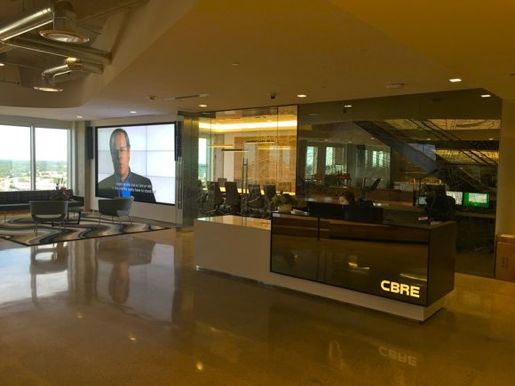
CBRE, a Los Angeles-based commercial real estate company with a global footprint and a presence in virtually every major American city, is consolidating its entire Minnesota team in one chic downtown Minneapolis location. CBRE’s move is the latest in a long string of
companies relocating from the suburbs to MSP’s twin downtowns.
The 34,000-square-foot office, on the 19th and 20th floors of LaSalle Plaza, brings together nearly 200 employees previously housed in Bloomington’s Two MarketPointe and downtown Minneapolis’ Young Quinlan Building.
CBRE’s Minnesota move is part of the company’s global “Workplace 360” initiative, an ambitious plan to reposition the firm as a millennial-friendly innovation engine. According to a press release, Workplace 360 “promote(s) flexibility, mobility and productivity through technology-enabled, free-address and paperless offices.”
In Minneapolis, Workplace 360 means open, airy offices connected by spacious hallways and a custom-designed internal staircase. CBRE’s MSP employees don’t have assigned desks; the bulk of the space qualifies as “collaborative.” (“Employees have the flexibility to choose where they want to work for the day,” says CBRE, “whether at a desk, in a team huddle room or the social cafe area.”) The office is paperless, and designed around employees’ mobile devices, not company-owned desktop computers and printers.
“We understand how the office environment impacts culture, productivity, and talent recruitment and retention,” says Blake Hastings, CBRE’s managing director in Minneapolis. “The nature of work is changing in our industry and we see it every day with the clients we serve.” To paraphrase, CBRE is working to attract and retain more talented young people, and keep them engaged and on point.
CBRE Minneapolis seems off to a good start. Though CBRE’s corporate Workplace Strategy Team oversaw the buildout in collaboration with its Project Management Team, the company did assign key design, decorating and culture choices to local employees — for instance, they selected the “WELCOME TO MINNESOTA” wall mural centerpiece and developed the office wellness program.
“The whole design is inspired by the Mississippi River running through Minneapolis,” says Tiffany Bagley, CBRE Workplace Strategy director, “and fully represents CBRE’s embrace of the concept ‘think globally, act locally.’”

Even if you’ve never been to the Big Apple, you’ve probably heard of Humans of New York — the wildly successful, ongoing photo essay that’s touched more than 20 countries and earned millions of social shares.
New York City has more than eight million inhabitants from all over the world, but it’s not the only place with a multitude of human-scale stories worth sharing. MSP has its very own analog: Humans of Minneapolis, Minneapolis-based photographer Stephanie Glaros’ often poignant look at the joys, sorrows and oddities of life in the urban North.
Glaros started Humans of Minneapolis as an occasional tumblr blog — a useful vehicle for her ample interactive talents. She’s since added a Facebook page and Instagram feed to bring her subjects to a wider audience. Last month, the Minneapolis Parks Foundation announced that Glaros would conduct a “summer-long portrait series profiling visitors to Minneapolis neighborhood parks,” showcased in Humans of Minneapolis’ digital ecosystem and the Park Foundation’s own social properties.
According to the Parks Foundation, Glaros will profile 15 park visitors in all. The portrait series aims to draw attention to Minneapolis’ 160-plus parks, which (per the Parks Foundation) attracted more than six million visitors last year. Shortly after the portrait series’ announcement, the Trust for Public Land announced that Minneapolis had once again earned the top spot in its closely watched urban U.S. park system rankings, continuing a dominant run that dates back to the early 2010s.
“Stephanie’s series will help us begin to tell the stories of the people who use our parks every day and show the multitude of ways people use and love our Minneapolis parks,” the Parks Foundation said in a release.
Some of the stories Glaros captures on the Humans of Minneapolis blog are challenging, to put it mildly. Interviews conducted immediately following Prince’s death were heartbreaking. More recently, she spoke with a young man whose ex-girlfriend’s brother had died violently the previous week; in the interview, he talked openly about his own mortality and agonized about carrying a firearm for protection.
It’s not yet clear whether Glaros’ park stories will hew toward the weighty, or whether they’ll focus on the lighter side of summer in MSP. No matter what the next few months bring, Glaros is excited to explore her beloved, snow-less home city and forge new connections with her fellow Minneapolitans.
“People are reserved here and they don’t want attention, so it can be a bit of a challenge to draw people out,” she told the Star Tribune in April. “I look at that as a challenge to get real and get outside of our shells and make a connection…[t]here’s something magical about connecting with a complete stranger.”
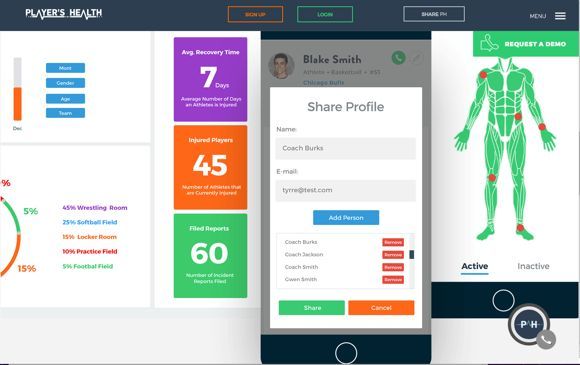
Player’s Health, a sports medicine startup based out of COCO’s Northeast Minneapolis hub, has made quite a name for itself in the short time it’s been in Minnesota. Last week, the company earned top prize at Google Demo Day, arguably the United States’ most visible startup pitch competition. Though the award itself doesn’t have a monetary component, more than 100 Silicon Valley financiers attend Demo Day each year, and the event is widely regarded as one of the world’s best places to raise startup capital.
Case in point: according to the Star Tribune, more than 100 Silicon Valley-based investment firms listened to this year’s 11 pitches.
Though Player’s Health hasn’t raised any funding off the award yet, there’s plenty of opportunity in the weeks ahead. AOL founder and former CEO Steve Case has pledged to personally give $100,000 to any finalist that raises $1 million within 100 days of Demo Day. Player’s Health has a head start: It’s currently in the midst of its first major fundraising push, slated to continue through the spring.
Founded by Chicago native and former pro football player Tyrre Burks, Player’s Health uses data to make youth sports safer for kids, less worrisome for parents, and less logistically challenging for coaches and school systems. The company’s signature solution is a HIPAA-compliant platform that builds and stores complete player profiles for youth sports participants.
These profiles contain a stunning breadth of information: not just personal health data, but also the type of field each kid plays on, the type of equipment used, where injuries occur and more. Over the long term, Burks hopes to tap an ever-growing body of injury data to produce targeted insights about where, how and why injuries occur. School systems and non-academic sports leagues can then use those insights to mitigate injury risk and ensure injured athletes recover properly.
“We manage not just injury, but record proper diagnosis and when patients can come back,” Burks told the Star Tribune. He saw his promising football career cut short by injury. “We need an app that collects this info to better understand the environment and how to make it safer.”
Player’s Health’s platform won’t be fully operational until June, when it begins tracking player injuries as they occur. But that hasn’t stopped Player’s Health from lining up a host of clients from Minnesota and surrounding states — including Minneapolis’ Homegrown Lacrosse, a youth lacrosse league.

On May 13, the University of St. Thomas’s Schulze School of Entrepreneurship hosted at least 50 MSP and Greater Minnesota nonprofit leaders and social entrepreneurs at DesignHack!, a one-of-a-kind event billed as a crash course in “human centered design.” The goal: to leverage the same principles behind simple but radical consumer product improvements, like OXO’s now-ubiquitous kitchen measuring cup with angled 3D fill lines.
DesignHack! Used Stanford University’s five-step design thinking model — which asks designers to approach problems “looking out from the inside, not outside in” — to tackle a core challenge: How do we rethink philanthropy to increase public engagement?
Dr. AnnMarie Thomas and Laura Dunham, who teach at the Schulze School, led attendees through design thinking’s five steps:
- Empathy: Discovering users’ implicit and explicit needs — the learning phase
- Define: Refocusing questions to drill deeper into users’ needs and determine how they can be met through design
- Ideate: Brainstorming creative design solutions
- Prototype: Making those solutions tangible
- Test: Determining whether those solutions work in practice
The typical design project takes weeks or even months, noted Dunham. DesignHack! attendees had just a single workday, so they weren’t able to run through a proper start-to-finish simulation.
But they did get to wander Minneapolis’s skyway system on a busy Friday, pulling aside passersby and asking open-ended questions about their relationship with modern philanthropy. Participants worked in pairs: one lead questioner and one note-taker/observer, with roles flipping periodically.
Per Dunham, they followed some basic design thinking “do’s” and “don’ts”:
- Do listen more than you speak
- Do ask how, then follow up with why
- Do probe for specific experiences and stories, not abstractions or generalizations
- Don’t ask leading questions (“push polling”)
- Don’t monopolize the conversation
- Don’t try to fill silences
- Don’t push the respondent to wrap up or conclude
- Don’t reaffirm your own bias
- Don’t ask what respondents want
In other words, don’t look for empirical conclusions right away. Instead, allow respondents to create their own narratives. “Be more Oprah than Edison,” quipped Dunham.
“Channel your inner two-year-old,” added Thomas. “Ask ‘how this’ and ‘why that.’”
It’s safe to bet that DesignHack! attendees didn’t solve philanthropy’s engagement problem in the course of a single afternoon. But they definitely left Minneapolis equipped with new tools for tackling the complex issues that vex their organizations every day.

Knight Cities Challenge, a massive social enterprise contest supported by the John S. and James L. Knight Foundation, announced the 37 winners of its 2016 competition last week. Two innovative concepts hatched in St. Paul made the cut, taking home more than $250,000 (of the contest’s $5 million total prize) between them.
Front Lawn Placemaking Platform, submitted by The Musicant Group, won about $82,000 — payable over the coming year — to support its goal: “Transforming front lawns from empty expanses of grass to vibrant places full of life through the development of a toolkit that encourages residents to create community hubs on their doorsteps.”
I’m Going to Vote Today, submitted by the University of St. Thomas (UST), won about $170,000 — also payable over the coming year — to put an updated spin on the age-old “I Voted!” trope. Instead of distributing “I Voted!” clothing or bumper stickers at polling places, the initiative hands out “I’m Going to Vote Today” stickers to eligible voters.
The goal, according to UST associate professor for marketing Aaron Sackett, is “behavioral intervention.” In an article released by UST, he explained: “First, sending out this sticker should serve as a reminder for people to make a plan for how and when to vote…[s]econd, the sticker and accompanying message serve as an indicator that voting is a socially desirable action, and that by wearing the sticker they can show both themselves and others that they engage in this desirable action.”
By labeling themselves voters, Sackett added, people wearing the sticker positively affect the behavior of “people who generally have a positive attitude toward voting but who don’t always follow through and vote” — rendering them more likely to vote. Now that his concept is funded, Sackett plans to test it across St. Paul, which has tens of thousands of registered voters.
These two initiatives were among more than 500 submissions. Following a rigorous review, Knight Cities Challenge narrowed the pool down to about 160 finalists, a significant increase over previous years. Knight then subjected finalists to a further round of view before settling on the 37 finalists. According to the organization, Challenge winners hail from 19 cities around the country — most of the markets in which Knight operates.
According to the John S. and James L. Knight Foundation, Knight Cities Challenge contestants must “focus on one or more of three drivers of city success: attracting and keeping talented people, expanding economic opportunity and creating a culture of civic engagement.”
The Florida-based Knight Foundation, which has an active presence in Minnesota but invests nationwide, is sometimes confused with the Minneapolis-based McKnight Foundation. McKnight invests heavily in sectors such as clean energy and sustainability, arts, education and community building, training most of its firepower in the MSP region and surrounding parts of the
North.

Assemble, a new player in MSP’s growing coworking scene, recently opened a 16,000-square-foot coworking hub near the Nicollet Mall LRT station, in the historic 15 Building. Outside the building, Bob Dylan’s gigantic visage
(Eduardo Kobra’s mural) marks the way for Hennepin Avenue pedestrians and cyclists. Inside, entrepreneurs and solo professionals put their noses to the grindstone in a 24/7, all-inclusive shared office.
Assemble’s key differentiator is its pricing model: Unlike many coworking spaces, Assemble doesn’t charge members extra to use certain amenities. The conference room, printer, 24/7 access, coffee (offered in partnership with locally owned Driven Coffee) and cleaning service are included in the price of membership for all members.
Packages start at $350 per month and increase depending on space requirements and employee counts. Until further notice, Assemble lets new members try our the space for one month free. Flexible month-to-month leases are available, and are ideal for growing or seasonal businesses that don’t want to be locked into long-term space commitments. And Assemble is dog friendly, so the office mascot can come along, too.
Assemble offers several workspace options. Stimulation-seeking solo professionals can use Assemble’s shared coworking space — a bullpen-style area perfect for collaboration. Shared workspaces split the difference between collaborative and private space, while glass-walled offices cater to larger teams looking to remain sequestered.
“What Assemble will uniquely bring to the Minneapolis coworking market is twofold. The first is a turnkey solution for a shared office, where everything is included in the cost of your space,” says Phillip Domenico, Assemble co-founder. “And second, it’s a community where we regularly offer networking and business development opportunities to enhance our members’ businesses, yet if they need privacy they can have it in their own space without interruption. Our goal is to listen to our members and provide them with benefits that best fit their work/life style.”
Assemble has at least seven anchor tenants in its downtown Minneapolis space: Synergy Construction, GO Intellectual Capital, Flipboard, Fresh Expertise, Praxis Capital, Ranstrom-Berg Wealth Management and Walden University. The company isn’t ruling out additional coworking spaces in MSP, and is also planning an ambitious nationwide expansion in the coming year: workspaces in Atlanta, Austin, Columbus, Denver, Dallas, Houston, Miami, Milwaukee, Nashville, Philadelphia and Raleigh are slated to come online by next spring.
Once you’ve become a limerick on “Wait Wait…Don't Tell Me,” the NPR news quiz, you’ve arrived, right?
On the March 12 show, Shanai Matteson and Colin Kloecker, who founded the Minneapolis-based social practice arts group Works Progress Studio, were surprised to hear host Peter Sagal and “judge and scorekeeper” Bill Kurtis source their new project, Water Bar, as one of the show’s weekly limericks. The surprising national exposure came hot on the heels of a Minnpost article about the couple’s art and environmental project that went viral, as well as other articles.
Why the explosion of attention? Especially because the Water Bar has already toured to several locations throughout the U.S., including
Crystal Bridges Museum in Arkansas? “It’s a couple of things,” says Matteson. The Minnpost article “had a headline that was easy to share via social media and it kind of glossed over what we’re really about,” she explains. “But I also think people are really interested in water and it’s a hot topic for a number of reasons,” including climate change, drought and the water crisis in Flint, Michigan.
“People are remembering how important water is to our lives, communities, the places where we live,” she continues. “I also realized, looking at the articles, that water is an interesting mirror. When people hear about the project they tend to see things in it that we may not see.” The responses generated by the Minnpost article, for example, “became this mirror about anxiety related to economic development in Northeast Minneapolis--some people thought we were creating a boutique retail space selling 'artisanal' water, which is not what we're doing."
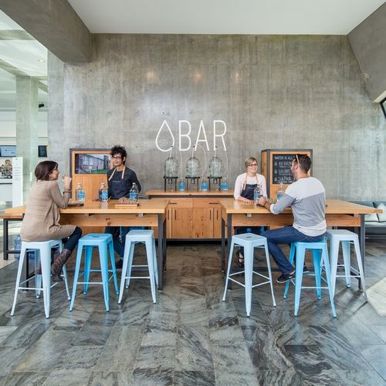
When the Water Bar and Public Studio, as the project is officially known, opens on Central Avenue off Lowry in April, it will be a collaborative public art project or an “art and sustainability incubator or hub,” Matteson says. “It’s a space where artists, designers, researchers and organizers can learn about water and how it touches various aspects of our lives and communities, and share work they’re doing.”
The studio may also show films about water, provide tap water testing, and offer space to artists and organizations that want to work through their ideas about art, water, sustainability and community with like minded people. Currently, Water Bar collaborates with the Holland Neighborhood Improvement Association, the University of Minnesota’s Institute on the Environment, and the Healing Place Collaborative.
But the Water Bar also is a tasting room serving—you guessed it—water. Tap water. “We are not a business, even though we’re playing with the idea of ‘tap rooms’ since there are so many brewery tap rooms in Northeast,” Matteson says. “But we really will only have tap water. It won’t be for sale. It’s free. And we’re doing a lot more than that. We’re an art space.”
Matteson and Kloecker had intended on a quiet launch for the project, while they continued fundraising for the SIP (studio in progress) Fund. Now they’re planning a series of interactive events open to SIP funders first, then the general public; some pop-up Water Bars with guest bartenders; and a real opening during Art-A-Whirl in May.
For now, though, the Water Bar is “doing what we’ve always intended it to do,” Matteson says. “Spark conversation.”

Tuesday, February 09, 2016
Phantom Records AMG-TCLA, an ascendant Minneapolis-based record label, hopes to raise MSP’s already significant profile as a creative hub for the auditory arts. Phantom is the brainchild of founder Alex Guerrero (stage name: Dweedo). He pulls quintuple duty as a producer, songwriter, talent scout, manager and promoter.
“Our inspiration for starting up a record label is to give Minnesota the attention it deserves within the music industry,” says Guerrero. “We want to continue the work of former producers like Jimmy Jam and Terry Lewis, who put MSP on the map. …[B]ut we [also] want the world to see that...amazing sounds are being produced outside New York, Los Angeles and Chicago.”
Guerrero has help from four other MSP music notables. Ariel Padilla (stage name: A.P.) serves as associate producer. Julian Scott (JuChefe) is the in-house arranger and DJ. Rob Skalsky (Robby Cur$ed) is co-talent scout, assistant editor, photographer/videographer and musical artist. Lou Oberg (J3b Adea) is lead graphic designer and co-photographer/videographer. And Cameron McCrimmon (Malovinci) is a promising artist.
Record labels come and go. Phantom plans to stick around by adding a human touch to an industry that’s increasingly focused on flashy, transient trends — good for the bottom line, perhaps, but not for music lovers or artists.
“Our goal is simple: we want to make music that you can feel and relate to on another level,” explains Guerrero. “We want to be more than just a record label. We want to be a part of our listeners’ experience.”
“Phantom Records is all about putting emotion back into music,” he adds.
According to Guerrero, Phantom is actively recruiting “hardworking, dedicated artists” willing to work with a startup label. He’s also hunting for “influential” artists capable of lending visibility to a nascent label in a crowded marketplace.
“We plan on keeping up with the latest trends, while having veteran artists over time help groom younger artists coming into the industry,” says Guerrero. “We want our artists, our company and our values to feel like they're part of a really special movement that brings people together from all walks of life.” Phantom Records plans to keep its operational base in MSP for the foreseeable future.

Tuesday, January 26, 2016
Accolades for MSP’s enviable work-life benefits are flying faster and thicker than snow this season, and it’s getting tough to keep up with the latest hits. Earlier this month, influential personal finance site NerdWallet dropped the latest data-driven love letter to the Twin Cities: a Best Cities for Young Entrepreneurs roundup that placed MSP fifth, ahead of regional rivals (Madison) and heavy-hitting coastal tech hubs (Seattle and Boston).
The study examined about 180 of the country’s largest metro areas and assigned a young entrepreneur friendliness score to each. MSP earned its fifth-place spot thanks to two data points in particular: unemployment rate and SBA loan value per 100,000 residents.
On the unemployment front, MSP is peerless among major cities. Metro-wide unemployment was just a tick over 3 percent as of September 2015, the latest month for which final figures were available as the study went to press. That’s lower than San Francisco (3.4 percent), Denver (4.2 percent) and Washington, D.C. (7.5 percent).
The SBA loans metric is admittedly wonkier, but it’s a critical factor in local small business health. Many startups rely on SBA funding to get off the ground and gain traction; an adequate SBA loan is often the difference-maker for businesses navigating the dreaded “death zone” — the first two to three years of existence.
According to Jonathan Todd, the study’s author, the SBA loan factor counts for 20 percent of the overall score, more than unemployment rate, small businesses per 100 residents and other factors. MSP ranked seventh, just behind famously entrepreneurial Austin and industrious Salt Lake City — and well ahead of major metropolises like New York City, which ranked 52nd.
In the study, Todd notes that small business success comes down to a confluence of other factors: cost of living, educational attainment and existing resources for entrepreneurs. MSP has long led most other big cities with regards to cost of living and educational attainment. Until recently, though, it hasn’t done so hot on the admittedly hard-to-measure entrepreneurial resources metric.
Here’s a sign of change and that MSP’s startup-friendly secret is finally getting out: Industrious, a well-funded coworking company with outposts in more than a dozen major U.S. cities, recently opened a gleaming new space in the North Loop. Industrious’s arrival comes on the heels of COCO NE’s debut — joining the swelling ranks of private coworking spaces around the Twin Cities.
Entrepreneurs take note: MSP is open for business.

Tuesday, December 15, 2015
Barely six months after its launch, Minneapolis women’s health startup Ova Woman is taking the reins as a national thought leader on issues routinely — and entirely without justification — dismissed as taboo.
Elise Maxwell, Ova Woman founder and CEO (and full-time Carlson School of Management MBA student), calls Ova Woman “the [country’s] only comprehensive, puberty-to-post-menopause women’s health e-commerce community.”
Maxwell is funding Ova Woman with the proceeds from two entrepreneurship competitions — $5,000 from the 2015 Acara Challenge and $31,000 from the 2015 MN Cup — and a $5,000 Sands Fellowship grant. According to remarks at October’s Minnesota Venture Conference, she’s targeting a $500,000 raise by June of 2016 and $1.6 million by the end of 2017.
Ova Woman publishes a lively mix of frank, useful content through four professional, if not always polished, channels: the Ova Vlog, a video blog usually featuring Maxwell and at least one friend or colleague; Your Questions, Our Answers, an in-depth question-and-answer resource with input from clinicians; Ova Stories, a long-form content portal; and The Speculum podcast, which “explores different intimate health issues,” says Maxwell.
Ova Woman is unsparing in its treatment of taboo topics. The inaugural Speculum podcast, for instance, devotes more than 20 minutes to the topic of douching; the second gives similar play to genital exams and anatomical awareness.
Maxwell wants to turn Ova Woman into an authoritative resource for fact-based information about women’s health, including potentially embarrassing issues that many refrain from discussing in public.
When it comes to women’s health issues, “[t]rust shouldn’t just mean a medical practitioner’s voice,” says Maxwell. “Other women’s opinions and experiences are valuable as well.”
Maxwell stresses that Ova Woman’s content isn’t meant to replace or counterbalance clinical advice. In the short term, her aim is to create a friendly, useful portal that offers actionable advice: a crowd-sourced alternative to WebMD.
Ova Woman’s longer-term plan — and the reason for its ambitious fundraising goal — is to build out a comprehensive retail platform with common and lesser-known products for a wide range of women’s health needs. There’s a huge market to reach: More than 100 million U.S. women experience incontinence, painful intercourse or period leaks, according to Ova Woman.
Ova Woman won’t manufacture its own products, at least to start. Instead, Maxwell plans to aggregate the best women’s health gear on the market for sale on its website, along with detailed, unbiased educational material, reviews and testimonials culled from a growing network of Ova Woman product testers: a cross between Amazon and Consumer Reports, with a laser focus on women’s health.
If Ova Woman’s retailing efforts are successful, says Maxwell, the company may launch its own white label — literally stamping its seal of approval on the best women’s health products available.

Tuesday, November 17, 2015
Thread Connected Content is MSP’s newest independent creative agency — and it’s an overnight powerhouse, thanks to its cofounders’ combined decades of agency experience, a multidisciplinary approach to creative campaigns, a unique penchant for high-touch storytelling and one of the most unique internship programs around.
Launched in July on St. Paul’s East Side, Thread already has 30 employees and is hiring for a handful of additional positions: digital designers, account managers and others as the need arises.
Thread’s client roster, burnished by its cofounders’ and employees’ past professional relationships, is already wildly diverse: blue chips like 3M and Target coexist comfortably alongside public institutions like Mia, and MSP originals like The Wedge Co-op and
FOOD BUILDING.
“Our client strategy is a three-legged stool,” says Kim Rudrud, vice president. The first leg is “large companies with multiple brands and distinct visions,” like 3M and General Mills, she says. The second is the middle market, broadly defined: mostly MSP-, Minnesota-, and Midwest-based companies with eight- or nine-figure annual revenues and “similar cultural philosophies,” says Rudrud. And the third is “passion projects,” clients that more traditional firms might work with on a pro bono basis to burnish their creative bona fides and impress deeper-pocketed prospects.
“We’re not looking to leverage [the third leg] so that someone bigger and better walks through our door,” says Rudrud. “We’re actually passionate about helping these clients.” Earlier this year, Christiana Kippels, Thread’s director of accounts and business development, brought in a friend who’d just purchased St. Paul’s Treadle Yard Goods and sought to rebrand on a shoestring budget.
Thread’s diverse client base is reflective of its cofounders’ and employees’ diverse professional backgrounds. Many came from top-tier MSP creative agencies, like Campbell + Mithun (now simply Mithun) and Olson. Some cut their chops as internal communications and branding gurus: Kippels came over from
Thymes’ product development department. Others have boutique backgrounds: Rudrud honed her storytelling intuition at WomanWise, a marketing research consultancy that “uncovers insights into what makes people tick,” she says.
Thread’s diverse staff, in turn, supports an impressive range of in-house capabilities: market research, brand strategy, copywriting and graphic design, technical digital marketing work, video production and more. “We do have outside research partners,” says Rudrud, “but we handle the bulk of our research and all of our production work internally.”
According to Rudrud, Thread’s in-house approach sets the agency apart from MSP’s smaller independents — and even many of the region’s biggest players, which tend to farm out labor-intensive production to specialized studios. “It’s not an accident that we call ourselves a ‘studio,’” says Rudrud.
Thread has a couple other differentiators up its sleeve, too. Compelling stories, not overcooked data, form the nub of each Thread campaign. According to Kippels, other agencies have “veered away from the creative side of marketing and branding,” creating an opportunity for an agency willing to mount comprehensive, authentic and human-scale — if subjective — campaigns.
“Human relationships are messy in the best possible way,” she explains. “More than ever, [marketing] is about creating useful, authentic experiences.”
When it comes to messy and authentic, thread definitely walks the walk. The agency’s website deftly blends what you’d expect from a well-produced business property — succinctly described services, employee headshots and bios, “about us” copy — with edgy, interactive elements that drive interaction. Each service description, for instance, ends with an open-ended question and live tweet button, inviting visitors to loop their followers into the conversation. Thread’s “Connect” page is a constantly evolving social feed that changes daily. Even its website logo is interactive, morphing and changing color in response to qualitative social media interactions (“a major development challenge,” says Rudrud).
In its employees’ admittedly biased collective opinion, Thread offers MSP’s best creative-industry internship. Dubbed “Spool,” Thread’s three- to six-month program is “not your typical internship,” says Rudrud. “Spoolers” hail from diverse academic backgrounds — from graphic design and comp sci to English lit — and can choose from several openended programs (“blogs to code,” “apps to animation,” and others).
“In many cases, we just give [interns] cameras, send them out into the world and tell them, ‘See what you can find,’” says Rudrud. The current crop recently spent a week producing and editing creative content onsite at the FOOD BUILDING, for instance. The results, says Rudrud, were “amazing.”
“The Spoolers are our Ph.Ds of pop culture,” says Rudrud. “As digital natives, they see the world differently — they provide us with insights that we don’t have and help us tell stories that we couldn’t tell on our own.”
Tuesday, October 20, 2015
Bringing a new medical device to market is a costly, time-consuming process. Innovations that seem like a slam dunk in the research lab often turn out not to work as intended during development. Clinical trials require minute, painstaking attention to detail. Federal regulators, understandably, demand proof that any new device is reasonably safe and works as its manufacturer claims. Each of these steps requires adequate funding and skilled manpower.
At the end of it all, Medicare, Medicaid and private insurance firms must be willing to reimburse providers that use the device. With rare exceptions, devices that don’t qualify for reimbursement—a highly complex consideration—fail to find traction in the market.
“Even with unlimited funding, it can take two years or more to complete the process for relatively simple medical devices,” says FocusStart founder and CEO Dr. Daniel Sigg.
Sigg and FocusStart co-founder Peter DeLange, who previously ran a successful medical device startup called Devicix (recently purchased by Nortech Systems, a local medical engineering company), had each spent years searching for a better early-stage device development model. When they met a few years back, they quickly realized their professional skills complemented each other.
So they founded FocusStart, a St. Paul startup that shepherds promising medical technologies through the tricky testing and development phase, refines validated devices for commercialization, and seeks strategic partners (typically multinationals) to complete the regulatory approval process and actually bring devices to market. FocusStart’s model is less capital-intensive than traditional medical device development models, though the company still assumes risk for technologies that don’t pan out during development.
FocusStart currently has four promising technologies in its portfolio: a cardiac product that may reduce blood clot risk following certain surgical procedures; a urological catheter that may reduce the risk of certain infections; a “smart” respiratory inhaler; and a “tissue tension sensor” that may promote better outcomes following partial and total knee replacement procedures.
Sigg and the team are devoting substantial energy and attention to the tissue tension sensor, which is capable of directly measuring ligament tension without requiring an invasive cut. Direct measurement enables surgeons to properly “balance” the knee during the replacement procedure, reducing the likelihood of complications or outright failure.
The sensor could potentially benefit other orthopedic procedures, such as rotator cuff and ACL surgeries, though FocusStart is concentrating on knee replacement for now. According to Sigg, it also has potential as a training tool for newer surgeons, who lack the intuitive “feel” of more experienced operators.
Although each technology is different, FocusStart’s development approach is fairly standardized. First, the company approaches a research institution to work out a licensing agreement for the technology. FocusStart works with the University of Minnesota, Mayo Clinic, the University of Zurich (in Switzerland) and an Israeli inventor.
“We quickly found that these agreements are fairly standard, with some variation,” says Sigg.
FocusStart generally would pay a royalty on future sales of the product, possibly with an equity component to sweeten the deal for the institution should the technology find its way into a marketable device.
“We find it easier to develop relationships locally,” says Sigg, adding that his Swiss background (he grew up in Switzerland and attended medical school at the University of Basel) probably helped with the Zurich partnership.
FocusStart’s lean model helps, too. “Once [our partners] understood our approach, we become more successful in finding very interesting technologies,” says Sigg. And the combined expertise of the firm’s principals—Sigg was a board-certified anesthesiologist and subsequently amassed almost two decades of medical research and development experience, while DeLange had the business chops to build Devicix into a successful concern and boasts insider knowledge of the medical device field—doesn’t hurt.
But that doesn’t mean swift success is assured. FocusStart has been “fortunate” to receive National Institutes of Health grants during the early going, but the company continues to seek government grants and private funding—a process that will likely continue as Sigg and DeLange seek out and develop promising new technologies.
There’s no such thing as a perfect batting record in the medical device business. “As we do our own work, we may find challenges or problems that weren’t apparent previously,” says Sigg. “Occasionally, you have to know when to say ‘that’s it’ and walk away [from a technology].”

Tuesday, October 13, 2015
In August, downtown Minneapolis-based healthcare incubator TreeHouse Health teamed up with LifeScience Alley, a local biotech accelerator, for a well-attended demo day called Healthcare Innovation Is Alive and Well in Minnesota. According to Dr. John Blank, a TreeHouse Health cofounder (and, previously, a pediatric oncologist and health system administrator), the event supported TreeHouse’s ambitious-sounding mission: to turn MSP into the “Silicon Valley of medical technology innovation.”
Healthcare Innovation is Alive and Well featured lectures and workshops on pressing issues facing early-stage medical technology and life science companies — raising capital, bringing ideas to market, becoming cashflow-positive and more — plus an open, craft brew-fueled networking hour with some of the region’s top healthcare decision-makers.
But the real stars of the show were the innovative startups tapped to pitch their solutions to the high-profile crowd. Many were current TreeHouse Health tenants: Cellanyx, whose diagnostic solution could revolutionize the industry’s approach to certain cancers; PerkHealth, a virtual health coaching app that made
The Line’s
10 life-changing startups list last year; and VitalSims, an education platform for medical professionals.
TreeHouse Health’s portfolio is compelling. But Blank believes that if MSP is to live up to TreeHouse’s “Silicon Valley” promise, more needs to be done to support current and future medical technology entrepreneurs. At the moment, MSP lacks a critical mass of native venture capitalists willing to go out on a limb for potentially disruptive healthcare ideas.
Blank cites an early-stage health IT firm, currently in residence at TreeHouse Health, that had struggled to meet a $2 million funding round target with local backers despite a proven technology solution and more than $1 million in annual revenues. After six or seven months of banging on doors in MSP, the firm broadened its search and eventually completed the round with outside investors.
“There are plenty of investors interested in the health IT space,” says Blank, a Massachusetts native, “but they’re mostly based on the East or West Coasts and tend to fly over Minnesota.”
That’s why Blank and the TreeHouse team are fanatical about boosting the visibility of the companies in and outside of TreeHouse’s portfolio, starting with initiatives like the Life Science Alley collaboration.
TreeHouse is also working to attract promising companies that began life in regions better known for tech innovation, like Boston (arguably the capital of the U.S. life sciences industry) and the Bay Area. According to Blank, TreeHouse currently has one tenant from each region, with an eye for more.
A key selling point for TreeHouse and MSP in general, he says, is location. “You can easily travel anywhere in the continental United States and back within a 24-hour period, or even in the same business day” from MSP, says Blank. He mentions a TreeHouse tenant that recently flew overnight to Seattle for morning meetings with hospital executives there, then caught an early-afternoon flight back in time for dinner—a nearly 3,000-mile round trip in less than 24 hours.
“That kind of turnaround isn’t possible when you’re based on the coasts,” says Blank.
Another big advantage for MSP: a diverse array of established medical “payers” (health systems like Mayo and HealthPartners), insurers (like UnitedHealth Group), and device/technology manufacturers (like Medtronic and St. Jude Medical).
In other words, local life science and medical technology startups that
do manage to find funding here are apt to find lots of paying customers close by, regardless of niche—an important measure of security for any early-stage company. Over the long term, that existing customer base, coupled with a healthy dose of Minnesota nice, should prove enticing for coastal entrepreneurs looking to relocate to a cheaper, business-friendly locale.
“[MSP] is one of the few places in the country where you have Fortune 100 companies in every major healthcare sector,” says Blank. “And it’s a friendly enough place that you can make real progress toward building a professional network within a few days.”

Tuesday, October 13, 2015
Healthcare spending accounts for a huge chunk of national GDP. And with dozens of major providers, insurers and medical device companies headquartered in and around MSP, the sector is absolutely critical for the local economy.
But the healthcare industry is notoriously inefficient. “Up to 30 percent of every dollar spent on healthcare is wasted due to unnecessary variations in care,” says Patrick Yoder, founder and CEO of LogicStream Health.
Yoder and LogicStream co-founder Dan Rubin want to bring healthcare delivery into the 21st century by making hospitals, clinics and individual medical professionals smarter about the care they provide.
Dozens of hospitals around the country believe in LogicStream’s solutions. Fairview, one of MSP’s largest hospital systems, is a current client; so is Yale-New Haven, a prestigious East Coast provider. LogicStream has nearly 500 ambulatory (walk-in) clinics in its system, too; not bad for a company that got its start just two years ago and still offices out of TreeHouse Health, a downtown Minneapolis healthcare business incubator.
LogicStream is built around the aptly named LogicStream Intelligence Platform, an algorithmic “learning system built for standardization,” as Yoder described it in an October 1 presentation at the MN Venture Conference. The goal of the LogicStream Intelligence Platform is to “improve clinical quality, provider satisfaction and cost efficiencies throughout the enterprise [while reducing or even eliminating] some critical hospital acquired conditions,” according to the company’s website.
While the technical aspects of LogicStream’s platform are complex, the gist is simple: It runs the huge amounts of data generated by each patient’s journey through the hospital or ambulatory clinic through a constantly evolving algorithm that spots trends and develops “rigid, clinically appropriate” (in other words, medically sound) protocols to reduce the risk of complications or waste.
LogicStream’s platform is designed to develop protocols rapidly, without hands-on human guidance. The platform’s speed and accuracy allows it to cover potentially thousands of life-threatening conditions that can affect hospital and clinic patients.
One early success: venous thromboembolism, a common clotting condition responsible for thousands of hospital deaths each year. According to a LogicStream case study, one client “reduced the rate of venous thromboembolism (VTE) in post-surgical patients by more than 80%, resulting in a significant overall decline in associated morbidity and mortality and $1.1M in cost savings.”
Yoder notes that, in most cases, reducing VTE risk is straightforward: Upon admission, “a patient’s care team needs to assess his or her individual risk for clots,” he says, not rely on statistical data that may not be relevant to the situation. LogicStream’s VTE protocols include an individual risk assessment; most electronic health records (EHRs), which clinicians use to track patient data and monitor condition changes, don’t.
As more clients discover LogicStream’s solution, Yoder expects the LogicStream Intelligence Platform to scale rapidly. At MN Venture, he projected three- to four-fold growth in total protocol content between Q3 2015 and Q1 2017, a huge boost to the platform’s power and reach. The company currently has 12 employees, and that count is likely to increase through 2016.
Job Listings
- Executive Vice President of Sales, Minneapolis (downtown)

Tuesday, October 06, 2015
Any attentive MSP citizen knows that F. Scott Fitzgerald, author of
The Great Gatsby, was a born-and-bred St. Paulite. Fitzgerald’s most famous novel explored the excesses of 1920s “Jazz Age” culture in the New York City area, but St. Paul was a pretty hopping place back then, too. Now, F. Scott Fitzgerald’s Jazz Age tour, hosted by St. Paul pastry chef and local historian Joan Mathison, lets you experience the era firsthand.
“I looked at the assets that would differentiate St. Paul from Minneapolis and appeal to a wide audience of travelers and potential residents,” explains Mathison, founder of Adventures with a Locavore. “It also happens that the 1920s is my favorite era in history.” Her next tour commences on Saturday, October 10.
Mathison’s tour, a walking excursion that winds through downtown St. Paul, hits more than a dozen examples of Art Deco design—an ascendant architectural style during the 1920s.
“St. Paul is the only city designated as a Distinctive American Destination by the National Trust, so I decided to focus the tour on historic preservation,” she says.
Mathison also conducted a fair bit of original research during the run-up to her inaugural tour this year. She was particularly intrigued by the old Kilmarnock Bookstore, which (according to period maps) sat at the corner of 4th and Cedar in downtown St. Paul.
Founded by a wealthy intellectual with a penchant for rare books and managed by a talented, aspiring writer (Thomas Boyd of
Through the Wheat fame), the Kilmarnock was never financially successful. In fact, it lasted less than a decade. But for a brief period during the early 1920s, it was the haunt for the cream of the American literary crop. On cold winter afternoons, Fitzgerald and other young writers met around the fireplace in the Kilmarnock’s smoky back room to trade stories and inspiration.
“The important thing I learned from that research was how critical collaboration is to innovation,” says Mathison. “The young writers that gathered in the back room of the avant-garde Kilmarnock Bookstore to talk about their work and other books...did the best work of their careers during those few years in the early 1920s.”
As an ode to the Jazz Age’s literary side, Mathison chose to pair the tour with three well-known books (not all written in the 1920s):
Silent Spring by Rachel Carson, a nod to “St. Paul's sustainability evolution;”
The Death and Life of Great American Cities by Jane Jacobs, which ties in to former St. Paul mayor George Latimer's downtown revitalization efforts; and, naturally,
The Great Gatsby.
The Kilmarnock inspired Mathison to connect with the just-as-vibrant community of modern artists and makers who live and work in downtown St. Paul. Mathison produced a “Meet the Makers” guide highlighting some of downtown’s top creatives; every tour-goer gets a complimentary copy.
Featured makers and artists include Susan Brown of Mademoiselle Miel, Stephen Gallilvan of Leprechaun's Dreamcycle, Alicia Hinze of The Buttered Tin, Jeff Moriarty of
Tin Whiskers, Monica Larsen and Bill Moran of Hamilton Ink Spot, and Jan Selby of Quiet Island Films.
John Anfinson, superintendent of the Mississippi River & National Recreation Area, Lee George of the James J. Hill Center, and Andy Sturdevant of Springboard for the Arts are also involved.
Longer-term, Mathison wants to bring her special brand of walking tour to other MSP neighborhoods. “I'm curious about 38th and Chicago [in Minneapolis], and Lake Street is so amazing,” she says. “The more tours we can offer in the Twin Cities, the higher we’ll raise our profile as a tourist destination.”

Tuesday, October 06, 2015
MSP’s rapidly growing pro-pollinator community is turning the region into an urban oasis for honeybees and other pollinating insects, raising the likelihood that future generations will know the joys of easily accessible fresh produce and biodiverse green spaces.
But plenty of intrepid pollinator entrepreneurs are focused on the here and now. Susan Brown of Mademoiselle Miel, a hyper-local sweet treats company based in downtown St. Paul, was an early evangelist for pollinator power—and continues to inspire a growing cohort of makers, chefs and educators who earn a living at the intersection of
urban agriculture, environmental stewardship and old-fashioned craftiness.
Mademoiselle Miel is a “beekeeping chocolatier” specializing in rich chocolate honey bon-bons, many wrapped in edible 23 karat gold leaf—“a brilliant union of elegance and raw nature,” according to Brown’s website. The bon-bons come in several varieties, including a decadent Scotch infusion and various seasonal flavors.
The honey for Brown’s bon-bons comes from hives situated on rooftops throughout MSP—for instance, at Union Depot (near Brown’s downtown St. Paul headquarters) and atop
Tiny Diner in Longfellow. The bees collect pollen from whatever flowers happen to be in bloom, providing Brown’s creations with an ever-changing array of local flavors.
Brown has been fascinated with bees and honey since she her youth. Ironically, though, she hasn’t always been a fan of honey’s taste. “I didn't actually like the taste of honey when I was young,” she told CityPages earlier this year. “I just started cooking with it because I was trying to eat in a way that made me feel good.”
In the intervening decades, Brown embarked on a successful cooking and catering career that found plenty of uses for the sticky substance. But she didn’t start making honey full-time until 2011, when she launched Mademoiselle Miel in St. Paul.
Hungry for a hyper-local alternative to sickly sweet candies and ho-hum storebought honey without a distinctive terroir, MSP foodies embraced Brown’s concept with gusto. Her creations quickly found their way into high-end cooking stores like Cooks of Crocus Hill and crunchy grocery outlets like Seward Co-op.
Brown’s products have since appeared in prominent hotel and restaurant properties around the area: high-end Minneapolis hotels like the Hyatt Regency, W Minneapolis and Le Meridien Chambers are customers, as is Surdyks Flights (at MSP International) and the Walker Art Center.
More exciting still, Mademoiselle Miel has lately joined a growing list of successful Minnesota exports. Brown’s sweet creations aren’t quite as well-known or widely available as SPAM and Post-it notes—yet —but they’re nevertheless available at select boutiques in New York City, Seattle and the Washington, D.C., area. More accounts could be in the works, though Brown’s production capacity is somewhat limited by bee, hive and rooftop counts.
Tuesday, September 22, 2015
The Minneapolis Idea eXchange (MiX) was launched a year ago during an interactive event at City Center featuring city leaders, performances and networking between the hundreds of attendees curious about MiX. The brainchild of the city’s Downtown 2025 Plan’s Festival of Ideas committee, MiX’s purpose is to bring together citizens and visitors with energetic thinking and civic engagement in order to further Minneapolis’ already considerable vitality.
On September 28, and October 1 and 2, MiX builds on its momentum with a free speaker series created in collaboration with Westminster Town Hall Forum. Pete Docter, a Bloomington native who helped create the blockbuster films “Toy Story,” “Wall-E,” “Up” and “Inside Out” with Pixar Animation Studios, speaks on Monday, September 28 (7 p.m.), on “Inside the Creative Community: The Power and Process of Animated Film.”
Later in the week, on Thursday evening (7 p.m.), October 1, author and social justice advocate Tavis Smiley will galvanize audience members with his talk, “No One Left Out: Creating Communities of Justice.” Friday, October 2, at noon, Minnesotan Dan Buettner — explorer, educator and three-time world record holder for endurance bicycling — discusses Blue Zones, the organization he founded to help people live longer, healthier lives.
The overall idea behind the series, says Mary Shaffer, co-chair of the MiX organizational committee, “is to inspire people to think about how they want to live, work and play in their city.” To that end, activities will also take place outside of Westminster Presbyterian Church (the location for the speaker series), at the corner of Nicollet Mall and 12th Street.
“We’re not only offering participants a chance to hear these high caliber, nationally recognized speakers, but we’re also activating the area outside the church to bring new energy to that part of the city and further conversation,” Shaffer says. The Independent Film Project will capture attendee responses to Docter’s speech and their thoughts about the future of Minneapolis; a screening of a Docter film may also take place. Brave New Workshop will host improv workshops in conjunction with Smiley’s talk. The downtown YWCA will offer fitness classes and the Minneapolis Bike Coalition will be present for Buettner’s appearance.
“For last century, Minneapolis has been a leader in innovation,” says Rev. Dr. Timothy Hart-Andersen, senior pastor, Westminster Presbyterian Church, and chair of the MiX committee. “MiX is simply picking up on the innovative, creative spirit of civic engagement in our city. The three speakers will each bring fascinating and provocative perspectives to the question of how we can be a better city and better citizens.”
Continuing, Hart-Andersen adds that, “Part of what makes Minneapolis work so well is the social connectivity, and the civic engagement, not only inside board rooms, classrooms, labs and churches across the city, but also over a beer and something good to eat. The space we’re activating at the end of the mall will give people the opportunity to enjoy food and beverages, share time together and further the conversations that began with the speakers.”

Tuesday, September 22, 2015
There’s about to be a new way for amateur and professional musicians to collaborate on original music without regard for geography — and it’s made in MSP.
Record Together, an innovative recording and idea-sharing platform developed and promoted by MSP brothers Scott and Mike Bishop, is nearing the launch of a completely revamped application that allows multiple musicians to collaborate on the same song, no matter where they live or whether they have access to sophisticated instruments and recording equipment.
Think of Record Together as a virtual, remote music studio that connects musicians who’d otherwise never even hear of each other, let alone meet up for a recording session. Users lay down one or more tracks — anything from an isolated piano line to a four-piece band’s guitar, bass, drum and vocal tracks. They then “draw in” outlines for other tracks (for instance, a vocal harmony to accompany the piano line) using automated music software and publish to Record Together’s online marketplace. Once published, other users record their own tracks to replace the drawn-in outlines and create a whole (or at least more complete) composition.
Record Together is intentionally designed for musicians of all ages, abilities and levels of seriousness. “We cater to professional jazz musicians with mindblowing musical skills and years of experience,” says Mike Bishop, “along with high school kids just messing around with a guitar or saxophone in the basement.”
The Bishop brothers fleshed out the revamped Record Together platform with non-technical, cost-conscious users in mind. According to Scott Bishop, Record Together isn’t the only cloud-based music recording solution that empowers cross-border collaboration. But musicians would be hard-pressed to find a simpler, more cost-effective option.
“Access to a professional recording studio is a major barrier to entry for most musicians,” he says, “due to the high cost of reserving studio space and the limited amount of space available.” Musicians who record demo tapes or digital imprints on their own solve the cost problem, he adds, but sacrifice collaborative potential and sound quality.
“Our objective with Record Together is to reduce recording expenses and remove every possible barrier to enjoyment and creativity,” says Mike Bishop. “We want to move users closer to their end goal — making great music.”
The updated Record Together app replaces a legacy platform born in 2011. The legacy platform was built around “opportunities” — calls for single-track contributions to unfinished songs. For each opportunity, users submitted recordings that fit the stated requirements; the opportunity’s poster then selected the winner and paid the creator an agreed-upon sum. The new platform is still transactional — “We want users to get something back for their contributions,” says Scott Bishop — but the “draw in” feature allows for a more seamless and expansive collaboration process.
Although the Bishops are coy about when the new platform will roll out to the public, they’re not shy about their plans or ambition. The brothers are currently putting out feelers for a seed funding round, says Scott Bishop, in the hopes of scaling the platform and ensuring that “everyone who wants to use it will be able to from day one.”
After that, the sky’s the limit. “We believe that Record Together has the potential to do for music what YouTube did for video,” he says.

In February 2015, Minneapolis startup Vidku raised $17 million in a 17-day Series A funding round led by Arthur Ventures, a Fargo-based venture capital group. The speed and size of Vidku’s fundraising effort was unusual: According to data from CrunchBase, the average Series A raised $6.9 million in 2014 and it often takes months to close a successful round.
So it’s no surprise that MSP’s investors and innovators sat up and took note of Vidku’s breakout success. CEO Jim Leslie attributes his company’s achievement both to the far-reaching capabilities of Flipgrid, its core “asynchronous video sharing” product, and the boundless belief of Vidku’s 35-plus employees.
“Our investors weren’t interested because they knew who [Vidku’s leaders] were or trusted us to execute,” says Leslie, a self-described “serial entrepreneur” who ran a handful of successful firms (and sold his most recent venture for a cool $100 million in 2011) before joining the Vidku team. “The passion of our entire team regarding Flipgrid’s future possibilities was infectious — our investors got as excited as we were” about Vidku and Flipgrid.
Users believe in Flipgrid, too. According to Leslie, the product has hosted more than 3 million video shares since its January 2014 launch, spreading chiefly through word of mouth. (Vidku has no formal marketing operation to speak of, though that may change in the future.)
Flipgrid admins, typically classroom educators, populate “grids” with video or text questions, prompting video responses from student users. Everyone with access to the grid can see and share the responses. There’s no limit to each grid’s capacity for questions and responses, though admins are limited to a specific number of grids per year — typically five to 10, or roughly one per class for full-time educators.
Though Flipgrid was originally designed for educators, Leslie is quick to point out that about 20 percent of the platform’s volume is devoted to non-educational use. Private businesses and government agencies use Flipgrid as a collaborative tool, while wedding planners and religious institutions leverage it to create more social events and environments.
“Flipgrid is a growing, powerful and highly effective technology tool that’s getting stronger all the time,” says Leslie. Following Vidku’s “design first” imperative, “we’re constantly developing new ways for users to participate.”
Vidku’s development activities have accelerated since the company spun out from an eight-person University of Minnesota team led by Dr. Charles Miller. Miller’s team is responsible for designing and building out Flipgrid’s base technology and critical elements. Leslie and co-founder Phil Soran, also a wildly successful tech entrepreneur, caught wind of Miller’s innovation and offered to form a private company capable of turning Flipgrid into a disruptive technological force.
“We were only interested in [spinning Flipgrid out of the U and forming Vidku] if [Miller’s] entire team was on board,” says Leslie. He didn’t need to worry: The response was an enthusiastic “yes.”
For Flipgrid’s core team and the U itself, the transition to private enterprise has thus far been smooth. All eight team members remain on staff at Vidku, generously compensated for their efforts and diligently working on the next big thing.
Perhaps more importantly, the U is a major shareholder in Vidku; Vidku’s success is quite literally the U’s success. Such public-private synergies, wherein universities drive innovation and investors provide the capital necessary to bring transformative ideas to market, are commonplace in established tech centers like Boston and Silicon Valley, says Leslie, but less so in MSP.
“A strong public-private linkage is the hallmark of a healthy entrepreneurial community,” he says. “We’re on the cusp of that here” in MSP.
In addition to Flipgrid, Vidku also offers a video-based assessment tool called Avenue. “Whereas Flipgrid is suited for discussions” and other forms of knowledge and experience delivery, Leslie explains, “Avenue is ideal for more formally assessing knowledge.”
Vidku’s team also handles development work for Passport, a language-learning application initially developed by St. Paul-based EMC Publishing. Though Vidku doesn’t own Passport, Fligrid and Passport are kindred spirits with the same lofty goal: reducing friction and improving knowledge delivery in the classroom.
Later this year, Vidku plans to launch an application that offers a “significant enhancement” to Flipgrid’s capabilities, says Leslie. The new update “is the first tangible fruit of our intensive development efforts” since spinning off from the U, he adds, though he’s mum on the software’s specifics.
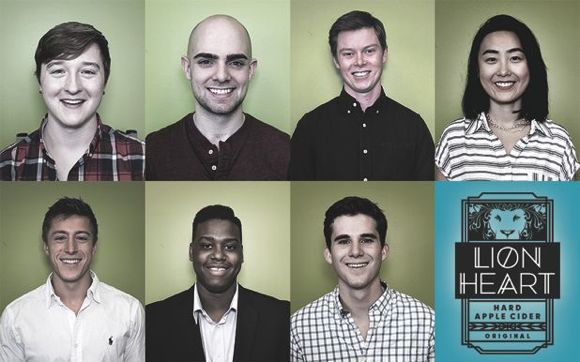
Seven recent graduates of the University of Minnesota, who met in the Carlson School’s Entrepreneurship in Action class, are taking the course’s title to heart. Within weeks of coming together last fall, the group had hatched an idea for a homegrown premium hard cider brand called Lionheart Cider.
Thanks in part to ample startup funding secured through Entrepreneurship in Action, Lionheart was a student division semi-finalist in the 2015 MN Cup — a huge leap for a concept that has yet to see its first birthday.
Lionheart closed its first production round last month and is now on shelves in about 120 liquor stores in MSP and surrounding areas, with Artisan Beer Company handling distribution. The suggested retail price on its 16-ounce can 4-packs is $7.99, which co-founder Anna Lin says is “affordable” relative to other premium craft cider brands.
Co-founder Jason Dayton, one half of an avid father-son home cidermaking team, developed Lionheart’s “not too sweet” recipe. “Lionheart is designed for people who find popular brands like Angry Orchard to sweet,” Lin says.
Lionheart’s co-founders aren’t typical startup types. Some were finance and business majors, but others focused on journalism (like Lin), agriculture and music during their undergrad years. All are first-time entrepreneurs “who don’t always know what we’re doing,” says Lin, who admits that the group has quibbled over plans and tactics.
“But the difficult periods present the greatest learning opportunities,” she adds.
Some Lionheart co-founders do have entrepreneurial pedigrees, including Lin herself. Lin’s father, a former truck driver, worked his way into the fueling industry shortly after China’s economy liberalized in the 1980s. He now owns a thriving gas station business. Not to be outdone, her mother runs two coffee shop franchises in China.
“[My parents’] hard work is why I’m here in Minnesota, speaking a second language fluently, meeting amazing people,” and learning firsthand what it takes to be an entrepreneur, says Lin.
In the near term, Lionheart’s team is looking forward to soliciting customer feedback on its original cider recipe and growing its Minnesota account base. But Dayton and the rest of the group are already mulling new flavors and styles within the “not too sweet” universe, plus an expanded distribution footprint.
“We eventually hope to have several varieties and distribute in multiple states, perhaps even nationally,” says Lin.
Lin herself may not take part in Lionheart’s long-term growth. Her current visa expires next year, and she’ll have to find work in journalism or a related field — and a sponsorship from any potential employer (Lionheart may not count) — to qualify for a longer-term work visa that allows her to stay in the United States. Given federal work visa caps and intense competition from highly qualified candidates, Lin knows she might not make the cut — though she’s eternally optimistic.
Regardless of how Lionheart’s leadership team — or the company itself — looks in three years, the experience has already been immensely rewarding for Lin and her colleagues. “It’s an amazing blessing to be able to come [to the United States] and work on a project like this,” she says. “I never would have hung out with or spoken to any of [my colleagues] were it not for Lionheart.”

Prolific MSP artist Cindy Lindgren is teaming up with Modern Yardage, a digital fabric printing company, to launch a Minneapolis-centric fabric line called “City of Lakes.” Lindgren debuted City of Lakes this May at the International Quilt Market, a national trade show. The fabrics feature iconic Minneapolis images, including Lake Calhoun, Lake of the Isles and Lake Harriet, plus the downtown skyline, Uptown theater marquee, bikes and Nordic skis.
“City of Lakes is my tribute to the wonderful chain of lakes and all the activities we love to participate in, whether it's music, nature or biking,” Lindgren explains.
The City of Lakes concept could soon go national. “[City of Lakes] got a lot of attention” at the International Quilt Market, says Lindgren. She’s already been approached by several other U.S. cities about custom-designed hometown fabric lines. She plans to finish work on her first two non-MSP city lines — Appleton, Wisconsin, and Watkins Glen, New York — in the coming months, with an eye to snagging additional clients and selling her work in local stores.
For now, Lindgren is throwing her multi-pronged marketing operation behind City of Lakes. She sells the fabrics themselves through Modern Yardage, her preferred fabric production partner. “Modern Yardage prints fabric on demand, so it can offer niche themes to their customers,” she says, giving “designers...a lot of freedom to create unique designs not offered by other large fabric companies.”
Lindgren sells City of Lakes prints and cards at her personal Etsy shop and “various gift shops and stores around MSP,” including The Minnesota History Center, Bibelot, The University of Minnesota Book Store and The Como Conservatory. Suburban outposts, such as the Mall of America’s Afternoon Store and Edina’s West Elm outlet, offer Lindgren’s work as well.
Lindgren also maintains a fruitful collaborative relationship with The Linden Tree, a specialty fabric shop and creative hub in Linden Hills. Linden Tree staffers consulted closely with Lindgren during the City of Lakes project’s design phase, produced prototype samples and reserved ample shelf space for the finished products.
Though MSP will always be City of Lakes fabrics’ natural home, Lindgren is actively seeking licensing partnerships with printers, retailers and apparel-makers in Minnesota and beyond. Current licensees include Great Arrow Graphics, Check Advantage (a personal check printer) and Janome (pending).
Lindgren describes her artistic style as “Craftsman Nouveau,” which include such stylistic hallmarks as “rich color palettes” and clean lines.
“My inspiration comes from William Morris, Frank Lloyd Wright and the WPA-era posters,” says Lindgren. “I'm also influenced by my midwestern upbringing and choose to illustrate the places, plants, flowers and birds around me.”

SaundersDailey, a first-of-its-kind web platform by local real estate veteran Marshall Saunders and digital marketing whiz Jason Dailey, is empowering MSP locals to invest in the region’s accelerating real estate market — without actually moving into the properties they help build or buy.
Saunders’ and Dailey’s platform is the latest innovation in the equity crowdfunding space — an emerging financial sector, made legal by the sweeping federal JOBS Act of 2012, that allows people who meet certain financial requirements to make small but meaningful equity investments in a variety of asset classes.
“Equity crowdfunding appeals to investors who want to support promising ideas and assets,” as they would on classic crowdfunding platforms like Kickstarter, says Saunders. “The difference is that it allows investors to take an actual stake in the asset,” and, hopefully, see a return on their investment.
SaundersDailey officially debuted at a July 14 launch party in Minneapolis’ Kenwood neighborhood. The company began with a single investment opportunity: Residential Fund One, a bundle that includes more than a dozen residential properties throughout the region. “Residential Fund One is basically a local real estate mutual fund,” says Saunders.
According to Saunders, future investment opportunities — including some that should become available in the coming weeks — will focus on discrete properties, mostly multifamily residential buildings. Saunders cites a seven-unit building on Chicago Avenue in Minneapolis, currently part of Residential Fund One, as an ideal SaundersDailey property.
For now, SaundersDailey owns, or has under contract, most of the properties listed on the site. But in the future, SaundersDailey plans to serve as a sort of clearinghouse for property owners and developers looking to raise funds for their own investments.
The platform already has one listed property that it doesn’t directly own: a retirement community in New Ulm, Minnesota. The community’s owners pay SaundersDailey to use the site and put its offering in front of a growing cohort of MSP-based investors; Saunders is betting that this arrangement will appear increasingly attractive to property owners who might otherwise struggle to attract backers.
Saunders says SaundersDailey is developing a thorough vetting process for future third-party property listings. He sees SaundersDailey-owned properties representing the bulk of the company’s business for the foreseeable future, but estimates that third-party listings “could represent 20 to 25 percent of our revenue stream” over the medium to long term.
Most SaundersDailey properties, including third-party listings, are residential. “Residential is what I know best,” says Saunders, who cut his chops at the helm of RE/MAX Results, now Minnesota’s third-largest residential real estate brokerage. In the future, SaundersDailey may “dabble” in commercial real estate, but Saunders expects residential to remain the focus. And though Saunders doesn’t categorically rule out the possibility of expanding to other midwestern markets, he’s cautious about setting his sights too high, due both to stricter legal standards for interstate offerings and the simple fact that “every market is different.”
For MSP residents keen to own a piece of the region’s hot real estate market without actually buying a house or condo themselves, SaundersDailey has a big catch. By law, the platform can only accept investments from accredited investors — individuals who earn at least $200,000 per year (or married couples earning at least $300,000 per year) on a consistent basis, or individuals worth at least $1 million.
Saunders is optimistic that the laws restricting equity crowdfunding investments to accredited investors will change as the concept goes mainstream. He’s also hopeful that regulations made possible by the recently passed
MNvest legislation will ease the burden for non-accredited investors, though he estimates a year or more will pass before those regulations are ready.
Nordeast continues its growth boom with the addition of
COCO. In June, COC) revealed the location of its fourth coworking space — 1400 Van Buren Street NE — in a century-old building that’s been almost totally remodeled and updated to meet the demands of the modern workspace.
COCO’s Northeast Minneapolis outpost joins locations in downtown Minneapolis and St. Paul, and Uptown Minneapolis. The Northeast location is also right around the corner from another Nordeast fixture that’s also in the midst of a growth boom:
Indeed Brewery. Bauhaus BrewLabs is just across Central Avenue, too. Thirsty COCO tenants certainly won’t lack for happy hour options at their new digs.
COCO Northeast looks to be a bit cozier than the two downtown locations. According to the release announcing the move, the new space will feature 10 closed-door startup suites designed for two- to 14-person teams. These suites function as separate offices with all the benefits of COCO membership; rents are likely to be in-line with or lower than prevailing rents for standalone suites in Northeast.
COCO Northeast also has plans for six campsites, semi-open — literally tented, in some cases — workspaces designed for teams of four to eight. For “solopreneurs” and remote workers, the space will feature 14 standalone, dedicated desks arranged in a bullpen-style configuration. A mishmash of tables, benches and standing areas, all perfect for solo work in a social environment, will flesh out the main space. Off the common bullpen, COCO plans to make five meeting rooms available for meetings and group presentations. The common area is available for meetings, too, though privacy is limited.
Tours of the entire space are available on Fridays at 11 am. Prospective members are encouraged to register online; others should contact COCO directly for arrangements.
COCO’s new space has a tech-y pedigree: It’s the former home of Sport Ngin, an MSP-made software platform that provides comprehensive web publishing and management solutions for sports organizations. Sport Ngin vacated the space for larger digs a few blocks south, at the corner of Broadway Street NE and Quincy Street NE.
COCO’s move adds mass to an emerging tech cluster running along Central Avenue NE, from roughly 18th Avenue NE in the north to St. Anthony Main in the south — the heart of Nordeast’s startup scene. In addition to Sport Ngin, the area is already home to BuzzFeed, SmartThings and Code42, among dozens of smaller startups.
Handsome Cycles and the Minneapolis Institute of Arts have entered into what could be MSP’s coolest creative partnership so far this year. In celebration of its 100th year, the MIA commissioned Handsome to create three custom cycles inspired by works in the museum’s world-famous collection. Handsome and MIA unveiled the bikes at MIA’s most recent Third Thursday event, on July 16. The event, dubbed “Bike Night,” turned into a celebration of all things bike.
Cyclists pedaled to the event from St. Paul’s Onmium Bike Shop. When they arrived, they were invited to bike right through MIA’s front doors and into its atrium. Minneapolis’ One on One Bikes was on hand with free bike checks, and both One on One and Twin Six unveiled new bike gear at adjacent booths.
Key MSP bike advocacy groups, including the Midtown Greenway Coalition, 30 Days of Biking and Powderhorn 24, were on hand. Custom frame builders, including Peacock Groove and Prairie Cow, networked with discerning cyclists.
“[MIA’s] continued support of the bike community is absolutely amazing,” says Jesse Erickson, Handsome Cycles co-founder and COO.
The custom bike design process unfolded over the course of several months. “Handsome Cycles...shares the museum’s commitment to embracing the local and integrating great design, technology and experimentation, while staying true to its core values and community,” says Hunter Wright, MIA’s Venture Innovation Director.
Handsome Cycles took inspiration from several works in MIA’s collection, notably the 1948 Tatra T87 Sedan, a petite car housed in an MIA hall; Claude Monet’s Grainstack; and Frank Stella’s Tahkt-I-Sulayman Variation II. The finished bikes blended the inspiration works’ color schemes, shapes and themes in attractive, functional packages that looked (and rode) like regular bikes.
The MIA-Handsome partnership didn’t end on July 16. Handsome Cycles is making a limited number of “MIA bikes” available for sale in its Northeast Minneapolis store and through MIA’s gift shop. The sleek single-speed bikes, available in white or black frames, are listed at about $1,100 on Handsome’s website.

Minnesota Social Impact Center, a North Loop coworking and social entrepreneurship organization charged with “connecting change agents” from disparate professions and walks of life, is now Impact Hub Minneapolis-St. Paul.
The name change is about more than semantics. Impact Hub Minneapolis-St. Paul joins more than 80 other Impact Hubs worldwide — the latest addition to a disparate network of cohesively branded, locally controlled organizations that offer “a unique ecosystem of resources, inspiration and collaboration opportunities to grow the positive impact of the work of impact-focused innovators,” says Danielle Steer, Impact Hub’s manager of operations and member services.
As part of the global Impact Hub network, Impact Hub Minneapolis-St. Paul gains access to a “shared international database” that leverages the experiences and expertise of Impact Hub’s global membership, dubbed “Hubbers.” The global Impact Hub network provides consulting and logistical support to each member organization, a helpful perk as Impact Hub Minneapolis-St. Paul grows its membership and deepens ties to the MSP community.
With a much higher profile and the cachet of an international social entrepreneurship brand behind it, Impact Hub Minneapolis-St. Paul is “actively seeking organizational partners, financial support and more members to make this venture a success,” says Steer. The board is also expecting to outgrow its North Loop “prototype space” and is looking for larger digs nearby. And Impact Hub Minneapolis-St. Paul is looking to expand its day-to-day programming and special event schedule, building off a launch event in May and a just-finished meeting/event space at its current headquarters.
Before the organization could officially adopt the Impact Hub brand, Steer, her teammates and Impact Hub’s six-member board of directors (led by board chair Terri Barreiro and staffed, among others, by organization founder Katie Kalkman) put the question to an up-or-down vote of the full Impact Hub membership.
According to Steer, preparing the necessary applications and supplemental materials — including a polished team video — took the better part of a year. Throughout the process, Steer and her colleagues solicited input from Impact Hubs that had recently achieved full membership in the global network: Impact Hub Sydney (Australia), Impact Hub Oakland, Impact Hub Boulder and Impact Hub Malaysia.
The Impact Hub concept was born in Vienna, Austria, and now has a presence on four continents. Impact Hub Minneapolis-St. Paul is the first and only Impact Hub in The North; other U.S. locations include Boston, New York, Seattle, Los Angeles, Oakland and San Francisco.

Minneapolis’ status as the Internet hub of The North
(and IOT, or Internet of Things), is now even more secure. Just months after opening an ultra-connected “Meet Me Room” in a
new, state-of-the-art facility at the 511 Building in downtown Minneapolis,
Cologix has announced a high-profile partnership with Nebraska-based Great Plains Communications, a network provider for carriers and enterprise clients across the Heartland.
The deal sees Great Plains establishing a major presence, known as a Point of Presence (POP), at Cologix’s Minneapolis data center, colloquially known as a “carrier hotel.” Great Plains’ Minneapolis POP will serve about 75 clients in MSP, greater Minnesota and other areas throughout The North.
According to Lynn Mead, Great Plains’ head of carrier and wholesale communications, the new POP is part of a major expansion and modernization drive that includes the laying of about 5,000 miles of additional broadband fiber in Nebraska, South Dakota and Minnesota.
“Across our markets, we saw new demand from customers seeking connectivity into Minnesota, including both carrier and enterprise clients,” says Mead. “Our customers want low latency and high bandwidth connections into The North” — two advantages Cologix’s carrier hotel, part of the “most connected building in Minneapolis,” is equipped to provide.
“Cologix’s Minneapolis facility is designed very well and the staff accommodates customers by ensuring the framework to extend fiber is in place,” she adds.
Cologix’s staff is thrilled to have another high-profile partner to add to the likes of Netflix, a key bandwidth user at its carrier hotel.
“We are thrilled to add a prominent company like Great Plains Communications to the ecosystem of our Minneapolis data center,” says Mike Hemphill, general manager at Cologix’s Minneapolis facility. “As we continue to increase the fiber connectivity with a robust collection of carriers, the network fabric of [The North] is strengthened to sustain the increasing demand we continue to see in this market.”
Cologix’s carrier hotel isn’t the only super-connected hub in MSP. The area is home to several other major data centers, most clustered at or near the intersection of several high-traffic fiber lines in downtown Minneapolis. For instance, the AT&T Building hosts IronGate’s main data center, which itself hosts dozens of network providers and high-bandwidth enterprise clients.
MSP has emerged as the Internet hub of The North — the most connected place between Chicago and Seattle, and the north-central United States’ only real data center alternative to Chicago — for a host of economic reasons. Two are worth singling out.
In 2011, the Minnesota State Legislature passed a 20-year tax holiday on qualifying data center investments, including infrastructure and power generation. That dramatically lowers the cost of opening and maintaining data centers here.
MSP’s climate helps, too. The long cold season reduces year-round cooling bills — typically a huge overhead expense for data centers, which are prone to overheating. In places like Dallas and Jacksonville, both popular data center hubs with famously scorching summers, cooling costs can eat into centers’ profits and raise costs for carriers and enterprise clients.

Medical cannabis or marijuana officially became legal statewide on July 1, with MSP quickly emerging as the de facto hub for sales and cultivation. Two MSP-area companies, Minnesota Medical Solutions (MinnMed) and LeafLine Labs, are leading the way.
According to the Minnesota Department of Health, more than 200 healthcare practitioners were certified to recommend patients for medical marijuana during the first month of registrations. About 100 patients are certified to purchase medical marijuana statewide, though that number is expected to increase as the state works through its backlog of patient applications and more providers come online.
MinnMed’s flagship clinic, where medical marijuana cardholders can purchase cannabis oil and other derivatives, recently moved into the old League of Catholic Women space in downtown Minneapolis. LeafLine’s first clinic is located in suburban Eagan.
Each organization plans three more dispensaries around the state: MinnMed in Moorhead, Rochester and Eden Prairie; LeafLine in St. Paul, St. Cloud and Hibbing. LeafLine grows its product at a tightly controlled, 24-acre facility in suburban Cottage Grove, while MinnMed works a state-of-the-art greenhouse complex in rural Otsego.
Combined, LeafLine and MinnMed have already raised about $30 million in venture capital funding, with more potentially in the works. But with some of the nation’s most restrictive medical cannabis laws here in Minnesota, it could be a while before funders see a return on their investment. Unlike California, Colorado, Washington State and other pro-cannabis states, Minnesota — even liberal MSP — won’t have ostentatious storefront dispensaries or open-to-the-public cannabis clubs anytime soon.
‘‘The [national] industry doesn’t do it this way,’’ MinnMed principal Dr. Kyle Kingsley said in a recent interview with the Boston Globe. ‘‘It’s all new.’’
The law also sets strict qualifying standards for prospective patients. Patients need to demonstrate — and healthcare providers must confirm — that their conditions are truly debilitating or life threatening. Qualifying conditions include glaucoma; Crohn’s disease; cancer or cancer treatment associated with nausea, vomiting, wasting and/or severe pain; HIV/AIDS; seizure disorders; severe muscle spasms, such as caused by multiple sclerosis; ALS; and Tourette’s Syndrome.
To promote safer modes of ingestion and prevent patients from smoking their medicine, Minnesota’s law forbids direct sales of plant material. Instead, producers are required to extract the plant’s active ingredients, condensing them into potent oils that can be incorporated into pill capsules, oral sprays, tinctures, suspensions and oils designed to be heated, vaporized and inhaled.
Dosages vary between and within each mode. Both MinnMed and LeafLife offer detailed dosing instructions to patients and healthcare providers, with MinnMed advocating a “start low, go slow” approach for patients unfamiliar with marijuana’s effects. Over time, each patient is encouraged to develop a customized dosing regimen in consultation with their healthcare provider.
“Different patients have different needs, and there are a lot of compounds in cannabis that are helpful to patients,” said Kingsley in a recent interview with KSTP. “[W]e want to...make these medications for specific patients.”

Though debate continues as to whether the average person needs eight glasses of water per day, many of us still forget to stay hydrated when we’re busy. Hidrate co-founder and recent University of Minnesota graduate Nadya Nguyen found out the hard way.
On the bus home from a 10-hour volunteer shift at TEDxMinneapolis, Nguyen felt faint and disoriented. Her head was pounding. With effort, she recounted the events of her jam-packed day and realized that she hadn’t taken a single sip of water since the morning. She simply hadn’t had the time, to say nothing of the mental bandwidth necessary, to stop what she was doing and take a drink.
Then it hit her: In the age of cloud-connected smartphones and tiny, powerful sensors, she didn’t
need to remember to drink water. She could simply build an app that connected to a special water bottle that would remind her to hydrate. Along with three other recent U of M grads, she built out the app and a prototype water bottle—called Hidrate—during least year’s Twin Cities Startup Weekend.
“It’s so easy to forget to take care of yourself when life gets busy,” says Nguyen. “I wanted to create something that would make life better for people in this small but important way.”
The idea is breathtakingly simple: Users download the app for free on their phones and enter personal parameters (weight and other factors), location (temperature, relative humidity and altitude can affect water needs), and daily activity level, editing over time as this information changes. Hidrate uses this data to create a personal “daily water goal,” expressed in both ounces and water bottle equivalents. The app syncs with a 24-ounce, BPA-free, dishwasher-safe water bottle that can sense its own fill level and updates your total daily intake whenever you take a sip. If you go too long without drinking, a reminder message appears on your phone; if you really fall behind, the bottle glows gently until your fluid intake gets back on pace.
Hidrate isn’t the first smart water bottle to hit the market. But the talented, driven team enjoys the benefits of a heavily discounted shared workspace at
Startup Venture Loft in the North Loop — a huge help for any startup operating on a shoestring budget.
The company’s Kickstarter campaign, launched June 1, had a seemingly ambitious goal: $35,000. Thanks to tremendous support from what Nguyen calls “a dedicated group of early adopters” and a high-visibility mention in widely read tech publication TechCrunch, the campaign blew through that ceiling in a couple days, notching nearly $200,000 from more than 2,500 individual donors in its first week. Everyone who donates $39 or more gets a personal bottle, with delivery expected in December 2015 or January 2016.
The Kickstarter campaign’s proceeds will mostly cover costs for the initial bottle-manufacturing round, which is likely to be larger than expected given the campaign’s success. Nguyen and the team are still working out a retail price for the bottle, but “it’ll probably be in the $39 to $45 range,” she says.
For now, interested buyers can reserve a bottle — in the color of their choosing — on Hidrate’s website. Longer-term, Nguyen expects to sell through gyms, sporting goods stores and other retailers. The team is already courting potential partners, though nothing’s ready to announce.
“We’re willing to work with any gym, specialty store or retailer that caters to our customer base,” says Nguyen. “We’ve been blown away by early demand for the product and can’t wait for the next phase of our growth.”
Hidrate Jobs i
n Minneapolis
- iOS Mobile Developer
- Android Mobile Developer

Field Nation, an online work platform that connects skilled IT contractors with companies that need to complete time-sensitive tasks or fill temporary positions, recently doubled in size after acquiring Field Solutions, its main competitor in the Upper Midwest. The acquisition boosted Field Nation’s internal employee count from about 50 to more than 100, and allowed the company to double down on its innovation, MSP-made business model.
Field Nation chief marketing officer Billy Cripe expects the firm to “grow into” its new offices in the AT&T Building in downtown Minneapolis. But rather than let half of its square footage languish, the firm’s management team landed on an ingenious idea: a free, fully wired coworking — Cripe prefers “colocation” — space where Field Nation’s out-of-town contractors, clients and kindred spirits can set up shop for a day or two as they go about their business in MSP.
“The recent move left us with all this extra space,” says Cripe. “We thought, ‘Why not open a free colocation space?’”
Field Nation’s colocation “tenants” come and go on the honor system. Field Nation doesn’t formally assign a gatekeeper or space manager, though employees do approve (or invite) and keep tabs on everyone who passes through. Stays typically last a couple days, rarely longer than a week.
For instance, video game maker and existing Field Nation client Activision recently sent a team to MSP to meet with executives at Target and Best Buy. The team approached Field Nation about using the colocation space as a home away from home during their brief trip. Cripe and the team were happy to oblige.
Tenants that need a longer-term office space, whether they’re permanently relocating to MSP or transitioning out of a home office, can leverage Field Nation’s ongoing partnership with
CoCo to make arrangements.
“We don’t want to be the go-to for people who need a permanent coworking option,” explains Cripe. “But we definitely want our office to be a launching and landing pad for on-the-go professionals.”
Field Nation’s new colocation space is a great fit for an ambitious, growing company that fosters flexible connections between talented contractors and labor-seeking employers. Field Nation’s “contingent workforce” platform doesn’t require upfront payment from contractors or employers; the company simply takes a cut from payments for completed work before forwarding the remainder to the worker.
Jobs come in many different forms, from multi-month “distributed projects” that require dozens of workers in multiple locations to 15-minute gigs “that contractors can fit in as they’re driving home from their regular job,” says Cripe.
For contractors, Field Nation offers a more secure and predictable payment system than “a la carte” work arrangements that can take months to produce a paycheck — if one comes at all. And the company provides each worker with a single 1099 for all gigs completed through Field Nation, regardless of how many individual clients were involved — dramatically simplifying tax-time paperwork.
For clients, Field Nation provides a large, reliable, on-demand pool of skilled, often formally credentialed technicians and IT professionals. Clients and contractors are free to negotiate rates; a mutual rating system controls quality and mitigates disagreements. According to Cripe, Field Nation’s goal is simple: “We’re cutting out the middleman” — i.e., traditional staffing agencies — “and making it easier to get work done.”

In the groan-inducing 2000 film What Women Want, Mel Gibson’s misogynistic executive used an acquired ability to hear women’s thoughts to amusing, mostly self-serving ends.
Mary Van Note and Beth Perro-Jarvis, MSP-based Ginger Consulting’s co-founders, can’t read minds. But thanks to decades of marketing experience and a comprehensive, highly authoritative survey for female householders, they’ve got a pretty good handle on what drives women consumers in MSP and across the country — certainly more so than Gibson’s fictional mind-reading cad.
Van Note and Perro-Jarvis released their sixth annual “What Women Want” survey in April. The survey touched on of-the-moment health trends, like juicing and the Paleo diet, plus political issues, personal finance, household division of labor, popular culture and more.
Some of the headline findings were surprising. For instance, nearly two-thirds of survey respondents believe the “latest diet and nutrition trends” — i.e., Paleo — are “just fads.” A similar proportion claimed to be fine with making dinner at home every night. And more than a quarter believed that Hillary Clinton and any other female Presidential candidates in the 2016 election cycle will be judged more harshly than male candidates — in other words, that voters hold prospective women leaders to a higher standard.
The “What Women Want” survey processes responses from Ginger Consulting’s Alpha Panel, a 350-strong cohort of hand-selected women, most of them affluent and well-educated.
“The Alpha Panel isn’t a random sample,” explains Van Note. “We have longstanding relationships with most of these women and value their input in a way that goes beyond many other consumer surveys.” Ginger’s partners are particularly dismissive of teen surveys, which are highly sought after by marketers due to teens’ notoriously fickle tastes — but can be unreliable to the point of uselessness precisely because teens are so fickle.
By contrast, “our ‘alpha-females’ are a representative sample of America’s largest consumer group — the powerhouse that buys and sells 85 percent of all products bought and sold in the U.S.,” says Perro-Jarvis, referring to the single and family-attached women who make the vast majority of purchasing decisions, often on behalf of domestic partners and dependents. “Naturally, they have a lot to say about the marketplace, and life in it.”
In many ways, Perro-Jarvis and Van Note epitomize their Alpha Panel. Whip-smart, both left prominent positions at Fallon (the two were team members for some time, in fact) to work on their own terms and achieve that elusive work-life balance.
“The world of marketing and advertising is incredibly stressful and not particularly conducive to raising a family,” says Van Note. “At the same time, we were having these back-of-the-napkin conversations about what it would look like if we went into business together.”
During those conversations, the pair decided to focus more on big-picture, data-driven strategy instead of the full-service marketing work typically done by larger agencies.
“We don’t have the resources to manage the teams we’d need to execute client campaigns,” explains Perro-Jarvis. “We’ve found a niche as ‘strategy outsourcing’ specialists who consult on high-level tactics, custom research, ideation and brand strategy.”
“We’re basically strategic brains for hire,” she adds.
Now that they’re masters of their own destiny, Van Note and Perro-Jarvis are reaping the rewards. “We take calls in line at Target, work out of home offices and structure our workdays around other obligations,” says Perro-Jarvis.
“Who wants an office anyway?” she laughs. “It’s just another place to clean up.”

A while back, as Prodality co-founder Parag Shah scanned a credit card statement, he noticed a restaurant charge that seemed suspiciously high. Though he couldn’t remember the bill’s exact amount, he recalled the meal well enough to know he’d been overcharged. But Shah couldn’t find his receipt, and thus couldn’t confront the restaurant about the mistake.
“I hate paper, so I probably just threw the receipt out after signing,” says Shah. “But the experience made me ask why I didn’t have the option to receive my receipt by email and search through an archive of all my purchases.” Such an archive would also help with returns that required a receipt, he reasoned.
Shah set about developing the searchable receipt database that would become PurchaseBox. He soon saw the value in including promo emails in the concept: “The average person gets way too many promotional messages to keep track of, even with email systems like Gmail [which collects promo emails in a separate inbox],” explains Shah. “Most people just delete them as they come in, even if there’s a chance that they’d come in handy at a later time.”
By organizing retailer-specific promotional emails in a searchable database, PurchaseBox makes it easier for consumers to call up and use coupons while shopping online or in-store. Each PurchaseBox user gets an @purchasebox.com email account to which retailers can send digital offers and receipts. (Users can also photograph and upload paper receipts to their accounts, though that’s likely to become less common as more retailers switch to digital receipts.)
PurchaseBox exemplifies the customer-first approach to big-picture technology solutions of its parent company, Prodality. From its office near Uptown, Prodality is honing a unique business-building approach that could have a big impact on MSP’s burgeoning startup economy.
Shah, who serves as founder and chief executive, runs Prodality with business partner Whitney Johnson, who serves as director of marketing and oversees the company’s day-to-day operations. According to Johnson, Prodality is a “mix between a startup incubator and a capital investment firm.” Prodality turns ideas into new subsidiaries, taking an equity stake in every concept that makes it past the idea stage.
To get each new business off the ground, Prodality’s core team offers “labor support” during the startup phase, says Johnson, then builds “specific teams around each company as they continue to grow.” Prodality's startups are structured as separate legal entities, not departments of Prodality itself.
Prodality focuses on “big ideas” that can potentially achieve seven- or eight-figure valuations within three to five years, Shah says. “Before launching a new idea, we ask ourselves, is it a large enough opportunity?” he explains. “If the answer is ‘no,’ we don’t pursue it.”
Prodality’s ideas generally focus on business and consumer needs, depending on the company. Its most successful subsidiary to date, BookBottles, is an event management platform that caters to nightclub and entertainment venue owners. Regardless of target audience, Prodality’s startups must be cost-effective and “bootstrappable,” backed by software systems — either web or mobile — capable of being rolled out within weeks.
“One of the biggest advantages of our model is that it’s scalable,” says Shah. “We’ve put together a framework for providing the seed funding and labor to develop apps and other necessary technologies really quickly.”
Prodality’s model is attractive to local and national tech investors, who have participated in multiple funding rounds for the firm’s most successful startups. The ultimate goal of any Prodality backed startup, says Shah, is a full exit: the sale of Prodality’s stake to another firm or investment group. Prodality reinvests the proceeds of these sales into new ideas, some of which — hopefully — eventually make it through the same cycle.
As for PurchaseBox, it’s still early days. The app remains invite-only as the team works on functionality enhancements and tests new features, which Johnson says are critical to PurchaseBox’s eventual success. Current users tend to be tech-savvy “early adopters,” she says. “We count on experienced technology users to evangelize the product for us, and we always welcome feedback that helps us focus our development efforts.”
“The goal is to make PurchaseBox as user-friendly, seamless and convenient as possible,” Johnson adds. “Those attributes are what will ultimately drive adoption.”
According to Shah and Johnson, PurchaseBox is planning a big push — aided, again, by its early users — to put the app in front of retailers in MSP and beyond. “Our goal is to build a base of at least one million users” in the near term, says Shah. “Hitting that target will create a compelling value proposition for merchants and encourage adoption.”
Though one million users sounds like an ambitious target for an app that’s still technically in beta mode, Shah and Johnson clearly believe in PurchaseBox’s potential. And they’re fresh off a big visibility boost: PurchaseBox was one of a few hundred startups (out of 15,000 applicants) to appear at this year’s Collision, an annual tech expo held in Las Vegas in early May.

It’s no secret that women and minority entrepreneurs struggle to achieve equal footing with their white male counterparts, particularly in the fast-growing science and tech fields. The problem isn’t unique to MSP: According to American Express OPEN’s much-cited 2014 State of Women-Owned Businesses report, women-owned firms account for 30 percent of all U.S. businesses. Though the number of women entrepreneurs is growing at a rapid clip, women-owned businesses still employ just 6 percent of all U.S. workers — a proportion that hasn’t budged since the late 1990s.
MSP’s talented cohort of current and future women entrepreneurs may soon lead the nation on these critical representation and employment metrics. Locally based Technovation[MN] is expanding an exciting new initiative to level the playing field for local women and girls, especially those from disadvantaged backgrounds — and seeing impressive early results.
Now in its second year, Technovation[MN] helps small, all-female teams conceive, develop and pitch apps to the thousands-strong audience at the global Technovation Challenge, held in San Francisco every June since the late 2000s.
Led by Thomson Reuters veteran (now Bluespire marketing director of product development) Shawn Stavseth and sponsored in part by Code Savvy, the volunteer-run organization draws entrants mostly from MSP (including historically disadvantaged areas like Cedar-Riverside and North Minneapolis), its suburbs and the Rochester area. According to International Falls native Stavseth, the organization plans a push into outstate Minnesota over the next couple years.
Technovation[MN]’s volunteer mentors — tech-savvy parents, local tech entrepreneurs or computer science entrepreneurs — walk participating kids through an intense, 12-week course that includes ideation, competitor research, big-picture market analysis, actual app building and pitch practice. According to Stavseth, most apps focus on social entrepreneurship.
“The girls are incredibly passionate about the social issues of our time,” she says.
Each team works roughly four hours per week, usually after school or at local community centers. Due to the significant time investment required and the fact that mentors are usually busy professionals, Technovation[MN] requires no fewer than three mentors per team — basically a one-mentor-to-one-student ratio. The 12-week course culminates in a pitch day called Appapalooza, when each team debuts its idea.
In addition to the usual suspects like local financial institutions and tech companies, says Stavseth, Technovation[MN] has cross-disciplinary classroom support.
“We’ve heard from English teachers who frame coding as a second language and make the argument that kids who can ‘talk’ to computers will be more successful than those who can’t,” says Stavseth. Meanwhile, “[g]ym teachers and coaches are enthusiastic about the wearable-device revolution” and want students to know how to make fitness apps for those devices.
Despite its newcomer status, Technovation[MN] is clearly on the ascendancy. The global Technovation Challenge’s judging panel chooses a relative handful of finalists — this year featured just 10 teams in all, split between high school and middle school groups — from among hundreds of global entries. Though no MSP teams are slated to compete at this year’s event, a Rochester-area middle school team called Furst Class did make the finalist cut.
Technovation[MN] is also growing. The group boasted 28 teams this year, up from 11 last year, and Stavseth expects even more to sign up this coming school year, despite a barebones publicity campaign that turns mainly on word of mouth. But Stavseth cautions that Technovation[MN] can only grow so fast: Since its talented teens need intense support from mentors, the total number of teams depends on how many parents, educators and community members are willing to devote substantial amounts of their time to the cause.
“We’re very pleased with how things are going, but we’re also fighting a huge battle,” says Stavseth. “There’s a tremendous need to have girls in computer science and to fight the stereotypes associated with the field.”

St. Paul’s Macalester College is aiming to be the first higher education institution in MSP to generate all of its electricity from renewable sources. In mid-April, the college announced a partnership with SunEdison, a leading builder of solar generation infrastructure, to purchase a share of the output of a soon-to-be-constructed community solar garden in rural Dakota County. The deal permits Macalester to offset up to 120 percent of its campus consumption.
According to the college and SunEdison, the solar garden should be mostly built out by the end of the year and will be operational sometime in 2016. As soon as the facility is reliably generating enough electricity to offset consumption on Macalester’s campus, the college will be functionally carbon-free (or better). The agreement will remain in force for 25 years, guaranteeing Macalester’s carbon-free status for a generation.
“Given our projected consumption patterns and the expected rising trend in electricity rates over the period of the agreement, we believe that the savings over the term of the agreement could be in the millions of dollars,” said David Wheaton, Macalester’s vice president for finance and administration, in a recent release.
Wheaton estimates that the partnership will cut the college’s power bills by 50 to 67 percent over the life of the agreement, though the exact savings depend on long-term pricing for carbon-intensive energy sources. It costs more than $1 million annually to power Macalester’s roughly 50-acre campus at current prices. Colorado College, a similarly sized institution near Colorado Springs, has saved more than $1 million per year since switching to solar.
Macalester also recently applied for a state grant to fund the installation of solar panels on the roof of Markim Hall, a building on campus. Those panels would supply some of the energy used on that part of campus and would help make up any deficit if output at the SunEdison garden dips temporarily.
Given the clear financial benefits — not to mention the cachet of being a sustainable trailblazer — other MSP higher education institutions may soon hop on the solar bandwagon. Just down Summit Avenue from Macalester, the much larger University of St. Thomas has committed to carbon-neutrality by 2035, and may push that timetable forward if circumstances dictate. Even the University of Minnesota, a far larger institution, has made noises about going carbon-neutral. Such moves could be a boon to Minnesota’s solar industry, which employed about 1,000 people last year, not to mention MSP companies like
SimpleRay Solar.
Macalester’s ambitious 100 percent-solar initiative was made possible by the passage of a solar-friendly law during last year’s legislative session. Though Xcel Energy, Minnesota’s largest utility, recently warned the state utility commission that the law was promoting the growth of “utility-scale” solar installations that could have unintended consequences for the state’s energy grid, the commission isn’t bound to act on Xcel’s recommendations. Macalester officials have expressed confidence that the college can make good on its 100 percent-solar commitment in the still-unlikely event that the SunEdison deal falls through.
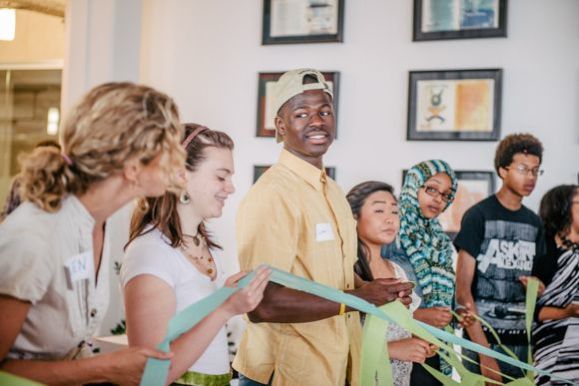
The BrandLab, an innovative nonprofit supported by MSP’s biggest creative agencies, is actively broadening creative-industry networks to introduce young people from diverse backgrounds to the dynamic world of advertising and marketing. With more than 600 students enrolled in The BrandLab's classes this semester and with ambitious plans for growth, the organization is wrapping up a curriculum revamp that will make its lessons even more engaging to MSP’s brightest young minds.
The BrandLab has a simple yet ambitious goal: To boost diversity and inclusion in the creative industries through education and network building. According to Ellen Walthour, The BrandLab’s executive director, MSP’s advertising and marketing agencies — from big players like Olson and Carmichael Lynch to smaller, independently run outfits — should be every bit as diverse as the clients they represent and the consumers to whom they market.
“The ad industry is trying to break out of traditional modes of hiring, which tend to be network-based and thus less diverse than the talent pool as a whole,” says Walthour. “The BrandLab’s goal is not to eliminate personal networks from the equation, but rather to broaden and reframe them to include a more representative range of perspectives.”
According to Walthour, the industry’s long-term success could turn on its ability to attract and retain diverse talent. “Our region’s demographics are rapidly shifting,” she says. In Hennepin County, children of color account for about one in two births, and nearly 20 percent of the county’s college grads are people of color.
The industry recognizes the need to adapt to this new demographic reality. On April 22, more than 200 advertising professionals, Fortune 500 executives and media types packed into Brand New Workshop for “Moving Beyond Representation to Full Inclusion,” the latest panel discussion in The Brandlab’s Fearless Conversation Series. Panelists from General Mills, Cargill and Minneapolis ad agency Carmichael Lynch offered frank, occasionally uncomfortable answers to MPR host Tom Weber’s questions about racial and ethnic diversity in MSP’s creative industries.
Judging by the probing queries and nuanced answers, diversity and multiculturalism clearly weigh on the minds of MSP’s advertisers, marketers and commercial artists. The consensus: Though creative workplaces are slowly becoming more diverse, full inclusion is more elusive than would appear from the increasingly multicultural TV, print and digital ads produced by many local agencies.
The BrandLab may have the solution. Founded in 2008 by John Olson, the late principal at the legendary agency Olson, the organization hires professional instructors to teach elective marketing and advertising classes at local high schools, including St. Paul’s Johnson Senior High. Volunteer helpers, who are often creative-industry professionals, share real-world experiences and techniques to add context and perspective.
These classes cover industry history, ethics, culture and theory. One highlight: An engaging, if uncomfortable, lesson on “extraordinarily racist and sexist ads from the early 20th century,” says jabber logic principal Amee Tomlinson McDonald. Along with Emily Ronning, The BrandLab’s curriculum design director, she’s spearheading the organization’s curriculum redesign. By confronting advertising’s ugly past, The BrandLab’s multicultural students gain a visceral understanding of what they’re up against — and why they need to lend their voices and talents to the conversation.
These awkward ads are just one example of Tomlinson McDonald and Ronning’s revamp, which shifts the focus from traditional pedagogy (think half-hour lessons) to a more interactive, engaging model.
“It sounds cliched, but kids really do have short attention spans,” explains Tomlinson McDonald. “We’re using 30 to 60 second videos, real-world case studies, digital images” and other varied media “to keep kids engaged.” J. Crew’s YouTube page proved a particularly effective teaching tool, she mentions.
Students also dive deep into key agency roles: copywriting, graphic design, video production, project management, and even positions like accounting. By the end of the semester, they’re knowledgeable enough to put together mock projects for actual clients, whose employees hear pitches, critique work, and sometimes adopt aspects of a draft campaign.
The new curriculum is “in beta” in all of The BrandLab’s classrooms this semester. After some tweaks and improvements, a more finalized version will roll out for the next school year, though Walthour notes that The BrandLab’s curriculum is “always looking for ways to improve and adapt.”
The BrandLab doesn’t rely solely on classroom instruction. Throughout the semester, heavily programmed field trips to MSP-area agencies give students the chance to interact with creatives in their natural environments — and, possibly, get a sneak peek at their future workplaces.
On an April 21 trip, for example, Carmichael Lynch, Colle+McVoy and Olson each hosted 20+ Johnson Senior High students for two hours of tours, informational videos, Q&A time and — of course — a Pizza Luce-catered lunch. At Carmichael Lynch, students engaged fearlessly with agency staff and appeared genuinely surprised at the creativity that pervaded the building. (After passing by a midday yoga class in the agency’s lobby, one bright-eyed young lady remarked, “I had no idea people would be having fun at the office.”)
The BrandLab cultivates and focuses such sentiments in hopes of transforming curious students into the next generation of passionate creative professionals. Each year, the organization places dozens of classroom alums in paid summer internships at local agencies. Whereas other organizations focus on supporting older college students who have already self-selected into creative majors, The BrandLab deals exclusively with high school students and college freshmen. “The goal is to captivate kids early, before they’ve really considered [and potentially dismissed, due to lack of professional support] marketing or advertising as a career,” explains Walthour.
After an intense “boot camp” that prepares them for a “real world” workplace, interns work 12 to 20 hours per week during the summer. Every Monday, they pair up with a “coach” — someone with academic or professional experience in marketing and advertising — for debriefing sessions, all held on the University of Minnesota campus. These sessions help the interns process their often intense summer experiences while providing additional instruction in advanced concepts like brand strategy and personal branding.
The BrandLab’s model is clearly successful. Many first-time interns return the following summer. The BrandLab alums often major in creative or marketing-related disciplines after heading off to college. As the organization’s first alums graduate from college, they’ll disperse into the creative workforce to build the broad, inclusive networks the industry needs.
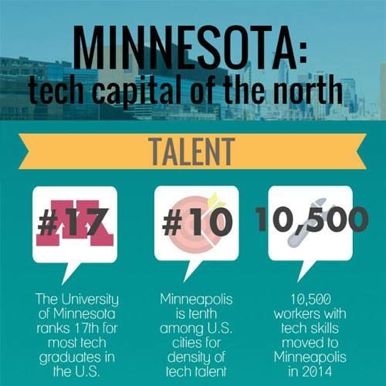
The U of M’s Carlson School of Business hosted its annual Tech Cities conference on March 27. The event drew hundreds of local innovators, investors and social entrepreneurs to the West Bank on the University of Minnesota campus in search of answers to a simple but vexing question: “How can we strengthen and promote MSP as a source for tech leadership, talent and innovation?”
The packed “Supporting Innovators in the Tech Cities” workshop offered a glimpse of the problems the region faces — and offered hope that workable solutions are within reach.
According to Matt Lewis, Greater MSP Strategy Manager and workshop moderator, MSP could produce “tens of thousands of jobs by 2020” that the region currently lacks the talent to fill. This “talent gap” is mostly due to two structural forces.
First, the accelerating pace of technological change is dramatically reordering the economy, rewarding highly skilled professionals and tech-savvy innovators while challenging those who don’t acquire new, relevant skills. This shift is happening everywhere, but it’s more pronounced in regional hubs like MSP (i.e.,
the capital of the North), where much of the tech economy’s most exciting, cutting-edge advances are forged.
The second structural force is unique to MSP: Despite a strong economy, reasonable living costs and excellent quality-of-life metrics, the region perennially struggles to attract the country’s — and world’s — best and brightest. The upside is that once transplants find their way here, they tend to stick around.
“The cliche that it’s hard to get people to come here and even harder to get them to leave holds true,” Lewis noted at the workshop. “We need to change the conversation and make [MSP] a global destination for people who self-identify as innovators.” Doing so would solve both problems: the technological talent gap and MSP’s “attraction issue.”
Four self-identified innovators who already call MSP home piped up to offer their ideas. Scott Cole, co-founder of the local tech cooperative Collectivity, proposed a “comprehensive tech accelerator” that would combine and magnify the efforts of existing local initiatives like the Minnesota High Tech Association, Greater MSP, MN Cup, university-based tech groups and others. The ultimate goal: to create a pervasive culture of innovation wherein cash-strapped innovators with great ideas effortlessly connect with investors, mentors and customers.
Melissa Kjolsing, MN Cup director, highlighted the tech world’s persistent gender gap — an issue that has gotten plenty of press in MSP and elsewhere. She noted that while women run 30 percent of all U.S. companies, most are solo operators. The solution: “deeper peer networks for women,” she argued. Women entrepreneurs need positive role models, namely successful female business owners who have made it through the male-dominated startup gauntlet.
Kjolsing noted that though MN Cup has yet to achieve parity, the prestigious tech competition is spearheading the drive to empower women entrepreneurs: In 2014, about one-third of MN Cup entries came from all-women teams, up from 25 percent the previous year; 45 percent of 2014’s teams had at least one woman on the roster.
Lee George of the James J. Hill Reference Library argued that MSP must do more to support ambitious people at the two biggest “pinch points”: the moment when the entrepreneur moves from tinkering with an idea in their spare time to quitting their day job and fully plunging into their startup; and the exit strategy, or the point at which the entrepreneur steps away from the company he or she founded to focus on a new project or simply “cash out.”
Without support from mentors, investors and talented employees, many entrepreneurs never make it past the first pinch point, and their dream either dies or goes into a long slumber. Meanwhile, those fortunate enough to be able to contemplate an exit strategy often don’t know how to forge the connections with leaders of the established firms that typically buy up successful startups. It’s worth noting, for instance, that though MSP has a deep bench of Fortune 500 firms capable of financing numerous buyouts, one of the region’s most successful startups —
SmartThings — turned to a Korean firm (Samsung) for its exit.
George advised existing organizations like Greater MSP and MHTA to adjust their programming in two ways: creating better and more numerous mentorship opportunities for soon-to-be-full-time entrepreneurs, and deepening connections between successful startups and major firms.
David Berglund, the fourth speaker, exemplifies the power of connections between MSP’s startup community and established business players. He’s UnitedHealth’s “entrepreneur in residence” and co-founder of
Hoodstarter, a real-estate crowdfunding app. At UnitedHealth, he’s more or less in charge of “building healthcare startups from the ground up.”
“We need to accelerate the pace of innovation in large, sometimes bureaucratic corporations,” he said. “To do that, we need to get off the corporate campus and out of our comfort zone.”
Berglund believes that MSP’s major corporations need to communicate better and experiment more, both with one another and with the region’s entrepreneurs. Knowledge — and knowledge sharing — is power, after all. Berglund’s dream: an MSP in which big companies, successful small businesses and fledgling startups “forge partnerships and come together without fear of stealing each other’s ideas.” Such an outcome could accelerate the pace of business formation here and transform MSP into a truly global innovation hub.
Confluence Capital, the groundbreaking MSP venture capital (VC) fund, is now Matchstick Ventures. The rebrand comes amid a flurry of other changes announced early last month, notably the addition of several high-profile investors and advisors.
New investors, according to Minneapolis-St. Paul Business Journal, include Seth Levine, managing director at Boulder-based Foundry Group, a venture capital fund; Lisa Crump, co-founder of Eden Prairie-based
digifab giant Stratasys; Scott Burns, CEO of St. Paul-based GovDelivery, a software communication platform that serves government organizations; and Darren Cotter, founder of St. Paul-based online rewards company InboxDollars. Advisors include Levine and Joy Lindsay, principal at Minneapolis-based StarTec Investments.
But why “Matchstick”?
“The ‘Matchstick’ name rings truer to the entrepreneurs and startups that we exist to serve,” says founder and managing director Ryan Broshar, who also founded beta.mn and Twin Cities Startup Week. “Our goal is to act as a catalyst — not just for the companies we invest in, but for MSP’s startup economy as a whole.”
To date, Matchstick/Confluence has invested in 14 early-stage companies. Though most are headquartered in the MSP area, there are a few outliers: Denver, Seattle, Chicago, St. Louis, and Lincoln, Nebraska. Far from diluting Matchstick’s local potency, Broshar sees these wayward investments as central to the fund’s mission: “evangelizing” MSP’s emerging tech ecosystem.
“We talk up the region every time we interact with out-of-market clients and prospects,” says Broshar, adding that his company gets at least one inquiry from outside entrepreneurs or VC funds who’ve heard about Matchstick and are excited about what’s happening in MSP. “Interest in the Twin Cities is definitely gaining momentum.”
“The writing is on the wall for MSP’s startup scene and capital ecosystem,” he adds.
Broshar should know what an up-and-coming tech hub looks like. He lived in the Denver-Boulder area in the late 2000s and early 2010s, when the Front Range’s tech economy was blowing up. Broshar threw himself into the local scene, parlaying a pending MBA at UC-Boulder into a gig as a consulting firm principal. He networked with and advised ambitious Front Range entrepreneurs for a few years, then turned his focus to finding and investing in early-stage companies through partnerships with the Foundry Group and other local VCs.
When he moved back to MSP in fall 2012, Broshar found the same entrepreneurial energy he’d grown accustomed to in Denver-Boulder. But with few notable VC firms and a relatively conservative commercial financing ecosystem that eschewed risk, many local startups had to look elsewhere for capital.
“We’re blessed with a lot of gritty entrepreneurs who just go to work and get stuff done, rather than talking about what they have yet to do,” says Broshar. “But even the most talented and ambitious entrepreneurs can’t survive without capital,” along with the mentoring and peer support services provided by organizations and initiatives like Broshar’s beta.mn and Twin Cities Startup Week.
“The goal was, and still is, to put MSP on the map,” he says.

Cologix, one of the country’s most prolific data center operators, recently unveiled a new state-of-the-art facility in Downtown East’s 511 Building, the company’s MSP headquarters. According to a company press release, the 28,000-square-foot hub has space for more than 250 server cabinets and upward of 70 network connections, making it the most connected piece of real estate between Chicago and Seattle — the Internet capital of The North.
“People think of the Internet as this ethereal cloud,” says Graham Williams, chief operating officer, Cologix. “But in reality, that cloud is very solid. The world is crisscrossed with untold miles of fiber optic cables and dotted with servers, routers and switches. That physical infrastructure — the Internet’s plumbing — intersects at data hubs like [the 511 Building].”
The heart of Cologix’s new facility is the Meet Me Room, the hub where the networks actually intersect. Clients who rent space in the facility can pick and choose which networks to use. The setup is akin to a co-working space: Tenants pay to be there and provide their own equipment, but they get access to most of the service providers operating in MSP.
They also enjoy lower latency (faster connection speeds), which is particularly important in the video streaming business. “We enable companies like Netflix to get closer to their end users,” explains Mike Hemphill, general manager of Cologix’s Minneapolis facility. “They’re pushing copies of the shows and movies people want to watch to their servers here in Minneapolis, rather than calling everything up from California and traversing thousands of miles of fiber to get here.”
Increased competition for clients in the Meet Me Room reduces’ service providers’ pricing power by as much as 20 to 40 percent, says Williams. But it’s a worthwhile tradeoff. The alternative is an expensive, piecemeal approach wherein providers lay fiber all the way to clients’ offices, wherever they might be located. Depending on the fiber’s final cost per mile, directly connecting to clients could end up being less cost-effective than using a facility like the 511 Building.
Cologix’s new data center also houses the Midwest Internet Cooperative Exchange (MICE), a nonprofit, donation-supported network exchange used by smaller Internet service providers and telecoms as well as data-hungry content providers like Netflix. MICE was devised in 2010 to improve MSP-area bandwidth and connection speeds, and to level the playing field for smaller operators. FWR Communications, Cologix’s predecessor in the 511 Building, donated a modest square footage to house MICE’s first servers; with more than 50 participants at last count, MICE is now a major Cologix tenant.
“It’s an exciting time to be in this business,” muses Hemphill, whose telecommunications career has spanned nearly a half-century. “I’ve had more fun in the last decade than at any time previously.”
Visual, a Northeast Minneapolis startup run by co-founders Chuck Olsen and Taylor Carik, has an ambitious vision for “social VR,” a blend of social media, virtual reality and everyday experience. The company’s current app, an interactive social dashboard that hovers in an immersive, computer-generated 3D environment, will soon be available on two virtual reality headsets: Samsung’s Gear VR, an affordable consumer model, and Oculus’s DK2, a higher-end device ideal for gaming.
Visual’s app grew out of Futurekave, a far-reaching “virtual world platform” developed by Olsen and Carik. To help build it, the pair tapped Dual Reality Games, a group of talented app designers with members in MSP and Oregon. Users sync their social media profiles with the app, manipulating photos, posts, tweets and profile information using a keyboard or touchpad. Visual only works with Instagram at the moment, but other social networks are in the works.
Social VR’s time has come, explains Olsen. “Facebook is hiring 1,200 employees right now,” he says, “many of whom will be working on building a VR presence for the company.”
“But Facebook [and other tech companies like Apple] aren’t VR natives, like we are,” he adds. “That puts them at a disadvantage.”
As a small, lean startup, Visual is more nimble than Facebook et al. And as possibly the first independent social VR company anywhere in the country, Visual is uniquely positioned to take advantage of what Olsen and Carik believe will be a fundamental change in the public’s relationship with mobile computing and connectivity.
In the short term, VR is about to get a lot more accessible. Samsung is planning a big consumer push later this year for its $200 Gear VR headset, a goggled apparatus that syncs up with the Note 4 smartphone’s screen to immerse wearers in a 360-degree VR. Thus far, the Note 4 is the only piece of hardware that works with Gear VR, though (according to Olsen) that’s not as big of an obstacle as it seems.
“[Gear VR] is going to be under Christmas trees this year,” predicts Olsen. “If you’ve got a free phone upgrade, it’s not a huge commitment to get a Note 4 and then buy the headset.” And Samsung may tweak the Gear VR interface to work with other mobile devices, he adds.
Visual’s social VR app is also compatible with the DK2, a similar headset device from Oculus, the company responsible for many of the recent advances in VR interfacing.
In both cases, the headset experience is incredibly lifelike, with realistic sound, HD-quality video and just-barely-perceptible lag when the user moves his or her head. The big drawback, explains Olsen, is that VR is not yet interactive: You can move your head to look at different parts of the virtual environment, but you can’t reach out and manipulate your surroundings.
Visual’s social VR system could solve, or at least mitigate, the interactivity problem. Olsen and Carik imagine headset-wearing concert-goers using Virtual’s app to post real-time images and video with friends who aren’t at the event, or meet and engage with other social VR users who are present. While users wouldn’t actually be able to manipulate the performers or anything else about the environment, they’d be able to process and share it socially.
Olsen, Carik and the Dual Reality Games crew aren’t placing all their eggs in the headset basket, of course. Longer-term, they’re interested in the concept of augmented reality: a virtual, Internet-connected field of vision overlay, like a much more advanced version of Google Glass. They see Visual as a “hardware agnostic” app that can handle the social element of augmented reality, which some technology experts believe is the future of mobile Internet — the post-smartphone world.
“Imagine having your social dashboard in the corner of your living room, waiting for you to engage with it,” says Olsen. “That could really be powerful.”
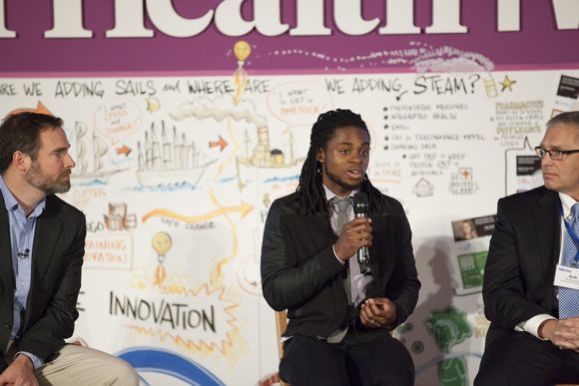
Rising costs and inconvenient delivery modes beset healthcare consumers. Thompson Aderinkomi, a trained economist with an MBA from the University of Minnesota’s Carlson School of Business, has a novel solution.
His new startup, Retrace Health, offers at-home, on-demand consultations and care from licensed doctors and nurse practitioners, either by videoconference or in-person visit.
Retrace has grown rapidly since its late 2013 launch, when the company had a roster of about 40 patients, mostly Aderinkomi’s friends and family members. The company began accepting corporate clients in June 2014: Aderinkomi now counts at least seven client companies, ranging in size from a few hundred to a few thousand employees, whose employees can tap Retrace’s services. Between individual and corporate clients, Retrace now brokers “double-digit weekly consultation counts,” says Aderinkomi.
According to Aderinkomi, convenience — the fact that patients don’t have to drive to a clinic or hospital and sit in a waiting room for hours on end — is a huge factor in Retrace’s success. “We’ve found that once people try Retrace and realize how seamless the process can be, they use us more than they’d use a regular doctor or care provider,” says Aderinkomi.
Retrace’s doctors and NPs keep longer hours than a typical health clinic. Video consults are available 6 a.m. to 10 p.m. on Mondays, and 6 a.m. to 6 p.m. Tuesday through Friday. In-person consults occur from 10 a.m. to 3 p.m. Monday through Friday.
For simple issues, users can schedule a three-minute video consultation and be on their way. For more complex problems, a 30- or 60-minute home visit may be necessary. Retrace’s care providers can schedule same-day appointments with as little as 60 minutes’ notice, though off-hours requests need to wait until the following business day.
Retrace users also value the company’s untimed appointments. Whereas a traditional clinic might schedule 15 or 20 daily appointments per doctor or NP, Retrace’s care providers don’t have such heavy workloads. A lighter workload allows care providers to linger longer with each patient, answering questions and addressing issues that might normally get pushed aside due to time constraints.
Financially, Retrace isn’t out of reach for most patients. Individual patients who want to pay through their insurance provider (Retrace works with most providers) don’t have to pay anything to use the service, aside from premiums and co-pays set by their providers.
Individual patients who don’t want to tap their insurance providers can choose from three packages: Basic, Premium and Unlimited. Basic, which doesn’t come with an annual fee, requires users to pay a la carte for labs, visits and other services. (For instance, an in-home X-ray costs $150). Premium and Unlimited come with respective annual fees of $99 and $599; costs for visits and services are reduced or waived altogether. (Corporate prices are customized based on the client’s employee count and other factors.)
Retrace’s simple pricing scheme is a breath of fresh air in a healthcare sector that famous for confusing statements and wildly variable prices. “We’re huge believers in price transparency and simplicity,” says Aderinkomi. “Customers have a right to know upfront how much they’re paying for their care.”
And not everyone is bound by Retrace’s standard prices. The company’s “original 40” patients got a sweetheart deal in exchange for their faith in the company: An all-inclusive lifetime membership for a one-time fee of $300. That deal, unfortunately, is off the table, replaced by a limited-time promotion that waives all visit and lab fees for 12 months with the payment of an annual membership fee.
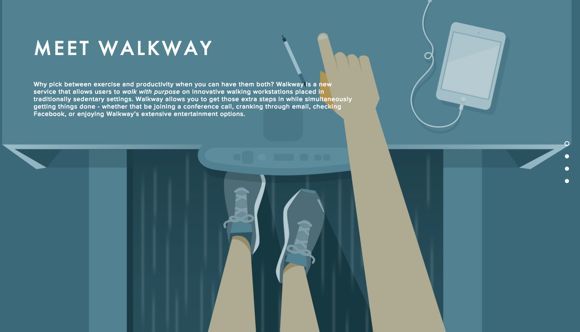
Kari Severson, a Minneapolis-based inventor and entrepreneur, has a fun, healthy, ultra-connected solution for sedentary office workers: the Walkway Workstation, a “treadmill desk designed with the purposeful user in mind.” On March 2, Severson and her team of contract designers and developers celebrated Walkway’s official launch at
Startup Venture Loft (SVL), a North Loop coworking space and startup incubator.
SVL will permanently feature at least one Walkway desk, a high-visibility win for Severson’s health-and-productivity startup.
“We’re thrilled to have the support of Startup Venture Loft’s tenants and management,” says Severson, a self-professed fitness enthusiast who juggles a full-time job at United Health Group with her entrepreneurial duties at Walkway. “It’s gratifying to see people embracing the Walkway concept so enthusiastically.”
Walkway Workstation also recently announced a partnership with MSP International Airport. Severson’s team will deliver two Walkways to Concourse C, near gate C21, and one to Concourse F, near gate F3. More could follow in other locations this year or next.
The airport partnership is apt. Severson first came up with the idea for Walkway during a hectic, travel-heavy period in her life. Because her boyfriend was enrolled in graduate school at the University of California Los Angeles, and Severson had a full-time job in MSP and was pursuing master’s program Duke University in North Carolina, she was constantly crisscrossing the country.
“With all the travel and a generally unpredictable schedule, I found myself really inactive,” she says. She came up with a concept that improved upon existing treadmill desks, which didn’t feature the amenities or built-in controls that would eventually adorn the Walkway.
Each Walkway is a self-contained unit equipped with a sturdy treadmill, ample desk space, device charging ports and a free Internet hotspot. The treadmill’s speed is capped at two miles per hour, a relatively leisurely pace that facilitates multitasking and doesn’t tire out users too quickly. The setup is ideal for individual offices, common areas in open-plan workplaces, waiting rooms and institutional public spaces, says Severson.
“The goal is to make everyday lifestyle resources available to busy people,” she says, “and to seamlessly facilitate healthy choices in a convenient setting.”
Severson offers several different Walkway configurations, each ideal for a particular end-user. A light-duty treadmill base is ideal for home offices and small workplaces; a moderate-duty base works better in medium-sized, collaborative workplaces; and a heavy-duty treadmill supports near-constant use at large corporate offices, and airports and other public spaces. Each version comes with the user’s choice of a manually or electronically adjustable desk.
Though individual buyers and small offices can purchase Walkways at market price, Severson’s team seeks sponsorships to subsidize the cost of units in heavily trafficked public spaces. In effect, each public Walkway is an interactive billboard; sponsors pay for customized user interfaces and prominent, outward-facing logo displays visible to anyone who walks by.
And a lot of people can walk by: According to Walkway’s website, about 26,000 people per day walk by the company’s two MSP airport sites.
Severson is looking at other revenue-generation ideas, too, including a “freemium” model that offers free access for an initial period, and then imposes a per-minute or per-hour rate for continued use. She’s also mulling partnerships with content providers to deliver premium music and video to users willing to pay a fee for the service.
Severson is also keen on the concept of “Walkway pods,” which would feature two, three or more Walkways facing one another — good for “walking meetings” and other collaborative activities, she says.

Little, one of Minneapolis’s oldest and best-known design and branding firms, has emerged stronger and more focused from a recession that left some local peers reeling and put others out of business altogether. Since the beginning of 2014, the company has signed a dozen new clients — including high-profile organizations like US Bank and the Minnesota Timberwolves. Collectively, the new accounts will add about $2 million to the company’s top line — a hefty boost for a firm with revenues of about $10 million last year.
Little is also refreshing its leadership ranks. Monica Little, the firm’s founder and principal, stepped aside last year. Into her shoes stepped competent leaders like president/chief creative officer Joe Cecere, vice president of finance and administration Kirk Grandstrand, and director of marketing and business development Traci Elder. Cecere is a Little veteran, but Grandstrand and Elder are outsiders to Little and the agency world writ large: Little hired both away from Best Buy.
The leadership change, says Cecere, brought a rare opportunity to reassess Little’s priorities and refine the company’s approach in a competitive, rapidly changing industry that’s sensitive to economic disruption. Little has historically focused on high-quality, brand-focused design; in the 1980s, the company cut its chops producing colorful annual reports for MSP-based corporate behemoths like Hudson-Dayton (later Target) and Polaris. But the past decade’s economic turmoil and technological changes drove home the need for a broader, bottom-up approach to branding.
“At our core, we still believe in the power of design,” says Cecere, “but we’re a much more holistic brand agency now than even five years ago.”
Brand strategy and effective communications, both internal and external, are now critical components of Little’s work. “We want our clients to know what they stand for,” says Cecere, “and to be able to effectively communicate that to employees and customers.”
Cecere cites the Minnesota Timberwolves as a prime example. Little is currently helping the Wolves through an “inside out rebranding,” asking employees at every level of the organization for insight into its identity and purpose. The eventual goal: a recognizable, unified brand that produces a compelling, consistent fan experience “that feels right from the moment [fans] enter the arena to the moment they leave,” says Cecere. “As an organization’s most important brand stewards, employees are integral to a positive customer experience.”
A broad-based, recession-related drop in marketing budgets and promotional spending complicated Little’s “reset,” though the company survived the downturn relatively unscathed.
“Companies typically cut ad spending after they’ve reduced costs elsewhere,” says Cecere, “but we were fortunate not to lose any clients during the recession, just individual projects.”
In some ways, the recent economic downturn was a boon for Little, despite the temporary hit to revenues. Lean times tend to disrupt “comfortable” sectors; well-run companies and organizations typically respond by refocusing and rebranding. For instance, Carleton College and the University of St. Thomas Law School, both recent additions to Little’s portfolio, are trying to remain competitive and relevant in an increasingly cluttered higher-education market.
“[These schools are] competing against larger institutions with inherent structural advantages,” says Cecere. “For organizations in such a position, the importance of effective branding and communication is clear.” Especially in a world where disruption is the new norm, and companies large and small struggle to stand out from the crowd.
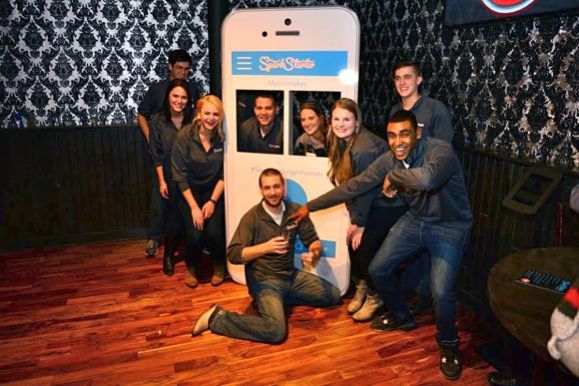
SparkStarter, a matchmaking and dating app developed by MSP entrepreneur Tony Kramer, promises a better, less awkward way for singles to meet, mingle and (maybe) fall in love.
Launched nationally in mid-February, SparkStarter already has nearly 2 million unique user profiles. The business also has about a dozen collaborators working part- or full-time. The app is available for download at the Google Play store and the iTunes App Store.
Kramer has an aggressive plan to drive user growth over the coming months, relying on a combination of organic growth and collaborations with nonprofit organizations.
“We’re developing win-win partnerships to grow our user base in return for supporting worthy causes,” says Kramer. “We love giving back to charities and the community in general, as we see SparkStarter as a thriving community of its own.”
Kramer is also laser-focused on the user experience, a weak point for some other dating apps. “We’re continuously adding features to engage users,” he says, describing how customer feedback led his team to add a social feed that strengthens the connections between Sparkstarter users.
SparkStarter syncs with Facebook for a twist on the now-familiar dating app archetype. As a single user, you browse your friends and friends-of-friends lists to find other eligible singles who catch your eye. When you find someone appealing, you can “vote up” to create a “Spark” — a potential match — and get formally introduced by a mutual friend.
Since both individuals know the matchmaker, these matches involve an element of trust and familiarity that may be missing from chance encounters or dates brokered by a computerized dating app. And since the matchmaker knows the individuals well, he or she is likely to be a great judge of their mutual compatibility.
Once the introduction has been made, other SparkStarter users in your Facebook network can upvote or downvote the Spark; upvotes increase your compatibility score relative to your match partner, while downvotes decrease compatibility. A built-in messaging system lets you communicate with your Spark partner. If things go well, you and your partner can mutually decide to meet offline as well.
Unlike most other dating apps, SparkStarter has a distinctly social element, welcoming — even relying on — input from other users (who may not even be single) to determine the compatibility of each match. Each upvote is a literal vote of confidence that the two individuals go well together — and that the match will ultimately succeed.
Kramer’s confidence in the SparkStarter model comes, in part, from personal experience. Five years ago, while trawling Facebook, a good friend of Kramer’s found an old female acquaintance who seemed to be compatible with Kramer. He introduced the two online, and a real-world relationship soon blossomed.
“Within 3 years after that first date, we were married,” Kramer recalls. “It was simple, easy” and not at all awkward, he adds. After speaking with friends and colleagues, Kramer realized that his experience wasn’t unique: Lasting relationships often form when a matchmaker introduces two mutual friends to one another, whether online or in person. But when he met his future wife, Astyn, Kramer wasn’t aware of any apps or websites that facilitated person-to-person matchmaking.
“While online dating and apps had become more popular, there still wasn't a digital concept that involved a common way for people meet, through a mutual friend,” says Kramer. “That's when the idea for SparkStarter was born.”

Humdinger and Sons, a young ad agency in Minneapolis’ Mill District, may have found the formula for startup success in a competitive industry dominated by entrenched behemoths: seek out, and partner with, other ambitious startups.
With a full-time staff of six and a trusted supporting cast of freelance scriptwriters, developers and designers, Humdinger has built and scaled a business around memorable, well-produced promotional videos.
Thanks to a rapidly rising profile and impressive client retention rate, Humdinger is growing faster than at any point in its two-year history. At least two new hires, including for business development, are imminent.
“We’re taking the expertise we’ve developed over the years in the ad business and reinventing a business model that really hasn’t changed in 40 years,” says Nicolas Will, who co-founded the company along with fellow Minneapolis native Andrew Berg. “Our clients are immensely receptive — we haven’t lost a single one since we’ve been in business.”
Will and Berg tie Humdinger’s retention figures to the company’s unique niche and approach. Unlike traditional agencies, which typically compete for high-profile clients like Target and Wells Fargo, Humdinger seeks out ambitious but often cash-strapped startups — in MSP, coastal innovation centers and even international markets — that simultaneously need funding and exposure. In many cases, Humdinger clients can’t even afford an in-house marketing employee.
“For a lot of our clients, we’re basically operating as an external marketing department,” says Berg. “Once they see what we can do [after the first project], they totally trust us to handle their promotional needs.”
Humdinger’s startup culture appeals to entrepreneurs and innovators, too. Startup owners are used to devising and implementing solutions quickly, without filtering decisions through multiple layers of red tape or aligning directives with corporate protocols. For people used to results, says Will, working with a traditional agency can be a frustrating experience. With Humdinger, there are few if any barriers between agency and client.
And for Will, Berg and the rest of the Humdinger team, working with smaller firms ensures that creative work doesn’t get diluted or shelved by an in-house marketing department or hands-on C-suite employees, as sometimes happens with larger corporate clients.
There’s an additional benefit to Humdinger’s niche: a relative lack of competition. Will and Berg struggle to identify their closest competitors, largely because established agencies — even small ones — tend to pass on unproven startups that may still be scrounging for funding.
While Will estimates that 80 percent of Humdinger’s business is paid upfront, the company will often exchange its services for a percentage of a client’s Kickstarter funding, or even (though less frequently) for an equity stake. Some of Humdinger’s most promising clients” have accepted Humdinger’s services in exchange for equity or a “Kickstarter kickback.”
Accepting equity or a percentage of a crowdfunding round — which isn’t guaranteed to succeed — “is a bit of a risk,” says Berg. But for truly promising startups, it’s an acceptable risk.
Will and Berg weren’t always risk-takers. Both cut their chops at big coastal ad agencies with high-profile clients — Will was part of a team that designed LeBron James’ first website, after the NBA superstar signed a massive deal with Nike. But in the early 2010s, Will and Berg returned to their native MSP, ostensibly to settle down. The pair first crossed paths at Olson, where they worked for a few months on the company’s Tivo account.
Though Will and Berg enjoyed working at Olson, they soon grew frustrated by the sheer volume of inquiries they and their colleagues received from smaller companies and startups without the six- or seven-figure budgets necessary to support a full-scale campaign with a major agency — the types of companies that would later become Humdinger’s bread and butter. So Will and Berg conceived the “Humdinger model.”
Current Humdinger Job Listings in Minneapolis
- Business Development Manager
- PR Specialist

Tuesday, February 24, 2015
A successful Kickstarter that netted Great Lakes Clothing Company more than $20,000 will allow the custom clothing company to move into a new collaborative work space on March 1. The company will share space near the North Minneapolis riverfront with several other Minnesota companies—including
Marked Leather, Mill City Fineries, and the U.S.-made artisanal clothing and product distributor William Rogue & Co.
“We’re committed to the idea of native businesses sticking together, sharing resources and space,” says cofounder Spencer Barrett, hinting at the prospect of future apparel and branding partnerships with Great Lakes’ co-tenants. The move will roughly quadruple Great Lakes’ floor space, from 600 to about 2,400 square feet,
For now, cofounders Barrett and David Burke plan to use the expanded space to grow their inventory and make way for new hires to manage inventory, sales and the company’s expanding online presence.
Great Lakes has already shipped its branded T-shirts, crew sweaters, polos and accessories — including koozies — to 47 states, building buzz largely through word of mouth, a no-frills video marketing campaign orchestrated by Barrett, and a “brand ambassador” program that recruits college students to sport its clothing on campuses across the Midwest.
Customer service doesn’t hurt either. The co-founders include a handwritten thank-you note with every online order and send a follow-up email about a week after each customer’s order arrives.
According to the co-founders, Great Lakes’ brand centers around “life at the lake,” a laid-back, nostalgic vibe that’s instantly recognizable to anyone who has spent a warm day near a body of water in Minnesota. The brand’s mascot is an understated loon, a Northern archetype that needs no introduction.
“We found a huge gap in the apparel market,” explains Burke. “No one in Minnesota, or anywhere in the Midwest for that matter, was taking advantage of our unique Northern lifestyle and fusing those ideals into a brand. We strive to create fun, useful and well-made products inspired by life at the lake.”
“We were inspired by shared memories of time spent around the water” in the Twin Cities and up north, adds Barrett. “It’s a common experience shared not just by people in Minneapolis-St. Paul and Minnesota, but by anyone who lives near fresh water.”
Another Great Lakes differentiator: Unlike many of their competitors, including similarly sized startups, Burke and Barrett are committed to a totally American-made supply chain. The pair will oversee all design work at their new Minneapolis studio, even as the company grows.
Great Lakes currently relies on a North Carolina manufacturer to supply the bulk of their unfinished shirts — “that’s where most of the American textile industry operates these days,” explains Barrett — with partners in the Twin Cities handling embroidering, printing and other final touches.
Though the online sales model is working well for now, Burke and Barrett are hoping to diversify in the months ahead. A last-minute decision to put on a popup store during the holiday season paid off big time, “blowing past our already pretty ambitious projections for November,” says Burke.
The co-founders are already exploring additional popup opportunities at outdoor events — including a “winter golf” tournament on Lake Minnetonka in mid-February — and, possibly, local brewery taprooms.
But “the dream,” says Burke, “is a flagship store that gets right to the core of the Great Lakes brand,” with an expansive retail area up front and a fulfillment center in the back.
“The popup experience has really reinforced the importance of personal connections for us,” says Burke, noting that in-store conversion rates are about five times higher than online. “We want to be as friendly and hospitable to the customer as we can.”

Tuesday, February 10, 2015
The calendar still says winter, but Tangletown Gardens is ramping up hiring, and investing in initiatives to make the popular South Minneapolis business “even better at what we grow, what we produce, and what we create for our customers and the communities we serve,” says co-founder and principal Scott Endres.
That doesn’t mean, however, that Endres and co-owner Dean Engelmann will tear up a playbook that has worked for more than a decade.
“The growth of our business has always been organic,” Endres says. “We make sure things as are as good as they can be before taking the next step. Right now, we feel there is room to grow and refine all aspects of our business without having to take on new ventures.”
Tangletown Gardens’ current ventures keep Endres, Engelmann and their staffers plenty busy. The flagship garden center at 54th & Nicollet supports a flourishing garden design and consulting business that counts some of the Twin Cities’ most notable companies, nonprofits, government organizations and individuals as clients. Off the top of his head, Endres lists the Museum of Russian Art, the Minneapolis Park Board, the Minnesota Landscape Arboretum and the U of M’s Horticulture Department as “garden partners.”
Endres and Engelmann met while enrolled in the University of Minnesota’s horticulture program. They worked in the landscape design business before setting out as partners and founding Tangletown. Careful product selection and innovative cultivation strategies play a role in their success, along with their backgrounds. According to Endres, Tangletown has “thousands of...perennial, annual and vegetable varieties,” along with “the most diverse group of unusual and hard-to-find woody plants in the Upper Midwest.”
In addition to the garden center, Endres and Engelmann run
Wise Acre Eatery, a bastion of the Twin Cities’ farm-to-fork movement, and a 100-acre farm in Plato, which supplies Wise Acre and a flourishing CSA. According to Wise Acre’s website, “80 to 90 percent of what we serve is grown sustainably” on the Plato farm.
Since opening in 2012, Wise Acre has been joined by a host of farm-centric restaurants across town. But it remains unique. “Unlike the owners of any other restaurant we know of, we are the folks sowing the seeds, nurturing plants, and tending the animals in the morning, then delivering the harvest to our restaurant’s kitchen in the afternoon,” says Endres.
Endres and Engelmann grow produce year-round in state-of-the-art greenhouses to maintain their locally grown supply. The owners also keep Scottish Highland cattle, two heritage pork breeds and free-range poultry on the farm — a self-contained food ecosystem that relies on “biology, not toxic chemicals,” says Endres.
“Healthy soil creates healthy food and gardens, which ultimately create healthy people,” adds Engelmann.
This philosophy reflects Endres’ and Engelmann’s upbringing. Though horticulturalists by training, both grew up on small working farms in the family for generations. “Our fathers, grandfathers, and great-grandfathers knew the way they treated their land would shape its future,” says Endres. “We farm today in much the same way as the farms we grew up on.”
Current Tangletown Job Listings in Minneapolis
- Garden Designer
- Container Designer
- Gardener
- Seasonal Garden Center Associate
- Seasonal Landscape Team Member
Tuesday, February 03, 2015
Two new initiatives, MNvest and MN-SBIR (Small Business Innovation Research), are aiming to give Minneapolis-St. Paul startups and entrepreneurs a competitive leg up. Both initiatives lessen or remove existing barriers to funding for early-stage companies.
MNvest is a legislative proposal that could pave the way for “equity crowdfunding,” which would remove some red tape from existing securities law and allow young companies to raise up to $5 million from members of the public in any 12-month period.
Currently, Minnesota startups can raise funds in three ways, none of them ideal. First, they can register with state and federal securities regulators, a costly and stringent process that’s unrealistic for capital-starved entrepreneurs. Second, they can limit advertised investment offerings to accredited investors — roughly the state’s wealthiest one percent.
Third and most common: They can make a private, unadvertised offering, sometimes known as a “friends and family round,” but can’t solicit on the Internet or through other public means. In all cases, startups must either shoulder unreasonable costs or remain unable to accept investments from most members of the public.
MNvest’s value proposition appeals to lawmakers and constituents alike, says Winthrop & Weinstine attorney and MNvest proponent Ryan Schildkraut. “The question is simple: Why should only the wealthiest people be able to use the Internet to invest in businesses with compelling ideas?”
MN-SBIR is a conduit to the federal SBIR program, which offers access to more than $2 billion in business grants from nearly a dozen federal agencies. Individual grants range from less than $150,000 for Phase I (early stage) companies to as much as $4 million for Phase III (established, generally medium-sized) companies.
MN-SBIR provides technical support, proposal writing assistance, cost analyses, commercialization planning and other services for startups and small-to-medium-sized businesses seeking grant money. The Minnesota program also offers regular workshops, including a February 24 proposal-writing workshop and a March 26 overview workshop, for participants and interested parties.
MN-SBIR is “often the only source of capital available” to startups and small companies perceived as high-risk by traditional lenders, including venture capitalists, says MN-SBIR director Pat Dillon.
The program also pumps federal dollars into Minnesota’s economy. “We send so much of our [tax] money to Washington,” says Dillon. “This is one way for us to get some of it back.”
But both MN-SBIR and MNvest face challenges.
As a legislative proposal, MNvest is currently working its way through committees at the Capitol. Though the bill has bipartisan support and “has not run into major opposition from any group,” the legislative process offers no guarantees, says Zachary Robins, Schildkraut’s Winthrop colleague and fellow MNvest proponent. House and Senate versions of the bill still need to be reconciled into a single draft, a process that can take time. A full vote could happen anytime between now and late spring, with the governor’s signature required for MNvest to become law.
“We’re cautiously optimistic about MNvest’s prospects,” says Robins.
MN-SBIR faces a different set of obstacles. The state government recently restarted the program after a decade-long hiatus. MN-SBIR remains under-resourced due to its newness and funding realities, with Dillon and a small team of consultants sharing responsibilities.
“I’m a hard worker, but I’m not Superwoman,” Dillon laughs.
The continued economic vitality of Minneapolis-St. Paul, and Minnesota more broadly, could hinge on the success of MNvest and MN-SBIR. Both find the state in the unfamiliar position of playing catch-up with others, including some of its closest neighbors.
MNvest, for instance, is similar to bills already passed in Wisconsin, Indiana and other midwestern states. Last year, Schildkraut found out about Craftfund, a Milwaukee-based brewery crowdfunding platform that takes advantage of the Wisconsin law.
“I assumed we had something similar on the books in Minnesota,” he recalls. When subsequent research failed to turn up anything similar, he and Robins set MNvest in motion.
“We’re just young and energetic enough to try to get a law passed,” says Schildkraut.
Meanwhile, MN-SBIR aims to dramatically increase Minnesota’s share of the federal SBIR pie. Local companies account for just $30 million of the $2.3 billion total, a disproportionately small share relative to population. California and Massachusetts alone account for nearly 50 percent of the available amount.
“We could do a whole lot better given our size and existing entrepreneurial energy,” says Dillon.
Tuesday, January 20, 2015
A novel partnership between several local craft breweries and the students in a College of Design class at the University of Minnesota produced innovative tap-handle designs, and laid the groundwork for future collaborations between creative students and the Twin Cities’ booming beer industry. Sarah Sheber, a fabric developer at Target, taught the Product Form and Model Making class. Her intention was to give students a window into the workings of the small, creative businesses reshaping the Twin Cities’ economy.
“I pursued smaller [breweries] purposefully,” she says. “I wanted students to have a chance to learn as much about [the breweries’] brands as they could, to see as much of the business as possible and understand the different roles that go into producing local brews. With a large company [like Target], individuals own a small piece of the process. With small companies, each member of the team needs to be flexible, to know the business and the brand, and be able to wear a lot of hats.”
Fair State Brewing Cooperative in Northeast Minneapolis participated in the project. So did Mighty Axe Hops, which produces high-quality, locally grown hops for brewers in Minneapolis, St. Paul and elsewhere; and Excelsior Brewing, a suburban taproom and brewery.
Students produced multiple tap-handle designs for each business, some attempting improvements on existing designs and others completely reimagining the brands’ ethos. Breweries had the option to purchase finalized tap handles, which otherwise remain student property.
The collaboration had two overarching goals. First, Sheber wanted to students to experience the creative freedom and creative expression that inform commercial design projects. “The idea was to act like a client, providing support and feedback as students worked through each design,” says Matt Hauck, Fair State’s director of operations.
Not every design was practical. One student incorporated powerful rare earth magnets into a prototype, recalls Fair State CEO Evan Sallee, making it impossible to detach and move. “There was a lot of trial and error,” says Sallee, “but it was great to be engaged with talented students who are passionate about design.”
Some designs eventually solved problems of which Hauck and Sallee weren’t even aware. “The students we worked with put a lot of thought into the ergonomics of their final designs, something we’d never even considered,” says Sallee.
Sheber and her students unveiled the final tap-handle designs during a December 16 happy hour fueled, naturally, by free beer from Fair State and Excelsior. Sheber is already planning to bring back the collaboration for next year’s class, possibly with new brewery partners.
“We’ve had interest from brewers of all scales,” says Sheber, some of whom urgently need updated branding.
At Fair State, Sallee and Hauck may take a pass on using any of last semester’s designs. But they’re open to future collaborations that keep their branding fresh and distinctive.
The local craft beer community is largely chummy and supportive of new entrants, says Sallee. “But positioning among other breweries’ tap handles at bars is still important,” he notes. “You want your design to stand out in the right way.”
Tuesday, January 13, 2015
Kim Bartmann’s Tiny Diner has just been honored as the country’s top “Small Business Revolution” story by Deluxe, a business services company based in the Twin Cities’ northern suburbs. The South Minneapolis restaurant was the first stop on Deluxe’s nationwide Small Business Revolution tour, which will profile 100 U.S. companies during the coming months in honor of Deluxe’s 100th anniversary.
Small Business Revolution was initiated in response to what Deluxe sees as the country’s increasingly impersonal, digitized economy; a place where conducting anonymous online transactions is often easier than seeking out independent, brick-and-mortar businesses owned by our friends and neighbors.
“We’re less likely to know who we’re buying from,” according to Deluxe’s Small Business Revolution website. “We’re exchanging data instead of sharing experiences. In too many places, the magic and the meaning [of doing business] have begun to fade.”
According to Deluxe, Small Business Revolution taps “award-winning independent filmmakers and photographers to honor” businesses that “create something more personal, more local, more meaningful for all of us.”
Bartmann’s participation required a couple of phone interviews and a “fairly long day of shooting,” Bartmann says—not a bad deal for national exposure.
“I was thrilled to be approached,” she says. Bartmann owns
Tiny Diner and seven other restaurants across the Twin Cities. “I’m interested in taking part in anything that promotes small business here.” She found her way onto Deluxe’s radar, she says, because she’s a prominent booster for the Twin Cities Metro Independent Business Alliance, a key small business organization.
Deluxe immediately bought into “the pretty powerful little project we have here,” says Bartmann.
Tiny Diner is “engaging sustainable food production in a real way,” she says, “thinking through how we can close the loop in the traditionally wasteful restaurant industry.”
As a diner that offers food at a moderate price point and caters to a regular, neighborhood-centric crowd, says Bartmann, Tiny Diner has an even greater responsibility to be sustainable than high-end “destination” restaurants.
Case in point: Tiny Diner’s patio-top solar setup is “the largest visible solar array” in the Twin Cities, she said, as all larger arrays are on high roofs or hidden behind greenery. Despite the array’s size, Bartmann offset about 90 percent of its cost through various state and federal rebates.
Bartmann is justifiably proud of Tiny Diner’s food, too. “Our challenge is to think about how we can make typical diner food, like hash browns, better,” she says. “You can go and eat at a lot of restaurants, but you’re not always being fed.”
After Tiny Diner, the Small Business Revolution tour hit The Shed Fitness and Bogart’s Donuts, both also in Minneapolis. The tour heads south to Kansas next, though Deluxe is still accepting nominations for businesses to be featured in the tour’s later stages, regardless of location.

Tuesday, January 06, 2015
Startup Venture Loft (SVL) tripled its physical footprint with a move into an 8,500 square foot space in the North Loop’s McKesson Building last September. The new digs were the final piece of a year-long rebranding and restructuring process that transformed SVL from Healthcare.mn, a healthcare-focused business accelerator, into a coworking hub and incubator for “investable startup companies with high growth potential,” says owner and executive director Peter Kane.
“Expanding to an 8,500 square foot space grabs people’s attention and lets them know we’re serious,” says Kane, who wants to “make the Twin Cities the best place in the country to launch a startup.”
Thirty early stage companies mostly in the healthcare and technology sectors now rent space at SVL, up from just five in November 2013. Healthcare.mn remains an SVL tenant.
Turning the Twin Cities into a tech hub requires a self-contained ecosystem of entrepreneurs and talented knowledge workers, plus venture capital funds, angel investors and service providers such as intellectual property lawyers and marketing specialists, who support and promote entrepreneurial efforts.
Kane cites Chicago—a city not known for its technology industry until recently—as a model for the Twin Cities. 1871 is the beating heart of Chicago’s tech startup scene, with tenants ranging from idea-stage one-person companies to established VC funds that funnel capital into proven technology concepts. Decision-makers from big technology and healthcare firms, including Google, either rent space in or routinely visit 1871, providing startups with access to larger, more lucrative markets and creating buyout opportunities—known as “exit strategies” in startup parlance.
SVL also aims to bridge a generational and cultural gap that hinders local startups’ growth. Many Twin Cities entrepreneurs, especially in tech and healthcare, are Millennials with different values and business strategies than the older, more experienced executives and investors they typically pitch ideas to. Kane’s two previous startups both failed in part, he says, because established company executives didn’t take him seriously.
“Our culture is somewhat risk averse, which isn’t necessarily a bad thing,” says Kane. “But [decision makers] want to know that you’ve been vetted, and that’s a tough sell when you’re a 20-something entrepreneur and everyone across the table from you is a baby boomer Pharm.D.”
“The response is often ‘who are you’ and ‘why should I trust that you know what you’re doing,’” he adds. “There isn’t the sort of informal vetting network that exists in more established tech centers like Silicon Valley and New York.” Kane wants SVL to be a core node in that network. With the support of a competent, technology-driven community, entrepreneurs associated with SVL would have a de facto stamp of approval from investors and corporate decision makers.
Bringing entrepreneurs and business leaders together also requires a mature digital media sector that trumpets the Twin Cities’ startup scene as worth of national and international attention—and investment.
“We’re not always great at telling our story [in the Twin Cities],” says Kane. “We need a beacon—the media—that churns out stories with national appeal and raises the local startup scene’s profile to where it needs to be.”
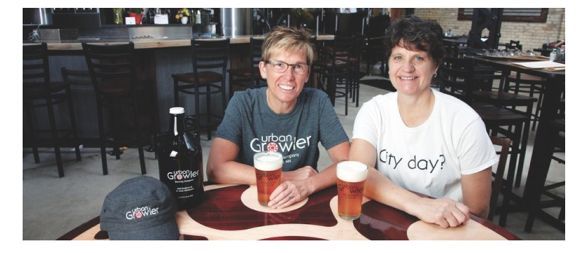
Sunday, December 14, 2014
Urban Growler is booming. And co-founders Deb Loch and Jill Pavlak have a lot on their plate, from a long-awaited kitchen and menu expansion to a new Kickstarter campaign and a rapidly growing distribution footprint. The St. Anthony Park brewery now has 22 employees, with 17 between the brewery and taproom, and 5 in the kitchen. That’s up from about a dozen when the brewery first opened.
“We thought we could get by with 12 or 13 people,” says Pavlak, but Urban Growler’s runaway popularity quickly spurred another hiring round. “You need to have enough [employees] to provide excellent customer service,” she says. “That’s what keeps people coming back.”
The kitchen expansion tops on the agenda. Pavlak hopes to have the kitchen expanded by mid-winter, but warns of unexpected delays or complications.
“If there’s one thing I’ve learned since we began,” she laughs, “it’s that timetables can slip.” She and Loch had to push back Urban Growler’s opening date several times due to unforeseen complications.
The new kitchen’s menu will expand to include burgers and other entrees made from organic, locally sourced meats. Urban Growler cultivates relationships with local producers whenever possible, says Pavlak, noting a particularly poetic relationship with Mark and Jesse Gilbertson, a pair of western Wisconsin farmers who frequent the St. Paul Farmers’ Market. Pavlak hands off Urban Growler’s spent grains to the Gilbertsons to be used as animal feed
“They tell us their cows, hogs and chickens love them,” says Pavlak. “The grains are sweet, but also wholesome and protein-rich.”
Once the new menu is in place, Pavlak and Loch plan to buy beef, and possibly pork and chicken, from the Gilbertsons, creating a sustainable circle. Pavlak says the new kitchen may also use spent grains in house-made bread and cookies, though “we’re still working on the recipes,” she warns.
Pavlak says the new kitchen’s Kickstarter campaign should be live before Christmas, but details on the funding amount and timeline still have to be worked out.
Separately, Urban Growler is also feverishly producing more beer to satisfy an expanding roster of brewery and restaurant clients, despite frustrating delays in fulfillment for Urban Growler’s branded tap handles. “We’re still sending out prototype tap handles,” laughs Pavlak.
Distributed beers include Cowbell Cream Ale, City Day Ale and Graffiti IPA. Most confirmed accounts are in the western suburbs, but Pavlak mentions Bar Louie in Uptown and Muffuletta in St. Anthony Park as local adopters. In October, a Muffuletta-Urban Growler beer dinner sold out in seven hours. “[Muffuletta’s manager] said that was a record,” says Pavlak.
Beyond the kitchen, Urban Growler’s interior configuration is changing for the better. Come January 1, the co-founders will take over a storage area next door that will house a gigantic cooler that now juts out into the seating area. The expanded kitchen will occupy part of its former footprint, with expanded seating and standing room in the remainder.
And Pavlak and Loch are weatherproofing the brewery, widely known for its spacious, sunny patio. An interior vestibule, installed in November, should shield the high-ceilinged brewhouse/taproom from outdoor cold.
Wednesday, December 10, 2014
Twin Cities’ parents have a new source for unique, high-quality baby apparel and nursery decorations: BoomBoom Prints, an online marketplace based out of an “informal coworking space” in downtown Minneapolis. BoomBoom Prints (BBP), says Jennifer Weismann, BBP’s PR consultant, is “Etsy meets Pottery Barn.”
Fresh off a July 2014 launch, BBP already has 4,000 unique pieces for sale and about 500 participating designers—many of them based in the Twin Cities. The company has four full-time employees and three part-timers, says CEO Brett Brohl, with tentative plans to add more after the holidays.
A recently closed fundraising effort earned $400,000, a tidy sum for a startup. “Our funding round allowed us to make key hires, invest in our platform and expand our offerings,” says Brohl. BBP started as a marketplace for wall art, he explains, but now offers clothing, stationery and baby/parent accessories as well.
Founded by new dad Ryan Broshar and “serial entrepreneur” Brohl, BBP sources designs from a rapidly growing community of artists—including many in Minneapolis-St. Paul.
“I heard about the site from a friend of a friend,” says Twin Cities’ artist Kate Worum, who chose BBP as her first online sales channel. “BoomBoom Prints felt more approachable: They are local, have the artists’ interests in mind and they advertise by word of mouth.”
Worum is not alone. Another local BBP artist, John Gerber, has created such items as a bib captioned “Feed me” and a onesie that asks “Who you calling baby? Thought so.” Kate McCollow’s wall art features baby-themed fantasy scenes and serene watercolors depicting familiar Twin Cities’ landscapes.
BBP artists set their own prices, using the company’s suggested multipliers to arrive at a fair retail price. BBP then takes a cut of the sale and passes the rest on to the designer.
Though the Etsy comparisons are inevitable, Brohl points out a key difference: BBP is completely turnkey, handling every nitty-gritty aspect of selling artwork online, from printing and shipping to returns and customer contact. Etsy and other online marketplaces ask artists to do these tasks.
Worum appreciates BBP’s full-service approach. “I run a freelance illustration and design business by night, and work as a trend forecaster for apparel and accessories at Target during the day,” she says. Her hectic schedule makes it impossible to fulfill orders herself or even print her own work. “With BoomBoom Prints, all I have to do is make my art, click a few buttons and move on with my day.”
There may soon be more local “BoomBoomers” like Worum. Though about 50 percent of BBP’s designers are international, says Brohl, “we’re really concentrating our efforts on developing artists in our backyard. There’s so much artistic talent and diversity here.”
Brohl and his team often reach out directly to local artists and invite them to sell their work on BBP. With no upfront costs, they’ve already found lots of takers. “We’re excited about the future,” says Brohl. “We’re making a go of it.”
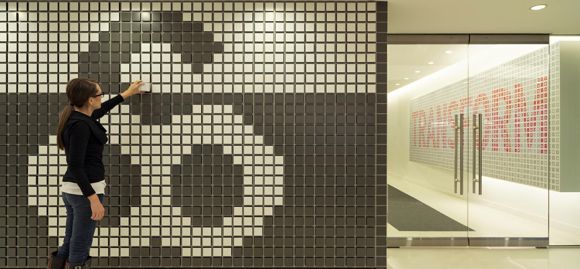
Wednesday, December 03, 2014
Outsell, based on the 32nd floor of the Capella Tower in downtown Minneapolis, is one of the fastest-growing companies in the U.S. according to Inc. Since 2010, Outsell has roughly tripled its employee base and quadrupled its revenue. The company earned a spot (#455) on the 2014 Deloitte Fast 500, a closely watched list that tracks revenue growth at public and private North American companies. According to Deloitte, Outsell is Minnesota’s third-fastest growing tech company.
And Outsell shows not signs of slowing down. The company has added 15 jobs this year, bringing its total headcount to more than 100, and predicts an equal or greater number of employees for 2015.
“Our people are our most important asset by far,” says founder and CEO Mike Wethington. “We’re constantly looking for talented, self-starting candidates, especially web developers, data analysts and marketing specialists.”
Outsell’s current office space measures about 18,000 square feet, with a variety of spaces that encourage collaboration. Depending on the pace of hiring next year and beyond, says Wethington, his company may soon need to exercise an option to expand into the Capella Tower’s 31st floor.
Outsell was started in 2004, when Wethington, a self-described “serial entrepreneur,” bought Judson Bemis’s Solv Technology, which had developed an online lead generation solution for auto dealers. Wethington and his first employees improved and streamlined the platform, developing analytics to predict customer preferences and deliver automated, high-value marketing material.
For instance, a recent car buyer might receive emails or texts advertising oil changes, tune-ups and vehicle-appropriate accessories consistent with the buyer’s past purchasing and web navigating habits. “We customize and automate everything for the dealers so they can devote more resources to selling and fixing cars,” says Wethington.
“The experience is brand-consistent, like Amazon,” he explains, allowing independently owned and franchised dealers to use the same platform and analytics as others selling the same model. Outsell currently works with about 1,000 U.S. dealers and seven automotive brands, sending out automated communications to about 10 million consumers per month.
If you’ve recently purchased a new or used vehicle from a franchised dealer, there’s a good chance Outsell is behind the marketing emails and texts it sends you.
Despite its reach, there’s room for Outsell to grow. Dealers spend well over $1 billion per year on marketing, says Wethington, and many don’t yet use automated customer-contact solutions.
Even as Outsell racks up impressive growth figures and finds new ways to improve the customer experience, the company devotes significant resources to employee retention. The company offers unlimited paid time off, with no questions asked, and no distinction between sick days and vacation time, a rarity in the modern workplace.
“We place a lot of trust in our employees,” Wethington explains. “We expect them to take care of their work and reward them for holding up their end of the bargain,” –i.e., getting their work done on time.
Outsell also offers a profit sharing program for all associates, including entry-level employees, as well as performance bonuses, a matching 401(k) and tuition reimbursements for associates looking to further their careers with advanced degrees.
In a typical year, says Wethington, Outsell devotes 3 to 5 percent of total operating income to charitable contributions. The company’s employee-led Caring Committee partners with the Minnesota Keystone Program to distribute financial resources and manpower to groups like the Make-a-Wish Foundation, Boys & Girls Clubs of America, and the ASPCA.
Giving back to the local community is a win-win experience for employees, says Wethington—just like every workday at Outsell. The company’s perks earned it a spot on a recent Star Tribune list of best Minnesota work environments.
“We love being based in the Twin Cities,” he says. “We’ve got a talented, smart, kind workforce that understands the value of hard work and doing the right thing.”
Outsell Jobs in Minneapolis
Senior Software Analyst
Senior Software Developers

Wednesday, November 19, 2014
The Minneapolis Downtown Council recently announced that Aimia, a consumer loyalty and engagement management firm, would move its U.S. headquarters, along with more than 300 employees, to a 50,000-square-foot space in the North Loop’s Butler Square building. Aimia previously occupied space in a Plymouth office park near I-494.
Aimia is the latest company to relocate, expand or retain space in downtown Minneapolis since the launch of the Minneapolis Downtown 2025 Plan. Other notable companies include CenterPoint Energy, Valspar, XCel Energy, Olson and Be the Match. Three years into the Downtown 2025 Plan, the momentum is palpable.
“Aimia saw the merits of moving downtown...and all the opportunities and progress on display here right now,” says Steve Cramer, president and CEO of the Minneapolis Downtown Council & Downtown Improvement District. “Our mission is to create an extraordinary downtown.”
One of the core goals of the Downtown 2025 Plan is to create a more vibrant, energetic downtown for workers, businesses and residents. Another goal is to accelerate economic and cultural progress by eliminating the either/or distinctions between those three categories. The plan recognizes that a truly world-class downtown core needs a diverse mix of uses, and a high density of people, ideas and economic activity.
“Cities with a strong central business district thrive because they have companies, big and small, working in close proximity [and collaborating] with clients and partners,” Cramer says. “When the area as a whole succeeds, it creates new opportunities for everyone involved.”
The addition of thousands of
new residents has raised downtown Minneapolis’s profile, too. With a broader, more creative pool of potential recruits within walking or biking distance, talent-driven companies like Aimia find it much easier to justify the temporary cost of moving downtown.
“Our population has risen to more than 37,000 people,” Cramer says, “and we’re seeing apartments and condos under construction across the area.” The increasing density of creatives downtown dovetails with other Downtown 2025 Plan initiatives, including the recently announced
Minneapolis Idea eXchange and a street beautification partnership with the University of Minnesota’s College of Design.
Aimia’s move is just another sign of how far downtown Minneapolis has come. “For the first time in decades, we’re seeing an incredible trend of people moving in toward the downtown area,” Cramer adds.
“Downtown Minneapolis is a leader for the [Twin Cities] region,” he adds. “If it thrives, the region as a whole thrives.”
Aimia Jobs in Minneapolis
Director of Business Development - CPG, Retail, Finance
IT Sales Engineer
Mobile Delivery Manager

Wednesday, November 19, 2014
The latest craft brew to come out of Minneapolis-St. Paul isn’t made from barley and hops. It’s Prohibition Kombucha, a fermented beverage made from high-quality teas and fruit or floral flavorings.
The tasty product of a partnership between former Herkimer brewer Nathan Uri and Verdant Tea founder David Duckler, Prohibition is the region’s first homegrown kombucha. The company’s three kombucha flavors are available at about a dozen co-ops, coffee shops and farmers markets around the Twin Cities, including Mill City Farmers’ Market, Seward Co-op, Spyhouse and Kopplin’s Coffee.
Uri has bigger aspirations, though: He’s teaming up with Minneapolis-based Tree Fort Soda to build a larger kombucha brewery at a to-be-determined location in the Twin Cities. Eventually, Uri envisions a product line available at cafes, restaurants and grocery stores throughout the country, plus satellite breweries on the East and West Coasts to supply customers in other regions.
Prohibition Kombucha’s creations are healthy -- really healthy. “Depending on the quality of tea and type of yeasts and bacteria used, there can be varying levels of amino acids like L-theanine, healthy sour acids like malic and acetic acid, B vitamins, magnesium, zinc and other nutrients,” says Uri. “Our kombucha is also low in sugar and calories, slowing the glycemic load of a meal when consumed with food.”
According to Uri, all Prohibition Kombucha varieties have less than one gram of sugar per ounce and no more than 56 calories per pint.
Popular with the counterculture movement in the Southwest and West Coast, kombucha is novel concept in the Twin Cities. “Currently, the main reason people drink Kombucha is for the probiotic content,” explains Uri, “which can be as simple as one bacteria or as many as 20 beneficial yeasts and bacteria.”
The microbes ferment a mixture of tea, sugar and other natural ingredients, producing carbonation, crisp flavors and a trace, non-intoxicating amount of alcohol. A multi-organism fermenting base is called a symbiotic colony of bacteria and yeasts, or SCOBY.
Kombucha doesn’t always taste great, though. Without naming names, Uri fingers “some other brands” that have a funky, sour, “sharkbite” flavor that’s too tangy to be pleasant. Prohibition uses high-quality black and oolong teas, plus carefully selected secondary ingredients, to achieve a “crisp, cider-like acid-sugar balance,” Uri says.
The fermenting process does produce trace amounts of alcohol -- less than 0.5% by volume. Though 0.5% isn’t intoxicating, Uri and Duckler are sensitive to sober customers’ concerns.
“We completely and unequivocally respect and support” those who avoid kombucha for any reason, says Uri. “That said, others in recovery enjoy our Kombucha without issue. It's a very personal choice and we want everyone to lead healthy and happy lives, so we label our product accordingly.”
In fact, Prohibition Kombucha probably wouldn’t exist if not for Uri’s temporary decision to quit drinking. In 2012, while living in Portland, he hankered for the sensory and aesthetic experience of a fine wine, great beer or perfect cocktail.” He tried his first “small batch craft” kombucha, loved it, and began brewing kombucha at home.
Soon realizing the importance of quality tea to quality kombucha -- many other kombucha producers use low-quality teas or “the bare minimum” of a higher-grade variety, he says -- Uri moved back to the Twin Cities and contacted Duckler, an old friend. Now, Uri exclusively uses Verdant Tea’s black and oolong teas in his kombuchas.
“Since [Duckler] sources the finest, freshest and highest quality Chinese teas available in the US, it’s a natural partnership,” he says. One that could soon bring a fermented, cocktail-quality and (almost) totally non-alcoholic beverage to your local coffee shop or grocery store shelf.
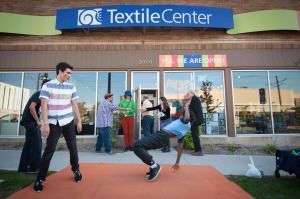
Wednesday, November 12, 2014
Creative City Roadmap, the City of Minneapolis’ ambitious plan to highlight and strengthen the city’s creative assets, is entering its next phase. Until November 21, an online survey allows city residents to share insights about Minneapolis’ current cultural strengths and offer new ideas for widening the city’s “dot” on the American cultural map.
The results of the survey will inform the drafting of the actual Creative City Roadmap, a 10-year arts and culture plan to be released in 2015. The Creative City Roadmap will replace Minneapolis’ current 10-year arts and culture plan released in 2005.
In addition to inviting rank and file Minneapolitans to take part in the survey, the city tapped two “artist engagement teams” to “engage with people [around the survey], especially those who are part of traditionally underrepresented and underserved communities,” says Rachel Engh, creative economy program associate for the City of Minneapolis.
The teams include local creatives Chrys Carroll, Keegan Xavi, Sha Cage and E.G. Bailey. Their duties encompass in-person surveying, “anecdotal data gathering” through community engagement initiatives, and drafting and editing the Creative City Roadmap document.
The Creative City Roadmap process is run by a steering committee that oversees five working groups focused on core intersections of the creative economy: placemaking, creative engagement, lifelong learning and sharing, supporting artists’ work and the arts’ relationship with the “mainstream” economy.
“The role of arts and culture in the city of Minneapolis, and the way the city chooses to support these industries and activities, is changing,” says Engh. “The Creative City Road Map’s vision is that arts and cultural activities have the capacity to expand the economic pie and help more people reap benefits.”
“Many major U.S. cities have citywide arts and culture planning documents,” she adds. “[We’re also] acknowledging the value a new plan for arts, culture and the creative economy could have for Minneapolis,” both by “making Minneapolis a more welcoming and desirable place to live and giving underserved Minneapolitans access to economic and social returns.”
Creative City Roadmap kicked off with a September 17 public house at the Textile Center on University Avenue and a September 24 followup event at the Pillsbury House & Theater in South Minneapolis. The information-gathering phase of the project will run through September 2015, with regular programming and feedback during that time. According to Engh, at least two more open houses, in the mold of the Textile Center and Pillsbury House events, are planned for the coming months.
Wednesday, November 12, 2014
The Foundation is moving its 20+ employees from a small office shared with Atomic Data into a bigger space in the recently renovated Ford Center, near the heart of the North Loop. The “single source IT provider,” which serves as a one-stop help desk for design, architecture and nonprofit firms that use Apple systems, is also opening a new office in Co-Merge, a coworking space in San Diego, in what could be the first phase of a multi-city expansion.
A rapid expansion and a shift into mobile device support for national retail chains “caused us to run out of physical space” for housing employees and “storing pallets of iPads and iPhones,” says Matt Woestehoff, director of operations and business development. “Meanwhile, Atomic Data”—a data center operator co-owned by Jim Wolford, sole owner and CEO of The Foundation—“was growing rapidly and basically kicked us out of their office,” Woestehoff says with a laugh.
The new digs are “definitely an upgrade,” he adds. The Foundation shares one floor of the Ford Center with Seed, a small startup incubator that focuses on biotechnology and other high-tech ideas. Seed uses an old chemistry lab on one side of the building.
The Foundation’s new space belonged to a boutique soap manufacturer, a longtime client of The Foundation’s, which moved its operations to Milwaukee after a buyout by Johnson & Johnson. The space has a 32-desk bullpen and easy access to a highly secure storage area for valuable electronics. The Foundation has access to a guest parking lot, a huge perk for the 300-odd local clients that had to use meter parking at its old location.
Though The Foundation is growing rapidly, the Ford Center space should be fine for the foreseeable future. Unlike many IT companies, The Foundation lacks an office-based salesforce. “We’re not salesy people,” says Woestehoff. Instead, the company relies on referrals and search traffic to generate new business. The company’s engineer-heavy workforce spends “40 to 45 hours per week, per person” on site at local clients’ offices, freeing up space at the Ford Center.
The flexible work model first led Woestehoff and the team to explore the possibility of a second office last year. Two employees, an engineer and operations specialist, expressed interest in moving to southern California and remaining part of the team. Woestehoff investigated and found that San Diego’s business culture is remarkably like the Twin Cities’, “very forward-looking in terms of technology, but laid back and supportive too,” he says, without the competitiveness of tech hubs like San Francisco and New York.
Using The Foundation’s experience with CoCo, “a valued partner” that the company has worked with for years, Woestehoff found Co-Merge and set the two employees up there. It’s still early going, but initial business development efforts have been successful. He’s confident the move will pay off, noting that other cities with similarly forward-looking yet supportive cultures could be ripe for additional offices for The Foundation.
But not too fast. In today’s fast-paced IT world, The Foundation, now in its 15th year, prides itself on patience and strategic thinking. “A lot of our friends have gone out of business because they’ve acted fast and made mistakes,” he says. “If it takes another 15 years to open a third office, so be it.”

Wednesday, November 05, 2014
Tunde Wey, a Detroit chef with a reputation as hot as his cuisine, is making his way to Loring Park on November 11. He’s on a mission to “unfetter diners from the tedium of modern American cuisine,” using the newly opened Third Bird (on Harmon Place) as his canvas for Lagos x Minneapolis.
Wey’s ticketed event features a six-course meal of authentic Nigerian dishes, including a traditional rice pilaf, peppered goat and fried plantains. The gathering is aptly named after the capital and largest city of Wey’s home country. The event, Wey says, is a way for American diners “to allow themselves to be colonized by Nigerian food,” which isn’t as popular in the Twin Cities as many other ethnic cuisines.
“Nigeria is the most populous country in Africa, with about 150 million people in an area the size of Texas,” Wey says. “So I find it amazing that its cuisine isn’t more widely available.”
Then again, says Wey, “Nigerian food” is something of a misnomer. His home country’s cuisine is much like what’s available in across West Africa, which has a common climate and dozens of cultures with a shared, ancient history. Labeling country-specific cuisines is a much newer concept, the byproduct of European colonial activity in the region.
The idea of an authentic, intimate West African experience in a newly opened restaurant resonated with Kim Bartmann, owner of the Third Bird and the force behind such notable Minneapolis-St. Paul establishments as the
Tiny Diner, Red Stag Supper Club and Barbette. Wey and Bartmann met at IMG’s
Urban Innovation Exchange in September, and the partnership quickly took root.
“It seemed to be a good match,” says Wey. He’ll be first on a slate of monthly guest chefs that Bartmann wants to feature at the Third Bird.
Wey formerly co-owned (revolver), a “permanent pop-up” restaurant in Detroit’s up-and-coming Hamtramck area. Typically open just two days a week, (revolver) hosts a “revolving” slate of notable, innovative chefs from around the U.S. and world, allowing them to create a completely new menu during temporary stints in the kitchen.
Though (revolver) raised Wey’s profile considerably, he came to feel that the restaurant constrained his creativity. (revolver)’s guest chefs were all incredibly talented, but most adhered to the orthodoxy of modern American cuisine. Six months after opening (revolver) with his business partner, Wey was regularly experimenting with traditional African dishes—“what my mother, grandmother and relatives on back have been cooking for hundreds of years.” Earlier this year, he sold his shares to his partner and left (revolver) behind.
“People were very supportive of the idea behind Lagos,” says Wey, “which gave me the confidence to go out and do this.”
Without a permanent restaurant home, though, Wey is keen to drum up even more public support. In addition to Minneapolis, Lagos has made stops in New Orleans and Chicago, with Cincinnati, Buffalo, Philadelphia and Brooklyn still to come.
Asked what he’s looking to take away from the experience, Wey says, “I have no expectations. I’ll take whatever the good people of Minneapolis want to give me.”
When the Lagos tour ends, he does have his sights set on opening a Nigerian (or West African) restaurant in Detroit. Longer-term, he can see himself as a restaurateur in the mold of Bartmann, opening unique, independently branded restaurants in Detroit and other Midwestern cities.

Wednesday, November 05, 2014
Hundreds of entrepreneurs, investors and corporate executives gathered at the Depot Hotel in Minneapolis on October 27 and 28 for the Midwest Innovation Summit, an annual gathering that showcases what’s next in technology and manufacturing across the region. About 75 exhibitors were on hand, including promising Minnesota startups like 75F—winner of this year’s
Minnesota Cup— and Water Meter Solutions, which operates out of
CoCo Minneapolis.
“The Midwest Innovation Summit is about attracting entrepreneurs and business leaders from all across the region to display any solution that uses natural resources more efficiently,” says Justin Kaster, executive director of Midwest CleanTech Open, the summit’s sponsor. “Many of the exhibitors here are committed to sustainability for ethical and environmental reasons, but [Midwest Innovation Summit] really shows that clean technology is a great business opportunity as well.”
In innovation capitals like the Twin Cities, Kaster adds, entrepreneurs and investors have “started to respond to that value proposition” over the last decade. “Everyone realizes that clean technology is a win-win situation now,” he says. “You don’t have work overtime to convince people of that anymore.”
Several Twin Cities companies have clearly bought in. Water Meter Solutions makes two water-saving technologies. Floo-id is a “smart toilet monitoring device” that allows property managers and homeowners to monitor their toilets’ water use in real time, quickly identifying leaks and other issues that could affect their water bills. Floo-id is powered by flowing water, making it energy neutral. Water Meter Solutions’ other technology, H2O Pro, performs a similar function for entire buildings’ water systems, offering value to multi-unit landlords.
Nearby, Minneapolis-based Irri-Green’s exhibitor booth showed off the Genius irrigation system, a patent pending lawn-watering setup that analyzes landscape contours and other factors to deliver water as efficiently as possible. Each Genius irrigator’s range overlaps precisely with that of the next, “eliminating the wasteful, overlapping arcs of water that conventional irrigation systems” produce, says Irri-Green.
Garden Fresh Farms, a Minneapolis startup and 2013 Minnesota Cup division winner with an aquaculture facility in the city, was on hand as well. The fish in the company’s growing tanks continuously fertilize the plants suspended above them, creating a self-sustaining ecosystem that produces plant and animal products for harvest.
These local companies are part of what Kaster calls “a regional ecosystem of innovation.” He urges entrepreneurs, investors, nonprofits and government entities across the Midwest to “think bigger than the city or county level” and “move past the state versus state competition” that can hinder the exchange of ideas, people and investment. The Northeast, Kaster says, is a great example of a region where innovators have banded together to create sustainable, big-picture solutions, like the Regional Greenhouse Gas Initiative.
“We have a tremendous amount of intellectual and creative capital here in the Twin Cities,” he says. “Events like the Midwest Innovation Summit are conduits for ideas and investment from nearby areas” that ultimately raise the profiles and prospects of local innovators.
Wednesday, October 22, 2014
Hothouse @ MIA, Sarah Lutman’s pop-up coworking space in the Minneapolis Institute of Arts’ (MIA) Villa Rosa Room, just reached the end of its 12-week run. To sustain momentum for the experiment, Lutman is partnering with OTA and Philadelphia-based coworking guru Alex Hillman to produce “What’s Up with Alex Hillman,” a TED-style conversation this Thursday, Oct. 23, at 7 p.m. in the MIA. Thursday’s event, coupled with “ongoing conversations with fellow Hothousers,” could help Hothouse secure a permanent location somewhere in the MIA.
“What’s Up with Alex Hillman” is the final event of several produced with the participation or collaboration of Hothouse residents. “Hothouse participants who produce public programs as part of their professional work were tasked with directly connecting the MIA to their programs during the 12-week pilot,” says Hunter Wright-Palmer, MIA’s Venture Innovation Director. “Programs as diverse as Climate Hack Twin Cities, Chris Farrell's Unretirement, Sing the Museum, and an FD:13 performance by Jen Rosenblit were enhanced by authentic connections to different elements of the MIA and the collection.”
On Thursday, Hillman—founder of Philadelphia’s Indy Hall coworking hub and first-time Twin Cities visitor—will talk about “taking an active role in creating community and pursuing ‘the good life,’” says Lutman, MIA’s Entrepreneur-in-Residence. Hillman defines “the good life” as one “rich with relationships, ideas, emotions, health and vigor, recognition and contribution, passion and fulfillment, great accomplishment and enduring achievement.”
The overarching goal of “What’s Up with Alex Hillman” is to spark conversations about creative approaches to coworking here in the Twin Cities, using Indy Hall’s community-driven art shows, readings, pop-ups, farmers’ market and spin-off organizations as models. Those conversations could help determine the future of Hothouse and coworking at the MIA.
“There are a lot of spaces at the MIA that are episodically not in use,” says Lutman, stressing that no decisions have been made about how Hothouse will look or where it will “live” if it returns later this year or next.
“[Lutman] and I are working together to determine the future of Hothouse,” says Palmer-Wright, “exploring...benefits thus far from both the participant side and MIA side to address next steps.”
Hothouse @ MIA, and community-driven coworking more broadly, is an important component of MIA’s development strategy, which “emerged directly out of two prongs of our strategic plan DNA, audience engagement and [revenue generation],” says Palmer-Wright. For Lutman, Hothouse offered an opportunity to “foster [community] connections and create an opportunity for authentic co-working experiences,” a longtime passion. Hothouse naturally arose from the intersection of these complementary goals.
“Hothouse posed an opportunity to connect a new audience with new ways to use the MIA's resources by activating our collection, physical spaces and staff to catalyze innovation, productivity and connection in the everyday work of Hothouse members,” explains Palmer-Wright.
Like Indy Hall, Lutman’s inspiration, Hothouse is more than a “transactional” coworking space where independents share resources with peers but otherwise remain aloof. Rather, Hothouse is “an opportunity to take a deeper dive into the MIA in the daily lives and needs of members,” says Palmer-Wright.
“The key differentiator between Hothouse @ MIA and other co-working spaces, locally or nationally, is the intentional connection between the co-working members and the MIA,” she adds.
Wednesday, October 15, 2014
More than 100 Twin Cities’ creatives gathered last week in the Minneapolis Convention Center for the fifth annual Giant Steps, an all-day conference for “entrepreneurial creatives and creative entrepreneurs.” Giant Steps featured three plenary panel conversations, covering broad topics like overcoming creative and practical challenges, defining success and scaling a creative business. Smaller breakout sessions included “Finding Your Audience/Finding Your Niche,” “Tax: Thinking Outside the Shoebox” and “Self-Care for Creatives.”
Founded by Susan Campion of Camponovo Consulting and M.anifest, a Ghana-born hip hop artist with close ties to the Twin Cities, Giant Steps is all about helping local creatives, freelancers and self-employed “independents” overcome obstacles to creative and financial success. This year’s conference was hosted by Campion, who’s also a professor at the University of St. Thomas, and Kevin Beacham, a DJ, hip-hop historian and manager at Rhymesayers.
According to Giant Steps, attendees included people from all over the creative spectrum: “Chefs, designers, dancers, architects, photographers, playwrights, film-makers, inventors [and] hip hop artists.”
“We believe we'll learn more and learn faster if we cast a wider net—connecting with and learning from folks beyond our current discipline or industry,” according to the Giant Steps’ website. “By creating conversations around interesting examples and challenges we all share, we set the stage for cross-pollination and future collaborations.”
Giant Steps’ three panel conversations shaped the dialogue. In the morning, “Resilience: Overcoming Challenges and Moving Forward” found four local entrepreneurs and artists (including Teresa Fox of Glam Doll Donuts) sharing insights on early roadblocks to creative and financial success—writer’s block, business setbacks and more. “Success: How Do You Define It and How Does It Define You?” featured dancer/choreographer Ananya Chatterjea, founder of Ananya Dance Theater, and three others, discussing the importance of setting manageable goals and crafting a long-term creative or entrepreneurial vision.
The final panel conversation, “Good Problems to Have: Insights on Scaling Your Work and Increasing Your Impact,” featured four successful “creative entrepreneurs” who have “graduated” to managing sizable teams: Chris Cloud of MPLS.TV,
Joan Vorderbruggen of Made Here and the Hennepin Theater Trust, Mark Fox of creative-friendly Fox Tax and Maurice Blanks of local modern furniture designer Blu Dot.
All talked about what drove them to move beyond the “independent” mindset and recruit teams to work under them. “We started with the narcissistic assumption that our need”— fashionable furniture at an affordable price—“was shared by others [in the Twin Cities],” said Blanks, whose company now has nearly 100 employees. “The initial goal was to create jobs we liked.”
Campion, who moderated the conversation, asked the panelists about limits to growth as well. “The most important thing we learned was when to say ‘no,’” said Fox. “You never want quality to suffer” as a result of ambition.
For Vorderbruggen, success—specifically, managing a team of artists for the Hennepin Theater Trust—meant sticking up for her fellow creatives. Asked by Campion what prerogatives her newfound power provided, she recalled convincing her superiors not to request free work from artists. “If I’m getting paid, my artists are getting paid,” she said.
Vorderbruggen also talked about staying in tune with the creative community as she transitioned to an oversight role. She was instrumental in putting together a panel that represented the diversity of Minneapolis’ arts community, ensuring that many viewpoints would be included in Made Here’s work.
Giant Steps packed a lot of insight into a single day, but the theme that tied it together was simple: Creatives and entrepreneurs have more in common than they might think—and they’re more powerful when they work together.
“You need to make sure that others know what you stand for,” said Cloud, “and know when to rely on people who can do a great job at things you might not be so good at.”

Wednesday, October 15, 2014
You no longer need to bike to the boutique to find the latest in Twin Cities fashion. With HOTROCITY, a Minneapolis-based e-shop run by model, blogger, event promoter and fashion guru John-Mark, you can shop for local designs in the comfort of your living room. Still, you may want to pedal over to Public Functionary on Friday (October 17), where HOTROCITY will be featured during an open-admission launch party.
HOTROCITY launched at the beginning of October, drawing inspiration from (among many others) local artist Jesse Draxler, “the exquisite personal style” of Twin Cities’ fashionista Sarah Edwards and the collaborative fashion blog MPLSTYLE, which John-Mark ran with locals Drew Krason and Savanna Ruedy.
HOTROCITY specializes in such items as pendants, bracelets, earrings and bags, made right here in the Twin Cities. Featured local designers include East Fourth Street, Silver Cocoon and Objects & Subjects. Some items are instantly memorable, like Silver Cocoon’s “Moon Rabbit Rice Pack Draw String” and Objects & Subjects’ “Bullet Bracelet” (yes, those are shell casings).
“At HOTROCITY, we have a very unique relationship with each individual designer,” says John-Mark. “It's been so much fun getting to know [them all]. We're pretty flexible with our designers and do our best to accommodate wherever they're at in their own journey as artists and business people.”
Though the focus is on local artists, HOTROCITY also curates designs from creatives in L.A., Chicago, Seoul and Shanghai. And John-Mark is always on the hunt for new looks, wherever they’re found.
“We have an intensive checklist of standards to ensure that we're providing our customers with high quality product, manufactured with care,” he says. To keep things fresh, he adds, HOTROCITY will add to its lineup on a monthly basis and “do an aggressive turnover of store product bi-annually.”
HOTROCITY launched after a year of “brainstorming how I could foster a greater impact on the local design community that extended beyond blogging,” says John-Mark. He paired with Irv Briscoe of VON91, a web design agency based in downtown Minneapolis, to craft an arresting website and e-commerce platform: “something notorious,” according to the website.
John-Mark expects the “relentless creativity” of the Twin Cities to seal HOTROCITY’s success. The region isn’t known as a fashion hub, but there’s enough inspiration here to support a locally focused fashion boutique.
“This is an easy job when I see all the talent we have in the local design community,” he says. “Starting a business can be scary, but I've seen enough positive growth in our design community to be confident in the sustainability of HOTROCITY.”
John-Mark is a big fan of the buy-local concept, too. “Most women make the pilgrimage to Uptown, the Mall of America or the Internet to buy clothing or accessories at least once a year, if not more,” he says. “Wouldn't it be great if that shopping also supported local artists?”

Wednesday, October 08, 2014
The Knight Foundation recently announced 42 winners of its first-ever St. Paul Knight Arts Challenge. The challenge tasked applicants with answering this question: “What’s your best idea for the arts in St. Paul?” The grants, totaling nearly $1.4 million, recognize creative initiatives from the Far East Side to St. Anthony Park.
In addition to providing their best ideas for the arts in St. Paul, the Knight Foundation requires successful applicants to demonstrate that that project will either “take place in or benefit St. Paul,” according to a release from the foundation. And each applicant must find funds to match the Knight Foundation’s awards. Some of notable winners include:
The “Smallest Museum in St. Paul,” $5,000
A project of almost-open WorkHorse Coffee Shop, in the Creative Enterprise Zone in St. Anthony Park, the “Smallest Museum in St. Paul” will be really, really small—a vintage fire-hose cabinet that couldn’t even hold a Labrador retriever. The museum will host rotating collections of artifacts, art and memorabilia from the neighborhood’s vibrant creative and academic communities. The first exhibit is scheduled for June. Future exhibits must follow three simple rules: celebrate local themes or history, engage the coffee shop’s patrons, and avoid high-value, theft-prone artifacts.
Fresh Traditions Fashion Show, $35,000
The Center for Hmong Arts and Talent won a sizable grant to expand its Fresh Traditions Fashion Show, the Twin Cities’ “only culturally inspired fashion event that exhibits the creativity, originality and quality of work by Hmong designers,” according to the Knight Foundation. At the show, designers must incorporate five traditional Hmong fabrics into clothing that hews to contemporary fashion. Part of the Knight Foundation grant will be set aside for career support and skills-building classes for individual designers.
Radio Novelas on the East Side, $50,000
Nuestro Pueblo San Pablo Productions, led by Barry Madore, will use its Knight award to produce a series of 20 fictional radio novelas that celebrate the history and culture of the East Side’s Latino community. Madore plans to promote the series with three live shows at yet-to-be-named venues around the district. Like Fresh Traditions Fashion Show designers, participating performers can count on support and training from Madore and his partners.
Paleo-osteological Bike Rack, $40,000
Artist and paleo-osteological interpreter Michael Bahl has plans to fabricate the bronze skeleton of a large dinosaur-like animal in repose, with its ribcage functioning as a bike rack. That bony crest on its skull? A bike helmet. The work focuses on how prehistoric skeletons, which are obsessed over by scientists and fossil hunters around the world—can also be viewed as works of art. “When the individual bones are joined in a united effort, a skeleton becomes the ultimate functioning mechanism, or in this case, a whimsical bike rack,” according to Knight’s website.
Twin Cities Jazz Festival, $125,000
More established organizations got a slice of the pie, too. The largest single grant went to the Twin Cities Jazz Festival. The annual festival already draws more than 30,000 attendees, but organizers wanted to add more stage space and spring for better-known headliners. Performers have yet to be announced for next year’s event, in June, but executive director Steve Heckler is considering a move to the brand-new St. Paul Saints stadium, in the heart of Lowertown. That would create more seating space and facilitate pedestrian traffic from the Green Line stop at Union Depot.
The St. Paul Knight Arts Challenge will continue through 2016, with two more rounds of awards. All told, the foundation has earmarked $4.5 million to fund creative ideas, plus another $3.5 million for five established St. Paul arts institutions: Springboard for the Arts, Penumbra Theater, TU Dance, St. Paul Chamber Orchestra and The Arts Partnership. St. Paul is just the fourth city to participate in the Knight Arts Challenge, after Miami, Detroit and Philadelphia.
Wednesday, October 08, 2014
Tech Dump, a technology recycling nonprofit based in Golden Valley, opened a second location on North Prior Avenue in St. Paul on September 22. The facility collects more than a dozen varieties of tech waste, from old computer monitors and TVs to batteries, cell phones and printer cartridges.
Tech Dump complements its commitment to responsible waste disposal with a mission to create jobs for “economically disadvantaged adults” who live in the area. The organization is an offshoot of the nonprofit Jobs Foundation, led by Probus Online founders George Lee and Tom McCullough. Lee and McCullough claim that for every 72,000 pounds of waste Tech Dump handles, the organization creates one job for one year.
Tech Dump finds its employees through partnerships with such Twin Cities nonprofits as Goodwill Easter Seals and Better Futures Enterprises, and referrals from current employees. “[The nonprofit partners] provide soft skills training and other pre-employment resources, then refer employees to us when we have openings,” says Amanda LaGrange, marketing director, Tech Dump.
She adds that, “employees are very protective of our organization,” so they can recognize potential candidates who “really want to change and work toward a new future.”
Once hired, employees take on escalating responsibilities until they “graduate” from Tech Dump and find work at another employer. “We want to develop the skills that will make our staff the best employees in their next position,” LaGrange adds, such as “showing up to work on time each day, respecting managers and co-workers, accepting feedback and going the extra mile.”
Tech Dump handles old electronics in two ways: recycling and repurposing. For the former, Tech Dump employees take apart each piece of equipment, separate its electronic components and reduce them to the simplest state possible before shipping them off to a specialized facility for recycling. For the latter, Tech Dump workers repair or replace damaged or broken components and restore each piece of equipment to good working order.
With both processes, any stored data is destroyed (by force, not just erased) before usable components are harvested or recycled.
Tech Dump is cheap and inclusive, too. “We only charge for the items we have to pay to recycle, like CRT/tube TVs and monitors, rear projection TVs and fluorescent bulbs,” LaGrange says. Tech Dump is also “open to anyone—businesses and residents of any city, county or state.”
Ironically, Tech Dump started out as a furniture recycler. But an experimental “Tech Dump Day” in 2011 was wildly successful, turning Lee and McCullough on to local demand for responsible e-recycling. The pair exited the furniture recycling business in 2013 and set about building Tech Dump into a socially responsible powerhouse.
To sharpen its approach and develop new practices, Tech Dump regularly communicates with other recyclers, like Isadore Recycling in Los Angeles and Recycle Force in Indianapolis, which provide employment opportunities for teens and adults who have spent time in the criminal justice system.
Tech Dump is open Monday through Friday, from 8:30 a.m. to 4:30 p.m., for waste quantities of any size. Tech Dump also operates trucks that travel off-site, by appointment, to pick up larger amounts of waste.

Wednesday, September 17, 2014
The Minnesota Social Impact Center (MSIC) will launch in early 2015 spearheaded by Katie Kalkman, Terri Barreiro and Beth Parkhill—three Twin Cities’ residents with deep roots in the local business community. MSIC aims to build on the momentum generated by other recent social innovation startups in the area, including
Social Innovation Lab, Social Enterprise Alliance Twin Cities and GlobalShapers Hub.
According to MSIC's launch-event manager, Michael Bischoff, the organization’s goal is simple: Connecting “change agents” from the nonprofit, business, government and philanthropy sectors to improve citizen engagement, access to education and the arts, and conditions for Twin Cities residents of all ages.
Despite a dense concentration of such change agents right here in Minneapolis-St. Paul, Bischoff laments, there’s no single framework for integrating their activities, or even ensuring that they’re on the same page. “Our goal is to foster real world solutions to address some of the greatest challenges facing our communities and the world,” Barreiro explains. “Pick any major issue and you’ll find groups convening in our region, seeking new answers that will achieve better results than what we have today.”
On November 12, MSIC hosts a “pre-launch” event (6:30 pm to 9:30 pm in Macalester College’s Kagin Ballroom). Macalester College is “a natural choice for the pre-launch event,” says Bischoff, “because social innovators have been gathering there for several years as part of the Bush Foundation’s
Social Innovation Lab.”
The event will include announcements about specific programming initiatives and membership options, as well as material on “more than 30 stories of transformative social impact in Minnesota,” says Bischoff.
There is a sliding-scale fee for the event registration, but for $275 attendees can distinguish themselves as “founding members.” Although many details still have to be worked out, membership at MSIC would include access to a co-working space similar to those currently administered by Joule and
CoCo. Other levels of membership would include access to MSIC’s facilities, staff, collaborators and other members—all offering a wealth of social enterprise expertise—without physical co-working space.
According to Bischoff, MSIC’s programming will initially utilize several spaces around the Twin Cities, but the organizations is in the market for a permanent location. Board members Kalkman and Tim Reardon are heading up the search, weighing site options in downtown St. Paul, along the Green Line and at unspecified locations in Minneapolis.
“We know innovators want us to get this going now,” says Reardon. “We need a minimum of 5,000 square feet to start. Long-term, we’ll need two to three times the space to build the right environment for this dynamic, interactive community.” Reardon and Kalkman hope to find a space, at least on a temporary basis, for the center’s anticipated launch.
Wednesday, September 17, 2014
On September 10, the Minnesota Cup announced its best “breakthrough idea” of 2014: 75F, a Mankato-based technology company that makes efficient, cost-effective HVAC sensors. The company, which emerged as the winner of MN Cup’s Energy/Clean Tech/Water category division before emerging as the grand prize winner, took home a total of $105,000 in prize money and funding commitments.
But it wasn’t the only company that won big in this year’s MN Cup. Trovita Health Science, a startup based in Minneapolis' North Loop that makes a meal replacement drink called ENU, took home a $30,000 prize as the winner of the Food/Ag/Beverage category.
YOXO, a St. Paul toymaker that uses simple cardboard connectors in innovative ways, also took earned $30,000 for topping the General/Miscellaneous category. Four other
category winners won between $20,000 and $30,000 in prize money, and earned immeasurable visibility for their ideas.
All told, more than 1,300 Minnesota entrepreneurs and startups participated in this year’s MN Cup—a record turnout. At least 50 percent of all entrants came from the Twin Cities. In a press release, MN Cup co-founder Scott Litman described the field as “the most competitive yet” in the competition’s decade-long history.
Aside from 75F and the rest of MN Cup’s category winners, the September 10 event highlighted the achievements of local entrepreneurs and thought leaders who support the Twin Cities’ growing startup scene. After raising more than $10,000 via Kickstarter,
Twin Cities Mobile Market secured a $1,000 cash prize for its elevator pitch at this year’s Minnesota Cup. TCMM is a “grocery store on wheels” that brings fresh, affordable produce and other nutritious foods to Minneapolis-St. Paul neighborhoods that lack easy access to full-service grocery stores.
MN Cup also recognized Carlson School of Business grad Steve Eilertson as its “2014 Entrepreneur of the Year” for his role as president of locally based Grain Millers, Inc. And thanks to a partnership with the Holmes Center for Entrepreneurship, women were much more visible at this year’s event. Published figures indicate that more than one-third of all entries came from women-led teams. Nearly half of all entries had at least one female participant.
For entrepreneurs who missed the May filing deadline for MN Cup 2014, next year brings a new opportunity. In a September 12 interview on Minnesota Public Radio, Litman had some sage advice for those who would participate. “It might seem un-Minnesotan,” he said, “but successful entrepreneurs” have to be unabashed about self-promotion and arguing for their vision.
He sees two big reasons why enthusiastic entrepreneurs fail. First, they don’t ask for enough money. It’s critical to pin down the cost of developing, marketing and scaling an idea, and many startup owners underestimate the costs they’ll incur before revenues start coming in. By holding out the prospect of five-figure prizes for winning entrants, and by connecting all entrants with mentors and investors who can inject additional capital into worthy startups, MN Cup helps bridge this financing gap.
Just as important, entrepreneurs must surround themselves with the right people, who may be more important than the idea itself. “A great idea in the hands of a mediocre team may not work,” said Litman. He argues that MN Cup is designed to help entrepreneurs self-select: Those who thrive on high-stakes pitches and meticulous business plan development leave the process much stronger, while those who flounder realize that they may need help turning their vision into a reality.
“It’s like American Idol,” said Litman. “Lots of people can sing well,” but not everyone’s voice can fill Xcel Energy Center.

Wednesday, September 17, 2014
Minneapolis event-organizing company, GetKnit Events, is changing the way Twin Cities residents experience local businesses and attractions. On September 13, it pulled off its most ambitious and far-reaching experience yet: Rails & Ales, a self-guided tour of the breweries and brewpubs along the Green Line, from Target Field to Union Depot. Hundreds of participants sipped discounted brews, previewed special cask releases and rubbed shoulders with some of the most innovative brewers in Minneapolis-St. Paul.
For GetKnit founder Matt Plank, connecting Twin Citians with local business owners—preferably on a permanent basis—is the whole point. He and the company’s “core team” of paid employees, most of whom knew each other socially before GetKnit’s founding, are constantly looking for “ways that we [can pursue] our goal of community engagement while supporting local businesses in and around Minnesota,” says Plank.
Tickets for Rails & Ales sold out quickly, but a lucky group of several hundred attendees got their run of three establishments in Minneapolis and five in St. Paul, all within walking distance of the Green Line. (Though pedicabs were out in force to transport customers between stations and breweries, especially at farther-flung spots like
Urban Growler and
Bang Brewing.) Guests checked in at the Target Field, Stadium Village or Union Depot stations, where GetKnit staffers and volunteers handed out T-shirts, drink tokens (two per person, each good for a free pint) and “event passports” that listed participating breweries, their specials and Rails & Ales social media contests.
Other locally owned businesses got in on the act too. The Dubliner Pub, between the popular Raymond Avenue (Urban Growler and Bang) and Fairview Avenue (Burning Brothers) stops, ran all-day drink and food specials. Food trucks like Peeps Hot Box posted up outside participating breweries, tempting customers with daily specials. And even independent vendors, like the woman selling vintage glassware outside Bang, profited from the early-afternoon crush on a beautiful Saturday.
Meanwhile, the brewers themselves relished the chance to mingle with enthusiastic craft beer fans. At the Mill District’s Day Block Brewing, for instance, the head brewer handed out free pints to anyone who correctly guessed the varieties of hops laid out on the table before him. Rails & Ales wrapped up at 6 p.m., but brewery owners have to be hoping that the day provided a permanent boost in visibility.
GetKnit draws inspiration from other tour companies and event organizers, says Plank, but with a twist. Aside from the focus on locally owned business, which is lacking in some areas of the industry, the company aims for “wildly original” events “that our participants likely couldn’t do anywhere but through GetKnit.” You might be able to spend an entire Saturday riding the Green Line between breweries, in other words, but you probably wouldn’t be able to mingle with head brewers, try specially brewed cask releases or enter social media contests for free events and swag.
And unlike more bare-bones tour and event operators, GetKnit organizes well-staffed, all-inclusive events that “allow participants to turn off their brains for a day...and not worry about anything,” says Plank. For Rails & Ales, GetKnit had at least one representative at every participating brewery, in addition to staff at check-in stations. The goal was to facilitate “safe and responsible” enjoyment while showcase the ease of using local transit and “how much is accessible right off of its grid.”
GetKnit also designs bespoke events for private groups. Plank cites a recent example in which a group of Latin American businesspeople came to the Twin Cities for meetings and sightseeing. Many had never been to Minnesota, so Plank’s team set about creating the "quintessential Minnesotan experience” that included a horse-drawn carriage tour of St. Anthony Main, a brewery tour and tasting, a hands-on cooking class featuring Jucy Lucy burgers and even private curling lessons.
For now, GetKnit organizes events in the Twin Cities and greater Minnesota. But Plank doesn’t rule out the possibility of expanding the model to other regions, possibly with the help of knowledgeable locals. A recent St. Croix Valley winery tour did cross the Wisconsin border, and “we are playing with other events that might do more extensive tours of other areas in our neighbor to the east,” he says.

Wednesday, September 10, 2014
This week (through September 14), the best and brightest in the Twin Cities’ booming startup scene will come out to play for Twin Cities Startup Week (TCSW). Sponsored by prominent, entrepreneur-focused local organizations like Beta.mn, Tech[dot]MN, Minnesota Cup and Minne*, the event features free
coworking at CoCo, Minnesota Cup’s final awards reception and the ever-popular Bootstrappers Breakfast get-together.
“Twin Cities Startup Week is inspired by the growth of Minnesota’s tech startup community,” says Morgan Weber of Minnesota Cup. “Our goal is to unite the makers, doers and creators in the local startup scene.”
TCSW events will take place throughout Minneapolis and St. Paul, with many events finding homes at tech-friendly spaces like
CoCo and Maker’s Cafe. They’ll cater to businesses at every stage of the startup process, too.
For instance, on Tuesday, Beta.mn 1.5 invited early-stage startups to demo their ideas, dispensing with formal pitches. It was “a lot like a science fair, but with more booze,” according to the event page. The Minnesota Cup reception on Wed evening caters to startups that are further along, awarding hefty prizes to entrepreneurs and teams with highly promising products. Rejection Therapy, which teaches participants to deal with professional rejection, offers character-building guidance that entrepreneurs can use throughout their careers.
While most TCSW events cater to local startups, tech entrepreneurs and investors will be on hand as well. Showcase events like Twin Cities Startup Crawl, which will tour a handful of downtown Minneapolis startups, and MinneDemo, a formal pitch event, are particularly attractive to outsiders (and local investors) looking for the next big thing.
Twin Cities Startup Week isn’t a first-of-its-kind event. Startup Weeks abound in other parts of the country: In May, Boulder hosted its own Startup Week, sponsored by more than a dozen local tech companies and innovation nonprofits; in June, Maine Startup & Create Week hosted an eight-day conference that showcased that state’s technology sector for the benefit of outside investors. Startup Weekend, a Seattle-based, nonprofit offshoot of Google for Entrepreneurs, hosts frequent local events at which entrepreneurs collaborate to launch a startup within 54 hours.
TCSW, however, is rooted in the unique, collaborative culture of the Twin Cities. Neither the Boulder nor Maine events included free coworking sessions or anything like Minnesota Cup, for example.
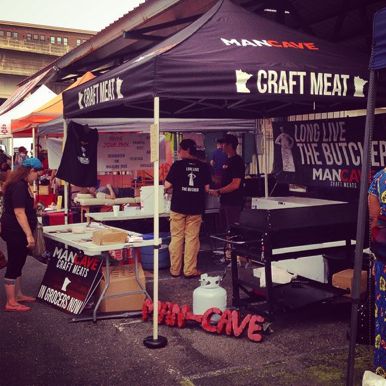
Wednesday, September 10, 2014
Man Cave Meats, a rapidly growing Minneapolis startup founded by a recent University of Minnesota grad and his brother, aims to do for burgers and brats what Summit and Surly have done for beer. The company sells “craft meat” processed and prepared in small batches from high-quality regional (the pork comes from Iowa and the beef from Nebraska) ingredients.
From its first 20 grocery store accounts in November 2013, Man Cave has grown to around 200 individual accounts, mostly in the Twin Cities, greater Minnesota and North Dakota. Locally, the company deals with homegrown grocers like Lunds, Byerly's, Kowalski’s and some Cub Foods outlets. In its ever-popular beer brats, Man Cave incorporates a hyper-local ingredient: Summit Pilsener.
“You can smell the beer when you cook our beer brats,” says Man Cave marketing coordinator Jessica Hughes.
Man Cave’s goal, Hughes says, is simple: to produce flavorful, high-quality and responsibly sourced meat products that don’t cost an arm and a leg. Everything but the initial butchering and processing, which needs to be done at a specialized plant, happens at Man Cave’s Twin Cities production facility. Unlike larger producers, Man Cave exclusively uses pork shoulder in its brats. Pork shoulder is a relatively lean (80/20) and flavorful cut of meat, and a far cry from the fatty cuts used in mass-produced sausages.
Man Cave also hires locally. About half the full-time staff hails from the U of M or the University of St. Thomas, and most referrals come via word of mouth. During the warm season, when Man Cave’s business picks up, the company retains 20 to 30 part-timers to do grocery store demos and to staff booths at outdoor events, like minor league baseball games, 5K runs and street festivals.
“We’re taking a page right out of the craft beer playbook,” says Hughes, citing local beer festivals like the Summer Beer Dabbler as inspiration for Man Cave’s outdoorsy promotional events. Hands-on demonstrations, preferably outdoors, are in the company’s DNA: As a U of M sophomore, co-founder Nick Beste promoted the nascent Man Cave with backyard grilling events at which guests (and passers-by) sampled brats and socialized.
Early on, the Bestes also secured a stall at the Mill City Farmers Market. “That really got us off the ground,” says Hughes. Until last year, the bulk of the company’s sales came from on-site purchases at the farmers market and the occasional backyard party.
But Man Cave has outgrown its roots. Its exponential growth in the past year is exciting for the company’s nine or 10 full-timers, some of whom started out as part-timers. Finding new markets is exciting as well: Thanks to its growing, affluent and heavily male population, Williston, North Dakota—the epicenter of the shale oil boom—is Man Cave’s most promising market outside of the Twin Cities, says Hughes.
Challenges do remain. With a tight focus on Angus burgers and flavored brats, Man Cave’s product line is heavy on the grillables. But the company has grown to the point where it needs a strong revenue stream all year long, says Hughes, so the team has redoubled its efforts to identify “winter-friendly craft meats.” One such item is Man Cave’s mini-brats. “They’re about a quarter the size of our regular brats and come in packs of 15,” says Hughes, “so they’re perfect for pigs-in-blankets and can easily be cooked in any oven.”
The company is also looking to introduce a new line of bacon. “It can’t just be your standard slice of bacon,” says Hughes. “It needs to uphold that craft theme.” Further down the road, locally sourced chicken and turkey sausage could make their way into the inventory, especially in health-conscious markets like Minneapolis and St. Paul. And the company is focused on fleshing out its online store as well.
But for now, Hughes and the Man Cave team are just happy to be part of an ambitious startup that’s putting the Twin Cities back on the butchery map—and, hopefully, making it possible for people everywhere to pair their craft beer with a craft brat or burger.
Wednesday, August 06, 2014
The Twin Cities has an entrenched biking culture and a surprising history of local cycling innovations. Soon, MSP will have a cycling museum to celebrate those achievements, as well.
Three cycling enthusiasts, including the two founders of Recovery Bike Shop, are creating the Cycling Museum of Minnesota (CMM)—"an idea that's long overdue," says Nina Clark, Secretary of CMM's Board of Directors. The museum will open sometime in 2015, in the 4,000-square-foot, second floor suite above Recovery.
The idea for a cycling museum originated with Juston Anderson, the captain of the Minnesota chapter of The Wheelmen, a national organization "dedicated to keeping alive the heritage of American cycling," according to its website.
Over the years, CMM has accumulated dozens of bikes and bike-related artifacts from sponsors, including one of the oldest bike repair stands in existence, a solid racing wheel prototype from HED Cycling and the first Surly fat tire prototype. "We want to be a repository for those seminal artifacts," Clark says.
At the moment, CMM's collection is largely made up of items Anderson has loaned out. In turn, Recovery owners Brent Fuqua and Seth Stattmiller permit rent-free use of their second-floor space. But CMM is growing quickly: According to Clark, the organization has already had some success in soliciting donations, pledges and loans from individual biking enthusiasts and companies tied to the industry.
A fundraising/open house event in late July showcased items that represent various cycling eras. "The idea is to represent all periods" of cycling history, says Clark about the museum, while "keeping the focus on Minnesota."
The museum won't just be for physical artifacts. A self-described "biker about town," Clark is particularly interested in literature and exhibits that celebrate cycling's contributions to the development of the Twin Cities' park and trail systems, as well as the manufacturing and retail businesses that profit from growing interest cycling.
CMM's founders and directors envision the space as a force for advocacy, too. "We want to be advocates for cycling's benefits for health, the environment and sustainable urban development," Clark explains, "not just a static collection."
Significant donors can earn membership in one of three "Founders' Clubs": Silver Spoke for contributions of $50 to $249, Gold Spoke for $250 to $499, and Titanium Spoke for $500 to $1,000. Since the cost of refurbishing and maintaining items in a collection like CMM's increases proportionally with its size, the organization is exploring membership and/or sponsorship models that ensure positive cash flow.
After months of anticipation,
Sisyphus Brewing Company opened its doors to the general public on July 11.The new nano-brewery, located in a former Dunwoody College of Technology storage space near the I-394/94 interchange, has a 100-seat taproom with local artwork, shuffleboard tables and exposed brickwork.That's the first phase.
A 100-seat performance space on the opposite side of its building is still under construction. And a massive, Kickstarter-funded mural on the north side of the building--facing busy I-394--is ready for admiration.
The beer is flowing, too.Owner and head brewer Sam Harriman unveiled four brews at the July 7 "thank you" party for Kickstarter contributors.The Kentucky Common, which is brewed with ingredients you'd find in a typical Kentucky bourbon, was chewy yet refreshing. The Oatmeal Pale Ale--"I've only tasted one other example of this before in the many beers I've tried," says Harriman--evokes several different styles without being derivative.
The black ale with coffee displayed the final stage of the "brewing" process, with Harriman's associate pouring an ounce or so of dark roast coffee into the freshly poured beer. The Brett IPA toed the line between brewer's dream and nightmare, using a wild strain of yeast (brettanomyces). Regarded as a malodorous contaminant in most styles of beer, brettanomyces imparts a sour, spicy, slightly floral note in the right doses. (It worked beautifully.)
"The brewing world is steeped in tradition, and that tradition says bringing brett into a production brewery is a dangerous proposition," says Harriman. "But others I've talked to do it successfully, and with proper cleaning we'll be able to do it successfully too...I view the use of brett as an opportunity to differentiate ourselves in the Twin Cities market."
Harriman is also cognizant of how the Twin Cities' brewery scene looks from an outsider's perspective. The region's craft beer advocates, he argues, can get so caught up in new brewery openings and locals' increasingly sophisticated palettes that they downplay the work that still needs to be done.
"People in the Twin Cities may think we have an awesome brewing culture, which we most certainly do," he says, "but we lag behind many, many cities in the US...to set ourselves apart, we need to do things that aren't being done here yet."
Harriman and the Sisyphus crew have no plans to step on other brewers' toes, though. They won't can or distribute, with the possible exception of a partnership with the Comedy Corner (in the basement of the Corner Bar).
Even that will require regulatory wrangling that Harriman doesn't yet have time for. And even if he wanted to, the taproom's volume would probably make that impossible. With a 2-barrel brewing setup, Sisyphus is officially the Twin Cities' only nanobrewery--the smallest brewery designation there is.
Since he can't brew much of any one brew, being small will actually help Harriman experiment with different styles and circle back to fan favorites. "I brew what I like to drink, and I have a really concrete idea about what I like," he says. "There are so many beers out there nowadays, and it takes something really special to stick out in your mind and make you come back for more...Inspiration and focus is what will set us apart in the long run."
A big part of that inspiration are Harriman's plans for a comedy/performance space in the still-in-progress section of his building. The timing of the buildout--and the opening of the space itself--will depend on the taproom's cash flow.
Harriman hesitated to give a timeframe, but was hopeful about its prospects: "If our customers like our beer enough," he says, "we'll be able to build out the other side of that space."
For now, the brewery is open between noon and 1 a.m. on Fridays and Saturdays. Additional hours are in the works.

On July 1, in partnership with the Ewing Marion Kauffman Foundation, online business directory Thumbtack released its annual small business survey of U.S. cities. Minneapolis-St. Paul finished in eleventh place and earned an overall "A" rating, falling behind several cities in Texas and smaller Mountain West towns like Colorado Springs and Boise.
The Thumbtack-Kauffman survey subjected the Twin Cities to more than a dozen measurements, based on responses from surveyed small business owners.The region earned an "A" grade for ease of starting a business and an "A+" for the availability of training and networking programs. It earned decent"'B+" grades for environmental and zoning regulations, and a "B" for health and safety. Licensing rules and employment, labor and hiring protocols came in at the '"B-" mark, with the local tax code and ease of hiring scoring "C+"
The Cities' rankings showed marked improvement over the past two years. Minneapolis-St. Paul's overall rating was "B+" in 2013 and "'B" in 2012. The change in availability of training and networking programs was particularly noteworthy, with a jump from "C-" to "A+" between last year and this year. The overall regulatory environment and ease of hiring improved significantly as well.
Although the Twin Cities could have scored higher in some areas, the region fared great next to some well-known locales. Buffalo, Providence, Sacramento, and San Diego earned "F" grades for overall business friendliness, and many other East and West Coast cities failed to clear the "D" bar. At the state level, California, Illinois and Rhode Island earned failing grades.
The survey also sourced subjective opinions from business owners across the Cities. Some of these were glowing: A Minneapolis-based designer reported that "I'm in a great location and have a lot of room for growth." Others were more skeptical of local governments' role in business, with a Minneapolis pet sitter complaining about the state sales tax on dog-walking services.
Relatively high taxes, coupled with byzantine regulations, were a common complaint. But some respondents actually argued for a more hands-on approach by local regulators, including a Minneapolis voice teacher who complained that hands-off licensing was creating room for scam artists in the field.
Thumbtack's survey collected reponses from about 12,000 U.S. small business owners (in the Lower 48 only) over a two-month period in early 2014. For a copy of the full report, contact .
Made, based in Uptown, takes an approach to designing and manufacturing corporate gifts, apparel and novelties that encapsulates client brands and reduces the environmental impact of the manufacturing process.
Made is the brainchild of Michelle Courtright and Kristin Hollander, two "gift industry" veterans who met through mutual friends in the late 2000s. When the bottom fell out of the economy in 2008, the pair decided to abandon their storefronts and join forces to create memorable corporate gifts—"beyond tchotchkes," says Courtright.
Made takes a bespoke approach to each product, usually designing items from scratch. The company started in government procurement. Through contracts with the Pentagon and FBI, Courtright and Hollander devised complex, multi-step solutions to clients' often-inscrutable requests.
"We gained a reputation for figuring stuff out," says Courtright.
Their approach also led to contracts with Twin Cities businesses like Target, as well as with The New York Times and pop culture icons like Pharrell Williams. In Made's nearly six years of operation, the company has relied exclusively on referrals and organic growth.
Another client, Minnesota Public Radio, still relies on Made to design and fulfill gift orders for its 120,000-strong membership base. Early on, when MPR needed a large order of red mugs, Made advised that red dyes manufactured in the United States were highly toxic, eventually finding a German producer that used a less-toxic vegetable base.
As a general rule, Made doesn't like to create disposable or single-use products, although they women bend this rule for such items as USAID's natural disaster relief kits. Made also structures its supply chain, where possible, to avoid redundant shipments.
But the company balances an earnest commitment to sustainability and environmental stewardship with realism. "[Our client] Whole Foods knows that its customers won't want to pay $10 for a single tote bag," says Courtright. So Made finds solutions that incorporate low-impact materials without sacrificing affordability.
Although Made has Minnesota roots –and 13 local employees—its approach to manufacturing is a global endeavor. The company sources materials and components from all over Asia, but tries to acquire as many materials as possible from the United States. “The world is more interconnected than you would believe," says Courtright.
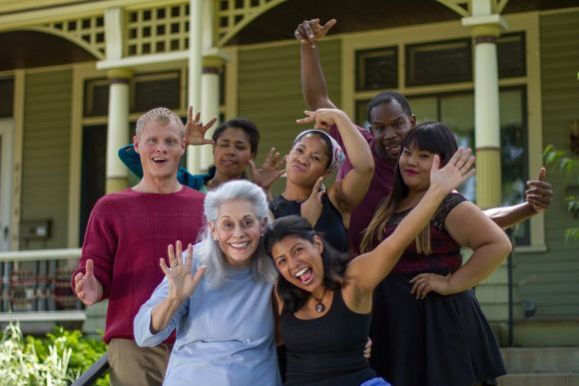
Earlier this summer, more than a dozen Minneapolis-St. Paul 17-21 year olds participated in the inaugural production of Film in the City, a Minnesota State Arts Board-funded initiative that connects at-risk youth with local filmmakers and front-of-the-camera talent. The original short, “A Common Manor,” was entirely written by Film in the City’s young participants, who also made up the majority of its cast. Highlights of the filming process were included in filmmaker Jeff Stonehouse’s contribution to
One Day on Earth, with the edited production to be released in October.
Film in the City is the brainchild of Rich Reeder, a 30-year veteran of the film industry. He was inspired by a tragedy: While he was producing a documentary on the White Earth Reservation, a local high school student suddenly took his own life, shattering the community (and Reeder’s crew). As a filmmaking veteran, he saw the medium’s potential to boost self-esteem and commitment in at-risk youth.
Reeder and an assistant connected with six homeless youth organizations—Ain Dah Yung, Youthlink, Avenues NE, Face to Face/SafeZone, Full Cycle and Kulture Klub Collaborative—across the Twin Cities. Beginning in February of this year, 16 participants attended 12 workshops that covered everything from art and sound design to improvisation.
Filming took place over two weeks in June, at several locations in Minneapolis and St. Paul (the Midtown Farmers’ Market and private residences in St. Paul’s Summit-University and Midway neighborhoods among them). Local arts organizations including the Guthrie Theater and HDMG Studio & Production Center lent backdrops and equipment.
“A Common Manor” wrapped on June 25. There’s still plenty of editing and marketing work to be done before its release. But the project has already paid dividends: As a direct result of their work with Film in the City, says Reeder, at least eight participants have conducted internships or mentoring sessions with “professional Twin Cities’ directors, writers, cinematographers, lighting and sound specialists, makeup and wardrobe mentors.” Two have worked with Stonehouse on a commercial film shoot in Wisconsin.
Reeder also sees Film in the City, and projects like it, as critical for character-building and professional development. “These youth have made major strides in terms of self-esteem, collaboration with other youth and adults, learning the entire film[making] process and focusing…on specific aspects of the creative arts,” he says.
Reeder and crew plan to apply for the same Minnesota State Arts Board grant next year. The hope is that first-year veterans will actively mentor second-year participants, creating an artistic legacy among at-risk youth.
More ambitiously, Film in the City may soon export its concept to other cities. “Youth organization leaders in Seattle and San Francisco have already expressed interest in the concept,” says Reeder, noting that those cities’ famous writing and visual arts workshops for homeless youth haven’t yet been complemented by filmmaking initiatives.

Local musicians who value realistic, earthy sound quality have a local source for their equipment: Northeast Minneapolis-based Northeast Cable Company (NECC).
Founded in 2012, the company designs and handcrafts reference cables for instruments, microphones and amplifiers. Its wares can be used in live and studio settings. According to Jake Gilbertson, NECC’s operations manager and an engineer by training, the cables are designed for musicians who need “unique, durable, and flexible” cables that won’t wear out with regular use.
Unlike many larger companies, NECC focuses exclusively on these cables – it doesn’t manufacture accessories or other equipment. NECC takes a bespoke approach to its products, creating each order to customer specifications and executing a thorough inspection—“by a real human”—before shipment. Additionally, the XLR (microphone) cable is made to avoid tangling and the patch cable made rigid for stability.
Reliability is a key objective. Larger manufacturers take a quantity over quality approach to cable manufacturing, forcing musicians to go through cables faster and make needless replacement purchases. By outlasting their inferior counterparts, NECC’s cables significantly reduce a major expense for prolific musicians.
Even patch cables, which are notorious throughout the industry for their tendency to wear out, get this treatment. Gilbertson and his colleagues took the “time to figure out what would make these cables last forever,” according to NECC’s website, and developed “the most durable and reliable patch cable on the market.” Despite a higher manufacturing cost, musicians reap long-term benefits because they don’t have to buy replacements as frequently.
Sound quality is also essential. NECC’s cables are designed to minimize feedback and interference, creating a studio-quality listening experience even in sub-optimal settings. All of NECC’s products include features that make this possible, including double-Reussen shielding (which clarifies sound by allowing the cable to lie flat on the stage or floor) and a proprietary ULTRA-FLEX cord jacket that minimizes crimping when the cable is moved, stretched or wound back on itself. The cables’ contacts are gold, a superior material for the purpose.
NECC cables also aim to create a sound that’s as natural and “clean” as can be. “All of the properties of sound are tied up in each cable’s copper strands,” says Gilbertson. “By manipulating the individual strands, you can change how your instrument performs.” Whereas many cable companies sell sound- and even genre-specific cables—rock, acoustic, and so on—NECC’s products can be used by musicians of all stripes.
And they are. Though still small, NECC already has a nascent, global dealer network, with outposts in Bend, Oregon; New York City; Brantford, Ontario; and even Japan. Up-and-coming musicians from Minnesota, Tennessee and California are regular customers. Twin Cities residents can find its stock cables at Twin Town Guitar in Uptown, American Guitar Boutique in Plymouth, and Lavonne Music in Savage, or order custom cables directly through the company’s website.
Crux Collaborative, a user-experience consulting firm based in the southwest Minneapolis, is dramatically changing its approach to business, staff and clients as part of a bold rebranding effort.
During the past year, the firm formerly known as Eaton Golden has adopted a flatter management model, a more collaborative approach to internal problem-solving, and a culture of “trust and even friendship” between clients and employees, says co-principal Mahtab Rezai. She calls the experience overwhelmingly positive, with new clients and new staffers energized—and surprised—by Crux’s highly personal, yet results-driven, approach to its work.
Recently, says Rezai, an increasingly tech-savvy population and a growing volume of digital points of customer-vendor contact created a “sea change” in user experience best practices, from a proscriptive, top-down approach to a more user-friendly, even nurturing one.
“Almost everything we do now is complex and interrelated,” she says, including how we access and communicate information. Crux specializes in improving user experiences for “complex, data-driven, transactional experiences,” Rezai says, which “aren’t optional and haven’t historically provided a lot of choice to the user.”
Ultimately, the goal is to render these experiences—like using a health exchange, executing online financial transactions and accessing employee benefits—more “humane,” making it easier and more natural for people to complete essential, boring tasks in the digital space.
Rebranding has helped Eaton Golden/Crux Collaborative process and take advantage of this shift. Sadly, a tragedy accelerated the process.
In early 2011, principals Emily Eaton and John Golden lost their young son to cancer. Rezai, a former colleague of Golden’s who was already in talks to take a new role with the company, immediately took over day-to-day management of the firm while the parents grieved. Eaton eventually sold her interest to Rezai and left the company completely to write a book about coping with grief.
Rezai still has her operational role. Golden and Rezai are now equal partners. But Crux is no longer “two leads plus a support staff,” says Rezai. Nearly every important decision, including the company’s new name, arises through consultations with rank-and-file staffers. In a larger company, this might produce friction, but Crux is small enough to function as a single team.
So far, the experience has been transformative. Even experienced employees had never seen a rebrand go so smoothly. Morale has spiked. Clients are happy, too: Crux just posted the strongest first quarter in its 10-year history. Last year, with the transition in full swing, the company made Minnesota Business Magazine’s “Top 100 Businesses to Work For” list, a major achievement.
Will Crux’s new approach to business translate into a bigger workforce and a national client pool? For now, Rezai is cautious about such plans.
“Growth is not our objective,” she says. “Excellence is.”
The company has eight full-timers, with room for just a handful more. And since it doesn’t have a business development division or send out RFPs—“We’ve found that they’re a waste of our time”—the firm relies on word of mouth to attract new clients. Crux is picky about accepting new work, essentially “prequalifying” clients before pitching or consulting with them.
“The ability to judiciously say ‘no’ has taught us how to say ‘yes’ when it’s clearly right,” says Rezai.
By choice, Crux also focuses on companies in the banking/finance, medical device, health insurance and benefits administration subsectors—niches heavily represented by Twin Cities businesses. As Rezai puts it, “we stick to what we’re good at.”
In less than a year, a partnership between Advance IT Minnesota and Metropolitan State University has produced Fusion, an “IT residency” program that will officially launch during the 2014-15 academic year. Fusion places students in various technology degree programs with local employers—ranging from cutting-edge startups to Fortune 500 firms—that need flexible, entry-level IT labor. The program has already accepted applications for the coming year’s roster and is in the process of vetting applicants.
Unlike a traditional internship, which typically runs a single academic semester, each participant’s residency lasts 18 to 24 months—roughly tracking their last two years of college. Students are paid for their time, typically less than 20 hours per week, with projects assigned by their employers and paychecks issued by their school.
Fusion currently has 40 open spots, but Bruce Lindberg, executive director of Advance IT Minnesota, hopes to grow the program significantly in time for the 2015-16 academic year by expanding the program’s enrollment at Metro State and creating an identical residency program at Mankato State. By next year, enrollment could increase twofold, with further growth possible.
“If employer demand and participation grow beyond the capacity of those two partners,” says Lindberg, “we will look to expand by involving other academic partners” around the Twin Cities and outstate areas.
With a projected deficit of nearly 10,000 tech workers in the state by 2020, Fusion aims to accelerate the development of Minneapolis-St. Paul’s high-tech workforce while making it easier—and less risky— for employers and prospective employees to find one another. Currently, the rapidly growing and changing industry suffers from “skill mismatch,” where employers struggle to find candidates who can keep pace with changing job requirements and competencies.
“Many graduates face the frustrating reality of employers asking new grads for two to three years of experience…which they usually don't have,” says John Fairbanks, a third-year Metro State student who applied to the program this spring. “[T]hrough the Fusion program, I will graduate with a degree and have substantial experience to back it…allowing me to enter the job market more quickly and with real-world experience to solve real-world problems.”
The idea for Fusion developed out of conversations between Lindberg and Marty Hebig, Maverick Software Consulting’s founder and president, in January 2013. Lindberg and Hebig, whose company helps firms avoid offshoring by hiring low-cost, U.S.-based student IT workers for special projects and ongoing work, helped recruit other local business leaders to the cause. He also helped them build a compelling case for an IT residency program. In January 2014, Metro State approved the program and began publicizing it to students.
Employers and managers who wish to learn more about Fusion can attend an information session, hosted by Advance IT Minnesota, at MCTC’s campus on June 17 between 11:30 a.m. and 1 p.m. RSVP through Bruce Lindberg at or 612-659-7228.

As part of the
redevelopment at the Schmidt Brewery site, Blue Ox Mini Golf is leveraging a $350,000 grant from ArtPlace America and the proceeds from an ongoing GiveMN campaign to fund its new course on West 7th Street. The course sits amid the site’s 260 residential units and multiple commercial spaces, all of which are part of a $120 million project that’s wrapping up early this summer.
The course “will add art each year in the form of new holes, amenities and supplemental programming,” according to the Blue Ox website. All will be designed and installed by local artists. The course’s permanent features are also artist-designed, creating “multiple points of entry for everyone from committed art-ophiles to the random passerby on the way to the bus stop.”
Blue Ox is taking a page from the Walker Art Center in Minneapolis, which has constructed several art- and architecture-focused mini golf courses in the past 10 years. Like its St. Paul counterpart, the Walker’s Artist-Designed Mini Golf regularly incorporates new artist-commissioned holes, examples of which include a foosball area replete with garden gnomes and a “gopher hole vortex.”
Although Artist-Designed Mini Golf is only open during the warm season—May 22 through September 1 this year—its most popular holes enjoy permanent status amid the newcomers. Blue Ox, which will shut down each fall and reopen in late spring, will also recycle perennially popular holes.
The similarities between Blue Ox and the Walker’s course aren’t accidental: Blue Ox’s Christi Atkinson previously served as the Walker’s course director, and Jennifer Pennington, the initiative’s marketing director, is married to the designer of one of the Walker’s most engaging holes. The Walker’s current Sculpture Garden course’s $12 or $18 tickets (for 9 and 18 holes, respectively) include free admission to the museum. This has been a winning formula, with long waits for tee times on weekends and nice evenings.
The St. Paul course presents an additional design challenge thanks to strict historic preservation guidelines to which future artists will be beholden. Each hole has to incorporate themes or design elements that harken back to the brewery that once occupied the site.
Blue Ox doesn’t have a world-class art museum to keep golf-averse family members occupied, although the as-yet-unnamed restaurant tenant of the site’s soon-to-be-renovated keg house could keep visitors fed and watered.
But Blue Ox does double the number of artist-commissioned mini golf holes in the Twin Cities, providing visibility and recognition for installation artists in St. Paul. And as the entertainment centerpiece of the Schmidt redevelopment, the course promises to draw families and local residents who previously sped by the disused site on their way to downtown St. Paul or the airport.

A recent city-ordinance change has paved the way for mobile grocery stores. Now the Wilder Foundation’s Twin Cities Mobile Market, a repurposed Metro Transit bus that cost the foundation just over $6,000, can distribute fresh produce on St. Paul’s East Side and the North Side of Minneapolis.
Both neighborhoods are considered “food deserts” because the corner shops and independent markets that provide residents with groceries lack fresh produce and other wholesome items.
“[Low-income] people living in these neighborhoods are already at higher risk for obesity and diabetes,” explains Leah Driscoll, the Wilder Foundation program manager in charge of the project. “Living in a food desert makes these problems worse.”
Many residents of these lower-income areas also lack reliable transportation to supermarkets in adjacent city neighborhoods or suburbs, further constraining their shopping options.
The ordinance change, which requires each food truck-like mobile grocery store to stock at least 50 individual fruits and vegetables in at least seven varieties, replaces an older ordinance that had restricted mobile grocery sales to areas around senior housing complexes.
The new law permits mobile grocery stores to set up in commercial, industrial and apartment complex parking lots between 8 a.m. and 9 p.m. They can’t locate within 100 feet of traditional grocery stores and farmers’ markets without explicit permission from owners or operators. They also can’t sell certain items, including tobacco products and alcohol.
In addition to the requisite variety of fresh fruit and veggies, Twin Cities Mobile Market will also stock other staples, including bread, dairy products, meat, canned goods, and other non-perishables at costs competitive to places like Cub Foods. Before selecting sites for weekly visits—“public housing high-rises, senior buildings, community centers, and churches” will get the highest priority, according to the foundation—Wilder must secure at least 50 signatures from locals interested in using the market.
Driscoll is working closely with local community leaders to ensure that “we’re actually wanted and needed in the neighborhoods that we select—we don’t just want to show up,” she says.
Twin Cities Mobile Market, which Wilder unveiled on Monday at a “sneak preview” event hosted by Icehouse, isn’t the only mobile grocery truck set to take advantage of Minneapolis’s ordinance change. Urban Ventures, a faith-based organization headquartered in the Phillips neighborhood of Minneapolis, is putting the finishing touches on a repurposed refrigerator truck that will begin making grocery sales around South Minneapolis, and eventually the North Side, later this summer. The truck, whose wares will include healthy helpings of local produce, will accept EBT and carry a nutrition specialist to help customers make healthy buying decisions.

Earlier this year, Google selected the University of Minnesota’s MARS Lab as its primary academic partner for Project Tango, a high-profile indoor mapping initiative that has been compared to Google Maps. The selection came with a $1.35 million grant and a directive to explore—and expand on—the possibilities of a prototype smartphone capable of creating 3D maps of indoor spaces. Google’s only other academic partner on the project, Washington, D.C.’s George Washington University, has a much smaller role.
According to Google, the current prototype device is a “5 inch Android phone containing highly customized hardware and software designed to track the full 3D motion of the device as you hold it while simultaneously creating a map of the environment.”
The phone can take up to 250,000 spatial measurements per second to create an intricate map of its surroundings. While this technology isn’t yet available as an app on regular smartphones, part of MARS Lab’s charge is to create apps and APIs—mobile development platforms—that enable the app to be scaled down and included with non-specialized devices. Within a few years, some form of the technology will be available for download like any other Android app. The U of M lab will have played a central role in making that possible.
A major challenge will involve surmounting the technology’s requirement for two independent cameras. It’s unclear whether future versions will be able to work with a single smartphone camera, or whether devices that use it will need to have at least two vision sensors. A strict non-disclosure agreement, breach of which could jeopardize the lab’s funding, prevents MARS Lab director Stergios I. Roumeliotis from getting into such specifics about Project Tango.
A video released last month by the MARS Lab team shows the prototype’s capabilities. Although the current version produces a somewhat slow, abstract representation of its surroundings, future iterations will create near-lifelike interior maps. Google and MARS envision three broad areas in which 3D mapping can play a role: virtual/augmented reality video games, internal navigation in unfamiliar buildings (rendering directions in malls and corporate edifices all but obsolete), and navigation aids for the visually impaired. But innovation probably won’t stop there: In a recent interview, Roumeliotis argued that “the list of potential future applications is endless.”
In addition to Roumeliotis, two MARS Lab alums who have since taken positions with Google—Joel Hesch and Esha Nerurkar—are leading the development charge. The building blocks for the project were actually laid about a decade ago, when the MARS Lab team helped create the internal navigation system, known as VINS, for NASA’s Mars landers. A loss of NASA funding for the project proved to be a blessing in disguise, as Roumeliotis’s team found that the system worked just as well for earthbound mapping and navigation.

Indeed Brewing Company, Northeast Minneapolis’ biggest craft brewery by volume, is partnering with J.J. Taylor Distributing Company—also based in Northeast—to expand its distribution footprint across Minnesota. The partnership, which officially began on May 1, will see Indeed enter or expand in southern Minnesota markets like Rochester, Owatonna/Faribault and Mankato.
According to Indeed marketing director and co-founder Rachel Anderson, Indeed will be available in virtually every major Minnesota market by the end of the year.
The J.J. Taylor partnership represents the last big link in Indeed’s in-state distribution chain. Dahlheimer Distributing already sells Indeed beer in east-central Minnesota, and D & D Beer Company handles distribution for points north of St. Cloud. Indeed also self-distributes in Duluth and Hudson, Wisconsin, the only out-of-state market currently served, and has no plans to stop. According to Anderson, the company envisions a hub-and-spoke network that penetrates deep into Minnesota’s vast rural hinterland, with self-distribution representing a key strategy for ensuring coverage.
Indeed’s partnership with J.J. Taylor,
and two recent expansion initiatives, are born out of necessity. Indeed has roughly doubled its production capacity during the past year, from 6,000 barrels to between 11,000 and 12,000 barrels, and it’s still not at capacity.
“We could make more,” says Anderson, “but we’re trying to grow responsibly.” The brewery just finished adding production capacity, in January, and plans to expand its capabilities again this summer, with the installation of a new fermenter.
As appetite for craft beer grows among suburban and rural drinkers, Indeed expects to utilize this spare capacity. “There’s still a lot of growth left in the state,” especially in smaller markets that are just getting their first taste of Indeed’s products, says Anderson. “We’re not yet at the point where we don’t have enough beer, but we do need to build volume in those territories.”
Indeed is currently Minnesota’s 5th or 6th biggest brewery, behind Summit, Surly, Fulton and Lift Bridge. Long-term, the company is interested in developing out-of-state distribution partnerships that could raise the company’s regional profile, but no concrete plans or timetables exist yet. For now, Indeed is focusing on filling in the gaps in its footprint and further boosting business at its already bustling taproom, which is open Thursday through Saturday and is “busy all the time,” says Anderson.

The Minnesota Inventors Congress’ Invention Expo just wrapped up its first session in the Minneapolis Convention Center, after nearly 60 years of meeting in the small town of Redwood Falls. On May 2 and 3, hundreds of exhibiting inventors, investors and business leaders crowded into the center’s main hall to peruse the latest ideas and designs from the country’s brightest tinkerers, hardware whizzes and gearheads.
The continent’s “oldest annual invention convention,” according to its website, moved to the Twin Cities to take advantage of the local infrastructure. For Zachary Crockett, co-founder of Minneapolis-based Spark and an Invention Expo keynote speaker, the move was about connecting tech-savvy hardware and software experts, who tend to be younger and urban, with practical-minded tinkerers, engineers and designers who come from a “broader demographic” and often live in rural areas.
The exchanges of ideas, partnerships, and capital that result can be game-changing. Early on, Invention Expo’s participants often focused on clever, useful products that made discrete tasks easier—think late-night infomercials. Today’s attendees leverage cutting-edge technology to create products with far broader applications, from Bondhus Arms’ credit card-sized pistol (perfect for a post-“conceal and carry” world) to the Powerizer toolbox, which features a battery-powered charging station, USB outlet and three adapter connections to help users stay connected outdoors. Crockett’s Spark Core, meanwhile, is a node that connects everyday items and systems to the Internet via WiFi.
“Building hardware used to be hard,” says Crockett, “but the process has been democratized. You don’t need a $1 billion factory to make things anymore.” Open-source software (and, increasingly, hardware), coupled with coworking and other efficiency-enhancing trends, are making it easier for teams of three or four to develop, build, market and profit from innovative products.
Trevor Lambert, a University of St. Thomas grad who founded Lambert & Lambert (an IP and product-licensing firm) and Enhance Product Development (which turns invention ideas into marketable products), sees two value propositions for Innovation Expo participants.
First, the expo’s workshops and presentations educate novice inventors about the various aspects of product licensing and development, from pitch support with the “Pitch the Experts” panel (on which Lambert sat this year) to Crockett’s “Inventing Success” address, which discussed the potentially revolutionary impact of always-online devices.
Invention Expo, and events like it, also provides inventors with access to markets, whether through product-development experts like Lambert or direct contact with potential investors. With so many good ideas floating around, competition requires inventors to network relentlessly—something that many are less than comfortable with.
For Lambert and his team, that creates an opportunity. “We’re paid to know people,” he says.
Wednesday, April 23, 2014
Max Martin, a luxury shoe brand based in the Nokomis neighborhood of Minneapolis and recently featured in celebrity swag bags at the Grammys and Oscars, goes into production next month with its first full high-heel line. In addition to the Fall 2014 line, a Spring/Summer 2015 line is also in the works. If these two big releases prove successful, a more inclusive women’s shoe line—beyond high heels—could be on the horizon, along with men’s shoes and possibly accessories or other clothing items.
Max Martin got its start in 2012 after William Panzarella, founder of the Minneapolis-based Aegis Foundation (which helps “vulnerable, needy, underserved, and imperiled youth plan, prepare, and focus on education” according to the website), was seeking a sponsor for the foundation’s annual High Heel Dash on Nicollet Mall.
Panzarella noticed a proliferation of shoe brands with ties to celebrities. A longtime hip-hop fan, he immediately saw the potential for a hip-hop line that leveraged his connections to the music industry. Panzarella broadened the idea into a high-heel line that wouldn’t just appeal to musicians. He credits MC Lyte, a former president of the L.A. Chapter of the Grammy Association, with generating publicity about Max Martin among L.A.’s fashionable set, which has driven early sales. Panzarella donates a portion of Max Martin’s pre-season sales to charity.
Being featured at two national awards ceremonies, again thanks to MC Lyte, was a big step forward for Max Martin. For Panzarella, the marketing represented a significant investment, but “the press pays for itself,” he says. During awards season, the shoes were features on Entertainment Tonight and ABC News, as well as in local Twin Cities media outlets. Panzarella also hosted Minneapolis’ “official Oscar viewing party” at Muse. Proceeds from that event benefited the Smile Network and Aegis Foundation.
Panzarella’s fall line includes a striking boot called “Leo,” an angular stiletto called “Betty,” and a classic high-heel called “Moma,” among others. The line’s goal: to prove that true luxury footwear can be made by American hands. The shoes are manufactured in Los Angeles and reportedly are easier on the feet than many other designer shoes, which make them easier to wear on the red carpet—and around town.
The American-made angle was present from the get-go: During Panzarella’s initial market research, he realized that virtually every high-end footwear brand is made in low-cost Chinese factories or, at best, Italian workshops. Spurred on by 2012’s Chinese-made U.S. Olympic uniform fiasco, he set aside his romantic notions of master Italian cobblers manning antiquated shoemaking equipment and resolved to create a footwear line made by Americans, for Americans.
So far, Max Martin’s raw materials, components, and production processes exceed the Federal Trade Commission’s “American Made” guidelines. Panzarella has “tentative plans” to move production to Minnesota in the future.

Wednesday, April 16, 2014
In early April,
Docalytics and Kidizen, two startups in the Twin Cities that utilize CoCo’s coworking facilities, headed to California to deliver pitches at the first annual Google for Entrepreneurs Demo Day. The event is a gathering for 10 early-stage tech startups from the seven cities in Google’s North American Tech Hub Network.
Both companies networked with tech industry heavier hitters. Both received funding commitments worth $100,000 from Revolution Ventures, a venture capital firm run by former AOL boss Steve Case.
According to those in attendance, Case was so impressed with the quality of the pitches—and the ideas behind them—that he made an on-the-spot decision to evenly divide $1 million of Revolution’s early-stage funding pool among the 10 entrants. At a frenetic post-pitch networking round, the other 60 or so investors in attendance connected with the startups’ principals on an individual basis about potential investments or partnerships.
“How cool is it that two startups out of Minneapolis-Saint Paul were part of this?” remarks Dug Nichols, CEO of Kidizen, an online marketplace for used children’s clothing, accessories, and knickknacks. “I have never been a part of such a truly talented group of startups at an event, and I've done a lot of these types of events.”
After the pitch round, he and Kidizen co-founder Dori Graff (Mary Fallon is the other principal) attended the hour-long networking event with investors. They spent the entire session “in constant conversation with a number of different VC firms,” says Nichols, “and we've had additional firms reach out to us after the event.”
Evan Carothers, one of Docalytics’ three founders, had a similar experience. Case’s investment was merely the most public of the company’s Demo Day wins: For Carothers, “getting up in front of a huge group of our peers, investors, and prospects…and tell[ing] them all about the solution Docalytics provides” was equally important, as was securing “the needed capital to really grow our team and product.”
Although it was widely known that prominent VCs would attend, Demo Day’s organizers framed the event more as an opportunity for entrepreneurs to pitch to industry experts and create connections that could lead to funding commitments, either at the event itself or down the line. No one expected Case to commit $100,000, and in such public fashion, to all 10 entrants.
Not that anyone is complaining. As Kidizen continues to gain users and increase its cash flow, Nichols is feeling the momentum. He plans to hire additional developers and marketing staff to grow the six-person firm.
On top of the Revolution investment, which got a wave of national press, Kidizen’s selection as “best new app” in the iTunes App Store’s lifestyle category has dramatically boosted its visibility.
Brian Martucci
Wednesday, April 09, 2014
In March, the tenth iteration of the Minnesota Cup officially opened to entrepreneurs across the state. The initiative provides mentoring to participants that pass the initial selection phase, as well as financial support for winners. The Cup accepts applications from nascent businesses in seven broad categories, including Food/Agriculture/Beverage, which is new this year and sponsored by General Mills. Melissa Kjolsing, the Cup’s director, ascribes the addition to a massive jump in consumables-related submissions last year. The entry deadline is 11:59 p.m. on May 9.
The Cup’s prize structure isn’t lavish, at least by the inflated standards of the venture capital business. Five of the seven division winners take home $30,000 in cash, with Student and Social winners receiving $20,000 prizes. The grand-prize winner gets an extra $50,000 when the contest wraps up in September. According to past winners, though, the money is almost beside the point.
“Starting anything on your own is difficult,” says Julie Gilbert Newrai, whose PreciouStatus software won the
2012 Minnesota Cup’s grand prize. But, she explains, the serial entrepreneurs, business leaders, and technology experts who donate their time as Cup mentors are “genuinely interested in helping [participants] win.” These veterans help their mentees craft better business plans, hone their investor pitches, and connect with potential partners, employees, and investors.
Newrai is careful not to exaggerate how PreciouStatus’ win influenced the company’s prospects, but it clearly helped. In total, she ascribes more than $1 million in direct investment to her company’s post-win visibility. And that’s just part of the “Cup boost.”
As Newrai sees it, Cup participation does three things for entrepreneurs and their teams. First, it raises startups’ profiles within the state—and, by extension, within the national VC and angel investing communities, which are plugged into local startup scenes. Second, it subjects participants to a barrage of questions and criticisms from veterans who have tried, failed, and succeeded, often in quick succession. “You can’t buy that kind of confidence boost,” says Newrai.
Last but not least, Cup participation shapes and strengthens internal culture: Even if they don’t win, entrepreneurs and their employees derive a well-earned sense of pride and accomplishment from their efforts, validating the sense that they’ve built something valuable.
Minnesota Cup isn’t a radical idea. Businesses have long sought mentoring and funding from more experienced actors, after all. But the initiative dramatically simplifies the process for ambitious entrepreneurs who want to put their ideas in the right hands. The application process is digital and requires entrepreneurs to enter just a page’s worth of data. The competition is open to entrepreneurs at various points in the startup phase, says Kjolsing, from “people with good ideas” to principals of companies with $1 million in annual revenues.
Kjolsing echoes Newrai’s sentiments about the relative merits of money and mentoring. The Minnesota Cup “does provide seed funding, but money isn’t the biggest factor,” she says. “The exposure piece is critical.” Exposure, of course, often leads to investment. And the initiative’s list of sponsors reads like a who’s who of Twin Cities business—from United Health to Digital River—making it an invaluable networking opportunity.
Even entrepreneurs who have existing investor and mentor networks? “There’s no reason why you wouldn’t want to enter the Minnesota Cup,” Newrai says.
Sources: Melissa Kjolsing, Julie Gilbert Newrai
Writer: Brian Martucci

Wednesday, April 09, 2014
Got big plans for April 26? Lu Lippold, the local producer for One Day on Earth’s “One Day in the Twin Cities,” has a suggestion: Grab whatever video recording device you can—cameraphones included—and record the audio-visual pulse of your neighborhood.
On the final Saturday of April, the Twin Cities and 10 other U.S. metros will host the fourth installment of One Day on Earth’s celebration of film, culture, and all-around placemaking. Founded by Los Angeles-based film producers Kyle Ruddick and Brandon Litman, One Day on Earth (ODOE) has a “goal of creating a unique worldwide media event where thousands of participants would simultaneously film over a 24-hour period,” according to its website.
The first event took place on October 10, 2010 (10-10-10); 11-11-11 and 12-12-12 followed. ODOE skipped 2013, but its organizers weren’t about to wait until 2101 for their next shot. Instead, they selected a spring Saturday—both to accommodate amateur filmmakers with 9-to-5 jobs, and to give participants in the Northern Hemisphere longer daylight hours to work with—for a bigger, bolder, slightly revamped version of the event.
For the first time, participants get 10 questions to inspire their creativity and guide their storytelling, from “What is the best thing happening in your city today?” to “Who is your city not serving?” The goal is to create a multi-frame snapshot of “cities in progress,” one that doesn’t simply answer the who-what-where of the places it covers.
As One Day in the Twin Cities’ point person, Lippold supervises local filmmakers and pitched the project to dozens of partner organizations, including the Science Museum of Minnesota and Springboard for the Arts to visual media companies like Cinequipt and Vimeo. (The McKnight Foundation and the Central Corridor Funders Collaborative are the largest local sponsors.)
The upside? “[The event] is a great way to shine a light on all the hard work that our nonprofit community does,” says Lippold.
Lippold also works with a handful of local ambassadors, some of whom enjoy national acclaim. These include noted cinematographer Jeff Stonehouse, veteran documentarian Matt Ehling, and community-focused filmmaker D.A. Bullock. They’ll be contributing their talents—and stature—to One Day in the Twin Cities’ promotion and execution.
One Day in the Twin Cities could be seen well beyond Minneapolis and Saint Paul. Along with their counterparts from other participating cities, local filmmakers may see their work incorporated into a condensed, three-part series that Litman and Lichtbau will market to PBS affiliates around the country. No word on whether TPT will air the special, but TPT Rewire has agreed to publicize the event in the coming weeks.
The real stars of One Day in the Twin Cities, though, are its filmmakers. Even if you’ve never filmed anything in your life, says Lippold, you can contribute meaningful work. Thanks to an interactive map feature on ODOE’s main site, the work will visible to anyone who visits.
“If I were just starting out in video, I would see this as a huge opportunity,” says Lippold. Since all contributions are credited by name and location, each participant “instantly becomes a documentary filmmaker,” she adds.
Source: Lu Lippold
Writer: Brian Martucci

Wednesday, March 19, 2014
Docalytics, an ambitious tech company that operates out of CoCo’s Saint Paul coworking space, will be debuting its next-generation document viewing technology at this year’s Google Demo Day. Thanks to a partnership between Google and CoCo, Docalytics’ founders—Evan Carothers, Ryan Morlok, and Steve Peck—are heading to Silicon Valley on April 1 and 2 to show off their cloud-based solution, absorb the wisdom of Google’s top product specialists, and rub shoulders with some of the technology industry’s leading lights.
Not bad for three guys with a startlingly simple idea. According to its website, Docalytics helps marketers “bridge the gap between sales and marketing communication,” boosting lead generation and conversion rates for businesses that utilize online content marketing—which, these days, is just about every business.
The key? “Smart” PDF documents that enable the B2B marketers responsible for putting in-depth marketing materials in the hands of executives, purchasing managers, and other decision-makers to track each prospect’s engagement with their content. Companies that use Docalytics’ application can track, measure, and analyze what potential clients do with key marketing content. That capability generates a treasure trove of relevant data, which marketers didn’t have access to before.
According to Carothers, the idea for Docalytics arose from a simple observation: Few prospects bother to fill out the contact forms on the “gated” landing pages that many companies use to track readers’ engagement with ebooks, white papers, and other marketing materials. These landing pages have “terrible conversion rates,” as Carothers puts it, both because they require effort to get past and because they can seem invasive. This is a classic catch-22: With a lack of viable alternatives, marketers are forced to employ a lead-tracking strategy that actively discourages lead generation. One could argue that they’d be better off not tracking their leads at all.
Unless they had a viable, non-invasive, flexible alternative, that is. Docalytics’ elegant solution removes artificial barriers to prospects’ engagement with high-level pieces of content marketing while dramatically enhancing their ability to analyze each viewer’s experience with the material.
This second bit is particularly important: It’s only a slight exaggeration to say that Docalytics is doing for content marketing analysis what Google Analytics has already done for website analysis. Used properly, the solution could result in far more relevant, personalized, and—perhaps most importantly—authentic-seeming marketing materials. “This tracking provides marketers with data to produce better, more effective content,” says Carothers, “and helps salespeople understand [and cater to] the interests and needs of specific prospects.”
So what do Carothers, Morlok, and Peck stand to gain from Demo Days? First of all, they’ll be pitching directly to a panel that includes some of biggest players in the venture capital space. “This group has the potential to help introduce us to new customers, markets, and growth capital to help us take our company to the next level faster than we could using conventional growth strategies,” says Carothers.
They’ll also get some valuable advice from Google’s product whizzes, who certainly know how to spot and improve game-changing technologies.
Back in Saint Paul, the future looks bright for Docalytics. “We have certainly found a pain point in the market,” says Carothers. “We are already starting to experience great growth and traction and have no plans to slow down.”
If things continue to go Docalytics’ way, the definition of “we” will expand. “[We’ll] be looking for great talent in the Midwest to help us expand and capitalize on the opportunity in the marketplace,” he says.
Source: Evan Carothers
Writer: Brian Martucci
Wednesday, March 12, 2014
After a long, successful career in the technology industry, Swedish-American entrepreneur Carl-Johan Torarp is bringing reliable wireless broadband to small towns and farmsteads in southwestern Minnesota and beyond. His firm, Minneapolis-based LocaLoop, is “an economically viable 4G business solution for operators providing fixed and mobile broadband Internet service and web applications for consumer, business, and government users,” according to its website. Put another way, it’s a “complete 4G business-in-a-box.”
As a (primarily) B2B firm that markets to smaller communication service providers—rural telephone companies, communications/electric cooperatives, local public utilities, and entrepreneurs who see a money-making opportunity in bringing fast, reliable mobile and fixed Internet service to previously underserved areas—LocaLoop doesn’t deal directly with individual subscribers.
It does, however, offer a complementary, consumer-facing brand called synKro, which is enabled by LocaLoop’s four-patent cloud technology. SynKro allows operators to immediately deploy this “brand-in-a-box” and leverage LocaLoop’s existing marketing infrastructure, salesforce, and client-facing services.
On top of the cachet of an increasingly recognizable brand, synKro offers benefits like on-demand support, automatic payment collection and mobile compatibility—“data roaming,” as LocaLoop describes it—with other synKro-enabled providers across the country. Subscribers who want to use their mobile devices outside their regular provider’s service area can be confident that they’ll enjoy access to consistent, high-quality broadband Internet.
If this sounds novel, it should. According to Torarp, LocaLoop’s solution is a superior—and innovatively disruptive—alternative to the three main categories of service providers that currently operate in LocaLoop’s target markets. These are larger telecom firms with huge “legacy” investments in fixed (aka landline) broadband systems that require government subsidies to remain profitable; smaller firms that rely on wireless LANs or early-generation (and thus uncompetitive) broadband technology; and wireless carriers (AT&T, Verizon, and others) whose 4G coverage is designed for high-density markets and isn’t profitable or consistent in rural areas, if it’s available at all.
Each type of provider has its own shortcomings. The legacy operators “don’t know of any other way [to profitability] than relying on subsidies,” says Torarp, and the LAN/first-generation wireless broadband operators can’t afford to scale or maintain the technology at sufficient densities. It’s possible that mobile carriers could one day build out profitable, tower-based 4G networks in rural areas, but that’s still a decade away, at best.
By then, a new technology may have usurped 4G broadband anyway—a problem that LocaLoop’s continuously updated Software-as-a-Service/Infrastructure-as-a-Service (SaaS/IaaS) avoids by adapting its “cloud service platform” to newer generations of wireless broadband hardware as they emerge.
In fact, LocaLoop’s technology is the first rural wireless broadband service that offers a speedy path to profitability for operators. According to Torarp, a new client with access to an existing tower and 180 subscribers needs less than $30,000—or $1,000 per month, if its equipment is leased—to get started.
All things being equal, the technology’s break-even point is around 100 subscribers per tower location, and an operator that adds 50 subscribers per month should recoup its investment in less than six months. When compared to the multimillion-dollar deployment costs of existing rural broadband technologies, LocaLoop’s solution looks like a steal.
Aside from local operators and entrepreneurs, LocaLoop serves vertically integrated customers like energy firms that maintain labor-intensive operations in remote areas. Its solutions are also cost-effective for prosperous farmers and ranchers who wish to set up their own towers and act as their own operators.
What’s next for LocaLoop? Growth—and plenty of it. “From a technology or business point of view, nothing prevents us from becoming a billion-dollar company [over the next decade],” says Torarp. “From now on, it’s about effective business plan execution and access to enough expansion capital.”
Sounds like a plan.
Source: Carl-Johan Torarp
Writer: Brian Martucci
Wednesday, March 12, 2014
It’s not quite “Pinterest for professionals” or “Facebook for freelancers.” But CreativeMinneapolis.com, developed by Mark Sandau of the Minneapolis design firm Sandau Creative in the North Loop, is an interactive, user-curated, free online community for designers, illustrators, writers, and other artists who want to get their work noticed.
After kicking the idea around for several months, Sandau soft-launched the site in early February. He invited his close friends and colleagues to make submissions and approvals. He followed up with a proper kick-off at the end of February.
According to the website, Creative Minneapolis’ member-submitted, member-approved content is “about the creative work, people, and events in and around Minneapolis.” After a trial period, during which creatives can submit their own work but can’t approve other members’ submissions, users gain “editing” privileges that give them a say over the approval and placement of the site’s content. By “hyping” chosen posts, editors can push compelling work to the “top” of niche-specific silos like “advertising,” “copywriting,” “photography,” and “digital.”
“This platform isn’t revolutionary,” Sandau says. “It’s evolutionary, an interesting idea.” The fact that users can shape submitted content—and, thus the very appearance and nature of the site—is a powerful proposition.
Sandau’s worked in the industry for nearly two decades. Prior to founding Sandau Creative 10 years ago, he worked several entry-level jobs. He then landed at Fallon for a seven-year stint. He understands how tough it is for rank-and-file creatives—especially freelancers, who often toil around the margins of the media and advertising industries—to get their work noticed by the right people.
Even smaller agencies like Sandau’s, unless they have a “sexy brand” under their belts, might not have the resources to devote to a tradeshow exhibit or promotional campaign. Creative Minneapolis aims to be a highly visible virtual portfolio for these folks.
Current focus notwithstanding, there’s nothing stopping Creative Minneapolis from morphing into something bigger or broader. In the future, Sandau hypothesizes, a close-knit group of gearheads could use the site to share pictures, videos, or animations of modified cars or motorcycles, and the most interesting of the bunch would bubble to the top alongside portfolio pieces from local graphic designers.
“Done right,” he says, “Creative Minneapolis has the potential to mirror the audience that’s watching and contributing.”
For now, Sandau is content to see where this all leads. He has a business to run, after all, and doesn’t have unlimited time to promote the site. That’s okay, he says. “At the end of the day, it’s just fun to see other people’s work.”
Source: Mark Sandau
Writer: Brian Martucci

Wednesday, March 05, 2014
Lyft, a San Francisco-based ridesharing company that has expanded into nearly two dozen U.S. cities over the past 12 months, kicked off its Minneapolis-Saint Paul service last week with a stylish launch party at Northeast Minneapolis’ Public Functionary. Guests mingled to beats from DJ Sarah White and quaffed free brews from Indeed Brewing Company. Glam Doll Donuts and Maya Cuisine catered.
The beats and brews weren’t the only free items on display at PF. Lyft used the event to showcase its Lyft Pioneer program, which offers two weeks’ worth of complimentary rides—up to a $25-per-ride limit—for Twin Cities residents who download its app.
Lyft bills itself as “your new best friend with a car.” That’s actually pretty accurate: The company works with freelance drivers who use their own cars to move riders, who “hail” rides using Lyft’s mobile app, around a pre-determined service area. It’s basically a taxi service without a car barn, human dispatcher, or official licensing system.
This last bit has gotten Lyft in hot water with some local governments, including Minneapolis’. Officials fret that Lyft circumvents restrictions against unlicensed, “for hire” taxicabs. Lyft counters that it carries liability insurance worth $1 million per driver, far exceeding that of many taxi companies. For now, riders shouldn’t worry too much about the service’s legality—any liability falls on the shoulders of the company itself, not its users. And Lyft’s proponents contend that the progressive, even revolutionary potential of an on-demand ride-for-hire app is self-evident.
According to Tricia Khutoretsky, Public Functionary’s founder and executive director, such progressiveness drew the two organizations together. Khutoretsky got in touch with Nic Haggart—the point person for Lyft Twin Cities, although he’s actually based in San Francisco—through “mutual contacts,” she says, and the idea for a launch party at PF sprouted from there.
“[Haggart] thought Public Functionary would be a good fit” for the type of launch event that Lyft had already held in 20 other cities, says Khutoretsky. More so than many other galleries, Public Functionary has a diverse audience that’s heavily involved in the Twin Cities’ creative industry. Many members of the “Lyft community,” meanwhile, are hardworking creative types who either drive to make a few extra bucks or ride because they lack cars of their own.
Lyft and PF might be very different organizations, but they share a singular devotion to finding new solutions to old problems.
“We’re always thinking about how we communicate and share resources with an eye towards sustainability,” says Khutoretsky. As a company that promotes ridesharing, Lyft is nothing if not sustainable, and the launch party served as a means of “giving support for their concept, which we are totally behind.”
In return for the warm welcome and much-needed visibility, Lyft will be sponsoring PF’s next exhibition. As the organization looks for new ways to break the “stuffy” art gallery mold, it’s likely to host more mutually beneficial events of this nature.
Khutoretsky is careful to draw the distinction between this “sponsorship” model and the “space-for-hire” approach that many small galleries use to raise funds. Working with like-minded organizations is a boon, she argues, as long as it doesn’t compromise PF’s image as an accessible, progressive, occasionally subversive exhibition space that values small donors and community engagement.
“One of our resources is our space,” says Khutoretsky, “and we continuously seek ways of using it without diluting our identity.”
Source: Tricia Khutoretsky
Writer: Brian Martucci
Wednesday, February 19, 2014
Saint Paul-based ThisClicks, a mobile technology company in the Payne-Phalen neighborhood that specializes in “workforce solutions” apps, recently received $4 million in new funding from three venture capital firms. In its sixth year of operations, ThisClicks is hitting its stride.
Founder and CEO Chad Halvorson aims to boost the company’s sales force and press ahead with the rollout of its time-clock app, WageBase. He’s also planning to move to a larger office in Saint Paul, and double the company’s employee headcount from 15 to 30 by December.
WageBase is ThisClicks’s second product. WageBase is a startlingly simple concept: a remote time-clock app that lets hourly employees clock into and out of work from anywhere. (A GPS tracker ensures that they’re doing so from the workplace, not bed.) The app is especially useful for big diffuse workplaces, such as construction sites.
The building blocks of Halvorson’s company have been in place for a decade and a half. As a part-time grocery jockey in the late 1990s, Halvorson grew sick of making extra trips to the store to check his weekly schedule. He dreamed up an online employee-scheduling program—WhenIWork—that would eliminate this problem. He shopped a prototype version of the app with a contact at the Mall of America, but it didn’t pan out.
“There were just too many barriers,” he says. “Many people still lacked high-speed Internet and the mobile space didn’t really exist yet.”
Halvorson bided his time with other projects. He founded a Web consulting firm in college. In 2005 he partnered with a video design company to found Meditech, a “full-service development and marketing agency for the medical device industry.” Meditech eventually acquired Boston Scientific, St. Jude’s, and Medtronic as clients.
In 2008, with the mobile revolution in full swing, Halvorson gave his teenage dream another shot. He built a new version of WhenIWork—he’d registered its Internet domain back in 1998—and used his own funds to build an organic business-development campaign driven largely by content marketing and word of mouth. He describes this approach as “consumerized B2B marketing.”
“We don’t want to market directly to the guy in the suit,” says Halvorson. Instead, ThisClicks focuses on scheduling managers and supervisors at small- to medium-size companies, counting on WhenIWork’s obvious benefits to impress upper management and engender long-term contracts.
In fact, WhenIWork has taken off—the app now counts recognizable businesses like 1-800-GOT-JUNK? as clients—without a traditional sales force or seed funding. Halvorson hired his first business development staffers in late 2013, and the recent capital infusion represents ThisClicks’s first debt tranche.
This was deliberate. “Before we could consider raising money, we needed to figure out how to make money,” says Halvorson. “When you raise money first, it’s easier to learn how to spend money.” To ensure that his company would survive if it couldn’t find decent financing terms, he vowed not to raise outside funds until ThisClicks was taking in at least $1 million in annual revenues.
It helps that, unlike many tech entrepreneurs, the Minnesota-raised Halvorson took a low-key approach to success. “We weren’t interested in breakneck growth” to start, he says. Figuring out how to appeal to hourly workers and schedulers was far more important.
What’s the endgame for ThisClicks? On this point, Halvorson sounds a lot more ambitious. “We want our apps to be the most important tools in employees’ and managers’ pockets,” he says. “We’re focused on being the premier provider of cloud-based workforce solutions.”

Sunday, February 09, 2014
For most people, a diabetes diagnosis is a wake-up call. For WholeMe co-founders Mary Kosir and Krista Steinbach, it was a business opportunity.
In the mid-2000s, Kosir’s husband developed adult-onset Type I diabetes—an unusual, but not totally unheard of, condition that progresses differently than the age-related insulin resistance we know as Type II diabetes.
The news forced the family to eliminate gluten, grains, and most dairy products from its diet. Kosir embraced the new restrictions, sharing experimental cereal and bar recipes with friends, neighbors, and associates at her local CrossFit gym.
That’s where she met Steinbach, the former pastry chef at Minneapolis’ Bachelor Farmer. Steinbach was coming off a lifestyle change of her own: In 2011, she’d competed in (and won) a 30-day “food challenge” that required contestants to eliminate refined sugar, gluten, grains, and certain other substances from their diets. By the contest’s end date, her chronic gastrointestinal issues had vanished and her energy levels were higher than they’d been in years.
“The challenge taught me how much food impacted my daily life,” she says, “and pushed me to learn more about nutrition.”
The two women had a lot in common, so they officially joined forces in early 2013. Kosir’s first creation, the energy-dense DateMe bar, was already making waves—“Everyone was telling me to start selling them,” she says—but Steinbach brought years of culinary expertise to the table. In addition to the DateMe bar, the duo created the WakeMe cocoa bar and EatMe cereal.
And so WholeMe was born. Thanks to their CrossFit connections, the co-founders had a ready-made market of active, health-conscious clients. Kosir and Steinbach also have stocking arrangements with gyms across the metro area, and they’re looking to find other places, like yoga studios and food co-ops, that attract a similar clientele. “We want to be closer to our customers,” says Steinbach, not tucked away on a shelf at a big-box store.
WholeMe’s bars and cereals are made from whole foods that haven’t been treated or altered in any way. “Our goal is to create relatively simple products where taste comes first,” says Kosir. “At the same time, we need to be mindful of what we’re putting in our bodies.” She’s quick to note, wryly, that WholeMe’s only preservative “is a refrigerator.”
Kosir and Steinbach think they’ve found a sweet spot for their products. “There’s lots of room to grow in this segment,” says Kosir. Many “healthy” foods don’t taste very good, she argues, and most tasty foods aren’t that healthy.
The two women hope WholeMe’s simple promise—healthy, delicious food for all—resonates beyond Minnesota’s borders. Less than a year after their official launch, they’ve already shipped to gyms and stores in North Carolina, California, and Hawaii. Their burgeoning e-store puts the rest of the world at their fingertips. In March, they hope to make some new friends at the Natural Foods Expo West in Anaheim, California.
It doesn’t hurt that they have a cheeky, catchy brand campaign and an experienced chef. They plan to expand their “gear concept” with more merchandise options, like T-shirts and hats, says Kosir. They expect WholeMe’s “beta testing” arm, branded NewMe, to produce seasonal or limited-release products exclusively for online sale. If a NewMe creation is well received, says Steinbach, it could become a permanent addition to the lineup.
Ultimately, Kosir and Steinbach would like to see WakeMe, DateMe, and EatMe—and whatever else they dream up—in the likes of Whole Foods, Lund’s, and Byerly’s.
Their ambition doesn’t come cheap. To cover their travel expenses and fund WholeMe’s ongoing expansion, they’ve launched a Kickstarter campaign that aims to raise $40,000 by February 24. To encourage participation, Kosir and Steinbach plan to give donors dibs on the first-ever NewMe creation.
Source: Mary Kosir
Writer: Brian Martucci

Wednesday, February 05, 2014
“And Nick helps make the dough…only now he makes a lot more of it.”
With those words, spoken by President Barack Obama during last week’s State of the Union (SOTU) address, Nick Chute became the Twin Cities’ most famous pizza maker. Moreover, Chute enjoyed those moments of fame while seated with Punch Pizza co-owner John Sorrano behind the First Lady during the joint session of Congress.
Why did President Obama showcase Chute, and his bosses Sorrano and John Puckett, during the State of the Union? Because in a notoriously low-margin industry, Punch’s owners have taken a bold risk, raising the company’s “wage floor” to $10 per hour.
The President devoted several minutes of last week’s address to “honoring the dignity of work,” as he put it, noting that the current federal minimum wage of $7.25 per hour is about 20 percent lower than the wage floor during Ronald Reagan’s presidency.
In a recent press release, Punch’s owners characterized their decision to raise workers’ wages as a simple business calculation. “As we continue to grow Punch,” Sorrano stated in the release, “we recognize that only the most dedicated employees will position us to compete and maintain the highest quality food and the best service in the market.”
Puckett also underscores the importance of investing in the things that matter most to a business, regardless of how those investments might affect margins in the short-term. Punch has been around for 18 years, he notes, “and we aim to get 10 percent better each year. We’ve invested in real prosciutto, authentic marble for our customer areas…and now we’re investing in our people.”
Previously, the company started most entry-level employees at $8 per hour, so a bump to $10 represents a 25 percent hike across the board. Puckett isn’t sure how long it will take for this “investment” to pay off, but he does know how much it’ll cost: $3 million over the next decade, assuming Punch stays at its current size—which it won’t.
Although there aren’t any plans to franchise the business or mount an aggressive expansion, Punch’s co-owners plan to open one new store per year for the foreseeable future. With nearly 300 current employees across eight stores, that translates to roughly 30 new hires per year.
As a private company, Punch isn’t required to make detailed financial disclosures, but the wage raise “will result in a significant hit to our profit in the short to medium term,” says Puckett. “Ultimately, we’d rather be higher-quality and less profitable than lower-quality and more profitable.”
By making work worthwhile for entry-level employees, Punch’s co-owners hope to make their managers’ jobs easier. Well-compensated cooks and servers are more likely to prioritize work over other obligations, the thinking goes, increasing the chances that bosses can put schedules together without too much arm-twisting.
And employees who earn a living wage tend to stick around for longer, learning valuable skills that improve the customer experience and create a deeper talent pool from which to draw management candidates. Over time, the whole enterprise runs more smoothly and boosts its reputation among diners, who may even feel comfortable paying a little more for Punch’s irresistible Neapolitan pies.
It’s too early to tell whether other business leaders in traditionally low-wage sectors will follow Punch’s example. While political handicappers are cautiously optimistic about the possibility of a federal minimum wage hike—Obama’s goal is $10.10 per hour—not every SOTU attendee was as thrilled as Chute. Any legislation would have to make it past Republican House Speaker John Boehner, who has always been cool to the idea.
Sources: Punch Pizza release, John Puckett
Writer: Brian Martucci

Wednesday, January 22, 2014
Patients at risk for heart disease know they need to eat better, but cooking nutritious meals is time-consuming. Also, truly beneficial foods often don’t taste very good unless they’re well prepared. According to Dr. Elizabeth Klodas, a practicing cardiologist, her new company Truhealth MD aims to solve both issues.
Truhealth MD is a Minneapolis company whose four employees manufacture and market its line of health food products. The company’s offerings include heart-healthy pancakes, oatmeal, bars, smoothie mixes, and “anytime sprinkles”—fiber-rich flakes that mix well with yogurt, fruit, and granola.
“[In large part], heart disease is a nutrition-related problem,” says Dr. Klodas. After 18 years as a cardiologist, she’s identified four common nutrients that at-risk patients often lack: antioxidants, omega-3 acids, fiber and phytosterols, a broad class of steroid that may lower “bad” cholesterol.
The trick, she says, is “supplying clinically meaningful amounts of these nutrients in a delicious package…and turn every meal into a therapeutic intervention.” While other “healthy” foods, like FiberOne cereal and Clif bars, may contain sufficient doses of fiber and omega-3 acids, few contain significant quantities of phytosterols. This is largely an issue of ingredient cost, says Klodas, and it’s a major point of distinction for her products.
Meanwhile, the taste issue basically solves itself. “We tend to forget that real, wholesome, nutritious foods actually taste good,” says Dr. Klodas.
Many of the company’s customers report impressive reductions in their LDL and triglyceride readings within weeks of beginning a twice-a-day regimen.
Robert Kirscht, a Twin Cities-based sales director in his late 40s, is a typical case. Kirscht’s job duties—“I’m traveling and entertaining clients about half the time,” he says—make it difficult to eat right or exercise regularly. A family history of heart disease doesn’t help either. Last spring, his longtime physician confronted him with an especially bleak blood-work report and issued an ultimatum: Take a cholesterol-lowering statin drug or else.
“I wasn’t comfortable with that choice,” says Kirscht. “So I asked for 30 days.” He started using Truhealth’s products—“I usually sprinkle the ‘anytime flakes’ on my granola [in the morning] and have a cranberry or chocolate bar in the afternoon,” he says—and began to feel better almost immediately.
When he returned the next month for a round of follow-up tests, Kirscht’s doctor was thoroughly impressed. Among the highlights: his triglyceride reading dropped from 150 to 99, his LDL dropped from 155 to 118, and his HDL rose from 45 to 53. The only drawback, he says, is that he has to hide his “delicious” stash from his two teenage daughters.
Truhealth MD’s products aren’t endorsed by the FDA, and Dr. Klodas stresses that they’re just one component of a healthy lifestyle—albeit a powerful one.
Patients who truly commit to cooking heart-healthy meals, exercising regularly, and making other smart choices, says Dr. Klodas, may see even better results than Truhealth’s meal-replacement regimen can promise. “But those people are rare,” she adds. “[Our products] make dietary advice actionable…and help our customers think about what other lifestyle decisions they might be making.”
What types of decisions? Consider a hypothetical customer who, every day for a solid year, replaces a plain bagel and Snickers bar with single servings of Truhealth pancakes and chocolate bars. To absorb comparable amounts of phytosterols and antioxidants, said customer would need to consume a ton of broccoli and 150 pounds of kale over the same period. For many, that’s not an appetizing prospect.
After all, says Dr. Klodas, “Who wants to eat 150 pounds of kale?”
Source: Dr. Elizabeth Klodas, Truhealth MD
Writer: Brian Martucci

Wednesday, January 22, 2014
For Geoff Stenrick, owner and president of the Saint Paul-based SimpleRay Solar, sunshine is much more than a mood-lifting respite from winter’s bitter chill. It’s a way of life.
In 2006, Stenrick quit his job as a Saturn salesman and channeled his longtime fascination with renewable energy into a nascent solar panel business called SimpleRay Solar. He enrolled in a comprehensive training course in solar technology, installation techniques, and parts engineering, then signed on with three U.S. distributors and began selling their equipment through his website.
His timing couldn’t have been better. While SimpleRay’s early customers were often hard-core environmentalists committed to green living, the launch of California’s rebate program, in 2007, drew building contractors onto the site. Similar incentives followed shortly in New Jersey, Pennsylvania, Massachusetts, and other East Coast states. Still, Stenrick’s gig remained low-key through the late 2000s: After his daughter’s birth, in 2009, “I would have to send emails and work on the website while she napped,” he says.
Because of generous rebate programs, falling manufacturing costs, and end-users’ increasing demand for panels and accessories, things are much busier now. In 2011, Stenrick hired his first employee, a car-industry colleague. His company’s 2012 revenues were sufficient to earn a spot on the “Inc. 500” list for 2013. Last year, after several additional hires—SimpleRay now has seven employees—he moved into a permanent office on Raymond Avenue, in the Creative Enterprise Zone on the Central Corridor’s Green Line.
Stenrick’s team doesn’t just sell solar panels out of this new space: As part of a transaction, SimpleRay’s in-house engineering and design professionals often help clients plan and optimize their arrays.
The most exciting development, though, may be Minnesota’s recently passed “Omnibus Energy Bill,” an aggressive renewable-energy law that requires “all utilities in the state [to] procure 1.5 percent of their electricity from solar generation by 2020,” according to the Center for Climate and Energy Solutions. By the end of the decade, predicts Stenrick, this requirement could boost in-state solar panel sales by a factor of 40.
Already, the law has dramatically increased the likelihood that the Aurora Solar Project, a planned cluster of about two dozen solar arrays in the state’s eastern half, will be built. SimpleRay doesn’t typically sell to utilities—it prefers small and medium-sized commercial and residential contractors, although it will soon contribute to a one-megawatt array in the area—but the increased demand that accompanies large-scale utility projects is sure to reduce panel costs and render the technology competitive with fossil fuels.
“A solar system works like a furnace,” says Stenrick. “You don’t need to replace it every five years. Instead, you’re basically prepaying for your power over the 20-plus-year lifespan of your system.” Thanks to industry-standard warranties that guarantee efficiencies of at least 80 percent over a 25-year span, this leads to dramatic long-term savings.
Even in Minnesota, with its short winter days and frequent cloud cover?
Yes, says Stenrick, noting that Minnesota gets more sun than many solar-friendly East Coast states—and far more than Germany, the world’s reigning solar energy leader. “On average, Germany gets about as much sunlight as Seattle,” he says, “and look at what they’re doing over there.”
Stenrick doesn’t minimize the obvious environmental benefits of solar power—“It’s better than blowing up a mountaintop for coal,” he half-jokes—but he’s more interested in touting the cost side of the equation. In California, solar power is already cost-competitive with fossil fuels, and the Omnibus Energy Bill suggests that Minnesota isn’t far behind. Eventually, Stenrick believes, the tax credits and rebates that currently support the U.S. solar industry will be obsolete.
“The whole idea of where you get your power from [will] totally change by 2030,” says Stenrick. “We hope to ride that wave.”
Source: Geoff Stenrick, SimpleRay Solar
Writer: Brian Martucci

Wednesday, January 08, 2014
Last month, a team from Twin Cities Maker, a nonprofit organization that runs a community workshop known as the Hack Factory, snagged the $10,000 grand prize in the Ultimate Maker Vehicle Challenge. Ford Motor Company and Make Magazine sponsored the contest.
The challenge was to reinvent the Ford Transit Connect commercial vehicle to equip makers on the go. Ten teams around the country participated in the contest, by invitation from Ford.
“Makers were given an imaginary budget and certain build constraints, while being encouraged to define what is 'ultimate' to them as a blueprint for a potential vehicle,” the Ford website reads.
The public voted for standout designs in an online platform during the first round, which lasted nearly a month. From there, judges from Ford and Make evaluated several finalists. The Twin Cities Maker’s Hackmobile, as the group calls it, rose to the top.
Now, Ford plans to build the vehicle that came from team members Jon Atkinson, Becca Steffen, Riley Harrison, and Michael Freiert, according to Twin Cities Maker materials.
The Minneapolis-based team created a vehicle that “centered around the idea of a maker or artist being able to fabricate anything they needed out of the back of a vehicle,” a statement from the group reads.
In some ways, the Hackmobile builds on an idea the group already had for a trailer, which it could bring to events, Freiert says. “When Ford invited us to participate, it seemed like a good opportunity to create what we’d been dreaming about over a beer,” he adds.
When the Twin Cities Maker team members put their heads together, they decided that everything within the vehicle should perform multiple functions. It wasn’t about cramming things into the vehicle. “It wasn’t [like the game] Tetris, with components in it. It was a more unique storage and work surface solution all in one,” he says.
The resulting vehicle combines a woodshop, welding, and electronic studio. It also has 3D printing capabilities along with storage for supplies.
The work surface folds away like a Murphy bed while a single tool has several heads that allow for different uses. “I don’t think anyone else had the deep multi-purpose” aspect, he says. In the mobile workshop, someone could “knock together an Adirondack chair,” as just one example, he adds.
However, the Hackmobile is aimed more at coarse work than finishing work. “The Hackmobile isn’t an artist’s studio on wheels,” he says.
Now, the group is deciding how to put the cash prize to best use. That could mean creating a Hackmobile-like trailer for the group or starting a tool lending library, among other possibilities. “We need to look into what’s viable. We’ve got a lot of projects we haven’t been able to get off the ground yet,” he says.
Source: Michael Freiert, founding member, TC Maker
Writer: Anna Pratt

Wednesday, December 18, 2013
When Jeff Freeland Nelson turned eight years old, his parents gave him a cardboard box filled with tape, string, and wire. “I thought it was the best present ever,” he says. As a young child, he was always making toys out of odds and ends.
Nelson grew up to build a resume that includes theater and public policy experience. But he always thought, "Why doesn't someone make a business out of this?" he says, meaning a box of bits that would spur children's creativity.
In 2012, he acted on that impulse and launched the Saint Paul-based toy company, Play from Scratch. Right away, the toy company found success with several items, including the World Famous Box of Boxes, Enormous Tube of Tubes, and One Giant Box, which are sold at various local retail shops. More recently, the company introduced YOXO, a kit containing cardboard pieces that come in Y, O, and X shapes.
YOXO can be used to piece together household items -- such as paper towel tubes, cereal boxes, and silverware -- to create one-of-a-kind toys, company materials state. YOXO has been described as an “eco-friendly alternative to LEGO,” according to company materials.
Nelson has brought home prototypes of toys for his children, who are two and five years old, to play with. “I didn’t tell them what to do. Almost immediately, they were making things,” including toys he’d never thought of, he says.
Nelson has been getting plenty of attention for his company. He even made an appearance on NBC’s “Today” show earlier this month. “We can’t make them fast enough,” he says of the toys. He's also trying “to figure out what to do next and how to make sure as many kids have access to the products as is possible."
Nelson hopes the toy line helps children to grow up to be creative problem-solvers. “Everyday I’m focused on that dream,” he says.
In some ways, he's leading by example with toys that are made out of environmentally friendly materials.
As he was formulating the concept for Play from Scratch, Nelson's wife, Alisa Blackwood, suggested making everything as sustainable as possible, he says. That value has shaped the toys in a big way. “Not only can you create a toy that’s fun and awesome, but it doesn’t have to be an eco disaster,” he says. “You can make durable toys out of recycled wood pulp” that won’t end up in a landfill.
Plus, almost everything that goes into manufacturing the toys is locally sourced, he says.
Source: Jeff Freeland Nelson
Writer: Anna Pratt
Wednesday, December 04, 2013
A recent survey from the Entrepreneurs Organization of Minnesota found that entrepreneurs are in a good position to hire more workers. More and more, entrepreneurs are also feeling confident about where the economy is headed--and it's up.
The organization, a chapter of a larger network of entrepreneurs around the globe, collected feedback from 72 Minnesota companies that achieve $1 million or more in revenue each year.
Kevin Burkart, president of the local chapter, says the bottom line is that, “It’s a good time to be an entrepreneur.”
The annual study is a strong economic indicator. “Small business owners are significant drivers of many economies,” he says.
As much as 71 percent of entrepreneurs across the state are poised to hire more full-time workers, the study found. Likewise, 62 percent plan to bring on more part-time workers in the next six months. The consensus among survey participants is that the economy is steadily improving.
Also, the vast majority of survey participants were optimistic about the prospect of starting a new venture in the next six months.
That jibes with the national organization’s findings. The trend has been positive over the past few years, with a consistent increase in hiring, particularly in the U.S., according to Burkart. The findings relate to the potential evident in the “domestic rebirth in manufacturing in the U.S., with companies insourcing instead of outsourcing,” as costs overseas go up, he explains.
From 2006 to 2010, survey responses went in the opposite direction. But entrepreneurialism tends to thrive in challenging economic times. “More people get laid off and they pursue those entrepreneurial ideas,” Burkart says.
The next 5 to 10 years “are rich for the U.S. economy,” he says. “I think the future is bright for entrepreneurs and our annual indicator survey supports that conclusion.”
Source: Kevin Burkart, president, StepStoneGroup and Entrepreneurs Organization of Minnesota
Writer: Anna Pratt

Wednesday, November 20, 2013
Smart Factory, a new school for mobile app development located in Minneapolis’s Uptown neighborhood, is on a mission to deepen the tech talent pool in Minnesota.
Jeff Lin of Bust Out Solutions, and Mike Bollinger of TechdotMN and Livefront, who are friends and colleagues, founded Smart Factory, which held its inaugural classes in October.
The need for Smart Factory rose out of rapid changes in the web and mobile industry, Lin says. “Formal academic training can’t keep up” with the changes, he says, adding that some developers find it difficult to stay on the cutting-edge while working a full-time job.
The tech scene is “already being pushed forward by market forces and people’s desires and interests. We hope to help that cause by training people directly,” he says.
Smart Factory's program is aimed at experienced designers and engineers who want to expand their skills, especially those related to web and mobile app technology. Companies can also send employees to the school to gain software development skills, as opposed to having to outsource those skills.
Six-week classes, led by leaders in the field, cover Mobile UI Design, Ruby on Rails, Web Production, iOS Development, and Android Development. Students follow along with the lessons on their laptops.
Class sizes are no more than 16 people, to ensure everyone gets plenty of individual attention, Lin says. Two mentor-teachers lead the classes, as well. “In programming and design courses, there’s a lot of hands-on activity, so it’s always good to have one-on-one time with teachers,” he says.
Additionally, students are expected to spend another 10 to 15 hours on their studies outside of the classroom, according to Smart Factory materials.
Lin hopes the school fosters collaboration within the local tech community. “We want to educate people about what we’re passionate about," he says. "It’s less of a competition and more of a collaboration. Collaborative competition is good too."
Although schools like Smart Factory are popping up around the country, few exist in the Twin Cities. With the opening of Smart Factory, Lin expects other schools to will launch within the next couple of years.
Source: Jeff Lin, co-founder, Smart Factory
Writer: Anna Pratt
Wednesday, November 13, 2013
A new microgrants initiative will spur ideas within the Jewish community, locally and internationally.
The Minneapolis Jewish Federation is a community partner to the Charles and Lynn Schusterman Philanthropic Network, which is leading the program called, Make It Happen.
Debbie Stillman, director of community partnerships and engagement at the federation, says the initiative has already stirred “lots of buzz in the community.” Often, people have good ideas, but not the means to “step into the game and to say, ‘I want to try this out,’” she says.
That’s what the program is all about: “This isn’t aimed at organizations or meant to augment somebody’s operating budget. It’s meant for individuals to enter the game with an idea that they think is worthwhile,” she says, adding that young leaders can get involved in the decision-making process, as well.
Projects might relate to cultural, educational, spiritual, or social aspects of Jewish life. For example, pop-up trucks, musical mash-ups, Shabbat dinners, and service projects are just a handful of the possibilities, according to program materials. “Selected projects will identify creative means of engaging, serving, and leading local Jewish communities,” a prepared statement reads.
Schusterman will award $1,000 and $5,000 microgrants to 50 projects, which it will select on a rolling basis between now and December. At the same time, the Minneapolis Jewish Federation will separately dole out additional microgrants through the spring.
Around 10 to 15 projects will be granted locally, depending on the scope of individual projects, Stillman says.
Projects will be uploaded onto the website, which will double as a kind of idea share. “There are a lot of pluses to the platform as well as the microgrants themselves,” she says. "Organizations can look in their own communities and across the globe and if they see an interesting idea, they can execute it. They can see how it might work or how they can change it."
Source: Debbie Stillman, director of community partnerships and engagement, Minneapolis Jewish Federation
Writer: Anna Pratt
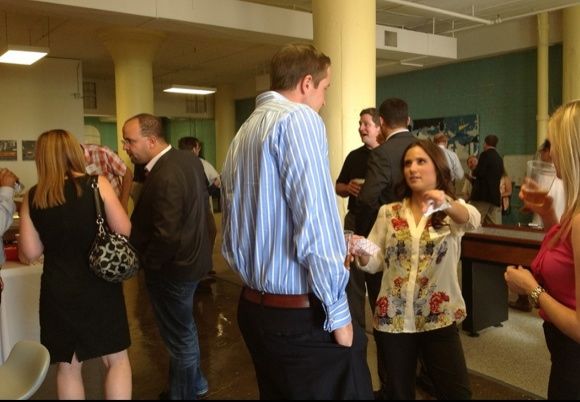
Wednesday, October 16, 2013
When a large company opens a regional office, sometimes it becomes a remote outpost, with a small staff and limited growth. But sometimes, it turns into an example of how a new office can thrive where it's planted.
Open Systems Technologies (OST)--which is a sponsor of The Line--definitely falls into the latter category, growing from three employees when it opened in 2010 to 20 employees today. David Gerrity, Executive Director of OST's Minneapolis office, says the company brings on a new hire every couple months, and he anticipates a steady pace for that growth in the future.
Based in Grand Rapids, Michigan, OST employs 120 direct employees and 70 full-time contractors, and focuses on business process solutions, data center services, application development, and other IT tasks.
The Minneapolis office is nestled inside the historic TractorWorks building in the North Loop, where technology professionals serve clients like Target, United Health Group, and Thomson Reuters.
"We anticipate about 35 percent annual growth," says Gerrity. "While we grow, we want to do so in a way that honors and maintains the culture we have. We put a great deal of emphasis on employee retention, and we think that makes a major difference."
Although hiring is done constantly, the process is also thorough, Gerrity adds. At OST, they want that professional to stay around for a long time — something of a rarity in the technology arena, where job-hopping is common. But focusing so heavily on employee retention allows OST to gain more credibility with clients, Gerrity believes.
Drawing good employees is easier with the office's location, he adds. "Minneapolis-St. Paul is the biggest small town in the country, it has a great culture," he says. "That makes for a very good match between the cities and the company."
Source: David Gerrity, OST
Writer: Elizabeth Millard
Wednesday, October 09, 2013
Even though bloggers are constantly connecting with readers and each other, it can still feel like a lonely task to send thoughts out into the world and wonder if anyone is reading them.
That's one of the reasons that the Minnesota Blogger Conference, started four years ago, is gaining prominence among the state's busy bloggers. Held on October 12th this year, the conference is a new venue, at Concordia University, and co-founder Arik Hanson says that the change in location should help to draw more interest from students.
Also, this year's lineup is particularly solid, Hanson adds. "It's a very diverse range of individuals, and we're excited about it," he says. "It's such a great chance for us to all learn from each other."
In addition to schmoozing with other bloggers, attendees will able to learn about optimizing content for mobile devices, using WordPress, tapping into Google Analytics tools, and making the most of Tumblr.
An ending keynote on the future of blogging will veer away from the technology of blogging and into the cultural and social implications of this unique form of writing. Weber Shandwick digital strategist Greg Swan will join MinnPost media writer David Brauer, TopRank Marketing CEO Lee Oden, and Fluence Media principal Blois Olson to chat about what blogging could look like in the years ahead.
The conference, in general, is a nod toward the broad blogger community in the Twin Cities, and it's no surprise that it's a growing scene here. Technology and culture are both rich local sources of innovation and creativity, and blogging is at the intersection of those two distinctive arenas.
"This is one of those grassroots conferences that let you geek out for a day," Hanson says. "People won't look at you sideways when you talk about plug-ins."
Source: Arik Hanson, Minnesota Blogger Conference
Writer: Elizabeth Millard
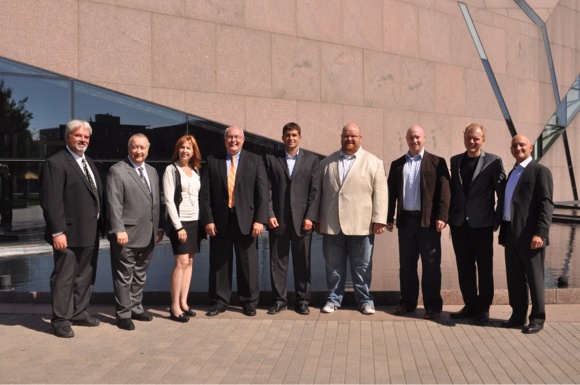
Wednesday, September 18, 2013
Crossing the finish line in the heated Minnesota Cup entrepreneurial competition is Preceptis Medical, a device manufacturer that's developing surgical tools for pediatric patients.
The company bested almost 1,100 competitors to nab the $40,000 grand prize, as well as $25,000 as the Life Science/Health IT division winner.
What got the judges' attention for Preceptis was the company's focus on the development of surgical innovations that would allow ear tube procedures to be performed with reduced pain and surgical time for children. Any parent who's watched a child suffer through multiple ear infections is likely to laud the kind of relief that Preceptis promises. Ear tube surgery is the most common pediatric surgery in the United States.
Now in clinical evaluation, the ear tube device and procedure have been tested on 60 patients, and Preceptis CEO Steve Anderson notes that it reduces trauma and risk, and offers greater efficiency for the surgeon.
"This year has been exhilarating," says Minnesota Cup co-founder Scott Litman. "We've had the best collection of presentations in our history, including the one from this year's winner, Preceptis Medical."
He added that 2014 will be the competition's 10th anniversary, and the competition's leadership is already brainstorming ways to grow the contest and involve more Minnesotans. Litman says, "We will discover and help more entrepreneurs to build better business plans and achieve long-lasting success. And of course, our ultimate goal is to cement the Minnesota Cup as a permanent part of the business landscape."
Source: Scott Litman, Minnesota Cup
Writer: Elizabeth Millard

Wednesday, September 11, 2013
Minnesota will have yet another technology and business resource on Sept. 18th, when the Minnesota High Tech Association (MHTA) and Minneapolis-based awareness firm Innovosource partner to provide a new monthly innovation series.
Dubbed "A Break for Breakthroughs," the series takes the form of free webinars for MHTA members, with the first event covering the latest breakthroughs in flexible electronics, from films and displays to touch sensor integration.
To kick off the series, the first webinar will be shown both online and at CoCo Minneapolis in the Minneapolis Grain Exchange. Speakers have just been announced, and Innovosource's founder will moderate.
According to Andrew Wittenborg, MHTA's director of outreach, upcoming sessions will cover emerging areas that affect Minnesota's technology landscape most directly. For example, wearable devices and robotics are booming here, so they'll get coverage, as will nanotech, biotech, and stem cells. Advancements in image processing and analysis are also slated to be discussed.
"We are particularly excited by this new partnership because it represents a key aspect of MHTA's mission to fuel Minnesota's prosperity through innovation and technology," Wittenborg notes.
He adds that the mission of the series is to help business leaders, R&D teams, investors, entrepreneurs, and others to learn more about emerging technologies and to build stronger relationships among the top players locally. "We will provide a greater level of awareness beyond the widely accessible information already available," says Wittenborg.
MHTA will also provide programming for Innovosource's Pardon the Disruption program, which connects high technology companies and investors to research universities and laboratories.
Source: Andrew Wittenborg, MHTA
Writer: Elizabeth Millard
Wednesday, August 28, 2013
The entrepreneurs vying for the grand prize in the heated competition for the Minnesota Cup just passed one more milestone, as 18 finalists were announced in preparation for the Sept. 11th award ceremony.
Now in its ninth year, the Minnesota Cup will award $40,000 to a grand prize winner who displays the most innovative idea in the state. The top three ideas in each of the six divisions (energy/clean tech, general, high tech, life science/health IT, social entrepreneur, and student) will advance to the finalist round, and compete for a share of prize money.
Finalists range in terms of innovation, and include aquaponics company Garden Fresh Farms, teacher-centered tech tool Kidblog, and medical device firm RxFunction. A list of finalists can be found here.
The competition is designed to bring out the best and brightest minds in Minnesota, and to help budding entrepreneurs to make connections within the business community.
Co-founder Scott Litman notes that the competition grows tremendously every year, and this spring, almost 1,100 people entered. More than 8,000 Minnesotans have participated in the Minnesota Cup since the competition began in 2005.
"We're proud to point to our successes, including last year's Grand Prize winner, PreciouStatus, which has raised more than $1.5 million in capital to date," Litman says, adding that other finalists have gone on to raise more than $60 million in capital, to support the development of their ideas, create jobs, and broker numerous business partnerships, collaborations, and distribution agreements.
Source: Scott Litman, Minnesota Cup
Writer: Elizabeth Millard
Wednesday, August 21, 2013
The University of Minnesota is proving to be particularly adept at turning research into commercial efforts, and this year, it will set a record for the number of startup companies it's launched.
In the university's 2013 fiscal year, 14 startup companies were given a boost into the marketplace through efforts by the Office for Technology Commercialization (OTC). That's up from 12 last year, and it's likely that the momentum will continue into the next fiscal year. Already, five startups are on track to launch in the first few months of 2014 and another 19 technologies are in various stages of startup activity.
"Our continued success as a research institution depends upon our ability to transfer knowledge created at the university into the real world, where it can have a direct impact on our society," notes Brian Herman, the University of Minnesota's Vice President for Research. He adds that the team at the OTC is doing an especially impressive job given the challenging economic climate of the past few years.
The OTC has been aided by the formation of a Venture Center, first opened in 2006. Since then, 52 startup companies have been created, and nearly 80 percent of those are still active. That success rate is notable, Herman points out, since a study done by Harvard Business School showed that 75 percent of all startups fail.
Also worth noting is the breadth of startups coming out of the university. In 2013, the range of products included a plastic bead that cuts off the blood supply to tumors, a smartphone-based breathalyzer, a handheld probe that can measure tension in soft tissues during orthopedic surgery, and a genetic test that assesses certain risks in dogs.
So, investors take note: when looking for the next big startup, it might be time to go back to school.
Source: Brian Herman, University of Minnesota
Writer: Elizabeth Millard
Wednesday, August 14, 2013
Web design firm Byte Technology recently made a major shift when it moved its national headquarters from Monterey, Calif., to Bloomington.
CEO and founder Terry Low notes that he and his wife had been visiting family in Minnesota over the past few years, and he began to see the opportunities here. "I started to see how the state is different, in terms of the business climate," he says. "There's so much here, from the standard of living to the availability of great employees. It opened my eyes."
The company will continue to operate a branch in Monterey as well as Denver, but Low looks forward to building up the new HQ locally. In particular, he anticipates bringing his blend of business savvy and social good to the Twin Cities area.
"I love being able to give back to the community, and that's something I hope to instill in all of my employees," he says.
Founded in 2001, Byte's clients have included Comcast, Colgate-Palmolive, AT&T, and other significant companies. Low anticipates that the company will make an impact here with Byte's distinctive web experience services, and hiring is currently underway.
"The web industry is moving at a breakneck speed, and we're keeping our goals high so that we can stay ahead," Low says.
Source: Terry Low, Byte Technology
Writer: Elizabeth Millard
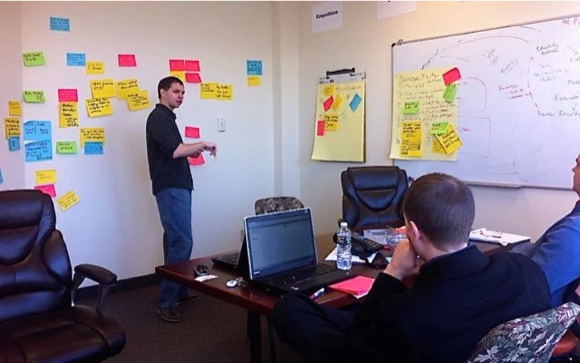
With continued expansion, Field Nation may have to consider changing its name someday to Field World. The Minneapolis-based firm, which provides an online work platform that connects businesses and independent contractors, is growing fast, leading to a recent expansion into Europe.
"There has been such demand from customers to use our platform in other areas than the U.S. and Canada," says CEO Mynul Khan. "We've been asked to expand into Latin America, parts of Asia, and Western Europe, so really, we just chose a starting point for more international services, but we expect to keep expanding geographically."
Launched in 2008, Field Nation employs 45 but has a contractor database of about 40,000. Although the company did aggressive recruitment in its early years, the momentum is now so strong that hundreds of new companies and contractors sign up every day through word of mouth, Khan says.
The company offers a marketplace where professionals can meet, but also provides a management system with distinctive features and tools that allow customers to create work orders, arrange payment, and keep track of documentation.
In addition to broadening its planetary footprint, Field Nation is also growing vertically, Khan says, by adding more skillsets into the mix. Currently, the company tends to lean toward IT services, but Khan believes that Field Nation's platform and work management automation can extend to any industry that hires independent contractors, including construction, creative work, and telecom.
"Every day is exciting here," he says. "We're always thinking about the next big thing and making new milestones."
Source: Mynul Khan, Field Nation
Writer: Elizabeth Millard

Major coworking and collaborative space CoCo recently announced plans to open a third location in Uptown, joining the organization's popular Lowertown St. Paul and downtown Minneapolis spaces.
Slated to open this fall at the intersection of West Lake St. and Lagoon Ave., the new location will be in the heart of Uptown and just yards from the Greenway bike route. Plans include a 15,000-square-foot space that will be rich with features and amenities, according to CoCo co-founder Don Ball.
Most notably, the space will offer a tap room with craft beers, a movie theater for presentations, a billiard room, and a walkout patio. For those who want to balance work with play, the space will feature two large conference rooms and several private "call booths."
Similar to the organization's location in the Grain Exchange, the new space will offer a large commons area where members can do presentations for up to 100 people, build product prototypes, or network with new ideas. Another open space, dubbed "The Garage," is a 3,500-square-foot area designed for groups that want to do deep work in strategic planning, Ball notes.
There will also be an abundance of coworking seats, as well as "campsites" where members can claim a dedicated desk for individuals or for small groups.
The move is likely to create more growth and buzz for CoCo, which scored a major win this year when it teamed up with Google (see The Line's coverage
here) for an ongoing partnership and event series.
"Membership has been exploding, especially since we launched our partnership earlier this year with Google," says Ball. "So we knew we'd have to expand, not only to create more space, but also to give members more options for where they can drop in and work. Uptown is a great location not only because of its demographics skew younger, but its proximity to so many great neighborhoods, the Greenway, and highways."
Source: Don Ball, CoCo
Writer: Elizabeth Millard
Minneapolis-based Maverick Software Consulting boasts a distinctive business model that's getting noticed by award presenters.
The company just received the Innovative Partnering and Collaboration Award from Minnesota State Colleges and Universities (MnSCU), as recognition for its efforts to link companies with entry-level IT staff sourced from colleges and universities.
Drawing on nearly 60 campuses across the Midwest, Maverick recruits, trains, and manages college students who work with companies that are experiencing a shortage of software development talent. The program also provides a supply of experienced IT professionals who've graduated from the program, and notes that Maverick "grads" typically find employment up to six months sooner than typical college graduates.
Started in 2006, the company's growth has been impressive, expanding from an initial staff of 10 student employees on one college campus to 130 employees on 25 campuses. Martin Hebig, the company's founder and president, notes that of the 325 students who've worked for Maverick, all have gone on to full-time employment at companies like Microsoft, Facebook, IBM, and Symantec.
He adds that receiving the MnSCU recognition is an honor, and made possible through academic and corporate partners that keep the program growing strong.
Hebig believes that the technology field in Minnesota will continue to heat up when it comes to hiring and retaining IT talent. "This is the year of the computer geek, nerd, tech diva, and so on," he says. "There are so many great things going on in the state right now to support this strong growth trend, and a lot of efforts to keep high-paying IT jobs in the state."
Source: Martin Hebig, Maverick Software Consulting
Writer: Elizabeth Millard
The summer may be off to a sluggish start weather-wise, but at the Minnesota Cup, the heat of competition just got kicked up a notch.
The annual contest, which supports the development of breakthrough ideas from across the state, just announced the start of its semifinal round, with 57 teams of entrepreneurs and inventors ready for the next stage.
Now in its ninth year, the Minnesota Cup offers six categories of innovation: energy/clean tech, general, high tech, life science/health IT, social entrepreneur, and student. Competitors are able to enter individually or as a four-person team.
The semifinal round will give those innovators a chance to buff up their ideas through exposure to mentors and business leaders, who will act as advisors for the next round. The teams and individuals will also have the opportunity to meet members of the Cup's review board.
A full list of this year’s semifinalists is available on the Cup’s site, and includes companies like Rowbot Systems, Windjuicer, Foodsby, Kidblog, Mode-sty, and Cinch Chix.
The competition is designed to bring out the best and brightest minds in Minnesota, and help those individuals to make connections that can advance innovation in the state, according to Minnesota Cup co-founder Scott Litman. He says, "The 2013 competition is no exception. We're excited to see how the many strong applicants in this year's pool will progress with mentoring and business planning this summer."
Three finalists from each division will be chosen on August 19th, and will be expected to present their business plans for a chance to nab the top prize, which will be awarded on September 11th.
Source: Scott Litman, Minnesota Cup
Writer: Elizabeth Millard
A new website, Community and Local Food Resources, is aimed at assisting rural community food systems and development. Sparked by a tri-state collaboration, the site's mission is to improve local food resources, no matter where people might live in the upper Midwest.
"Farmers and community members can face a variety of unique struggles and opportunities when working to develop strong local food systems," says Greg Schweser, Community Food Systems Planner at the University of Minnesota's Regional Sustainable Development Partnerships. "We worked with rural communities in Minnesota, North Dakota, and South Dakota to find out what those issues were and addressed them as best we could in this website."
The university collaborated with North Dakota State University Extension Service, Buy Fresh Buy Local South Dakota, and non-profit organization FARRMS to craft a site that will be useful for those working in local food systems. Topics include production, marketing tactics, business advice, sourcing options, education, and public policy.
The site comes at a crucial time, as community support for the farm-to-fork movement is growing. By providing online resources to rural communities, the site's developers hope to connect farmers with local organizations and also assist consumers who might be searching for affordable farmers market options or looking to start a community garden.
"While there is a wealth of information online to help those working on local foods, this website combines and organizes hundreds of resources into one easy-to-use interface," says Schweser.
As food systems change over time and community food strategies develop, the site's developers hope that people will forward new resources so the site can be kept up to date. Schweser is confident that the website can be a major force for change, and a central point for those aiming for stronger, community-based food systems.
Source: Greg Schweser, University of Minnesota
Writer: Elizabeth Millard
Minnesota technology leaders, start your engines.
The high-profile Tekne Awards just opened for entries, and five new categories have been added: STEM education and digital learning, healthcare delivery, impact on industry, agricultural technology, and safety and security.
Innovative entrepreneurs, organizations, nonprofits, and government agencies will all compete in the award program, now in its 14th year, presented by the Minnesota High Tech Association (MHTA).
The state remains at the forefront of cutting-edge technological growth, the MHTA noted, and the robust and growing competition highlights the kind of innovation that's homegrown here, from cleantech to robotics.
Last year, winners included Nova-Tech Engineering, Ecolab, Global Traffic Technologies, Maverick Software Consulting, and Sophia Learning. The City of Minneapolis also received an award, for technology excellence in a non-profit organization, getting a nod for an emergency operations training facility that blends digital data and streaming video.
This year, the five fresh categories showcase new directions in the state's approach to innovation. STEM education, a hot topic these days, gets its own category for programs that engage K-12 students in applied learning opportunities. Healthcare delivery will award innovation in the area of medical devices, diagnostics, data management, and other areas that improve patient care.
"We are watching significant growth in the areas of mobility as well as safety and security and want to make sure the Tekne Awards reflect that," says Andrew Wittenborg, Director of Outreach for MHTA. "At the same time, we want to recognize and support the collaborative efforts that lead to Minnesota breakthroughs."
In addition to its new categories, the awards will feature well-established, competition-rich categories like software, startup, advanced manufacturing, and mobile technologies.
Applications for this year's awards will be open until July 15th, and there's no application fee, nor do applicants have to be MHTA members. Finalists will be announced in September, with an award celebration held in November.
Source: Andrew Wittenborg, Director of Outreach, Minnesota High Tech Association
Writer: Elizabeth Millard
The heat begins to spike in the middle of summer, and suddenly the online ads you see promise thirst-quenching drinks, air conditioning systems, and convertible cars. Coincidence? Far from it: local firm Totally Interactive Weather, helmed by well-known meteorologist Dave Dahl and his son, Andy Dahl, is pioneering an ad platform that utilizes weather information to shape an advertiser's message.
Started in 2007, and often referred to as TiWi, the company was formed as a way to bring more weather information online, and disseminate it to other media properties. But the startup began at a difficult economic time, says Andy Dahl, and some lean years of trying to sell subscription content convinced the founders that they needed a stronger model.
"We began thinking of ways to go toward an advertising revenue model," he says. "Essentially, we were providing weather content for free, and attaching advertising to that content to monetize in that space."
That led to the debut of a technology called Trigger X, connecting weather data with advertising to make online ads more relevant and timely, Dahl says. The new platform provides in-the-moment ad messages based on changing weather patterns. For example, if someone is reading the Denver Post online and snow is moving into the area, Trigger X will prompt advertising that might include last-minute skiing specials, or snow shoveling service offers.
The platform went through beta testing in February, and just launched officially in May. TiWi is working to partner with ad agencies and media companies, and Dahl is confident that growth is as imminent as, well, the next big heat wave.
Source: Andy Dahl, Totally Interactive Weather
Writer: Elizabeth Millard
When attorney Zahra Aljabri went shopping for clothes, she was often disheartened by the lack of conservative-yet-stylish options. "I've always been a modest dresser, and it's been a struggle to find clothing that has some style and yet isn't revealing." When she began talking to friends about her experiences, she discovered that she wasn't alone--and as many entrepreneurs know, where there's struggle, there's opportunity.
Last July, she and her husband, James Faghmous, began working on Mode-sty, an online clothing boutique that meets the need for conservative clothing that looks good and is affordably priced. Aljabri found that by working with small-scale designers who crafted each item by hand, she could provide a range of clothing options for others who prefer more modest fashions.
Although Aljabri is Muslim, she sees the Mode-sty site as a resource that will appeal to numerous religious and cultural groups. "There are many religious communities where women want more coverage, like Muslims, Jewish women, and Christian groups, like Mormons," she says. "But then, there are also women who want to dress conservatively just because it seems more professional, or because they're getting older and they see this style as more age-appropriate."
At first, Aljabri utilized a "pop-up" model for the site, which meant the site would go live for only two weeks at a time until all inventory was sold, then it closed until Aljabri could re-stock. But with increasing attention and customer loyalty, the site is now up continuously, and she's thinking of her next move.
"We've realized that we need to produce our own clothing line, so we're working on that, and we also want this to be a destination site, where women can talk about different issues," says Aljabri.
Source: Zahra Aljabri, Mode-sty
Writer: Elizabeth Millard

Sustainable food, farm-to-table, artisan products: there's no doubt that the food world is changing rapidly, and as it does, Ingle Marketing is picking up clients along the way.
Founded by entrepreneur and marketer Jodi Ingle about seven years ago, the firm draws on Ingle's experience working on foodservice accounts at several advertising agencies. That industry is unique, she notes, because unlike retail, which has a set of measurable metrics, foodservice presents a distinct B2B niche that can be tricky to navigate.
She's drawn to the industry because she simply appreciates food, she says: "Really, I love everything about it, from growing to cooking to grocery shopping. A big goal for me is to be the go-to agency partner for food companies, in terms of branding, marketing strategy, and creative development."
Ingle seems to be reaching that goal nicely, with a roster of clients that include a fresh fish purveyor, a creator of wine jelly, and a developer of "foaming sauce," among others. Although Ingle Marketing is a one-person company at present, Ingle draws on a wide array of contractors, freelancers, and branding experts to put specialized teams together for every project.
Social media is a booming field for her, she notes, and more clients are asking for campaigns that incorporate blogging and other online, interactive communication.
No matter what the medium, though, Ingle is ready to prepare the message. "Each brand has its own flavor," she says, "and our menu is full of new creations."
Source: Jodi Ingle, Ingle Marketing
Writer: Elizabeth Millard

When Drew Geraets and his wife moved back to the Twin Cities from New York in 2010, they bought a 1908 charmer in St. Paul. Like so many older homes in the area, the house had plenty of character, but also boasted a lengthy to-do list of improvements. It also had a distinctive feature: a book of photographs from the previous owner, showing the work that had already been done.
"I got a history of the place, and it was so striking to see how it had changed," Geraets says. "Because of that, I started to notice how often people posted their projects online, in blogs and on Facebook or Instagram. There are a ton of DIYers documenting projects from start to finish."
Although a somewhat popular site, Houzz, tries to collect these kind of efforts, Geraets envisioned a more user-friendly site for DIYers, and eventually, a mobile app. Along with a fellow entrepreneur, Ryan Cavis, he launched HouseTalent, a site that allows users to upload photos, create project sites, and browse other projects.
Currently, the founders are working on an iOS app that will make it easy for users to take photos with smartphones and upload to the site. The app should be ready by the end of June.
HouseTalent is seeing a steady increase in users as word gets out (and the spring renovation momentum takes hold), and Geraets anticipates that the next step will be developing a revenue model that could take the form of premium content. Right now, just like his house, everything is a fun work in progress.
Source: Drew Geraets, HouseTalent
Writer: Elizabeth Millard

As communication and information increasingly go mobile, Leviathan Technology Group is seeing the benefits.
The Minneapolis-based technology services firm is finding significant growth in interest for mobile tools, as well as new methods for pushing content to users. That shift is creating strong expansion opportunities for the firm, propelling it beyond its initial healthcare specialization and into many other industries.
Founded about nine years ago by entrepreneur Steve Engels, the company first focused on software development and product design for health-related nonprofits, helping them build content tools online. Since then, the firm has grown into a developer of mobile tools and web applications, and Engels sees a wealth of opportunity ahead.
One secret to the company's success is local hiring combined with expert contractors in Russia and Ukraine, he notes. Leviathan's system of connecting consultants from all over the world has allowed the small local team of 10 to be more agile, according to Engels, and integrate mobile technology in a creative way.
At this point, he's now trying to anticipate the next big thing. "When it comes to the future, we'll be pushing more, trying to find the cutting edge," he says. "We're seeing strong growth in mobile, but we have to think about what's after that. We need to be experts by the time technology hits the mainstream."
Source: Steve Engels, Leviathan Technology Group
Writer: Elizabeth Millard
Successful creative agency KNOCK is likely to find even more open doors in its future, with expansion of its brand strategy, advertising, and design services to global clients.
The agency's CEO, Lili Hall--quoted in our
lead feature this week--has been zipping around the world in the past six months, and just completed a Master's degree in international practice management. She's in talks with business connections in countries like Saudi Arabia and India, and she anticipates much more global work coming to KNOCK in the near future.
"Global is really becoming our focus," she says. "We have a great partner who's consulting with us about cultural relevance, and we feel very connected to global networks in a new way."
Hall founded the company in 2001, just a few months after 9/11, and she admits the timing was challenging. Without a business plan, and in a tricky economic climate, KNOCK might have faltered if it hadn't been for Hall's passionate belief in creating an agency based on the right way to treat colleagues and clients.
"When I started the company, I reflected on the attributes of people I admired and respected," she says. "But I also thought about the situations I'd seen that were negative. I created a list of 'how to never treat people,' and in many ways, that's become a major part of our philosophy."
For example, KNOCK stands apart for blending creatives with account professionals, which is an unusual arrangement for an agency. Those two "sides" tend to do battle, but Hall saw the power of collaboration from the start, and has shown that blending those viewpoints creates more strength for clients. In other words, when thinking about how never to treat people, the first lesson is: don't make your colleagues into enemies, just because of their job titles.
Hall also credits transparency, a proactive approach, and internal entrepreneurial energy for driving growth throughout KNOCK.
Source: Lili Hall, KNOCK
Writer: Elizabeth Millard

Most consumers haven't heard of Grocery Shopping Network (GSN), but it's likely that nearly everyone has seen the company's work. The Minneapolis-based firm creates digital tools for grocery retailers and packaged goods manufacturers, resulting in a wealth of online and in-store promotions.
With the surge in digital marketing efforts and greater interest in food and cooking, GSN, currently on a roll of hiring and expansion, is likely to have even broader reach in the near future. The company's distinctive analytics capability is leading sales on a national level, promising to expand GSN's market reach, according to company spokesperson Albin Andolshek.
"We’ve built a great deal of strength on the regional level, and now we’re seeing more national campaigns emerge," he says. "With the new digital shopper marketing tools we have access to, our clients have access to unlimited reach."
Started in 1996 as a website developer for the grocery industry, GSN has been beefing up its offerings ever since. The company added e-grocery.com in the late 90s, then brought in software that let clients add recipes and online coupons to the mix.
GSN still offers end-to-end solutions for websites, but it also integrates online display advertising into its services. Both areas of the company are growing, and attracting partnerships with sites that focus on grocery shopping, coupons, deals, and cooking.
Part of the unique digital marketing that GSN provides is deep integration with digital marketing resources. For example, if a grocer runs a special on coffee and wants to target only coffee drinkers in the store's loyalty card program, GSN helps them find those individuals and tailor a message to reach them.
As a result of strong growth and expanded services, GSN has been hiring and expanding, Andolshek says. "We have milestones we want to hit, and we're excited to keep growing."
Source: Albin Andolshek, Grocery Shopping Network
Writer: Elizabeth Millard

Digitiliti was founded in 2005 to offer basic database backup and disaster recovery software, and has been expanding ever since. Having moved to cloud backup services just a few years later, the company is now poised to continue its innovation curve with more services around unstructured data.
In most companies, unstructured data comprises about 80 percent of an enterprise's information, in the form of emails, documents, records, audio and video files, online journal articles, and other non-database formats. This type of data can be difficult to search and store without an effective tool for addressing backups and security.
"We looked at that data and wondered how we could make it useful," says Billy Cripe, Digitiliti's Vice President of Marketing and Sales. The company came out with a flagship product, digiLIBE, that offers archiving, sharing, and access to all unstructured data in an enterprise. Even better, the product can collect all business content from any device and put it into Digitiliti's cloud-based system.
The company currently has nine employees, and Cripe says it will continue to operate in lean and efficient mode, but Digitiliti is growing in terms of client numbers. Enterprise content management as an industry has been stagnant in the last five years, but nimble technology like Digitiliti's is surging in popularity as companies use content for collaboration, peer-to-peer file sharing, and other efficiency gains.
"The technology is changing so rapidly, and that's really exciting," says Cripe. "What we focus on is building functionality that adapts to how people need to deal with information."
Source: Billy Cripe, Digitiliti
Writer: Elizabeth Millard

Minneapolis-based social media and digital marketing agency The Social Lights (see The Line's previous coverage
here) recently unveiled a new training and certification program that could boost the number of social media professionals in the Twin Cities.
The six-week accelerated course will be designed to equip qualified candidates with the knowledge and skills to shine as full-time social media community managers. Training is done in a classroom setting as well as online, blending client projects, industry speakers, and case studies. Participants learn to manage multiple platforms and pages, measure the success of their efforts, and develop creative content.
"Over the past three years of managing social media on behalf of a variety of brands, we've learned what it takes to be a strong Community Manager and act as the eyes, ears, and voice of a brand," says Martha McCarthy, co-founder of The Social Lights. "We've also noticed that an increasing number of social media positions require years of experience, but most candidates have no formal training, and limited experience."
During the past year, McCarthy and her partner, Emily Pritchard, have spoken with recruiters, HR managers, brand managers, and others, and discovered that many companies are in a similar position when it comes to recruiting social media professionals: the selection is slim, and those who have great potential lack a deeper level of training.
In addition to providing that instruction, the company will act as a placement agency of sorts, matching training participants with enterprises that need those skills.
"We aim to fill the social media talent gap and provide value to our students and clients alike," says McCarthy.
Source: Martha McCarthy, The Social Lights
Writer: Elizabeth Millard

A beautiful website or app might be satisfying, but if they lack a high degree of usability, they could sink a business.
Minneapolis-based NiceUX focuses on creating digital products that people enjoy using, and their expertise is becoming more in demand as companies across a range of industries rely on sites and applications.
Seeing steady growth, the company recently moved into new offices in the Warehouse District, and expects to grow its three-person team to 10 within the next year.
Founder Jon Hadden says he doesn't want to turn NiceUX into a large agency (or even be considered an agency), but he feels that the firm offers a distinctive service that will prompt further growth.
"What sets us apart is that every project is different, and we have the skills to recognize that," he says. "Each project has unique content and a unique audience, so we do the research upfront before we pick up a pencil to start any design work."
Many agencies produce digital work, he adds, but skimp on making sure that people will be viewing the finished product in a way that most benefits a client. NiceUX makes that endpoint a priority from the beginning, and Hadden believes this creates a higher level of customer service.
"Sometimes at companies, the research on usability gets put on a back burner," he notes. "But it should be a starting point."
Before making the move to new offices, the company was sharing space with another firm in the Grain Belt building, and Hadden feels this shift will kick off a fresh wave of growth. He says, "It's a wonderful space, and we're excited for what's ahead."
Source: Jon Hadden, NiceUX
Writer: Elizabeth Millard

Wednesday, April 24, 2013
Many times, entrepreneurial inspiration comes from seeing a gap in a specific chain of supply and demand. For University of Minnesota student Benjamin Hohl, that gap was filled with textbooks.
As a freshman, Hohl learned that the average college student spends about $900 per year on textbooks, and receives significantly less than that when selling them back to a campus bookstore. For example, Hohl bought a $200 psychology textbook, and sold it back for $15.
"I wondered why there wasn't a better system to connect students who had the books with those who were willing to buy them," he says. "I thought: why not localize it? We all take the same classes, so why shouldn't we connect with each other to get what we need?"
A few years later, the idea came back to him over a holiday break, and he put together a rough website called TextExchange, which he later changed to the "more catchy" NakedTextbooks. After rebuilding the site several times and adding more functionality, he launched recently and had 2,500 site visitors in the first week. The startup has brought on two other university students to expand its marketing efforts.
The setup is simple: users arrange book exchanges in person, stating how much they'd charge for their used textbooks. Hohl anticipates that the service will always be free for users, but will be monetized by local advertising, especially from potential meet-up sites like coffee shops.
Based on how well the site does at the U. of M. in the near future, Hohl expects that NakedTextbooks could roll out to several more campuses next fall, and expand beyond that in subsequent semesters. In addition to textbooks, he sees the site becoming a major exchange point for students, who could buy and sell items like futons or dorm furniture. Eventually, there could even be subscription fees from universities themselves, he believes.
"We think we have a service that's valuable, and at some point, we'll see a revenue stream," Hohl says. "In the meantime, we're just excited about the different directions this could go."
Source: Benjamin Hohl, NakedTextbooks
Writer: Elizabeth Millard

Wednesday, April 17, 2013
When it comes to crowdfunding, most people are familiar with Kickstarter, a site that boosts the potential of artists and businesspeople, with a strong focus on community efforts and creative arts. For those who don't fall into those categories, though, utilizing crowdfunding has been almost impossible.
That is, until now. Savage-based company LiifGroup offers a dynamic platform that allows users to raise money through multiple crowdfunding sites designed by the firm.
Co-founded by Mark Connelly, Jack Cosentino, and Kristi Masser, the platform launched on January 8th, and has already been gaining traction.
"The last couple months have been crazy," says Connelly. "We're vetting projects, looking at financials, and going from meeting to meeting. We're the first crowdfunding company started in Minnesota, and it's obvious already that there was a need for this."
LiifGroup's model differs from Kickstarter, since a venture won't lose all their money if a certain amount isn't reached within a specified timeframe. Instead, they can receive partial funding. LiifGroup generates revenue by receiving five percent of the amount each company raises.
The medical market, in particular, will benefit from the platform. Connelly is an emergency and trauma physician for North Memorial Health Care, while Masser spent 15 years with pharmaceutical giant Merck. That experience, combined with Cosentino's tech startup background, made the trio gravitate first to the many medical device startups in the region.
In addition to its medical crowdfunding site, called LiifMed, the company has a platform for sports-related startups, LiifSport. Connelly notes that another one is being built for luxury goods, and he anticipates a variety of platforms in the future.
"Already, we see growth ahead, and a great deal of opportunity," he says.
Source: Mark Connelly, LiifGroup
Writer: Elizabeth Millard

Wednesday, April 10, 2013
Although online deal sites like Groupon and LivingSocial boast plenty of fans, the model can be challenging for consumers and businesses alike. Those who change their minds about a product or service will lose money because they paid upfront, and for companies, demand can be so intense that more than one business has been shuttered by a Groupon deal.
Minneapolis-based startup lumaNEAR believes there's a better way.
The idea for the deal site has roots at the University of Minnesota, where co-founders Scott Sailer and Kyle Ries were roommates while attending the Carlson School of Management. Sharing a passion for business efficiency, the pair tried a number of different startup ideas, but none felt large enough for eventual expansion.
Then, they started listening to complaints about the online group-buying model, and like the lightbulb in their logo, something clicked on. "We wondered what would happen if we removed the friction and hassle from both sides," says Sailer. "People could still get deals and companies could still get business, but without the headaches."
Their venture, developed with creative guru Teresa Facciotto, went into beta on April 6th. The platform lets users navigate a map with posted deals, but doesn't require pre-buying to take advantage of them. Unlike other online deal sites, lumaNEAR lets vendors tweak a deal at any time, or even remove them if they choose.
Best of all for both sides, the service is free. As a bootstrapped venture, lumaNEAR will likely add fee-based premium features for businesses in the future in order to begin turning a profit, but the co-founders are adamant that basic functionality will always be free.
"Our mission is to connect these two groups together, easily and with low cost," says Sailer. "We have lofty goals for expansion, and we're excited to see where this takes us."
Source: Scott Sailer, lumaNEAR
Writer: Elizabeth Millard

Wednesday, April 10, 2013
As the construction industry roars back to life after a difficult recession, Minneapolis startup BuildTools is finding robust growth, less than two years after launching.
The construction management software got its start when a local builder approached business development professional Chad Mayes and asked for a software tool to assist with building projects. After a test run, Mayes and his team took the software platform to other builders to see if it was worth further development.
"It quickly became apparent that we were sitting on something really valuable, so we took it from in-house ugly duckling to polished software platform," says Mayes. The new BuildTools application released nationally in the summer of 2011, and since then, growth has been so solid that the tool quickly went international, and is now translated into six languages.
Timing has been key, Mayes notes. During the darker days of the recession, many in the construction industry learned to streamline operations, and they didn't make investments for new software. As the industry regained health, the ongoing desire for efficiency and looser budgets brought a surge of customers to BuildTools.
Designed by builders, the software is ideal for mobile devices like iPads, which are increasingly used by project managers, contractors, and even carpenters, for making lists and referring to construction plans.
Mayes estimates that BuildTools is currently reaching just under 10 percent of the market, which means that major expansion is likely as the platform becomes more widespread.
"Definitely, we see increased growth, and we'll be looking to expand not just locally but also nationally and internationally," says Mayes.
Source: Chad Mayes, BuildTools
Writer: Elizabeth Millard

Wednesday, April 10, 2013
Minneapolis-based Sport Ngin just received a major funding infusion that will boost the company's already impressive growth even more. The sports software provider recently closed a $6 million financing round with El Dorado Ventures, a venture capital firm with offices in Minnetonka and Silicon Valley. That brings their overall funding total to $10 million since the company's founding in 2008.
Sport Ngin began as TST Media, a design and creative agency started by Justin Kaufenberg and Carson Kipfer while both attended the University of Wisconsin-Eau Claire. "Originally, it was just to make a little extra beer money," Kipfer says, with a laugh. "But by the time we were finishing school, we could see the potential for much more."
Looking for a niche, and drawing on their experience playing sports through high school and college, the pair focused on developing software for sports organizations, first for hockey and then for many other sports.
The software they developed allows teams to manage players, post schedules, and track stats, as well as offer online registration. A tournament package offers tools that let users run everything from a Little League event to a professional playoff.
Currently hiring for a number of positions, Sport Ngin sees more growth ahead, both in employee numbers and in products. The company's revenue has increased 100 percent year after year for the past four fiscal years, and aggressive hiring has increased staff numbers to 120.
"This current investment underscores our progress, hard work, and many successes to date, and validates the widespread adoption of Sport Ngin by thousands of sports organizations," says Kaufenberg. "This capital infusion will enable us to further grow our market presence, and to expand and enhance the functionality of Sport Ngin."
Sources: Carson Kipfer and Justin Kaufenberg, Sport Ngin
Writer: Elizabeth Millard

Wednesday, April 03, 2013
Real estate isn't the only industry where location matters.
For marketing, branding, and creative design, a company needs to understand its figurative place among competitors and customers. Susan Hopp and Karl Schweikart, founders of Minneapolis-based creative firm 45 Degrees, have spent the last 16 years as mapmakers for their clients--helping to figure out how each client fits into a specific place in the world.
The married couple started the business in 1997, and chose the company name as a nod toward their geographical position--on the 45 parallel of latitude, which runs through the Twin Cities. They feel that 45 Degrees is unique in the creative industry because of the amount of time they spend in finding a client's "location."
"We need to really understand them before we start designing anything," says Schweikart. "We help them identify their strengths, their emotional connections, in order to give them a solid foundation to move forward."
Hopp adds that other design firms try to capture the essence of a company or brand, but not as in-depth as 45 Degrees. That tendency toward brand cartography can be invaluable for clients, since they might come in thinking they only need a new logo, and end up realizing that they're deeply disconnected from customers.
Looking ahead, the pair don't anticipate growing their employee numbers (currently, it's just the two of them in their happy groove), but they are leaning toward taking on more mid-size companies, which tend to feel the pain of customer disconnection most acutely.
"We have an opportunity to make an impact for clients of any size," says Hopp. "For us, this work is about much more than design."
Sources: Susan Hopp and Karl Schweikart, 45 Degrees
Writer: Elizabeth Millard
Wednesday, April 03, 2013
Now entering its 9th year, the Minnesota Cup is distinctive for its array of innovative ideas and entrepreneurship, attracting startup founders and inventors to showcase their best insights for the chance to win $200,000. This year's kickoff came on March 25th, with ideas accepted until May 17th, and organizers are gearing up for another year of robust competition.
"Just like every year, we're excited about what's ahead," says Scott Litman, Minnesota Cup co-founder. "This has become such a great way to inspire and support the state's early-stage entrepreneurs, and it's become a cornerstone for the entrepreneur ecosystem here."
The competition features six divisions: Energy/Clean Tech, General, High Tech, Life Science/Health IT, Social Entrepreneur, and Student. Those who advance to higher rounds get the opportunity to present their business ideas, get paired with mentors, and network with potential investors.
Since the competition began n 2005, over 7,000 Minnesotans have participated. Finalists from just the past four years have gone on to raise more than $60 million in capital. Last year's Grand Prize winner, PreciouStatus, has raised over $1.5 million since its win.
Although every division is chock full of entrants, Litman notes that there are some trends from year to year. "It's fascinating to find a big surge of quality and ideas in certain areas," he says. High Tech tends to be a busy division, he says, but in teh past few years, Health IT has been growing steadily.
Participation is fairly consistent, though, with about 1,000 participants every year. Those who make it to the semifinal round in June will be paired with mentors, with finalists from every division chosen in August.
Source: Scott Litman, Minnesota Cup
Writer: Elizabeth Millard
Wednesday, April 03, 2013
Nightclubs in Chile are getting more profitable, thanks to Minneapolis-based startup BookBottles.
The company got started in 2011, when founder Parag Shah was chatting with some friends who were nightclub promoters. They began talking about the challenges of bottle service, a VIP-level reservation where club-goers can book a table and buy liquor by the bottle rather than by the drink. A significant revenue driver for clubs, the service varies widely even in nightlife hotspots like New York and Las Vegas.
Shah tested out the reservation services of several clubs in big cities, booking tables online and by phone, and found that over 75 percent of the clubs didn't even contact him to make the reservations, and some got back to him after the reservation date.
"Considering how much customers are willing to spend on bottle service, the terrible customer service was just baffling to me," he says. "This wasn't just a big opportunity; it seemed like it could go global."
After forming a team and creating software that made it easy for club owners to streamline their bottle service offerings, Shah's business partner went to Startup Chile and received funding for expansion into South America.
Success there is translating into more international opportunity, with BookBottles opening in Mexico within the next couple weeks. In another recent win, the company partnered with Apple to create device packages so the app can be used on Apple products like the iPhone and iPad.
"People don't understand how big this market is, and the nuances of bottle service," says Shah. "We're fortunate in that we're getting into this growing, huge industry, and seeing that our application can be modified for different industries like casinos and restaurants. We're very excited about where we can go from here."
Source: Parag Shah, BookBottles
Writer: Elizabeth Millard
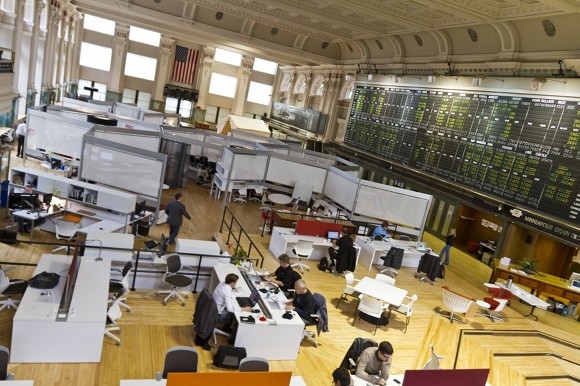
Wednesday, March 27, 2013
Fundraising in the Digital Economy
April 2
CoCo Minneapolis
400 S. 4th St., 4th Floor
3:30 pm - 4:30 pm
free
INVESTyR co-founders Patrick Donohue and Phil Pogge deliver an overview of the types of tactics used to harness digital media for fundraising. Geared toward entrepreneurs, nonprofits, and companies of any size, the talk gives attendees tools for raising capital and strengthening relationships with investors and financiers.
TechBiz Minnesota 2013
April 5
Earle Brown Heritage Center
6155 Earle Brown Dr., Brooklyn Center
9:30 am - 3:00 pm
$25
Organized by Advance IT Minnesota, this conference brings together employers of IT-related talent and local students. During the event, student projects will be showcased, giving students an opportunity to demonstrate their skills and employers a chance to see accomplished learners.
Hedgeye Embraces Minnesota: CEO Keith McCullough Talks Social Media
April 10
Macy's Oak Grill
700 Nicollet Mall, Minneapolis
11:30 am - 1:00 pm
$20 members, $45 non-members
Hosted by the CFA Society of Minnesota, this talk by Hedgeye Risk Management founder Keith McCullough addresses social media in the context of finance and investment. With more than 20,000 followers on Twitter, McCullough can articulate how he uses the medium to engage audiences and spark innovation.
Access the Western Hemisphere Conference
April 23 & 24
Radisson Plaza Hotel Minneapolis
7:30 am - 5:00 pm
registration from $249 to $349 depending on type
Bringing together 10 senior commercial diplomats and sponsored by the Minnesota District Export Council, this conference will provide insight on how attendees can identify new export opportunities, develop strategic relationships, and increase market share in specific countries.

Wednesday, March 27, 2013
There's a certain kind of power to a really good metaphor, and for a top example, just consider Bicycle Theory.
The St. Paul-based brand marketing firm, started in 2001 by entrepreneurs Ben McCoy and Jeremy Burgeson, got its distinctive name in part from McCoy's love for cycling, but also from the company's mission.
"It's a great metaphor because when we chose it, we were working with small brands and we could see how bicycles were representative of brand marketing," says McCoy, noting that a strong brand is similar to a well-designed, well-maintained bicycle that can carry its rider farther and faster than a poorly constructed bike. Even the wheels can be metaphorical, he adds--they stand for the two primary media that carry campaigns, print and web.
The idea for a brand management company was first sparked when the founders were just out of college and working for a creative agency. McCoy jokes that they were both the kind of kids who knew how to program VCRs in the 1980s, so they gravitated toward technology, and in 2001, the Internet was still like the Wild West.
"We started in a basement, and then moved into larger spaces over the years," he says. The firm has five full-time employees, and McCoy notes that they're ready to grow, but want to be methodical about expansion.
"There's so much innovation going on, and every day brings a new round of problem solving," he says. "We're excited about the possibilities, but at the same time, our goal isn't to be on the bleeding edge, it's to be on the cutting edge. We always want to make sure our solutions will work."
Source: Ben McCoy, Bicycle Theory
Writer: Elizabeth Millard

Wednesday, March 27, 2013
As the housing market continues to rebound, real estate agents and house hunters will have a powerful tool in the search for fresh properties, thanks to a new app called 400 Doors.
Created by real estate agent Bill Pauling, designer Nils Hansen, and programmer Robert Nelson, the app allows buyers to get a glimpse of properties potentially coming onto the market before they're formally listed, providing a crystal ball into new listings. Sellers are able to use the app to gauge what sort of price they can get for a property, as a way to determine if the timing is right for them.
"Right now, a lot of buyers are frustrated because there's very little inventory on the market, so when something good does get listed, it's very competitive," says Pauling. "From a seller's standpoint, they want to know if they can get the price they want before they list."
The idea came to Pauling when he was sitting in a weekly meeting at his agency and chatting about pre-listings. This is common practice at every real estate firm, he says, but it's done on such an informal basis that the information isn't captured in any useful way for those who can't make the meeting. Some systems have been created at certain agencies, but they're in-house and agency-specific, so they don't benefit the entire real estate community.
The app's name is a nod toward all the doors that open as a result of getting a deal done, Pauling says. Funded by sponsors like plumbers and electricians, who pay to get their names to users, 400 Doors is free for agents. Launched in February, the app is taking off already, with agents from over 20 brokerages signing up, and more new members every day.
"This model should work anywhere, and the feedback so far has been outstanding," says Pauling. "We try to be modest in our goals, but once we perfect it here, there's no reason we can't go nationwide with the system."
Source: Bill Pauling, 400 Doors
Writer: Elizabeth Millard
Wednesday, March 20, 2013
In Internet years, The Foundation is practically an institution by now.
Founded in 1999, the Minneapolis-based company began as a managed IT firm for printers, graphic designers, and architects, and even after 14 years, the focus still remains on creative professionals. In the past decade, the company has blended in other services like project implementation and remote network monitoring, but its laser focus on one industry has made The Foundation a go-to IT resource for creatives.
"The difficulty in that particular industry is that they're increasingly reliant on technology, but many of them don't have time to learn about the technical side," says Matt Woestehoff, Director of Business Development and Operations at The Foundation. "We help them get back to work quickly when a problem comes up."
The company's 14 employees tend to come from creative fields--Woestehoff jokes that he's a "failed designer"--and are passionate about supporting the creative community. In addition to getting clients back on track, The Foundation has also seen an uptick in implementation requests. For example, a creative agency might want to deploy 1,000 iPads in retail stores and set up a dedicated help desk for the effort. Not only can The Foundation take on that task easily, but it can also set up relevant apps and handle technology updates.
Mobile technology efforts like that are driving big growth at the company, which looks forward to adding at least five people to its employee roster over the next year. But even if the firm didn't get a major boost from mobile, there would still be contentment with its founding mission, Woestehoff believes: "We have a purpose, and we can see how our work affects the bigger creative community."
Source: Matt Woestehoff, The Foundation
Writer: Elizabeth Millard
Wednesday, March 20, 2013
Back in the old days of Internet business startups (think mid-1990s), usability tended to be a big deal, sparking hundreds of articles about best practices and online navigation strategies. Although the term isn't used as often these days, it's still a vitally important component for companies that want to build effective user experiences.
Founded in 2002, Minneapolis-based Straight Line Theory has focused on information architecture and usability for over a decade, resisting the urge to broaden its offerings into other areas like web design or online branding. The company has no web designers or developers, just usability experts who know how people interact with each other and with companies online.
The business name, says co-founder John Dusek, refers to the route someone would take to get from point A to point B: a straight line. "It's a good metaphor for what we do," he says. "We see what clients are trying to accomplish, and we help them satisfy those goals as efficiently as possible."
With the rise of mobile technologies, usability has become even more important in some ways, giving Straight Line Theory a steady stream of clients. They now do a large chunk of work on mobile devices, tablets, and even mall kiosks and ATM machines.
With seven employees, Straight Line Theory has been conservative in terms of growth, Dusek says. Usually, the firm adds one employee per year, and that rate of expansion keeps the company nimble, notes Dusek: "We don't have layers of project managers and account people, just clients and interface design professionals working directly with one another."
Source: John Dusek, Straight Line Theory
Writer: Elizabeth Millard

Wednesday, March 20, 2013
Mobile apps can provide everything from online banking capability to restaurant reviews, so why wouldn't they be able to untangle your love life, too?
A unique new app, Dear Appvice, is willing to give it a shot. Developed by Todd Gross at media company New World Productions, the app's name is a nod toward popular advice column Dear Abby, and it's designed to make any user into a budding expert on relationships.
Featuring a simple interface, the app lets users pose a question and get up to five responses. Other users can give advice or see what's already been written. The categories are love, sex, dating, and relationships.
Gross thought of the idea after working on corporate projects at New World. Looking for a venture he could do independently, he was struck by a morning talk radio show that featured callers who gave each other advice on love.
"It occurred to me that I could put that in an application, and let people talk to each other, with the same level of anonymity you'd get from a call-in show," he says. "Sometimes online, it feels like everyone is running their own promotional campaign for themselves, but this is something where they could interact instead."
Of course, the app launched on Valentine's Day. Since then, the reaction has been strong, and users are embracing the concept. A couple of very heartfelt interchanges let Gross know that he was on track with his goal of creating something useful and important to users.
"You always think, what can I do to make the world a better place, to increase communication?" he says. "Matters of the heart affect all of us, and that's why I think this app is so well received. I'm excited to see where we can take it."
Source: Todd Gross, Dear Appvice
Writer: Elizabeth Millard
Wednesday, March 13, 2013
Fundraising for nonprofits and political campaigns seems to be as much of an art as a skill. Harnessing innovation can help, and that's where PoliMobile comes in.
Founded by entrepreneur Curt Prins in 2011, the startup initially began as a software-as-a-service platform, until both President Obama and Mitt Romney announced they were adopting Square to help them fundraise. Prins and his team saw that moment as a hook for PoliMobile's platform, showing that new technologies could be used to raised money.
The company switched its focus to mobile, working with a mobile app development agency to create a tool that could be used across a variety of campaigns. Last year, PoliMobile set up mobile capability for Minnesotans United, the major effort to defeat the proposed Marriage Amendment, as well as a mobile project for the organization against the proposed Photo ID Amendment. Prins notes that PoliMobile's market tends to lean toward progressive organizations right now, but could work across the political spectrum.
"Coming out of the 2012 election cycle, campaigns we worked on had an 80 percent win rate, which is pretty decent," Prins says, adding that the PoliMobile platform was able to identify specific communities using census data and send tailored messages that were helpful for building awareness and developing fundraising opportunities. For example, a campaign that wanted to send a customized message to Somali residents could find the top three zip codes for those voters and push out a note to their mobile devices. For populations such as Somali, Hmong, and African Americans, mobile technology is often the only way to reach individuals.
Because of its unique niche, PoliMobile's future looks bright, especially since there will always be political campaigns, from local elections to presidential races, with every level in-between.
"We believe that next year will be big, and if we continue to play it right, 2016 will be even larger," Prins says.
Source: Curt Prins, PoliMobile
Writer: Elizabeth Millard
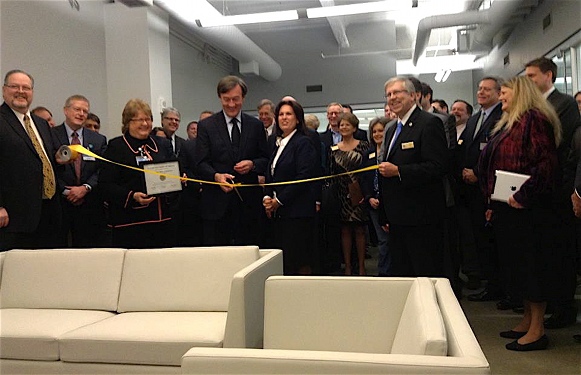
Wednesday, March 13, 2013
Rochester is ready to see a fresh burst of startup activity, thanks to a new business accelerator put together by the Mayo Clinic and the Rochester Area Economic Development Initiative.
The Mayo Clinic Business Accelerator at the Minnesota BioBusiness Center features space that can be leased by entrepreneurs, startup companies, venture capitalists and professional service provider. According to Dr. John Noseworthy, president and CEO of Mayo Clinic, the accelerator was put together to spark the growth of healthcare-related businesses in the area.
"The accelerator is an example of the strength of a strong partnership between Mayo Clinic and the community, to make it easier and more affordable for companies to start and locate in Rochester," Dr. Noseworthy says.
There are seven founding tenants, including Versant Ventures, a venture capital firm that specializes in investments in medical devices and biopharmaceuticals, and Evidentia Health, an IT company focusing on healthcare clients. Other tenants include Resoundant, Zumbro Discovery, and VitalHealth Software.
Mayo Clinic aims to provide a nurturing space so that companies can avoid the type of startup roadblocks that might hinder growth.
Dr. Noseworthy added that the accelerator fits in well with Destination Medical Center, a $5 billion economic development initiative that is projected to create up to 45,000 new jobs in Rochester and other parts of the state.
Startup companies are willing to locate in Rochester, Dr. Noseworthy notes, but they need to infrastructure to stay in the city. "Without that, they are vulnerable to leaving not only Rochester, but the state of Minnesota."
Source: John Noseworthy, Mayo Clinic
Writer: Elizabeth Millard
Wednesday, March 06, 2013
A new program at the University of Minnesota could boost the number of startup companies and innovative products in the state, with faculty putting a whole new spin on "office hours."
The Entrepreneurial Leave Program will facilitate temporary leave for faculty inventors who want to assist an external organization in commercializing a product or service that might use university-derived intellectual property.
The university decided on the step because as a land-grant institution, the school wants to stay connected to the local business community, notes Russ Straate, in the Office for Technology Commercialization at the University of Minnesota. That connection is strengthened when technology makes it out of the university and into the marketplace, a transition in which faculty usually plays a key role.
"We put this together to help faculty translate their work into the commercial sector," says Straate. "It gives them permission and time to explore."
Most importantly, the program also gives them benefits. In the past, faculty were granted leaves of absence to pursue projects, but had to give up their health insurance and other plum university benefits. That left many putting their projects on a back burner instead of pursuing commercialization.
"It's important for faculty to continue to grow and learn, that's what sabbaticals are about," Straate says. "When doing a leave of absence, though, you shouldn't be negatively impacting your family and yourself."
The program will be officially in place in July, but Straate notes that there's already buzz among faculty members who've wanted to take their research and development to the next level.
Source: Russ Straate, University of Minnesota
Writer: Elizabeth Millard
Wednesday, March 06, 2013
Wildly popular with consumers, sites like LivingSocial and Groupon aren't always relevant for young adults, believes entrepreneur Chad Olsen.
"There are so many crazy good deals, but it felt like there wasn't much for college students," he says. To change the situation, he created ByME, an app that focuses on that demographic, and also puts a different spin on the online coupon model.
Unlike Groupon, those using ByME don't need to buy ahead for their deals. They can just bring a smartphone into a participating retailer or service provider and present the e-coupon on the spot. That's an advantage, because it doesn't create a deluge of orders for a small business, and it doesn't lock users into a certain deal before they start shopping.
Olsen got the idea for the company while running a web development agency. One of his clients called, in tears, because a Groupon deal had overloaded the company, and eventually drove it into bankruptcy.
"When I heard that, I thought there must be a way to start with good deals for students, and drive traffic for these businesses, without overwhelming them," he says.
The app does create a bit of a frenzy, however. A recent deal at Noodles & Co. was so popular that the restaurant ran out of food. Olsen jokes that the company's new tagline is "We made Noodles run out of noodles."
As the company approaches its one-year mark, Olsen and his business partner Alec Bronston are already working on the next version, incorporating tweaks that will make ByME even more useful. He says, "We're able to learn from our mistakes to become more agile and lean."
Source: Chad Olsen, ByME
Writer: Elizabeth Millard

Wednesday, March 06, 2013
Sometimes, great ideas spring from mundane situations--such as watching a delivery person show up multiple times to the same building within a half-hour timeframe.
"While I was working in a corporate setting, there was one day where I saw a delivery driver from a restaurant five blocks away come to our office building five times within about 20 minutes," says Ben Cattoor (see photo at left), "I just thought to myself: there has to be a better system than that."
The idea sparked Foodsby, a startup launched last May that allows restaurants to streamline their deliveries. The company focused on wooing eateries that were smaller, and didn't have delivery service already in place, since Foodsby tends to work best for that type of restaurant.
The app works by allowing restaurants to choose their delivery times and locations. Users can go to the Foodsby site and place orders, relieving the restaurant from taking time to jot down individual orders and deliver them separately.
Because of the efficiencies realized by the app, many customers are finding that they don't have to hire delivery drivers, and can depend on existing employees. For example, if a restaurant decides to deliver to just one certain nearby office building on Fridays, an employee can zip over in less than 15 minutes with all the orders.
Currently, about 20 restaurants use the system, and Cattoor says Foodsby is using Minneapolis as a test market with the hope of going nationwide at some point. "We really think this model is useful, and it gives restaurants much more control," he says. "We're excited to see where it can go from here."
Source: Ben Cattoor, Foodsby
Writer: Elizabeth Millard
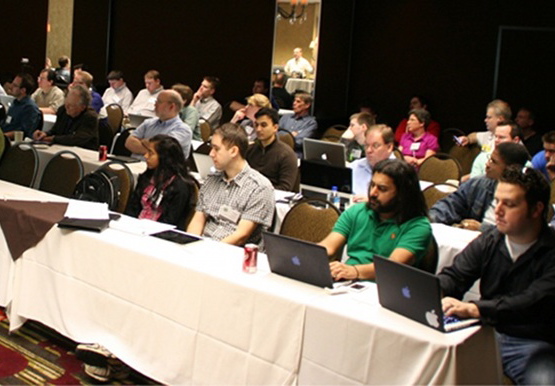
Wednesday, February 27, 2013
The Stir
March 14
Minneapolis City Center Marriott
5:00 pm - 8:30 pm
$75
Hosted by the Women's Foundation of Minnesota as a fundraising event for the organization, The Stir is a networking event with dinner and drinks. A keynote from Jacquie Bergland, founder and CEO of Finnegans, will kick off the evening.
TechFuse
March 21
Minneapolis Convention Center
8:00 am - 5:00 pm
$349
Geared toward IT professionals, TechFuse is now in its sixth year, and going strong with a couple sold-out shows in the past few years. The one-day event covers a range of topics, from app-specific sessions on Windows 2012 and PowerShell v3 to broader discussions on change in professional development and IT as a business.
Mobile March 2013
March 21
Earle Brown Heritage Center
6155 Earle Brown Dr., Brooklyn Center
8:00 am - 6:00 pm
$115
The popular Mobile March conference should prove especially lively this year since the Twin Cities seems awash in mobile app development. Attendees will hear presentations on topics like game development, user experience, and mobile advertising, as well as case studies of local businesses that have found success in the mobile space.
Connect India
March 23
Crowne Plaza, Bloomington
5:00 am - 9:30 pm
$40 - $50, depending on membership
Over a sumptuous Indian dinner, attendees at this business event can hear speakers from the Indian-American community discuss their role in the wider economic community. Scheduled to speak are Vikas Narula, creator of Keyhubs, Marie Pillai at General Mills, and Sri Zaheer, Dean at the Carlson School of Management.
Wednesday, February 27, 2013
As cabin fever continues across the metro, many local food lovers are signing up for community supported agriculture programs and eagerly looking forward to this year's farmers markets.
That mentality created ideal timing for a recent Living Social sign-up offer from Twin Cities Local Food, an online marketplace and food delivery system that pairs local consumers and growers. Now entering its second year, the company used the deal-making site to offer a discount on its usual membership price, and was rewarded with a stunning surge in new memberships. Within only four days, the firm sold all of those discounted memberships.
"We were amazed, it was a really intense couple of days, and we had no idea it would take off like that," says co-founder Josh Kelly, who started the venture with his wife, Natalie. He left the corporate world to pursue his dream of providing fresh, healthy food to the local community, and after slow-but-steady growth last year, it already looks like they'll need to expand infrastructure to meet demand.
With the Twin Cities Local Food model, farmers and producers of other goods like honey and maple syrup benefit because they can directly market, sell, and package their own products, but skip distribution. Customers can order online weekly and then pick up their food at one of the company's drop-off sites in locations like South Minneapolis, St. Paul, Eagan, and Osseo.
The model has been tried in other states, but so far, Twin Cities Local Food is the only business of its kind here. From the recent reaction to the Living Social deal, it's obvious that demand is strong. As the farming season gears up, it's likely that more new memberships and referrals will be on the way.
Kelly says, "It felt really good to see so much interest and enthusiasm, not just for us, but for local food. Healthy, whole, real food is getting the attention it deserves, and that's bound to drive growth for us."
Source: Josh Kelly, Twin Cities Local Food
Writer: Elizabeth Millard
Wednesday, February 27, 2013
Considering the economic storm that creative placement agency True Talent Group survived in its first few years, the sunny skies ahead are more than welcome.
Started in 2008 by entrepreneur Stacey Stratton, the company began during a dismal time for startups, she believes, but she took a chance anyway. She established a basement office, did sales recruiting, and took only a year to bring on three employees (see
previous coverage in The Line about her start-up track).
Over the past year, Stratton has found even stronger footing, and she notes that the agency is on track for double-digit growth again in 2013. In addition to business revenue growth, True Talent Group has added to their team by hiring staff to help with recruiting and client retention, and the company is now a robust enterprise. What it lacks, however, are actual offices.
The accounting, marketing, legal, and advisory teams consist of individuals and organizations outside the corporate entity of True Talent Group, and Stratton believes that the model demonstrates the strength of a virtual office strategy.
"While we focus exclusively on marketing, interactive, and the creative industry, we think it would be disingenuous for us to build capacity in the categories of legal, accounting, and especially marketing," she says. "We rely on experts with perspective and savvy to deliver for us, just like our clients expect our talented team to deliver for them."
She adds that they company's impressive 90-percent referral rate is keeping the company on track, and it's more than likely that True Talent will keep going strong.
Source: Stacey Stratton, True Talent Group
Writer: Elizabeth Millard
Wednesday, February 20, 2013
The housing market's slow-but-growing recovery is good news for everyone from homeowners to lenders, and it's particularly welcome news for Minneapolis company Mobile Realty Apps.
Established in 2009, the technology-based startup entered the market at a tricky time, admits founder and CEO Aaron Kardell. But even with a sickly industry, the firm saw modest growth during its first two years. Over the past year, however, the traction really began to build. "We've seen pickup in a significant way, especially as our apps are getting more noticed," he says.
The company has developed a range of applications for tablet computers and smartphones, and is garnering the most attention lately for HomeSpotter, an app that uses a device with a live camera feed to deliver information on a specific property. A user can just point a smartphone or tablet down a street and instantly get info on all the houses for sale on that stretch.
Mobile Realty Apps has also been upgrading its other applications, drawing customers like Edina Realty, RE/MAX, and NorthstarMLS. "Our local success has positioned us well for rollout on a national level," Kardell says. "We're seeing a convergence of key factors in our growth, including increased credibility based on our local customer base, and pickup in the housing market."
The company's wins created the need to find bigger office space, leading Mobile Realty Apps to recently move into the Grain Exchange building.
Kardell expects the momentum to continue, with an expanded client base, more product lines, and strong growth. As the housing market comes back, Mobile Realty Apps will be ready.
Source: Aaron Kardell, Mobile Realty Apps
Writer: Elizabeth Millard
Wednesday, February 20, 2013
It seems that every college campus and coffee shop is awash in flyers, with announcements about bands, parties, and for-sale items. But what if all that information could be disseminated digitally, creating a robust and hyperlocal connection?
That's the premise behind YELLaround, a startup created in 2011 when friends Kyle Case and Trong Dong came to the Twin Cities after graduating from Iowa State University. The pair were struck by the number of activities locally, but still struggled with feeling connected to the city, and realized that much of their information about events came from flyers and newspaper ads.
"We thought that there must be a way to feel engaged with the people around you in a better way," says Case. "We envisioned an app that would connect you to a community quickly."
They started YELLaround to build the app, and just released the first iteration to the App Store on iTunes in January. Although it's early in the sales cycle to get an idea of popularity, Case is feeling confident that it'll catch on, based on the positive reaction of the first wave of users. The app works by broadcasting a message over a 20-mile radius, making it ideal for local events, and users can expand the range with a feature called "echo."
To extend the app's reach, Case and Dong are focusing on event organizers, but they see a broader future ahead. Case says, "We want it to be a local communication venture, where you can connect with people around you without having to use formal systems like Facebook. You can see why traffic is backed up, or find people to start a band. It's an open platform to connect."
Source: Kyle Case, YELLaround
Writer: Elizabeth Millard
Wednesday, February 20, 2013
Silicon Valley and Silicon Prairie are ready to meet.
On Wednesday, February 20, coworking and collaborative space CoCo hosted a major kickoff with new partner Google for Entrepreneurs, announcing a two-year schedule of events, conferences, and social mixers at CoCo's Minneapolis office.
Focusing on technology and startups, the events are aimed at boosting entrepreneurship in the state, and draw on Google's extensive history of innovation and development. The company's Google for Entrepreneurs initiative was created to support entrepreneurs worldwide, and boasts an array of successful programs already, including Campus London, Women on the Web, and The New Orleans Community Leaders Program. The company even provides guidance and training for child entrepreneurs with Lemonade Day, a nonprofit that teaches children how to start and operate their own businesses.
John Lyman, Entrepreneurship Manager at Google, remarked in a release that the company believes entrepreneurship drives innovation and economic growth. "We see that happening in Minnesota and particularly at CoCo," he noted.
An announcement about the local partnership was made during an all-day conference at CoCo that began with U.S. Senator Amy Klobuchar and Minneapolis Mayor R.T. Rybak talking about innovation and entrepreneurship. The jam-packed event was free, but filled up quickly, as tech leaders and aspiring business owners jockeyed for a spot at one of the afternoon's sessions with visiting Google employees.
A full 2013 event schedule is still being finalized, and will be released soon, but CoCo did give a glimpse of what's to come. The event series will include affinity and user groups, including Google Developers Group Twin Cities, Android Users Group of Minnesota, and House of Cards, as well as one-day and multi-day conferences. Social and networking events will also play a large role in the partnership, with a particular focus on connecting startup founders with mentors.
Also slated are classes and educational sessions, including online-only instruction geared toward appealing to entrepreneurs across Minnesota who may be far flung from CoCo's office space.
The event series will rely on Google technology, including Google+ Hangouts, a video conferencing app that allows users to connect directly to multiple participants, or to broadcast an event through Google+, a YouTube channel, and a website. The app also lets users record the broadcast so that it can be shared later.
In a release, CoCo founding partner Kyle Coolbroth noted, "This partnership with Google will allow us to continue to expand our mission of creating a robust community of individuals pursuing the work of their dreams."
Writer: Elizabeth Millard
Wednesday, February 13, 2013
When Curenci co-founder Mike Brooks tries to describe the company, the first thing he mentions is Russian nesting dolls--those wooden tchotchkes that are split in the middle to accommodate smaller and smaller dolls tucked into one another.
"When people first see our company, they see a loyalty program, and get the impression that we're just a technology company," he says. "But if you keep going through the layers, you'll find there's more to us than that."
Started last year, the company calls itself "a loyalty program on steroids," and provides a link among merchants, consumers, and fundraising efforts. Retailers and other merchants sign up with Curenci, and when shoppers frequent those stores, they bring along their Curenci card. The merchant sends a rebate amount to a cause chosen by the consumer, as well as a certain amount to the consumer's card to be used like cash.
Merchants set the rebate amount. For example, Berry Blendz in Eden Prairie offers a 3.5 percent rebate amount, while Cloud 9 Carwash in the same city offers seven percent.
The company is finding some traction as it puts the program in place, and Brooks notes that they would like to have whole neighborhoods involved. Since Curenci can be used for any type of transaction, including EBT, car registration, and other tasks, Brooks believes that government agencies could benefit as well as vendors.
Currently, eight merchants have signed up, but now that the technology has been proven, Brooks says the momentum has begun. The tool represents the company's first application to market using its core payment and disbursement technology. Curenci's primary focus is on a patent-pending secure electronic settlement system for transactions and payments through ecommerce and mobile platforms.
"We're really getting things ramped up, and getting to market as quickly as we can," he notes.
Source: Mike Brooks, Curenci
Writer: Elizabeth Millard
Wednesday, February 13, 2013
Although charitable giving can seem straightforward, there's a complexity to that type of generosity, especially if done through an employer. A new startup, DoTopia, aims to simplify the process, and create enormous benefits along the way.
Kicked off by philanthropist Billy Weisman and Target veterans Nate Garvis and Mike Dominowski, the firm offers a better model for giving, based on what the trio experienced in the corporate world.
"We've all seen a number of limitations with how things are handled," says Dominowski. "There are demographic trends that show changes in charitable giving for younger generations, so we wanted to develop a sustainable model of fundraising that would appeal to companies as well as individuals."
Launched in 2012, DoTopia provides a platform where companies can use "DoDollars" for charitable contributions. This digital currency can be utilized for customizing giving programs, funding a nonprofit project, or engaging individuals, Dominowski notes.
"Companies are trying to do more to meet the needs and interests of employees and stakeholders, and the current models don't go far enough to give these people the ability to be engaged in charitable giving at the level they'd like," he says. With DoTopia's platform, people can have more control over where their dollars go, creating a stronger connection between donors and nonprofits.
Recently, the firm signed on its first Fortune 50 client, and is already getting strong feedback. Dominowski anticipates growth as the platform catches on: "We see this as the next iteration of charitable giving. We want to establish ourselves as the norm when it comes to corporate giving programs."
Source: Mike Dominowski, DoTopia
Writer: Elizabeth Millard
Wednesday, February 06, 2013
For many in the legal and political realms of the Twin Cities, Adam Wahlberg is a well-known name. For over a dozen years, he was executive editor of the thought-provoking magazine 'Minnesota Law & Politics,' then went on to helm 'Super Lawyers,' a Thomson Reuters service.
But after 16 years in the business, he was ready for a change. Always interested in advocacy, Wahlberg enrolled at the Humphrey School at the University of Minnesota, but found that he missed journalism. "I didn't see how I could connect those worlds, because I was anticipating a new career as a policy wonk," he says. "Then, I had a light bulb moment."
While talking with a friend who worked as a journalist in Afghanistan, the two began discussing PTSD in the military, and the conversation turned to publishing the journalist's thoughts on the subject. Wahlberg began to research self-publishing options, and then realized he could become a publisher himself, and start a venture that put out e-books exclusively.
Think Piece was born. The digital publishing firm is in the 'humble beginnings' stage, with Wahlberg working in CoCo's offices for now. But he's already landed several big projects, including a new book from popular author Janet Burroway, who plans a memoir about her son, a private military contractor in Iraq.
Wahlberg is excited to be hitting the ground running on multiple projects, and is beginning to envision other ways to offer content via mobile devices. "In some ways, I don't have any idea what I'm doing," he says with a laugh. "But it doesn't matter because I'm having a blast."
Source: Adam Wahlberg, Think Piece
Writer: Elizabeth Millard
Wednesday, February 06, 2013
Much has been written about cracking the genome's code, but little is said about how this information will be used, particularly on an individual level. Will your genome data be public property, or will you be able to have a level of ownership over its contents? One Minneapolis-based startup prefers the latter.
Founded in March 2012 by entrepreneur Paul Saarinen and University of Minnesota Associate Professor of Genetics Scott Fahrenkrug, Miinome aims to be the largest member-owned genetic database and genetic data broker in the world. The name Miinome derives from a combination of 'genome' and a play on 'Wii' game controllers, creating a blend that indicates members will have control of their own unique genetic code.
"We believe in the concept of property rights, and genomic data right now isn't necessarily legally yours yet," says Saarinen. "We want to change that, to a model where you would have access to your genetic information, and the ability to choose what you do with it."
The company is in its early stages right now, but sparking quite a bit of interest with partnerships and investors. The pair has filed an initial patent around the idea with plans to release a beta version of their platform in the next six months. Until then, Saarinen is jetting around the country collecting advisors and raising capital.
"This is getting a little crazy in terms of traction, and we're just trying to keep up," he says. In other words, keep an eye on Miinome this year as it goes from stealth to boom.
Source: Paul Saarinen, Miinome
Writer: Elizabeth Millard
Wednesday, January 30, 2013
MHTA Session Preview: Tech, Innovation, and Life Science Industries
February 5
Science Museum of Minnesota
20 Kellogg Blvd. W., St. Paul
4:30 pm - 7:00 pm
$15
Presented by the Minnesota High Tech Association and Life Science Alley, this event features a panel discussion with several legislators, including Speaker of the House Paul Thissen, talking about the future of tech, innovation, and life sciences in the state.
Health 2.0: Aetna and Azul 7
February 6
Azul 7 offices
800 Hennepin Ave., Suite 700, Minneapolis
5:30 pm - 8:00 pm
$15
For the past year, design firm Azul 7 has been working the Aetna to develop a cohesive user experience across multiple systems. In this talk, both sides will discuss the project, as well as give insight on the challenges and benefits of designing user-friendly technologies in the health care industry.
Business Valuation Conference
February 6
University of St. Thomas
1000 LaSalle Ave., Minneapolis
7:30 am - 4:30 pm
$199
This annual conference, now in its 23rd year, covers an array of business valuation topics, including the basics of a real estate appraisal, use of regression analysis, and eminent domain. Toby Madden, from The Federal Reserve Bank of Minneapolis, will give an economic update to kick off the day.
Social Media and Data Analytics for Digital Marketing
February 7 & 8
Carlson School of Management
321 19th Ave. S., Minneapolis
8:00 am - 4:30 pm
$3,000
As part of its Executive Education series, the Carlson School of Management presents this two-day conference on making smarter use of social media and their data. Participants will learn how to extract business intelligence from social tools, why they should tap into open innovation opportunities, and much more.
Wednesday, January 30, 2013
Home automation has been one of those technology fields where innovation has come before demand. Much like it took e-readers a few decades to really catch on, home automation has been available, but not quite ready for its close-up.
But that situation may be changing fast, thanks in part to local startup SmartThings.
The company has been gaining serious momentum, after a successful Kickstarter campaign and a seed funding round. Co-founder Ben Edwards notes that the industry is on the verge of major growth, and SmartThings is likely to boom along with it.
"We're seeing interest in partnerships with companies like insurance firms, who would benefit from more home automation," he says. "There are many unexpected partnership opportunities that we're pursuing right now."
The SmartThings platform is fairly simple, but ingenious. It allows numerous systems in a home to be connected to technology. For example, you could be at work and get an alert on your iPhone that someone has just opened a window in your house, or that the temperature has dropped by 20 degrees, indicating a potential mechanical issue. There's a level of control as well, allowing you to turn lights on and off while on vacation, for instance.
Just the promise of SmartThing's offering has created significant buzz. The company's seed funding round netted $3 million, augmenting the $1.2 million raised by its Kickstarter campaign.
Thanks to its potential, the company is on a hiring path, with a headcount in Minneapolis of 20, and 10 more employees in other parts of the country. Edwards says, "If feels like we're getting bigger every day."
Source: Ben Edwards, SmartThings
Writer: Elizabeth Millard
Wednesday, January 30, 2013
"We should do happy hour sometime, I'll buy you a drink." That phrase may be uttered often, but for busy executives who barely have time to eat, putting together a leisurely get-together can feel like planning a trip around the world. It would be nice, but it's not exactly realistic with a jam-packed schedule.
That was the situation facing BreAnna Fisher when she was working at a marketing and advertising agency, and wanted to reward her intern for diligent work. "We had a project and he did an amazing job, so I said, 'I want to buy you a drink,' but later at home, I realized that I had a 3-year-old, I was full-time in school, and had a demanding job," she recalls. "I looked at my husband and said, 'When am I ever going to buy this kid a drink?'"
That realization sparked an idea for a business, DoDrinks, that would allow people to quickly "send a drink" (beer, wine, cocktail, or coffee) to someone else, which they could redeem whenever they like.
The idea is deceptively simple, since it involves some complex technology behind the scenes. Fisher relies on a technology team for development and testing, and the app is now in its third iteration.
The venture has started to gain momentum and garner attention from potential partners. Already, Fisher has linked up with Heineken, and is likely to ink deals with other drink purveyors.
Fisher credits her eight years in the military for giving her the discipline to take on an entrepreneurial venture. "I have a high risk tolerance, and I can complete a mission with limited resources," she says. "You can't be successful in the military without those skills, and as it turns out, they're perfect for leading a company as well."
Source: BreAnna Fisher
Writer: Elizabeth Millard
Wednesday, January 23, 2013
The Consumer Electronics Show (CES) might not be well known to actual consumers, but for companies that develop devices, software, gadgets, and games, it's the Olympics of trade shows. Held annually in Las Vegas, the event is awash in big names, dramatic unveilings, and more than a few industry parties.
So, when Minneapolis-based startup Canopy got a burst of attention for its new touch-sensitive iPhone case, Sensus, it was more than just nice recognition for its founder, Andrew Kamin-Lyndgaard--it proved that his idea was ready for the big time.
"People really took notice at CES," he says. "Since then, the attention has been constant."
Kamin-Lyndgaard started the company in 2008 as a solo entrepreneur, working in a 400-square-foot office in Northeast Minneapolis. The company's first product, the Canopy Kapok, was an iPhone case with dedicated buttons for shooting photos and video.
Although the product didn't garner wide adoption, it opened the door, he says, sparking conversations with others in the iOS application community who made products for Apple devices.
The result of those explorations is Sensus, a smartphone case that expands a device's functionality. As Sensus gets more buzz, Canopy is headed for a robust growth track. In the past couple years, Kamin-Lyndgaard has added seven full-time employees, and plans to hire another two or three in the coming months.
The larger goal, he says, is to be acquired by a bigger firm, and with the CES success, that seems a realistic goal. He says, "The nature of Sensus is disruptive, and that's why it's getting attention. That's going to be compelling for a company looking at acquisition opportunities."
Source: Andrew Kamin-Lyndgaard, Canopy
Writer: Elizabeth Millard
Wednesday, January 23, 2013
Sometimes, business ideas come from unlikely places. For Blake Sohn, entrepreneurship started with a lost dog.
In the midst of the family's move to a new house, Sohn's dog, Emma, got free. Emma's ID tags had a previous address, as well as an older phone number, so Sohn considers himself lucky that he and Emma were quickly reunited. The seemingly minor event sparked an idea, however.
"I'd been interested in QR codes for some time, and I thought there had to be a way to use this platform for dynamic data in a new way," he says.
After developing prototype, Sohn founded FinderCodes, a company that creates durable ID tags for animals as well as stickers for possessions like electronics, backpacks, tools, and anything else that needs protection. The tags can be affixed to nearly anything, from a well-loved leather jacket to a kid's hockey stick.
If the item is lost, someone with a smartphone can scan the QR code to find the owner.
The company recently scored a big win: FinderCodes Lost and Found Kits were awarded a top innovation prize at the Consumer Electronics Show (CES), a major event for the electronics industry.
"I'm still stunned that we won it; it put us on a rocketship ride," Sohn says. The company is likely to keep zooming forward on that momentum with a new software upgrade, and future hiring. Right now, the company has 12 employees, and Sohn is looking toward worldwide opportunities and partnerships in Asia, Australia, and the United Kingdom.
Already, the company has relationships with FedEx and AT&T. Sohn says, "The goal is just to help people manage their favorite things."
Source: Blake Sohn, FinderCodes
Writer: Elizabeth Millard
Wednesday, January 16, 2013
Conferences can be rich sources of networking, innovation, education, and sales leads, but those opportunities tend to end when the speakers and the trade show exhibitors begin packing up to leave.
One local entrepreneur wants to keep the energy going.
Michael Lunser, who acts as a project manager for conference content capture firm OrganicVoices, felt that all of the education and connection that occurs at conferences could be put to greater use, and also reach a wider audience, if they could be transferred to an online format.
The result is Exhibit Hall Earth, a startup project that Lunser is rolling out for organic agriculture conferences initially, but which has potential for all types of conferences.
"The traditional model for content capture is to record speakers and then try to sell the materials to attendees," he says. "But that model is starting to wear out; people aren't as interested in buying a pack of CDs anymore."
He envisioned a system where content could be included as part of a registration cost, with all the sessions and workshops online for easier access. Since the exhibit hall would be online and accessible, it could also host articles posted by users, publish classified ads and job listings, and become robust with other content. Lunser has even created a cookbook on the site so that attendees can swap recipes.
"Instead of a couple days networking and learning about topics, you could get exposure to so much more in a virtual exhibit hall," he says. "For conferences, it would allow them to have a presence on a yearly, ongoing basis. Everyone benefits."
Lunser is still fine-tuning the site, but is optimistic about making the model into a must-visit destination for conference attendees.
Source: Michael Lunser, Exhibit Hall Earth
Writer: Elizabeth Millard
Wednesday, January 09, 2013
Launched last year, RoadTab is gaining speed. The online matchmaking app between auto owners and repair shops began in the Twin Cities, but now offers options for users in Atlanta, Milwaukee, and Seattle.
The service's growth isn't a surprise, notes founder Jacob Phillips. "People are responding to the way the system works, and really liking the way they can get estimates online, instead of taking their vehicles to different shops."
RoadTab allows users to input the type of work they need performed, and to receive estimates via email. Based in Chanhassen, the service got its start when Phillips reflected on his experiences owning a small car dealership. Constantly on the phone to auto repair shops, he sought a tool that would streamline the process. When he couldn't find one, he decided to build his own, with the help of web and mobile development firm Tiny Mission.
The app is free for users, and mechanics pay a yearly membership fee. Phillips has refined the tool so that requests don't get sent out to every mechanic in the system. For example, if a car owner needs repair on a cracked windshield, only specialists in auto glass repair will get the query.
One sticking point is that it can be difficult for mechanics to give estimates for cars they haven't examined, but despite that challenge, the service seems to be picking up more mechanics and site users on a regular basis.
Phillips anticipates that the service will begin rolling out to more cities in the future. Next up is probably Chicago, he believes. "We can see this being nationwide," he says. "It's picking up momentum as it goes."
Source: Jacob Phillips, RoadTab
Writer: Elizabeth Millard
Wednesday, January 09, 2013
It all started with a lampshade.
When Katherine Hayes was visiting her grandparents in 2010, she noticed stains on a lampshade, and decided to spend some time with bleach and a bucket rather than making a run to the store to buy a new one.
A finance professional, she'd been contemplating a career switch, and somehow, that seemingly minor moment of home maintenance clicked for her. "I love to repair things, put them back in order," she says. "I've always been a tinkerer, and in some ways, it's a reaction against our disposable consumerism. It feels like people don't fix things anymore, they just replace them."
That line of thinking has led Hayes to start Fixity, a service specializing in the small aspects of a home that could use adjustment. From tailoring curtains to mending jewelry to righting a wobbly chair leg, Hayes embraces the long list of to-do items that many people usually avoid. She's repaired a zipper on a travel bag, re-woven small holes in sweaters, assembled IKEA furniture (a talent in itself), and patched holes in upholstery, among numerous other tasks.
To get the business going, she's been relying on grassroots marketing efforts, which involve traditional referrals and social media. Hayes believes that her service is unique, because as a former art major, she utilizes creative solutions that some handyman-type services might skip. For example, she once sewed a round pillow to cover an oddly shaped window in a client's attic space.
"A handyman isn't going to be sewing pillows," Hayes says. "But if that's what you need, and you can't sew it yourself, now there's Fixity."
Source: Katherine Hayes, Fixity
Writer: Elizabeth Millard
Wednesday, December 19, 2012
The Collaborative Innovation Series
January 10
Cowles Auditorium, Humphrey Institute
301 19th Ave. S., Minneapolis
7:45am - 10:25am
Maybe your resolution for 2013 is to put together a great board of directors. If that's the case, you're in luck: The Collaborative presents a morning of insight about how to create, develop, and effectively utilize a board.
Healthy Life Expo
January 12
Minneapolis Convention Center
10am - 5pm
$6 or free with donation to food shelf
This annual expo has been increasing in popularity every year, and this round offers up to 200 exhibitors, three stages of speaker presentations, product samples, free health advice, and plenty of information on wellness, nutrition, and fitness.
Technically Speaking: Leading with Emotional Intelligence
January 17
University of Minnesota
McNamara Alumni Center
5:30pm - 6:30pm
free, but must pre-register
The Technological Leadership Institute (TLI) at the U of M continues its new speaker series with this presentation about emotional intelligence, led by TLI's Kirk Froggatt. Geared toward leaders within organizations, the talk looks at the impact and practice of emotional intelligence as a way to boost leadership qualities.
Leadership Challenge Conference
January 24
St. Catherine University
Rauenhorst Ballroom
8am - 3:45pm
$225
The Leadership Challenge conference brings together professional women from a range of settings, including government, education, nonprofit, and small business sectors. Now in its 16th year, the event is a day of education and discussion focusing on leadership, with interactive workshops and networking opportunities.
Wednesday, December 19, 2012
Let's say you've been looking for the perfect pair of boots for the last few months — classic but fashion-forward, dressy but office-appropriate — and finally, you find them and put a photo up on social media to show off your prize. How would it feel if a group of your friends then dashed out to buy the exact same boots?
More interestingly, would that feeling change if you got a "reward" every time a pair got purchased based on your recommendation?
It's the answer to the second question that drove the creation of StuffDOT, an online platform that allows users to post items like books, movies, clothes, and housewares, and then earn rewards if those postings lead to purchases by others.
Created by AOI Marketing, a Minneapolis-based loyalty marketing firm, StuffDOT is still in beta testing, but is likely to be widely released soon, according to Amanda Axvig, the company's vice president of marketing.
"Basically, it's just a smarter way to share," she says. "It rewards users for sharing what they like."
Like other referral programs, StuffDOT compensates users through a point system than can be redeemed for cash or gift cards from retailers like Target and Amazon.com, or even Punch Pizza. In look, the site is similar to Pinterest, but tying posts to rewards makes it even more compelling than those types of "inspiration sites," Axvig says.
Currently, StuffDOT is working with over 18,000 retailers, and Axvig notes that nearly every prominent online retailer has signed on as a partner. With that kind of beta, it's likely that the site's popularity (and AOI Marketing's staff numbers) will continue to grow.
Source: Amanda Axvig, AOI Marketing
Writer: Elizabeth Millard
Wednesday, December 12, 2012
For professionals like electricians, plumbers, and builders, referrals are a rich source of marketing. But harnessing this type of business driver is usually done on a casual basis, and often isn't viewed strategically. That's where Referral Buzz comes in.
Co-founder and president Lisa Schneegans and her partner Klaus Schneegans started the company in 2010 after renovating a number of older houses, and talking to contractors along the way. They discovered that the contractors relied heavily on referrals but didn't have a method for making the most of the referral system.
At the beginning of 2012, the service had about 100 contractors, and over the past year, Referral Buzz has steadily built up its reputation and developed new tools that allow small businesses to automate the entire customer life cycle, from lead generation to maintaining contact with past customers. Schneegans says, "These type of automatic tools help businesses during the 'hidden sales cycle.'"
Consumers benefit as well, since the service is a free, easy way to find contractors and others who have earned recommendations.
In 2013, Referral Buzz will get a major boost by becoming a partner of Trulia, an online marketplace for home buyers, sellers, renters, and real estate professionals. Schneegans notes that the arrangement will provide a huge benefit to the company's customers thanks to greater exposure, which will continue to drive growth for Referral Buzz.
The company has also added several features to its service, including an online digital portfolio where home improvement professionals can share photos of their work. Also new is an automatic synch between Referral Buzz and a contractor's Facebook page, and a mobile app is due to launch next year as well.
Source: Lisa Schneegans, Referral Buzz
Writer: Elizabeth Millard
Wednesday, December 12, 2012
Social media can be a boon for keeping up with personal and business information, but given the number of tools available, feeds can also be a major time sink. That's why entrepreneur Shivani Khanna developed dasBoom, a data visualization application that helps users cut down on the noise and focus on what's important in a feed rather than what's simply new.
Khanna's venture is exactly the type of "intrapreneur" strategy that's often encouraged at tech firm W3i, where Khanna has acted as a software development manager before taking on her own projects. The company fosters incubator projects like these in order to encourage creativity and development growth.
Given its strong start, and large market potential, it's likely that dasBoom is ready to, well, boom. "With the enormous volume of information being generated on social networks, there's a critical need to make sense of all this connected knowledge," Khanna notes. With the tool, users will be able to make more intelligent decisions, she adds.
The application allows users to visualize information from their data feeds, and then organize and filter that content. For example, the app will show which friends have posted in the last few hours, and the user can choose how people should be ranked in terms of importance. Also, the app will show the popularity of those posts so that the user can get a quick glimpse of the amount of buzz being generated.
This strategy gives users the ability to focus on content that's most relevant to them, rather than wading through posts containing game requests or shared articles and photos.
Khanna notes that the app is unique compared to other applications that curate social content, because it doesn't create assumptions about what's important. Instead, it lets users decide what to filter out and what to keep. The app is currently for Facebook, but she anticipates that Twitter and LinkedIn will be covered in the near future.
Source: Shivani Khanna, dasBoom
Writer: Elizabeth Millard
Wednesday, December 05, 2012
By now, the bright blue bags of The HopeFULL Company are recognizable, even nestled in the shelves of a co-op. The founders of HopeFULL, though, want to boost that recognition even more.
As
noted in previous Line coverage, the company was started by sisters Stephanie Williams and Jessica Welch, as a way to help patients in chemotherapy increase their nutrient intake. The sisters created small, easily transported kits that contain a neoprene bag, silicone molds for making frozen "pops," and Popsicle-type sticks that double as spoons.
Since founding the business a couple years ago, HopeFULL has been steadily growing to expand its product line and distribution. The company recently launched The BellyFULL Kit, inspired by a desire to introduce whole foods to young children.
HopeFULL has also found a larger audience as it gains traction. In addition to helping chemo patients, the kits are being used for any condition in which loss of appetite can be a factor, including gastric bypass surgery, lupus, and even strep throat.
Looking ahead, the company anticipates moving into more wholesale sales to supplement its thriving co-op and natural health care center placement, according to Williams.
"We're moving into the next phase," she says. "We see some strong opportunities in several different places and markets, so we're gearing up for the next stage of growth."
If the sisters succeed, it's likely that those bright blue HopeFULL bags and jaunty BellyFULL junior chefs hats will be coming to a store near you in the year ahead.
Source: Stephanie Williams, HopeFULL Company
Writer: Elizabeth Millard
Wednesday, December 05, 2012
Started in a dorm room in 2005, Minneapolis-based TST Media is growing steadily, and attracting strong investment interest along the way.
Last year, the maker of website-management applications for sports leagues closed on a $3.5 million round of financing with El Dorado Ventures. Although the company hasn't commented yet on its most recent funding round, regulatory filing reports note that it raised an additional $3.3 million in capital.
Going along with that funding is hiring, and the company continues to add employees in areas like sales, marketing development, and design. In addition to regularly promoting job openings on Twitter, company representatives also attend college career conferences and encourage employees to refer contacts from their networks.
"We have a product designed for explosive growth," says TST Media co-founder Carson Kipfer. "We have aggressive hiring goals that will keep us on that growth track."
Over the past year, TST Media has seen several wins in client acquisitions, including the Lake Placid Summit Classic lacrosse tournament, and it has crafted innovations to its main product. Its "Sport Ngin Mobile" app is used by sports teams and leagues in all U.S. states, across Canada, and in Europe and Asia as a way for teams to connect with fans via scores, stats, schedules, and other content.
"Once someone sees the capability of what we provide, it spiders out from there," says Kipfer. "Other teams and organizations want the platform, too, and that just fuels our success."
Source: Carson Kipfer, TST Media
Writer: Elizabeth Millard
Wednesday, December 05, 2012
As it turns out, being able to pinpoint influential people within an organization is an in-demand talent.
That's the experience of Vikas Narula, founder of Minneapolis-based Keyhubs, a startup that focuses on how connections within an enterprise can affect everything from productivity to executive development.
Narula first had the idea for the company while in business school at Duke University. A professor did an experiment about corporate social networks, and Narula was fascinated (for more on Keyhubs' beginnings, see our previous coverage
here).
After nearly three years since founding the company, Narula is seeing strong growth as the concept is embraced by clients looking for more strategic ways to understand their enterprises.
In the past past year, the company was featured in Forbes, and Narula was listed as one of the 100 Twin Cities leaders to watch by Twin Cities Business magazine. New client engagements include Medtronic, Liberty Diversified International, and a Silicon Valley technology company called Responsys.
Buzz is growing, Narula notes, and that's driving more interest in the distinctive services that Keyhubs offers. Although there are management consulting firms that look at org charts, Keyhubs seems to be the only firm that can give deep insight into how employees interconnect on an informal basis -- information that could be crucial to talent development.
Narula feels that the future looks bright as well. "In 2013, we're looking to deepen relationships with our existing clients and bring on new ones with thoughtful care and consideration," he says.
Source: Vikas Narula, Keyhubs
Writer: Elizabeth Millard
Wednesday, November 28, 2012
Employee performance reviews: the three little words that no one likes to hear.
"Almost universally, it's been a process filled with dread," says J. Forrest, founder and president of Minneapolis-based technology company Alignamite. "Who looks forward to performance reviews, even if they're largely positive?"
Forrest wanted a better strategy, so he built one. Alignamite's new software tool is designed to create alignment between an enterprise's goals and an employee's success. With a dashboard that tracks employee performance and a system that brings in colleague opinions as well as management views, Alignamite looks like it could change how performance is measured.
Founded in 2011, Alignamite got started when Forrest decided to quit building performance tools for other companies and start his own enterprise instead. He envisioned a system that would be more employee-centric, where staff members could get a grasp of their performance on a continual basis and an ongoing sense of how well they were meeting company goals, rather than relying on annual performance reviews.
After completing a beta testing period, Alignamite recently launched a robust, full version and is already seeing strong growth, particularly with clients of about 50 to 200 employees.
"There's great scalability in the tool, so that makes it exciting for organizations," says Forrest. "Most important, though, is that it significantly improves communication within an enterprise, and that benefits everyone."
Source: J. Forrest, Alignamite
Writer: Elizabeth Millard
Wednesday, November 28, 2012
In 2009, Kate Ryan Reiling and some friends were waiting out a snowstorm in an Uptown apartment, and they quickly became bored by their game selections. That's when the fun really started.
The group put together flat glass beads, Jenga pieces, string, and a dictionary. One person would choose a word, then try to depict it using the game components. Although it was a simple way to pass the time, Reiling was struck by the level of creativity and enjoyment that emerged, and she used her business school background to turn a fun afternoon into a full-time avocation.
Using pieces she first cobbled together from surplus stores, Reiling created Morphology, a game that lets players "morph" wooden sticks, cubes, glass beads, little wooden people, and other elements into a representation of certain words.
When Reiling brought a prototype to a major toy and game show in 2010, she knew she had a winner. She sold 400 games on the spot, and later that year began landing on lists like Time magazine's Toys of the Year. She says, "I began to get emails from around the world asking about the game. It's been really amazing to see the momentum and watch this catch on."
Reiling created a version for kids called Morphology Jr., and her ultimate goal is for Morphology Games to be acquired by one of the major game companies. Until that happens, though, she'll work on getting the game in more stores and expanding distribution. With so much buzz building in this holiday season, she's expecting strong growth in the next month and beyond.
"We see a real opportunity to keep expanding this and designing more games that encourage creativity, and maybe even move into the digital tablet space," she says.
Source: Kate Ryan Reiling, Morphology Games
Writer: Elizabeth Millard
Wednesday, November 28, 2012
The Lean Startup Conference
December 3
University of Minnesota
Carlson School of Management
11am - 7pm
free
Those who aren't able to attend The Lean Startup Conference in San Francisco can still see great speakers, thanks to this simulcast event that showcases the conference's experts. Presented by the university's Gary S. Holmes Center for Entrepreneurship and the Minnesota Lean Startup Circle, the event will help attendees jumpstart their businesses.
Women in the Boardroom
December 4
University of St. Thomas
Law School Atrium, 11th St. and Harmon Place, Minneapolis
3pm - 6pm
$105
An organization designed to assist women in pursuing board service, Women in the Boardroom hosts several types of in-person and virtual events throughout the year. This signature event brings together a panel of experts, including the Chief Administrative Officer of the Mayo Clinic.
Automation for the Cloud
December 5
Open Book
1011 Washington Ave. S., Minneapolis
4pm - 5:30pm
free
Hosted by cloud management company enStratus, this event looks at extending automation to cloud environments, including auto-provisioning, auto-scaling, and setting automated backups. Attendees will learn more about cloud management and see a product demo.
No Coast Craft-O-Rama
December 7 & 8
Midtown Global Market
3pm - 8pm on Dec. 7; 9am - 5pm on Dec. 8
free
Started in 2005 as a way to feature designers, artists, and creators of handmade crafts, the No Coast Craft-O-Rama has grown into a true showcase for artisans of every type. From letterpress operators to knitters to jewelry makers to many others, the breadth of work is staggering--and the fair is showing up just in time for holiday shopping, too.
Wednesday, November 14, 2012
Highlighting technology leaders in the state, the Minnesota High Tech Association (MHTA) announced winners for the 2012 Tekne Awards, handing out top honors to companies like MakeMusic, ReconRobotics, JAMF Software.
The award program, now in its 13th year, recognizes innovations from 2011 that impact the lives of Minnesotans, through lifestyle improvement or education. Forty-four finalists were named in fifteen categories. Winners were unveiled at a special event on November 1st.
According to MHTA president Margaret Anderson Kelliher, the awards draw attention to the breadth of innovative and competitive technology companies in the state. Greater awareness of the efforts being done here will boost Minnesota's stature as a "silicon prairie" where tech companies can thrive.
Fifteen winners show the range of businesses here, and the list includes both large companies like Seagate Technology (winner in the advanced manufacturing category) and smaller companies like Code 42 Software and SparkWeave.
Other winners included PeopleNet, Agosto, GiveMN, OrthoCor Medical, Starkey Hearing Technologies, Imation, and The University of Minnesota Rochester.
In addition to showcasing the work of technology-fueled businesses, the awards also honored seven individuals who provided leadership to advance technology and innovation in Minnesota, particularly in state government. The public officials led the effort to consolidate IT services from more than 70 state agencies into a single organization called MN.IT Services.
Speaking about all of the awards, Kelliher says, "This year's recipients, once again, raised the bar with the quality and originality of their entries and should be very proud of their accomplishments."
Source: Margaret Anderson Kelliher, Minnesota High Tech Association
Writer: Elizabeth Millard
Wednesday, November 14, 2012
With so much information being stored in digital form, it seems inevitable that computer forensics and e-discovery would surge toward growth.
The strategy is used by companies of all sizes to create a digital paper trail that identifies issues such as file theft by departing employees or misuse of company resources. In this competitive arena, Minneapolis-based LuciData is hoping that expertise wins out.
"Our guys come from the IT security world, not the law enforcement world," says CEO Jeremy Wunsch. "You see a lot of companies that hire former cops, and that's fine, but you need a deeper understanding of how technology works to really be effective. That's what we provide."
These days, the most common client requests come from companies fretting about intellectual property theft, he notes. If someone leaves a job and takes information along, that can burn not only the former employer, but also the new company as well. Hiring a seemingly stellar new employee and then getting hit with an IP theft lawsuit soon after can be a nasty surprise.
"We've seen that situation happening much more frequently," Wunsch says. "That's why clients are asking us for more safeguards and prevention measures, so they can detect theft as it's happening."
Because LuciData employs technologists with deep expertise in security, the company can watch the movement of data more easily, Wunsch believes. Called "internal threat management," or "proactive forensics," the field might be burgeoning right now, but look for it to boom in the near future as companies work to protect themselves at every level.
As that happens, Wunsch expects that LuciData will stay on its current growth track, and live up to its name. "We bring clarity to data," he says.
Source: Jeremy Wunsch, LuciData
Writer: Elizabeth Millard
Wednesday, November 07, 2012
Blaine-based Infinite Campus is continuing to build momentum as it heads into another school year, helping K-12 districts to become more cost-efficient, streamlined, and productive.
The company delivers student information systems, and distinguishes its development from competitors, says Karl Beach, whose company title is Evangelist: "We build what districts need, rather than waiting to find out what they want. That puts them ahead in terms of having systems that work for the future, not just for today."
Infinite Campus manages more than 5.3 million students in 43 states. One recent implementation has been Clark County School District in Las Vegas, which selected the company's system for management of over 300,000 students.
Over the past year, Infinite Campus has worked to enhance its systems, and recently released new instructional management tools that assist teachers in offering blended instruction. For example, teachers can post assignments and hyperlinks through a campus portal, allowing students to submit homework online. Capabilities like these reduce the need for data entry, and make information available to administrators, parents, and students as well as teachers.
The systems can even track behavior data such as violence, bullying, and drug use. This type of tracking is crucial for federal grant funding tied to the Safe and Drug-Free Schools and Communities Act. With Infinite Campus' Behavior Management Tool, districts can streamline incident reporting and improve communication throughout schools.
"Public education can be divisive, fragmented, and resource-constrained," says Beach. "We're working to change that. We want to transform education."
Source: Karl Beach, Infinite Campus
Writer: Elizabeth Millard
Wednesday, November 07, 2012
Thanks to the recent elections, healthcare has been a hot topic lately, and politics aside, it should continue to lead policy debates for some time to come. But apart from competing visions of what healthcare in the U.S. should look like, the issue comes down to a more fundamental level, believes Dr. Peter Mills. "How can providers interact with patients in a more effective way?" he asks. "That's the real question to be asking."
Mills has worked to combine technology with health care in a way that increases doctor-to-patient communication. Previously, he launched employee wellness software firm vielife, which was sold to Cigna in 2006, and now helms a new effort called nGage Health.
The cloud-based online platform is geared toward creating a more robust relationship between doctors and patients, so health activities can be tracked with more accuracy. For example, a patient can input information about exercise and food intake, and a doctor could monitor that data remotely to make sure the person is on track with preventative measures.
That type of system is a radical departure from existing healthcare interactions, Mills says. Currently, most doctor visits occur because a patient is ill, leading to treatment of symptoms rather than an understanding of factors like lifestyle and behavior that can be tweaked to avoid illness.
"I felt that we have so much technology at our fingertips, and it's transformed how we do banking, communication, travel, almost everything," says Mills. "Yet, healthcare is delivered in the exact same way as it has been. Why not use that technology to change the relationship between provider and patient?"
Source: Peter Mills, nGage
Writer: Elizabeth Millard
Wednesday, November 07, 2012
Employee recruitment and online technology have blended together with mixed results in the past decade--Monster.com may have led the way initially in applying innovation to job postings, but these days, talent acquisition calls for more sophisticated tools.
Founded by Jeffery Giesener in 2011, St. Louis Park-based SourceMob aims to meet the need. The startup helps companies expand their recruitment efforts by utilizing social networks more effectively. With modules called Social Media Career Centers, the service taps into major sites like Facebook, Twitter, and Google+, tracking active jobs and conversational content.
"We saw an opportunity to bring a new lens to the talent acquisition space," says Giesener. "There's an e-commerce angle that hasn't existed before."
One particular strength for SourceMob is reaching passive candidates, who are open to new opportunities, but aren't actively sending out resumes or perusing online job boards. These candidates, highly prized by HR departments, have been tricky to acquire, but SourceMob makes the process easier since clients can access them through social platforms.
Better recruitment is particularly crucial right now, Giesener believes, since there are many jobs like software development going unfilled. Regardless of industry, companies are desperately trying to fill those vacancies in order to thrive, and depending on a more robust solution like SourceMob can boost their talent acquisition strategies.
Giesener self-funded the venture, and expects significant growth in the year ahead. He says, "It's getting really exciting to see the potential for what we've built. We're really in the right place at the right time with this."
Source: Jeffery Giesener, SourceMob
Writer: Elizabeth Millard
Wednesday, October 31, 2012
Tekne Awards
November 1
Minneapolis Convention Center
4:30pm - 9pm
$195 for individuals; $1,750 for table of ten
The Tekne Awards program, now in its 13th year, recognizes innovations from 2011 that impact the lives of Minnesotans, through lifestyle improvement or education. Forty-four finalists were named in fifteen categories, and this event unveils the winners. Just as importantly, the gathering provides ample opportunity for networking with a "who's who" of Minnesota business, technology, and politics.
Women's Excelerator Workshop: Practice Your Pitch
November 14
St. Catherine University
CDC401 Board room, 4th floor
8am - 12pm
$89
In this workshop, attendees will develop a level of comfort with pitching their business, and will learn to create a value proposition statement. Each entrepreneur will have 10 minutes to present her business to her peers and facilitators, followed by a feedback session to identify which parts of the elevator pitches need work.
Tap the Power of Primal Branding
November 21
Risdall Marketing Group
550 Main St., New Brighton
8:30am - 11am
$99
Led by Patrick Hanlon, the author of the popular book "Primal Branding," this workshop lays out a blueprint for more effective brand marketing. Hanlon advocates creating "brand zealots" who spread a company's message across multiple channels, a process that builds a stronger customer base. After Hanlon's presentation, representatives from Risdall Marketing Group will showcase how primal branding helped a number of their clients.
Selling Globally in a Borderless Society
November 29
The Woman's Club of Minneapolis
410 Oak Grove St.
7:15am - 9am
Fees range from $20 to $60, depending on registration type
Hosted by the Sales & Marketing Professional Association, this expert panel addresses the challenges and benefits of selling and marketing internationally. Participating will be international trade specialists Matthew Woodlee, Mike Danielson, and Jim Thomas. Planned topics include marketing support, hiring consultants, cultural issues, and current political and economic affairs.
Wednesday, October 31, 2012
St. Louis Park-based software development firm Warecorp doesn't see boundaries--geographically or otherwise.
Founded in 2004, the company has been growing at a steady pace, thanks in part to expansion into Minsk, Belarus, a hotbed of engineering talent. Warecorp has added about 30 employees there in the past six months, and has also brought on a Montana-based Vice President of Development, Sarmeesha Reddy.
The firm specializes in software engineering, and boasts projects in open source, social media, and software testing. One particularly compelling new project is Drupal Squad, developed by Warecorp engineers who use the programming language to design custom modules for other clients.
"Drupal Squad is an exciting development for us, and one that grew organically," says company cofounder Chris Dykstra. "We just converted a service we'd created to manage our own customer base, and it ended up being something that was really needed in the marketplace."
Because of projects like these, Warecorp is poised for growth, and Reddy notes that she's been tasked with bringing the company from $5 million in annual sales to $20 million. After working on $100 million projects at Motorola, she's ready for the challenge. "This is a company that's full of heart, with a super smart team," she says. "When you bring that together with so many great ideas, it's magic."
Source: Chris Dykstra and Sarmeesha Reddy, Warecorp
Writer: Elizabeth Millard
Wednesday, October 31, 2012
Founded in 2004, Minneapolis-based tapQA began to see an interesting inflection point a few years ago, says consulting partner Mike Faulise.
The company specializes in quality assurance, including software and systems testing, and Faulise notes that clients began to ask about offshore services, and to do pricing comparisons in terms of project costs. When tapQA compared the numbers, the firm founds ways of matching lower offshore pricing and, in some cases, coming in below those figures.
"We use local, Minnesota talent and we compete against offshore rates," says Faulise. "Because of that, we continue to grow, and to be effective in a competitive marketplace."
The company focuses on clients that tend to need contractors for a significant portion of work, particularly for technology projects. Faulise points out that the IT industry in the state is below zero percent unemployment, so finding in-house talent is especially challenging. Because of that, many companies have turned to outsourcing, and tapQA has stepped up as a resource to fill that need.
"We're able to separate strategic from tactical resources; that's one of our strengths," he says. "At the beginning of a project, you need strategy, and we can provide that. During a project, you depend on tactical skills, and we've focused on creating a solution that's just as affordable as offshore contracting, but without the hassles."
As tapQA contines to expand its contractor and client pools, the company anticipates more growth in the years ahead, particularly as it establishes more partnerships within the technology industry.
Source: Michael Faulise, tapQA
Writer: Elizabeth Millard
Wednesday, October 24, 2012
Minneapolis health and medical marketing agency StoneArch unveiled an iPad-based mobile selling platform designed for medical device manufacturers and their sales forces.
The platform, dubbed VOLLEY, was developed in response to an observed need, according to company president Jessica Boden.
"Most of our clients are medical device manufacturers, and they depend on their direct sales forces to sell their products," she says. "When the iPad launched, the medical device industry was an early adopter, but because they lacked a strong platform for the industry specifically, the devices became more like toys than tools."
StoneArch brought together a cross-functional team to address the issue, and ended up with its first proprietary application, which launched on Oct. 16th.
VOLLEY allows for customized content across diverse target audiences, and features a sales rep coaching tool that can help reps deal with challenging customer situations. Use of the application also comes with StoneArch support, including training and deployment, and the agency offers rental iPads for small and mid-sized companies.
Boden says that VOLLEY is already being well received in the industry, and the agency is planning its next iteration after getting feedback from users. The project hasn't just filled a need in the marketplace, either--it's also created some new bounce at StoneArch.
"It's been really fun to develop this; the organization has gotten energy out of making it happen," Boden says. "It gives us fuel for thinking about other ways we can use innovation to help our clients accomplish more."
Source: Jessica Boden, StoneArch
Writer: Elizabeth Millard
Wednesday, October 17, 2012
Minneapolis-based startup BuyerCurious has certainly piqued the curiosity of investors: the company recently announced completion of the final phase of its $1.75 million first round Series A funding, led by private angel investors.
The funding should help the firm take advantage of the online real estate transaction platform it's developed, notes co-founder Jim Lesinski. Launched late last year, the service allows homebuyers and sellers to connect and to negotiate with one another--reducing the control of intermediaries like realtors, appraisers, and bankers.
Before the launch, BuyerCurious had to iron out numerous kinks related to real estate regulation, Lesinski says. That proved challenging, since the company was determined to build an offering that could be used in any part of the country.
"From the start, we wanted a very robust platform," says Lesinski. "We've looked toward national expansion before it even rolled out." The new wave of funding should assist in that effort, he adds, and allow the company to pursue a major marketing strategy for the year ahead.
The company had previously secured about $1.4 million from Gopher Angels and other investors, and also became higher profile when it reached the semi-finals round of the Minnesota Cup.
Lesinski looks forward to getting some strong traction for BuyerCurious in the near future, thanks to more financial resources and a platform that's been earning adoptions. "This represents a transformation of the buyer/seller mindset," he says. "We're excited to be offering this first step in creating an electronic marketplace for real estate."
Source: Jim Lesinski, BuyerCurious
Writer: Elizabeth Millard
Wednesday, October 17, 2012
Highlighting technology leaders in the state, the Minnesota High Tech Association (MHTA) announced finalists for the 2012 Tekne Awards.
The award program, now in its 13th year, recognizes innovations from 2011 that impacted the lives of Minnesotans, through lifestyle improvement or education. Forty-four finalists were named in fifteen categories.
The MHTA noted that the state remains at the forefront of cutting-edge technological growth, and the finalists show that the state's technology future is bright indeed, in areas that range from cleantech to robotics to mobile technologies.
In the startup category, finalists are Sophia Learning and Sparkweave, while those competing in the software category are Code 42 Software, Savigent Software and Third Wave Systems.
Finalists in other categories represent a range of companies, from large firms like 3M and Seagate Technology to smaller businesses like SheerWind, Digineer, and Agosto.
The awards are designed to showcase these types of companies, and draw attention to the innovative and competitive companies in the state, according to MHTA president Margaret Anderson Kelliher. They're part of the organization's larger mission to boost education and entrepreneurship along with technology development.
"We're very excited about the opportunities available to technology companies here," says Kelliher. "In general, we believe that individuals and companies in the state have more potential than they do challenges. We're proud and happy to support them in any way we can."
The Tekne Awards will be presented on November 1st at the Minneapolis Convention Center.
Source: Margaret Anderson Kelliher, Minnesota High Tech Association
Writer: Elizabeth Millard
Wednesday, October 03, 2012
Although coffee shops have always attracted book lovers, one local publisher is using technology to make that relationship even more rewarding.
Minneapolis-based Hillcrest Media Group recently launched CoffeeandBooks.com, an online venture that pairs coffee house partners with publishers, with plenty of incentives thrown in for reading groups and bibliophiles.
Hillcrest CEO Mark Levine actually bought the domain name four years ago, but let it idle while he built the company into a leading local publisher, growing the company through other business divisions like Mill City Press, BPR Book Group, and Publish Green. Then, a chance connection with the head of Dunn Bros. put the site on a fast track.
"Once we had that anchor partner, the site became a priority," says Levine. "Dunn Bros. is very entrepreneurial, as are we, so it was a great partnership." The publishing firm tested the model about two months ago by putting together events for authors like Don Shelby and promoting them on CoffeeandBooks.com. When huge crowds showed up, they knew they'd found a powerful combination.
"The success we found with those early tests is very encouraging, and we're ready to go to the next phase," Levine says. That will involve putting a point-of-sale stand in participating coffee shops, with a selection of eight books, including both fiction and non-fiction. Although titles and publishers have yet to be fully finalized, Levine notes that some of the books will come from local favorites like Milkweed Press and the University of Minnesota.
He says, "So many publishers are dying to find non-retail places to sell books, and this is a fresh concept, so we expect to see a great deal of interest." Readers will also benefit from incentives like discounts on food and drinks, and a gift card for each book purchased.
Source: Mark Levine, Hillcrest Media Group
Writer: Elizabeth Millard
Wednesday, September 26, 2012
Cyber Security Summit
October 9 & 10
Minneapolis Convention Center
Fees range from $319 to $779, depending on registration type
Focused on how we look at digital space and security, this event brings together leaders from government, business, and nonprofit organizations to talk about digital infrastructure security issues. Now in its second year, the summit features talks about topics like cyber threat identification, privacy, and cloud computing, and boasts speakers from Medtronic, the FBI, Best Buy, and the Department of Homeland Security.
Minnesota Venture and Finance Conference
October 11
Minneapolis Convention Center
7:00am - 5:00pm
Fees range from $295 to $645, depending on registration type
Hosted by The Collaborative and the Minnesota Venture Capital Association, this one-day conference focuses on the future of innovation in a number of fields, including cloud computing, cleantech, healthcare, and mobile devices. Attendees can choose from a wealth of workshops, many of which are geared toward entrepreneurs who are trying to position a company for financing.
She's Geeky
October 19 & 20
Science Museum of Minnesota
120 W. Kellogg Blvd.
Now in its third year, She's Geeky is a conference designed to connect women in science, technology, engineering, and mathematics. The event is an "unconference," which means that instead of a pre-planned agenda, topics and discussions are generated by attendees. Organizers note that women attending the events (which are held in multiple cities) find inspiration and gain self-confidence because they build peer networks for support and discuss critical issues.
Yancey Strickler talk
October 25
Walker Art Center
7:00pm - 9:00pm
free
Kickstarter co-founder Yancey Strickler will speak about the website's inspiration and evolution, and its increasing impact on artists and creative entrepreneurs. In addition to talking about how Kickstarter's success could affect the wider world of arts funding, Strickler will also speculates about what the future might hold for the technology platform itself.
Wednesday, September 26, 2012
The campaign to end texting while driving is heating up, especially with the recent announcement by AT&T that it was joining up with the Department of Transportation and the FCC to establish a national movement to halt the practice.
Although individuals can "take the pledge" to stop texting and driving, they can also thwart temptation with DriveScribe, a mobile application that acts as a real-time driving monitor and "coach" that gives tips on better driving. Parents can also use the app to get alerts whenever a teen texts while on the road.
Created by Minneapolis-based tech firm Drive Power, the app launched in August and is seeing a great deal of momentum already, including a pilot project in Saudi Arabia and a partnership with GMAC insurance.
CEO Will England notes that the quick adoption rate is being fueled by a free version of the app, as well as an expanded incentives program and an aggressive awareness campaign. He says, "We're continuing to gain traction in the individual-user market, even hearing from parents that many are requiring their teens to use DriveScribe when they drive."
Another growth driver: corporate partnerships, like the ones with GMAC and the Saudis. The project in Saudi Arabia involved having employees of Saudi Aramco, one of the largest oil companies in the world, use DriveScribe. With a large fleet of vehicles, the company believes that DriveScribe can reduce liabilities and minimize accidents.
"We're actively working with corporate partners to promote safe driving among large groups of drivers," England says. With such high-profile projects leading the app's kickoff, look for DriveScribe to come to a vehicle near you in the not-too-distant future.
Source: Will England, CEO
Writer: Elizabeth Millard
Wednesday, September 26, 2012
Mendota Heights-based healthcare technology firm Healthsense recently got a major boost toward more growth, in the form of strategic funding that will help the company keep expanding its operations.
Healthsense provides a remote monitoring platform, called eNeighbor, targeted toward the senior care market. Caregivers can be alerted to situations like falls or sudden health changes, and can also use the technology to keep on top of regular health issues.
The system--developed under the direction of the National Institute of Aging and the Defense Advanced Research Projects Agency--relies on a series of wireless sensors placed throughout a residence, which can capture an occupant's activities. The system "learns" a person's routines, like what time he or she gets out of bed, and alerts caregivers if there's a significant change in behavior.
The company will be able to expand the product's reach, thanks to an infusion of $7 million, in a round of Series-D financing, led by new investors Merck Global Health Innovation Fund and Fallon Community Health Plan.
"The addition of these respected investors supports our belief that our technology and approach can both improve quality and reduce cost," notes Healthsense CEO Brian Bischoff. "Both companies represent strong strategic alliances for us at this important point in our growth."
The company has seen a nice amount of traction in the past few years, kicked off by a grant from the Department of Defense, which launched a research program to demonstrate how wellness monitoring and assistive technologies could help keep older adults in their own homes.
Bischoff is confident that the system's steady adoption will keep fueling company growth, especially with the financing round. He says, "As we go forward, our attention will increasingly focus on enhancing care models to advance the adoption of remote monitoring in health management."
Source: Brian Bischoff, Healthsense
Writer: Elizabeth Millard
Wednesday, September 19, 2012
Anyone searching for an indicator of Minnesota's strong tech growth should take a good look at St. Cloud-based W3i.
The company has not only tripled growth for its mobile monetization business within the past year, but it's also nearly doubled its employee numbers, and there's no stopping the momentum now.
To keep pace, the company will be opening an office in the Grain Exchange building in Minneapolis, and has recently added space to its headquarters as well. Another office just opened up in San Francisco, too, to attract developers and potential employees in that technology hub.
"We're excited about everything that's happening, and the surge in revenue we've seen," says Rob Weber, who co-founded W3i with his brothers, Ryan and Aaron, in 2000. "With the growth in mobile technologies and apps, we're in a hot category, with a platform that's creating a lot of value. It's hard not to be excited when you're in that position."
The company helps app developers and publishers make a profit from their apps, through a monetization and distribution system. Services include user acquisition, media buying, and marketing solutions.
Particularly well received is the W3i Games Platform, which provides a hosted virtual goods management system. The platform allows developers to add, modify, or delete inventory items and manage their currency online.
With all the momentum, W3i is likely to keep its current, robust pace, Weber believes. There are 20 open positions in every functional area of the company, and he anticipates that the business side of W3i will get built out as much as the development side. He says, "All areas are growing here, and we're just doing our best to keep up."
Source: Rob Weber, W3i
Writer: Elizabeth Millard
Wednesday, September 19, 2012
For a decade, marketing and technology have been racing toward each other, and Minneapolis-based Fision expertly demonstrates the powerful effect that can occur when they finally fuse.
The firm, kicked off in 2008 by entrepreneur Mike Brown, provides clients with integrated marketing that boasts high levels of customization and simplicity.
For example, a health and beauty manufacturer with 7,000 distributors, retailers, and salons across 24 countries used Fision to create a centralized online marketing asset repository for sales materials. Each location could build digital and print marketing campaigns and deliver a consistent message, no matter where the salon or distributor was in the world.
Over the past four years, Fision has built a number of software-as-a-service products that give clients more clout in streamlining their marketing and communications efforts. Customers can choose customized e-mail marketing, social media marketing, digital asset management, business rule configuration, list management, and other services.
Recently, the company made a major move into the mobile space as well, by announcing an agreement with 3Cinteractive, a provider of cloud-based enterprise mobile solutions. That partnership should bring more sales and marketing automation across multiple channels, including messaging, smartphone apps, and mobile web.
Currently, Fision has 20 employees, but look for that number to increase as marketing automation keeps catching on, notes Fision spokesperson J.T. Williams. "This is a huge area for growth," he says. "The emergence of marketing automation is a major driver for change within enterprises; it really allows them to be much more effective about their marketing efforts."
Source: J.T. Williams, Fision
Writer: Elizabeth Millard
Wednesday, September 19, 2012
Small companies spend a large chunk of time on customer acquisition and supplier management, but it can be tricky to determine if those external contacts will be a boon to business or a drag on the accounting department.
Minneapolis-based Argos Risk intends to turn the process into a streamlined, simple strategy that can benefit any company. The firm provides a monthly subscription service that allows enterprises to monitor the ongoing financial health of customers, suppliers, and even competitors.
The tactic lets Argos clients manage risk, and also gives them a tool to determine which customers deserve more credit or more sales efforts directed their way. The software-as-service was designed for small and medium-sized businesses (SMBs) in particular, says co-founder Steven Foster, because companies of that size often lack the resources to do extensive risk management.
The Argos "stoplight system" gives users a quick indication of potential credit problems, and an alert system kicks in when a customer or supplier starts heading from yellow to red. Foster says, "We've had very good feedback about the system; people really appreciate how helpful it can be when making decisions about their customers or suppliers."
Recently, the company introduced another risk-management tool, but this time it's for the SMBs themselves. Argos Risk Defender monitors a company's credit and issues an alert if problems are cropping up. Company president Lori Frank compares it to LifeLock, the identity-theft prevention tool for individuals.
"This is an era when identity theft is the fastest growing crime, and businesses aren't immune--far from it," she says. "We're helping to address the problem, and to help companies that may have been compromised."
The company is finding strong traction for its products, and expects strong growth in the year ahead, including hiring in some key positions. "We take a field that's complicated and make it easy for our customers," says Frank. "When you do that, you can always find growth."
Sources: Steven Foster and Lori Frank, Argos Risk
Writer: Elizabeth Millard
Wednesday, September 12, 2012
Minneapolis-based technology firm MentorMate continues on its robust growth track, anticipating more hiring when it moves into new headquarters soon.
Started in 2001 by entrepreneur Bjorn Stasvik, the company was founded on a signature app, iQpakk, which allows users to create education and training courses on a mobile device. Later, it rolled out SpyderMate, a web-based SEO application for marketers.
Despite a challenging economic climate in the past few years, and slow early adoption of mobile tech, MentorMate found its footing and kept on growing. The company expanded internationally, opening offices in Bulgaria and Costa Rica, and Stasvik notes that MentorMate found even more traction when the iPhone debuted.
At the start of 2011, the company had 30 employees, but began this year with 115 employees. Stansvik aimed to increase that number to 200 by the end of 2012, and the move to larger offices should help meet that goal. The company will relocate within Uptown to 3036 Hennepin Ave., occupying space once held by advertising agency mono.
"Software is permeating society as a whole," says Stansvik. "We see demand only increasing, and we're in a great position to take advantage of that."
The company's success is only partially based on innovation, he adds. Also helpful is filling customer need, and excelling at web marketing. He says, "If you have happy clients, the rest can take care of itself. "
Source: Bjorn Stasvik, MentorMate
Writer: Elizabeth Millard
Wednesday, September 12, 2012
The best breakthrough business idea in Minnesota this year is a mobile application that allows care providers, family members, and loved ones to interact with one another throughout the day.
Called PreciouStatus, the app nabbed the top prize at the lively Minnesota Cup competition, beating out over 100 competitors in the high-tech division, and about 1,000 entrepreneurs total. PreciouStatus founder Julie Gilbert-Newrai started the company about a year and a half after her husband was hospitalized with a severe brain hemorrhage when the couple's child was just eight weeks old.
"I learned firsthand how difficult communication with loved ones can be during times of crisis," she says. "The more I looked at the system at large, it became obvious how broken it was." She mapped out a tool that could provide real-time updates for those in daycare, eldercare, rehabilitation facilities, schools, and other locations.
Using the technology, care providers input updates on activities, medication, mood, and other aspects of care. This allows family members to keep up with what's happening without frequent calls to a facility.
This year's Minnesota Cup competition was closely watched, in part because it offered the highest total prize amounts in the Cup's history. One finalist from each division received $25,000 in seed capital ($10,000 in the student division), and runners-up each received $5,000. PreciouStatus will was awarded an additional $40,000 as grand prize winner.
"The Minnesota Cup is one venue that tells entrepreneurs to keep going while so many tell you that your business isn't going to work," Gilbert-Newrai says.
Source: Julie Gilbert-Newrai, PreciouStatus
Writer: Elizabeth Millard
Wednesday, September 12, 2012
For parents who want to find toys made in the United States, the search can be challenging, believes Patrick Magnusson, co-founder of a new online retail venture, HomeGrown Kid.
"We have a young daughter, and we became aware of how difficult it could be to find toys and other products made here," he says. "Many were made in countries where the safety standards aren't as rigorous as those of the United States, and that was a concern for us."
He started the venture with his wife, Nousha, and her brother, with the trio bringing on family friend Bobbi Bohnsack to handle marketing. In addition to offering American-made goods, many of the products on the website are eco-friendly as well. For example, a dump truck from Green Toys, a manufacturer in California, is made from recycled plastic milk containers and is BPA-free. Even the packaging for shipping is constructed of recycled materials.
Beyond safety issues, Magnusson and his co-founders have a larger goal of increasing access to American-made products. He says, "We feel that consumers can positively influence the economy by buying products made here. It moves us toward a better future."
The site launched in June, and is finding initial traction through word of mouth, he notes. They plan to do a larger marketing push soon, and by next year, hope to have a steady base of sales and predictable growth. Magnusson says that the step after that will be to expand into other areas, like product development.
"At the end of the day, we're seeing that the 'Made in the USA' options aren't that numerous, but that's one of the main reasons we started this, to begin the process of doing something about that," he notes.
Wednesday, August 22, 2012
Now it's down to 19.
The eighth annual Minnesota Cup continues to draw attention in announcing the division finalists, whittling the top contenders down to just three companies in each category. The contest features high tech, bioscience and health IT, clean tech and renewable energy, general, and student divisions. Four contenders are competing in the social entrepreneur category.
Finalists include OrthoCor Medical, which proposed ideas for noninvasive therapeutic devices to alleviate pain, and PreciouStatus, a mobile application that allows care providers to interact with patients' family members throughout the day.
Division finalists will deliver an eight-minute presentation to a panel of judges, and winners will be announced on August 29. The grand prize will be awarded on Sept. 6 at an event held at the University of Minnesota.
This year's competition has been closely watched, in part because it offers the highest total prizes in the Cup's history. One finalist from each division will receive $25,000 in seed capital ($10,000 in the student division), and runners-up each receive $5,000. The grand prize winner will get an additional $40,000.
Cup co-founder Scott Litman believes that the contest serves as a catalyst for innovation in the state. He notes that selecting the top ideas is always a challenge, since the Cup draws impressive applicants every year. Those who've won in the past or have been finalists went on to attract significant investment, he adds: "Our track record shows the level of intelligent and inspiring entrepreneurs in the state is truly remarkable."
Source: Scott Litman, Minnesota Cup
Writer: Elizabeth Millard
Wednesday, August 22, 2012
Minnesota Cup Final Awards Event
September 6
University of Minnesota, McNamara Center
5:00pm - 7:30pm
free
One of the liveliest entrepreneurial competitions, the Minnesota Cup has been a source of innovation and fresh ideas since its founding. (Read about this year's finalists
here.) In its final awards event, attendees will get to hear elevator pitches from the division winners and hear the announcement of the grand prize winner. The event promises to be an ideal networking opportunity for the state's entrepreneurial community.
Work/Life & Flexibility Expo
September 13
Minneapolis Marriott Southwest
8:30am - 4:30pm
$50 - $150, depending on registration type
As the economy recovers, engaging highly skilled talent will be crucial for all organizations, and employee retention will be vital. This conference offers insight and strategies for building a work environment that attracts the best talent and positions a company for future growth.
Minnesota Blogger Conference
September 22
Allina Health
Midtown Exchange Building, Minneapolis
9:00am - 5:00pm
free
The first Minnesota Blogger Conference, in 2010, was such a success that organizers decided to keep it rolling. The highly popular conference--tickets are released at strategic times, as for a rock concert--will feature speakers who've taken blogging to new levels, including turning their blogs into business opportunities. Last year's sessions also included insights on legal issues, writing topics, and video blogging.
Food + Justice = Democracy
September 24 - 26
Radisson Plaza Hotel
35 S. 7th St., Minneapolis
Ranges from $85 - $195 depending on registration type
A distinctive national meeting, this event brings together food-justice activists with the aim of pushing political leaders to prioritize a fair, just, and healthy food system. Instead of traditional breakout sessions, the meeting features "People's Assembly sessions," connecting attendees with fellow participants in order to craft elements of a national food-justice platform.
Wednesday, August 08, 2012
Some creative agencies can provide stunning strategies and vision, while others are stronger in delivering the technology that turns a promise into a workable project. At Modern Climate, they don't feel the need to choose.
"We can deliver top to bottom, including all the technology" says Geoff Bremner, the agency's president. "We're capable of very strong creative ideas, but also have the ability to deliver the code."
The agency got its start in 2009, with roots in a different interactive agency, Wolfmotell. The founders from that firm joined with Bremner to capitalize on their experience in product development and other services and broaden their approach. The result has been a full range of services for clients, and more national accounts, Bremner says.
The other result has been a nice amount of growth. The agency employs 45 people, and will see about 35 percent growth this year. Bremner predicts that Modern Climate will stay robust, likely sailing along at about 20 percent growth year to year in the near future.
The agency's ability to provide full services is one driver, but Modern Climate also stands out for its expertise in delivering powerful brand experiences for clients.
Recent projects have included the development of the Health4Me mobile app for UnitedHealthcare, the creation of a communications platform for Northern Brewer's recent store opening, and improvement of Geek Squad's consumer site.
"We see so many opportunities for fun consumer engagement," says Bremner. "When people enjoy a brand experience, they want to interact more with that brand. So, our focus is to create a great experience through the whole journey."
Wednesday, August 08, 2012
For Julie Mackenzie, growing up around actors and other theatrical people created a strong sense that life should be lived creatively, and with plenty of improvisation. When she stepped into the business world, she was surprised to discover that not everyone held that belief.
"I was shocked at what some people considered creativity," she recalls. "Right away, I could see the need for more transformation and innovation through a creative approach."
She hatched the idea for a firm focusing on those goals, but then got sidetracked by building a marketing company with her husband. After establishing that firm, she decided to take the leap and open Mindsailing to realize her vision.
The timing has been perfect, she notes: "We have this community of great collaborators right now. They're pursuing their interests, and trying to find a way to be valuable and relevant, while using the momentum of change to pull their businesses forward."
Mackenzie provides some wind for their sails, by bringing together a group that can deliver strategic planning and creative development, while helping clients to connect to a company's value proposition.
Mindsailing tends to work with clients in industries that are experiencing rapid change, such as healthcare, and uses social innovation to boost transformation.
"There are so many well-founded and well-researched strategic plans that simply fail," she says. "It's because those companies aren't responding to changing dynamics through creativity, or they're not finding ways to communicate in a new way."
Source: Julie Mackenzie, Mindsailing
Writer: Elizabeth Millard
Wednesday, August 01, 2012
Online broadcast reporting service BringMeTheNews (BMTN) made some news itself recently, when the company announced that it had raised $3 million in capital from the Shakopee Mdewakanton Sioux Community (SMSC).
In announcing the funding infusion, SMSC chairman Stanley Crooks noted that the company is the face of 21st century media since it's local, social, and mobile.
The SMSC has been a sponsor of the firm for almost two years, but this major funding boost will help to spark even more growth, according to founder Rick Kupchella.
He notes that BMTN has grown to nearly 20 employees, including some notable names in the local news scene. In addition to Kupchella, who's been an Emmy-winning investigative reporter and TV news anchor in the Twin Cities for two decades, BMTN includes other high-profile news reporters and producers like Don Shelby, Eric Perkins, William Wilcoxen, and Amy Hockert.
"There's a lot to be proud of with the tremendous growth we've seen in BMTN in just three years," Kupchella notes, adding that the firm has aggressive plans for growth in the next three years.
The investment will allow BMTN to enhance the user experience of the site, he says, as well as provide the funding needed for improving the speed and relevance of the content. Also, the company is eyeing additional markets. Already, the news delivery system has been dubbed the top radio newscast in the state by the Society of Professional Journalists, and Kupchella is hoping to bring that expertise and reputation to other areas.
Source: Rick Kupchella, BringMeTheNews
Writer: Elizabeth Millard
Wednesday, August 01, 2012
The Collaborative Innovation Series
August 2
University of St. Thomas College of Business, Minneapolis Campus
46 Eleventh St. South, Minneapolis
7:10am - 11:20am
$45 for members, $105 for non-members
The Collaborative, a membership organization focused on growing companies and investors, frequently provides education opportunities, and this upcoming morning seminar is part of its "innovation series." Speakers will focus on larger topics like choosing angel or VC investors, leveraging advisors, and growing through new hires.
Datavenu
August 7 & 8
University of Minnesota
Carlson School of Management
Fee ranges from $25 - $125, depending on type of pass
Organized by local entrepreneur Barbara Bowen, Datavenu focuses on personal data, economic development, and the information economy. The first day of the event brings together leading speakers to talk about IT developments and data policies, while the second day is an "unconference" that features an agenda created in real time by participants.
Exporting in 2012: The Practices of Profitable Companies
August 22
Mortenson Construction
700 Meadow Lane North, Golden Valley
8:00am - 11:00am
$79 before Aug. 14, $119 afterward
Hosted by Enterprise Minnesota, this seminar brings together experts and business leaders who will discuss the export process and how attendees can better navigate this particular strategy. There will be several examples of how local companies are selling internationally, and connecting with global business experts who can streamline the process.
The Engaged Philanthropy Conference
August 23
Hyatt Regency Minneapolis
4:00pm - 8:00pm
$70
Also known as EPCON, this conference focuses on social innovation in Minnesota, and is hosted by Social Venture Partners Minnesota, an organization made up of entrepreneurs and corporate leaders who are attempting to address the state's social issues. Now in its fourth year, the conference features a competition for identifying top social entrepreneurs, and keynote speaker Tim Knowles from the University of Chicago Urban Education Institute.
There are plenty of wedding planning websites, giving advice on everything from rings to thank-you notes. But GetMarried stands out, thanks to a recent revamp that's made the site more airy, fresh, and useful.
An asset of Taylor Corporation (run by Glen Taylor, former politician and owner of the Minnesota Timberwolves), the site was an underutilized asset that couldn't match major competitors. Heather Dempsey, who worked on strategic accounts and digital print technologies for the company, suggested a major shift toward inspiration and photography rather than the usual articles and advice.
"With the popularity of Pinterest and other visually-oriented sites, it's clear that people love to look at images and take ideas from that," she says. "At the same time, the site needed to feel more personal."
GetMarried relaunched at the end of June, with Dempsey at the helm. True to her vision, the design features plenty of photographs and trend-spotting. For example, she groups wedding photos into areas like "vintage glam" and "preppy chic."
"We feel that the site now is a great start in terms of putting out fresh ideas and letting people translate that into what they want," she says. "One disappointing aspect of some wedding sites is that they have elaborate photo shoots and then you find out that they weren't even real weddings. Brides and planners prefer to see details that other people really loved, and that made the day special."
The format of the site is being tested now, Dempsey notes, and could lend itself to additional lifestyle directions like baby showers, graduation parties, and other common celebrations.
"It's really fun to work on this, and see the different directions it can go," she says.
Source: Heather Dempsey, GetMarried
Writer: Elizabeth Millard
When Minneapolis-based marketing technology firm Spyder Trap decided to expand, company CEO Mike Rynchek didn't look toward an outer ring suburb or a hop just across the river: instead, the company is headed to the mountains.
Recently, it announced plans to open an office in Denver this fall, with a small staff initially. However, the company anticipates expanding both offices in the near future, and is currently hiring to broaden its local presence.
Spyder Trap offers an array of marketing technology services, such as website and mobile site development, social media expertise, search analytics, and email marketing (see previous coverage in The Line
here). In its four-year history, the firm has grown its revenues by 200 percent per year.
The move to Denver makes sense strategically, Rynchek says: "Similar to Minneapolis, Denver is quickly becoming one of the nation's leading marketing technology cities. We view our new location as a gateway to attracting West Coast talent, along with better servicing that clientele."
Another important factor was lifestyle, he adds. Much like the Twin Cities, Denver tends to top lists when it comes to healthy eating and outdoor activities. Spyder Trap wanted a location that would be a great place for employees, with the wellness levels they enjoy here.
Rynchek says, "We continue to look for ways to make Spyder Trap a great place to be for our employees."
Source: Mike Rynchek, Spyder Trap
Writer: Elizabeth Millard
The Minnesota Angel Tax Credit Program recently celebrated its second birthday, and boasts some impressive numbers for a two-year-old.
Since its launch in July 2010, the program has attracted more than $126 million in private investments for small, entrepreneur-led companies in the state. According to Mark Phillips, Commissioner for the Minnesota Department of Employment and Economic Development (DEED), over 100 businesses have received funding in 2012 alone. Companies attracting the most attention from investors and angel funds tend to be software, biotechnology, and medical device firms.
The program has been a tremendous help for promising businesses, Phillips believes. Some of the companies earning funds could be the state's next big high-tech success stories, leading to job growth and a more robust local economy.
Run by DEED, the program provides incentives to investors or investment funds, steering them in the direction of putting money into emerging companies, particularly those focused on high-tech endeavors. The Angel Tax Credit gives investors a credit of 25 percent for investments of at least $10,000, and the past few years have shown that plenty of investors are eager to take advantage of that incentive while helping to get innovative companies off the ground.
Over two-thirds of $12 million in tax credits allocated for this year have already gone out, Phillips noted, and DEED expects the remaining credits of about $3.3 million to be allocated by the end of August.
The program is slated to continue operation through the end of 2014, and if everything works as DEED expects, close to $236 million will have been invested in Minnesota high-tech startups by the time the program ends.
Source: Mark Phillips, Department of Employment and Economic Development
Writer: Elizabeth Millard
Searching for the right realtor can sometimes feel like dating--everyone is hunting for that special someone who's trustworthy, friendly, and compatible. Where are the sites that give you a strong realtor match the way dating sites pair you up with romantic candidates?
HomeVisor comes awfully close. Started by real estate agent Brett Doshan, the service aims to bring buyers and sellers together with realtors who understand their needs.
Doshan says, "A first-time, 22 year-old buyer usually wants a younger agent, whereas a retiree likes to work with someone their own age. That's just one example of preferences that people have. Buying and selling real estate is a big part of someone's life, so they want to make sure they feel comfortable with the agent."
In order to find just the right agent for each client, Doshan and his team spend hours on the phone, talking with agents around the country to get a sense of personality types, reputations, experience, and other factors that go into a recommendation.
There are some competitors that try to do a similar match-up, but Doshan says that they usually have a pool of agents that pay to be part of the service. When a buyer goes to one of their sites, they simply put in his or her zip code, and get a list of agents. "The focus of those sites is to get agents to sign up, to expand their databases," he notes. "Our focus is on buyers and sellers, to find out what they really need."
Doshan's comprehensive matchmaking skills have allowed HomeVisor to go national, within only a few years since it started. The company employs five people, and the founder expects strong growth for the future. "We just want to constantly get better at our service."
Source: Brett Doshan, HomeVisor
Writer: Elizabeth Millard
Although there are now plenty of tech experts at Apple stores, Martin Thomas was a lone Mac guru when he and his wife, Kate, started Lotus + Lama in 1995.
"At that point, you didn't see everyone with Apple products like you do now," he says. "There was just a smaller, dedicated group of people who loved the technology."
Thomas had been a recording engineer earlier in his career, in an industry where Apple found early adoption. When he showed an aptitude for fixing the computers, people began to find him and ask for help. He says, "At some point, it became obvious that I'd have more work if I focused on computers instead, and since I was only using Macs, that's the direction I went."
The consulting firm has gotten more robust over the past 17 years, particularly with remote log-in ability, freeing Thomas from doing extensive on-site work. Kate provides project management services, and the firm does website design as well. Clients range from advertising agencies to recording studios, non-profits, and graphic designers.
Even with the Apple store Genius Bars offering technical assistance, Lotus + Lama continues to establish a larger client base, mainly due to Thomas' ability to give technology advice with a long-term vision, not just a quick tech tweak.
"With clients, I get to know their frustrations, and how they organize their files," he says. "Every client has a different approach as to how they use their computers and networks. If they go to an Apple store or other tech, they have to tell their story again and again. With me, I already know their story because I've been part of it."
Source: Martin Thomas, Lotus + Lama
Writer: Elizabeth Millard
Most college students are focused on class schedules and grades; but Kyle Jordahl and his business partner John Ziemann used the time to buy apartment buildings and then become real estate brokers. Before they graduated, they started their own property management company. So, it's no surprise that only a few years later, they'd be thriving with their own startup, VanquishAP.
The company is unique, Jordahl notes, because it runs on distinctive technology. The pair designed a software tool to make the property management process easier, and they now extend that capability to clients.
"We're able to do tasks more accurately with this technology," says Jordahl. "We can make use of our resources more effectively, and that gives us an advantage."
VanquishAP has seven employees, with offices in downtown Minneapolis and St. Cloud, and expects to keep growing in those areas and eventually extend into other markets. The company is a full-service real estate firm that does everything from automated rent collection to property analysis. The app lets the company take on more properties without adding employees right away, Jordahl says.
"We're still a young company, and we experience the kind of challenges that any young company does," he notes. "But we feel that there are many factors driving our growth and that makes us excited about what's ahead for us."
Source: Kyle Jordahl, VanquishAP
Writer: Elizabeth Millard
A few years ago, 3rd grade teacher Matt Hardy became interested in using blogs to help students express themselves. But there was one problem: he couldn't find a software solution or website that met his needs.
Because his students were so young, the blogs had to be simple to use, as well as secure so that he could moderate comments and block potential creeps. When he couldn't find what he needed, he developed a version himself, and his efforts had an immediate impact on students, who loved their new blogging abilities.
After sharing the application with other teachers, he decided to join forces with entrepreneur Dan Flies and start Kidblog, which now boasts over 1.6 million users, in 80 countries.
"This technology is at the intersection of programming and pedagogy," says Flies. "Matt understood how tools could be effective for students because he'd been a teacher, but he also has an intuitive understanding of web development and business startups."
Although the company is still just the two business leaders, Flies anticipates growth in the near future, as more and more schools adopt the technology. After only a few years, there's been significant expansion, without any marketing.
"Right now, we're the largest educational blogging service in the world," he says, adding that technology access is exploding in the United States and other parts of the world.
"The opportunity to grow this will only get bigger," says Flies. "It's really fun to see how much this is catching on."
Source: Dan Flies, Kidblog
Writer: Elizabeth Millard
The craft beer scene in the Twin Cities is going strong, to the point where it feels like a new brewery or taproom is opening every week. Distinguishing them from each other can sometimes be a challenging (if delicious) task for craft beer drinkers.
To introduce some rigor into all the efforts, the Better Beer Society (BBS) offers some expertise. The agency focuses on promoting craft beer and every aspect of its service, including staff training for bar servers so they can chat about beers with confidence.
One major focus is certification; the organization awards a "BBS Certified" label to establishments that prove they have a high level of beer service, selection, storage, and server knowledge. So far, only three bars--Bryant Lake Bowl, The Happy Gnome, and Republic--have gotten the BBS stamp of approval, but founder Rob Shellman is working with others to get them to that point.
"We've been pretty hard at work these past few months auditing and meeting with bar and restaurant owners about the certification program," he says. "Most of the response has been very encouraging, with owners and management wanting to get involved and improve on their practices."
Certification isn't an easy task, he notes, but it's not impossible. The BBS works with each establishment closely to track areas of improvement, so that every pour is a clean, predictable one.
A certified Cicerone (the beer world's equivalent of a sommelier), Shellman started the BBS last year after moving back to Minneapolis from Los Angeles. He's seen the strong beer scene in places like Portland and San Diego, and believes that the craft beer movement in the Twin Cities could be just as robust.
"We could really be a major beer destination here," he says. "Our mission is to help make that happen."
Source: Rob Shellman, Better Beer Society
Writer: Elizabeth Millard
Exporting 101
July 11
St. Michael City Center
11800 Town Center Dr. NE, St. Michael
11:30am - 4:30pm
free
Exporting isn't just for big companies; more than 97 percent of exporters are small- to medium-sized businesses. This seminar focuses on strategies that can increase sales and profits, minimize seasonal sales fluctuations, and connect businesses to the many trade resources available through the federal and state governments.
Software Quality Forum: Buyer Beware
July 12
Doubletree by Hilton Hotel Bloomington
7800 Normandale Blvd.
5:00pm - 7:00pm
free
Put on by the Software Quality Forum, this seminar looks at third-party software, and issues tips on how to purchase without getting burned. By applying due diligence upfront during the vendor and selection process, companies can defend against quality problems during implementation.
Crowdfunding: Using Digital Media to Directly Access Capital
July 17
CoCo Minneapolis
400 South 4th Street
3:00pm - 4:30pm
$75
Thanks to sites like Kickstarter.com, crowdfunding is fast becoming a viable way for many startup companies to gain funding from a range of sources. Speaker Patrick Donohue provides an interactive presentation on why digital media is changing the world of finance, and offers some tactics for achieving business goals and raising capital.
TopCoder Roadshow
July 25
Humphrey Institute
301 19th Ave. S., Minneapolis
1:00pm - 5:00pm
free
TopCoder is a community of developers, algorithmists, and digital designers, coming together from private enterprise, academia, and government agencies. On its spin through the Twin Cities, the group will offer an afternoon of sessions focused on open innovation for enterprises, education, and government.
Forget the image of the lonely gamer in the basement rec room, spending hours playing an elaborate game alone. With the huge boom in multiplayer options, gaming is more like a college campus these days, where everyone is rushing around together and having conversations along the way.
But that environment can feel fragmented, believes local technology company Echobit. CEO Adam Sellke says, "Believe it or not, the act of gaming can represent a fair amount of work. It's like downhill skiing without a chairlift; the skiing is fun, but getting to the top of the mountain is tough."
Gamers need to be able to manage their game profiles, find other players, do online chat as they're playing, and coordinate other tasks to streamline their play. Echobit makes it all easy with their product, Evolve, which acts as an online matchmaking engine for gamers in the same way that Facebook aggregates content under single profiles and allows people to "meet" others who share their interests.
The company got kicked off in 2008, but has only been in open beta since the beginning of 2012. Word is spreading fast, though: since January, they've doubled membership for Evolve, and hope to have 100,000 members by the end of the year.
In addition to Sellke are two other co-founders, Soren Dreijer and Michael Amundson, and it's likely that they'll garner more seed capital and look toward hiring in the near future.
"As gaming becomes more and more popular, we all need for it to become simpler," says Sellke. "This is a way of connecting people, making gaming more social, and taking the management out of it so people can enjoy their games more."
Source: Adam Sellke, Echobit
Writer: Elizabeth Millard
Paper is so yesterday. The steady march toward digital information is changing the publishing industry, making photo labs increasingly obsolete, and even prompting emailed receipts instead of physical ones.
At Burnsville-based CoraCove, that evolution is taking shape for forms processing, giving professionals the opportunity to replace paper forms with digital ones on tablet computers.
The uses are broad, notes CEO Chris Zweber. An insurance agent might use CoraCove to process a claim instead of pulling out a stack of forms, or a repair person could tap into customer history instead of sorting through a paper-filled file.
In addition to saving time during initial input, the application can create efficiency because it significantly reduces data entry later. Analytics in the software can show field reps important information, such as time spent on service calls.
"In many ways, we're like a combination of Oracle and Salesforce.com," says Zweber. "But we're also unique, since we can customize applications for clients. Basically, we're taking what people already do and making them 10 times faster."
The company got its start in 2011, and Zweber sees plenty of growth ahead as the application gains traction. He says, "We're fine-tuning our ability to scale out already."
Source: Chris Zweber, CoraCove
Writer: Elizabeth Millard
Imagine being on a business trip and talking to your dog at home before the next meeting, and even giving him a treat for good behavior. Welcome to PetChatz.
Developed by Minneapolis-based Anser Innovation, the web-based "pet phone" is a unique product that's poised to tap into the enormous pet accessory market. CEO Lisa Lavin notes that even though the product isn't on the market yet--look for it this fall--the reaction has already been strong.
"We did national consumer research, and the response was amazing," she says. "About 76 percent of people we polled said they'd have high interest in PetChatz. We thought the product would be popular, but that number blew us away."
The idea for PetChatz comes from Mark Kroll, a medical device inventor who holds hundreds of patents. During lunch with him, Lavin asked if he had any patents that he wasn't using, and he talked about the "greet and treat videophone" that he'd envisioned for pet owners. The pair worked together, along with others on the Anser team, to make his vision into a working prototype.
The applications for the technology are broad, Lavin believes. For example, a pet boarding facility might install it in suites so that owners can check in on their pets and reduce separation anxiety (on both sides). Anser has teamed with KLN Enterprises' Tuffy's Pet Foods to design treats that can be given via the device.
The company anticipates hiring leading up to the launch in a few months, and growth after the product hits the market. In the future, this type of technology could be used for other markets, like communicating with seniors for elder care, or checking in with children in daycare, Lavin notes.
"We're building a platform for products that enhance remote communication," she says. "We're starting with the retail pet market, but there are so many directions we can go from there."
Source: Lisa Lavin, Anser Innovation
Writer: Elizabeth Millard
The Twin Cities beer revolution continues: a new brewery and taproom, 612Brew, takes its name from the classic Minneapolis area code, and has announced plans to move into a busy intersection in Northeast Minneapolis.
On the auspicious date of 6/12/12, founders Adit Kalra, Robert Kasak, Ryan Libby, and Jamey Rossbach signed a lease for a brewery at the corner of Central and Broadway, in a historic building called The Broadway. The building has exposed brick and timber, as well as polished concrete floors and an outdoor patio, making it an ideal place to hoist a brew, the founders believe.
The taproom should be open by late fall, with growlers planned and two beers ready for launch: a pale ale called "SIX" and an IPA called "Rated R." Another beer, "Mary Ann," is a nod toward Gilligan's Island (complete with freshly grated ginger) and will be served as a summer seasonal beer.
Kalra notes that there's been a trend in the craft beer movement toward aged beers that have high alcohol content, but 612Brew will go the other direction into what he calls the "sessionable" category, with beers that feature moderate to low alcohol content. "That means you can drink a few and not feel over-served," he says.
The booming craft beer scene in Minnesota is bringing the state in line with other beer-friendly places like California, Oregon, Washington, and Colorado, adds Libby. He says that with other breweries starting up in Northeast Minneapolis, the 612Brew team is hoping the area adds "Brew District" to its reputation to go along with "Arts District." Cheers to that.
Source: Adit Kalra and Ryan Libby, 612Brew
Writer: Elizabeth Millard
Can you make the world a better place by building software for companies that do great things? Casey Helbling and his team at Software for Good are willing to give it a shot.
Helbling started his own software consulting firm in 2003, and found success over the next handful of years, but as he brought on more clients, he felt like something was missing.
"I realized that I wanted to create alignment between my need to do good in the world and my day job," he says. "Then, everything would be perfect."
He came up with a model that became Software for Good, a startup firm he runs in addition to his regular consulting work. The new company builds software for progressive companies, nonprofits, and companies that focus on world-changing work.
Recent projects have included revamping the website of the Minnesota Ovarian Cancer Alliance, creating software for a diabetes prevention program, and doing bug fixes on the registration site for the National Down Syndrome Congress annual conference.
"We're still too young as a company to pick and choose our projects, so we do some clients that aren't part of the model," Helbling says. "But we hope to get to that point soon."
The company employs five full-time software engineers, but expects to bring on more in the near future. Helbling notes, "I think people are getting the message about what we do, and they like the idea of doing something more with their time than the usual 9 to 5 tasks."
As Software for Good increases its pace over the next couple years, Helbling is hopeful that he'll find the alignment he seeks, and do good while doing well.
Source: Casey Helbling, Software for Good
Writer: Elizabeth Millard
Forget the Olympics: for a truly ferocious competitive environment, take a look at the Minnesota Cup.
The annual competition seems to keep gaining prominence and momentum every year, and recently announced the semi-finalists for its eighth go-round.
Designed to accelerate the development of the state's most innovative business ideas, the Minnesota Cup gives applicants the opportunity to compete for a share of $200,000--up from $185,000 last year--and to network with individuals and organizations that can help turn a business plan into a reality.
Judges chose 49 entrepreneurs, inventors, and innovators for the second round of the competition, and Cup co-founder Scott Litman notes that this year is full of exciting and strong business ideas.
"We love seeing all the excitement around the program, and it does seem that we see more applications every year," he says. "Everyone is very supportive of the competition."
The range of semi-finalists is broad, from a yoga studio that specializes in pre- and post-natal classes to a holistic treatment company to a web application developer for forms processing. Companies include BuyerCurious, Omnicron Health Systems, QuadROI, and EnergyPrint.
During this round, the semi-finalists will be paired with entrepreneurial mentors who will help them refine their business plans and presentations. Finalists will be chosen in late August, and winners announced in early September.
Source: Scott Litman, Minnesota Cup
Writer: Elizabeth Millard
For Christine Kropp, inspiration came in the form of a thought-for-the-day calendar.
"It sounds so cheesy, but my dad gave me a page from one of those calendars when I was going through a crossroad in my career," she says. "The next day, I founded a company."
The page read, "When you look back on life, you'll regret the things you didn't do more than the ones you did."
That was back in 1998, and since then, Kropp has been aiming toward a regret-free life with Bluewater, a firm that combines brand strategy with smart technology in order to grow brands.
Recently, the company launched a new branding initiative for itself, to reflect the latest evolution of its capabilities and offerings. A new logo, images, and messaging blended together for a revamp of the company's website, and Kropp and her team have been infused with new energy as a result.
"The whole rebranding effort is geared toward showing clients how Bluewater can help them grow their brands by using one-to-one marketing techniques," she says. "We want to show that we're not just marketing automation tools; we're real people who love our jobs."
In the past few years, Bluewater has expanded its service offerings to introduce more multi-channel marketing programs. The company debuted a platform, Fusion, that combines mobile, web, email, and direct mail in order to help clients connect more closely with their customers.
"It's really fun to help a client grow, and then to watch them build on their strategies," says Kropp. "We're looking forward to what's ahead."
The company is on its own growth track, and has added eight employees in the past year. Kropp expects that they'll keep expanding, and continue to ditch any regrets.
Source: Christine Kropp, Bluewater
Writer: Elizabeth Millard
Although mobile devices like the iPad are wildly attractive to children, local app developer Christopher Black found that the tools don't have many apps that are geared toward that audience.
"You can find some storybooks from major brands like Disney, but there didn't seem to be many options for kids' books, especially from small local publishers," he says. "We wanted to create something people hadn't seen before."
About two years ago, Black founded his own contract work and app development firm, Blacktop Interactive. When his girlfriend had an idea for a children's book, the pair realized it could lend itself well to an online storybook, and "Turtle's Day at the Beach" was born. The interactive storybook, designed for ages 3 and older, is available as an app for Nook, Blackberry, and Apple devices.
That app has been followed by "Rainbows are Colorful," an app to help children learn about colors, and coming soon is a painting app that allows kids to digitally color illustrations of animals.
"Now that we have the platform, we wanted to continue reusing that and going down that path," says Black. "It just makes sense in terms of our strategy and our interests."
Black hopes to have at least eight apps on the market by the end of the year, and to keep going strong after that. So the next time kids reach for a coloring book, they'll want to make sure it's got a full battery charge first.
Source: Chris Black, Blacktop Interactive
Writer: Elizabeth Millard
What happens when a former executive "fails" at retirement, longing for the type of daily success that only work can bring? Or when a senior director wants to make a switch to another company, but hasn't updated her resume in decades?
In situations like these, Navigate Forward is ready to assist.
Started in 2008 by management consultants Teresa Daly and Mary Kloehn, the firm works with executives in transition. Daly says, "We really saw an opportunity in the marketplace to help this group of people. In the big firms, transition services have changed, they've become more standardized. We felt people needed more personalized services to meet them where they're at."
She adds that many of those in the Baby Boom generation are at a particular crossroads right now in their careers. They've been used to trailblazing, and are now seeing work change as they get older. In the later stages of their careers, they may prefer to switch industries, work longer into their supposed retirement, or even shift into starting their own companies.
"Careers aren't always a straight line," says Daly. "Because of that, making career transitions isn't just about updating a resume or tapping into a network."
Navigate Forward specializes in helping executives to "build their brand," which means packaging themselves based on where they're going, not on where they've been. Daly notes that a resume is helpful for detailing experience, but it's a "look backward" that doesn't usually capture the essence of a person.
The firm prefers to create a "brand profile" instead that captures someone's interests, passions, and personality. Clients often tell Navigate Forward that they come out of the process with more clarity than they've ever had.
"They're able to tell a story about who they are, and what unique contributions they can bring to an organization," Daly says.
The firm currently employs nine people and expects to grow organically as it develops an even stronger foothold in the local executive transition space. Daly notes, "There's such a big trend of seeing the value of a whole generation of executives, and understanding what they bring to the business world."
Source: Teresa Daly, Navigate Forward
Writer: Elizabeth Millard
For most business owners, having a website is essential, but they can be tricky to manage for those who aren't IT-savvy.
Local web technology firm Origin Eight believes that it doesn't have to be that way. The company, which brands itself as a consulting group rather than an agency, specializes in a core set of technologies based on Drupal, an open source framework.
(Quick primer for non-techies: "open source software" involves freely available source code that anyone can use for building applications, and Drupal is an open-source content management system that's used specifically for developing websites.)
Because of the use of Drupal, Origin Eight's clients have more power to tweak their own sites, notes company founder Seth Viebrock.
"A lot of existing sites are built on solutions that make it difficult for users to edit their own content," he says. "Redoing these sites in Drupal is worth the effort, because it allows the end user to embrace this new way of doing things. Basically, our growth comes from people looking to make their lives easier."
Founded in early 2010, the firm has built some high-profile sites, including ones for Justin Bieber, Mariah Carey, and Rihanna, as well as Boston entrepreneur hub Greenhorn Connect and social networking site swapbeats.com.
For the future, Viebrock notes that the company wants to grow in a sustainable and consistent way, and expand into other sectors like education. "We're always looking at other ways to differentiate ourselves, in addition to building awesome websites," he says. "But of course, we'll keep doing that, too."
Source: Seth Viebrock, Origin Eight
Writer: Elizabeth Millard
A "quad" is a measurement of energy, and the massive unit is used by the U.S. Department of Energy when discussing national and global energy budgets.
The United States uses nearly 100 quads of energy each year, and local entrepreneur Mark Brown (as well as many other experts) believe that the majority of these quads are wasted.
To address the issue, Brown started QuadROI, a Minneapolis-based firm that intends to boost productivity and innovation in the energy industry through the use of better business intelligence. "Regulation is not our enemy," the company's webpage notes. "Waste is our enemy."
Brown believes that waste can be minimized by utilizing existing documents and reports, and tweezing out data that can be used by utility companies and others to create benchmarks and goals. He aims to develop a single, searchable repository of information where subscribers can see high-level trends as well as project-level ROI stats. He also hopes to cultivate an online community where ideas can be shared, and collaboration can occur.
"There's so much information that's available out there, but it can be hard to make use of, especially when it comes to comparison with other programs," he says.
Right now, the site is in beta testing, and Brown expects it to be in full force by the end of the summer. After that, it's likely that QuadROI will assist in making sure those quads aren't getting wasted.
Source: Mark Brown, QuadROI
Writer: Elizabeth Millard
Anthropology and business are rarely put together as complementary fields, but they have more in common than many people might think. The social science deals with the organization of human societies and all characteristics of the human experience, so it makes sense that it could be used to make a company more agile, transparent, and strategic.
That's the theory behind Thinkers & Makers, a firm founded in 2010 by Emilie Hitch, who started her career as an academic anthropologist.
The idea for the company germinated while Hitch was doing field work in Peru. She wondered if she could translate the academic world of anthropology into the business realm of strategy. When she couldn't find a job that fit that idea, she landed at creative agency Olson, and began applying her studies to marketing projects.
After two years there, she saw the need to start Thinkers & Makers, to give clients a unique perspective on their organizations, employees, and customers. "I bring a very different view than what you'd get from an MBA or an economist," Hitch says. "Usually, people come to me with a big question, like how they can find revenue leaks, or learn more about their customer, or what they need to relaunch their brand."
Most of her business comes through referral, and that strong word-of-mouth marketing has helped Hitch to grow the firm. Looking ahead, she's anticipating more expansion into areas like business development for startups, social entrepreneurship, and sustainability. "Many times, I see startups that have great ideas and passion, but they don't understand all aspects of how to put their business together," she says. "My perspective can help."
Source: Emilie Hitch, Thinkers & Makers
Writer: Elizabeth Millard
When Kristin Pardue left her high-profile corporate position at Carlson Companies, she envisioned starting a distinctive strategic management firm, but she also considered founding a non-profit that helps teens in North Minneapolis learn digital marketing.
Instead of choosing, she established both.
"I felt there was a great need in the marketplace for people to understand organizational purpose," she says. "At the same time, we wanted a way to give back and we thought, why wait?"
Rêve Consulting was started in 2009, and Pardue's husband, Brad von Bank, joined a year later to help round out the team. Pardue says the combination works well, since they bring different skills to the mix. Together, they offer insight to a range of clients like Capella University, Engine for Social Innovation, Hewlett-Packard, IBM, and Caribou Coffee.
"Clients come to us with questions about how their organizations can grow, and how their systems might be impacting the levels of their employees," says Pardue. "We encourage them to think strategically on every level, about how they're engaging their organizations."
The company is going strong, and plans to double the size of its small staff in the next year, she adds. She's especially excited about bringing more jobs to North Minneapolis, where the company's located.
For the teens in the area, there's Rêve Academy, an innovative after-school program that prepares students for careers in digital marketing. With an immersive curriculum and potential internships, the program is helping to shape the kind of leaders who could shape the local creative community someday.
"We believe this is a true pathway for these kids," says von Bank. "They're learning real-world skills that they can apply now, and at the end of the program, they make a presentation as if they're at an agency. It's very exciting."
With Rêve Consulting and Rêve Academy going strong, it's obvious that when it comes to choosing a rêve (the French word for "dream"), sometimes it's possible to go even bigger than planned.
Source: Kristin Pardue & Brad von Bank, Rêve Consulting
Writer: Elizabeth Millard
There are plenty of new lunch trucks zipping around the metro, but keep your eyes out for a different kind of fresh food delivery system.
Twin Cities Local Food aims to connect farmers with customers in a unique way: by playing middleman. Started by Josh Kelly, who left the corporate world to pursue his dream of providing fresh, healthy food to the local community, the service intends to give people year-round access to locally grown and produced food.
Farmers benefit because they can directly market, sell, and package their own products, and customers can order online weekly and then pick up their food at a location in South Minneapolis. The system has been successful in other states, such as Michigan, but hasn't been tried here before. The first orders went out just last week, and Kelly is excited to see the online marketplace grow as it becomes better known.
"This is a different kind of model, but we feel that it's needed," he says. "People are busy, and sometimes they just want the convenience of shopping for good, local food online and picking it up easily."
The service includes numerous types of products, including fresh produce, meats and poultry, eggs, honey, syrup, dairy, grains, and preserved foods.
Kelly created the company with his wife, Natalie, and he notes that they always knew they'd make great business partners. Twin Cities Local Food is fulfilling that prediction, and they're both eager to keep the orders rolling in.
Source: Josh Kelly, Twin Cities Local Food
Writer: Elizabeth Millard
Wednesday, April 25, 2012
"Taxi" is a universal word, the same in nearly every language. So, when entrepreneur Peggy Paul wanted to start a new company that would take off quickly and have cross-cultural resonance, she went with SheTaxi.
Paul began the company in 2010 after being laid off from a previous position as an "intrapreneur" who started companies within existing companies. She'd had cancer in 2004 at the age of 34, and she saw the layoff as part of a larger change she'd been making ever since her illness—to lead a life that was non-toxic and spiritually aware.
"After getting sick, I'd go on well-being sites and read blogs about different topics, like meditation," she says. "But alongside that content were ads for liposuction and celebrity gossip. I wanted a place where women could go and talk about real stuff in their lives, without being bombarded by that kind of junk."
SheTaxi became a personal development site that brought together insight on balance and well-being. Paul and others also provide coaching and training services as well as events like "Bringing Your Type A Life into Balance."
The site is geared toward working women, and Paul envisions an annual retreat where women can come together and connect to learn from each other. She's currently in the process of fundraising, and once some funding comes in, she plans to hire employees to keep the growth going.
"We're in an early stage right now, but I think it's very exciting to see how it's all coming together," she says.
Source: Peggy Paul, SheTaxi
Writer: Elizabeth Millard
Wednesday, April 25, 2012
As a registered dietician, Tamara Brown is used to counseling people about healthy food choices. Now, she can just take their order instead.
Brown had been leading classes and cooking on her own, but a few months ago she decided to take a leap of professional faith and go from advisor to purveyor. Her new venture, Sassy Spoon, will be rolling out at the beginning of May.
The food truck, with its distinctive logo and bright pink hue, stands out visually but also provides a unique culinary experience: gluten-free, high quality, low-glycemic food on the go.
"I felt like it would be such a fun idea to pair my nutrition background with a food truck," she says. "I've always wanted to have my own business, but never had an idea that really felt like a fit until now."
Brown will be basing her dishes around foods used to regulate insulin, which can help balance moods and energy levels. She's focusing on vegetable-oriented carbohydrates, to prevent the type of energy crashes that come from eating refined carbs.
Most of all, she aims to make the choices delicious. Her menu picks include braised beef, sweet potato hash, ginger-garlic coleslaw, and wild rice salad with black beans. Who says eating healthy has to taste boring?
She sees the venture as exhilarating, but also terrifying. "This is the scariest thing I've ever done," she says. "It's been a huge personal challenge, but I've always been drawn to women who have their own businesses, who put themselves out there. I respect them so much, and now I have the chance to be one of those women."
Source: Tamara Brown, Sassy Spoon
Writer: Elizabeth Millard
Wednesday, April 25, 2012
Many brides have fond memories their wedding days, but Meghan Phillips has an unusual recollection: the power of the photo booth.
She and her husband Jacob (founder of RoadTab, which was previously
covered in The Line) had a photo booth at their nuptials, since she's always had an affinity for the quirky kiosks, and the French film Amélie just deepened that love.
In November 2011, they decided to create a side business, to help other wedding parties and guests, as well as corporate workshop attendees. VP Booths was born, and Phillips says it's taken off nicely.
"I've been surprised at how many people want booths at their events," she says. "We'll be busy for quite some time."
In order to accommodate more people in the booths, she and Jacob designed a kiosk that would be larger inside, and have a partition rather than a curtain. Because she missed having video clips from her own wedding, Phillips made sure that users could record short video messages as well as opt for traditional photo strips.
In terms of growth, Phillips has been talking with relatives in other states, as well as an entrepreneur in Canada, but nothing has been decided yet about possible expansion.
"Right now, we're just having fun with it, and enjoying creating the business together," says Phillips, then she laughs. "We now have a one-year-old, so working on VP Booths is like date night."
Source: Meghan Phillips, VP Booths
Writer: Elizabeth Millard
Wednesday, April 25, 2012
Google Workshop: Get Your Business Online
May 3
Rasmussen College
3500 Federal Drive, Eagan
10am - 11:30am
free
Create and publish a website for your business in less than an hour. Presenters will also teach attendees how to customize their Google Places online listing, and how to optimize their new websites. Participants are encouraged to bring their own laptops. For more insight, stick around for the afternoon, when another free workshop, "Grow Your Business Online" will be presented.
International Conference on Robotics and Automation
May 14 - 18
RiverCentre, St. Paul
Rates vary; visit conference website for more info
The theme for this year's ICRA conference is "Robots and Automation: Innovation for Tomorrow's Needs." Some of the top researchers and entrepreneurs in the field will gather for numerous discussions on topics like nanorobotics and bio-integrated robotics. There will also be six "robot challenges" in which teams compete to solve problems in areas like integrated perception.
RailsBridge
May 20 & 21
Guthrie Theater, 8th floor classrooms
free
RailsBridge workshops were started about three years ago as a way to create more female Ruby developers in San Francisco. Now the organization will bring its expertise to Minneapolis, giving attendees a chance to look at every step involved in deploying a Ruby on Rails application.
Tech.2012
May 22
The Metropolitan
5418 Wayzata Blvd., Golden Valley
$25 for members of The Collaborative, $75 for non-members; rates increase after May 11
As part of The Collaborative's Vanguard Series for this year, the Tech.2012 event features a series of conversational sessions, breakfast, and networking opportunities. Speakers will focus on areas like cloud computing and how it's changing business, the app economy, and changing Minnesota business models. Scheduled to participate in panels are entrepreneurs and established business leaders from companies like Code 42 Software, UnitedHealth Group, and Split Rock Partners.
Wednesday, April 25, 2012
In a January opinion piece in TechCrunch, entrepreneur Jon Bischke suggested the most successful urban leaders are those who view cities like startups. CEOs for Cities, a national network of urban leaders dedicated to creating next-generation cities, will examine that premise at its 2012 Spring National Meeting: The City As a Startup--Creating Demand, Attracting Talent, Taking Risks, and Going to Scale.
The meeting is set for May 17-18 at Great American Ball Park in Cincinnati and is made possible with support from The Carol Ann and Ralph V. Haile Jr./U.S. Bank Foundation. Former AOL Chairman and CEO Steve Case will deliver the morning keynote and also sit on a panel conversation about Startup America.
CEOs for Cities will also release its latest City Vitals report, a framework for measuring the success of cities. Other panels include considering Songdo, South Korea as the planet's smartest city and using the collective-impact approach to catalyze social change. There will also be opportunities to tour Cincinnati attractions and examples of success.
Register here. View a draft agenda here.
Issue Media Group, the parent company of The Line, partners with CEOs for Cities in exploring new options for urban growth.
Wednesday, April 18, 2012
About 13 years ago, business partners Cameron Henkel and Dave Gooden were both looking for lake property and shared their war stories about going through newspaper listings and calling multiple realtors.
"We wondered why there wasn't a one-stop shop for that kind of thing," says Henkel. "So, we decided to create it for ourselves." The pair had been selling computer equipment online, and began adding cabin rentals on their site as well. About a year later, they had about 600 realtors and thousands of properties on their site, LakePlace.com.
They decided to expand in 2006 and become a real estate brokerage. That meant giving up their classified-ad revenue and taking a big chance. Henkel says, "We had to make a bet that being a brokerage would be better. It was hard to make that gamble, but it paid off."
They added another site to the lineup, LandBin.com, and opened offices in Brainerd, Hayward, and Wayzata. They employ 30 real estate agents and LakePlace.com has become the second most visited site in the Midwest, with 1.5 million visitors a year.
"We're growing every day, I'm not kidding," says Gooden. "Hopefully, we'll be making some exciting announcements this year. We have a solid roadmap of where to go."
The founders, who've been friends since kindergarten, foresee abundant growth through acquisitions and hiring. And for site visitors, there's finally a place to shop for cabins and land without resorting to the classifieds.
Source: Cameron Henkel, Dave Gooden, LakePlace.com
Writer: Elizabeth Millard
Wednesday, April 18, 2012
Never underestimate the power of a basement office.
Take recruitment professional Stacey Stratton. She decided to leave the Minneapolis-based staffing firm Celarity and strike out on her own in 2008 to start True Talent Group, and she laughs now about the timing: "It was a terrible time to start a business, just dismal."
But she wanted to give it a try anyway. She set herself up in the basement, with a bathmat as her office rug, and told her husband that she was giving herself 60 days to make it work. Over the next year, she did sales recruiting, and then got back into working with creative professionals. "I'm so passionate about this industry, I just love it," she says. "And that's translated into triple-digit growth."
In 2009, she brought on three employees and all work out of their homes, which Stratton believes is beneficial for achieving a strong work/life balance.
Although the firm initially focused only on permanent placement for creatives, the industry at the time was more geared toward contract work, so Stratton added freelancers to the pool. She focuses on marketing and creative professionals partly because marketing is her background, but mainly because she finds the fields exciting.
"There's nothing cooler than looking at great creative," she says. "Also, creative is its own animal. If someone says they need a production artist, we know exactly who to find. There's value in sticking with a niche instead of trying to build expertise in all areas."
To keep the growth rolling, Stratton will be launching a new website in the near future, and focusing on keeping her 90 percent referral rate. "The Twin Cities has such a vibrant community when it comes to marketing and creative," she says. "That makes our opportunities seem limitless."
Source: Stacey Stratton, True Talent Group
Writer: Elizabeth Millard
Wednesday, April 18, 2012
Assessing tornado damage, mapping Minnesota's water quality, creating new views of the Frogtown neighborhood, measuring the performance of a fire department's response: these tasks might seem unrelated, but they fall under the umbrella of geographics research, and a new startup is ready to take on even more.
Flat Rock Geographics, based in St. Paul, is the blend of two previous startup companies, mixing the skills and talents of their founders.
Paul Wickman started Northstar Geographics in 2007, growing it into a sizeable organization with international clients. GIS Rangers, started by Blaine Hackett in 2002, provided on-site GIS services to numerous municipalities, watershed districts, and private clients.
The two met while sharing coworking office space at CoCo, and Hackett notes that they complemented each other nicely. "Paul is more into web application development, and I'm in the geographic information systems realm," he says. "In this field, you get many people from a geography background, but they don't know much about computer science. Now, we have the best of both worlds."
They kicked off 2012 with the formation of the new company, and already they have a robust list of services that they offer, including GIS consulting, web applications, mobile apps, and geospatial business intelligence. Clients include municipalities like Fridley and Columbia Heights, as well as the Science Museum of Minnesota, 3M, and Second Harvest Heartland.
Projects can vary--the Frogtown effort, for example, had Flat Rock look at map data collected by interns over the past few years. There wasn't any consistency to the mapping, so Flat Rock created a tool that allowed users to do mobile data collection about the neighborhood.
For the future, Hackett believes that Flat Rock is off to a strong start, thanks to the business and market experience of its founders. "This is a very exciting time for us," he says. "We're looking forward to seeing where we can go."
Source: Blaine Hackett, Flat Rock Geographics
Writer: Elizabeth Millard
Wednesday, April 11, 2012
Finding a savvy mechanic can be a challenge, especially if you want to compare multiple quotes. But if RoadTab finds its footing, that search might take only a few clicks instead of a dozen phone calls.
Started in January by entrepreneur Jacob Phillips, RoadTab stems from Phillips' experience as an owner of a small car dealership. He constantly had to call auto repair shops, and felt that there had to be a better way. So he partnered with Twin Cities web and mobile development firm Tiny Mission and developed a free system that brings together mechanics and consumers.
Users can anonymously input their vehicle's make, model, year, and repair issue. By also inputting zip code, they can search for a shop within a certain radius. Mechanics get a notification of the job and respond with a parts and labor estimate.
Mechanics can choose between two membership levels: a free level that lets them get three repair queries per month, or $199 per year for receiving unlimited queries.
One strength of the service is that consumers can send in queries for a specific job--such as windshield repair--and get only auto glass repair shops in response.
The next phase, due within a few months, is the inclusion of reviews from people who have used the system to find shops. Phillips notes that the app is also expanding to Milwaukee this month.
"We'll be moving throughout the Midwest, and eventually we'd love to have this be national," he says. "People are really responding well to the service, because we've simplified it as much as possible. You can send out a query about brake pads, for example, and get quotes from two dozen mechanics about what it would cost to replace them."
The company's name is based on the cost of upkeep, or “tab," that a car owner builds up over time, Phillips says. With this new app, that tab may be more reasonable in the future, he believes.
Source: Jacob Phillips, RoadTab
Writer: Elizabeth Millard
Wednesday, April 11, 2012
Crowdsourcing is a technique that allows tasks to be outsourced to a wide array of people simultaneously. A project that might normally be sent to one individual for help on a specific issue can be sent to "the crowd," where it benefits from numerous perspectives and skill sets.
Minneapolis-based Brand Ninjas brings this concept to design contests, giving clients the ability to create a design brief and set a project budget, then send it out to a crowd of design professionals (which the company calls ninjas).
The artists submit designs and give feedback, and the client can choose the design they like the best. Every time a designer places in the top three rankings for a client, he or she earns a "belt" similar to a martial arts ranking.
Created by entrepreneurs David Throldahl and Brad Haymaker, the company is already gaining traction, even though it was started just a few months ago.
"It's been shocking to us, how much it's taken off," says Throldahl. "People are really honing in on their ability to find reliable resources through this method." He adds that the design ninjas are worldwide, so the "crowd" that sends in designs might include people from Indonesia, Texas, or Eastern Europe. Becoming a ninja is free, which is part of what's driving the growth, Throldahl notes.
"We just wanted to create a platform where artists can get recognition and jobs, and clients can get more access to an international design community," he says.
Next up for the site will be the creation of a brand toolkit, where site users can store multiple brochures and ads, giving designers a better reference point for bidding on projects.
Throldahl says, "We're very excited about the future with this. The fact that it's so well received already gives us a great starting point."
Source: David Throldahl, Brand Ninjas
Writer: Elizabeth Millard
Wednesday, April 04, 2012
In the marketing arena, how large is the gap between what people say and what they do? And how does that question affect their purchasing habits?
Those are the sorts of inquiries that drive David Bergstrom, founder of Minneapolis-based Reflect Research. Before creating the firm in 2009, the entrepreneur spent 10 years developing products and strategies for Procter & Gamble, and studied engineering at the University of Minnesota before that.
He combines the complex process thinking involved in engineering work with the creative skills he honed as a product designer, he says, and that's what makes Reflect unique.
"Basically, this company is the story of me wanting to do something I love," he says, "and that's creating a very specific niche within the world of market research."
Most market research emphasizes consumer reaction to products, he notes, but Reflect takes a different approach by figuring out what people need, and proposing products, services and campaigns based on that information.
For example, a recent client hired Reflect to find out why people choose to prepare their own tax returns. Bergstrom not only came up with top reasons, but also offered advice on how to draw these potential customers to a professional tax service.
Bergstrom feels that by doing ethnographic research and consumer trend analysis, he can help to develop innovative products and spark new ideas for clients.
"We figure out what people need, not just their reactions," he says. "Then we help to bring those solutions to life."
Source: David Bergstrom, Reflect Research
Writer: Elizabeth Millard
Wednesday, April 04, 2012
Now in its eighth year, the Minnesota Cup is ready to award $200,000 in prize money to innovative entrepreneurs, inventors, and small business owners.
Designed to award breakthrough business ideas, the competition has six main categories: bioscience and health IT, clean tech and renewable energy, general, high tech, social entrepreneur, and student. Since 2005, more than 6,000 people have participated in the competition, and finalists from the last three rounds have gone on to raise $45 million in capital.
The competition's co-founder, Scott Litman, notes that the program expands every year, which has always been one of its major goals. Also, the number of partners increases--this year, UnitedHealth Group and Proto Labs have signed on as partners, bringing more prize money to the competition.
In terms of trends, Litman says he's seen a good deal of energy around high tech ideas in the past few years, and he expects that this year should continue that trend.
The program's judges are expecting a last-minute rush--and that's meant literally. Litman says, "About 10 percent of our entries come in during the last hour of the competition, and some come in during the last couple minutes. It gets pretty intense, actually." Entrants have until May 18th to submit their ideas. The contest ends at 11:59 pm on that day.
That level of excitement is felt during all aspects of the Minnesota Cup, and Litman is looking forward to another lively round of competition. "We love seeing the entries, and watching people talk about the program over social media," he says. "This should be another great year."
Source: Scott Litman, Minnesota Cup
Writer: Elizabeth Millard
Wednesday, April 04, 2012
Founded about 15 years ago by two professors at Carleton College who wanted to create a French/English dictionary for students, Ultralingua has evolved from a small side project to a robust company headed for impressive growth.
The professors--a French linguist and a computer science prof--envisioned a quick-and-easy product that would reduce the need for reference books. They launched an initial version in 1997, and then eventually started making mobile apps for that early handheld organizer, the PalmPilot.
In 2008, when Apple launched its App Store, the company found itself on the fast track. "We grew really quickly, really suddenly," says Ashleigh Lincoln, Marketing and Communications Coordinator at the company. "After being two guys working in a garage, all of a sudden, we were a fast-growing business."
The firm has eight full-time employees, but is ramping up hiring, Lincoln says. They're looking for software developers and marketing gurus, but they're willing to take their time in finding the right fit. "This is a very fast-paced startup environment and our team is small," she says. "So we're really picky about getting the right fit for our culture."
It's possible that Lincoln and other team members will have to speed up the search. Ultralingua is experiencing rapid growth and gaining new customers every day, and the company is considering a move into phrase books and word games, expanding their capability beyond dictionary apps.
"We're having fun making the word games, and everyone is interested in pursuing that," says Lincoln. "We're excited to see where we can go from here."
Source: Ashleigh Lincoln, Ultralingua
Writer: Elizabeth Millard
Wednesday, April 04, 2012
When it comes to figuring out what's best for clients, Minneapolis-based software development firm Warecorp has Belarus on speed dial.
The company got its start in 2004, when entrepreneur Chris Dykstra decided to strike out on his own after working in the software and web development fields.
Since he'd had some experience in working with offshore software firms, particularly in Belarus, he decided that Warecorp could benefit from a similar arrangement. He quickly built up an office in Minsk, which currently has about 60 employees. Another 10 employees are located throughout the United States.
Minsk is a hotbed of engineering activity, Dykstra notes, and despite some challenges with communication and time zone issues, he feels that such a large office there gives Warecorp an advantage. He says, "The level of expertise there is excellent, and it's much cheaper to hire and maintain an office with that many employees there as opposed to here."
Warecorp also distinguishes itself in the marketplace by being choosy about projects, Dykstra says. "We try to look for companies that are doing something to make the world a better place." The company has clients in the education, healthcare, and nonprofit sectors, as well as media companies and software firms.
"What makes us different is that we focus on social responsibility as well as business expertise," says Dykstra. Drawing on the engineering talent in Belarus gives Warecorp the ability to keep its robust growth rate, and Dysktra believes that the company will keep increasing by almost 50 percent every year.
Source: Chris Dykstra, Warecorp
Writer: Elizabeth Millard
Wednesday, March 28, 2012
Designing Content That Sells
April 4
International Market Square
274 Market St., Suite 180, Minneapolis
11:30am - 1:15pm
$35 members, $55 non-members
Put on by the Society for Marketing Professionals, this workshop for those in the architecture and engineering industries focuses on developing effective online content. Reporter and PR professional Rachel Gold will give tips on making content interesting and on gauging how well design and content work together.
From Focus to Performance
April 6
DoubleTree Hotel
7800 Normandale Blvd., Bloomington
7:00am - 9:00am
$35
Sports psychologist and executive coach Dr. Justin Anderson presents the latest advancements in performance psychology and brain research, providing tips on how to use your mind in a more optimal manner to enhance sales and lead a more meaningful life.
High Heels, Higher Heights
April 10
Minneapolis Convention Center
3:00pm - 6:00pm
$80 members, $95 non-members
This annual event honoring women leaders is a prime networking opportunity, and is put on by the Women's Health Leadership TRUST. This year's speaker is Teri Fontenot, president and CEO of Woman's Hospital in Louisiana. Women leaders in health care will also be recognized for two major awards.
MHTA Spring Conference
April 25
Minneapolis Convention Center
$165 member, $215 non-member
The Minnesota High Tech Association presents its popular spring conference, kicked off by a morning keynote address by Rick King, Thomson Reuters chief operation officer for technology. Participants can network with other technology leaders, visit an expanded exhibit hall of more than 100 technology-related businesses, and attend breakout sessions about research, funding, education, and policy development.
Wednesday, March 28, 2012
After working in the organizational and HR field for most of her career, Louise Harris found herself out of job when a project came to its planned end.
"I was presented with a fabulous opportunity," she says. "I thought I'd take six weeks off to rejuvenate myself." That was 10 years ago, and she still hasn't gone back into a corporate position.
Instead, she began consulting and set up shop as Praeeo (Latin for "to lead the way"), a firm that offers strategic development, organizational effectiveness, leader development, and change management.
Harris believes that she fits well into that specific niche because she brings a theoretical foundation together with practical experience. She marries psychology, sociology, training, and development in a way that allows her to balance experience with theory.
When she first started Praeeo, Harris considered growing the business into a mid-size consultancy at some point, but the more she worked as a solo entrepreneur, the more she liked the freedom of that structure. She says, "I think if I had a team, there would be a greater sense of responsibility to manage the business for their sake. Now, I just manage it for me."
In her free time, Harris is also an artist who creates works made out of recycled furnace filters. She donates most of her proceeds from the art to charity, and has been in some art shows. "It's just fun to tap into my artistic side," she says. "Although business can be an art, too."
Source: Louise Harris, Praeeo
Writer: Elizabeth Millard
Wednesday, March 28, 2012
In the middle of the recession in 2009, Jamie Millard (no relation to this writer) was ready to find work in publishing. There was just one problem: there were no jobs for her.
After graduating at the top of her class and having done five internships, Millard still couldn't find a position. "So, I decided to stop asking for permission and create my own," she says. Together with a couple other enthusiastic, literary friends she formed Paper Darts in order to create a new literary magazine.
"We saw the opportunity to jazz up that genre with a more lighthearted tone, to pull in the mainstream reader," she says. "That was our mission, to fill the void of unemployment with something useful."
Although Millard eventually landed a job at the Charities Review Council, she and the other founders kept the magazine going and even hired an editorial director to bring more cohesion to the firm. Recently, Paper Darts published its first book, and the staff members were excited to learn about the book publishing process from start to finish, Millard notes.
The firm has slowly turned into a creative agency as well. They'll be redesigning the popular Pollen newsletter, and taking on other projects as they crop up. Millard says, "We're trying to build a model that can support a full-time staff, but right now, we're just happy with the creative projects that we have. We're having fun with it."
Source: Jamie Millard, Paper Darts
Writer: Elizabeth Millard
Wednesday, March 28, 2012
To say that Burnsville-based DigitalTown has school spirit is an understatement.
The enterprise, founded in 1982, purchased its first web domain in 2005, when the founder, Richard Pomije, was chatting with Kay Joyce, then the principal of Burnsville High School. They talked about how effective it would be to have a site outside the school's official website that connected parents, students, and other community members.
Pomije bought www.burnsvilleblaze.com, and then went on a buying spree. The company now owns about 20,000 "school spirit" sites, and CEO Robert Castle notes that they have big plans.
"We want to build a powerful, nationwide publishing tool," he says. "We're ready to take this to the next level."
The sites only have local sports scores right now, but Castle envisions community-provided content as well as advertising that will give half the revenue back to the schools. The advantage of a school spirit site, he notes, is that schools don't have to manage them, or deal with liability issues that might crop up.
DigitalTown has 10 full- or part-time employees, but Castle sees the potential for rapid growth, which would also include hiring. "We've done the hard work in building the sites, and now we're at the point where we'll add the content to get it the rest of the way," he says.
Source: Robert Castle, DigitalTown
Writer: Elizabeth Millard
Wednesday, March 21, 2012
After Jaim Zuber's wife Cynthia discovered she was allergic to gluten and corn, going to restaurants became a daunting challenge. "We ended up with a list of maybe five or six restaurants that we knew were safe," says Zuber. "Otherwise, it was too time-consuming to call in advance and find out about the ingredients of their dishes."
Zuber figured that there must be others facing the same difficulties. As a software consultant and entrepreneur, he began envisioning a mobile application that would allow people to do searches of restaurants based on food allergies and sensitivities.
He brought the app, Food Seeking, to the entrepreneurial event Startup Weekend Twin Cities, and took second place, which boosted the fledgling firm's profile and gave Zuber the energy he needed to forge ahead.
"There are about four or five people working on this right now, and it's a good mix of people and talents," he says. "We would love to get to the point where we could afford to make this our full-time jobs."
The app is in beta version right now, and Zuber thinks it may launch in early June. In the meantime, he's collecting information on restaurants and specific dishes, and encouraging beta testers to share their experiences as well.
"I think my true long-term goal is to take my wife out to dinner in any neighborhood," he says. "Having the ability to just tap in a restaurant name and get a list of safe dishes would be a dream come true."
Source: Jaim Zuber, Food Seeking
Writer: Elizabeth Millard
Wednesday, March 21, 2012
The Office for Technology Commercialization (OTC) has helped numerous University of Minnesota researchers, becoming an engine for economic development. Now, it's even more useful for university-based entrepreneurs.
A new program will eliminate the kind of roadblocks that have challenged researchers in the past. Previously, researchers have had difficulties launching startups within the university, since some federal business grants require a certain amount of time spent on the business. Researchers struggled to fit their entrepreneurial ventures together with their academic duties.
But now, they can turn to the OTC for assistance, notes university spokesperson John Merritt. The office will help faculty members create companies and avoid conflicts of interest. Entrepreneurs can use the school's lab for business projects, and the university will own 49 percent of the company.
The OTC will guide faculty in the formation of a business, and will assist in recruitment of formal management teams for each new company.
The new approach is part of a move toward making the university more entrepreneurial, and geared more toward winning federal grants like Small Business Technology Transfer and Small Business Innovation Research.
Merritt adds that the OTC has been in a process of reinvention itself over the last three or four years. This fresh program should help university researchers and faculty to be more competitive for grants, and pursue entrepreneurial ventures in the future.
Source: John Merritt, University of Minnesota
Writer: Elizabeth Millard

Wednesday, March 21, 2012
In 2010, Sonal Gerten was pregnant, and began looking for cute clothes for the baby boy she was expecting. "I just wanted clothes he could get dirty," she recalls. "Something really bright and fun."
Although there were no shortage of clothes options, nothing seemed quite right, especially for boys. She found a wealth of muted colors, but nothing like the beautiful colors and patterns that she saw every time she visited relatives in India.
She decided to abandon her search and start her own company instead, launching Tumblewalla (the Hindi word for "one who tumbles") in December 2011. She focused on making play clothes without zippers, stiff fabrics, or complicated button closures, and the colors are crayon-level bright.
One distinctive part of the company is Gerten's emphasis on initiatives that give kids more opportunities to play (whether wearing their Tumblewalla duds or not). In an effort she calls Tumble & Tickle, the entrepreneur supports The Priynaka Foundation, which supports children facing chronic and terminal illness, as well as One Home Many Hopes, a Kenyan organization that houses and educates abandoned and orphaned girls in that country.
Over a year after starting the company, Gerten is seeing traction and is hopeful about growing and expanding operations over the coming year. She wants to increase awareness of the two Tumble & Tickle organizations, and to expand her product line as well. She's been getting picked up in some local retail stores, and envisions going beyond clothing into other play-related items like coloring books and toys.
"I have high hopes for this, and I'm excited about how it's been going," she says. "We're just gauging the consumer appetite right now, but it's looking like a very bright future."
Source: Sonal Gerten, Tumblewalla
Writer: Elizabeth Millard
Wednesday, March 14, 2012
Marketing to the Millennial age group--18-to-28-year-olds--can be more than tricky, but a new Minneapolis-based agency has the savvy and background to help. After all, it's run by a couple of Millennials.
Started in January 2011, The Social Lights got started when friends Martha McCarthy and Emily Pritchard decided to combine their entrepreneurial energies while they were both attending the University of St. Thomas.
They did business plan competitions together and took classes in journalism as well as business topics. They created The Social Lights during their last semester at school, and McCarthy recalls that it wasn't easy. "We were doing homework and pitching clients at the same time," she says.
After graduation, they came to a full boil and took on numerous campaigns, focusing on others in their age group. "Sometimes companies that are trying to use social media can have a hard time reaching Millennials," says McCarthy. "They know how to use the tools, but they don't know how to communicate with them. Since we're in that age range, we have insight into what that audience needs."
With an increasing number of clients, the firm is getting ready to hire its first non-founder employee this summer. McCarthy believes that the hire will be another major step forward for the company: "We're not sure how large we'd like to get eventually, but this is very exciting, to get to this point."
Source: Martha McCarthy, The Social Lights
Writer: Elizabeth Millard
Wednesday, March 14, 2012
Entrepreneurial incubation program Project Skyway was much heralded for its first round of tech acceleration. Although the initial cycle saw a couple of speed bumps--which the founders expected, given that it's the state's first seed-stage startup program--it resulted in the growth of several early-stage companies.
Now comes round two, with a quartet of businesses that are looking to be the next big thing in tech. Here's the lineup, which will be worth watching over the next couple of months:
YumZing: This service is similar to Yelp, but instead of collecting information on restaurants, it'll list menu items. So, if you want to find the best taco in town, or a list of creative cocktails, the site will guide you there.
HypeSpark: Users of this site can earn rewards and freebies by endorsing brands through social media.
Energy Resource Insights: An aggregator of data from thousands of reports, this service relies on a central database that can provide current information on regional energy programs.
Political Harmony: The name might sound like an oxymoron, but the site's creators intend for the service to help voters choose political candidates more effectively.
Focused on building companies that promise long-term and sustainable growth, Project Skyway provides mentorship and support. For this latest round, the competition was ferocious.
"These companies beat out ambitious entrepreneurs from five states and four different countries," says Project Skyway co-founder Casey Allen. "In a nutshell, they're all solid entrepreneurs that we believe are working on solid ideas."
Source: Casey Allen, Project Skyway
Writer: Elizabeth Millard
Wednesday, March 07, 2012
Urban farming is experiencing a huge boom in the Twin Cities, and is expected to grow stronger in the near future. Community gardens, employer gardens, and mini-farmers'-markets are popping up everywhere, and more municipal initiatives are geared toward encouraging growth.
So it's not surprising that a major new farm could take root. Stone's Throw Urban Farm brings together seven farmers and 12 vacant lots in both Minneapolis and St. Paul, covering four acres altogether.
To get the necessary startup capital, the group just launched a Kickstarter campaign. One of the farmers, Alex Liebman, notes that they wanted to put themselves on the path of independence, where they didn't rely on external funding in order to run.
The farm will offer shares in its community-supported agriculture (CSA) program, and will sell at the Mill City Farmers Market, but it turned to Kickstarter for the funds needed for initial projects, like building a hoophouse that will house spring transplants.
"Our goal is to provide a financially viable source of employment, while also tackling bigger ecological issues," says Liebman. Vegetables and fruits are grown without chemical fertilizers, herbicides, or pesticides, and the farmers will hold tours and volunteer days so local residents can participate in the farm.
"There's a lot of coordination with this many sites, and so many people involved," Liebman notes. "But the benefits outweigh the challenges. There's a lot of excitement and great ideas happening right now."
Source: Alex Liebman, Stone's Throw Urban Farm
Writer: Elizabeth Millard
Wednesday, March 07, 2012
The Twin Cities has been lauded many times for its bike-friendly routes and strategies, but what happens if you have a flat at 10pm?
Until now, repair service has been limited to bike shop hours, but local startup Bike Fixtation aims to change that. Started by entrepreneurs Chad DeBaker and Alex Anderson, the firm creates kiosks that pair a large vending machine with a standalone bike repair rack.
The idea was sparked during DeBaker's bachelor party, when he and a group of friends were bar-hopping by bike. One of them got a flat tire, and no one had a spare tube.
"We thought it was crazy that we live in one of the biggest biking places in the country and we couldn't get a tube after 8pm," he says.
Bicyclists can buy products such as tubes, patch kits, tools, and even sunscreen and energy bars, whenever they like. The repair rack features a collection of tools, attached by theft-proof cords, and an electric tire pump.
The first kiosk was installed inside the Uptown Transit Station, just above the Midtown Greenway. A second location is planned for Lake Street and Hiawatha, in the light rail station there.
Bike Fixtation has been building up its capital by selling equipment--like the bike repair station--worldwide, so other cities can duplicate the effort. In addition to more locations, the company is also working to bring out more products, like public bicycle pumps.
"In general, everyone has been very supportive of the project," says DeBaker. "Cyclists are getting a lot of use out of it, and that's great to see."
Source: Chad DeBaker, Bike Fixtation
Writer: Elizabeth Millard
Wednesday, March 07, 2012
Launched in late February, Minneapolis-based PH Digital Labs may utilize a number of technologies in order to manage brands, but the firm distinguishes itself by focusing on an old-fashioned concept: personal connection.
"The gap that we see in the space is that people still want to connect with brands in a personal way," says co-founder and Director of Strategy Kyle Meehan. "That can get lost in the digital space. We want to make that connection deeper, more meaningful, and more relevant and authentic. We want to turn 'likes' into 'loves.'"
Offering search engine marketing, digital content, web design services, and social media marketing, PH Digital Labs aims to build a customized, digital strategy for each client.
The firm comes out of Pocket Hercules (see The Line's coverage of that company
here), a branding and ad agency that's found success in creating its own products as well as representing major clients. Meehan notes that the relationship is advantageous, because it allows PH Digital Labs to pull from the talent at Pocket Hercules for specific projects.
For the future, he expects that PH Digital Labs will do more hiring to expand its in-house team. Until then, the firm is readying itself for growth through some initial clients.
"Our growth will come from a couple of decent-sized projects, and we're confident that those will come our way soon," says Meehan.
Source: Kyle Meehan, PH Digital Labs
Writer: Elizabeth Millard
Wednesday, February 29, 2012
Twin Cities Software Symposium
March 2 - 4
Hilton Minneapolis/Bloomington Hotel
3900 American Blvd. W., Bloomington
$975
Focusing on best practices in the enterprise software development space, this conference is put on by "No Fluff Just Stuff," a technology event company that usually specializes in Java and Agility. For its Twin Cities gathering, the firm promises "hype-free technical training for developers, architects, and technical managers," with over 55 sessions offered over the weekend.
Women Leading in Technology
March 6
The Woman's Club of Minneapolis
5:00 - 7:30
$15; free with valid student ID
Sponsored by the Minnesota High Tech Association, this event is put on quarterly to help women learn more about the technology industry and to network with other professionals. Industry experts share their experience, and the event is particularly valuable for those who are just entering the technology field.
Entrepreneurs Rally
March 13
CoCo Minneapolis
6:00pm - 9:30pm
$10 for keynote plus Mentorlab; free without Mentorlab
Presented by Entrepreneurs' Organization Minnesota, this networking-fest is designed to bring the entrepreneurial community together for a night of think-tank style interaction. The keynote speaker is Ido Leffler, co-founder of Yes To Inc. (makers of Yes to Carrots products). Those who are founders, co-founders, or CEOs of a company with revenues under $1 million can attend Mentorlab, which pairs participants with leading local companies.
Mobile March
March 16 & 17
Embassy Suites-Minneapolis Airport
7901 34th Ave. S., Bloomington
$85
This event offers the latest information in mobile technology and trends. Now in its third year, Mobile March offers two learning tracks: mobile development and mobile business. Sessions range in topic from games to mobile trends for the year ahead, to boosting loyalty through mobile app development.
Wednesday, February 29, 2012
The local beer scene just keeps getting more and more lively, and the latest entrant is Indeed Brewing, located in Northeast Minneapolis.
The Line recently
covered the growth of craft beer, and also
noted how Indeed is moving into the rehabbed Solar Arts Building. With a strong market and a distinctive location, the brewery has a robust head start for growth.
"We wanted to create a brewery that could offer a fuller approach," says co-founder Tom Whisenand. "We want to sell in bars and restaurants, but also liquor stores."
The use of cans instead of bottles might help that effort. Unlike many of the craft breweries in the Twin Cities, Indeed has chosen to can their beer, emphasizing the durability, portability, and environmental friendliness of cans (lighter to transport, they use less fuel to ship, and are fully recyclable).
Another ingredient for success is Josh Bischoff as head brewer, Whisenand notes. Bischoff comes out of Town Hall Brewery, and has won awards for several of his brews. He's been the force behind the beer's first "hop-forward" brews, due this summer.
Whisenand came up with the name "Indeed" after he and co-founders Rachel Anderson and Nathan Berndt kicked around numerous choices. He felt that it was an affirmation of living in Minnesota, as in, "Despite the winters, this is indeed a great place to live."
That type of positive outlook fuels the company, he says: "We all love living here, and we believe we can create quality beer in a great place."
Source: Tom Whisenand, Indeed Brewing
Writer: Elizabeth Millard
Wednesday, February 29, 2012
Justin Kaufenberg and Carson Kipfer were just a couple of students at the University of Wisconsin Eau Claire, trying to figure out how to make more beer money. What they developed turned out to be a thriving, successful venture that's likely to have over 100 employees by the end of the year.
The pair mixed Kaufenberg's economics and business background with Kipfer's graphic design experience, and started doing design and creative work for small businesses in Wisconsin. When they began getting more customers, they rented studio space and ramped up production. By graduation, they were talking about the next step.
Having both come from sports backgrounds, the pair decided to focus on developing software that could power sports organizations--everything from online registration to statistics compilation. They originally dubbed their venture Puck Systems, but changed the name to TST Media (Team Sport Technologies) once they moved beyond initial hockey clients.
In 2006, they moved to the Twin Cities, Kipfer notes: "At the time, our niche was hockey, so it was natural to come here. This is the best place in the nation to be in the hockey industry."
The firm continued to gain momentum, and now has 85 employees, with 10 job openings. "Our hiring plans are pretty aggressive for the remainder of the year," Kipfer says. "We have a product that's geared for explosive growth, and we're trying to maintain that."
Source: Carson Kipfer, TST Media
Writer: Elizabeth Millard

Wednesday, February 29, 2012
Strategic expansion, grassroots marketing, and corporate sponsorship: these aren't exactly what you'd imagine when watching the Choo Choo Bob Show. But behind the cheery talk about trains and friendship on the new show, a strong business and brand are being built.
The show started after Bob Medcraft, owner of St. Paul-based Choo Choo Bob's Train Store, did a television commercial for the store with Joe Martin and Wilson Webb. The trio had fun making it and subsequent feedback convinced them to do a TV show about trains. At first, they'd envisioned something on cable access, but then they decided to create something with more polish.
"The finished shows turned out great; kids loved them and parents were really positive," says Medcraft. "I decided that I was going to do everything I could to find someone who could help us raise money and get more episodes made." He turned to University of Minnesota professor Bob Vince, who offered to finance the project. Vince and Medcraft formed a company, and the Choo Choo production engine got turned on.
Because the show is too "old fashioned and atypical" to match what's on Disney and Nickelodeon, Medcraft notes that they're creating a Choo Choo Bob Network, which will pay to broadcast the show throughout the region. They're also putting together a live show that will go on tour, with the first show April 14th at the Riverview Theater.
"We came to the conclusion that if we want to get the show on TV, then we'll have to do it ourselves," he says.
Source: Bob Medcraft, Choo Choo Bob Show
Writer: Elizabeth Millard
Wednesday, February 22, 2012
Imagine being able to post to numerous, major online job boards in less time than it takes to finish your first cup of morning coffee. Just think of how much you can do before lunch.
That ability is part of the offering for Minneapolis-based Resfly, a startup launched last October that gives companies the ability to amp up their online recruiting efforts. The firm allows clients to post to over 20 job boards, including Indeed, Simply Hired, JustJobs, and CareerVitals.
A few specialized job boards are thrown into the mix, too, such as ResearchGate for scientists and Hire Health for healthcare professionals. Resfly also lets users screen candidates through customized questionnaires, solicit video interviews, and create a hosted career portal.
Launched in October 2011, the company is unique, notes Tony Sternberg, product manager for Resfly: "We let you send out listings to more job boards than any other service, and then we have different tools to go along with it."
Since its start, Resfly has seen a twofold increase each month in signups, and developers are constantly tweaking the model to make it more useful. For the future, users can expect even more services that streamline recruitment, including a potential applicant tracking system that will save time and money for HR departments.
Although there are just nine employees now, Sternberg expects that the startup has a bright future rife with growth and hiring. "We're excited about everything we have going on," he says.
Source: Tony Sternberg, Resfly
Writer: Elizabeth Millard
Wednesday, February 22, 2012
Although Minneapolis-based KeyedIn Solutions is technically a startup, it probably won't be for long.
Fired up in late 2011, the company provides software-as-a-service (SaaS) and consulting for small to midsize businesses (SMBs), with specialization in areas like project management and enterprise resource planning. Clients can gain control over their resource capabilities, operational efficiency, business performance, and workflow processes, according to CEO Lauri Klaus.
Part of the reason that KeyedIn has been able to ramp up quickly is that it's in acquisition mode. The company took majority ownership in Datacom International in January, and also recently acquired a UK-based software publisher, Atlantic Global.
"Our strategy is to look for small technology companies with hot technology that can be deployed in an SaaS model," says Klaus. "We look for best-in-breed products and bring those into our portfolio."
Catering to the SMB market also distinguishes the company from potential competitors, she adds: "We believe the SMB market is underserved. That gives us many opportunities for really establishing ourselves in the marketplace."
The combination of acquisition and hiring has meant an employee surge: just a few months ago, only four people worked at KeyedIn, and now, there are 50 employees. Klaus notes that her goal was to have 100 by the end of the year, but she believes she'll reach that number within just a few more months.
"Recruiting isn't an issue for us," Klaus says. "Many people know that we're creating a good, solid company that's creating and deploying business applications in a new way. We're going to be very successful, and people want to be part of that."
Source: Lauri Klaus, CEO
Writer: Elizabeth Millard
Wednesday, February 22, 2012
"Definitely, everyone here is caffeinated," says Andi Dickson, principal at St. Louis Park-based creative agency SixSpeed.
In some ways, he's joking about how energy drinks fuel innovation at the agency, but on a more figurative level, his comments point to the secret of SixSpeed's success: wild energy, properly harnessed.
Dickson started the agency three years ago with co-founder Tom Cusciotta, and each brought a background in agency work mixed with action sports and marketing. For example, Dickson worked for Red Bull for some time, where he pulled together some stunningly creative events.
In creating SixSpeed, the pair aims to blend traditional agency abilities with event management and, quite simply, a little bit of crazy. They've attracted edgy, fun clients like Polaris, Two Gingers Irish Whiskey, and Colt 45.
"We do lifestyle marketing, that's been a major piece of what we offer," says Dickson. "We provide content generation and events, as well as social strategy. Basically, we provide good old-fashioned hard work, and it's allowed us to grow as a result."
The agency has doubled in size every year since its founding, and recruitment is never much of a problem. The staff skews toward a younger demographic--no one, including the founders, is over 35 years old--and a recent move to new offices included an aerialist show and craft beers.
"We're having a great time, and we're working hard and loving it," says Dickson. "Also, our new offices are attached to a brewery. So, what more could you want?"
Source: Andi Dickson, SixSpeed
Writer: Elizabeth Millard
Wednesday, February 15, 2012
The Minnesota High Tech Association (MHTA) recently added three new members to its staff, with the positions reflecting a new strategic plan for the organization.
MHTA is dedicated to making Minnesota one of the country's top five technology states within the next decade, notes President and CEO Margaret Anderson Kelliher, and by boosting skills in certain areas, the group will be able to move forward on that vision.
Tim Barrett joins as STEM (science, technology, engineering, and math) Coordinator, a role that will be instrumental in meeting ambitious goals for more STEM education and outreach in the state.
The organization's previous coordinator left to go to law school, Kelliher says. With Barrett stepping into the role, the MHTA has had a chance to reformulate its position so that it focuses more strongly on STEM connections between business and education sectors.
"This is about being the voice of businesses that are engaged in science and innovation, and making that vital connection to classrooms," says Kelliher. "We want to strengthen that, and create a science and technology ecosystem that's truly dynamic."
Another position was made possible through a grant from the Minnesota Science & Technology Authority: a "SciTechsperience Program Coordinator," who will manage a paid internship program for college students pursuing STEM degrees. Becky Siekmeier, who worked in advertising and marketing at Best Buy for 16 years, will take on the role.
A third new hire, Erika McCallum, will act as the organization's Programs and Events Assistant. The three positions are aimed at increasing MHTA's effectiveness and reach, and Kelliher is excited about the direction that the group is taking.
"There are so many opportunities around science and technology here, there's so much innovation," she says. "We're happy to be fostering the connections needed to make Minnesota one of the top technology states."
Source: Margaret Anderson Kelliher, MHTA
Writer: Elizabeth Millard
Wednesday, February 15, 2012
Fundraising for a college or university has always seemed like a complicated and tricky process, but one local company is making the effort more predictable--and garnering fast growth as a result.
St. Paul-based Reeher helps colleges and universities to amp up their fundraising power by predicting which alumni are most likely to donate (see our previous
coverage of the company).
Started in 2002 by Andy Reeher, the company has been growing quickly, with large institutions like Tulane and Johns Hopkins signing up early for the service. Recent deals have included Temple University, Haverford College, and University of the Pacific.
A large part of the company's success comes from measurable results, says Reeher. The firm's platform helps clients find up to 40 percent more donors, which results in better use of fundraising time and money. Reeher developed the platform after spending time on a project that included Harvard, MIT, and other top colleges.
"I found that they lose money on 94 percent of their relationships," he says. "They invest a great deal, but almost all their funding comes from a handful of very large donors."
By demonstrating how predictive tools can stop that type of loss, the company is gaining a strong reputation in the education sector. Reeher says, "They see that it's working for another institution, and that's very attractive to them, so they come to us and find that it'll work for them, too."
Currently, Reeher has 20 employees, and the company will continue to hire in the sales and marketing departments, as well as in customer care.
With about 30 customers, the goal for the next few years is to build that number to 100, Reeher says. He expects that with additional sales staff and a robust reputation, the company can reach that number within 18 to 24 months. "There's a great deal ahead of us," he says. "Other tools we can add to the platform, more customers. We're looking forward to all of it."
Source: Andy Reeher, Reeher
Writer: Elizabeth Millard
Wednesday, February 08, 2012
Helping teenagers and other drivers to put down mobile devices and concentrate on the road seems like a monumental task. But DrivePower is willing to give it a shot.
The company's showcase mobile application, DriveScribe, is geared toward using technology in a way that's appropriate, not distracting. The app functions as a real-time driving monitor and "coach" that gives tips on better driving. If a user tries to sneak some text messaging into drive time, the application immediately alerts parents or other administrators.
Sorry, kids. But it's not all-stick-and-no-carrot: the app also posts scores based on driving safely, and users can "play" against each other or earn rewards. The technology's market reach is enormous, believes founder and CEO Will England.
"We want to be thought of by every parent and every teen when they get in a vehicle," he says. "Our product could become an essential tool when transitioning from a learner's permit, for example."
He anticipates partnerships with insurance companies, which could offer lower rates based on safe driving scores. The app will be released to the general public in April, after an intensive research and development phase, including a number of tests with the Minnesota Department of Transportation.
Although the company is anticipating success with DriveScribe, England notes that they're increasing their reach beyond teen driving, and even beyond driving in general. "As a company, we really want to leverage emerging technology to help people make better decisions," he says. "Right now, that's concentrated on driving, but going forward, we'll broaden our scope."
Source: Will England, DrivePower
Writer: Elizabeth Millard
Wednesday, February 08, 2012
Music composition and software programming may seem like they reside in opposite areas of the brain, but one local entrepreneur believes they co-exist quite nicely, and he's built his business around the fusion of the two abilities.
Minneapolis-based Hypergolic Motion got its start when composer Zachary Crockett wanted to keep more of the royalties from his music. In the traditional model, a music publisher would retain a portion of royalties, so Crockett opted to become a publisher himself. Since he's been doing programming for a number of years, it made sense that he'd continue that work under the Hypergolic name as well.
The company gets its name from a term used to describe rocket propellant--something that's "hypergolic" ignites on contact with another substance. After igniting the company in 2009, Crockett has taken on projects like desktop applications and mobile development, as well as internal corporate websites.
The blend isn't as clumsy as it might seem. Crockett notes that although music and programming are distinct arts, they share some unique qualities.
"They're both very natural for me, because there's analysis and synthesis in each," he says. "If you take a problem, whether it's a developing software or creating music, you have to understand the bigger vision, and then break that down into smaller pieces."
Through his work as a composer, Crockett makes many contacts in the non-profit world, and that sometimes leads to discussions about technology needs. As a result, Hypergolic Motion has built up a robust client portfolio of nonprofits.
"I think there's a perception that nonprofits aren't worth pursuing because they don't have a ton of money," says Crockett. "While that may be true, I find that the projects are more satisfying, and the clients are so grateful for the chance to be more efficient and have better systems in place."
For the future, Crockett looks forward to blending more programming with his music, and finding harmony in each.
Source: Zachary Crockett, Hypergolic Motion
Writer: Elizabeth Millard
Wednesday, February 01, 2012
Innovators & Entrepreneurs of the Twin Cities
February 2
Joe's Garage
1610 Harmon Place, Minneapolis
5:15 pm - 7:00 pm
Free
This casual networking event aims to bring together those who are starting their own businesses or independently developing new products and patents. Founded last June, the group hopes to keep introducing innovators to entrepreneurs so they can learn from each other and make the journey more enjoyable.
MN Society of Women Engineers Career Expo
February 4
University of St. Thomas
2115 Summit Ave., St. Paul
Murray-Herrick Campus Center, 3rd Floor Lounge
Noon to 4:00 pm
Free
Fire up the business attire and spiff up your resume. This career fair is designed to bring together talented job seekers and innovative companies, and is hosted by the Society of Women Engineers. Companies attending include Hormel Foods, Starkey, Nycor, Medtronic, EV3, Loram, Target, and St. Jude Medical.
Minnesota 2012 Entrepreneur Kickoff
February 8
Boy Scout Base Camp at Fort Snelling
5:30 pm
Cost ranges from $5 to $25
The Entrepreneur Kickoff brings together investors and startups, in advance of this year's state business competitions like Project Skyway, IDEA Competition and TiE CONS. Now in its second year, the event features business pitch evaluations and ample networking opportunities.
How to Leverage Digital Media to Raise Capital
February 23
CoCo Minneapolis
400 S. 4th St., 4th floor, Minneapolis
2:00 pm - 4:00 pm
$75
Speaker Patrick Donohue gives a presentation on why digital media is changing the world of finance. He'll demonstrate tactics for using digital media to achieve business goals, and give an overview of tools that can be used to raise capital.
Wednesday, February 01, 2012
The way that churches stay in touch with members and involve them in activities is unique in terms of strategy. Now, a local startup is helping them gain some of the advantages of the business world, without having to use software designed for enterprises.
Minneapolis-based Fresh Vine--previously called Nineteen05--provides software that's designed to help churches increase engagement while still staying true to a larger mission.
"It's different than typical administration or sales software," says company president Paul Prins. "Their goal is not to convert leads into customers. Their goal is getting the community involved in what they're doing. For that, they need to be more proactive with their members, rather than reactive."
Prins got the idea for the software when he was involved in the launch of a new church about seven years ago. He was asked to take a look at their software and what he saw was painful, he says: "I thought that they could be doing such a better job of managing members, events, contributions, everything."
Fresh Vine's tool helps to define what a church should be focusing on in the near future, and see its strengths and weaknesses. The software is picking up customers, and Prins hopes to expand his current team of four into a larger group of developers.
"I love the tech scene in Minneapolis, so I want to have a development team here that can keep growing and innovating," he says. "As the company gets more traction, I'm looking forward to more sales and expansion."
Source: Paul Prins, Fresh Vine
Writer: Elizabeth Millard
Wednesday, January 25, 2012
"You know that moment when you get home, and it's been a long day, and you just want to sit down and treat yourself a little?" asks Terry Williams, founder of food company BlackOnyx Creations. "Well, that moment is what drives our whole business."
Williams and her husband Frank work to develop comfort foods for what they call the "ahh time," when people seek peace and relaxation through a cup of chai or bite of toffee. They produce drinks and snacks like coffee, chai, granola, and candy and market many of them under the label Winter Goddess.
The firm started a few years ago after Frank was injured at his job working for the TSA and the couple had to take a leap of faith in search of a new income source. "Our business is the result of dealing with economic difficulties," Williams notes. "We had to look at the world differently, to see opportunities where we hadn't seen them before. Most of all, we had to look at our community in a more interactive way. It's been a wonderful shift."
BlackOnyx takes it name from the stone, which is thought to increase regeneration, happiness, and intuition. Williams says it helps to create balance, give strength, and boost self-confidence — qualities that are hugely beneficial when starting a new business and gaining traction in the market.
The business began with craft shows and farmers markets, but started to grow after the pair took classes with Kindred Kitchen, the food incubator program in North Minneapolis [see our coverage of the program
here]. That, in turn, led to the Minneapolis Homegrown Business Development Center loan program. BlackOnyx became the first loan recipient of the pilot program, and they're using the funding for marketing and a chocolate tempering machine.
With a strong start for the company, it looks like more local residents are likely to get that "ahh" moment in the future.
Source: Terry and Frank Williams, BlackOnyx Creations
Writer: Elizabeth Millard
Wednesday, January 25, 2012
In today's technology-driven business arena, mobility is an advantage, and St. Louis Park-based I.T. support firm Backpack Tactics aims to give companies that edge.
Founders Joel Barker and Brian Roemen chose the company's name as a nod toward how they both work--carrying their laptops in backpacks--but also as a representation of what they provide, like mobile technology services and cloud computing insight.
"It's all about lightweight technology," says Barker. "With current technology, you should be able to carry your business with you anywhere."
Before teaming up, the pair had worked as consultants, both independently and together on a few projects. They decided to start a business together in 2010, and the firm has grown through word of mouth since then. Since Barker has worked for nonprofits since 2005, that's one sector that's particularly strong for Backpack Tactics.
Barker says, "Many nonprofits don't understand what tools are out there and how they can be utilized properly, so it's our mission to help them. Essentially, we're trying to put ourselves out of work by providing training and technology, but that's okay because we're really passionate about helping people to help themselves."
He adds that training is a strong focus for most clients, and that many small business owners haven't had any technology training in the past. By blending training with tech-purchasing advice, Backpack Tactics can help them to use tech more effectively.
"For the future, we'd just love to be able to grow more and reach more clients," says Barker. "We continue to learn about new tools and connect with more people, and that's what we envisioned when we started, so we're on a good path."
Source: Joel Barker, Backpack Tactics
Writer: Elizabeth Millard
Wednesday, January 25, 2012
In the dystopian novel "Fahrenheit 451," Ray Bradbury describes a world where firefighters start blazes instead of ending them, burning books and libraries because reading is outlawed.
The novel was named for the temperature at which paper burns, and a local technology company has adopted the number for a much more positive outcome: helping businesses to go paperless.
CEO and co-founder Mark Johnson of Minneapolis-based Four51, says that the company isn't a typical startup, since it's been in business for 12 years and has seen continuous growth through some very tricky economic periods.
Four51's signature application, CommerceTools, launched in 1999 and provides a way for product distributors and suppliers to connect with their buyers. The software is used throughout the U.S., as well as in 40 countries.
A newer app, FanTools, lets customers create and publish promotional content. It's similar to the wildly popular Groupon, but unlike that service, merchants with FanTools don't have to pay service fees. The app guides a business owner through the process of marketing in the same way that Turbo Tax or Quicken help businesses navigate tax or financial data.
With the unveiling of its newest offering, the company expects to grow rapidly as a result. After a plateau during the recession, the firm hired nine people last year, and expects to bring on close to 20 new employees this year, adding to its current roster of 41.
"Our focus for this year will be on maintaining our growth rate," says Johnson. "We're confident that we'll see success with this new product, and we'll roll it out to other cities in the near future."
Source: Mark Johnson, Four51
Writer: Elizabeth Millard
Wednesday, January 18, 2012
The Web fosters the organic growth of small communities--quilters, for example, can swap insights in the forums of online quilting sites--but local startup Itizen brings these discussions to a whole new level.
With its new mobile app, currently in beta testing, users will be able to join groups that are focused on popular hobbies like bicycling, gardening, home decor, guitar playing, and others. Instead of scrolling through forums, users can interact more directly, creating an intimate community of like-minded hobbyists.
The company, helmed by Dori Graff and Mary Fallon, has been around for almost two years, and had a previous incarnation with a different mission. When it launched, the co-founders envisioned using QR codes to track the "lives" of physical objects.
"We were interested in storytelling, and learning about the life of an object as it changed hands," says Graff. "We got great press, but we just weren't getting the traction we needed for it to be a viable business model." The QR codes proved too cumbersome for users, who had to put tags on their objects, then scan the codes and enter content.
After ditching the QR codes, the co-founders looked more closely at their user base and found they were mainly hobbyists and enthusiasts. That realization led to the creation of a platform where they could connect with others who have similar interests. Most notably, users can share insights across a number of categories. So, a gardener who loves to cook can comment on both hobby areas.
"There are a lot of people doing forums and online groups, but they're on platforms that aren't built for that level of sharing," says Graff. "We started with mobile because we want them to be able to connect when they're out doing what they love. This is a touch point for people, a way of interacting in a new way."
Source: Dori Graff, Itizen
Writer: Elizabeth Millard
Wednesday, January 18, 2012
No matter what the industry, every business benefits from better information, stronger research, and savvy insight. Minneapolis-based Knowteria provides all three.
The company is helmed by Alisa Coddington, who earned a degree in library science, and then branched out into the realms of analysis and insight.
"By definition, I'm a librarian, that's my skill set," she says. "I've always loved research, though, and the investigative aspect of that. No matter how bland a topic might appear, it always becomes interesting the further I get into it. It's a good way to learn a little bit about many different subjects."
Coddington started the firm in 2009 and still works as a solo entrepreneur, but she draws on a large network of other information professionals, and benefits from robust collaboration.
Before starting Knowteria, she worked in an ad agency, and noticed that many smaller, specialized agencies began popping up on the scene. She anticipated that Knowteria would cater only to those agencies, but instead, she's found a broader client base than she expected.
Now, a client might be an investor who needs to get up to speed on a particular industry, or an entrepreneur who's refining a business pitch. Coddington provides customized information packages that she calls "value-added brainpower."
"This type of business research and intelligence is geared toward helping to win business and gain a competitive advantage," she says.
Although her research ranges across industries and topics, she's noticed a trend lately toward questions about emerging markets, from companies that want to expand internationally. Also, she's getting more requests about technology use, leading her to dig into statistics like iPhone usage.
Coddington currently does mainly secondary research--which means that she finds the studies, insights, and stats that others have published and compiles them into a cohesive whole--but she's hoping to begin doing some primary research as well. It's all part of being an information sleuth, she believes.
Source: Alisa Coddington, Knowteria
Writer: Elizabeth Millard
Wednesday, January 18, 2012
Although Minneapolis-based Pocket Hercules successfully represents numerous high-profile brands like Pearl Izumi, Gorilla Glue, and Rapala, the firm has taken its advertising, PR, and branding skills a bit further by developing a few products of its own.
The company puts out Lakemaid Beer and Tiny Footprint Coffee, and its marketing might is getting those products some high-profile attention.
"They're going gangbusters," says agency principal Jack Supple. "We feel like we're learning a great deal by launching our own brands, and that translates into what we do for clients. We know what they're going through with product development and distribution, and there's value to that."
Founded in 2005, the company has grown in the past year to 17 people, and recently expanded their offices in the Warehouse District, taking over a neighboring space. Lakemaid was launched in 2008, and a year later, the company expanded its reach into Michigan, Montana, and Nebraska.
In 2010, Pocket Hercules partnered with a local coffee roaster, Roastery 7, to create Tiny Footprint, which it describes as "the world's first carbon-negative coffee brand." When people buy the coffee, trees are planted in Ecuador that will offset the carbon impact of the coffee's production. Given its appeal of "good karma in every cup," the coffee is gaining in popularity, Supple says.
The experience of producing coffee and beer--two beverages that many people couldn't do without-- has made the agency stronger and more vibrant, Supple believes. "We have an entrepreneurial bent here," he says. "It's been fun to pursue and make real products, and back brands that we really care about."
Source: Jack Supple, Pocket Hercules
Writer: Elizabeth Millard
Wednesday, January 11, 2012
CityCamp Minnesota
January 11
4:00 pm
Republic at Seven Corners
221 Cedar Ave. S., Minneapolis
free, but reservations are suggested
Touting itself as an "unconference," CityCamp Minnesota held
its first meeting in November, and now intends to kick off the new year with another networking opportunity. The theme of this quarterly meetup is "nonprofits" and the group will do brainstorming and presentations on the topic.
Low Cost/No Cost Methods to Get Found Online
Monday nights from January 16-February 20th
or full days on January 21st and January 28th
DemandQuest-Minneapolis Marketing Institute
2112 Broadway St. NE, Minneapolis
$299
This extensive workshop series teaches business owners how they can harness social media, blogs, and emails to develop a comprehensive online marketing plan. Available as a 6-week course or two full Saturday classes, the course covers online directories, inbound marketing, and social media tools like Facebook and Twitter.
High Impact Leadership
January 18
9:00 am - 4:00 pm
MAP for Nonprofits
2314 University Ave. W., Suite 28, Saint Paul
$75
Although this workshop is being held by MAP for Nonprofits, which serves the nonprofit sector, the leadership skills offered here would be applicable for any type of business. The workshop centers on emotional intelligence, and notes that increased self-awareness can help leaders to manage their own emotions and improve relationships with others.
Healthy Life Expo
January 21-22
Minneapolis Convention Center
1301 2nd Ave. S., Minneapolis
$6 or a non-perishable food item
Get the info and products necessary to fulfill those New Year resolutions. This popular conference brings together exhibitors and speakers, covering topics such as wellness, natural cooking, meditation, nutrition, and fitness. There are a number of free seminars and free health screenings.
Wednesday, January 11, 2012
For website developers, a "spider trap" is created when a site has so many changing links that it ranks high on search engines. But for the past few years, the term has garnered another definition: a fast-growing digital marketing firm.
"The name is a good representation of who we are," says Mike Rynchek, president and founder of Minneapolis-based Spyder Trap. "It's technical, sophisticated, and analytical, but also energetic and playful. We aim to be all of those qualities."
Rynchek started the company in 2008, after working on digital projects in a more traditional agency. He believes that his firm has a jump on agencies because of its laser focus on digital projects, especially as it moves more into mobile technology.
"I think a lot of agencies are still trying to figure out digital," he says. "We're at the point where we're optimizing the online side, and going heavily into mobile. And that will be a point of differentiation for us."
Spyder Trap certainly has a strong start, with considerable growth over the past year. The firm just hired its 23rd employee in December--at the end of 2010, there were only nine employees--and Rynchek anticipates steady hiring as more clients take advantage of Spyder's mobile insights.
"Social media has been the big buzz for the last couple years, but I believe that mobile is about the take over the conversation," he notes. "More and more people are trying to be smarter with their time, they're starting to disconnect in some ways. That will be key for us, as marketers, to understand."
For Spyder, that shift should lead to organic growth, and an even more attractive digital web for clients.
Source: Mike Rynchek, Spyder Trap
Writer: Elizabeth Millard
Wednesday, January 11, 2012
Imagine you run a yoga studio, or a plumbing shop, or a coworking space. How do you link up with other small businesses to build a network, do creative marketing partnerships, or just take advantage of bulk purchasing?
Michael Noble believes he's found the answer to that question, and it's called Nitch.
While working at the CoCo Minneapolis shared business space, Noble came up with idea of a website that connects small businesses to each other and to sponsors that cater to specific industries.
For example, a yoga mat manufacturer could get introduced to all of a city's studios by signing up with Nitch, or could create a private network of existing customers.
"Nitch is supposed to be about saving money, connecting with vendors, collaborating with industry peers," says Noble. "What we found in our initial research was that many small businesses spend the majority of their time trying to get new customers, and they're less adept at managing the back office. They don't have time to submit bids, or team up with others for purchasing."
The site's pilot industry was restaurants, and Nitch has about 100 on the site now. Noble expects that number to grow, and for other industries to start being represented, like bicycle retailers.
Although the site only launched in December, Noble feels that the unique mission and the lack of competitors should make for a strong start.
"We're excited to see where this can go," he says.
Source: Michael Noble, Nitch
Writer: Elizabeth Millard
Wednesday, December 21, 2011
In the past year, the economy didn't rebound with as much bounce as anyone would have liked, but a few fascinating things are happening on the way to recovery: the Twin Cities business community seems to be getting closer, more creative, and in some ways, more relaxed. The past year has seemed less like a slog and more like a fresh start.
In covering the innovation and jobs beat for The Line, I've spoken to dozens of entrepreneurs, some CEOs of large firms, and quite a few non-profit folks, and the trends are the same across every sector. The recession delivered a blow, certainly, but rather than going right back to business-as-usual, many companies here are seeing success through different measures. They brag about flex time for employees, community-based projects, and buying locally. It's as if the economic storms brought many enterprises under the same roof, and now they've learned that rather than survive independently, they're better off thriving together.
An Incubator Boomlet
For example, look toward the business incubator boomlet, and the wealth of services for entrepreneurs, like
CoCo,
WorkAround, MOJO Minnesota, the
Economic Gardening Network,
Homegrown Business Development Center, Minnesota High Tech Association, and so many others. The University of Minnesota, in particular, is a powerhouse of advice and skill building. Even the engineering school is
teaching its students how to play well together in a business setting.
This level of closeness to each other has created a business community that supports new endeavors so enthusiastically. Look at our recent
feature on Kindred Kitchen, an effort in North Minneapolis that supports food entrepreneurs, for just one example, but there are many others. A sampling of companies that got their start this year include
Sophia,
DogWonderful,
BuyerCurious,
Pashen, and
CRAM.
Through strategic hiring and expansion of services and products, many companies are showing a sense of starting anew, even if they've been around for years. For instance, just look at
Bulk Reef Supply, an aquarium supplies service that has done such tremendous growth through increased product offerings that it landed on the Inc. 5000 list.
Companies Chillaxin'
Finally, there's the relaxation factor. Business can always be a bit of a meat grinder at times, but as companies learned to operate lean and get creative, they started to identify different measures of success, like happiness. As Chris Trifilio, co-founder of
Primordial Soup noted, "We don't want to be a 50-person firm. We want to keep going down the path we're on, because it's fun and we love it." That's a sentiment that I heard often this year, leading me to believe that if a company didn't start fresh in terms of operations, then maybe they did in terms of attitude.
In the year ahead, I predict that these trends will keep rolling strong, because they contribute to the health of the business community, and make the Twin Cities a strong and vital area. Happy, satisfied entrepreneurs and business owners are creating a business climate that's sweeping away the economic clouds of the recent past with something awfully close to a sunny outlook.
Elizabeth Millard, Innovation and Jobs Editor
Wednesday, December 14, 2011
When looking for a plumber, electrician or other contractor, most people turn to their network of friends and family for recommendations. Now, they can supplement those efforts with one more powerful resource for finding a pro.
Referral Buzz, a Minneapolis-based startup, aims to connect contractors with homeowners and provide feedback and information from individuals in a homeowner's social network.
"There are some sites that have comments, but if I'm looking for a referral, I want it from someone I trust," says Referral Buzz co-founder and president Lisa Schneegans. "It's like going on Hotels.com and seeing the feedback there. People might be raving about a place, but if I don't know them, I don't trust it as much as a review from someone I know."
The idea for Referral Buzz was sparked when Schneegans and her partner, Klaus Schneegans, sold Praxis Software Solutions in 2006 and decided to renovate old houses as a new career path. Unfortunately, the housing market hadn't quite hit bottom, and the pair ended up losing quite a bit of money, but they came out of the experience with a new business idea.
"During that time, we worked with a lot of contractors, and consistently, they told us that they got business through referrals," she says. "But when we asked how they managed those, it turned out that they didn't have a systematic approach. So, we decided to use our technology backgrounds to create a referral-based system."
In addition to giving homeowners valuable feedback, Referral Buzz gives contractors a way to formalize their referral systems, which allows for better marketing.
Currently, the service has about 100 contractors, which is a strong start, considering the site has only been live for a short time. A notable addition has been Bachman's Landscaping, Schneegans says, which gives Referral Buzz a good boost of credibility.
"Like any entrepreneurs, we want everything to go faster," she says, with a laugh. "We want at least 1,000 Twin Cities contractors on the site by the end of next year."
Source: Lisa Schneegans, Referral Buzz
Writer: Elizabeth Millard
Wednesday, December 07, 2011
The traditional method for buying and selling real estate involves realtors, bankers, and appraisal experts, but rarely does it give those most connected to the process the ability to talk directly to each other. For many homebuyers, for example, the first time they ever meet a property's seller is at closing.
But now, the paradigm may shift, thanks to a new Minnesota startup, BuyerCurious, that connects buyers and sellers and allows them to negotiate with one another.
Put out by DealCurious, the service is in its very early stages, having launched only about a month ago. But already people are registering and there's tremendous potential, believes co-founder Jim Lesinski.
"We recognized that real estate is not progressing as fast in the e-commerce realm as other industries," he says. "There have been some strides by innovators like Zillow, and some companies in the valuation process, but not much has been done with respect to actual negotiation and transactions. It felt like there was a real void."
BuyerCurious aims to fill that gap with a simple-to-use site that allows buyers to make offers on properties or to contact a seller. Once an offer is made, the prospective seller can respond, and BuyerCurious assists by setting up a "deal room" where they continue negotiations until a binding purchase agreement is signed.
Like any software development project, BuyerCurious has run into its share of challenges, particularly because the site needs to be in compliance with real estate laws, but Lesinski says it's built to go nationwide. "We have a very robust platform that will allow us to be compliant in every area of the country," he says.
The company is still small right now—Lesinski notes that they've just hired their fourth employee—but it relies on an extensive network of service providers. The team is excited about the chance to create an electronic marketplace for real estate.
Just think: if BuyerCurious catches on, your next home purchase could be only a few clicks away.
Source: Jim Lesinski, BuyerCurious
Writer: Elizabeth Millard
Wednesday, December 07, 2011
As Internet-based marketing continues to boom, a newer field is growing along with it: online reputation management.
That's good news for companies like Minneapolis-based Internet Exposure, a web design and development firm that specializes in helping companies keep track of what's being said online, and advises them on ways to increase positive buzz.
The firm added two new people within the last month, and is likely to bring on more in the year ahead if demand continues as expected.
"In the last five years, the issue of a company's online reputation has come up more and more," says Internet Exposure CEO Jeff Hahn. "Almost every new business meeting I have covers social media, and although it's more important to certain clients, all of them need to address it in some way."
Companies of any size, particularly those run by multi-hat-wearing entrepreneurs, can find it daunting to build a good reputation online through sites like Facebook, Twitter, and Google Plus. They might have an executive blog or a business website, but often they struggle with how to create true influence through social media.
Internet Exposure assists them by using search tools to see what's being said about the business, and then helping executives to use social media more effectively to create a positive image. If a company has negative reviews or feedback online, the firm has tactics that can help to push the comments lower in search results, and also works to address the feedback directly.
Hahn expects to see more interest in the tactics in the future, and as a result, Internet Exposure should see more growth as well. He says, "The Internet is still a bit in the 'Wild West' phase. So, we're excited to help people make these online tools work for them, instead of against them."
Source: Jeff Hahn, Internet Exposure
Writer: Elizabeth Millard
Wednesday, November 30, 2011
In classrooms around the world, Sophia is proving to be a very popular and very smart girl.
The online education site went live last March and experienced an overwhelming response, with people logging on from nearly 70 countries in just the first two days.
Now, just seven months later, Sophia has grown from start-up to robust enterprise, expanding from six to 13 full-time employees, plus approximately 25 contractors and consultants. Founder and CEO Don Smithmier,
whom we profiled in February, anticipates more hiring in the coming year, as Sophia ramps up even more.
"We're now executing a plan that we'd put forth at the beginning, the goal of bringing Sophia to the world," he says. "We're getting traction, and seeing growth as a result."
Sophia is a free social learning community, focused solely on education. The service brings together teachers and students from around the world. Utilizing "learning packets" that combine text, video, and graphics, teachers can create educational units that can be viewed by everyone, or just a select group of students.
Smithmier notes that the approach falls into a growing new category of academics called "social education," in which access to learning is increased. He says, "We're talking about flipping the student-to-teacher ratio. So, instead of 30 students for every teacher, what you'll have are 30 teachers for every student."
The strategy can be particularly effective, he adds, because people tend to "click" with some teachers but not others. Exposing students to so many teachers and different teaching styles keeps those relationships clicking.
As Sophia keeps expanding, in both employees and reach, Smithmier anticipates that the company will be doing more work on its learning programs and refining its offerings. "We want to make Sophia nationally known, and eventually globally known," he says, then laughs. "I guess we just want to be world famous."
Source: Don Smithmier, Sophia
Writer: Elizabeth Millard
Wednesday, November 30, 2011
CIO Panel
December 6
7:30--9:30 a.m.
Minnesota High Tech Association
Free for MHTA members, $85 for non-members
The annual CIO Panel at the MHTA is an educational forum aimed at addressing key technology issues, trends, and challenges that CIOs are facing. This year's panel includes Abdul Bengali of the Mayo Clinic, Joe Topinka of Red Wing Shoes, and Ranell Hamm of Patterson Companies.
LifeScience Alley Conference & Expo
December 7
Minneapolis Convention Center
From $70 - $525 depending on membership and different attendance options
Now in its 10th year, LifeScience Alley is a must-attend event for medical technology professionals from around the globe. Session topics cover finance, IT, sales and marketing, product development, research, and other issues.
Doing Business in Africa
December 7
Carlson School of Management
321 19th Ave. S., Minneapolis
Suite 2-206
Free
This panel discussion about education and workforce development is being put on by the Carlson Global Institute of the Carlson School of Management at the University of Minnesota, the Corporate Council on Africa, and Books for Africa. The panelists include Hussein Samatar of the African Development Center, Trevor Gunn of Medtronic, and Michelle Grogg of Cargill.
Kindred Kitchen Food Show and Buyers' Fair
December 15
6:30 p.m.
1200 W. Broadway, Minneapolis
Free
Participants in Kindred Kitchen's food business incubator program have the opportunity to meet industry professionals, food retail buyers, and the general public as they showcase their delicious creations.
Wednesday, November 16, 2011
Quick: think about a still-sour economy, layoffs, lost clients, and financial difficulties.
Although those are the types of thoughts that many business leaders try to avoid, many entrepreneurs still focus on those negatives, and end up falling short of their potential, believes business consultant Laura Goodrich.
In her work with organizations over the past 17 years, Goodrich has developed a program, "Seeing Red Cars," that applies these principles of unconscious attraction. She named the program after an analogy, in which someone might not think about cars of a certain color until he or she buys a red car, and then, suddenly, begins to notice red cars everywhere. Changing one's focus and attitude about an enterprise can feel exactly like that, she notes.
"Seeing Red Cars is a transformation process, it's about being intentional and about the nature of change," says Goodrich. "When we talk about the unconscious focus that people have, we begin to see the outcome that they're seeking. If you have an unconscious pull toward negative outcomes, that's what you'll get."
Along with a business partner, Goodrich owns On Impact Productions, a content company that specializes in producing videos, coaching, and consulting. She's produced a full-length film that brings together all of her views on how executives can create a more positive environment for themselves and employees.
Goodrich is hoping that as her business grows, so will the reach of her message: that getting stuck in a rut is all too common, and that it takes a new perspective to climb out of that ditch.
"I've worked with executives who don't know they have an unconscious focus on the negative, and yet they're sucking the energy out of their employees," she says. "They're putting a pin in every balloon. At this moment, what we all need is dynamic change, and that's what I want to help provide."
Source: Laura Goodrich, Seeing Red Cars
Writer: Elizabeth Millard
Wednesday, November 16, 2011
In the crowded healthy-bar space--think Larabar, Clif Bar, Luna, and dozens of others--a new competitor has sprouted from local roots.
Pashen, created by siblings Wendy Sorquist, Pol Sorquist, and Lisa Wilson, aims to bring superfood-level nutrition into the marketplace, and give consumers a taste of delicious, raw, sprouted ingredients.
The small food company was started when Wilson, a health and wellness counselor, came up with a recipe for the bar while teaching raw food classes. The response was overwhelming, and the trio decided to see if they could make them on a commercial scale.
They rented space at Kindred Kitchen, a food incubator in North Minneapolis that's geared toward food entrepreneurs. Within a month, they'd figured out how to make the bars in a cost-effective, efficient way, and ended up selling some to Seward Co-op and Golden Fig, as well as four other locations.
The bars are unique because they incorporate sprouted ingredients that are easier to digest than other raw foods, says Wendy Sorquist. They use items like buckwheat and pumpkin seed and soak them so that key nutrients are maintained, she notes. That helps to promote good bacteria in the digestive system. It doesn't hurt that the bars are also very tasty, too.
The siblings decided on the phonetic spelling of "passion" as a name because of their enthusiasm about the venture, and they're still motivated for what they see ahead: larger sales opportunities, their own commercial kitchen, and eventually, national distribution and expanding the team.
"We're really excited to be spreading the word, and getting these out to stores," says Sorquist. "We want to branch into other categories, maybe do trail mixes, and more flavors. We don't think our product is a good fit for really big supermarkets, but with so many stores focusing on whole food and healthy options, we think we're a great fit for those, and that we have a great start."
Source: Wendy Sorquist, Pashen
Writer: Elizabeth Millard
Wednesday, November 16, 2011
Billing itself as a site for "all things cool and canine," DogWonderful.com makes it easier for people to travel without leaving their dogs behind. The site offers hotel deals, listings of dog-friendly accommodations, and handy tips for traveling with dogs.
The pet travel site is the creation of Teresa Matsui Sanders, founder of a hospitality management and consulting firm, InnWorks.
After the economic downturn in 2009, and battling breast cancer twice within a year, Sanders was looking for a fresh start and different consulting opportunities. She did some work for an online publisher and learned about monetizing websites, but wasn't sure what to do with the knowledge until her beloved dog, Kendall, died at the end of June.
"The day after she died, I had the inspiration to do a website about dogs and travel," she says. "From my experience in the hospitality industry, I knew there were databases and booking engines that could give dog owners access to thousands of hotels."
Sanders hopes to steadily boost visitor numbers and have DogWonderful.com become a major destination site for people who want to travel with their animal companions. Part of the site's revenue is donated to dog-focused charities like NEADS, an organization that trains hearing dogs by using prisoners and combat veterans as trainers.
The site launched in late October, on a day that would have been Kendall's 17th birthday, Sanders notes. "Dogs just become such a huge part of your life, and what I've found from working on this site is how much people want to share their love of dogs. It's been amazing."
Source: Teresa Matsui Sanders, DogWonderful.com
Writer: Elizabeth Millard
Wednesday, November 02, 2011
Drawn to the online advertising spending power and retail strength of the Twin Cities, California-based digital marketing company ValueClick recently opened an office here in order to expand its Midwestern presence.
ValueClick combines data, technology, and services to increase brand awareness for advertisers, and focuses on boosting revenue for online and mobile publishers. Some of the brands under its umbrella include Greystripe, Mediaplex, Smarter.com, and PriceRunner.
The Minneapolis office is helmed by Jeff Zoss, who's worked in digital advertising for nearly a dozen years, including stints at CoolSavings and MyPoints. He runs the outpost as a one-person operation now, with another representative in the office for Greystripe, but he anticipates that business will build enough to warrant hiring a team.
"Minneapolis/St. Paul is seen as a very valuable market for ValueClick and for advertising in general," says Zoss. "If you look at what's here, from Target and Best Buy to ad agencies, there's a strong focus for the interactive market."
ValueClick, like other digital marketing companies, had been relying on a Chicago location for its Midwestern presence, but Zoss notes that an office here will allow the company to become a larger part of the community.
"It's nice to be local, to meet someone for coffee instead of flying in," he says. "Sometimes, the best business deals happen because you ran into someone in the skyway."
Source: Jeff Zoss, ValueClick
Writer: Elizabeth Millard
Wednesday, November 02, 2011
First Tuesday
November 8
University of Minnesota
Carlson School of Management
McNamara Alumni Center
$28, includes lunch
Held for nearly 20 years on the first Tuesday of every month at the McNamara Alumni Center, the First Tuesday Speaker Series has showcased top executives and their insights about business and leadership. This month's round features John Stumpf, the Chairman, President, and CEO of Wells Fargo.
Best Practices in Leadership Effectiveness & Employee Engagement
November 10
Embassy Suites Minneapolis Airport
Bloomington
Main conference: $200 members, $300 for members of partners, $400 non-members
Put on by the Minnesota Council for Quality, this two-day event features a main conference on Nov. 10 and post-conference workshops the following day. Organizations such as Toro, US Bank, and Allina Hospitals & Clinics will share best practices in succession planning, communication, employee engagement, and other topics.
CityCamp Minnesota
November 12
University of Minnesota
Humphrey Center
free
Touting itself as an "unconference," CityCamp Minnesota aims to bring together community organizations, technology startups, social media experts, software developers, open government advocates and "everyday citizens" for a discussion about how to strengthen local communities. Although there will be breakout sessions and at least 25 different interactive discussions, the conference organizers note that the "coffee break becomes the conference."
Robotics Alley
November 17
University of Minnesota
Carlson School of Management
$145
ReconRobotics (see our previous coverage
here) teams up with the Minnesota High Tech Association to host a gathering of 250 leaders in the global robotics industry. Featuring a keynote address by renowned robotics expert Peter Singer, the program also includes a series of open-format talks on the business of robotics from experts in the financial, legal, policy, and academic sectors.
Wednesday, November 02, 2011
When Ethiopian-born Tashitaa Tufaa lost his civil service position with the Minneapolis Housing Authority in 2003, he saw two possible directions: either go back to his former job as a bus driver, or take a leap of faith and start his own bus company instead.
Fortunately for himself and the 200 people he now employs, he took the entrepreneurial option.
Tufaa brought in family members to help run the business, Metropolitan Transportation Network, and began garnering contracts with public and private schools, steadily growing the Coon Rapids-based company over the years.
"We seem to grow faster every year," he says. "We stay on top of it by working day and night, and also by empowering our management team. They're responsible for big decisions, instead of everything coming from me. I think that builds trust."
With more contracts coming in and expansion into other communities like Crystal and St. Cloud, Tufaa expects to hire at least 50 more people in the next year. He also anticipates that buying more vehicles, broadening the current fleet of 300, and constructing a new building on a six-acre lot in Fridley should help in the effort.
"We're excited by the opportunities that we see ahead," says Tufaa. "We want to start providing public transportation in different cities, that's a major goal. In the meantime, we're just going to work hard and provide excellent service."
Source: Tashitaa Tufaa, Metropolitan Transportation Network
Writer: Elizabeth Millard
Wednesday, October 26, 2011
Sometimes, a small hobby can become big business.
For Ryan Batcheller and Andrew Duneman, an interest in aquarium supplies turned into one of the fastest growing companies in the state.
Started in 2007 by the entrepreneurial pair, Golden Valley-based Bulk Reef Supply has been on such a fast track that it recently landed on the Inc. 5000 list, coming in at number 258. Over the past three years, the company has soared from initial revenues of about $300,000 to nearly $4 million in 2010.
It all started with "fish chili," according to Batcheller. He made up a fish food for his own aquarium dwellers, and when some friends began asking for samples, he thought about selling it in bulk. From there, the idea blossomed into selling aquarium additives online, at bulkreefsupply.com.
Customers began sending them leads on products, and the pair started hiring and adding items to the site at a rapid pace. After creating some structure through the use of the Entrepreneurial Operating System, they managed to develop a system of their own that let them handle growth and keep hiring.
Currently, the company features 1,400 products and employs 21 people. Most likely they'll keep up the pace, but Batcheller isn't worried about hitting a wall: "We don't have revenue goals," he says. "We used to, but then we realized that revenue isn't where we'd find success. Instead, we want to be the best in the industry, the top saltwater aquarium supplier in the country. We'll get there."
Source: Ryan Batcheller, Bulk Reef Supply
Writer: Elizabeth Millard
Wednesday, October 26, 2011
A new group is hoping to bring more jobs and investment to the Twin Cities, and is amping up its marketing campaign to achieve its ambitious goals.
Called Greater MSP Partnership and based in St. Paul, the organization has developed a website that contains resources for local companies that want to grow their businesses, information for firms that are considering relocation, and tools for finding commercial and industrial properties.
A news feed features upbeat items, such as recent profit increases for St. Jude Medical and Supervalu. For companies looking at the Twin Cities from other parts of the nation, Greater MSP includes information on what makes the region so noteworthy, highlighting areas like our high rate of volunteerism, the arts and culture scene, and healthy lifestyle factors.
Covering the 13-county area around the Twin Cities, Greater MSP is a public-private partnership funded by charitable donations. The partnership works with dozens of partners and intends to set a strategic vision for regional economic development, among other aims.
Helming the effort is Michael Langley, who ran an economic development consulting practice on the East Coast before coming to Greater MSP. Recently, Langley noted that there are already at least 40 projects in the works, and the hope is that the number will expand to 150 to 200 over the next year.
Source: Greater MSP
Writer: Elizabeth Millard
Wednesday, October 26, 2011
Social media is big business these days, and John Marino aims to be at the forefront of the trend.
In 2003, Marino co-founded BRIOprint, an online printing company that reported double-digit growth every year since its founding. Marino sold it to his partner in 2010, wanting to take on new challenges.
While building the multi-million dollar company, he leveraged social media like Twitter and Facebook, and so when the time came to move on from BRIOprint, he knew just where to go.
"I realized that a lot of small- and medium-sized businesses could use some social media management, so I headed in that direction," he says. "RSP Marketing was created to meet that demand."
The company began ramping up through strategic hires, including a sales team, designers, and programmers. In all, RSP has 10 employees, and Marino notes that there are plans to keep hiring, particularly for the sales department. He just brought on three people from the firm's summer internship program, and expects to hire a new employee every few months.
A growing client roster drives the steady pace, he says. Companies come to RSP for video services, websites, a strategic social media plan, and details on how to leverage popular online tools. Usually, they're happy to have RSP do the management while they watch the results.
Marino compares the arrangement to hiring a fitness trainer who can shed pounds for a client by getting on the treadmill himself (if only that possibility existed!).
"By and large, most people just don't have the time to tap into social media, and that's understandable," says Marino. "They don't have time to add one more responsibility to their mix."
He expects that as more companies want social media clout, but don't have the luxury to spend hours on sites, RSP will keep on clicking.
Source: John Marino, RSP Marketing
Writer: Elizabeth Millard
Wednesday, October 19, 2011
Sorting through resumes can help human resources professionals see who's qualified for a position, and to really get a sense of the candidate, in-person interviews are crucial.
But what if there was another step in between, so HR could see and hear the candidate without the time and effort required for a standard interview process?
That's where the video interview comes in, and local startup Hyier is hoping to be that go-to resource for hiring. The company provides a platform where clients can list a job in Hyier's system, and receive video responses from candidates. Hyier's software allows people to record video in a systematic way, and for client companies to rate and comment on videos for their own files.
Founded by entrepreneur Derek Buschow in July 2010, Hyier sprouted from Buschow's experience in looking for a job while attending the University of St. Thomas. He'd gotten frustrated with the lack of calls after sending out his resume, and wished that he could use video to help him in his search.
He says, "I'm the kind of person who likes to meet face-to-face, and I thought that if I could just get in front of someone, I could get the job. I began to work with that idea and thought it might be like Monster.com, but with video."
Instead of a job board, Hyier ended up being a service that helps clients qualify candidates. Buschow believes that using video helps companies to see the personality and communication skills of a potential employee, and the Hyier system allows clients to ask specific questions to be addressed in the video presentations.
"This provides another dimension to screening," Buschow says. "It's another tool for HR to increase the chances of doing effective searches and hiring."
The software just came out of private beta, and Buschow is now moving forward with marketing. He's already seeing quite a bit of traction, he says, so look for video interviews to be the next big wave.
Source: Derek Buschow, Hyier
Writer: Elizabeth Millard
Wednesday, October 12, 2011
From bubbles to the cloud: Rocware has a unique history, and an even more compelling future.
The Minneapolis-based company began after siblings Sarah Welle, John Erck, and James Erck worked at Extreme Bubbles, started by their father. The artisan toy company, which makes bubble solution and bubble wands, found distribution in boutique stores, but struggled with expanding in the marketplace.
The situation led the trio to consider more efficient ways to share product information with potential customers. Once they came up with the idea of putting catalogs into a cloud-based environment, they knew other small manufacturers and customers could benefit as well.
"The mom-and-pop store is back," says Welle. "These store owners want to buy local, but they need help in getting started. That's where we come in."
Rocware developed a site where a product purveyor can create an online catalog that can be shared privately with customers. Since manufacturers tend to have different pricing and different product categories depending on the customer, they can tweak the catalog based on who's viewing it.
For example, a natural foods store looking at a soap manufacturer can see a catalog that has only organic products, with pricing based on smaller orders. Welle says, "This makes things better for people on both sides of the equation. It's completely customized." Another benefit is that users can create a purchase order with just a few clicks.
Rocware is unique, Welle says, which may be why the company is growing quickly, with over 50 customers right now, and more signing on every week.
Welle says, "We're really passionate about helping small businesses, and connecting with artisan product creators and mom-and-pop retailers. We aim to keep growing, and have fun along the way."
Source: Sarah Welle, Rocware
Writer: Elizabeth Millard
Wednesday, October 12, 2011
If all goes as planned, firefighters in Japan and South Korea will be racing to fires with innovative technology from Minnesota.
The countries have been talking about distribution arrangements with South Saint Paul-based EarthClean Corporation, developer of TetraKO, a system that transforms water into a liquid that sticks to vertical and ceiling surfaces. Once applied and exposed to heat, TetraKO converts to steam, leading to longer fire suppression and fewer incidents of rekindling.
EarthClean has garnered attention in the past year for
its equity financing rounds and
awards in the Cleantech Open and the Minnesota Cup competitions. Also, earlier this year, the company benefitted from being part of an international marketing project out of Stanford University.
Those opportunities have allowed the firm to move forward in its global reach, according to company founder and president Doug Ruth. Last month, the company signed a $4.3 million deal with a clean technology and industrial coatings company based in South Korea.
"Right now, it seems that international sales may be bigger for us than domestic," says Ruth. "We're in the process of negotiating with a Japanese distributor and doing testing with the Tokyo Fire Department."
Expansion globally is easier, he adds, because in some countries, government entities make decisions on fire department purchases, unlike in the U.S., where fire departments each make their own purchasing decisions.
Ruth expects to begin testing and negotiations with departments in Australia and New Zealand, as well as countries in Europe. The company has eight full-time and four part-time employees, and could do more hiring if more big deals come along. "We all feel really good about where the company is headed," says Ruth. "We're on track."
Source: Doug Ruth, EarthClean
Writer: Elizabeth Millard
Wednesday, October 05, 2011
Every company has an org chart, describing its hierarchy and reporting structure, but, as many people know, that's not always how business really gets done.
Instead, a sales manager may have lunch frequently with an executive assistant, or a CFO could go bowling weekly with account managers. Those social interactions, based on friendship and similar interests, have a ripple effect across an organization, and influence how projects are tackled.
For entrepreneur Vikas Narula, it's these informal social networks that are not only fascinating, but also crucial for understanding how businesses run.
To tap into the power of these relationships, he's created Keyhubs, a company that uses software and services to uncover social dynamics and delve into the self-organizing nature of groups. Keyhubs consultants first talk with employees at a client site, and then design custom surveys that are tailored to the organization and ask specific questions about how departments are working.
Narula believes that with this information, companies are in a better position to boost collaboration, grow talent, and leverage key influencers to help drive change.
"Many times, an executive's perception of who's critical is different than reality," says Narula. "My own experience in the corporate world was filled with examples of management making personnel decisions that didn't make any sense. They'd promote someone even though someone else was way more qualified. So, when I learned about this concept of informal networks, I wanted to find a way to apply it."
Narula searched for a tool that could help map these networks, but found only academic and complicated programs. He worked with one of his college classmates to launch Keyhubs as a side project, initially, and then as a full-time endeavor in 2009.
Since then, several Fortune 500 companies have chosen Keyhubs to provide insight into their organizations. Narula anticipates robust growth ahead, as more companies recognize the value of internal social networks. He says, "We're in the business of helping companies to manage in a new and better way, and to make better decisions. As long as we keep providing that, growth will follow."
Source: Vikas Narula, Keyhubs
Writer: Elizabeth Millard
Wednesday, October 05, 2011
Momentum keeps companies growing, and at software firm thisCLICKS, it means they have more desks to buy. The company has nearly doubled in size in the last 14 months, and now has 13 employees. With ongoing software development and client engagements, founder Chad Halvorson anticipates more hiring in 2012.
Part of the potential demand in the next year is likely to come from an application called "When I Work," which allows companies to create efficiencies in their schedule management.
For example, a hospital can use the app to schedule work shifts for doctors and nurses at multiple locations, and to fold in shifts from satellite facilities like nursing homes. That way, a health-care organization can make sure to have the right number of staff members without scrambling to fill last-minute schedule gaps, or paying excessive overtime.
Halvorson thought of the concept in 1998, when he was a bag boy at a grocery store. The Internet was growing in popularity, and he wondered why he had to drive to work every week to check his schedule, when the information could be put online.
After a dozen years of application development, he revisited the idea and looked for software that had been developed for schedule management. He found only complicated programs that were difficult to learn and had too many features to be useful. Also, very few were mobile, he noticed.
In July 2010, he and his team at thisCLICKS launched When I Work, and since then, feedback has been phenomenal, Halvorson notes: "There are a mess of options out there for scheduling tools, but what I hear is that ours is so simple to use that people respond to it in a very positive way."
When I Work is the firm's first product for itself, rather than for a client, and Halvorson anticipates that the program's success will drive more development at the company. "Technology has been my obsession since high school," he says. "It's so much fun to do this work and see how you can make things easier for people."
Source: Chad Halvorson, thisCLICKS
Writer: Elizabeth Millard
Wednesday, September 28, 2011
Imagine playing a game and seeing a shrug of your shoulders or a small bend of your knee translated perfectly on-screen.
At Medibotics, it's those types of visions that are fueling the company's future. The Minneapolis-based company has developed motion recognition clothing that relies on bendable tubes integrated into fabric.
Helmed by inventor Bob Connor, the firm was developed to create an organized structure for the development of patents, and Connor has plenty of patent ideas. For example, he believes his clothing product could be used for medical issues as well as gaming.
If someone is working on weight management, for instance, the garments could track much more than a pedometer's measurements. An individual can record blood pressure changes as he or she exercises or walks, along with general upper body movement, heart rate, the amount of energy expended each day, and more.
"There are so many applications for motion recognition clothing," says Connor. "I feel like I think of new ways to use it every day."
Under the Medibotics umbrella, Connor has a number of inventions at the ready. In attempting to help his son with his carpal tunnel issues, he created a computer mouse that's similar to a tiny beanbag chair, which he calls Blob Mouse. Instead of containing a rollerball, the mouse has pressure sensors on the bottom, alleviating stress on hands and joints.
Looking to deal with his own problem, tinntinitus, Connor is working on a product that can mask the sound without being uncomfortable or disturbing a sleeping partner. He's come up with a headband, called Hushband, now in the prototype stage.
Yet another invention is a wheelchair that can get through snow and ice without difficulty--likely to be a bestseller in the Midwest during our long winters.
Connor notes that he's been inventing products in his mind throughout his life, but it's only in his phased retirement as a University of Minnesota professor that he's really attacked the inventor role with gusto.
Currently, Medibotics has pursued 10 patents, and Connor anticipates more in the years ahead. "I'm always looking for solutions to unmet needs or problems that I see around me," he says.
Source: Bob Connor, Medibotics
Writer: Elizabeth Millard
Wednesday, September 28, 2011
Many inventors apply for awards, but in order to win, they often need working prototypes for judges to examine, and that can be an expensive gamble.
Local manufacturing company Proto Labs aims to change that scenario by offering an award that allows inventors to make those prototypes, with Proto Labs footing all or some of the bill.
Launched in April, The Cool Idea! Award is designed to give product designers, entrepreneurs, and inventors an opportunity to see their visions transformed into working models. The firm is providing an aggregate sum of up to $100,000 worth of prototyping and short-run production services to award recipients, so they can take their product idea from a 3D CAD model to a first-run production stage.
"We wanted to recognize people who have truly cool ideas, but who need help bringing them to market," says Bill Dietrick, Proto Labs' vice president of marketing. "Other award programs only kick in when a product is in the market and commercially viable. We wanted to help people who are further back in the process."
Proto Labs will choose several winners throughout the year. The first award recipient, TruFlavorWare, will use the manufacturer's services to prototype a set a flatware designed for people undergoing chemotherapy. The flatware eliminates the bitter metallic aftertaste caused by traditional forks and spoons.
Entries have been coming in at a rapid pace, and Dietrick notes that they're overwhelmed with applicants. Because of the wealth of great ideas, the company created a new category called "honorable mention" and awards those winners a reduced manufacturing cost if they decide to use Proto Labs.
Although the program is currently available only to innovators in the United States, the company is considering opening up the awards next year to inventors worldwide.
"It's really been wildly successful so far," Dietrick says. "It's great to see all the amazing ideas that inventors have, everything from robotics to household products."
Source: Bill Dietrick, Proto Labs
Writer: Elizabeth Millard
Wednesday, September 28, 2011
A new type of networking event is on the calendar for early October: a flea market that brings together entrepreneurs so that they can barter their services with one another or embark on collaborations.
That's the hope, anyway. Organizer Kareem Ahmed, an entrepreneur himself, envisions the event as a connection point for those who are trying to grow their businesses.
He hopes to draw a broad array of professionals, including content creators, illustrators, and marketing experts along with musicians, video producers, artists, and fashionistas.
The event's site notes that the flea market was created because Ahmed has heard too many people say, "I have this great idea for an app but I just don't know how to find a programmer," or "I have this great idea for a product but I don't know anyone who can help me create a prototype."
Ahmed says, "As an entrepreneur, I feel like I have a ton of ideas, but I need the connections to help bring them to reality. I think that's very common, so I came up with a way to network--not to find clients, but to grow a network of fellow professionals who can be helpful for projects."
Planned for October 5th at Urban Bean in South Minneapolis, the flea market has only a few spots still open as of this writing, showing that demand for an event of this type is strong.
Ahmed anticipates a monthly flea market where entrepreneurs can share ideas, present case studies, and talk about the future of their particular industries. He says, "We all go through challenges and struggles, and we can learn from one another."
Source: Kareem Ahmed, Entrepreneur Flea Market
Writer: Elizabeth Millard
Wednesday, September 28, 2011
Giant Steps
October 7
Guthrie Theater
818 S. 2nd St., Minneapolis
$120
Designed for "creative entrepreneurs and entrepreneurial creatives," this gathering includes workshops on topics like creative collaborations, networking and promotion, funding models for creative projects, and using social media effectively. Registration includes access to an after-party and concert.
Downtown Minneapolis Job Fair
October 12
Minneapolis Convention Center
1301 2nd Ave. S., Minneapolis
Free
Held in the Convention Center's ballroom, this major job fair features companies that are hiring in fields like accounting, health care, management, sales, and construction.
The Minnesota Venture & Finance Conference
October 12 & 13
Minneapolis Convention Center
1301 2nd Ave. S., Minneapolis
$295 for members, $495 for non-members
Now in its 25th year, this conference showcases entrepreneurship and investment, with presentations, networking opportunities, and workshops. Panels this year cover topics like innovation financing, intellectual property rights, IPOs, tax credits, and general trends in financing.
Women in the Boardroom
October 17
Hyatt Regency
1300 Nicollet Mall, Minneapolis
$105
This executive leadership event is designed to assist women in preparing for board service, and includes panelists who share their knowledge and expertise. The organization holds these annual events in 15 cities nationwide, as a way to boost interest in diversifying for-profit and non-profit boards.
Wednesday, September 21, 2011
Highlighting the strength of the state's technology sectors, the Minnesota High Tech Association (MHTA) announced finalists for the 2011 Tekne Awards.
The award program, now in its 12th year, recognizes innovations from 2010 that represent the brightest in development, commercialization, and management of technology in Minnesota. Forty-two finalists were named in fourteen categories.
The MHTA noted that recent growth in Minnesota's educational and robotic technology sectors were particularly visible this year, but that all technology sectors are staying strong.
In the education category, finalists are Capella University, Sophia, and Naiku--which recently won the recent Minnesota Cup award. Finalists in other categories represent a range of companies, from large firms like Imation Corp. and Digital River to smaller businesses like Xollai and QuickCheck Health.
The awards are designed to showcase these types of companies, and draw attention to the innovative and competitive companies in the state, according to MHTA president Margaret Anderson Kelliher. They're part of the organization's larger mission to boost education and entrepreneurship along with technology development.
"We're very excited about the opportunities available to technology companies here," says Kelliher. "In general, we believe that individuals and companies in the state have more potential than they do challenges. We're proud and happy to support them in any way we can."
The Tekne Awards will be presented on November 3 at the Minneapolis Convention Center.
Source: Margaret Anderson Kelliher, Minnesota High Tech Association
Writer: Elizabeth Millard
Wednesday, September 21, 2011
As telecommuting and contract working increases in the Twin Cities, coworking opportunities are keeping pace.
The latest initiative for bringing independent professionals together under one roof is WorkAround, a Minneapolis-based office space that distinguishes itself by providing both shared offices and business consulting services.
Founded by business coach Buffie Blesi and entrepreneur John Burns, the space is located in the Warehouse District, and features both individual desks/cubicles and conference rooms.
Blesi notes that the idea for a coworking space came, in part, from her efforts to bring together business coaches she'd hired as part of her company, KnowledgeSphere, and her part of a franchise, AdviCoach. She says, "I didn't feel like we were a team, we just weren't connecting well. Also, even though I worked from home, I began to feel like I'd do just about anything to get out of the house."
That experience is familiar to many entrepreneurs and small business owners, she believes, and a sense of connection and community can be helpful in fostering creativity and company growth.
WorkAround distinguishes itself from other coworking arrangements in the Twin Cities because of its business coaching, which is part of a member's coworking package. AdviCoach professionals advise members once a month on business matters.
"Our members are primarily small business owners in service-based businesses," she says. "CoCo has a lock on the technology entrepreneurs, and while they're certainly welcome here, we feel that this environment is more geared toward people who have started a business in the last year or two."
Connecting with others in the WorkAround space allows members to be part of a community that cares whether they succeed or fail--something that most people have a hard time getting at home, working alongside pets and kids, Blesi believes.
"We want our members to get to that next level, where they eventually have a space of their own," she says.
Source: Buffie Blesi, WorkAround
Writer: Elizabeth Millard
Wednesday, September 14, 2011
In the seventh annual Minnesota Cup competition, the top winner of $50,000 in seed capital was AUM Cardiovascular, a Northfield-based startup that developed a handheld device that can detect coronary artery disease.
The company's founder and CEO, Dr. Marie Johnson, started the firm after her husband died suddenly at age 41 while she was still a Ph.D. candidate the University of Minnesota.
Although he'd seemed to be in perfect health, Johnson's husband had suffered a heart attack, and it moved her to focus on creating a system that could identify symptoms of coronary artery disease.
Johnson estimates that she'll need about $3 million to accomplish the goal of preparing her device for market, and she believes that the award's seed money, combined with the presentation skills she learned through the award process, will help her to reach a new level of entrepreneurship.
Launched in 2005, the Minnesota Cup has become a high-profile and competitive event among entrepreneurs. Companies compete in six divisions, including biosciences, clean technology, high tech, and social entrepreneurship. There's also a student division.
This year, more than 1,000 participated, and in addition to AUM's win, several semi-finalists also received seed funding to grow their businesses. Other winners are Energy Max Panel, Naiku, Anser Innovation, Tesgen, and HOURCAR.
According to the Minnesota Cup, past participants have many notable success stories to tell. For example, the 2009 grand prize winner, 8th Bridge, raised $5 million in series A funding soon after the competition, and another $10 million in series B in 2011.
Other winners have been acquired, secured new capital, or garnered major distribution agreements as a result of their awards.
So, for entrepreneurs looking to fatten up their funding: start thinking ahead, because Minnesota Cup 2012 is likely to be even livelier.
Source: Minnesota Cup
Writer: Elizabeth Millard
Wednesday, September 14, 2011
They may not produce ooze, but Primordial Soup (Psoup for short) has plenty of creative juices flowing.
The St. Paul-based medical device design firm got launched in 2008, by three founding partners who "quit their normal jobs just as the economy was becoming so awesome," says co-founder Chris Trifilio, with a laugh. The trio had worked as consultants and often crossed paths, and eventually, they began talking about joining forces.
"One of the main reasons we formed Psoup is that when you work as a consultant, you can't help but feel the excitement of entrepreneurism," Trifilio says. "So we formed to be able to make our own products, instead of consulting on other people's products."
Although the economy was already grim when they launched, he believes that the recession was an advantage as much as a challenge. "When we started, everything was so terrible," he notes. "Because of that, we're lean and focused, with not a lot of overhead. We're super efficient."
The work done at Psoup is distinctive, combining a spare elegance of form to match very specific medical functions. For example, a hip screw implant is not only less invasive to the body, but it's also sleek, with a kind of minimalism that's nearly artistic.
The firm has produced medical device work that was in two Minnesota Cup entries, for Circle Biologics and QuickCheck Health (a runner-up in its division).
Although there's a strong focus on surgical tools and implants, Psoup also takes on consumer electronics for companies like Best Buy, says Trifilio. One major change in the past year in particular, he adds, is that the firm used to work mainly with very large companies like Medtronic. Now, all of their business is for small companies and startups, which Trifilio sees as a compelling change in the industry.
The opportunity is there for plenty of growth, yet the lean-and-focused team is hesitant to expand too quickly, and Trifilio's not sure they even want to go beyond hiring a few more people for their six-person team.
"Our mission is different," he says. "We don't want to be a 50-person firm. We want to keep going down the path we're on, because it's fun and we love it. Right now, our pipeline is full and I expect that will keep going."
Source: Chris Trifilio
Writer: Elizabeth Millard
Wednesday, September 14, 2011
Finding entertainment options isn't much of a feat these days, with Netflix streaming video, Hulu, iTunes, and many others competing for your attention. But what happens when you turn off your connection?
Entrepreneur and technologist Daren Klum believes two things: that a lack of Internet shouldn't mean a night of channel surfing or board games, and that you should have access to a huge amount of entertainment options.
To bring both to life, he created CRAM, a system that uses cartridges loaded with music, movies, TV shows, and other content. "I call us 'Netflix on steroids,'" he says. "Or, like Redbox in the palm of your hand."
With the service, a customer can use a special device that wirelessly streams the content to up to four other devices. That means someone could be watching a movie in the living room, while another is listening to music upstairs, and the kids could be accessing educational content from a handheld out in the treehouse.
Up to 360 movies can be stored on a single device, and users will pay about $20 per month to gain access to unlimited content.
The product hasn't launched yet, but it sure has some heavy hitters getting it ready. In addition to Klum, who has a long track record of creating technology products, the company has advisors that would make any startup swoon, since they hail from CBS, Sony, Disney, and Best Buy.
The startup has secured $600,000 in investment already, with part of that coming from St. Thomas' William C. Norris Institute. The product will officially launch in January, at the high-profile Consumer Electronics Show in Las Vegas.
"The growth potential here is phenomenal," says Klum. "Once we hit the market running, we plan to expand from a staff of 8 people to hundreds of employees. It's all really, really exciting."
Source: Daren Klum, CRAM
Writer: Elizabeth Millard
Wednesday, August 31, 2011
Your phone’s wake-up alarm resets itself to 30 minutes earlier than programmed because there’s traffic congestion on your usual route. As you drive to a meeting, your favorite coffee stop has your order ready before you approach the drive-up window. While sipping the latte, you’re directed to a gas station with the lowest price in the area.
Such unseen forces of organization seem like the stuff of science fiction, but Minneapolis-based AsystMe is working to create a legion of “automated personal assistants” that make life easier for all of us.
The company recently garnered a nice chunk of angel funding from private investors in Minnesota and North Dakota, as part of a larger initial round of funding. Investors were impressed with the enterprise’s knack for creating automated assistants that do tasks on users’ behalf. The system works by monitoring relevant data sources, and responding based on user preferences.
AsystMe founder Joel Nash came up with the idea for the company after spending years as an engineer and entrepreneur. In the past, he automated tasks for factories, but began being interested in home automation, and finally, in data automation.
“People always talk about data overload, how people feel stressed because they’re trying to constantly monitor data and work with technology,” he says. “With this approach, our solution is to put a layer of automation between people and these data sources.”
Some of the scenarios that Nash envisions may be a few years away, but they’re not too far-fetched. For example, notification services can already remind users of dry cleaning pickups, client meetings, and personal trainer sessions. Sending an automated order to a coffee shop or monitoring traffic data can easily be folded into those existing tasks.
“There’s no reason why we can’t have more automation to deal with information overload,” Nash says.
Source: Joel Nash, AsystMe
Writer: Elizabeth Millard
Wednesday, August 31, 2011
What do web and mobile engineers and consultants do for fun? Design mobile games, of course.
The latest local game addiction comes from Bust Out Solutions, a firm that engineers websites and mobile apps for clients like Best Buy, Minnesota Public Radio, The Saint Paul Chamber Orchestra, and Pedal Brain.
Employees at the firm have long wanted to build a product for themselves, but were always too busy with client work, according to founder and developer Jeff Lin.
Despite the client deluge, a small team eventually got together and created Brahmageddon, a whack-a-mole type of mobile game that uses characters from the great classical epics of India, the Ramayana and Mahabharata, Players have to defeat cannibal demons by smacking the on the head as they pop up.
“We had a number of concepts, and this one just seemed silly and unique,” says Lin. “It’s on the simpler side of game design, because we just wanted to see what we could do.”
Although Bust Out engineers designed the game as a nice stress reliever, without intentions of selling it, Lin ended up chatting with a major game distributor who gave him some encouragement about future game development. The game has even provided a return on investment, by selling over 100 copies through Apple’s App Store.
“The project was a success in that we proved we can design games and launch them, and still have fun doing it,” he says. “This has given us all kinds of ideas about where we could go from here.”
Source: Jeff Lin, Bust Out Solutions
Writer: Elizabeth Millard
Wednesday, August 31, 2011
Can office gossip be put to good use? That’s the question behind a new local web service, Office Leaks, which provides an anonymous forum for company employees to express their views.
Founder Ryan Masanz came up with the idea after years of being a network services consultant. Traveling to over 100 companies in that career, he was struck by how often people expressed valuable, interesting opinions about projects or other people, but never went to their managers with those thoughts. At the same time, the managers would ask Masanz for his own opinion regarding operations, communication, and productivity.
“I felt like I was doing therapy,” he says. “I thought, what if we could remove that fear that people have about expressing themselves?”
Launched last April, Office Leaks is currently in startup mode, but already it’s becoming a robust forum, Masanz believes. Employees from over 500 companies are already enrolled in the site, with new companies signing up daily.
Not surprisingly, privacy is a top priority for the site, and Masanz goes to great lengths to make sure that anonymity is cemented into place. There are no backdoors into an employee’s account, and Office Leaks doesn’t keep any identifying information. “The less data we keep, the better,” he says.
Office Leaks is free for employees to use, but the site also invites managers and company owners to join by offering businesses the ability to sponsor forums with their employees for a monthly fee, without compromising employee anonymity. This provides sponsoring companies with several additional functions, like being able to make their community private.
So far, Masanz hasn’t had to install many filters, but as the site gets more popular, he anticipates that additional controls may have to be put in place to make sure that no one is betraying company secrets or infringing copyright. He says. “Our main rule is ‘don’t be evil,’ and that includes libel and trade secrets. Honestly, though, I’m surprised by how civil it’s been. People just want to be heard.”
Source: Ryan Masanz, Office Leaks
Writer: Elizabeth Millard
Wednesday, August 31, 2011
Everything it Takes to Build Your Company
September 8
Cowles Auditorium, Humphrey Institute
301 19th Ave. S., Minneapolis
$45 for members and $105 for non-members
Part of The Collaborative’s series on business growth, this event features an array of speakers giving advice on leveraging technology, building revenue, and finding success in medtech. Experts include speakers from Best Buy, Calabrio, Shavlik Technologies, Compellent, GovDelivery, and more.
Minnesota Bioscience Summit
September 20
Nicollet Island Pavilion
40 Power St., Minneapolis
$99 for members and $129 for non-members
Presented by LifeScience Alley and the BioBusiness Alliance of Minnesota, the summit features panels that tackle three overarching trends that are poised to radically impact all the bioscience industries.
Advanced Search & Analytics Summit
September 20
2112 Broadway St. NE, Minneapolis
$495
Put on by DemandQuest, this summit is for people who are familiar with Google AdWords and want to dig into a more advanced understanding of how to manage and refine their campaigns.
Minnesota Developers Conference
September 29
DoubleTree Bloomington Hotel
7800 Normandale Blvd., Bloomington
$150
Now in its sixth year, the Minnesota Developers Conference is the largest developers conference in the Midwest. This year features seven tracks totaling 28 sessions, with the spotlight on .NET, Ruby, mobile, Silverlight, cloud computing, and HTML5.
Wednesday, August 24, 2011
Minnesota entrepreneurs may get some of their funding prayers answered, thanks to the launch of the Minnesota Angel Network (MNAN).
MNAN notes that it's a unique educational program for entrepreneurial companies that are looking to raise investment capital, as well as a connection point for investors looking for innovative companies. The typical business that will be boosted by MNAN will be one seeking to garner between $50,000 and $4.5 million, and will be in a high-tech or knowledge-based industry.
The group's advisors are picked out of a pool of experienced investors, business experts, entrepreneurial-minded CEOs, and technology experts. There are a number of foundational service advisors and partners, including Leonard Street and Deinard, Gray Plant Mooty, Fredrikson & Byron, and Messerli & Kramer. These advisors provide their insight on a pro-bono basis.
Designed as a first stop for entrepreneurs looking for investments, MNAN helps to prepare them for the rigors of fundraising--aid that the group believes will save valuable time and resources on both sides of the investment table. Candidate companies go through an evaluation process, and if they're deemed suitable for the program, they're launched into a rigorous training regime provided by up to eight advisors. The education process takes between 60 to 90 days, putting a candidate company on a fast track for investment.
The hotly anticipated MNAN is helmed by Todd Leonard, who's raised more than $50 million in equity for startup companies in the past. An angel investor himself, Leonard has held executive roles at companies in the construction and pharma industries, and has shared his insight on technology transfer processes as a consultant for government agencies.
The debut of MNAN is likely to be welcomed in the state, which has been experiencing increased vigor in its entrepreneurial efforts lately. And after all, who couldn't use a few more angels on their side?
Source: Minnesota Angel Network
Writer: Elizabeth Millard
Wednesday, August 17, 2011
Hennepin and Carver counties are rife with community garden efforts, but the counties are now embarking on a whole new kind of growth initiative. They're hoping to sow the seeds of business expansion, and they're currently looking for savvy CEOs to benefit from the process.
The Economic Gardening Network is an idea that came out of a project in Colorado, according to Hennepin County senior planning analyst Ron White. He notes that a large defense contractor there began struggling and was forced into layoffs, but the community came together in order to prevent widespread unemployment. They pooled their money to support local businesses in their second stage of growth.
In a similar move, the Economic Gardening Network is now looking for businesses with between 10 and 99 employees, with current revenues between $1 million and $50 million. "Statistics show that companies at this level have the most potential for job growth," says White. "They have a good chance for steady growth, and that's what we want to focus on."
Other eligibility criteria include: having maintained a business presence in Minnesota for at least the last two years, and growth in employment or revenue in two of the past five years.
The counties will be selecting 15 companies for a pilot program that includes technical assistance from a strategic research team, market research, project management, and other resources. It's an all-around education program meant to spark growth, White says.
Already, there's been a very encouraging response, he adds. The counties reached out to economic developers in various cities, then broadened their search from there. White is confident that they'll fill the pilot program, and hopefully keep gardening in the future, too.
Source: Ron White, Hennepin County
Writer: Elizabeth Millard
Wednesday, August 10, 2011
New technology companies may get some heavenly help in the near future, with investment from a just-formed angel investor group.
AngelPolleNation (APN) is the brainchild of attorney Jeffrey Robbins of Messerli & Kramer. After representing entrepreneurs in his practice for nearly three decades, Robbins began to notice that angel investors were lacking in the state more than ever before. Some news reports early this year confirmed his suspicions, and he thought there must be a way to amp up angel funding in the area, especially for technology firms.
Although there are a number of organizations that serve entrepreneurs with resources and networking connections, the crucial angel investment component has been dwindling, Robbins believes.
"When you go to entrepreneurial events, the number-one topic is money," he says. "Everyone in early-stage companies struggles with where to find enough money for what they want to do."
At the same time, investors benefit from joining together, Robbins notes, instead of attempting to fund companies on their own. "It's hard to be a solo investor," he says. "It's really nice to be connected to others."
The initial phase of APN will focus on getting investors and entrepreneurs communicating, and Robbins hopes to draw a number of angels to the group. In July, APN's first meeting at Interlachen Country Club attracted about 70 local investors, and featured presentations by other angel groups like Twin Cities Angels and Minnesota Angel Network.
The next APN event is set for mid-September, and Robbins anticipates that there will be quarterly meetings from that point onward.
Source: Jeffrey Robbins, AngelPolleNation
Writer: Elizabeth Millard
Wednesday, August 03, 2011
The craft beer movement is in full swing, and downtown Minneapolis is about to get another hot spot for hop lovers.
Fulton Brewery is set to open around mid-September, and when it does, the Warehouse District location will feature tours and growler sales, with initial brews like American Blonde and Russian Imperial Stout.
The four founders--Ryan Petz, Brian Hoffman, Pete Grande, and Jim Diley--met in college and bonded over homebrewed beer. As soon as they whipped up a fairly decent version, they started joking about selling their creation, notes Hoffman. "It was one of those conversations that got more serious without any of us realizing it," he says.
About two years ago, Petz was looking at a dismal internship market as he studied at the Carlson School of Management, and came up with the idea of starting a company as his summer project. From there, the momentum built until Fulton went from garage to full-scale brewing space.
"More and more people are getting into the beer scene, so this is great timing for us," says Hoffman. "Also, people who drink craft beer aren't brand loyal, so they tend to try beers from different breweries. That means we all do better as craft beer does better."
As they ready the new space, Fulton is working to build up buzz for their brews, through participation at events like "Brew at the Zoo" and "Eat Ramen, Help Japan." Eventually, Fulton would like to be a major player on the local beer scene, but for now, he and his partners are content to work on opening their Fulton Brewery doors and welcoming the adoring masses.
Source: Brian Hoffman, Fulton Beer
Writer: Elizabeth Millard
Sustainable growth is the holy grail for any small business, and the University of Minnesota is now aiming to help more companies reach that goal.
The university recently developed Small Biz, a 9-month program designed for small, established businesses that will identify and address key growth challenges.
Once a company is selected for inclusion, it can take advantage of monthly advisor sessions, co-working space, workshops, and interaction with peer companies. One particularly distinctive aspect of the program is the access to university graduate student projects, according to Jeffrey Seltz, Manager of Business Development Services in the university's Office for Business & Community Economic Development.
Business owners can depend on implementation support from a "smart and ambitious graduate student," he notes, as well as tap into the university's other research and faculty resources. The university is in the process of choosing its first round of eight to 10 companies (application info is available on the Small Biz site), and kickoff is expected the first week of September.
The program stems from an assessment done by the Carlson School of Management, which looked at small business needs, and specifically at what types of resources could be improved.
Although similar programs are cropping up nationally and in the metro area, Seltz notes that Small Biz is set apart because it's not geared toward starting businesses and entrepreneurs, but instead toward established companies looking to reach the next level of growth. Also, the array of resources available from the university makes it a particularly rich, supportive environment.
"We have access to key resources, cutting-edge research, and a vast network," he says. "It's an intense program, and we're looking forward to seeing it in action."
Source: Jeffrey Seltz, University of Minnesota
Writer: Elizabeth Millard
Social networking resources like LinkedIn and Facebook help to expand professional networks, but sometimes you just need the equivalent of a good phonebook.
Toward that end, a particularly valuable resource that lists women entrepreneurs is now being compiled by CoCo, a coworking and collaborative space that recently expanded into Minneapolis.
The project got its start when the founders of CoCo were talking about creating an advisory group of successful business people and entrepreneurs who could offer wisdom and advice, according to co-founder Don Ball.
"We created a short list of candidates that we might approach and it was apparent that we didn't have any women in the list," he says. "Kind of pathetic."
So, Ball tapped into his Twitter network to find a list of successful women entrepreneurs in Minnesota, and discovered that one didn't exist. He put a web form on CoCo's site to collect that information and immediately got questions asking for definition, such as "What do you mean by entrepreneur?" and "In what fields?"
"I made the list really open-ended," Ball says. "We're looking for information about any women entrepreneurs, however one interprets that. So, if you look at the list, you'll see that we have some diversity in peoples' pursuits, which seems healthy and appropriate. I don't need to set the criteria on the collection end. People who want to access the list can determine what kind of entrepreneurs they're interested in knowing about and connecting with."
Currently, the list has about 75 entries, and Ball is hoping to get many more and turn the information into a searchable, sortable database so that the data is more usable.
If the initiative is successful, Ball envisions similar efforts for other directories, like compiling the area's innovators, social entrepreneurs, Hispanic entrepreneurs, or green-energy business owners.
Source: Don Ball, CoCo
Writer: Elizabeth Millard
Co-ops are a common business structure for groovy food emporiums, energy consortiums, and dairy producers, but now that setup is ready to fuel more growth at entrepreneurial advocacy group MOJO Minnesota.
The collection of Twin Cities attorneys, advisors, entrepreneurs, and investors came together about a year ago, calling themselves "agitators for innovation policy and community." The group's main goal is to shine a light on new technologies through state policy advocacy, unique events, and mentoring. Creating connections among business leaders, industry groups, and investors is another strong focus.
Now, it's a co-operative as well. "Up until this point, we've been an unincorporated association, which just means there was a collection of us working together on these particular issues," says co-founder Ernest Grumbles. "We wanted to formalize our structure, and when we looked at the available options, we latched onto being a co-op because that's how we've been functioning."
MOJO has a populist feel to it, he notes, but more importantly, it allows the group to pursue advocacy action and potential commercialization that would have been more challenging if it had sought non-profit status.
"Minnesota has been a big booster of co-ops," he adds, "where people come together and share resources. There are a number of power co-ops and consumer co-ops, but our group is unique in taking that structure."
Grumbles believes that other business advocacy and networking organizations would be beneficial for the state, and it's his hope that MOJO won't be the only business-focused co-op for long.
Source: Ernest Grumbles, MOJO Minnesota
Writer: Elizabeth Millard
Because immigrants are settling in areas outside of the Twin Cities, the African Development Council (ADC) decided to begin reaching out beyond its Minneapolis offices.
"The pattern of movement with African immigrants is changing," says Hussein Samatar, ADC's Executive Director. "They were coming to the Cities in the beginning, but gradually, they've been moving outside the metro for job opportunities or housing, or to have more space for their children."
In order to offer assistance to those in other cities, the ADC recently purchased a building in Willmar to serve as a regional satellite office, with plans to open in mid-September. A new location in Rochester opened in June to serve those in that region of the state. Samatar notes that in downtown Willmar, more than 40 percent of businesses are owned by African or Latino people.
ADC was established in 2003, with its first major funding and full-time staff positions coming just a year later. The group believes that immigrant groups help to revitalize neglected neighborhoods, boost the economy through new businesses, and increase home ownership. The organization focuses on these areas with strategic lending, housing assistance, and other services.
According to a report by The Minneapolis Foundation, about 13 percent of the state's foreign-born residents are from Africa--a higher percentage than in any other U.S. state. Most Africans have come to Minnesota from Somalia, Liberia, and the Sudan, according to the ADC, but there's an increasing influx from Nigeria, Ethiopia, and Eritrea as well.
ADC formed to fill a gap that some saw with mainstream development corporations and the complex needs of African immigrants.
Just as the group is expanding northward and southward outside the metro, it got some help itself recently, when it garnered a two-year grant from the Otto Bremer Foundation. Samatar points out that Bremer's founder was a German immigrant, who came to the U.S at a different time, but faced many of the same business and housing issues that still challenge immigrants today.
"We feel that there are so many opportunities where we can provide services, and the grant will help us to keep expanding and serving more people," says Samatar. "We're always seeing where we can fill in gaps and provide assistance."
Source: Hussein Samatar, African Development Council
Writer: Elizabeth Millard
Although the state government's operations might be temporarily reduced to a simmer, it seems that Minnesota's exports are at full boil.
According to the Minnesota Department of Employment and Economic Development (DEED), the state's exports of manufactured, agricultural and mining products grew 13 percent in the first quarter, compared to the same period a year ago. Overall, state exports were a record $4.8 billion for the quarter.
The most dominant export category proved to be manufactured products, bringing in $4.4 billion of total sales, which is a 12 percent increase over last year.
"Minnesota exports continue to be strong, generating more business for companies and contributing to job growth statewide," said DEED Commissioner Mark Phillips in a press release announcing the news. He added that exports to nine of the state's top 10 markets expanded from a year ago, and sales for most of Minnesota's products and commodities grew as well.
Canada remains Minnesota's largest customer, accounting for $1.3 billion in exports in the quarter, up 16 percent from a year ago. Other top markets include China, Japan, Mexico, Germany, and South Korea. Growth in Asia was particularly significant, with exports to China increasing by 35 percent.
Despite the record export growth, the Minnesota Trade Office believes that many small- to mid-sized businesses could be doing even more to bring their products and services to non-Minnesota customers. In a statement, the Trade Office's Executive Director, Katie Clark, noted that Minnesota must focus on selling its products to the global marketplace.
Source: Minnesota Department of Employment and Economic Development
Writer: Elizabeth Millard
Pub Standards MN
Thursday, July 14, 6–8 p.m.
Psycho Suzie's
1900 Marshall Street NE, Minneapolis
Join in the monthly meet-up of Pub Standards MN to "drink, talk shit, complain, and commiserate" with other web professionals, as their website states.
Annual UEL Summer BBQ
Wednesday, July 20, 3–6:30 p.m.
University Enterprises Laboratories
1000 Westgate Drive, St. Paul
Free
Call 651-641-2804 or email to rsvp for this annual gathering at the biosciences research center and early-stage company incubator.
Creativity in the Digital World — MIMA event
Wednesday, July 20, 5:15 p.m.
McNamara Alumni Center, U of M Campus
200 Oak Street SE, Minneapolis
Free to $45
Heath Rudduck, chief creative officer at Campbell Mithun, will present at this event from the Minnesota Interactive Marketing Association (MIMA). Registration and cash bar at 5:15 p.m.; presentation at 6 p.m.; networking, food & cash bar at 7 p.m. Pre-register for $40 (free for MIMA members and students) or walk in for $40–$45.
Hacks/Hackers Twin Cities
Hacked! - Why You Should Care about Privacy in Social Media
Thursday, July 21, 6 p.m.
Public Radio International
401 Second Ave. N., Suite 500, Minneapolis
Join the newly established Hacks/Hackers Twin Cities for a conversation about privacy and security in social media.
Bootstrappers Breakfast
Thursday, July 28, 7:30–9 a.m.
Wilde Roast
65 SE Main St., Minneapolis
$10
Early stage technology startups compare notes on operational, development, and business issues with peers who "eat problems for breakfast." Moderated by start-up lawyer Kevin Spreng.
CoCo/Project Skyway Grain Exchange opening party
Saturday, July 30
400 South Fourth Street
details TBA
The early news is that CoCo and Project Skyway will celebrate the opening of their Minneapolis space at the Grain Exchange on July 30. Watch for details on their websites.
Visit Tech.MN for a full listing of tech-related events.
Minnesota companies account for one-fourth of the start-ups that will advance from the North-Central region and hope to compete on the national stage in this year's Cleantech Open.
The 20 semi-finalists from the 10-state North-Central region include five Minnesota companies in three of the six categories. A Cleantech Open news release describes the companies:
Green Building category
Supreme Energy Products of Lakeville--Seamless building envelope systems to enable 50-70 percent greater energy savings
Renewable Energy category
Atmosphere Recovery of Eden Prairie--Dramatic energy output increases from gas or liquid-based renewable energy processes
INVELOX of Chaska--Technology for safe, silent, low-cost and high-efficiency wind power generation
Transportation category
CleanTrack of Plymouth--Fleet fuel consumption and hydrocarbon emissions reduction system.
RoutePerfect of Minneapolis--A new fuel optimization technology for the transportation industry
In October, finalists will be chosen from the regions to compete nationally for up to $250,000 in investment and services and an opportunity to present in front of 2,000 attendees at The Cleantech Open's Global Forum in November.
Perhaps more important is the advice, education, and access to investors that each semifinalist company will receive in the coming months, including coaching from a network of business mentors, one-on-one consulting with specialists, an intensive "boot camp," and other local supporting events and training.
Win or lose, it's an opportunity to develop or perfect business plans and showcase ideas in search of capital to get a start-up off the ground
This year marks the second year of participation for the North-Central region in the competition, which began nationally in 2006. Illinois, new to the region this year, also sends five companies into the semi-final round.
In total, 163 start-ups made the semifinal round nationwide.
Source: Cleantech Open
Writer: Jeremy Stratton
After picking up speed over the last month, Minnesota's first tech accelerator is set to cruise with its first class of companies.
Following a weekend-long "bootcamp" June 10–12, Project Skyway chose eight "Skywalkers" from the field of 25 semi-finalist companies. Over the course of the weekend, the companies pitched their own and each other's ideas to fellow entrepreneurs, Project Skyway organizers, and the public. They attended roundtables with lawyers, investors, accomplished tech and software entrepreneurs, and others, and they met potential investors and customers.
"They certainly got a lot out of it," whether they moved on or not, said Project Skyway founder Cem Erdem of the 25 bootcampers. Project Skyway asked many of those not selected to apply for the next round after fine-tuning their ideas, adding a business partner, raising capital, or otherwise advancing their businesses.
After the bootcamp, the companies were rated by all involved, including each other and members of the public. In the end, eight were chosen:
COR² Technology--The company offers a cloud-based business-process and work-flow automation service to help organizations with 5 to 500 co-workers eliminate piles of paper by integrating simple applications with unlimited user licenses that power the whole organization.
Naiku--Naiku creates an affordable Software-as-a-Service that K-12 teachers use to easily individualize learning with a dashboard created by its proprietary analytics model.
Nitch--Nitch is an online platform for B2B collaboration and commerce.
Paypongo--Paypongo's service is a secure mobile payment solution that allows consumer-to-merchant transactions; consumer-to-consumer transactions; and merchant-to-merchant transactions, all through mobile devices. Transactions can originate from banking accounts or credit cards.
Qualtrx--Qualtrx is a new healthcare sales channel--an online solutions marketplace where healthcare providers publish patient-care needs, goals, and priorities, and where pharma and device vendors purchase these needs as "keywords" to make targeted needs-based proposals via the Qualtrx platform.
Telementry Web--TelemetryWeb helps makers of Internet-connected sensors and industrial devices build a new class of innovative, data-centric solutions by leveraging a ready-to-use, scalable Software-as-a-Service platform to secure, store, process, and integrate sensor data in novel ways.
Vanquish AP--VanquishAP is developing a real estate management platform that connects property managers, building owners, and tenants by creating local social communities while automating redundant tasks and centralizing logistics.
UHungry--UHungry is developing a social networking site to help college students save money and time by making it easy for them to place orders online at quick-serve restaurants with a group of friends while earning points to spend on future orders by completing tasks. This company, hailing from Long Island, was the only one not from Minnesota.
Erdem notes that the Skywalker companies are all early-stage companies, beyond the more basic start-up level.
Erdem and Casey Allen's video run-down of the eight Skywalkers gives an inside look not only at each of the companies, but at the Project Skyway decision process and model.
Cem and Casey Play-by-Play Skywalker Commentary from Casey Allen on Vimeo.
Although the accelerator class was intended to begin Aug. 1, Erdem sent an email this week informing the finalists that they would move forward now with the momentum of the bootcamp.
The class, and Project Skyway in general, will be based out of the tech accelerator's new shared space (with the co-working organization CoCo) in the Grain Exchange building in Downtown Minneapolis. Project Skyway plans a 'big party' at the end of July after the move in mid-July.
Erdem's personal email to each of the eight finalists reflects the tenor of his passion, and it sets the bar high for the participants:
"I bought into your vision," he writes, "but more importantly I bought into your purpose, your character, who you are. Our entire community will be watching you every step of the way. They are thirsty to see you succeed and bring the long lost entrepreneurial fame back to our region."
Source: Cem Erdem
Writer: Jeremy Stratton
A total of 51 companies have moved into the semi-final round of the 2011 Minnesota Cup, which is now in its seventh year.
The list of companies includes two, Naiku and Qualtrx, that were also selected for Project Skyway's inaugural tech accelerator.
The Minnesota Cup is also similar to the national Cleantech Open, which also announced semifinalists last week-- companies compete for divisional and grand prize money (a total of $185,000) but also receive invaluable mentoring and exposure to investors, entrepreneurs, and other business experts.
Companies fall into six divisions: Clean Technology and Renewable Energy, BioSciences, High Tech, Social Entrepreneur, General, and Student.
Matt Hilker, director of the Minnesota Cup, who is in his second full cycle of the competition, says this is where the value starts for the semi-finalists--with "the validation and the exposure they get for their idea, whether it's potential advisors or even customers, that's huge," says Hilker.
"Just the process itself is good, because they're given deadlines of when they have to turn in a business plan," says Hiler. "It's motivation."
Over the next month-and-a-half, each company will be paired with at least one mentor while they write their business plans. In mid-August, three finalists will be chosen from each division, with the winners of each collecting $25,000 and moving on to the final round in September.
The Minnesota Cup's program background and details page gives a good explanation and a timeline of the competition.
Source: Matt Hilker, Minnesota Cup
Writer: Jeremy Stratton
The Minneapolis City Council in April approved the Homegrown Business Development Center, aimed at supporting small and start-up food-based businesses in the city.
The center is a loan program and technical assistance center, through which Minneapolis-based businesses associated with the processing, manufacturing, distribution, and marketing of local food products can apply for loans of up to $10,000 at 2 percent interest. Businesses will need to match the loan amount.
The April approval by the City Council set in motion a year-long pilot with $100,000 in total loan funds available.
The center is part of the larger, ongoing "Homegrown Minneapolis" effort, "one small piece of the homegrown pie," says Kris Maritz, loan and technical assistance specialist for the Metropolitan Consortium of Community Developers (MCCD), which administers the loans for the city. It's "another tool in the toolbox of loans that the city provides for small businesses."
Eligible businesses exist in the middle of the continuum of grower-to-consumer local foods, says Maritz. While other resources exist for local growers and retailers, the program might benefit a small producer that has been selling at farmers' markets, for instance, but wants to take the step to packaging and selling in greater volumes.
Maritz says the newly approved center has yet to receive its first application, but she has spoken to about a dozen interested companies. Maritz expects the first round of loans to go to existing companies that already have products and/or sales under their belts. That said, the loans are intended to support start-ups as well.
The center will also refer companies to other resources such as experts in food packaging or nutrition labels, says Maritz.
Such resources could be just a part of a company's preparation to apply for the loan, notes Maritz. "Just because you send in an application doesn't mean you're going to get the cash," she says. "There's a lot of legwork that has to be done before a business is even ready to apply for a loan."
Once off the ground, Maritz says she thinks the program can be very successful. "I think it can really help a lot of the food manufacturers in the city … not just the loan capital, but sending this message to food businesses in the metro. Even if you don't come to us for a loan, you can still get a lot of informational help."
More information is available in the city's Guide to Starting a Local Food Business in Minneapolis. (pdf)
Source: Kris Maritz, Metropolitan Consortium of Community Developers
Writer: Jeremy Stratton
St. Paul co-working group Co-Co and tech accelerator Project Skyway have joined forces to establish Co-Co's second location, this one on the old trading floor of the Minneapolis Grain Exchange building in Downtown Minneapolis.
The16,000-square-foot trading floor of the 1903 building will offer alternative office space for Co-Co's clients: freelance professionals, small businesses, and corporate workgroups; and it will provide working and meeting space for Project Skyway's twice-yearly classes of tech entrepreneurs, according to a press release. The space will also hold educational and social events hosted by CoCo.
The space is set to open July 5.
Project Skyway, billed as "Minnesota's first tech accelerator program for motivated entrepreneurs," is currently in its first round of assisting early-stage tech companies. Project Skyway will hold a weekend–long bootcamp, June 10–12, for 25 select companies at CoCo's flagship St. Paul location, which opened in 2010. Ten of those companies will be the finalists to go through the inaugural three-month program in the new Minneapolis space, starting in August.
Minneapolis Mayor R.T. Rybak, whose office encouraged the move, said in the release that "entrepreneurs built our region in the 19th century, and their partnership will help a new generation of startups do the same in the 21st century."
Cem Erdem, founder of Project Skyway,and founder and CEO of the educational software company Augusoft, dubbed it "the Brain Exchange."
The organizations promise to post detailed space designs, images and videos in the coming weeks. In the meantime, they invite folks to visit the evolving space, every Wednesday through June 29, between 1 p.m and 5 p.m. (Email first.)
Source: CoCo, Project Skyway
Writer: Jeremy Stratton
The Minnesota Angel Network is beta-testing and fine-tuning its process in anticipation of a public launch in July.
Announced in January, the network will help companies prepare for funding by angel investors and will connect the two groups.
Right now, seven companies are beta-testing the process, says Todd Leonard, executive director of the Minnesota Angel Network. They represent various industries, regions of the state, and even stages of development--"from the whole spectrum of business," he says.
The company types include software, internet sales, biotech/cleantech firms, and animal health, and they include new startups, firms that have been through the equity process previously, and operational companies seeking outside funds for the first time.
"We're finding that even very seasoned CEOs that actually have functional, operating companies still are finding our educational process extremely helpful," says Leonard.
It's that educational process, more than connecting companies with capital, that Leonard stresses the network is about.
"Our primary concern is the educational side to this," he says. "The investment is really an additional benefit that we have, in that we have this relationship with those investors."
Investors are poised for that relationship, however, according to Leonard, and the Minnesota Angel Network is aligned with a number of other states with angel investment networks--at least 18 other network funds that "represent a significant amount of angel investment monies," he says. The network has also partnered with Rain Source Capital and other networked funds in Minnesota and elsewhere.
The network is also leveraging regional economic development organizations across the state with which it partners. While many may refer companies to the emerging program, those that sponsor the network as donors will take an early-stage role, facilitating intake and some of the training.
Those basic steps include due diligence and gap analysis, readying companies and their information for investors --an effort that mitigates risk for investors and companies alike.
The angel network also now has a full-time chief operating officer: David Wagy, a former senior director of finance for Medtronic and an angel investor.
Leonard says his own role is currently focused on fundraising. The network's goal is to not use any funds outside of donors, he says, and to be self-sustaining within its second year of operations.
Source: Todd Leonard, Minnesota Angel Network
Writer: Jeremy Stratton
When it comes to medical diagnosis and treatment, one generally doesn't want the doctor to "phone it in."
That is changing with the advent of companies like Zipnosis. The St. Paul-based firm facilitates online diagnosis and treatment of common health needs like colds, flu, allergies, common infections, tobacco cessation, and more.
For a $25 fee, registered patients can complete an "adaptive online interview" about their ailment. The information is sent digitally to a local, board-certified and licensed clinician, from whom the patient receives a diagnosis, treatment plan, and prescription if necessary, within an hour, between the hours of 8 a.m. and 8 p.m.
Zipnosis was co-founded in late 2008 by CEO Jon Pearce, then an MBA student at the University of Minnesota.
The company now has six employees, including corporate officers with experience at notable local health care and IT organizations.
Zipnosis completed a year-long, local pilot in early May, partnering with Park Nicollet to provide diagnosis and treatment to approximately 3,500 patients--about 30 percent of them in rural Minnesota.
Pearce says the pilot answered the questions: "'Can we deliver the care effectively? Can we deliver it safely? What sort of marketing responses work?' You get a really good idea for how the business works," he says.
Both clinical quality and patient satisfaction were high, says Pearce--in the mid-to-upper nineties (in terms of percentage) for safe and effective treatment and in terms of positive patient responses to a survey. More than 30 percent of patients served have used Zipnosis more than once, Pearce notes.
With the success of, and lessons learned from, the pilot, "We said, 'OK, we think it's ready to move into multiple states at this point,'" says Pearce. They wasted no time; Zipnosis expanded its services to two other states, Colorado and Washington, on May 15. Pearce expects to add others by the end of the year. Zipnosis has even drawn international interest, which they have had to turn down in this early stage. "We're not quite there," says Pearce. "[With] six people [it's] a little hard to tackle some of the other countries."
Here at home, Pearce anticipates Park Nicollet will remain a long-term partner in Minnesota. The company will similarly partner with local clinics and practitioners in other states, he says.
Pearce said he expects Zipnosis to add employees as the company grows and expands its reach.
Zipnosis can offer two types of service in partnering with providers, according to Pearce: practitioners can use the company's online "turnkey solution, right out of the box," he says, or it can "help them create an identity for their system" using the platform and technology.
"So far most people … have used the off-the-shelf product, because it seems to work fairly well," says Pearce.
Source: Jon Pearce, CEO, Zipnosis
Writer: Jeremy Stratton
At least a handful of local startups will have one cost area covered for them in the coming year: marketing and advertising.
Hopkins-based direct-response advertising company Marketing Architects and sister company MACatalyst have set aside $2 million for a new business incubator, called Project Lab.
Marketing Architects sells direct-to-consumer products through radio and television ads. The company began 15 years ago in radio, "very much at a time when everyone else thought that radio could not work for direct response," says Brand Manager Katelin Johnson. It is now the largest direct-response marketing company in the nation, she says.
The incubator is in response to the Minneapolis and St. Paul mayors' Entrepreneurship Accelerator," initiative, according to a press release from the company.
The Project Lab is a 5,000-square-foot space, designed to be movable and fluid enough to handle as many as 20 businesses, she says. Startups and existing customers may use the "creative" space for strategizing, research and development, testing, and as a "dedicated space … for their product lineups," according to the release.
The $2 million will actually fund businesses above and beyond the development of five products currently in various stages, says Johnson. Marketing Architects expects a couple of them--one a home-goods/lawn-and-garden product, the other a medical device--to launch in July.
"And by launch, I mean spots on the air," says Johnson. Direct-response marketability is a prerequisite for the startups and products, which otherwise may vary widely in type and stage of development, she says, starting with as little as "just an idea."
How much each company will get and how they use it will also vary, "depending on where they are in that startup process," she says. Marketing Architects and MACatalyst are open to dedicating more than the $2 million set aside for this year, and they plan further investment in the coming years, she says.
Marketing Architects has 115 employees, including those added when the company moved into television about four years ago, says Johnson. They stayed steady during the economic downturn and have about ten active job openings right now.
The incubator is in response to the Minneapolis and St. Paul mayors' Entrepreneurship Accelerator," initiative, according to a press release from the company.
The Project Lab is a 5,000-square-foot space, designed to be movable and fluid enough to handle as many as 20 businesses, she says. Startups and existing customers may use the "creative" space for strategizing, research and development, testing, and as a "dedicated space … for their product line ups," according to the release.
(Watch a time-lapse video, with high-powered rock-'n'-roll music, of the Project Lab being built):
Source: Katelin Johnson, Brand Manager, Marketing Architects
Writer: Jeremy Stratton
Mobile Technology: Adoption, Design, and Sustainability Lessons
Friday, May 6, 8:30 a.m.–11:!5 a.m., Room 2-206, Carlson School of Management
321 19th Avenue South, Minneapolis
registration required
Alina M. Chircu, associate professor in the Information and Process Management department at Bentley University, will present at this U of M MIS Research Center seminar. Chircu will discuss mobile technology adoption and usage patterns; related mobile phone design practices in developing and developed countries; recent research on sustainability principles employed by top phone manufacturers; how these principles impact business processes for new mobile products design, production and distribution; and more.
MinneBar
Saturday, May 7, 9 a.m.–5:30 p.m.
Best Buy headquarters
7601 Penn Ave. South, Richfield
Free, register online
Registration is open for the "(un)conference" that brings Minnesota's tech and design communities together. Sign up to attend or lead a discussion. Sessions will run throughout the day, and light breakfast and lunch will be provided. An after-party with beer and wine will follow.
Living Green Expo
May 7–8
Minnesota State Fairgrounds
Creative Activities, Education, 4-H, Fine Arts and Progress Center buildings
Free
The 10th annual expo will feature dozens of workshops and presentations on green topics ranging from energy efficiency and sustainable design strategies to the soybean--along with an actual "green wedding." Take a look at the full list.
MedTech Investing Conference
May 18–19
Graves 601 Hotel, Minneapolis
$895–$1,395, registration limited to 300
The 10th annual MedTech Investing Conference will bring together medical device investors, entrepreneurs, and corporate business development executives to network and foster the development and financing of companies. This year's event, with the theme "The New Era of Innovation," will feature more than 45 industry experts as well as clinical specialty sessions.
Mobile Twin Cities
Tuesday, May 17, 7–9 p.m.
Refactr Offices, 11 NE 4th St., Suite 300, Minneapolis
The May installment of this monthly meeting, sponsored by Recursive Awesome, LLC, will feature review and topics from the Mobile March Conference. Contact Justin Grammens at for more information.
On May 2, the City of Minneapolis awarded nearly $500,000 in grants to assist small businesses along its commercial corridors through the city's Great Streets Neighborhood Business District Program.
The city funded 15 proposals ranging from $5,000 to $50,000, for a total of $499,873. The funds are passed through community development organizations to the businesses.
This is the fourth year the grants have been awarded. So far, more than 250 new and existing businesses have received technical assistance in marketing, bookkeeping, product mix, licensing and code requirements, and business planning, states a press release announcing the grants. The awarded organizations also use the funds for such things as business development and recruitment, public safety initiatives, real estate/market assessment, construction mitigation, and more.
The list of awarded organizations includes nonprofits across the city.
The Neighborhood Business District grants program is part of the city's $4 million Great Streets initiative, according to Kelly Hoffman, senior project coordinator for the City of Minneapolis.
The greater initiative also includes façade improvement matching grants, real estate development gap financing loans, and marketing of the city's finance programs to help small businesses, she says.
As the program has progressed, the city is measuring progress and collecting success stories, Hoffman says, and the program allows organizations in the city's 118 commercial nodes and corridors to learn from one another.
"One of the benefits of the program being around for a fourth year is we're starting to figure out best practices and different ways for organizations to further best strategies," she says.
Source: Kelly Hoffman, City of Minneapolis.
Writer: Jeremy Stratton
Wednesday, April 20, 2011
The local-government focus on fostering innovation and entrepreneurs echoes a larger effort underway at the federal level, such as the Obama administration's Startup America program, which made its stop in the Twin Cities earlier this month.
Federal officials from the Commerce Department,Patent and Trademark Office, Small Business Administration, and Office of Information and Regulatory Affairs led a number of "Reducing Barriers" roundtable discussions with local small businesses and large corporations to gauge what changes might be made to improve the environment for entrepreneurship and innovation.
Medronic hosted the event at its Fridley headquarters.
Officials intend to take the ideas that come out of the roundtable tour of eight U.S. cities back to Washington "to streamline and simplify unnecessary barriers," according to a description of the April 6 event. President Obama has given an executive order for federal agencies to "identify and take steps to eliminate or reduce regulations that are outdated or overly burdensome to entrepreneurs."
Ideas are also being collected online, where a list of strategies is growing daily.
Specifics from the Twin Cities roundtables were not yet available, but Nancy Libersky, district director of the Minnesota office of the SBA, says the ideas similarly ran the gamut-- "anything from small-government to big-government to non-government questions," says Libersky.
Likewise, changes implemented could range from the congressional level to local fixes, she said.
In similar news, the SBA held the first class this week for its
e200 Emerging Leaders Program, through which selected small businesses receive training, mentoring, and other resources. As with Startup America, the Twin Cities is one of a select group to take part in the program.
"I think that Minnesota is really on the forefront of being highlighted, and I'm really hoping that this continues," says Libersky of the momentum of the programs.
Libersky sees both as part of a larger, necessary collaboration to improve the economic atmosphere for entrepreneurs.
"I think that everybody needs to work together," she says. "I think we have a huge gap that the entrepreneurs really need to fill, and the only way that they're going to be stronger is to help them. It's these types of programs that are really helping these entrepreneurs grow."
Source: Nancy Libersky, Minnesota Office of the Small Business Administration
Writer: Jeremy Stratton
Wednesday, April 13, 2011
"The only way that someone can come and license [technology or intellectual property] is if they know that it's there," says Darren Cox, founder and chief evangelist of Commerce and Search for Technology Transfer (CaSTT).
CaSTT is an online licensing tool that Cox developed to solve that problem for the
University of Minnesota's Office for Technology Commercialization. It's working; In the past 12 months, Cox reports, the university executed more licenses online for a single item than all the other Big Ten schools did for all of their technologies combined during the year 2008.
"We built it just for our own office; we never intended any one else to use it," says Cox.
Seeing an opportunity, he spun CaSTT out of the university and hired a development team to write a new version of the software, which will debut later this month.
Cox and the U of M finalized a licensing agreement last week for the CaSTT trademark, says Cox. The U of M will receive a free license and will continue to use the upgraded software service, he said.
The commercial version facilitates licensing similarly to the original version--fully online, in some cases--but goes further into marketing, primarily through search engine optimization of technology descriptions.
Research-level communication, for example, is often very technical, "and they don't actually ever say what the thing does, and what you get when you license it," says Cox. "Part of our process is training people on how to figure out what it is people are actually searching for, and then our software takes that information and mechanically optimizes it in such a way that it is very, very easy for search engines to index that information and drive it to the top of search results."
Cox hopes the tool will expand tech transfer beyond its traditional arena to "the other seven-and-a-half billion people in the world.
"There are literally millions of pieces of intellectual property sitting on shelves at universities, national labs, research hospitals, and corporations all over the world that no one knows are available," says Cox.
A subscription to the software-as-a-service platform is $500 per month.
Cox was not able to divulge his list of potential clients, but CaSTT was close to signing a major local corporation in early April, and he said other companies and 150 universities are waiting for the debut of the new software.
Cox expects to close an equity round in June, at which time CaSTT will have been backed by $700,000 in post-university investment, for which Cox credits his connections and colleagues at tech accelerator Project Skyway.
Virteva CEO and Project Skyway mentor Tom Keiffer was CaSTT's first investor and now chairs its board. Virteva has provided development, hosting, and other infrastructure to the project, says Cox. Joy Lindsay, president and co-founder of StarTec Investments, is also an investor.
Source: Darren Cox, CaSTT
Writer: Jeremy Stratton
Wednesday, April 13, 2011
Minnesota's first tech accelerator, Project Skyway, is accepting applications through May 1 for its first three-month program, beginning in August.
For the inaugural round, Project Skyway will select ten software-as-a-service (SaaS) or mobile startups to receive mentorship, co-working space, $6,000 (per founder), two developers, and a connection to key players in Minnesota's emerging startup scene. In June, 25 semi-finalists will participate in a tech accelerator "boot camp," after which the ten finalists will be chosen.
Project Skyway is seeking founders of companies that are beyond the idea stage, preferably with some sort of online presence, according to FAQs posted online.
"We want you to have done some market validation," says Project Skyway mentor Darren Cox. "Go out and talk to your potential customers … do some research, at the very least."
It wouldn't hurt to be in the revenue stage, either.
"We're no different than any other investor, in that folks with revenue actually have something to point to that folks without revenue can't," says Cox.
That said, Project Skyway has "some pretty strong differentiators" from other accelerators, says Cox. "We don't believe that you must be a coder to be a successful technology entrepreneur." Thus the access to two full-time developers per funded company.
The $6,000 per founder amounts to living expenses, explains Cox. "The money is there to allow you to focus 100 percent of your time on building your company."
The greatest value of the accelerator program to the chosen "Skywalkers" will be the mentorship, resources and connections, says Cox.
"That's how you build a company--you build a groundswell of support for the idea and for the people who are shepherding that idea," he says.
The first round is focused on SaaS and mobile "because we really want to dial into the type of startups that we know we can provide the most help to right away," according to the FAQ page. Future accelerator rounds might venture into hardware, cleantech, social ventures, and other types of startups.
In exchange for the program, Project Skyway receives 6–9 percent "founders shares" of common stock from participating (and successful, assuming) startups.
Source: Darren Cox, Project Skyway
Writer: Jeremy Stratton
Wednesday, April 06, 2011
Hey entrepreneurs: how does $50,000 sound? Good?
Well how about $30 million?
The first amount is the take-away for the winner of the 2011 Minnesota Cup competition, through which entrepreneurs pit their best ideas and business endeavors against one another in six categories.
The higher number is the amount of capital raised by companies that were Minnesota Cup finalists in 2009 and 2010.
Through May 20, the seventh annual Minnesota Cup is open for entries in six award divisions--High Tech, BioSciences, Clean Tech and Renewable Energy, Social Entrepreneurship, General, and Student--through a short online form.
Later, judges will select 8–10 semi-finalists from each division who will prepare full business plans and be paired with an industry-specific entrepreneurial mentor.
Division winners are awarded as much as $25,000 and the chance at the grand prize--another $25,000--in September.
While 50 grand and the exposure of winning is nothing to sneeze at, Minnesota Cup Co-founder Dan Mallin notes that the goal is really to "help 30 businesses get started in each category," whether a given business is just a good idea or an existing startup.
"Another good outcome is they might find out it really isn't a good idea," says Mallin.
Participants also benefit from mentorship and resources--far more of which exist in general for the state's entrepreneurs since the advent of the Cup six years ago, notes Mallin.
Two of those resources are the new 2011 partners Minnesota Angel Network and tech accelerator Project Skyway, which will offer the winner of the High Tech division a spot in its startup "boot camp."
Mallin says he sees momentum in the startup scene.
"The Cup is an attempt to be a conduit amongst the players and resources behind that momentum," he says.
That said, Mallin also sees a lot of room for improvement in state's entrepreneurial efforts. "We're being outspent by 30 other states in innovation," he says.
Source: Dan Mallin, Minnesota Cup
Writer: Jeremy Stratton
Wednesday, March 23, 2011
The search to "find, fund and foster" entrepreneurs with big ideas in cleantech kicked off last week in the North Central region: the 2011 Cleantech Open.
The second annual business competition is a year-long program through which budding companies receive mentorship and training from local experts and gain exposure to investors. Participants compete in six cleantech categories: renewable energy, transportation, smart power and energy storage, energy efficiency, green building, and air/water/waste.
There are prizes for the regional winners, including the chance to compete in the national Cleantech Open for more than $250,000 in cash and services. The North Central region covers Minnesota, Iowa, Kansas, Michigan, Nebraska, North Dakota, South Dakota, Wisconsin, and Illinois, new to the region for the 2011 competition.
Last year, the North Central region contestants outnumbered all other regions but California, with more than 30 collaborations and 200 contributing professionals.
All four 2010 semi-finalists received funding, notes Justin Kaster, Cleantech Open North Central regional director. They included Minnesota startups New Water and EarthClean Corporation, whose innovative and environmentally responsible fire suppression earned them the 2010 Minnesota Cup title, as well.
The competition helps "drive innovation, create jobs, foster early-stage investment, and teach a more sustainable way of doing business," says Kaster in a press release.
Entries for the Cleantech Open are now being accepted online, and the North Central region is recruiting professional volunteers to assist as mentors, judges, and program committee members.
Source: Cleantech Open
Writer: Jeremy Stratton
Wednesday, March 23, 2011
The saying "too many cooks in the kitchen" has a more positive connotation for Kitchen in the Market since the chef's collective moved to its new 1,550-square-foot space in Minneapolis' Midtown Global Market in February.
Kitchen in the Market was born in a 400-square-foot space at the Global Market in 2007 out of a need for affordable shared commercial kitchen space, says manager and owner Molly Hermann, who also runs Tastebud Catering.
After two and a half years at capacity with a waiting list and low turnover, Kitchen in the Market was bursting at its seams. The new space is quadruple the size of the old one and allows more than twice the number of chefs to rent; the number grew from nine to 17 with the move, and more are expected.
Midtown Global Market invested over $100,000 in the new space. Hermann says the City of Minneapolis approached her about the low-interest loans that financed about half of the cost, the other half coming from the Neighborhood Development Center.
The move is more than just a physical expansion. Kitchen in the Market incorporated as a business and added a more formalized cooking class space that allows new and more classes and events.
While the expanded space has improved Kitchen in the Market as an entity, its core benefit remains the availability of affordable commercial space for the caterers and chefs that rent there.
"It definitely allows them to grow their businesses," says Hermann, adding that it's a great opportunity for startups with low overhead. The chefs not only share equipment and resources, they use each other as a network.
"I think all of us have benefited in a lot of different ways from being in the same kitchen," Hermann says.
Source: Molly Hermann, Kitchen in the Market
Writer: Jeremy Stratton
Wednesday, March 16, 2011
Minneapolis is one of the most recent additions to a list of cities hoping to boost growth in its existing small businesses through the Small Business Asministration's (SBA) e200 Emerging Leaders Initiative.
The program, administered locally by the Minnesota office of the SBA, delivers 100 hours of training to selected small businesses, as well as mentoring, networking and connections with other businesses, city leaders and the financial community.
Classes begin April 18 and run bi-weekly through November, says Nancy Libersky, district director of the Minnesota office of the SBA. Libersky compared the "high-level, very-intense training" to an MBA worth $10,000 per student. Each company selected may send one executive-level employee ("CEO, CFO--one of the Cs," says Libersky).
Space is limited. Libersky did not say how many companies could participate, only that they have received some "excellent candidates." Minneapolis businesses that generate revenues between $400,000 and $10 million, and which have been in business for at least three years, are eligible.
Minneapolis is one of 17 urban-community participants around the country for fiscal year 2011. More than 600 small businesses have been through the program since its inception is 2008, according to an SBA press release.
The class will be led by a specialized trainer hired out of Washington, D.C. who will interview and train to learn the locality and specifics of the Minneapolis program, says Libersky. The SBA has eight local business, organization and municipal partners assisting in the initiative.
Source: Nancy Libersky, Minnesota Office of the Small Business Administration
Writer: Jeremy Stratton
Wednesday, March 16, 2011
Consider this reality: you're a high school math teacher. One hundred and sixty students cycle through your classroom every a day.
"How would you have any idea which students struggle with certain concepts?" asks Corey Thompson. "What we ask our teachers to do in that realm is not possible."
Thompson is co-founder and chief executive officer of Naiku, a local start-up offering an online education assessment platform that benefits both student and teacher, says Thompson.
Naiku ("teacher" in Lao) gives teachers a "classroom dashboard" that allows both summative assessment--what students know--as well as formative assessment--how they learned it. A formative assessment question might be: "What was the concept that this quiz tested you on?" offers Thompson.
The exercise in "meta-cognition" enriches the students' learning experience, he says. "It helps the students perform better, as well, because it makes them think about what they know and what they don't know."
Teachers can create assessments, share them with other teachers, and customize and organize the student data gathered.
A two-minute video on Naiku's website gives a quick overview of how the platform works.
Naiku was born last fall and is already being used by thousands of students, says Thomspon. In late February, Naiku announced a partnership with Austin, Texas-based Instruction-Driven Measurement Center (IDMC) to market and connect Naiku to more users. Thompson expects to add other partnerships in the near future.
Thompson met co-founder and cognitive psychologist Adisack Nhouyvanisvong while they were earning MBAs at the University of Minnesota. (Both graduated last year.) Kevin Sampers, a third co-founder, is Naiku's COO and VP of sales and marketing.
Naiku works in all major browsers and on all personal devices, Thompson says, including iPhone, iPod Touch, android, iPad and laptop.
Thompson sees schools embracing the use of personal devices more and more. He envisions that, in the near future, students will use their own devices, with subsidies for students that don't own devices, similar to free- and reduced-priced lunch.
"In the next year or two, it's all going to tip," says Thompson. "Student devices will be welcomed."
Source: Corey Thompson, Naiku
Writer: Jeremy Stratton
Wednesday, March 16, 2011
After four months of private-site testing, the online education site Sophia went live on March 7.
The response was overwhelming: In the first 48 hours, people logged on from 69 different countries. Not bad, considering Sophia had spent nothing on advertising.
"That was really just based on educational blogs and people spreading the word on Twitter and Facebook," says Sophia founder and CEO Don Smithmier,
whom we recently profiled. "It's just the most incredible example of the power of the social web that I've ever seen."
It's exactly that power Smithmier and his team hope to tap with Sophia--a sort-of social media for academia that crowd-sources educational instruction for free, public dissemination.
While the minimum registration age is 13, Sophia's core audience is grades 11–14, says Smithmier, "the last two years of high school and first two years of college, when people are working on general education curriculum … topics that are a gateways to college where a lot of people struggle."
That said, anyone can view Sophia's "learning packets," which registered users create on any subject, with instruction in text, video, graphics and more. (A quick perusal finds topics ranging from graphing rational functions to Chaucer.)
Packet creators may offer their instruction to the whole World Wide Web or create and manage private groups for work amongst students and peers.
Sophia packets are rated for "trustability" in two ways: through a five-star user rating, and by a more rigorous expert review. Though still crowd-sourced, subject experts need to be a teacher or hold a master's degree or higher in the field. Academically sound packets must be vetted by three such experts.
Sophia is one of four companies under
entrepreneur Smithmier's Matter Worldwide umbrella. Based in the Warehouse District in Downtown Minneapolis, Sophia began last November.
Before the public beta launch in March, 1,600 academics from 200 institutions tested the site. Those educators used it in ways the Sophia team didn't expect. "One high school teacher used it as an assessment tool," says Smithmier. "Instead of creating learning packets, he assigned [his algebra students] to create a learning packet … to demonstrate that they understood the concept."
It's an example of how the crowd-sourced, social education site will grow organically.
"I'm a believer that there are a ton of very creative, very innovative educators out there," says Smithmier. "I think Sophia can give them a tool that's out in the cloud, not a cumbersome software package, but something that's very intuitive, very easy to use and consistent with the web's most popular systems like Facebook, Wikipedia, and YouTube."
Sophia is in no hurry to move out of beta; with tongue in cheek, Smithmier cites Google mail's seven-year test period as a benchmark. The company does intend to roll out licensable versions offering more space, functionality, and administrative control later this year.
Minneapolis-based Capella University is one of the owners of Sophia, along with Matter Worldwide. The Sophia leadership team has a strong local strain, as well--a fact that Smithmier believes reflects the city's strong standing in educational technology.
"I'm personally dedicated to … making people more aware of that fact," he says. "There's tremendous brain power here when it comes to educational technology."
Source: Don Smithmier, Sophia
Writer: Jeremy Stratton
Wednesday, March 16, 2011
The results are in for the state's Angel Investor Tax Credit program, passed last April and launched in July of 2010.
The Department of Employment and Economic Development (DEED) delivered its report to the legislature on March 15. (The 16-page report and some of its contents are linked at the bottom of this page.)
In the last six months of the year, the program drew in $28 million in investment to 67 Minnesota small businesses (those not more than 10 years old and with fewer than 25 employees, among other qualification requirements).
Eleven separate businesses received $1 million or more through the program, including Cachet Financial Solutions, the only company to bring in more than $2 million.
The investments came from 258 certified individuals, who received approximately $7 million in Small Business Investment Tax Credits.
That amount is $4 million shy of the $11 million available for 2010--a remainder that will roll into 2011, totaling $16 million for the current year, according to DEED's Jeff Nelson.
Nelson said that activity accelerated toward the end of the last year, as the program picked up speed. That momentum is expected to continue, aided in part by the new Minnesota Angel Network, launched earlier this year.
No surprise: medical devices and equipment, software, and biotechnology accounted for more than half of the industries and businesses receiving investments, with clean technology close behind. In terms of total investment amount, biotech barely led the field:
Biotech: $5,683,000
Medical devices and equipment: $5,362,484
Software: $5,320,753
Clean tech: $4,281,002
Only six of the 67 businesses receiving investment were outside the Twin Cities metro area, a point of concern noted and addressed in the report.
Monte Hanson, DEED spokesperson, noted that more than a quarter of investors were from out of state--an aspect that differs from other states' angel-investment programs. Non-Minnesota investors receive a direct refundable credit from the state--an opportunity that encourages out-of-state participation, says Hanson.
Sources: Jeff Nelson and Monte Hanson, Department of Employment and Economic Development
Writer: Jeremy Stratton
Wednesday, March 02, 2011
Joe Tracy has a new paradigm for an old medium: television.
The name of his St. Paul startup MIDART is an acronym for the key elements of the company's strategic platform: mobile, internet, digital, authentication, retransmission and timing.
MIDART's goal is to acquire and operate "under-valued or over-leveraged" television stations around the country and capitalize on new technology, media, and revenue streams.
Tracy, a 25-year veteran of broadcast sales and management, left CW Twin Cities (WUCW) last September to devote himself full-time to MIDART. By mid-February, MIDART had raised more than a third of its $750,000-round equity goal, according to an SEC filing.
"It's a really, really interesting time to be in broadcasting," says Tracy. "Some guys are either shaking their head and getting out, or they're being squeezed out."
Instead, Tracy sees opportunity. While the past couple of years have been "some of the worst years broadcasting has had," he says, "behind that there is this new wave of technology that, in my opinion, represents the next wave of broadcasting growth."
MIDART's "three-screen" approach involves extending traditional broadcasting (and related revenue streams) to newer media models like mobile broadcasting and customized, interactive websites. As general manager at the local CW station, Tracy grew a successful mobile-texting strategy and instituted cross-media collaborations, with the online Star-Tribune, for example.
Tracy also hopes to maximize broadcast capacity with local programming on secondary channels (as in channel 11.2 or channel 2.4) and to capitalize on authentication and retransmission fees from cable companies or web-content providers, for example.
Add to Tracy's own experience MIDART's impressive list of collaborators, which includes meteorologist Paul Douglas and Digital River co-founder Todd Frostad, who have partnered to create Weather Nation and Singular Logic. Like other MIDART team members, the pair's expertise in technology and entrepreneurship fit nicely into key aspects of MIDART's business plan.
While MIDART aims to "streamline operations and content delivery," Tracy doesn't imagine a media-behemoth ownership model--a model that he says has played a part in broadcasting's recent decline.
"We need to buy a bunch of stations to create that economy of scale," he says, "but at the same time, you have to provide local programming that's relevant. If you're too macro, and you're just treating it as a business, then you're not a broadcaster anymore."
MIDART's next step is a big one: to start acquiring stations. Tracy expects to "close a deal or two" in the next few months.
Source: Joe Tracy, MIDART
Writer: Jeremy Stratton
Wednesday, March 02, 2011
Agitators, innovators, evangelists and maybe even some angels (as in investors) gathered Feb. 23 for a MOJO Minnesota-hosted conversation on technology transfer.
At issue: how to bridge the gap between inventors and entrepreneurs and smooth the runway for the commercialization of innovations and intellectual property produced by Minnesota researchers.
The event took place on the U of M's West Bank campus. The panel of six, which was moderated by MOJO "agitator" Rick Brimacomb, represented the university (and Mayo Clinic) research side, the entrepreneur side, and someone in between: recent U of M graduate-turned entrepreneur Alex Johansson, co-founder and CTO of the startup NewWater, LLC,
Jay Schrankler, executive director of the U of M's Office of Technology Commercialization, offered some statistics about the university's improving track record of "spinning off" companies--and ones that stay in Minnesota.
From 2001–2006, said Schrankler, 14 companies spun out of the university, of which four still exist. Of the147 jobs those companies created, 111 are in California now--an example of the tech-and-talent drain that was a key topic of the MOJO conversation.
By contrast, 23 companies have come out of the U of M since 2006, he said, 21 of which are still around. They account for 50 jobs, all of which are in Minnesota, according to Schrankler.
Early conversation addressed the success or failure of tech-transfer attempts.
"Success is a deal that doesn't fall through," said Jeff Carpenter, senior portfolio manager for Development Capital Networks. He outlined mistakes he sees companies making in the process of bringing research to market.
"The companies tend to … overestimate the stage of development, and they underestimate the cost and the time to get something to market."
Lee Jones, CEO in residence at the university's Venture Center, stressed the importance of similar expectations on the parts of the researchers and entrepreneurs.
"When I hear people say 'it's hard to get technology out of [the university],' what I really hear is that they, a) don't know how to access it, or b) they have expectations that they are getting more than [the concept of the technology].
"There's expectation that the development process has already taken place, or that the inventor is going to willingly hand over all of his information," she said.
Schrankler laid out the four elements necessary for a successful start-up company: the right technology, a good market for that technology, a good management team, and, of course, capital.
Johansson hit on a key point with his advice for entrepreneurs looking to license technology from the university.
"[The university's] one concern is the revenue that's going to get generated by this technology," he said, "and by licensing it to you, they are preventing anyone else from generating revenue with [that] technology."
Schrankler followed with a breakdown of revenue return: one-third rightly goes to the inventor, he said, and the rest goes back into research.
Later, conversation turned to the potential for technology to flee the state. While the university is strong in biotech research, "If you have a biotech invention, and you want to spin off a company, where is it going to end up?" asked Carpenter. "San Francisco or Boston."
Johansson noted that, of 40 recent, top-of-their-class graduates he knows, all have jobs, and only four are in this state.
Schrankler assured potential entrepreneurs that the university is trying to not send technology out of state--despite opportunities to do so--and he asked them to be patient.
"We have more potential companies in our pipeline right now than the system can handle," said Schrankler. "Have patience with us. The longer we can keep that company inside the university and work the problem so that it can stay here…"
An audience member asked why so much emphasis was put on biotech research at the university when the Twin Cities has stronger markets for other technology.
"We are the Silicon Valley of medical devices," said the audience member.
The argument was also made that the region's concentration of med-tech chokes off the potential for growth in other areas.
To this point, Carpenter advised entrepreneurs to diversify their interests in technologies.
"There's more here than just med-tech," he said. "Maintain what you've got with med-tech, but support all the other innovations out there."
"God bless you!" responded Darren Cox, founder and "chief evangelist" of Commerce and Search for Tech Transfer (CaSTT).
Earlier on, he had given prospective entrepreneurs some simple advice:
"Be curious … and figure out what it is that you're interested in that is going on at the U. It's a huge place, and they are some of the most amazing things that I've ever seen coming out of research.
"There are gold mines here, trust me," said Cox. "There are cash machines, and entrepreneurs who ignore the university's innovations are doing themselves a great disservice."
Source: MOJO Minnesota tech transfer conversation, Feb. 23
Writer: Jeremy Stratton
Wednesday, February 23, 2011
We often hear the University of Minnesota described as the "economic engine" of the state. From bioscience to information technology to agriculture, the U is indeed a source and driving factor behind many of Minnesota's successful economic endeavors and sectors.
Earlier this month, the university's Office of the Vice President for Research hosted an event to recognize the innovators at the very beginning of the continuum from research to commercial application.
"It's a key part of what we do as a university, and we want to acknowledge the folks who play a vital role in [the innovation] process," says John Merritt, director of communications for the Office of the Vice President for Research. "They are really the source of the intellectual property and technology that emanates from this place."
In the past two years (fiscal years 2990–2010), 161 inventors from 10 colleges generated 106 patents and 84 license agreements--contributing to the nearly $390 million in revenue over the last five years.
That dollar amount reflects the economic importance of innovation to the state and the nation, and it is a very necessary return on investment that supports additional research at the university. Merritt stresses how critical innovation revenue is to research funding--especially right now.
"As public support declines, as the support of the state in particular declines," says Merritt, "we're looking towards [technology commercialization] revenue to help fill some of that gap."
The university has seen an upward trend in a couple of key measures, says Merritt. The number of disclosures of inventions by faculty increased from 217 in FY2008 to 255 in FY2009. Likewise, the number of patent filings rose from 52 to 66 in that same period.
"We're seeing a nice growth of revenue here that comes from products," says Merritt, even above and beyond the U of M's revenue "home run"--innovation drug Ziagen, licensed to Glaxo Smith Kline (but set to roll off patent in 2013).
Inventors of recently applied research honored at the Feb. 10 event include:
-- Dr. Erik Cressman of the Medical School, whose discovery of a novel treatment for chronic venous insufficience resulted in the formation of the device startup XO Thermix Medical;
-- biochemistry professor Gary Nelsestuen, who licensed technology in 2008 using modified vitamin K as an anti-coagulant or pro-coagulant;
-- Kevin Groenke, coordinator for the College of Design, whose desk for architecture students has been licensed to three companies since 2009;
-- Vipin Kumar, head of the Computer Science and Engineering department, who developed software that allows researchers to track the growth and degradation of forests worldwide;
-- and Tom Levar, forestry and horticulture specialist at U of M Duluth's Natural Resources Research Institute, whose technology to protect plants from browsing by deer and mice was licensed to Repellex, which will release the product this spring.
The event also recognized patent and licensing activity from the St. Paul campus, including:
-- Honeycrisp apple trees;
-- La Crescent, Frontenac gris, and Marquette grape varieties;
-- FINPACK software for farm financial planning and analysis;
-- and the technology behind recent startup NewWater.
Even as it celebrated its recent patents and licenses, the university was finalizing an exclusive, worldwide license agreement with Paris-headquartered biotechnology company Cellectis for gene-modification technology, according to a press release.
U of M representatives will take part in a MOJO Minnesota-hosted conversation about the other end of the research continuum--the transfer of technology to the market--on Wednesday, Feb. 23. (More on that next week.)
Source: John Merritt, University of Minnesota Office of the Vice President for Research
Writer: Jeremy Stratton
Wednesday, February 16, 2011
It's a simple solution to a widespread problem: stormwater sediment.
The new startup Upstream Technologies is delivering the "SAFL Baffle"--a perforated stainless steel barrier that, once installed inside a manhole, traps debris like leaves and gravel while allowing water to flow through.
Developed at the Saint Anthony Falls Laboratory (SAFL) of the University of Minnesota's College of Science and Engineering, the baffle is a more cost-effective measure because of its simplicity.
"The current devices that are on the market have a lot of features that are generally not needed," says A.J. Schwidder, CEO of Upstream Technologies and an MBA student at the U of M.
Schwidder connected with co-inventor and civil engineering professor John Gulliver last summer at the university's Office of Technology Commercialization and soon after began to look into applications and markets for the new technology.
"The market looked big enough to justify starting a new company," says Schwidder.
Now in its third week since a Feb. 1 launch, Upstream has 20 orders for the $3,500 baffle--including four in Minneapolis and others in Prior Lake, Bloomington, and Blaine.
Schwidder, who has a background and degrees in civil engineering, believes cities are interested in long-term implementation. One is considering putting it into their 5-year sewer maintenance plan, he said, while another will use it to as part of their stormwater infiltration process.
Given the heavy winter, Schwidder expects installation to begin in April. In the meantime, Upstream is raising capital and taking in other orders. The company will focus on selling in the Upper Midwest, says Schwidder (particularly Minnesota, Wisconsin, and Iowa), with plans for nationwide expansion in 2012.
At this time, manufacturing is subcontracted to Custom Fab Solutions. Both companies are based in Chanhassen.
Source: A.J. Schwidder, Upstream Technologies
Writer: Jeremy Stratton
Wednesday, February 16, 2011
Last winter, when Dan Cleary sought warmer pastures for a bicycle trip, he encountered a huge hassle in a key aspect--bringing his bike.
He could choose from hundreds of dollars in airline charges, days or weeks for shipping and the risk of damage, or a bike shop rental (if he could find one) with a hefty liability premium.
A year later, Velolet was born. The Twin Cities online startup matches local bikes with visiting bikers by facilitating the above transaction, from search to saddling up.
Velolet went live in December in what Cleary calls a soft launch as he builds inventory to fill demand in warmer days and markets.
Icons are sprouting daily on the Google map on Velolet's home page. Most are concentrated in the Twin Cities, which will function as a demo market for his "methodical growth plan" into other cycling cities around the country and even overseas.
Cleary compares his online model to a hotel rental on Orbitz or Expedia. On the supply side, listings have been from individuals early on, but Cleary expects more and more bike shops to get on board.
Demand could come from the single traveler or through references from event promoters, who often field calls from incoming cyclists looking for local bikes. On either side, it's an organic dynamic with the natural potential for scalability.
"All I've done is create a platform for them to make it easy," says Cleary. A huge part of that platform is the handling of liability insurance, which Cleary calls the "secret sauce."
The online venture is also lean on infrastructure, thanks largely to the availability of "cloud space" and online applications and tools.
"You use everything that's available now," says Cleary, who remembers a different era of technology while in San Francisco in the late 1990s. The 20-year competitive cyclist describes himself as a "consummate entrepreneur" with a background in finance and small business with a flair for tech development.
"It allowed us to get off the ground without putting a lot of time and effort into the infrastructure," he says.
Source: Dan Cleary, Velolet
Writer: Jeremy Stratton
Wednesday, February 02, 2011
Quality Bicycle Products (QBP) Founder Steve Flagg is emphasizing the "and" in the new "Purpose AND Profit" program, which will provide seed grants of up to $5,000 for student green-business ventures at the University of Minnesota.
QBP has made a two-year commitment to the Carlson School of Management's Gary S. Holmes Center for Entrepreneurship, which has engaged in similar partnerships in the past.
Small seed grants matched with other investment capital might be used for development work or the design of a website or product, explains Holmes Center Director John Stavig. The center also provides legal and accounting advice, and mentoring by alumni, businesses and other volunteers.
"It's amazing what the students can do with a small amount of money," says Stavig.
Some past Holmes Center startups have gone on to become successful businesses, including NewWater and Bright New Ideas.
This round of QBP-backed ventures must combine environmental stewardship, community service or biking advocacy with sustainable business practices--corporate goals that are by no means at odds, Flagg explains.
"To have a vision and a purpose and values, you have to be around tomorrow to realize the benefits," says Flagg, whose LEED-certified headquarters in Bloomington sport one of the largest solar installations in Minnesota.
Sources: John Stavig, Gary S. Holmes Center for Entrepreneurship; Steve Flagg, Quality Bicycle Products
Writer: Jeremy Stratton
Tuesday, February 01, 2011
The international organization Ashoka has been effecting social change for more than 30 years in over 70 countries. So why did Ashoka's national organization look to the Twin Cities to pilot a new kind of local chapter?
"The Twin Cities is great at sort of homegrown solutions," says Jennifer Aspengren, director of the Ashoka Twin Cities. The chapter was launched in January 2010 with a $99,000 startup grant from The John S. & James L. Knight Foundation, a national partner that is "particularly interested in St. Paul," says Aspengren.
Other factors were Ashoka's Minnesota Changemakers and YouthVenture programs, and that its four active Twin Cities fellows comprise the largest concentration of Ashoka fellows outside of the coasts.
Ashoka fellows are "very, very rare individuals who are making very high-impact systems changes," says Aspengren. They receive $30,000–$50,000 annual stipends, as well as the support of Ashoka's global network of fellow social entrepreneurs and businesses.
Ashoka Fellows Conchy Bretos & Felipe Vergara, both from Miami, will speak at a free Ashoka Solutions Forum on Feb. 8 at the Walker Art Center. The 7 p.m. forum, sponsored by InCommons, Maslon Edelman Borman & Brand, and the Knight Foundation, will focus on three major challenges to growing and expanding a social change initiative: capital, talent, and marketing.
An afternoon session (invite-only) will convene representatives from local businesses including General Mills, Wells Fargo, 3M, and Best Buy.
Private-sector entrepreneurs are an important part of the Ashoka network, says Aspengren, in terms of funding, expertise, and strategic support. "It's the same thing they've been doing in the private sector," she says, "but just trying to push a different question in the public sector."
While Ashoka has local presences in other cities, the Twin Cities chapter is the first to "plant a staff person on the ground," says Aspengren. Its goal is "mapping out how to start building new chapters and integrate Ashoka programs in a new city," she says.
Source: Jennifer Aspengren, Ashoka Twin Cities
Writer: Jeremy Strattton
Wednesday, January 26, 2011
You don't always want to bore your Facebook friends with work-related updates, just like you don't always want to share personal details with your LinkedIn colleagues. Some video gamers have another layer of identity to manage: their online gaming personality.
A Minneapolis startup is developing a social network called Evolve that's built specifically for PC gamers. Echobit has raised $270,000 in angel funding and it hopes to find another $750,000 in funding by summer. The site is currently in a closed beta testing mode. (Sign-up here if you want to try it out.)
"To a slightly younger set we would describe it as Fight Club for gamers, sort of a discreet social network that helps gamers find each other," says co-founder Adam Sellke. And to an older set? "We just say, essentially, it's a knitting circle, but a lot cooler."
Most multiplayer, online games for PCs have social aspects built in already. You can chat with other players or receive updates on their play. The problem is that all of these networks are siloed by game or publisher. Unless you happen to be playing the same game as a friend, you have no idea what they're doing.
Evolve is different in that it's game-agnostic--it doesn't matter what game you or your friends are playing. A pop-up dashboard that can be toggled on and off the screen lets you chat with, and see updates from, all of your gaming friends, regardless whether they're playing the same game at the moment.
Why might that be useful? Maybe you're playing Counter-Strike but you notice a friend is playing World of Warcraft. Maybe you decide to hop over to that game instead, or perhaps you ping him a chat message telling them to join you in your game.
The founders demonstrated the software at this month's MinneDemo event. See the video below via TECHdotMN:
Source: Adam Sellke, Echobit
Writer:
Wednesday, January 26, 2011
A public-private partnership plans to launch a new web portal this summer aimed at better connecting Minnesota startup companies and angel investors.
The Minnesota Angel Network is the result of two years of planning by the BioBusiness Alliance of Minnesota and several partner organizations, all stemming from a recent report that identified a need for better "full-spectrum" funding opportunities for growing companies in Minnesota.
The network won't be funding companies, nor will it be making recommendations about what companies deserve investment. Instead, it'll be a clearinghouse of standardized information about startups seeking money.
"Although there are investors throughout the state that are looking for deals, there's no single resource or single access point where they can find quality deals. They can only find the ones that are in their own network," says Todd Leonard, director of the Minnesota Angel Network.
The goal is to standardize a process to help entrepreneurs prepare and organize all of the information that investors are going to expect from them. They'll enter summaries and business plans into a standardized format, and then have them reviewed by mentors to make sure all the pieces are in place.
Once a startup's information is ready, it will be added to the network. Certified investors will then be able to anonymously view summaries of any company in the system. Confidential or proprietary information about a company can be stored in the system and only revealed to specific investors with permission.
While the project is being initiated and hosted by the BioBusiness Alliance, it's meant to serve startups and investors in all industries, not just bioscience. The site is currently being beta tested and is scheduled to be up and running by the middle of this year, likely in July.
Source: Todd Leonard, Minnesota Angel Network
Writer:
Wednesday, January 26, 2011
Sen. Amy Klobuchar outlined a national innovation agenda last week at an Innovation Summit at the University of Minnesota.
Klobuchar shared the stage at the Mayo Auditorium with Carlson Companies' chairman Marilyn Carlson Nelson, Medtronic CEO William Hawkins, and University research vice president Tim Mulcahy, among others.
"Innovation has always been a catalyzing force in the American economy," Klobuchar said. "In recent years, however, the country has fallen behind in its efforts to research, develop, and compete in the global economy. We are resting on our laurels at a time when other countries, including China and India, are moving full-steam ahead."
Her strategy to help America regain its innovation edge consists of a series of targeted tax breaks and regulatory reforms, as well as a longer-term focus on improving science, technology, engineering, and math education.
Klobuchar has been collaborating on the legislation with U.S. Sen. Mark Warner of Virginia, who also spoke at the event. Warner said too much brain power was wasted building a "financial house of cards," and that the country needs fewer financial engineers and more "real engineers."
Other speakers noted Minnesota's struggle converting basic research into commercial products, as well as efforts for the University of Minnesota to work more closely with private companies in the state.
Klobuchar is on the Senate Commerce Committee and chairs the Subcommittee on Innovation, Competitiveness, and Export Promotion.
Source: Sen. Amy Klobuchar Innovation Summit
Writer:
Wednesday, January 19, 2011
What would cause a person to pour their life savings into converting their suburban home into a jungle-themed tropical birdhouse?
That would be the entrepreneurial drive.
Rainforest Cafe founder Steven Schussler gave a pep talk to the Twin Cities entrepreneurial community last week, speaking at a MOJO/Minnesota event in downtown Minneapolis. His talk centered around stories and anecdotes that appear in his recent book, It's a Jungle in There: Inspiring Lessons, Hard-Won Insights, and Other Acts of Entrepreneurial Daring.
"Life has been very interesting to me," said the New York native, who's been in Minnesota for 27 years and now considers it home.
The three and a half years Schussler spent trying to sell investors on the Rainforest Cafe were both financially and emotionally draining. Unable to convey his vision in words, Schussler began building the concept in his St. Louis Park home.
First he painted the walls black. Then he covered them with greenery. His tropical bird collection grew from a few to a few dozen. He added a couple tortoises. Then a full-scale waterfall, which required punching a hole in the roof. Then lights and mechanical displays. Then generators in the back yard to keep his house from blacking out the entire neighborhood. All while neighbors, then eventually he himself, began to question his sanity.
Luck and persistence paid off, and Schussler eventually found his angel investor. The Rainforest Cafe opened in the Mall of America on Oct. 4, 1994, and expanded to 45 locations on three continents over the next seven years. Schussler sold the business in 2000 for $75 million.
Today, Schussler spends his time working as a creative consultant for the retail, restaurant, and entertainment industries. He employs eight full-time people at his creative laboratory in Golden Valley, where they've developed new restaurants and attractions for Disney World, among other partners.
Source: Steven Schussler, Schussler Creative
Writer:
Wednesday, January 12, 2011
The financial meltdown grounded his last venture, but serial entrepreneur David-Elias Rachie is back on the runway with a new startup, Adestinn, which will launch its services in June.
Adestinn is an employee vacation savings match program. It works similar to some retirement benefits programs, in which employers match a portion of their employee's contributions. Only in this case, employees are saving money for hotels, resorts, or vacation rentals for their next getaway.
Two years ago, Rachie was working on a modular, green building system that would allow hotel chains to quickly and efficiently construct medium-sized, limited-service hotels. Ten contracts were in place when the financial markets crashed, and suddenly no one was building or financing new hotels.
"It would have been a slam dunk at any other point in history up until that point," says Rachie.
Rachie knew the hospitality space well by this point, but he also knew his hotel construction startup would have to wait. So he started brainstorming and pitching ideas to an investor.
The question became: "How do you fill rooms?" says Rachie. "If you can do that without being a Priceline or Hotwire [discount websites known for squeezing lower and lower rates out of hotels], then hotels will love you."
The Adestinn idea piqued the interest of local investor Rob Furst, who has since funded the company. His $1 million investment in Adestinn is among those to qualify under Minnesota's new angel investor tax credit program.
Employees who participate can spend the funds at approved destinations in 30 different markets. In addition to major chains, Adestinn was seeking to add popular independent hotels with an online contest through its Facebook page.
Employers have to match at least 50 cents on the dollar in order to offer the benefit. Rachie says the cost is relatively small compared to what employers already spend on paid vacation time.
So far: 71 companies with 1.7 million employees are on board with the program. Rachie expects the number of employees offered the benefit in 2012 will be at least 5 million. Adestinn has 10 full-time employees in downtown Minneapolis and is preparing to open a call center, likely in the Fargo area.
"I almost didn't start this, because I had everybody saying you'll never get employers to do that in this environment, with 10 percent unemployment," says Rachie. "But I'm an entrepreneur, and you have to ignore a lot. What I've learned is that the biggest objections are the ones you should probably ignore the most."
Source: David-Elias Rachie, Adestinn
Writer:
Wednesday, January 12, 2011
Peapods, like a lot of its customers, is experiencing a growth spurt.
The natural toy and baby care store moved into a new, bigger space last week in the St. Anthony Park neighborhood of St. Paul.
Co-owner Dan Marshall says when the store's Snelling Avenue lease ran up, they wanted to buy a building instead of rent, in part so that they could make their retail space as environmentally sound as possible.
They settled on a former hardware store at 2290 Como Ave. The 3,000-square-foot store is about 50 percent larger than its previous Snelling Avenue location. It also moves them from a busy commercial corridor to a cozier feeling neighborhood, which they hope will appeal to customers.
"We were really drawn to the idea of being part of a community of small businesses and giving people more than one reason to come to the neighborhood and shop with us," says Marshall.
Peapods, which has eight employees, is known for carrying products like wood toys, cloth diapers and organic clothing. Marshall says they avoid selling things like mass-market plastic toys and instead focus on more environmentally friendly items.
Marshall is also known for his active role in the Handmade Toy Alliance, which is seeking to reform the testing and regulations for small, independent toy retailers and manufacturers.
The new store opened on January 6. Marshall says official grand opening events will be planned after they finish setting up and settling in.
Source: Dan Marshall, Peapods Natural Toys & Baby Care
Writer:
Wednesday, January 05, 2011
At The Beauty Room in south Minneapolis, the iPad has become as indispensable to its stylists as a pair of scissors.
The six-year-old salon, which recently moved to a new location at 4300 Chicago Ave. S. in the Longfellow neighborhood, was having an increasingly difficult time coordinating the schedules of its 19 specialists. If a customer needed a perm, a wax, and a manicure, for example, a clerk would have to consult three separate paper calendars to find a window of time when all three specialists would be available.
"It was just a nightmare," says owner Mi Shaun Schmidt-Schwab.
In November, the salon switched to an all-electronic scheduling system that syncs to everybody's personal iPad, iPhone or iPod touch. Now, instead of someone at the front desk spending up to five minutes searching for an open time, any of The Beauty Room's specialists can quickly schedule clients from anywhere using their Apple device.
The same system also allows staff to check-in clients when they arrive, which automatically pings an alert to the stylists' iPad or iPhone. It's eliminated the need for front-desk staff to track down people in the often busy salon to tell them their next customer has arrived.
Schmidt-Schwab says switching to the iPad solution has freed up front-desk staff to focus more on customer service, things like greeting and making customers feel welcome, instead of being tied up on the phone. If a customer wants to book another appointment, the stylist can do that from their station while they're still in their chair.
Several stylists already owned Apple devices. Others have since purchased them. The app that runs the scheduling system costs $4.99. Schmidt-Schwab expects the investment will pay for itself by freeing up time from administrative tasks to focus on its services.
Source: Mi Shaun Schmidt-Schwab, The Beauty Room
Writer:
Wednesday, December 08, 2010
One of the taglines for Refactr's project-tracking software is "more useful, not more features."
At the company's Northeast Minneapolis headquarters this year, it's also meant more employees.
The four-year-old software development agency more than doubled in size in 2010, as its three co-founders hired four new employees to refine and relaunch their project tracking app, Lean-to. The cloud-based service came out of "beta" last week and it now accepting paying customers. Accounts range from free for individuals to $99 a month for unlimited users and projects.
Lean-to has been on the company's to-do list since Refactr was incorporated in 2006. Initially, it was developed as a tool for the co-founders to collaborate on software projects. Co-founder Ben Edwards says they found too many project management tools are overly complicated and emphasize reporting for managers over convenience for developers using it.
"We're going to use this every day. We wanted it to be easy and out of the way," says Edwards.
Edwards, Jesse O'Neill-Oine, and Scott Vlaminck, however, quickly found themselves tied up with consulting and outside development work, so progress on Lean-to went slowly. This year, they decided to hire three developers and a marketing person to give full-time attention to its own products, including Lean-to and an idea management app called MileMarker.
"We just said we're going to make the commitment to get these products where they need to be in 2010," says Edwards.
Refactr is looking to grow more soon, too. Edwards says the company is seeking to hire a designer and another one or two more developers as soon as they can find the right candidates.
Source: Ben Edwards, Refactr
Writer:
Wednesday, December 01, 2010
A trio of experienced Twin Cities software developers want to take their startup sensibilities and apply them to projects and products for more established companies.
Dan Grigsby, Tom Brice, and Pete Schwamb this week announced the launch of Drivetrain, an app development agency for mobile, web, and social networks.
Grigsby, who has successfully launched companies in the Twin Cities and Silicon Valley, says startups fundamentally need to be nimble and efficient with software projects. "Startups have to launch quickly, have things in the marketplace, and can't afford to get lost in the minutia and constantly push out launch dates," he says.
Drivetrain will aim to apply that same pace beyond the startup world. The Twin Cities is rich with large companies, many of which have a growing need for new software. Grigsby sees strong demand for marketing and branding apps, as well as business automation apps for managing in-house functions such as production and inventory.
Grigsby previously founded Mobile Orchard, a one-man mobile app development shop. His challenges with that company included scaling, as well as switching gears between selling and coding. He hopes a three-person company will alleviate those issues.
Grigsby, Brice and Schwamb will host a Drivetrain launch party 5:30pm Thursday, Dec. 2, at Pizza Luce in downtown Minneapolis. The new company was also preparing to announce the beta launch of one of its first projects, for local custom stationery shop RedStamp.com.
Source: Dan Grigsby, Drivetrain
Writer:
Wednesday, November 10, 2010
Kindred Kitchen wants to help food entrepreneurs avoid getting stuck with a half-baked business plan.
The North Side food business incubator celebrates its grand opening this week on West Broadway. The nonprofit will provide affordable, licensed commercial kitchen rental, as well as a series of classes and workshops covering everything from ordering ingredients to refining a menu.
Kitchen Operations Manager Terese Hill says the area is full of "hidden food entrepreneurs"--bakers, caterers and others who either work out of their homes or rent odd hours in church basements or restaurant kitchens. Those arrangements can be illegal or inconvenient and often don't allow businesses to get to the next level.
"You see a lot of churches that rent out their kitchen space, but they may not be licensed and they may not have state-of-the-art commercial equipment," says Hill.
The Twin Cities is home to only a small handful of licensed commercial kitchens for rent, says Hill, and Kindred Kitchen will make this type of space more accessible in the neighborhood. The facility will also offer a three-to-four-month curriculum on operating a food business.
The classes and workshops are open to anyone, with scholarships available for low-income North Side residents. The topics range from food industry essentials such as ordering ingredients, managing inventory, and proper handling and preparation to business basics like planning, marketing, and financials.
The kitchen already has five caterers who are using the facility. Hill says they have space for between 30 and 40 users per month. Rental rates are $25 per hour with a 10-hour-per-month commitment, or $35 per hour with no monthly commitment.
Kindred Kitchen celebrates its grand opening 4 p.m. Thursday, Nov. 11, at 1210 West Broadway Ave. N.
Source: Terese Hill, Kindred Kitchen
Writer:
Wednesday, November 10, 2010
As the nation recovers from a recession, it's still a depression for teenage job-seekers. The unemployment rate for teenagers was a staggering 27.1 percent last month, nearly three times the overall rate.
The recession appears to have been particularly damaging to teenagers' employment prospects, as laid-off adults trade down to jobs traditionally held by students. A new Minneapolis web startup is aiming to help put some cash in kids' pockets by connecting them with odd jobs around their neighborhood.
Rock Your Block is the brainchild of Sarah Young, who took the idea to last month's
Startup Weekend event in Minneapolis, which we covered in a
video. The web app will be a place where kids can search for work and advertise their services for things like raking, shoveling or babysitting.
"I wanted to provide a quick, easy, simple way for teens to find odd jobs within their neighborhoods" and avoid the hassle of putting up fliers or knocking on strangers' doors, says Young, whose income as a kid included pay for things like babysitting and dog walking. There is no Monster.com for these kind of chores, and that's what Rock Your Block wants to be.
Young and her team are in the process of working out safety and security issues. Before a child can set up an account, they need to get an adult to vouch for them and pay a sponsorship fee and for an optional background check. When they complete a job, customers can post feedback about their work, which will appear on the teenager's job history.
The company is self-funded for now. They hope to roll out a test version of the site this year with a wider beta launch in 2011.
Source: Sarah Young, Rock Your Block
Writer:
Wednesday, November 03, 2010
Stacy Becker knows there's already a million online dating sites.
But she also knows too many people--herself included--who are disappointed, disillusioned, and uninterested in them all.
So she banded together with a few like-minded singles to create Plume Blue, a local dating site that attempts to offer something different.
"We're really trying to rethink how online dating is done," says Becker, the site's founder and CEO.
The result: a site that's centered around events and things to do instead of personality profiles. Users post their ideas or plans for a night out (Say, Walker Art Center on Thursday night), and other users can respond and make plans to join if the plans fit their idea of a good time too.
Becker says too many online dating services lead to meetups that begin with an awkward coffee shop "interview" instead of having fun.
The site, which launched Oct. 26, is a side project for Becker, who also works as a public policy consultant. She developed some web experience while working on a social networking project for the Citizens League.
Her first goal is getting usership up to a critical mass. The first 250 people to sign-up receive a free lifetime membership. After that, Becker plans to charge $12 for the first two months and $7 per month after that.
Source: Stacy Becker, Plume Blue.
Writer:
Wednesday, October 20, 2010
A pair of social-media-savvy sweet tooths are nearing the opening of their artisan donut shop thanks to contributions they raised using a social fundraising site.
Dawn Lee & Laura Kennedy used Kickstarter.com to solicit startup capital for their new business, The Donut Cooperative, which is due to open later this fall at 3507 23rd Ave. S. in Minneapolis.
"We love food. We love local food, and we love sweets," says Dawn Lee. "Nobody had really been doing artisan donuts, or local, sustainable donuts. There's really good options for cupcakes in that way, but not donuts. Other cities have it, and we think Minneapolis is awesome and really deserved good donuts."
The idea of opening their own donut shop started out as a joke, but then one day they asked themselves: why not?
They set up a fundraising page on Kickstarter.com, and then promoted it via Facebook and Twitter. Their goal was to collect $10,000 in 45 days. Instead, they took in over $12,000.
That money is helping them pay for all the small things that really add up when setting up a business: filing city permits, registering their business and trademarks, and finding the right location.
Lee and Kennedy were working to open the shop within two months. Meanwhile, they've been taking their creations out for special events and sharing them with donors to get feedback and build buzz.
Source: Dawn Lee, The Donut Cooperative
Writer:
Wednesday, October 20, 2010
A Twin Cities software entrepreneur has announced plans for a new venture called Project Skyway that will aim to connect young entrepreneurs with mentors, resources, and funding.
Cem Erdem, born in Turkey, founded Augusoft in 1994 after reading about the Internet in a magazine on his flight from Turkey to the United States with his new wife.
The company makes online software for education administration. A decade and a half later, Erdem has a management team in place that can run the company without his day-to-day involvement, freeing him up to take on a new challenge.
Erdem says he's decided he wants the next phase of his life to be about helping other entrepreneurs achieve their goals faster, better, and more efficiently than he was able to do.
Project Skyway will be a new-business seed fund and incubator, launching in July 2011. The details are still coming together, Erdem admits, but above all he wants it to be a connector.
Erdem envisions a program that will build connections among ideas, entrepreneurs, investors, and other innovation hubs, and bring them together both online and in physical space.
He believes there are probably would-be entrepreneurs attending community colleges, as he did, who are not being reached out to. He wants to use his education connections to cast a broad net for potential entrepreneurs and bring them into an innovation community.
"Lots of people have e-business ideas, but they are not necessarily the programmers. They don't know how to take a concept to the virtual world, and we can help them with that," says Erdem.
Some of the other values that he's making a priority as he develops the program include a focus on long-term value, ethical practices, and making sure the program is accessible.
Erdem admits it's a "high-level model" right now. He's prepared to spend his own money getting the program off the ground. He's not seeking funding help, but he is seeking ideas.
Erdem says people looking to get involved should contact him at .
Source: Cem Erdem, Augusoft
Writer:
Wednesday, October 13, 2010
Another prize should help extinguish any doubts about EarthClean's potential.
The Minneapolis startup, which produces a non-toxic, biodegradable firefighting gel, was one of three winners named last week in the region's first annual Cleantech Open competition.
Other winners for the Cleantech Open North Central region were Xolve, a Platteville, Wisc., company that makes nanocoatings for energy generation and storage, and Silicon Solar Solutions of Rogers, Ark., whose technology improves silicon-based solar power cells.
NewWater, a startup that's
using University of Minnesota technology to develop an atrazine filter for municipal water treatment plants, won given a regional sustainability award.
EarthClean (which we've previously written about
here and
here) was also the grand prize winner in this year's Minnesota Cup entrepreneur competition.
The field for the Cleantech Open North Central competition also included companies from Iowa, Kansas, Nebraska, North Dakota, and South Dakota.
"That's a really important part of the program, to connect all these different geographies and create this ecosystem across the entire Midwest," says regional director Justin Kastor.
The three winners will receive a prize package that includes cash and services worth up to $30,000. They'll also compete for a $250,000 prize at a Nov. 17 national competition.
Next year's North Central competition is likely to include companies from Ohio and Illinois as the Cleantech Open prepares to launch a separate Midwest division in 2012.
The organization aims to help create 100,000 green-collar jobs in the United States by 2015.
Source: Justin Kastor, Clean Tech Open
Writer:
Wednesday, September 29, 2010
If you're a bicycle commuter, you owe a debt of thanks to Steve Flagg, owner and founder of Quality Bicycle Products (QBP). Flagg, who in September was named the University of Minnesota's 2010 Entrepreneur of the Year by the Carlson School of Management, not only leads one of the country's largest bike distribution centers, but uses his company as a vehicle for promoting cycling as an alternative to cars.
From its launch in 1981, QBP has fueled rapid growth by serving as the go-to source for hard-to-find bike components. From a one-man operation, it's grown to employ some 450 workers who service 5,000 independent dealers around the country.
Equally important, says Flagg, is his company's commitment to advocacy. "We have a full-time advocate on staff," he explains, whose job it is to work with politicians and community organizations to build trails and generally support the cycling community. "Our values are deeply integrated into our business."
Given Flagg's focus on cycling, it's not surprising that these core values extend to environmentalism. "We have a strong environmental ethos," he says. QBP operates out of a Bloomington warehouse that earned one of the of the nation's first LEED Gold ratings for a warehouse.
The headquarters sits adjacent to the Hyland Lake Park Reserve bike trail system, with commuter links to Minneapolis. QBP rewards employees who commute by bicycle with a four-dollar-a-day bonus.
While the company's been hit by the downturn, they've maintained positive growth--a fact that Flagg attributes at least in part to being a values-driven business. "There's a huge payoff," he says. "Not only are you doing the right thing, but at the end of the day, you get lower turnover and more motivated employees."
Source: Steve Flagg, Quality Bicycle Products
Writer: Joe Hart
Wednesday, September 22, 2010
A Minneapolis software developer is expanding his solo business into a three-person firm this month and moving into an office in the Loring Park neighborhood.
Jon De Long started the Composit Group in July 2009. His company makes automation software to help large, custom manufacturers operate more efficiently. The CAD software lets someone input order specs and generate custom product designs on the spot, instead of having a sales rep relay specs to an engineer.
De Long signed a lease last week on a new office space. (He previously worked from his condo.) He was hauling in equipment by the end of the week. He was also preparing to hire his first two employees by the end of the month.
"Right now, with the economy, manufacturers have the impetus--and oddly enough, also the cash--to try to improve upon their processes," says De Long. "We want to scale up now so we can handle the business down the road."
Source: Jon De Long, Composit Group
Writer:
Wednesday, September 22, 2010
A local mobile app developer's profile is rising like, well, a weather balloon.
Sevnthsin has doubled in size over the past two years to 14 employees today. The company's mobile site is on display this week as the Mobile Site of the Day for Wednesday, Sept. 22, on the Favorite Website Awards, a site where marketers and developers go for ideas and inspiration.
And last week it landed on the front page of the Pioneer Press for attaching a cooler full of cameras and mobile devices to a weather balloon and sending it into the upper atmosphere. "We are doing this out of curiosity, as a way to test the limits of mobile-phone technology," Sevnthsin owner Jamey Erickson told reporter Julio Ojeda-Zapata.
Sevnthsin was originally the name of Erickson's band, which never took off. But his web-building business did. During college he started doing web work for various local bands. As those contacts generated more work, he eventually started a full-time company in June 2006.
Erickson's company still does work for local musicians, including Doomtree and Rhymesayers Entertainment, but his clients now also include the likes of Target, Caribou Coffee, and Toyota.
"We basically help clients build a conversation with a twentysomething audience," says Erickson. It's a younger, tech-savvy audience that expects more two-way communication.
Sevnthsin has grown through the recession, and Erickson believes it's because the economy is encouraging companies to experiment with new technologies that cost less than mass media.
"People are trying to innovate and come up with new solutions as the world is rapidly changing around us"--from both a technological and an economic standpoint, says Erickson. "We see people willing to experiment with these new technologies, and experiment with them more seriously."
Sevnthsin plans to launch another weather balloon on Friday, Sept. 24.
Source: Jamey Erickson, Sevnthsin
Writer:
Wednesday, September 15, 2010
If you're familiar with the concept of software-as-a-service, consider this lawyering-as-a-service.
The Glover Law Firm in Minneapolis has launched a new practice aimed at serving tech startups, with a billing model inspired by the flat-rate, tiered pricing associated with many web applications.
"We're trying to build a firm that feels similar to the types of businesses we hope to represent," says owner/founder Sam Glover.
Clients choose from one of four service plans that range from $150 to $1,200 per month and include document preparation, annual reviews, and weekly, monthly or quarterly check-ins.
It sounds simple, and that's what makes it such a departure for the legal industry. Since the 1960s, law firms have almost universally charged clients based on "billable hours." Attorneys tally up every six-minute increment of work they do for a client and add it to their tab.
But that system, says Glover, rewards inefficiency and encourages clients to put off asking questions, even though a quick answer might help prevent bigger problems down the line. Glover's model allows an entrepreneur to call with a question without worrying about a new bill.
"It's great for the clients because they know how much they're going to pay next month," says Glover. "It's great for us because we know the money that's coming in next month."
Glover started his law firm in 2005 focusing on business and consumer protection law. He and business partner Aaron Street started signing up clients for the startup practice last month at startuplawyer.mn.
Source: Sam Glover, The Glover Law Firm, LLC
Writer:
Wednesday, September 08, 2010
Sara Pearce's baby is growing up fast.
The registered nurse and midwife started Amma Maternity in 2007, leasing time at a Minneapolis yoga studio to offer a popular parenting class for new mothers. Amma Maternity has since been named the exclusive provider of childbirth and newborn classes for Park Nicollet Methodist Hospital in St. Louis Park.
Meanwhile, Pearce has left the yoga studio for her first storefront location, at 3511 Hazelton Road in the Yorktown Mall in Edina. The company is now looking to partner with other hospitals that would like to outsource their childbirth classes, which are inconvenient and unprofitable for most hospitals.
Pearce says she borrowed the business model from a childbirth center in Boston. She believes Amma Maternity is only the second company nationwide to implement it.
What's a hassle for hospitals can be profitable for Amma Maternity because of its other products and services. In short: they come for the pre-natal, but often sign-up for new-parent classes or shop at the retail boutique. Parents like the service because it's in a "really cute, consumer-friendly space" with up-to-date AV equipment, and provides a sense of community, says Pearce.
"I think people are attracted to the setting and the idea of an updated experience," says Pearce.
The business has been profitable from day one, says Pearce. She estimates that she sees about 125 new families per month, and it's all hospital referrals or word of mouth.
(Amma Maternity is hosting an open house on Tuesday, Sept. 14.)
Source: Sara Pearce, Amma Maternity
Writer:
Wednesday, September 08, 2010
Six division winners are in the running for the Minnesota Cup grand prize. The winners of the sixth annual entrepreneur competition were announced last week. Each will receive $20,000, except for the student division winner, which gets $5,000.
"This year's Minnesota Cup winners are behind some of our state's most innovative new business ideas," Minnesota Cup co-founder Scott Litman said in a statement.
The winners are:
GeaCom, a Duluth company developing a device to help doctors and patients communicate across language barriers
BioMatRx, a Twin Cities company that provides tissue engineering products, equipment and information to the dental industry
EarthClean, a Minneapolis startup that is commercializing a non-toxic, biodegradable firefighting gel (See our
previous coverage)
Go Home Gorgeous, a Twin Cities company that provides postpartum recovery treatments to reduce the stress associated with childbirth
Springboard for the Arts, a Twin Cities organization that connects artists with skills, contacts, information, and services
Blue Water Ponds, a Twin Cities company that provides pond restoration services using barley straw and pond weed harvesting
A grand prize winner, to be named on Sept. 13, will win another $20,000. An awards ceremony is scheduled for 5 pm, Sept. 13 at the U of M's McNamara Alumni Center.
Source: Minnesota Cup
Writer:
Wednesday, September 01, 2010
After signing a lease for its future brewery in downtown Minneapolis, Fulton Beer has a plan for its next round of growth.
First, though, it needs to make sure it can pay the tab.
The company is named after the Minneapolis neighborhood where the its four founders started home brewing together. They started leasing time at at Wisconsin brewery last fall so that they could brew beer for commercial sale.
The guys--Ryan Petz, Jim Diley, Brian Hoffman and Peter Grande--have doubled production twice since then, and their hoppy Sweet Child of Vine brew is now on tap at a little over 100 bars and restaurants in the Twin Cities.
About six months ago they started searching for a spot to build their own brewery, and last month they signed a lease on an empty warehouse just northwest of Target Field at 414 N. 6th Ave.
"We couldn't be happier with what we found," says Petz.
The plan is to construct a 15- to 20-barrel brewhouse that would be open to the public for tours and growler sales. They're talking to architects, contractors, and equipment manufacturers. The time line will depend on financing.
"As you can imagine, it's a pretty expensive endeavor. We're looking at getting some traditional bank financing, but are not exactly sure how that is going to play out," says Petz. "We've been able to start saving a little bit of money from our current operations, but it may be that we have to continue to do that longer or find some other alternative means in order to get this thing together."
They're hoping to be brewing beer within about six months of securing financing.
Source: Ryan Petz, Fulton Beer
Writer:
Wednesday, August 25, 2010
A nice thing about taking the skyways: you can walk around with your phone in front of your face and not worry about getting hit by a car.
A pair of local developers have created a free iPhone app to help people navigate and explore the Minneapolis skyway system.
The Minneapolis Skyway app, by Frypan Digital, includes a map and business directory that lets users search for stores, see reviews and save favorites.
Co-creator Casey Holley says the app has been downloaded more than 3,000 times since it was posted in the App Store a few months ago. They're hoping downloads will pick up some when winter arrives and more people are using the skyways to avoid the elements.
"We've had a real steady number of downloads," says Holley. "I think it's just iPhone users saying man, this is confusing, there has to be an app for that."
One of the biggest challenge so far has been keeping information up to date. With around 400 different retail spaces, there's a fairly regular turnover among tenants. They're relying largely on the crowd to keep track of changes, which has worked well so far.
Holley says they've had lots of requests for an Android edition. That's in the long-range plan, but for now their focus is increasing use of the iPhone app and then building out services for skyway business owners to advertise and promote specials.
Source: Casey Holley, Frypan Digital
Writer:
Wednesday, August 25, 2010
Minnesota's breakthrough ideas this year include a battery for storing solar power, a device to help doctors communicate across language barriers, and a service for managing online movie and music ratings.
Minnesota Cup organizers last week announced division finalists for this year's sixth annual statewide entrepreneur contest. (We've pasted the complete list below.)
"Some of these ideas, you can tell they are thinking really big, and that's obviously what we want to see," says Matt Hilker, director of the Minnesota Cup.
Next, the finalists will make 12-minute oral presentations to the judges on Aug. 31 before division winners are named. The grand prize winner will then be announced Sept. 13 at McNamara Alumni Center.
One finalist in each division will receive $20,000 in seed capital. The grand prize winner will be awarded an additional $20,000. The student division winner receives a $5,000 prize.
The division finalists are:
High Tech Division
Curation Station--provides a multifaceted tool for gathering, curating and sharing content of nearly any media type on the web.
GeaCom--developing a multilingual medical communication system.
Open Preferences--provides a service that allows users to manage and control their ratings and preferences across many different media (e.g., music, movies, TV) and services (e.g., Netflix, TiVo, Yahoo, Last.FM, Pandora).
BioSciences Division
BioMatRx--provides tissue engineering products, equipment and information to the dental industry.
MRI Robotics--designs and tests medical equipment for use inside an MRI scanner.
NirvaMed--developing an organ-specific therapy-delivery technology platform for various clinical applications.
Clean Tech & Renewable Energy Division
EarthClean--commercializing an environmentally safe liquid that is exponentially more effective than water, Class-A Foams, and toxic retardants at stopping fires.
Silent Power--manufactures and markets easy-to-install, highly reliable, power inverters for the renewable energy and backup power markets.
Visiam--provider of processing technology that reduces the volume of municipal solid waste, dramatically increasing recycling rates and decreasing transportation costs.
General Division
Fresh EcoHarvest--developing a revolutionary greenhouse technology that allows growers to produce abundant, healthy food locally and in any climate with minimal environmental impact.
Fruchi--provides a line of nutritious, real fruit frozen smoothies.
Go Home Gorgeous--provides postpartum recovery treatments that have proven effective in decreasing the physical and emotional stress commonly associated with childbirth.
Student Division
Blue Water Ponds--provides environmentally-friendly services for restoring ponds through the use of barley straw and pond weed harvesting in an effort to control aquatic plants in the long term.
OncomiR--developing a data repository of microRNA expression profiles; this information is critical to the development of drugs for cancer treatment.
Power Trowel Solution Applicator--developing a device that allows a power trowel operator rather than a bystander to apply a chemical solution that slows the rate at which concrete dries.
Source: Matt Hilker, Minnesota Cup
Writer:
Wednesday, August 25, 2010
A former Medtronic manager has found a second career giving greeting cards a second life.
Last fall Christy Eichers started selling kits to help consumers reuse old greeting cards. Regreet kits come with fresh envelopes and recycled-paper labels to affix over the original signatures.
They also come with tracking labels that let users go online and see how many times the cards have been reused and where they wind up (as with the Where's George? dollar bill tracker.)
Eichers describes the inspiration as "a bit of necessity and a bit of red wine."
She was back home visiting family and friends in Mankato two winters ago when the idea struck. She couldn't motivate herself to go out into the cold to buy a birthday card for a friend, so her her mother suggested reusing one of the cards her father had just received for his birthday.
Her first thought: Where's the White Out? But later she started to wonder whether her crafty solution might contain a business idea. She took that thought to a WomenVenture class, developed a business plan, and started her company in October 2009.
Along the way she decided to take a voluntary severance package from her former employer, Medtronic, where she worked as part of the community affairs team. "A little bit of craziness," she says," but sometimes you just have to take the leap."
Regreet's card reuse kits are now for sale online and in 14 retail stores in seven states. And cards with the labels affixed have logged more than 138,000 miles around the globe.
Eichers doesn't have any employees, but she has a regular circle of consultants and creative professionals who work on contract, and she recently started signing up sales reps, too. Much of her energy is going toward building awareness and educating consumers about the product.
The $11.99 kits come with supplies to repurpose eight greeting cards, which works out to about $1.50 per card. In September, $2 from every purchase will support breast cancer research and awareness through the the Susan G. Komen for the Cure foundation.
Source: Christy Eichers, Regreet
Writer:
Wednesday, August 18, 2010
A local company's creative outsourcing model is helping put laid-off technicians back to work.
Field Solutions recently announced the completion of its first round of outside fundraising, a $1.5 million investment led by StarTec Investments, whose president, Joy Lindsay, will join Field Solutions' board of directors.
Marty Reader, the company's executive vice president for sales and marketing, says the infusion will allow the company to stay on the aggressive growth track it's been on since it was founded in 2007.
Field Solutions connects large companies with independent field technicians wherever they're needed in North America. The company screens technicians for skills and performance, matches them to the jobs, and handles all the administrative tasks, like pay and taxes.
They're typically small jobs. The average assignment is for less than two hours. A work order, for example, might involve hiring numerous temp technicians to swap out cash registers at several thousand fast food restaurants. Reader says that Field Solutions can save companies 30 percent to 70 percent of what full-time employees would cost.
The company's business has tripled over the past three years, says Reader. It has more than 25 employees at its headquarters in St. Louis Park, but it works with 22,000 independent field technicians.
"This is the working unemployed," says Reader. Scores of skilled people have been laid off during the recession, and many of them, especially older workers, may never find permanent work again. Field Solutions gives them a chance to string together regular work, he says.
Some make over $80,000 a year, and quite a few make over $40,000 a year, according to Reader.
Source: Marty Reader, Field Solutions
Writer:
A local mobile marketing startup bubbled up to the semifinals this month in a contest-like request by PepsiCo for promising new media communications technology tools.
MixMobi ended up losing its fizz as the field was narrowed from 40 to 20 companies, but founder Lisa Foote says their platform is gaining traction at home and elsewhere.
MixMobi has developed a light, versatile platform that lets retailers, restaurants, and other businesses create and send simple offers and promotions to customers' cell phones.
Unlike other mobile marketing platforms, MixMobi's promotions work on any phone with a web browser. They're delivered via tweets, short links, or, most recently, QR bar codes.
The company's technology is being used to run the QR code promotions in the July and August issues of
Minneapolis/St. Paul magazine. It's also the engine that powers the location-based advertising on the DriveAlternatives app,
which we wrote about earlier this month.
"We're the engine that helps them, but we're very happy being in the background," says Foote.
Foote says it seems like the company is getting more traction. The interest in mobile coupons and promotions is on the rise. MixMobi solves a lot of problems for agencies, which are getting more and more requests to push promotions on multiple different mobile platforms.
Foote started the company in 2008 with her husband, Brad Roberts, and chief technology officer Kelly Heikkila. The company launched publicly in February and has already earned positive reviews from blogs and analysts, including Mashable.com and Juniper Research.
The next step for MixMobi may be augmented reality, the new technology that layers visuals, directional signals, and other information onto digital images of the real world. The company was in talks with a major augmented reality developer about laying MixMobi offers into its augmented reality worlds.
Source: Lisa Foote, MixMobi
Writer: Dan Haugen
One week after launching the state's new angel investor tax credit program, state officials had received 20 applications for certification as of Monday.
All businesses, investors, and angel funds must be certified before applying for a tax credit allocation. Officials have already received one application for credit allocation.
The statute says state officials can only release the names of businesses and investors that have been certified.
Six entities had been certified through Monday. They include:
--OrthoCor Medical, Inc., a company that makes a device for treating knee pain
--Investors Donald Schreifels, Sheri Aggarwal, and Charles Floyd
--and the Twin Cities Angel II, LLC, fund
Spokeswoman Kirsten Morell said more applications are coming in every day.
Source: Kirsten Morell, Department of Employment and Economic Development
Writer:
A revolving investment fund at the University of St. Thomas helped five promising Minnesota technology companies get through a tough year.
The William C. Norris Institute at St. Thomas' Opus College of Business invested $280,000 during its 2010 fiscal year, which ended June 30. That included an investment in an undisclosed cleantech startup that's still in stealth mode, as well as follow-up investments in four companies that were already in the program's portfolio:
—Apinee, which makes an environmentally friendly wood treatment
—Dejen Digital, a web portal that aims to streamline music and dance tryouts
—Seeonic, which makes an RFID-equipped retail display to help track inventory
—and Xollai, which is developing a system for landing unmanned aircraft
Norris Institute Director Mike Moore said it was a difficult year for everyone.
"It was just survival. If a company matched its sales from the year before, or just lost a little bit, that was more than could be expected," Moore said.
The fund was created by the late Control Data Corp. founder and CEO William Norris in 1988 to support early-stage technology-based companies in Minnesota that address social needs as well as business opportunities. In 2001, the program became part of the St. Thomas business school, where students now help perform due diligence and other tasks related to running the fund.
Moore said this year he hopes to make first-time investments in four or five companies. Entrepreneurs can find guidelines and information about submitting business plans at http://www.stthomas.edu/norrisinstitute
Source: Mike Moore, William C. Norris Institute
Writer:
From indie radio to indie T-shirts: A former Twin Cities radio personality is turning music-inspired clothing into an at-home small business.
Pop Frocks started last fall when Mandy Cox bought a T-shirt press and started making toddler and infant clothing inspired by her favorite rock and soul music legends. The goal was not only cool clothes for her then 1-year-old son, but also building a business that would reconnect her with her former music career.
Cox started out her radio career in the mid-'90s as an intern at the late-great Rev 105, and later took that experience to KFAI, where she hosted an overnight music program. She also worked behind the scenes at 89.3 The Current during the first year of the station's existence.
As she settled down a bit and had a kid, she found herself missing her old music lifestyle. "I really missed that, and thought: what can I do from the house that can bring this element back into my life?"
When the Electric Fetus recently invited her to participate in one of its MinnEconomy events (Pop Frocks is one of this month's featured artists), Cox decided to create a whole new series of shirts all inspired by Minnesota artists.
"It all started off by asking (89.3 The Current DJ) Mary Lucia if I could put her face on a T-shirt," says Cox. Since then she's received enthusiastic OKs from more than a dozen local bands and personalities, from punk pioneers The Suicide Commandos to current buzz-band Communist Daughter.
"I'm totally jazzed about the way it's turned out," says Cox. "It's nice to get that e-mail from [Duluth musician] Alan Sparhawk saying, yes, go ahead! Do it! Send me one for my daughter!"
The limited-edition collection (Cox is limiting each design to between 30 and 50 shirts) is for sale at The Electric Fetus and will soon also be available on the Pop Frocks website.
Source: Mandy Cox, Pop Frocks Apparel
Writer:
Drivers looking to kick their gasoline habits can now get directions on their iPhones.
A new iPhone app by Minneapolis-based DriveAlternatives lets users search for and get directions to the nearest alternative fuel stations and carshares anywhere in the country.
The startup claims to have built the nation's largest database of its kind, compiling information from government and industry sources, as well as some 10,000 phone calls to fuel stations. The app's database covers biodiesel, E85 ethanol, hydrogen, compressed natural gas, liquefied petroleum gas, and electric vehicle charging stations, as well as carshare locations.
CEO Kavi Turnbull started thinking about the problem five years ago while he was working for statewide DFL political campaigns, which tried to fill up on ethanol or biodiesel whenever possible. Turnbull's job included finding these types of fueling stations and relaying the information to staff out on the campaign trail.
It turned out to be a tricky and at times frustrating task. The Department of Energy hosted a searchable database on its website, but at the time much of the information was outdated or incorrect.
"I was just sick of bad data," says Turnbull.
Turnbull went on to earn an MBA at the University of Wisconsin-Madison. While studying there and interning at a venture capital fund he developed the business plan for DriveAlternatives.
The app is free to download. The company plans to make its money selling advertising and sponsorships to alternative fuel stations. The number of such stations is projected to surge from around 15,000 today to more than 1 million five years from now.
The app will count on crowdsourcing from users and station owners to help keep the database up to date. Turnbull expects the early adopters to include fleet operators, especially government agencies that require employees to use ethanol or other biofuels when available.
Source: Kavi Turnbull, DriveAlternatives
Writer:
Minnesota economic development officials expect to be able to launch the state's new angel investor tax credit program sometime next week.
The Department of Employment and Economic Development this week was completing and testing back-office systems for the program, says coordinator Jeff Nelson. If all goes as planned, the department expects to post applications on a new web page the week of July 19, two weeks before the deadline set by the Legislature.
The 25 percent tax credit is designed to incentivize up to $48 million per year in investments in emerging and high-tech startups in the state. The Legislature set aside $11 million for 2010 and $12 million annually for 2011 through 2014.
The money will be awarded through a two-step, first-come-first-served process. First, investors and companies need to be certified to ensure they qualify for the tax credit. Next, the investor may apply for the tax credit allocation.
Among the criteria for companies to qualify: They must be less than 10 years old and have fewer than 25 employees. Their headquarters and more than half their payroll and employees must be in Minnesota, and all employees must make at least $18.55 per hour. Qualifying companies also need to be using or researching proprietary technology in a high-technology field.
Nelson says that based on the volume of questions and requests his office has had, they very well might be swamped in the next few weeks, but it's impossible to say for sure.
"We've had a lot of interest from all parties, but we have no experience in this, so it's kind of hard to tell," says Nelson.
We'll see next week, maybe.
Source: Jeff Nelson, Department of Employment and Economic Development
Writer:
Customers rummaging through the iPhone App Store last week found a new bargain: a free version of iGarageSale.
The garage-sale-mapping app by Performant Design of Maple Grove was downloaded about 10,000 times last week, by far its highest ever weekly total. Now the developer hopes some of those downloaders will eventually decide to upgrade to the $2.99 pro version.
Performant Design is the name for the one-man, bootstrapped company founded in 2007 by Aaron Kardell. It initially focused on Facebook apps, including the Risk-like strategy game World Conquest, which Kardell sold to Sillicon Valley-based SGN.
iGarageSale, Performant's first mobile app, has been in and out of the Top 100 apps for its category since it was introduced about a year ago. Kardell estimated the iGarageSale paid app has been downloaded between 12,000 and 15,000 times.
"If you look at the graphs, I'd characterize it as a little bit of a roller coaster," says Kardell. The app's first big spike came last September when Apple featured it in the "New and Noteworthy" section of its app store homepage. The pace of downloading slowed over winter as garage sale season cooled, but it's picked up again this spring. Last week was the app's biggest week for downloads, although the majority of them were for the free, basic version.
"What we're really looking forward to seeing now is the conversion rate," says Kardell. The paid verison of the app allows users to save favorite locations and search the text of garage sale ads, which are culled from craigslist postings.
Kardell also recently created a company called MobileRealtyApps.com, which creates branded home search apps for realtors.
Source: Aaron Kardell, Performant Design
Writer:
A gadget to help doctors diagnose patients across language barriers is one of a dozen outstate Minnesota proposals to make the Minnesota Cup semifinals.
The annual entrepreneur contest has typically been dominated by metro-area inventors, but 12 of the 48 semifinalists announced last week come from Greater Minnesota.
"We had more entries than we've ever had from outstate Minnesota, which is something we've really been trying to develop," says Matt Hilker, director of the Minnesota Cup.
Duluth-based Geacom, for example, makes a medical communication device called Phrazer, which lets patients point to diagrams in more than 100 languages.
Hilker credits the contest's new partnership with the Arrowhead Growth Alliance in northeastern Minnesota for helping to boost participation in Greater Minnesota.
Minnesota Cup organizers received around 400 proposals for this year's contest. The 48 semifinalists will spend the next month refining their business plans before the field is reduced to 16.
By the end of summer, there will be one finalist in each of six divisions: cleantech, biosciences, high-tech, general, student, and social entrepreneur.
The social entrepreneur division, which is on a different schedule than the others, announced its finalist last week: Saint Paul's Springboard for the Arts.
Source: Matt Hilker, Minnesota Cup
Writer:
A Waconia-based website that aims to be a matchmaker between patients and healthcare providers announced last week that it's received a $1 million angel investment to help expand its services.
WellClicks.com lets consumers search for physicians and other health and wellness providers by criteria such as location, specialty, gender, and years of experience. Providers, meanwhile, pay to be included in the search results.
Mark Prondzinski and Lisa Suchy launched a limited pilot version of the service in July 2009 with backing from Ridgeview Medical Center in Waconia. Up to now the site has only covered providers in the southwest metro.
The site's usage has been "low to moderate," but with a limited marketing budget and small geographic area, they didn't expect an overnight blockbuster. The goal was only to prove the concept for investors.
"Our objective now, with the investment funds, is to expand the concept, both from the product side and from a geographic point of view, and then really try to turn the business model into something that is profitable and see and realize some of our longer-term business objectives," Prondzinski said. "It's not a tremendously huge amount, but it's enough to help us take the next steps down that path."
WellClicks.com is the first product from CreateHealth, a for-profit healthcare innovation center created and spun off by Ridgeview Medical Center in 2007. Prondzinski, who previously interned in the hospital's operations department, was tapped with Suchy to co-found the center.
Source: Mark Prondzinski, WellClicks.com
Writer:
A team of young entrepreneurs thinks they've come up with a better way to let restaurant diners know when their table is ready.
WaitMaster is a web application that lets restaurant hosts digitize their wait lists and send text messages to parties when it's time to have a seat.
The program eliminates the hassle and expense of making customers carry around clunky buzzers, which have limited range and are often lost or stolen.
Prodality, the new name for an aspiring startup agency founded by three recent University of Minnesota graduates, plans to charge restaurants $50 a month for the service, which runs off a netbook at the host stand.
Buffalo Wild Wings started a test of the system in its Apple Valley restaurant a few weeks ago, and set it up two weeks ago at its Roseville location. If the restaurants are full, customers can give their name, phone number, and e-mail address and then roam Bear Valley Road or Har Mar Mall until they get a text alert telling them to come on back.
"You get a text message on your phone saying your table is ready, which makes sense for consumers because they want to walk around. They want to have the flexibility, and the pagers don't really travel that far. Usually it's 100 feet, if that," says Parag Shah, one of Prodality's co-founders.
Restaurants can use the system to keep track of customer visits, and the team plans to add features in the future that will turn WaitMaster into a more robust loyalty tool. Customers who frequently add their names to wait lists, for example, could be awarded discounts, as with Foursquare check-ins.
Prodality teamed up with the local creator of TeeMaster, an online golf reservation system, to create the original wait list application, which it then adapted for restaurants. It's working on another restaurant-related app, too. LunchBox lets users place take-out orders with participating eateries using their computer or smart phone.
Source: Parag Shah, Prodality
Writer:
A local firm that helps startups get off the ground announced a new online video service last week for Minnesota entrepreneurs to showcase their ideas.
The Minnesota Startup Showcase won't replace the handshake, creator J.C. Gureghian admits. But it might help cut through some of the clutter, he said.
"Entrepreneurs get 100 no's before they get one yes. The idea here is to be a timesaver for entrepreneurs, to weed through all the no's and get to the yes," Gureghian said.
Gureghian is founder and CEO of the StartupShoppe, which helps new companies with everything from refining business plans to managing human resources paperwork.
For a $300 setup fee and $100 monthly hosting fee, Gureghian will produce a 5-7 minute video and slideshow to appear on the Minnesota Startup Showcase website.
The video plays side-by-side with the entrepreneur's PowerPoint, with links underneath so potential investors can download a summary or share the video on social media.
Gureghian said he's looking to showcase quality startups with promising intellectual property. He doesn't perform intensive due diligence on the companies he profiles, but he does screen them using his instincts from ten years in the local entrepreneur community.
Ten Minnesota startup companies, including LunchBox, PrepAthlete.com and Twin Cities Coworking, are currently featured on the site, though it has no paid clients yet.
Source: J.C. Gureghian, StartupShoppe
Writer:
Doris Taylor earned international acclaim in 2008 when she and her team at the University of Minnesota grew a living, beating rat's heart from stem cells in a jar.
Now, the state is betting that a Minneapolis biotech startup can grow that technology into a successful company.
The state Agricultural and Economic Development Board announced an agreement last week to loan $250,000 in seed capital to Miromatrix Medical, a six-month old U of M spinoff. Under the terms, the state's loan is to be matched by private investors.
Miromatrix has an exclusive licensing agreement with the university to commercialize the technology, which might one day be used to grow human replacement organs.
Miromatrix CEO Robert Cohen said in an e-mail that he is pleased with the state's support, but that as a "matter of corporate policy" stopped commenting publicly several months ago.
"Our preference is to let the ultimate success of our products speak for itself," Cohen said.
Cohen and Taylor did speak with MedCity News in January, when they commented on the incredibly high expectations many have for the company and its significance to the state's biotech industry.
The Ag Board has traditionally funded the expansion of manufacturing firms but its scope is broadening to include emerging high-tech businesses, according to the Department of Employment and Economic Development.
Source: Department of Employment and Economic Development
Writer:
A team of students from the University of Minnesota believe they can build a sustainable business bringing biogas services to residents of rural India.
A 2007 report estimated that 82 percent of Indians rely on stoves that burn wood, dung, coal and other solid fuels--a major source of indoor air pollution, according to the World Health Organization. Solid fuels are responsible for 3.5 percent of disease in the subcontinent.
Since the 1980s, the Indian government has invested in hundreds of thousands of biogas digesters, which turn cow dung into clean-burning cooking fuel, but it's estimated that nearly half of them no longer work. The student team wants to get to work refurbishing that infrastructure with a new company called BioServ.
The students are collaborating with another group from the Indian Institute of Technology, Roorkee, on a business plan that would help families purchase digesters at-cost with a lease-to-own financing model. BioServ's revenue would come from a small monthly fee it would charge for repair and maintenance of the equipment by locally hired technicians.
Most of the cross-continent collaboration so far has taken place over Facebook and on Google Chat exchanges and Skype calls. This summer the students will work face-to-face in Minnesota, then India, to refine their business plan before seeking financing and firing up a pilot project in the fall.
The concept won the energy division last month in the 2010 Acara Challenge, an annual student social entrepreneurship contest.
"It's extremely exciting," said Judd Eder, one of four Minnesota students involved in the project. "This is the first time for me being a part of something this multiculturally dynamic. It's been really exciting and really fun."
Source: Judd Eder, BioServ
Writer:
The success of Denali Marketing's Tally software is helping it add to its employee count.
The Minneapolis marketing firm, which helps companies like Best Buy, Sun Country, and Toys "R" Us manage customer loyalty programs, announced three new hires last week: a web app developer, a marketing analytics specialist, and a senior IT project manager.
The company has grown from fewer than 10 employees when it started in 2006 to more than 70 today. Guy Cierzan, partner for client services, said one factor in the company's growth has been Denali's proprietary Tally software.
"It's really been a differentiator," Cierzan said.
The software collects and mines data on customer behavior and lets companies manage and monitor every aspect of customer loyalty programs. For example, clients can use it to set program rules and send targeted communications to members.
The company provides a variety of other marketing-related services. One of its higher-profile assignments lately was working with Best Buy on the design and placement of its advertisements at Target Field.
Source: Guy Cierzan, partner for client services, Denali Marketing
Writer:
Minnesota economic officials expect applications to be available for the state's angel investor tax credit before the Aug. 1 deadline set by the Legislature.
Dan McElroy, commissioner of the Minnesota Department of Employment and Economic Development, told an audience Monday that his department hopes to have documents related to the tax credit posted on its website as soon as July 1.
McElroy spoke at an angel tax credit panel discussion at ADC Auditorium presented by several local science and technology organizations.
The Angel Tax Credit was signed into law April 1. It set aside $11 million in 2010 and $12 million for each of the following four years for a 25-percent tax credit for investment in Minnesota technology startups.
"We're most interested in jobs, and good paying jobs," McElroy said. "We'd love to see a couple relatively early successes."
Among the criteria for companies to qualify: They must be less than 10 years old and have fewer than 25 employees. Their headquarters and more than half their payroll and employees must be in Minnesota, and all employees must make at least $18.55. Qualifying companies also need to be using or researching proprietary technology in a high-technology field.
More information is available at http://www.positivelyminnesota.com/angelcredit
Source: Dan McElroy, Minnesota Department of Employment and Economic Development
Writer:
Starting your own company doesn't have to mean working alone.
A St. Paul co-working center recently kicked off a new Startup Saturdays theme. The 3rd Place, 2190 Como Ave., is one of two co-working centers that opened in the city earlier this year. The other is CoCo in Lowertown St. Paul.
Co-working centers are meant to be an alternative to the kitchen table or coffee shop for self-employed and telecommuting professionals, who typically pay a membership fee for access to a workstation, Internet connection and other office amenities.
The 3rd Place, a project of the social-media marketing firm Monkey Island, centers on the hope that a handful of aspiring tech startups will decide to take their projects out of the garage or basement and into its co-working space one day a week.
The sessions are free during the month of May. Amenities include high-speed wi-fi, whiteboards, and a conference room with a projector, but co-founder Zack Steven said the real reason to participate is the chance to be around other startup-minded people.
The real benefit is getting to "talk to people who have done it, and are doing it, and dedicate time to it so you can actually find out if what you're working on is worth while from a market/business standpoint," Steven said.
So far, Startup Saturdays have no formal program or curriculum — participants just show up between 9 and 5 — but Steven said they're talking with local tech groups about possibly developing sessions specifically aimed at entrepreneurs.
Source: Zack Steven, The 3rd Place
Author: