Entrepreneurship : Development News

The American Indian Cultural Corridor in Minneapolis, home to the largest population of urban American Indian people in Minnesota,
continues its ongoing redevelopment into an area of cultural pride and community cohesion with a new proposed mixed-used housing development. The Red Lake Band of Chippewa Indians recently purchased a 37,367-square-foot parcel on Cedar Avenue, formerly occupied by Amble Hardware. The project will be called Mino-bimaadiziwin, Ojibwe for “living the good life.”
The site is “in the heart of the American Indian community” and located adjacent to a Blue Line light-rail station, explains Sam Strong of the Red Lake Band of Chippewa Indians. Plans include demolishing the existing, blighted structures, and developing the site into a mixed-use property with approximately 115 units of affordable rental housing. The project would also include a healthcare clinic and a variety of social service programs for tribal members, and the Red Lake Band’s Minneapolis Embassy.
The Minneapolis-based Cuningham Group is the designing the project. “While nothing has been finalized on the design side, we are interested in making this a sustainable green project and are looking into our options,” says Strong.
About 2,100 Red Lake Band members plus their descendants live in the Twin Cities area. “We are excited to build a strong, healthy affordable housing community for Native Americans in this culturally significant area that will not only benefit our own tribal members, but also the entire Minneapolis community and Seward neighborhood,” said Darrell G. Seki, Sr., Chair of the Red Lake Band of Chippewa Indians, in a prepared statement.
The Red Lake Band has long been a leader among Indian Tribes and has been at the forefront of numerous initiatives in Indian Country. Mino-bimaadiziwin, a new urban mixed-use project “is important as an investment in our community,” Strong says, “and will help meet the ongoing housing, health and other service needs of our people.”

On Friday, the letterpress printing company founded by Ben Levitz, Studio on Fire, holds its grand opening at its new location in the Creative Enterprise Zone (CEZ) in St. Paul. Now housed in a 1940s industrial building replete with enormous steel structural beams, large windows, high ceilings and operable garage doors (the building formerly housed a semi-tractor service garage, a garage door company and an adult arts program), Studio on Fire has room for its 15 employees and dozens of heavy-duty machines (many of them vintage printing presses).
When the building came on the market, “We put into motion something we’d wanted to do for a long time: Own our space,” he says. Previously, Studio on Fire was located in Northeast Minneapolis: before that, in Levitz’s basement. He also cites the neighborhood, which is part of St. Anthony Park, as an impetus for the move. Local mainstays Bang Brewing and Foxy Falafel will be selling libations and food, respectively, during the event. The neighborhood, which is experiencing a micro-brew boom, also includes Lake Monster, Urban Growler and Burning Brothers.
Studio on Fire, Levitz explains, specializes in “pressure-based printing. Letterpress, foil stamping, engraving—they all use pressure. That means our equipment is very heavy and most of it is antique, including 1950s and 60s Heidelbergs for letterpress printing.” As a result, Studio on Fire’s work—which includes business cards, packaging and invitations for individuals and large corporations—is visually striking and tactile.
You can watch the press operators at work through the windows in the Dogwood Coffee shop next door. Levitz likens the set up to “a tap room,” where visitors and coffee aficionados can get a first-hand look at the physical aspects of pressure-based printing. During Studio on Fire’s grand opening, the gang will take the printing outside, as well: a large steamroller will be used to create a giant print. They’ve done it before: go here for the video.
Studio on Fire’s grand opening and Steamroller Print Fair is Friday, July 29, 1-7 p.m., 825 Carleton Street, St. Paul. Take the Green Line to the Raymond Avenue station and walk north. You won’t miss it. And it’s free.
Little Mekong Night Market, a project of the Asian Economic Development Association (AEDA) in St. Paul, just keeps gaining momentum. This year, the summer festival (Saturday and Sunday, July 23 and 24) takes place at the proposed Little Mekong Plaza on Western Avenue to bring in more vendors and artists. The market also includes an artwalk showcasing the exhibition “MANIFEST: Refugee Roots” inside the recently opened
Western U Plaza—a community-driven, transit-oriented development. Get your Green Line light-rail pass here.
The exhibition will feature local artists and cultural groups, including Koua Mai Yang, Ifrah Mansour, the Somali Museum, the Immigrant History Research Center and an art mandala by monks of the Gyuto Wheel of Dharma Monastery. This year’s market includes another new feature: a kid-zone with interactive exhibits from the Minnesota Children’s Museum, Mobile Comedy Suitcase and sParkit Lantern Making. Three stages throughout the market will showcase performances by Hmong artists, such as LOTT, Jayanthi Kyle, Mu Daiko and Mayda.
For those new to the area, “Little Mekong is the Asian business and cultural district in Saint Paul, Minnesota,” according to Little Mekong’s website. “Located between Mackubin and Galtier streets along University Avenue, the district boasts a diversity of cultures, top rated restaurants and unique shopping experiences. Visitors come to Little Mekong to experience the unique culture and flavors of Southeast Asia.”

Admit it: you’ve been tempted to take a baseball bat (or sledgehammer or crowbar) to that fancy lamp, horrid vase or even that old television in your living room. Just to see what would happen, you know? But you hold back, because that thing is expensive, and responsible adults don’t take out their frustrations that way.
But what if they did?
The Break Room, scheduled to open in St. Paul’s Midway neighborhood this summer, wants everyone to have the chance to go crazy in a room full of delicate objects — wearing proper skin and eye protection, of course. Call it “recreational destruction”: violent stress release without injury or lasting ill effect, save for an industrial-sized mess when it’s all said and done.
According to The Pioneer Press, The Break Room will operate on the “you break it, you buy it” model. The plan is to charge customers a few dollars per item, though larger, more intricate breakables — like TVs and printers — could fetch upwards of $15. Certain high-stress groups, like new parents and newly minted nonsmokers, might qualify for discounts.
“I’ve kind of always liked smashing things, even when I was a kid,” The Break Room founder Theresa Purcell told the Pioneer Pres. “I figured other people would like to do the same thing.”
Purcell plans to source breakables from thrift stores in Midway, St. Anthony Park and surrounding neighborhoods. Old computers, TVs and printers will come from Tech Dump, an eco-friendly electronics recycling nonprofit also located in Midway.
The Break Room’s windowless “smashing room” will be outfitted with a state-of-the-art speaker system and high-def cameras: a multisensory stress relief experience. According to Purcell, patrons will be able to purchase stills and video footage of their sessions, and will have full control over what plays over the speakers.
Longer-term, Purcell wants to take her concept on the road with a miniature version of The Break Room inside a specially outfitted truck, though it’s not yet clear into which (if any) local licensing scheme such a mobile unit would fit. Purcell has already experimented with larger-scale destruction events: during a fundraiser at the Soap Factory last month, one lucky group got to go to town on an old sedan.
According to Purcell and the Pioneer Press, The Break Room tentatively plans to move into a space near Can Can Wonderland, an artist-designed mini-golf course at the sprawling Orton Midway Complex on Prior Ave N. Purcell continues to hold fundraisers to keep The Break Room on track for a projected early August opening.
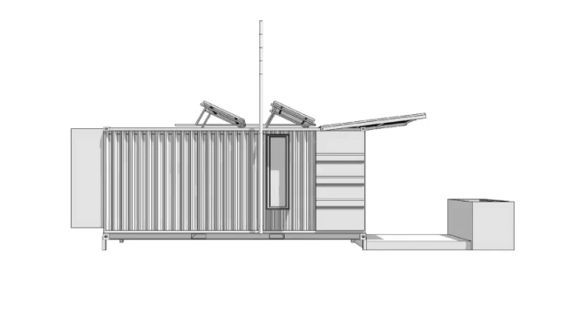
Since Geoffrey Warner and his firm, Alchemy Architects in St. Paul, debuted the weeHouse in 2003, the modular prefabricated housing system, which optimizes many elements of the traditional design-build process, has become a Dwell darling and a hit on the tiny-house circuit. The components of the weeHouse have also been combined and stacked in myriad combinations for clients from Pennsylvania to Marfa, Texas.
Now, Alchemy is premiering another prototype sure to transform modern living. On May 19, at Mia’s Third Thursday: Art of Sustainability, the lightHouse debuts. In an article on the Mia website, lightHouse is described as “a new kind of urban hotel and the next evolution of sustainable living.” Warner goes on to explain that lightHouse fulfills the firm’s desire to “do something between a tent and a house that wasn’t a travel trailer.”
It’s basically a shipping container with a door and windows, insulation, and solar panels, in-floor heating and filtered wastewater systems installed so the lightHouse could exist off the grid. That means it could be mobile, as well—and comfortable. “This will expand the idea of what you can do with limited space—sustainable doesn’t mean it can’t be comfortable,” Warner told Mia. “By inserting a room like this into the urban fabric, places both celebrated and ignored, you can start to talk about living in the city as an interaction with the urban environment.”
The 300-square-foot unit could also be used as an accessory dwelling unit or ADU, but with caveats: In the Twin Cities, regulations stipulate that any sleeping quarters must have a foundation and sewer/water connections. Warner is currently discussing with officials how lightHouse could fulfill pressing needs for ADUs to increase density, sustainability and the shortage in affordable housing throughout the Twin Cities.

The City of Minneapolis is launching a free technical assistance program for budding co-op founders, starting with a two-hour presentation on April 20th.
Dubbed C-TAP (Cooperative Technical Assistance Program), the initiative is an outgrowth of the city’s successful B-TAP (Business Technical Assistance Program) for aspiring small and midsize business owners. Like B-TAP, C-TAP is an immersive program designed to support co-op founders and supporters from ideation through opening—and, in some cases, beyond.
According to the City of Minneapolis, C-TAP will unfold over three years, in three steps.
Step one, happening this year, focuses on “co-op readiness planning” for “groups that are thinking of forming a Co-op…to get a clear picture of the legal, operational and organizational requirements.” It’s basically a crash course in what it means to start a co-op.
Step two, set for next year, will focus on “board member and organizational design.” That means training prospective board members in the basics (and nuances) of co-op governance, as well as “one-on-one technical assistance” for select co-ops that require guidance designing their organizational structures. Step two is available to not-yet-open co-ops and existing co-ops that want or need outside assistance.
Step three, set for 2018, will revolve around “sustainability [and] profitability.” In other words, setting and keeping newly opened co-ops on the path to stable, long-term profitability and prosperity.
C-TAP’s kickoff event, a two-hour presentation dubbed “The State of Co-ops in Minneapolis,” is scheduled for April 20, 5:30-7:30 p.m., at Open Book in
Downtown East. The presentation will discuss the city’s current “co-op inventory” and the industries supported by Minneapolis co-ops, introduce and explain C-TAP, and discuss next steps for co-op founders and principals interested in participating.
On May 11, Step one officially gets underway with an eight-week “co-op feasibility” course. Held at the City of Minneapolis Innovation Center in the Crown Roller Mill Building near City Hall, the course’s eight sessions will cover the basics of the co-op development process, co-op business plans, finances, cooperative governance, legalities and other topics. Registration is free and open to the public, but prospective co-op groups need to have at least two participants and have selected a product or service to offer prior to signing up.
The City of Minneapolis is no stranger to co-op support. According to city government, Minneapolis has plowed some $3.5 million into local co-ops through existing development and support initiatives, and has an additional $850,000 outstanding in loans to three in-development co-ops—including
Wirth Cooperative Grocery, a first-of-its-kind grocery co-op in the city’s underserved Northside, slated to open later this year.
If WOODCHUCK USA’s widely shared Instagram post is to be believed, it took the ascendant woodworking company all night to move its headquarters in late March. But they didn’t go too far: WOODCHUCK moved just 500 feet — give or take — down 9th St SE in Minneapolis’ Marcy-Holmes neighborhood. The company’s destination? The old RyKrisp factory, which WOODCHUCK founder Ben VandenWylemenberg purchased with three other partners a few months back.
The sprawling, low-slung building is becoming a 21st-century fabrication hub with a decidedly local maker flavor. WOODCHUCK USA is the main tenant, but other small-scale makers have already moved (burrowed?) in and set up shop, including a video production company (HECCO). WOODCHUCK has designs on about 30 percent of the space, leaving the balance for smaller tenants.
“We had been looking for the right building for our business and other businesses committed to building the economy with American-made products,” VandenWylemenberg told Kevyn Burger of Minnesota Business back in January, shortly after closing on the property. According to VandenWylemenberg, the property’s convenient location between the dense St. Anthony Main area and the I-35W/University Ave/4th St SE interchange is a perfect fit with WOODCHUCK’s hip vibe and distribution needs.
The location is also probably an asset as WOODCHUCK ramps up hiring. The company had about 30 employees as of earlier this year, but as orders accelerate, the headcount is likely to rise sharply.
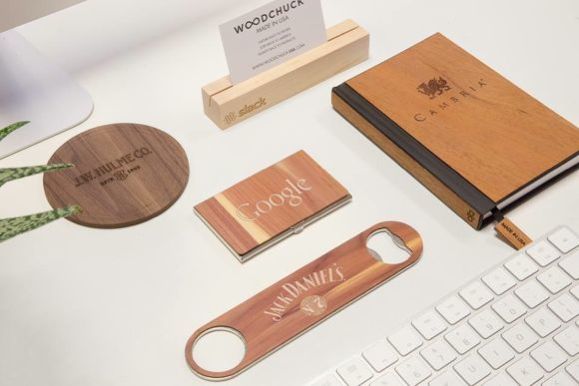
WOODCHUCK first made its name in wooden phone cases. Its rapidly expanding wooden accessory lineup now includes flasks, bottle openers, coasters, money clips, electronics sleeves and even maps. WOODCHUCK sells direct through its website, and to a growing lineup of retail partners: boutique stores, high-end chains, and big box stores (including MSP-area Targets) as far away as California, South Florida and New England.
According to the Pioneer Press, the RyKrisp factory closed in early 2015, after parent company ConAgra decided that the market for RyKrisp’s distinctive — some would say woody-tasting— crackers wasn’t salvageable.
Ironically, just as VandenWylemenberg and his partners were doing their due diligence on the old RyKrisp plant, word came (via the Star Tribune) that three former Pillsbury executives had purchased the cracker brand. The beloved (to some) crackers are likely to find a second life, with a relaunch coming as early as this year — though the new manufacturing facility won’t be located in MSP.
Scott Ervin has come a long way—and quickly—since launching
Minneapolis’ first micro-distillery, Norseman, in a warehouse basement. At the end of 2013, Ervin was quietly milling and mashing his grains, pitching the yeast, and guiding the alcohol through fermentation and distillation accompanied by two “boozehounds” (his dogs).
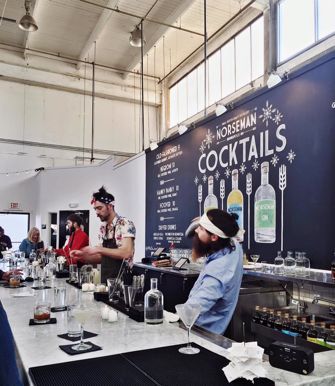
Today, his days are still spent distilling vodka, gin, rye whiskey and rum. But in the evenings, he leaves the production area to hobnob with guests enjoying the fruits of his labors in Norseman’s new cocktail room. Located on Taft off East Hennepin in Minneapolis, in a 2,800-square-foot space formerly used as a storage facility for the industrial company next door, the Norseman facility and cocktail room is a warm, welcoming swank/industrial addition to MSP’s growing micro-brewing/distilling scene.
Ervin is a trained architect who used to work at Alchemy Architects in St. Paul. Keith Mrotek, who is Norseman’s beverage director and runs the cocktail room, studied architectural drafting. So they designed and outfitted the cocktail room, which has white-brick walls and garage doors, a rusted-steel wall, a concrete floor and a fireplace in front of large, leather couches.
“As a brand Norseman is Scandinavian, obviously,” Mrotek says, about the cocktail room’s aesthetic. “We’re also very much embracing the fact that we’re in an industrial part of town in a former warehouse.” So the design approach “is a collaboration between Scandinavian simplicity and the Industrial Era.” Blond-wood tables with white chairs are situated throughout the space. There are also two counter-height tables constructed from factory workbenches.
The cocktail room only serves the spirits Norseman distills, including the flavorings that Mrotek, formerly of Marvel Bar, is in charge of creating. Those include fernet, triple sec and “fortified wines,” which are like dry, sweet vermouth. Mrotek has also created a “leathered” aquavit used in several classic cocktails. Need olives in your martini? Can’t get them at Norseman. But you may experience the smoothest martini ever to grace your tastebuds.
“The cocktail room is about fortifying the brand, while converting people to cocktails in a way that’s warm and inviting, pleasant and approachable,” Mrotek says. And the cocktails change quarterly “to keep the brand fresh and exciting … and pressure me to make new products.”
Do not fear
peak craft beer or brewery saturation. From Bryn Mawr Brewing (now Utepils) near Theodore Wirth Park to Sidhe Brewing (by women, for women!) on St. Paul’s East Side, craft breweries are still opening at a rapid clip here in MSP.
Most newcomers play it straight. Not Wild Mind Artisan Ales. South Minneapolis’s newest brewery is thoroughly and completely breaking the craft beer mold. It’s set for an early summer open in a low-slung warehouse near Minneapolis’s southern frontier, just west of the I-35W/Crosstown interchange.
How can any new MSP brewery — particularly one that might as well have an Edina address — possibly hope to stand out in our suds-soaked neck of the woods? By bringing to the North an entirely new style of beer: wild coolship ales.
Wild coolship ales utilize a centuries-old fermenting vessel known as a coolship — a long, shallow contraption built to expose fermenting beer (wort) to whatever wild yeast strains blow in on the wind.
According to an exhaustive piece in
Minneapolis-St. Paul Magazine, founder and head brewer Mat Waddell plans to keep each coolship ale batch in the signature vessel for about a day: long enough to catch enough microbial funk, but not so long that the beer turns or becomes dangerous to unsuspecting drinkers.
“It’s a funhouse style of beer,” Waddell told the magazine. “You end up strictly with whatever is in the air — whatever it picks up is whatever it picks up.”
The batch then spends the balance of its fermentation in oak or metal barrels. According to a press release from Jeremy Zoss, a local craft beer expert who’s handling publicity for Wild Mind, about 75 percent of Wild Mind’s brews will be barrel-aged — an unusually high percentage. Waddell plans to source wine barrels from as far away as France, plus chardonnay oak from Napa and bourbon barrels from Kentucky.
Due to the coolship’s limited volume and the time-intensive nature of the barrel-aging process, Wild Mind’s first beers won’t be “coolshippers.” They
will use wild yeast, though — all of it harvested in-state. No commercial yeast strains allowed: another rarity for an MSP craft brewery. According to Zoss’ release, “[t]hese strains were harvested from St. Paul and northern Minnesota from multiple wild fruit bushes, trees and wildflowers.”
Wild Mind’s early styles look to include bright farmhouse saisons, fruit-tinged sours, imperial stouts redolent with coffee and chocolate notes, and nearly everything in between.
If the whole wild yeast thing doesn’t appeal to you, or if you’re just not a big beer drinker, don’t worry: Waddell clearly aims to turn Wild Mind into the Windom neighborhood’s next hot hangout, complete with a 2,000-square-foot courtyard, lawn bowling, an outdoor movie projection wall (here we come, summer!) — and, of course, plenty of space for
food trucks.

Tuesday, February 16, 2016
“What is making the North Loop exciting and a gravitational point within Minneapolis?” asks Chris Palkowitsch, an Urban Land Institute (ULI) Minnesota Young Leadership Group co-chair for the March 3 event #MSPswagger – Building a Talent Powerhouse.
“Why has Lowertown in St. Paul been named the best hipster neighborhood? And what’s the next area? Midway in St. Paul?” he continues. “What steps can be taken from successful areas of the city to create the next up and coming community; to grow a great urban environment for people to live—young, old and families alike.”
The answers, hope the organizers of #MSPswagger – Building a Talent Powerhouse, will be tossed into the conversation, put on the table, shared and discussed during the afternoon event at Vandalia Tower in the Creative Enterprise Zone of St. Paul —and over beers at Lake Monster Brewing next door.
Created in collaboration with Greater MSP, and to help boost its
Make It. MSP initiative to attract and retain new talent to the area, #MSPswagger boldly wishes to assert that—despite our characteristic reluctance to brag—there’s a lot to boast about in our twin towns. “We really want the event to be a conversation, a dialogue,” Palkowitsch says. “We want to hear what creates MSP swagger. Let’s be proud of what we have.”
ULI is a nonprofit organization focusing on land use and development, so the discussion will be through a professional real estate lens—with an eye also on the power of placemaking. In other words, there’s more to this topic than
The North, a conceptual and branding idea about MSP identity proposed by Eric Dayton that went viral last year. “The idea of The North is a bit of swagger, particularly in the branding,” Palkowitsch says.
“It’s about being proud of our successful and clean cities, our lakes and open space, our arts and culture, our great neighborhoods,” he continues. “Our event isn’t building on the ideas of The North so much as functioning as an additive by looking at issues of job creation and retention from the lens of real-estate and land-use professionals.”
According to the #MSPswagger webpage, the challenge in the next five years is to “overcome a predicted workforce shortage of 100,000” people. “Concise, strategic branding will enable the region to compete for talent nationally,” and critical to that endeavor is placemaking: “Creating a work, live, play culture will encourage long-term talent retention.”
“What better way is there to talk about these issues than during a program for the land-use industry,” says Aubrey Austin, director of member engagement for ULI MN. And at this point, there are more questions than answers.
“How do we talk about what is good about our region, and what’s working well, so we can better respond to the challenges ahead?” Austin suggests. “What should we be thinking about in the land-use industry, around development and places, so we can be better prepared for a growing population and new workforce? That leads to another question: How do we talk about our region to encourage people to move here?”
Moreover, Austin continues, “We need to ask: What attracts businesses to downtown? How do we figure out why businesses locate where they do? What’s so important about connectivity and transit-oriented development? How can we have a conversation that encourages people to contribute and be civically engaged with their city?”
Yes, Austin and Palkowitsch agree that MSP already has a lot going for it. But there’s more to be done.
“Part of ULI’s mission is to bring public and private entities together,” Palkowitsch says. “City and business leaders, city planners and marketing professionals all need to be part of the conversation.” The speakers for #MSPswagger reflect that variety. On the panel are: Chris Behrens, president and CEO of YA (a marketing firm that recently moved to downtown Minneapolis); Andrew Dresdner, an urban designer with Cuningham Group; and Kris Growcott, an entrepreneur.
“We’re hoping for an open discussion from different sectors talking about what’s important to them,” Austin says, “and finding common ground.”
To register for #MSPswagger – Building a Talent Powerhouse, go here.
Tuesday, February 02, 2016
After successful runs at IKEA in Bloomington, next to a hair salon at 38
th and Nicollet, and on Nicollet Mall, Little Box Sauna (LBS) is making the moving to St. Paul—Como Park, on Como Lake next to
Como Dockside, to be precise.
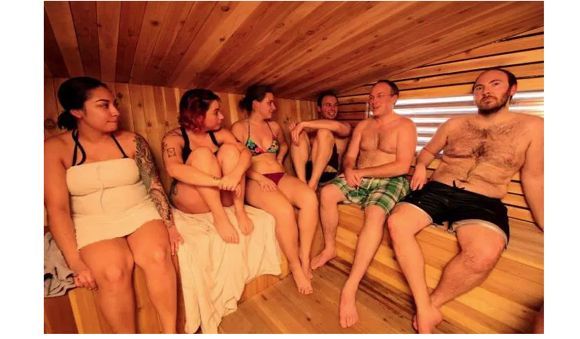
A “mobile hot spot,” as its founders and designers Molly Reichert and Andrea Johnson describe it, LBS was conceived, designed, built and deployed in 2015 as an experimental Creative Placemaking project “that generates vital and embodied social space in the contemporary city,” according to the LBS website.
One needn’t be Finnish, Swedish or any other Nordic nationality to join in a LBS group sweat. “Little Box Sauna is at once a beacon for quality and equality in the built environment,” the website proclaims.
The all-wood, portable sauna opens at Como Park on Friday, February 5. But the free 90-minute sessions, available only by reservation, are already booked for the opening weekend. The City of St. Paul will release new sessions for each weekend on the Monday prior (so the morning of Monday, 2/8 sessions will be released for 2/12, 2/13, and 2/14.) Sauna hours are Fridays and Saturdays from 5 to 9:30 p.m., and Sundays 12 to 4:30 p.m. A private dressing room for sauna users is available at no charge.
“The vision for an inclusive and vibrant community in St. Paul includes new and exciting ways to activate public spaces,” said Mayor Chris Coleman in a press release. “This unique opportunity is a great way for residents to connect with each other and it maximizes the recent growth in activity at the lake and in Como Regional Park.”
The sauna’s designers—Johnson and Reichert—teamed up with 612 Sauna Society to bring the project to neighborhoods throughout the Twin Cities. The City of St. Paul, through support from the John S. and James L. Knight Foundation, Warners’ Stellian and Como Dockside, joined forces with Little Box Sauna and the 612 Sauna Society to offer the sauna experience to city residents.
LBS will remain on Como Lake through February, after which the sauna moves to various businesses, parks, cultural institutions and festivals throughout the Twin Cities. Register for sauna sessions here or by calling (612) 567-7502.
Tuesday, January 26, 2016
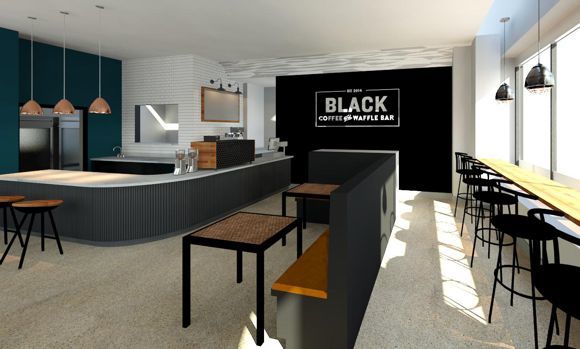
Black Coffee & Waffle Bar, which opened in 2014 on Como Avenue in Minneapolis, is expanding. In March, Black will open its second coffee and waffle shop on Marshall Avenue in St. Paul next to
Heirloom, chef Wyatt Evans’ new “hipster farmhouse” restaurant in Merriam Park. Shelter Architecture in Minneapolis is helping Black with its build out.
"Black Coffee & Waffle Bar’s first location [on Como] is a huge success,” says Kurt Gough, founding partner, Shelter Architecture. Black’s partners Andrew Ply and Brad Cimaglio “have developed a brand identity that is hip, simple and minimalist. Their second location plans to expand upon that identity.”
While the partners took a DIY approach to the Como location, “in this second iteration they asked Shelter to embrace the current brand aesthetic and create a space with more finish and refinement,” Gough says.
Black serves waffles with fresh ingredients and in-house-made toppings. Local roaster Dogwood Coffee provides the coffee beans. “When we started out, we were a coffee shop that server waffles,” says Heather Feider, general manager, “but we’ve turned into a waffle shop that serves specialty coffee!”
The clientele is mostly students from the University of Minnesota, she adds. “In the evenings, students hang out and study with a coffee. They’re also our brunch crowd for waffles. But even people from Stillwater come to Black’s. So want to have a place in another part of town.”
The new location in St. Paul will appeal to commuters from Wisconsin and the eastern parts of the metro area, as well as the University of St. Thomas crowd, Feider continues. “We were looking for a place with a similar feel to Como. Merriam Park is close to St. Thomas, a nice family neighborhood and a vibrant community.”
The new Black will have a similar aesthetic and utilize the same branding. “The building itself has some challenges as far as meeting ADA compliance and parking requirements, but we have creatively and effectively resolved them,” Gough says. According to Feider, the Shelter design team will be adding “cool new features.”
Together, Black and Heirloom are turning the corner at Marshall and Cretin into a destination for local cuisine. “Together we’ll be able to offer the Merriam Park community a couple of great choices for dining and gathering,” Feider says. “While two small places may not change the community, we will create a nice little corner there.”

Tuesday, January 12, 2016
When Wyatt Evans decided to leave his long-time position as executive chef at WA Frost and Company to open his own restaurant, scouting out neighborhoods was key. “First and foremost,” he says, “I wanted to have a neighborhood restaurant, a gathering space for the neighborhood.”
Next, he wanted to offer an ambience “that’s refined, but that shouldn’t read as stuffy. I wanted to create an environment like Grandma’s house without looking like Grandma’s house. Cool, but not too cool. Welcoming and comfortable.”
Of course, the food and the ethics behind it were essential to the new culinary endeavor. The cuisine, Evans explains, would be “inspired by the farmhouse, with elements of frugality and the total utilization of product. That’s the ethic I’ve been doing with food. In my new space, I wanted to amplify that idea and take it on in a way where we honor the past in the present by looking toward the future.”
Heirloom, located at the intersection of Marshall and Cretin avenues in St. Paul, is the result. Last July, Wyatt began renovating the former bakery and photography studio into his ideal restaurant. Studio M Architects in Minneapolis did the design and architectural work. According to Greta Johnson, a designer at Studio M, “the words he gave us were hipster farmhouse.”
“He came to us wanting to express a simple, old-fashioned feel,” she adds. “Heirloom vegetables, old seed packets and Audubon prints were our inspiration.” Friends of Evans’ provided graphic design, artwork and tables for the 2200-square-foot restaurant. Objects with a “Depression-era simplicity” added to the décor, Johnson says: “Things from the past resembling family heirlooms, that might have had meaning to a family at the turn of the century.” Adds Evans: “Mismatched antique chairs portray the humble aspect of how we’re trying to approach the business.”
Local and seasonal are a given at Heirloom, Evans says. “At this stage of the game, if you’re not using the fantastic local products we have, you’re not a player. We’re not trying to beat anyone over the head with local and seasonal; It’s just what it is. This is just how I cook. The menu changes based on availability. So the food and atmosphere reflect that.”
As for Heirloom’s location in the Merriam Park neighborhood, “Dozens of factors play into why you pull the trigger on one space versus another,” Evans says. “The deeper I dug into the neighborhood and got to know it, the desire to have a restaurant here like this began to unfold. In my opinion, this neighborhood has a strong demand for this kind of restaurant. The neighborhood people we met with expressed a desire for it.”
Heirloom’s location between Minneapolis and St. Paul, three blocks from the Mississippi River and near St. Thomas University, were pluses. Moreover, Evans adds, “There’s a really nice mix of people in this neighborhood in terms of age groups, and a good foodie contingent here in Merriam Park. Our goal is to be affordable and approachable, create top-notch quality food for less, and in doing so create a new place for neighbors to gather and eat.”
Tuesday, January 12, 2016
“I didn’t intentionally get into this business; it just kind of happened,” says Jon Oulman.
He’s referring, of course, to his restaurant business with son Jarret Oulman and collaborator Josh Mandelnan. The business has grown quickly, starting with the 331 Club (“contemporary music,” Oulman says) and expanding to include Amsterdam Bar and Hall (“contemporary music, entertainment, an imbibing environment and more food”),
Como Dockside (“entertainment and more food”) and now The Sheridan Room—which is next door to the 331 Club.
“The food aspect just keeps ramping up,” Oulman says.
The original owners of the 331 and the neighboring 337 (The Sheridan Room’s address), Oulman explains, had kids who ran the venues—“one of their children had the bar, the other had the diner,” he says, “so we put it back together again.” Moreover, a local chain wanted to move into the former Modern Café, and “it’s too soon for this neighborhood to have a chain in it—even if the chain is local. It’s a great corner and a great neighborhood.”
The restaurant is named for its neighborhood: the Sheridan Neighborhood of Northeast Minneapolis.
“Midwestern Americana” is The Sheridan’s Room theme, Oulman says. The restaurant’s signature dish is a beer-can roasted chicken using local Bauhaus beer. “The gravy is made with the beer drippings and we serve the gravy in a beer can,” Oulman says. “A little kitschy there.”
The cover of David Bowie’s album
Hunky Dory is featured prominently at the new bar, because “What is the first song on the album? ‘Changes’,” Oulman says with a laugh. A vintage hi-fi plays vinyl. “Collecting vinyl is a hobby of mine,” he says. While the kitchen is unchanged, the restaurant floor has a penny-size tile mosaic and new banquette seating.
Meanwhile, over at Como Dockside, the team is busy building a prep kitchen in the basement “so we can do banquets,” Oulman says, “and we’re going to upgrade the concession window down by the dock. There will be a grill and fryers outside, and a point of sale on the promenade, so we’ll be able to keep up with demand and do a better job of delivering food and beverage when the crowds come back in the spring.”
Tuesday, December 08, 2015
Four years after a tornado damaged dozens of homes and businesses in the district’s heart, North Minneapolis is experiencing a development resurgence. At the intersection of Penn Avenue and Golden Valley Road, the
Commons at Penn mixed-use project is nearing completion; it’s slated for occupancy in early spring.
Less than a mile north on Penn, at the busy five-way intersection of Penn and Broadway, an even more ambitious mixed-use property is taking shape: Broadway Flats, North Minneapolis’ largest workforce housing project in more than a decade.
Rose Development, a North Minneapolis company owned by a prominent local family, is taking the lead on the project with help from a $1.4 million pay-as-you-go TIF grant. ESG Architects designed the building. Broadway Flats sits squarely in the track of the 2011 North Minneapolis tornado, which damaged or destroyed dozens of homes and businesses in the neighborhood.
“In the aftermath of the 2011 tornado, a vibrant future is taking shape on the corner of Penn and West Broadway avenues,” said Dean Rose, principal at Rose Development, in a recent post. “Broadway Flats...[is] bringing new vitality and opportunity to West Broadway.”
Broadway Flats’ plans call for 103 units of workforce housing and “a level of quality and amenities not previously available in the community.” Renderings show an oblong, four-story structure that fronts on Broadway and occupies most of an irregularly shaped block.
Broadway Flats will have nearly 20,000 square feet of first-floor retail. About half of that space will be occupied by an expanded and redesigned Broadway Liquor Outlet, which is also owned by the Rose family. The store was extensively damaged in the 2011 tornado and is currently located in a smaller structure across Broadway. Rose Development hasn’t announced tenants for the rest of the first-floor space, but has previously indicated an interest in attracting a high-end restaurant or locally owned retail.
According to Broadway Flats’ website, residents can look forward to a host of high-end amenities that wouldn’t look out of place in the North Loop or Uptown: a high-tech business center; a fully outfitted fitness center; conference, community and party rooms; and heated underground parking.
Plans also call for a partially covered, heated transit platform serving the popular 19 bus. If Metro Transit stays on track with plans for the bus rapid transit C Line, currently slated for a late-decade opening, the Penn Avenue platform will receive an upgrade and/or new signage.

Tuesday, November 24, 2015
The Green Line corridor isn’t the only area of MSP experiencing a boom in
community-driven development. Two miles northwest of the Green Line’s Target Field terminus, at the heavily trafficked Penn Avenue/Golden Valley Road intersection in North Minneapolis’ Willard-Hay neighborhood, an ambitious mixed-use project is taking shape: The Commons at Penn Avenue.
A four-story, block-long structure, Commons at Penn will house 45 units of workforce housing, a host of community amenities and the 4,000 square foot Wirth Cooperative Grocery Store — MSP’s newest grocery co-op. Watson-Forsberg and LHB Corporation are co-developing the project.
Building Blocks, a North Minneapolis nonprofit founded and overseen by native son (and former NBA star) Devean George, designed and financed Commons at Penn. Wirth Co-op is financed independently, thanks in part to a $500,000 federal grant, and will lease space in Commons at Penn’s ground floor.
If the current schedule holds, Commons at Penn and Wirth Co-op should open in spring 2016 — well in advance of the planned Penn Avenue BRT (C Line)’s debut later this decade.
“We’re shooting for an Earth Day opening for the co-op,” says Miah Ulysse, Wirth’s general manager.
The development will join nearby Broadway Flats in providing affordable housing and locally run retail along North Minneapolis’ densely populated Penn Avenue corridor.
According to Building Blocks, Commons at Penn’s residential component will feature a mix of one-, two- and three-bedroom units with touches common in downtown lofts: hardwood floors and nine-foot ceilings. Amenities include community rooms, an onsite fitness center and three laundry rooms.
Commons at Penn’s first floor will include a Northpoint Health & Wellness office. Though the Northpoint office won’t be a full-service clinic — the focus is on “community outreach with space for events and health education classes,” according to Building Blocks — the design does include two “flexible-use exam rooms.” Building Blocks will office in an adjacent suite.
Wirth Co-op’s arrival is another boost for the area, often considered a food desert: The closest full-service grocery store is the Cub Foods at Broadway and I-94, well over a mile to the east. Corner convenience stores and gas stations stock essentials and plenty of snack foods, but rarely fresh fruits, veggies or non-processed foods. According to TCYIMBY, about 40 percent of Wirth’s fresh food will be certified organic or natural; that proportion could increase as the co-op establishes itself in the neighborhood.
“Locally sourced items will be a huge focus for us, in addition to organic and natural,” says Ulysse.
As of mid-October, the most recent reporting date, Wirth Co-op had about 460 committed members out of a 500-member goal. Membership is $100 (one-time) per household, payable in $25 installments, and $15 for those qualifying for public assistance.

Tuesday, November 24, 2015
Good Grocer, an independent grocery store tucked into a low-slung building near the old Kmart at Lake Street and I-35W, has only been open since mid-June. Yet it’s already received coverage in a half-dozen press outlets, from the Star Tribune and the Huffington Post.
What makes Good Grocer different? Founded by Kurt Vickman, long-serving (now former) pastor at Edina’s Upper Room Church, Good Grocer is part co-op, part nonprofit social enterprise and all good.
According to its website, Good Grocer stocks more than 3,000 items, focusing mostly on fresh fruits and vegetables, and minimally processed meats, dairy and baked goods. Unlike a traditional co-op, whose members pay fees on joining, Good Grocer regulars pay for their memberships by volunteering at least 2.5 hours per month at the store: stocking shelves, working checkout, whatever needs to be done. In return, they get 25 percent discounts to sticker price on everything they buy at the store that month. Good Grocer has at least 300 members and counting.
The goal, says Vickman, is inside-out empowerment — the inverse of the standard outside-in, or top-down, charity model. Though Vickman doesn’t keep detailed statistics on members’ economic status, the immediate neighborhood is among Minneapolis’ poorest precincts.
Good Grocer helps locals who “value eating well, but can’t afford the ever-increasing cost of food” to partake in a food quality experience usually reserved for Whole Foods shoppers. By giving members an outlet to give back to their fellow shoppers in a tangible way, Good Grocer is literally helping people help themselves.
“Low-income people aren’t helpless or giftless,” says Vickman. “We all have gifts and strengths within us. It’s [Good Grocer’s] mission to draw those gifts and strengths out of our members and empower them to define themselves in terms of their potential, not their limitations.”
Good Grocer also addresses its densely populated environs’ glaring lack of fresh food options. Its corner of South Minneapolis doesn’t meet the technical definition of “food desert,” but the Midtown Global Market and the Uptown Cub — the closest reliable sources for fresh food — aren’t close at hand.
“We thought we’d get some positive feedback about our choice of location,” says Vickman, “but we were really taken aback by the number of people who came in to say, ‘Man, thank you for opening a grocery store here.’”
Then again, Good Grocer isn’t a straightforward charity. The blocks to the north and west of Good Grocer are economically diverse — and, in some areas, downright affluent — so a fair number of locals can afford to shop at the store without much regard to price. Good Grocer counts on those folks to patronize the store in numbers and pay full price for their purchases. Full-price customers subsidize in-need members who rely on the 25 percent discount and ensure that Good Grocer can afford to stock top-quality food items.
Indeed, Vickman sees Good Grocer as a low-friction way for people of means to give back in a more meaningful way than simply donating some cans to a food pantry or church around the holidays. The store’s motto is “Let us never tire of doing good,” a Scriptural reference to Christians’ charitable duties. That motto neatly summarizes Vickman’s choice to leave his relatively comfortable appointment at Upper Room and strike out as a social entrepreneur.
“I decided that I wanted to spend more of my time living the themes I was preaching, rather than just talking about them,” he explains.
Despite Good Grocer’s ecclesiastical pedigree, the store is strictly non-denominational — non-religious, actually. “No one’s handing out tracts at the door,” says Vickman, who notes that the store’s membership base is a reflection of the neighborhood’s racial and denominational diversity: first- and second-generation immigrants from Latin America, Asia and Africa shop and volunteer alongside the area’s established European and African-American residents.
“We’re not looking for help or support from outside the community here,” says Vickman. “We’re proud to be creating our own solutions.”
Tuesday, November 17, 2015
There’s something brewing next to the “white hot”
Highlight Center in Northeast Minneapolis — but there’s more to it than beer.
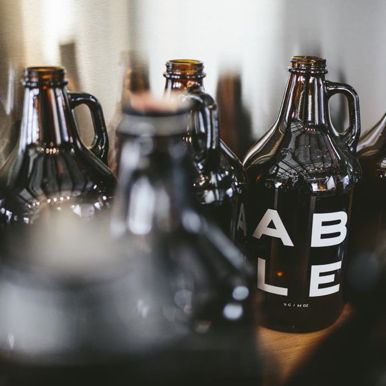
Able Seedhouse and Brewery chose to open in MSP’s dense craft beer market, but Able’s concept is unusual even by Northeast’s ambitious standards. Able, which occupies an historic brick structure adjacent to the Highlight Center (just off busy Broadway Street), isn’t only a
new Minneapolis craft brewery with a 20-barrel brewing capacity and 100-plus-patron taproom. It’s also a craft
malthouse.
Able officially opened its doors in early November and malts its own small grains on site. In other words, the Able crew cooks raw ingredients — mostly barley, but sometimes wheat and rye — in one corner of the facility, then carts the finished product over to the brewing kettles and turns it into delicious beer.
Able isn’t a totally self-sufficient operation, at least not at the outset. Casey Holley, co-founder and co-owners, anticipates the brewery’s initial batches — the first of which started brewing on October 9 — will contain up to 5 percent “in-house malt.” The balance will come from larger, more established malting houses, like Shakopee’s Rahr Malting. Over time, Holley hopes the proportion of house-made malt will increase.
“Producing an entire batch of beer using only our own malt would be something spectacular,” he says.
Holley is particularly excited about Able’s budding relationships with small-time Minnesota farmers. He’s reaching out to family farmers across the state and offering to pay a premium for their barley, which typically commands far less than the corn and soybeans that dominate Minnesota’s agricultural industry. Even though Able’s product is liquid and strictly adults-only, the brewery’s efforts help support long-depressed market for small grains.
“We’re doing our part to rebuild the local food supply chain,” says Holley. “We thought it would be super interesting to tell this story in beer.”
For the time being, the Able team is focused on navigating the opening rush. Eventually, Able’s malting operation could win out. Holley and his cofounders have contemplated serving as a small-scale “maltster” for other MSP breweries, offering an alternative — possibly with a more experimental bent — to major players like Rahr. He’s also game for helping smaller-scale packaged food producers with time-consuming, labor-intensive and frequently expensive R&D work.
“We could be someone that [packaged food producers] come to and say, ‘Can you play with this in the malter and see how it turns out?’” says Holley.
Tuesday, October 13, 2015
Mention the FOOD BUILDING and eyebrows invariably rise in concert with the reply, “At the state fairgrounds?”
But as butcher Mike Phillips of Red Table Meat Co., and cheese maker Rueben Nilsson of The Lone Grazer Creamery continue to gain traction—both are housed in Kieran Folliard’s latest venture, the FOOD BUILDING in Northeast Minneapolis—that’ll change.
Plus, in November, the opening of a new deli and restaurant, The Drafthorse (formerly The Workhorse), which will showcase the meat and cheese being produced down the hall, will bring people in to taste just how fine and fast MSP is growing as a hub for urban food production.
The Drafthorse, says chef Luke Kyle (also chef and co-owner of Anchor Fish and Chips), will be a cozy 40- to 45-seat restaurant specializing in slow-roasted meats and potpies. “I’m originally from Ireland,” says Kyle, who as a teenager moved to the Twin Cities with his family, “and one of my favorite things is to sit down with family and friends at the end of the night over comfort food made with good ingredients prepared well.”
The eatery will also have a deli showcasing products from Red Table and Lone Grazer, and grab-and-go food. “We'll be doing classic European-style baguette sandwiches with meat, cheese and butter,” Kyle says. “No frills, just letting the ingredients shine through.”
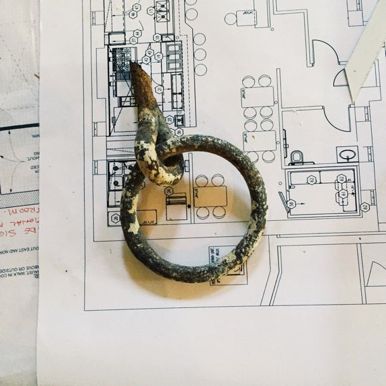
The Drafthorse takes its name from the building’s original use: as a stable and veterinary clinic for the horses that hauled kegs of beer from the local breweries to pubs and stores. “Each horse had its own window on the side of building, for fresh air and to look out, which are still here,” Kyle says.
The horse ties were still on the wall when Kyle and his team—including Geoff King of Scratch Food Truck, who will head up the kitchen, Katie Kyle, who recently left her Spyhouse Coffee Roasters operations and management position, and Anne Saxton, who currently works for Kim Bartmann's restaurants—moved in and started construction. “The Drafthorse is a good strong name for the restaurant and relevant to the building,” Kyle says.
If all goes according to plan, the FOOD BUILDING may be welcoming another tenant soon: a flour miller. “So ideally, if they move in, the baguettes, meat and cheese will all be produced in the building itself, which is super local,” Kyle says. “That’s the whole idea behind the FOOD BUILDING,” which bills itself as a “destination food production hub.”
According to Saxton, the FOOD BUILDING is built on foundation brands bound together by a shared purpose: “to handcraft exceptional foods close to the source because food tastes best when it has a ‘taste of place’.” The venture also gives new meaning to “farm to table movement,” Kyle says. “It’s about getting to know where your food comes from, the farmers and animals who make it, and what you’re eating—with no blind spots.”
Tuesday, October 06, 2015
The bourgeoning craft booze scene in MSP isn’t all about microbreweries, in case you were wondering. Ever since the Minnesota Legislature dropped the fees required to open a craft distillery, then allowed for cocktail rooms in which to serve the liquor produced onsite, distilleries have been popping up around the metro.
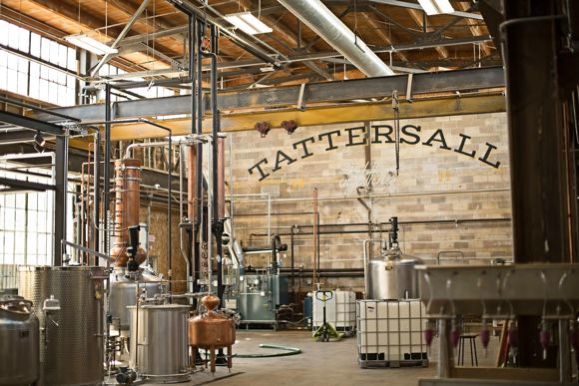
One of the newest is Tattersall Distillery, which is tucked into a former manufacturing/event space down a bumpy dirt road behind the Thorp Building in Northeast Minneapolis. In looking for a location, says Jon Kreidler, one of Tattersall’s co-owners, “After seeing Bauhaus Brewery,” which is off Central Avenue behind the Crown Center complex, “we knew it could be done”—meaning a hideaway location was do-able. “Then when we saw the space: wow!”
The cavernous room that once hosted light manufacturing, fashion shows and art sales for Midway Contemporary Art had a lot of potential, which Minneapolis designers Aaron Wittkamper and Amy Reiff fully released. Banks of clerestory windows were uncovered to light up the raw space. A glass wall was inserted between the cocktail room and production area, where the Tattersall logo curves across the back wall.
In the cocktail room, a carved wood mantel anchors the bar against a wall of plywood panels with painted reveals. The chandelier over the bar contrasts with a long cement high-top table, but adds pizzazz to a space also furnished with comfy club chairs. “We wanted to create a fresh and unpretentious space,” Wittkamper says.
In fact, the eclectic furnishings were sourced from 1 King’s Lane and Restoration Hardware—as well as “Craig’s List and the in-laws,” Wittkamper says. Reiff worked on the branding, using the Tattersall plaid not only in the logo but also on the bottle labels and “in subtle ways by using similar menswear fabrics throughout the space,” she says.
As for the booze: Tattersall’s lineup includes vodka, gin, white whiskey and aquavit. The cocktail room’s topnotch bartenders—trained by co-owner Dan Oskey, award-winning bartender formerly of Strip Club Meat & Fish in St. Paul and Hola Arepa in Minneapolis, and partner in the bitters company Easy & Oskey—readily whip up an assortment of drinks with house-crafted infusions.
“When we started designing the space, we knew things weren’t quite right,” Kreidler says. “Then when we brought in Aaron, he totally flipped the plans upside down and suddenly we knew how the space would work.” With a spacious cocktail room overlooking the production area, foodtrucks at the ready outside, an outdoor area for eating and drinking during warm weather, and fresh craft cocktails, Tattersall has set a new standard for the craft distillery movement in MSP.

Tuesday, September 22, 2015
For more than seven years, Frogtown Farm has been a community vision slowly manifesting into an authentic project: A 12.7-acre parcel of public land that will include 5.5 acres developed as an urban farm. On Saturday, October 3, at 10:30 a.m., the Frogtown Farm officially opens.
“Our grand opening signifies a herculean effort by community members,” says Eartha Borer Bell, executive director, Frogtown Farm, St. Paul. “I’ve been involved with the project for a year now as paid, full time staff, and it’s constantly humbling how much time and effort, heart and soul, for over almost a decade, the community has put into the project. Our opening is a mark of what can be done when people get together, have a vision and see it through.”
Frogtown Farm is the vision of longtime Frogtown residents
Seitu Jones, Soyini Guyton, Patricia Ohmans and Anthony Schmitz. “They saw a great opportunity to increase access to greenspace in the Frogtown neighborhood,” Bell says. After the Amherst H. Wilder Foundation built its main campus on the land, then put the buildings up for sale in 2008, the property was vacant. The visionaries approached the
Trust for Public Land to help them raise funds to purchase the site.
In 2012, the Trust, a national nonprofit organization that conserves land for parks, gardens and other natural places, struck a deal to buy the land for $2.2 million from the Wilder Foundation. In 2013, Frogtown Farm
invited the community to help design the site. “We developed a number of community engagement initiatives around what the park and farm would look like,” Bell says. “Over a six-to-eight month process, hundreds of community members became involved. Their input resulted in the design.”
Later that year,
the City of St. Paul began discussions with Frogtown Farm about owning the property, in order to keep it accessible to the public. At the end of 2013, the land was later transferred to the City of St. Paul. In addition to the farm, the site includes play areas and maintains a historic oak grove.
“Urban agriculture is really booming in the Twin Cities,” Bell says. “While Frogtown isn’t necessarily a food desert, our community does experience barriers to accessing fresh local food. The farm will help remedy that situation.” The farm will also bring the neighborhood’s various populations together, to grow, prepare and share the food grown on the farm, she adds.
“There are plenty of anecdotes, and there’s lots of information, on how Frogtown is a diverse neighborhood,” Bell explains. “But we keep hearing that there isn’t a lot of interaction between those diverse populations. We do know that people like growing and cultivating a garden or farm, and cooking and preserving food.”
“So our five-year plan includes construction of a building that would serve as an incubator for fledgling food businesses in the community, an education center with cooking classes, and a community center,” Bell adds. “We hope that will provide great opportunities for people of all ages to share food traditions from their diverse cultures.”
The grand opening on October 3 will include a land blessing ceremony (10:30 a.m.), program (11 a.m.), and “Taste of Frogtown” event with tours and activities (noon to 2 p.m.).

Tuesday, September 15, 2015
When does growth mean more than increased square footage and financial opportunity? When the organization is the nonprofit art center Public Functionary. PF’s planned expansion into the building it currently occupies a portion of at Broadway and Buchanan in Northeast Minneapolis will lead to more innovative community programming, says Mike Bishop, PF’s director of operations.
Within the three to six months, Bishop says, the organization will move into the north portion of the building “with the mission of making art even more accessible with community events that get people into art spaces. While it’s scary to take on that rent and responsibility, we’re also looking at the expansion as a chance to further develop PF.”
Since opening in 2013, PF has billed itself as a nontraditional arts center with a focus on contemporary visual art, especially by rising national and local artists whose work expresses diversity in background, approach, inspiration and materiality. Exhibitions have also included dance, theater, music and performance art, as well as public participation. “Through our flexible exhibition space, multidisciplinary artwork and events, we’ve seen how important collaboration is to us,” Bishop says.
To further the collaborative impulse, he continues, PF has been “inviting in community groups and letting them use the space as a resource. They bring in their audience, which allows them to get to know PF and get comfortable with contemporary art.” That initiative led to another. “We started thinking about the communities we haven’t engaged with yet, including local businesses in Northeast. We decided to open our space to new and established businesses, so they could become involved with the art in a nontraditional way. We’re calling it ‘functional philanthropy.’”
Financial One, for instance, recently introduced its new brand to its team in PF’s exhibition area. The location “was a great way for the employees to get outside of the office and have their meeting in a creative engaging space,” Bishop says. Other meetings may include an illustrator sketching the session’s outcomes, or PF director and curator Tricia Khutoretsky providing arts-related approaches to problem solving.
“We’d like to help businesses work through solutions more organically using an arts perspective,” Bishop explains. “For example,
Liz Miller is an installation artist who has transformed our exhibition area. She comes with an idea, but knows it will always go another way; that she’ll have to work with the space, modify her approach and those challenges will inform final product.”
Rather than a direct sponsorship approach, PF’s “functional philanthropy” offers businesses a way to “give back to their community and get something tangible in return that can come out of meetings and events budgets, and marketing budgets, not just community giving budgets,” Kate Iverson, PF’s development director, explained via email. “It's not only inspiring to meet and develop ideas at PF, but also to explore arts-driven approaches to problem solving, and pass on the value of art and community building to employees and clients.”
In other words, Bishop says, the expansion “will give us the flexibility to push our model further, and become a more fully fleshed out art center.”
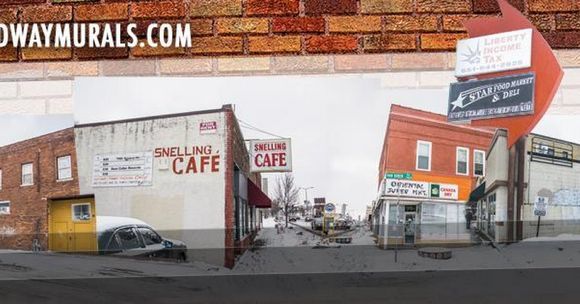
After moving to and buying a house in St. Paul’s Midway neighborhood five years ago with his wife, Jonathan Oppenheimer was inspired to create “a dream project.”
“I thought: ‘Wouldn't it be awesome to transform Snelling Avenue, then highlight the changes to transform the public’s perception of it,’ ” he recalls. He had in mind a half-mile stretch of Snelling, the visible and highly traveled portion from I-94 over the Green Line and north toward the State Fair.
“The area suffers from rampant graffiti,” Oppenheimer says, “and the business owners in the area, many of them immigrant business owners, would like to change people’s perception of that stretch of Snelling. I also wanted to help bridge the stark divide between immigrants and residents, economic classes and race, by doing something creative and productive.”
So Oppenheimer founded Midway Murals and in 2014 received McKnight Arts Challenge to complete the project. A launch party in February brought 300 people into the Turf Club “to show folks it’s really happening and get them excited about it,” Oppenheimer says.
On Saturday, August 29, the Midway Art Festival, co-hosted by Midway Murals and Little Africa, celebrates the murals’ completion, from 12-6 p.m., at Hamline Park on the corner of Snelling and Thomas avenues.
The event includes live and interactive art projects from Rogue Citizen, Dim Media, Streetcorner Letterpress, the Poetry Mobile, and Fluid Ink; music from Superbrush 427 and River Beats Entertainment; and an overall celebration of the newly reconstructed Snelling Avenue. Also on the docket are tours of the four murals created by four local public artists: Lori Greene worked in mosaic; Greta McLain in paint and mosaic; Eric Mattheis in spray paint; and Yuya Negishi in traditional and spray paint.
“Each artist created a separate mural, while working over several months with area business owners to craft an idea,” Oppenheimer says. “The murals reflect the changes in culture, residents, infrastructure and imagination that are forever occurring in the city, as well as the promise and struggles that the community navigates over time.” All of the artists worked with a central theme: starting anew.
“I always wanted to be involved in neighborhood activism, to take stock of what was wonderful and the places needing improvement,” Oppenheimer adds. “And I wanted to start a conversation around a public art project, as public art has the unique ability to bring people into contact with things they wouldn’t otherwise see.”
Oppenheimer is also thrilled that the completed murals, and Midway Art Festival, will occur just as renovations to Snelling Avenue are completed, including new decorative lighting and sidewalks. “People are excited because Snelling has a fresh look,” he says. “We’re hoping the arts festival and mural projects will also better unite the neighborhood, spark conversations and inspire people to continue improving the area.”
According to the Midway Murals website, the initiative “will serve as the cornerstone for a new public art workgroup housed in the Hamline Midway Coalition, the neighborhood’s non-profit district council. This group will bring together community members of diverse backgrounds to meet regularly to brainstorm new ideas and locations for public art; ensure upkeep and maintenance of existing pieces; and curate and oversee the expansion of this art corridor in future years.”
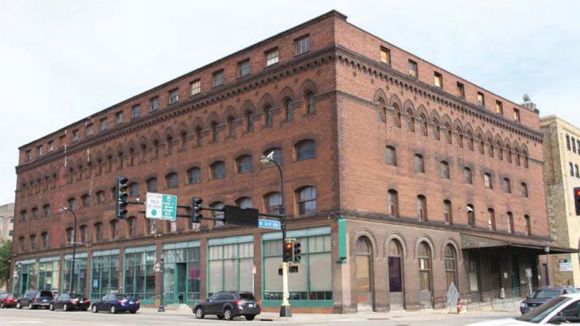
After months, even years, of speculation,
the historic Jackson Building in Minneapolis’ North Loop, most recently home to the IPR (Institute of Production and Recording) College of Creative Arts, is slated to become a boutique hotel. “The neighborhood is spectacular,” says Tim Dixon, owner of Fe Equus Development, LLC, which is taking on the project. “It’s rocking. Empty nesters are moving back to the city. Millennials are embracing the area. The food scene is spectacular. We’ll add value to the neighborhood with an experiential hotel that will bring in the locals.”
Based in Milwaukee, Fe Equus is best known for transforming a 200-year-old downtown building into the Iron Horse Hotel. “The Iron Horse Hotel fulfilled the growing demand for experiential hotels and the need for additional rooms generated by its neighbor, the Harley-Davidson Museum,” according to the Fe Equus website. “Unlike any modern luxury hotel today, this brand new concept pairs high-end accommodations with special amenities for motorcycle enthusiasts.”
The Jackson Building will be renamed the Hewing Hotel, in a nod to the area’s milling history, which began with lumber. To “hew” is to cut or to fell. Think axe to tree. Which will fit right in with the area’s growing lumbersexual vibe apparent at Marvel Bar, Spoon and Stable, and Askov Finlayson.
In the late 1880s, many Minnesota trees were hewed to create the sturdy timber frame of the Jackson Building, which also has exposed brick walls and wood floors. Built on spec by Henry George Andrews (in collaboration with John Pillsbury, Thomas Andrews and Woodbury Fisk, Dixon says, the building initially had two floors. But as the area boomed, ceilings were ripped off and floors added. An addition was made to the building, as well.
“We thought about calling it the Convolution Hotel,” Dixon says, with a laugh, “because of the build out. On nearly every floor, it’s clear they took the roof off and put new floors down, over and over again. In the basement, which has really high ceilings, they used to pull a train in.” In previous lives, the building functioned as farm implement showroom and a warehouse.
The Aparium Hotel Group of Chicago will work with Fe Equus on the building’s conversion into a 120-room hotel with a restaurant and bar. “We start with the history and the building, then investigate the neighborhood and the city,” Dixon says, “to create food and beverage services that embrace the community and attract the locals. As we’ve proved with other projects, once you bring in the locals you become part of the fabric of the community.”
Dixon is currently living in North Loop, were he’s soaking up the ambience 24/7 in preparation for the historic building’s redesign. “It’s no fun going into the middle of a cornfield and coming up with something creative and beautiful,” he says. “It’s more satisfying, and you’re forced to be creative, when working within the barriers presented to you, from structure and materials to existing urban neighborhood. Our team at every level — operationally, design, food and beverage — will integrate it all to ensure the Hewing Hotel experience is consistent and unique.”

Along the Green Line light-rail corridor, which opened in June 2014, business continues to grow as arts organizations, breweries and small offices either set up shop or expand along University Avenue. In St. Paul, they include the multi-cultural modern dance company TU Dance; the Mendoza Law Office, which specializes in nonprofits and cable/telecom communications; and Lake Monster Brewing, which joins the brewery boom in the Creative Enterprise Zone. Here’s what they have to say about being an invested part of the Green Line community.
TU Dance
As
The Line reported in 2013, Toni Pierce-Sands, co-founder of TU Dance, rode the bus to dance classes as a child. “So when she and her husband, dancer and choreographer Uri Sands, were founding their St. Paul-based dance company TU Dance in 2004, Pierce-Sands says she ‘envisioned young kids waiting on the corner for a bus that would take them to our dance school.’”
Today, that school is called TU Dance Center. And the kids ride not only the bus, but also the light rail. Founded in 2011 in a rehabbed former woodworking and cabinetry shop, the professional dance school is located between a Subway and an auto-repair shop on Green Line. Since opening, the center’s programming has been steadily growing to meet the needs of students seeking out the Sands’ singular mix of creative movement/drum classes, and ballet, modern and West African dance.
So much so, that the TU Dance Center has added another 2,000 square feet of space upstairs. Known as TU Dance Center Studio 2, the second floor includes a new dance studio with a sprung floor, ballet barres, piano and drums, and sound system; new restrooms and changing rooms, and administrative offices.
“Having grown to more than 150 students in our youth programs, our current expansion to a second studio space meets a critical need for offering classes at multiple levels and techniques in the limited after-school time slot that works for families,” says Sands. Rather than move to a new location, the couple decided to remain in their current building and expand.
“We believe the opportunity to experience dance is transformative — for audiences, for students, for our community,” explains Pierce-Sand. “To make that opportunity real, dance classes need to be accessible. Our location on the Green Line is one key aspect of that commitment."
Mendoza Law Office
“I have a lot of optimism about the Green Line corridor and how the area is going to grow in the coming years,” says Tony Mendoza, who recently moved his law practice, Mendoza Law Office, LLC, into the 1000 University Avenue building. While looking for a new location for his growing practice, which was previously located along the Blue Line, Mendoza studied the avenue and noticed “buildings being refurbished and lots of new businesses,” he says.
University Avenue also offered the convenience of hopping on the train to either downtown Minneapolis or St. Paul for meetings. Then he noticed 1000 University. The 1929 building has exposed brick and timber beams, as well as spacious common areas. “We were also able to design the space we wanted,” he adds.
After law school, Mendoza joined Fredrickson & Byron’s advertising and entertainment group, and began working in communications. He later worked for the administration of Governor Ventura as a deputy commerce commissioner for telecommunications. Eleven years ago, he opened his own practice specializing in cable, telecom and entertainment law.
“There’s a lot regulatory uncertainty and change right now in the area of broadband development,” Mendoza explains. “Comcast is one of my clients. They’re spinning off their systems here to a company called GreatLand Communications, which has generated quite a bit of work in terms of getting regulatory approvals for the transfer and spin off, and franchises they have to negotiate with cities where they operate, many of which have been coming up for renewal to provide their video services.”
Mendoza also works with startups, small businesses and nonprofits. “We’re getting involved with the Midwest Business Association with the hopes of helping more local businesses get started and organized,” he says. “We’re looking for symbiotic relationships where we can help each other grow, especially along University Avenue.”
Lake Monster Brewing
After scouting dozens of locations for Lake Monster Brewing, which he co-owns with Jeremy Maynor and brewer Matt Lange, Matt Zanetti decided on the
550 Vandalia Street property adjacent to the Green Line. Located a block off I94, in the Creative Enterprise Zone, Zanetti was taken with the convenience of the site, as well as with the massive building itself.
“We’ll have a 170-spot parking lot,” he enthuses, and the brewery, which may open this fall, is also a block from the Raymond Avenue stop on the Green Line. “The building itself is historic and amazing, with red brick and steel girders.” What about all of the other new breweries in the area, including Bang, Urban Growler and Surly?
“The day after we signed the lease we took a case a beer and went to Urban Growler and Bang,” Zanetti says. “We’re really excited to be a part of the growing microbrewery scene in the Creative Enterprise Zone. We’re another destination people can enjoy.”
Lake Monster will also be the first and anchor tenant in the building (owned by First & First), which Zanetti says will create a lot of buzz. “Our tanks have arrived, but a lot of site work still needs to be done,” he says. “We’ll have two patios, as well as a 2500-square-foot taproom. We’ll have a nice big bar, soft spaces for relaxing, high tops, low tables… we want our taproom to be approachable!”
In addition to its two flagship beers, the Calhoun Claw Pilsener and the Empty Rowboat IPA, the brewery will also begin working on crafting some traditional beers with new twists.
Three years ago, the Northeast Investment Cooperative (NEIC) was created to allow people to collectively buy, renovate, and manage commercial and residential property. Despite a mix of restaurants and retail businesses on Central Avenue in Northeast Minneapolis, and the adaptive reuse of former industrial buildings into the immensely popular
612 Broadway and
Crown Center nearby, the area has a history of rundown storefronts and absentee landlords. NEIC is changing all that.
With nearly $300,000 in member investments, and having transformed
2504-06 at the corner of Central and Lowry avenues into a successful building with thriving tenants, NEIC is sharing its innovative cooperative model nationally. Already, in New York City, inspired residents formed their own co-op modeled after NEIC — NYC Real Estate Investment Cooperative — and more than 200 people immediately invested.
In February, an article in
Yes! Magazine about NEIC went viral. Since then, the first commercial-property cooperative in the United States has been happily fielding inquiries from groups across the country, and board members will be speaking at conferences in St. Louis, Phoenix and Milwaukee on NEIC’s innovative business model. The appeal, explains Loren Schirber, a NEIC board member, is the opportunity to make a difference locally.
“People who have a vested interest in their neighborhood see the cooperative, commercial real estate model as an accessible way to make that difference and get a lot of other people involved,” Schirber says, and there’s more. “Kickstarter, Go Fund Me, Facebook and other social media and crowdfunding sites have changed how we do marketing and communications, so real estate investment opportunities are becoming more localized and accessible to people. This is the next logical step, because people don’t simply donate, they see where their money goes, what it’s doing and take ownership in the process.”
The cooperative real estate model also takes our new cultural emphasis on the local and bespoke — whether beer, food or handmade goods — further, Schirber continues. “How you save for retirement or invest is a logical extension of trying to be more conscious of what to do with your money and the influence you have. So with NEIC, we tackled an eyesore in the neighborhood we wanted to see changed. That resonated with local people…. and word traveled.”
Through NEIC’s cooperative structure, any Minnesota resident could join for $1,000. They could also invest more by purchasing non-voting stock. After a year of seeking investors, NEIC purchased two buildings on Central Avenue. Aki’s BreadHaus and Fair State Brewing Cooperative opened in 2014. NEIC’s partner, Recovery Bike Shop, is located next door. In total, the project represents more than a million dollars in new investment on Central Avenue.
“We spent thousands of hours getting started, fine tuning our bylaws, figuring out our structures, setting things up,” Schirber says. “Sharing that information with other groups, to make the process easier for them, is a principal of cooperative ownership.” So far, groups located in places from Seattle to Silver Spring, Maryland, Northern California to Cincinnati, Ohio, Texas to Washington D.C., have contacted NEIC for information.
Meanwhile, NEIC is avidly seeking a second property to bring to investors, and holding three information sessions and happy hours to discuss past successes and future plans:
June 4: Info session at Eastside Food Co-op (7-8 p.m.), happy hour at Fair State Brewing Co-op (8-9 p.m.)
July 16: Info session at Narobi Market (7-8 p.m.), happy hour at Fair State Brewing Co-op (8-9 p.m.)
August 13: Info session at TBD (7-8 p.m.), happy hour at Fair State Brewing Co-op (8-9 p.m.)
“People have plenty of opportunities to become a minority investor,” Schirber says. “But from a tenant, investment and neighborhood standpoint, a cooperative model offers people more accessibility, control, ownership and a tangible reason for success.”
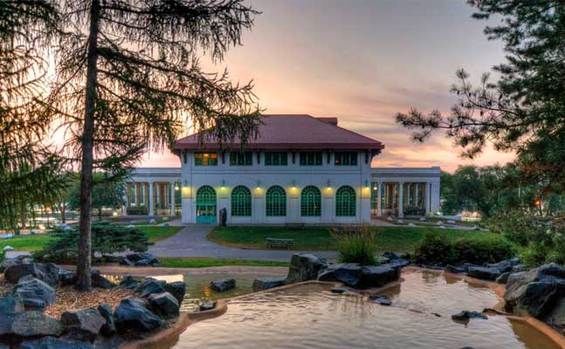
In early May, Jon Oulman and his team will open the doors to their latest restaurant and entertainment venue: Como Dockside in the Como Lakeside Pavilion in St. Paul. A 14-person selection committee, including City of St. Paul officials, approved the team’s proposal, which will “not only take full advantage of the unique space situated on the edge of Como Lake, but it will also offer services, food and recreation activities that will make it a vibrant destination for residents and visitors alike,” said St. Paul Mayor Chris Coleman in a statement. Oulman couldn’t be more thrilled.
“Have you been here?!” he responds, when asked why he decided to add the Como Pavilion to his impressive portfolio of businesses. “It may be the most incredible facility in the Twin Cities. It’s in the busiest regional park in the state. Only the Mall of American has more visitors annually than Como Park. It’s an incredible public asset, on a lake, with so much history. Talk to three people in St. Paul and at least two of them will have fond memories of engaging with the park and the lake.”
Oulman says he was also ready for a new adventure. “Personally, I felt like nobody needed me anymore!” he says, laughing. “The 331 Club has been running for 10 years now. We’re into our fourth year at Amsterdam [Bar and Hall] and that’s going really well. So last fall I was talking with my son Jarrett [who co-owns Amsterdam] about the public facilities in and around Minneapolis with food and beverage, like Sea Salt [next to Minnehaha Falls] and Tin Fish [on Lake Calhoun). The line at Tin Fish to get food! We saw potential here. And the timing is perfect.”
The Oulmans, operating as Como Dockside, responded to a survey of more than 1500 people who noted what they wanted in a new facility. Those criteria included a year-round place for food and beverages, a variety of entertainment options in addition to the beloved community groups, and more engagement with the park and lake. In response, the team revamped the kitchen and dining area on the main floor, and the second floor will be a lounge with comfy club furniture.
“We built the place out so in the summer, when you’re inside, you can see out through the large windows,” Oulman says. “In the winter, you’ll feel warm and cozy.” The menu will feature New Orleans-style po' boys, picnic baskets to takeaway, local craft beers and wine. In the evenings, for dinner, food will be plated. “It’s kind of a throwback vibe, which I’m interested in, so we’re wrapping the aesthetic around that.”
Because the park keeps attendance records for activities at the pavilion, the team could “see what’s been successful and supported by the community,” Oulman says. “For example, 800 people show up for the Como Players theater group. So we certainly aren’t going to get rid of them!”
“Our goal is just to make the entertainment offerings more diverse, with maybe some jazz, bluegrass and other Americana,” Oulman continues. “We don’t want to over-impact the neighborhood. There are a lot of people who live around the lake. So 75 percent of the community groups people really love will remain.”
The hours are also a change of pace from those held by the former café in the pavilion. Como Dockside will be open until 10 p.m. during the week and until midnight on Friday and Saturday. The team is bringing in a new dock system; new canoes, kayaks and paddleboards; and a 30-foot electric guided dining boat. “You can get a picnic basket, a bucket of beer and one our guys will putt you around the lake for an hour,” Oulman enthuses. “This is St. Paul!”
MSP’s craft-beer boom still shows no sign of slowing down. Opening this summer, in a 12,000-square-foot space in LPM Apartments — a
36-story apartment tower recently completed in the Loring Park neighborhood of downtown Minneapolis — is Lakes & Legends Brewing Company.
“Consumers keep flocking to craft beer,” says Ethan Applen, co-founder and CEO of Lakes & Legends. “It’s partly an extension of growing interest in local foods and peoples’ desire to know what’s they’re putting into the bodies. But for us, Lakes & Legends is also an opportunity to go deeper. We think there are brewing opportunities where we can grow.”
In particular, Lakes & Legends will focus on Belgian and farmhouse-style ales. The former, Applen explains, are “more improvisational. The beer goes back centuries to when monks in Belgium started brewing with what was on hand. The flavor profile has a lot of flexibility and appeals to even non-beer drinkers.”
The farmhouse style, he continues, “comes from farms in northern France and Belgium. Farmers would brew beers in the winter with whatever was left over from the harvest, and again that’s where the improvisational piece comes in: barley and rosemary, wheat and lavender.”
Lakes & Legends ingredients will be local and organic whenever possible, to find “a balance between the recipe we want to make and what’s available,” Applen says. He’s especially excited to source from MSP’s diverse ethnic growers.
“We’re looking at the Hmong community and culture. Ginger, citrus and hot peppers, which they grow and use in their cuisine, are all ingredients we can use in our beer. International ingredients from a local community!”
Applen's father and wife, Katie Kotchka, are from Minnesota. He grew up in Southern California and has lived in LA for 15 years. His background is in startups and entertainment, and he’s worked for Disney and Warner Bros., where he innovated new businesses. He’s been traveling back and forth for the last year, and will be moving to MSP in May.
Lakes & Legends co-founder Derrick Taylor, Applen’s brother-in-law, is a Minnesota native and MSP resident who has managed the Red Bull Crashed Ice event in St. Paul. Lakes & Legends' head brewer, Andrew Dimery, comes to MSP by way of Bluegrass Brewing Company in Louisville, KY, and Sun King Brewery in Indianapolis, IN. Lakes & Legends will not have a kitchen, but will partner with local restaurants and food trucks to bring local eats to the taproom.
“We want to be part of a community,” Applen says, which why he and Taylor selected the LPM building. They looked around Northeast Minneapolis and the Midway area of St. Paul. But they felt LPM and the Loring Park area are “a great part of Minneapolis, cool and upbeat, with tons of residents, and with breweries near by but not over served.”
The brewery and taproom, he adds, “will be a resource for community gatherings and events. We want it to be a comfortable space, a third space away from home and work, where people can come and hang out.”
After 22 years in St. Anthony Main along the Mississippi riverfront in downtown Minneapolis, the Minneapolis Television Network (MTN) is relocating to Northeast. On April 1, MTN will be joining the other entrepreneurial businesses, artists and creative industries currently in the Thorp Building, which is also a hub during the annual art festival Art-A-Whirl.
“As a creative media organization with a long history of serving the various communities in Minneapolis, we’re excited to move to the Thorp Building in Northeast in the middle of a thriving arts district,” says Michael Fallon, MTN’s executive director. Northeast Minneapolis was named
the best arts district in the U.S. by USA Today.
“There’s so much potential for us in this neighborhood as we’ll be right in the thick of things, serving the community in the way public access television is meant to serve,” Fallon adds.
MTN’s mission is to “empower diverse Minneapolis residents seeking to connect to the larger community through the media,” according to its website. “We provide low-expense training for anyone who wants to learn to use the media,” Fallon adds.
MTN is largely supported through the Public Access Education and Government Channels (PEG) fees attached to cable subscribers. Over the years, the organization has given artists, comedians, community activists and numerous groups a platform for their work.
MTN’s studios have launched such talents as Fancy Ray McCloney, Viva and Jerry Beck (of the show “Viva and Jerry’s Country Music Videos”), Rich Kronfeld (of “The Choo Choo Bob Show”), “Mary Hanson (of “The Mary Hanson Show,” which is “one of longest running public access talk shows in the country,” Fallon says) and Ian Rans (of “Drinking with Ian”). MTN also broadcasts city government meetings and has given the growing Somali community a place to produce public-affairs shows that reach other immigrants.
The new space will include staff offices; equipment rental; two fully equipped, community-focused television studios (with cameras, lights and a green screen) and video editing suites; a Youtube set-up for fast and easy studio productions; and a multipurpose classroom and public gathering area.
“We already been reaching out to the Northeast community and potential collaborations and we’re working on a partnership with [the Northeast Minneapolis Arts Association] NEMAA,” Fallon says. “ We expect to fit right in and to become an essential part of the Northeast’s creative mix.”
For three years Erin Rupp worked with local bee advocacy group and honey producer Beez Kneez as its director of education, incubating ideas about how to expand the public’s understanding of the vital role pollinators play in our food system. This spring, her ideas came to fruition. Rupp recently launched Pollinate Minnesota, a nonprofit organization designed to engage the public, including policymakers, in “a world with strong, healthy pollinators and people, where farms are functional parts of ecosystems and schools are functional environments for all learners,” according to the website.
Pollinate Minnesota will use honeybees to teach about pollinators’ role in creating a healthy, sustainable food system, focusing on interactive experiences for individuals and groups that include visiting bees in their hives. “I really love teaching about pollinators by putting people in beekeeping suits,” Rupp enthuses. “Bees are great tool to connect to a lot of different subjects. They’re social insects. And we know they sting — that’s pretty engaging, right, that they can hurt us? — and yet we’re doing most of the stinging by damaging their habitat.”
Rupp says beekeepers are losing 30 to 50 percent of their hives annually, mainly due to starvation. Because of the decimation of native habitats, bees need to fly greater distances to find pollen and nectar. Systemic pesticides — including neonicotinoids, which persist in the environment, and when used as seed treatments move into the pollen and nectar of adult plants — kill bees. And plant cultivars, while showy and colorful, often have had the nectar and pollen bees need bred out of the plant.
“The decline of bees tells the story of how our food system is broken in a way that both second graders and state legislators can understand,” Rupp says. To those ends, Rupp is actively seeking partners for the upcoming season; places where she can expand the possibilities of teaching with bees, such as in parks close to schools or on school grounds. She’s also at the State Capitol working on “forward-looking legislation that’s good for pollinators and people,” she says, including Governor Dayton’s “Buffer Bill.”
Rupp also wants to work on pesticide legislation, and to collaborate with the Minnesota Department of Transportation of increasing native plantings along roadsides. Meanwhile, she encourages people to plant flower gardens and pots with flowers bees need. “Just ask the seed catalogs or plant nurseries you’re buying from whether their products are free of systemic pesticides like neonicotinoids,” she says.
On Monday, March 30, Pollinate Minnesota will celebrate its launch with an event that includes a 2015 legislative session overview of Minnesota state pollinator policy work. The event runs from 6:30-8:00pm on 3.30.2015 at the Gandhi Mahal Community Room, 3009 27th Avenue South, Minneapolis.

Spyhouse Coffee Roasters will open its fourth cafe in a portion of the 3,900-square-foot, ground floor commercial space in Brunsfield North Loop on Washington Avenue in Minneapolis. Dubbed Spyhouse West, with an expected opening in June, the coffee shop, “will have a very different aesthetic and charm, but will still have those same Spyhouse elements and character that have been a defining standard for us,” says Christian Johnson, Spyhouse owner and director of operations.
Johnson adds that he’d been looking for a location in the Warehouse District for more than a decade, until the apartment complex was completed last year. “Brunsfield aligns with our overall mission in that its minimalistic design and location, and the demographics of the immediate area, seem a perfect fit for us,” he says. The project, designed by Snow Kreilich Architects, earned an AIA Honor Award for architectural excellence in 2014.
The location is also far enough away from such other indie cafes as Moose and Sadies, Johnson continues. “I spent a lot of time at M&S in college in the 90's, so I am quite fond of those memories from back then,” he explains. This fourth location for Spyhouse (which started in 2000 with a coffeehouse in Whittier, then added another on Hennepin Avenue in Uptown in 2008 and in the 612 Broadway building in Northeast Minneapolis in 2013) “will bring an attention to the craft of coffee and design characteristics that are congruent with the lifestyle of the neighborhood,” he says.
Adds Vincent Lim, president and general manager of Brunsfield America, Inc., “One key criterion [for a potential retail tenant] was that the user must share our vision for the space — to be an amenity to our residents and our community.” In addition, he continues, “our research on Spyhouse revealed the very passionate and committed entrepreneurs behind the business.”
As for being an entrepreneur who has “worked 80 hours a week for the last 15 years,” Johnson says, “it is important for me to grow a brand not out of ego, but out of what feels right…. and to know when to slow down. I have so many ideas for restaurants and cafes that I have to be careful the design wheels in my head don’t accelerate too quickly.”
He doesn’t, however, have any plans to move out of state, much less out of Minneapolis. “We like to have cohesion and proximity within our stores to ensure consistency, quality and ease for the staff, and myself, to commute to,” says Johnson, who owns a home between two of Spyhouse’s locations.
Tuesday, February 24, 2015
Kickstarter connects you with people willing to fund the innovative idea you’re working on in your garage. Why can’t you get funding for the innovative idea you have for the vacant storefront down the block?
Hoodstarter may have an answer. Co-founders Justin Ley and David Berglund, who work together at UnitedHealth, recently finalized and launched a first-of-its-kind crowdsourcing/funding platform that allows users to post vacant properties, post and vote on ideas for new onsite businesses or public uses, and fund entrepreneurs willing and able to turn those ideas into tangible businesses.
Property owners, real estate brokers, entrepreneurs and Twin Cities residents mingle on its website, exploring property listings, offering ideas, gauging interest and forging new connections.
“The goal of Hoodstarter is to connect neighborhood and city residents — anyone with a stake in and ideas for the vacant space — with real estate brokers equipped to market empty properties, property owners looking to monetize their holdings, and companies or entrepreneurs willing to shoulder the risk of launching a new use,” says Berglund.
“We’re facilitating connections between all the parties to a typical real estate transaction,” adds Ley, “including community members directly and indirectly affected by the project. Basically, we’re taking a model that hasn’t changed in 50 years” — commercial real estate development — “and making it much more efficient, while also creating opportunities for businesses and ideas that might not have access to other sources of funding.”
Though the platform hasn’t yet provided direct funding for any nascent businesses, the founders follow the well-worn model used by other successful crowdfunding platforms: taking a five-percent cut of users’ contributions and passing the rest along to entrepreneurs.
Hoodstarter’s database includes vacant sites across the Twin Cities, from expansive, high-visibility spaces like the unoccupied retail level at St. Paul’s new West Side Flats to abandoned churches and petite storefronts along community corridors like Chicago and James avenues in Minneapolis.
In addition to listings with detailed information about the property, including its price per square foot (when publicly available), leasing agent and amenities, Hoodstarter has a social function that supports lively debate over user-generated ideas, posted properties and urban life in general. The community is largely self-policing: A recent post suggesting that a prime Chicago Avenue storefront be left vacant was met with swift, if polite, criticism.
Less than a year and a half since its initial launch, Hoodstarter is already gaining traction across the Twin Cities. “When you see a vacant lot or storefront, there’s an intrinsic desire to envision its potential,” says Ley, especially if it’s in your neighborhood. “You can’t help but wonder, ‘Why has that place been vacant for so long?’ It’s a frustrating feeling.”
The South Minneapolis resident speaks from experience. His commute takes him past the same vacant space every day — a retail storefront empty for so long that no one quite remembers what it used to be.
Ley’s “pet” storefront crisply illustrates the problems Hoodstarter seeks to remedy. The property sits on an otherwise busy corner, near Angry Catfish, the Baker’s Wife and other popular businesses. It has obvious assets: space for indoor and outdoor seating, corner visibility and a floor plan tailor made for a restaurant or cafe.
But before Hoodstarter approached him, the owner had legitimate concerns about developing the property, says Ley, or even finding a temporary tenant for the space. According to Ley and Berglund, even well-meaning property owners who care about their neighborhoods can be overwhelmed by the cost, time investment and risks associated with finding a commercial tenant or developing a space on their own.
And, counterintuitively, many owners prefer to leave their properties empty as commercial land values rise, in the hopes of cashing out as the market peaks. Hoodstarter’s success will depend on its ability to convince property owners that they stand to gain from filling vacancies now, not waiting to sell later.
If all goes well, the owner of the vacant South Minneapolis property may soon have a new tenant or buyer. Last fall, Hoodstarter held a Better Block event at the site itself, continuing the conversation that began online.
According to Ley and Berglund, this hybrid model — using in-person events to publicize vacant properties and build support for the best usage ideas — could be a big component of Hoodstarter’s model going forward. But first, they need to fill some vacancies.
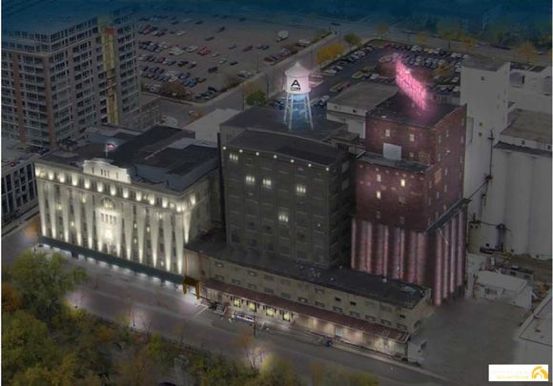
Tuesday, February 10, 2015
More than a decade after Minneapolis’ historic Pillsbury A Mill closed, capping the city’s reign as the country’s flour-milling capital, the four-building mill complex—which includes the iconic limestone A Mill—is once again becoming a hub of innovation and industry, this time driven by artists. The developer Dominium, which recently transformed St. Paul’s 1890 Schmidt’s Brewery into Schmidt Artists Lofts, is completing the adaptive reuse of the milling complex with BKV Group into the A-Mill Artist Lofts.
The first phase, Warehouse 2, a four-story, wood-frame building next to The Soap Factory, has been open since December and includes 43 living units, says David Lepak, community manager, A-Mill Artist Lofts. The 1881 A Mill designed by architect Leroy Buffington, the south A Mill cleaning house, and the 1910 elevator known as the “red-clay-tile building,” will be open for occupancy in August.
“Dominium knows there’s a need for affordable artists’ housing, and we’ve been successful with other projects in St. Paul and St. Louis,” Lepak says. The complex, which will be LEED certified, includes 255 living units designed for qualifying artists. To support artists’ work, the complex includes galleries, a performance and rehearsal space, and studios for dancers, visual and multi-media artists, photographers and potters.
“The neighborhood is already highly populated with artists,” says Lepak, referring to the Marcy-Holmes and Northeast neighborhoods. The transformed A Mill complex will further “drive people to the area for creative resources, and bring untapped resources to an already existing artists community with theaters and galleries.”
BKV Group, a Minneapolis architectural firm, has been working with Dominium on the project. The design team started by conducting laser scans of the buildings, to determine where structures and floors didn’t line up, and where components were missing. In addition to shoring up exterior masonry, structural repairs included new steel support columns (particularly in the limestone A Mill), floor decking and joist repairs, and leveling the floors.
The project was made possible through historic tax credits, because the A Mill is on the National Register of Historic Places. As such, the renovation was closely scrutinized by the State Historic Preservation Office (SHPO) and the National Park Service. In particular, the red-tile building—a former grain elevator—doesn’t have openings on the first eight floors, and none could be created. “It’s like a crawl space and we treated it that way,” explains John Stark, project architect, BKV Group.
The 27 new living units, instead, are on floors 8-12, and were designed around the existing openings, “which means each unit is unique,” Stark says. In the basement, the architects created a gathering space, fitness room and connections to the two-level parking garage. New outdoor landscaping around the railroad tracks is in the works.
The new complex will also have a roof garden with panoramic views of the Mississippi River and downtown Minneapolis, Stark says, and the landmark Pillsbury’s Best Flour sign is being redone in LED lights for greater energy efficiency.
Dominium is also considering the use of a hydroelectric heating and cooling system for the complex, using water from the nearby river. The water would enter through an existing tunnel, drop into a turbine pit and generate power to operate the complex. The initiative “would make the complex largely self-sustaining,” Stark says.
The project has significant merit regardless. “We’ve helped put the buildings back on the tax rolls, and created a new source of industry that tells the character of what Minneapolis was and is today,” Stark says. Lepak agrees, adding that the new A-Mill Artist Lofts “will add tremendously to the further development of an economically vibrant area of Minneapolis.”
Tuesday, February 03, 2015
Ever since she began working as a program director at the Metropolitan Regional Arts Council (MRAC) in St. Paul five years ago, Shannon Forney has been excited about “the energy shift happening in the neighborhood.” The neighborhood is St. Anthony Park, which encompasses the Creative Enterprise Zone, and is home to the Metro Green Line’s Raymond Avenue light-rail station, which is across the street from MRAC’s office.
“People have been so excited about light-rail transit, what it would bring to the neighborhood, and how it might reinvigorate the historic fabric of the neighborhood,” she says. Forney and her partner Ty Barnett participated in Irrigate artist training last year, she adds, and “we really resonated with the idea of artists and businesses working together to raise each other’s profile.”
So Forney (also an arts administrator and performing artist) and Barnett, who has long been in the coffee business, decided to start WorkHorse Coffee Bar. Located half a block west of the Raymond Station on the Green Line, in a space that has housed both a coffee house and MidModMen + Friends’ extra inventory, WorkHorse is scheduled to open later this month.
That’s not all. Outside WorkHorse’s front door is a 24”x 35” vintage fire-hose cabinet, which Forney is transforming—with help from a
Knight Arts Challenge grant—into the Smallest Museum in St. Paul. Forney will curate the micro-museum’s exhibitions with help from five-member board whose members she selected from local arts organizations and community members.
“Ty has been in the coffee industry for a long time,” Forney says—citing seven years as manager of Nina’s Coffee Café and a stint at Black Dog Coffee & Wine Bar, among other establishments—and “has dreamt of having her own coffee shop. So the impetus for WorkHorse really is coming from Ty. It’s an execution of her vision.”
“Mine is the Smallest Museum, and how I’ll bring my personality into the business,” she adds. Inspired in part by the Little Free Library movement, Forney explains, “I decided the cabinet is the perfect little nook for showcasing artwork.” She recently sent out a request for proposals. The first exhibition will open in June.
Meanwhile, Barnett has been working with contractors to renovate the 50-seat coffeehouse. The bathroom was made ADA compliant, and the kitchen, coffee bar and register area built out. They removed plaster to expose an existing brick wall and painted the tin ceiling silver.
“We’re restoring the space to its vintage grandeur,” Forney says. “There’s a real appreciation of history in this neighborhood, which Ty and I share.” The décor will be “vintage industrial,” she adds, “a cross between a machinist's shop and your grandfather’s workshop. We’re imagining a big, long, communal wood table down the middle of the space.”
Merging business, art and community is at the heart of the couple’s approach to WorkHorse, Forney says. A former colleague of Barnett’s, who now owns Voyageurs Coffee Roasters, will be roasting small-batch coffee for WorkHorse. “We have the delightful vision of two fledgling businesses helping each other,” Forney says.
She wants to create community in other ways. The exhibitions in the Smallest Museum will engage customers, passersby from the neighborhood and Green Line commuters. Forney hopes neighbors and commuters will become regulars, stopping by for beverages and simple lunch options. “For us, coffee and art are about community,” Forney says.
“We’re excited to become a part of the community synergy around transit, art and the exchange of ideas happening on University Avenue,” she continues. “‘Working together, all boats rise’ is a business philosophy we definitely live by. And it’s amazing how much support we’ve been getting already.”
Tuesday, January 20, 2015
The much beloved Art Outlet, formerly located on I-394 (or Highway 12 for long-time residents) in Golden Valley just west of Minneapolis, is back. Carter Averbeck, owner of Omforme Design at 24th Street and Lyndale Avenue in Minneapolis, has teamed up with Greg Hennes, an art industry veteran and Art Outlet’s originator, for a two-week original art extravaganza at Omforme.
“Greg and I have banded our two small businesses together to bring back Art Outlet, and to promote original art and affordable art buying,” Averbeck says. “We’ve been hanging art throughout Omforme’s space for the last week. We’ve got artwork all the way up to the ceiling!”
For many years, Hennes’ eclectic Art Outlet was a prime destination for purchasing original art at discounted prices. Hennes stocked more than 1,000 original works of art in diverse media—at up to 50 percent off retail prices. In 2010, Art Outlet closed after the building was sold.
Hennes currently owns the Hennes Art Company in Uptown, a corporate and residential art consulting business that also offers custom framing and art brokering services. “But he has a lot of art,” Averbeck explains, “and reviving Art Outlet is something Greg’s been wanting to do for a long while.”
“Omforme already promotes local artists,” he adds. “So teaming to make art accessible to people who can’t afford retail price tags is something we both wanted to do.” Before opening Omforme, Averbeck experimented with several pop-up shops. So inserting Art Outlet as pop-up inside Omforme was a natural fit.
The pop-up Art Outlet includes works by a mix of local, national and international artists. “Name a style, a medium, a genre, and we’ve got it,” Averbeck says, from sketches, posters, prints and paintings to sculpture. A tag on each work includes information about where to learn more about the artist. Price points begin at $25.
The Lowry Hill East area, or LoHi, just south of downtown Minneapolis includes the Loring, Wedge and Lyn-Lake neighborhoods. In addition to Omforme—which offers a mix of vintage and modern pieces that Avebeck restores and updates with singular panache—unique boutiques like Serendipity Road and the Showroom are nearby.
Restaurants including French Meadow Bakery and Café, Bluestem Bar, Heyday and World Street Kitchen also generate a livable, vibrant neighborhood where people increasingly like to meet, eat and shop.
The temporary Art Outlet, which continues through January 30, “is another edgy, artsy, interesting small offering along Lyndale,” Averbeck says. “Slowly, LoHi is coming into it’s own.”
In fact, Omforme is doing so well, Averbeck is considering a move in the neighborhood to a new space up to five times the shop’s current size.
Tuesday, January 13, 2015
They’re known as granny flats, mother-in-law apartments, even Fonzie suites for those who remember the Fonz’s digs above the Cunninghams' garage in the tv show “Happy Days.” For years, accessory dwelling units (ADUs) have been popular throughout the U.S. for homeowners needing an additional, separate living space for a relative (or family friend) adjacent to main house—and as a flexible housing option in developed urban neighborhoods.
Now ADUs are legal in Minneapolis. On December 5, 2014, the Minneapolis City Council passed a zoning code text amendment allowing ADUs on lots with single or two-family homes. Shortly thereafter, architect Christopher Strom, who spent countless hours working with zoning administrators during discussions about the code change, launched his new initiative, Second Suite.
“I wanted to be the first to market my expertise with the zoning related to these small residential dwellings,” says Strom, who has a thriving business as a residential architect in Minneapolis, and has designed ADU-type cottages for clients in the suburbs and northern Minnesota.
He learned during informational meetings that “a lot of people didn’t want ADUs because they fear too many people would be added to the neighborhood, resulting in extra noise and traffic,” Strom says. “But the new law limits ADUs to a total of 1,000 square feet, including parking; they’re only feasible on certain lots, depending on the positioning of the primary house; and the primary house must be owner occupied. Only one accessory building is allowed per property, so most people will combine an ADU with a detached garage.”
As a result, Strom continues, “The majority of the new ADUs to be built in Minneapolis will be Fonzie suites. Remember how he lived above the Cunninhgams' garage? He had a cool bachelor pad totally separate from the main house, but was always at the Cunninghams'.”
ADUs are a viable option for creating more space, whether for additional storage, an art studio, home office or apartment for aging parents. With the new zoning, the units can also include a small kitchen and/or bath. “They’re wonderful for seniors, and a nice way to establish multi-generational living next to the primary house while giving the occupant an integral level of independence,” Strom explains.
St. Paul, particularly the neighborhood of St. Anthony Park, is currently looking at its building codes, as well, by studying the feasibility of allowing ADUs on single-family lots.
Strom adds that ADUs are “a great entry point for people to start working with an architect.” A well-considered design might result in an ADU that blends in with the architectural style of the existing residence, or be entirely different.
Moreover, Strom adds, “Second Suite represents a lifestyle that I want to be able to deliver to my clients. This lifestyle is about families pooling resources and enjoying more quality time together through care-giving that enables grandparents to help with childcare and adult children to help with aging parents.”
Tuesday, January 06, 2015
On Friday at 4:00 p.m., the Twin Cities’ newest micro-distillery will open MSP’s first cocktail “tap” room. Entrepreneurs Christopher and Shanelle Montana, owners of Du Nord Craft Spirits, have created a bar with windows looking into their distillery inside a former Motoprimo store in the Longfellow neighborhood of Minneapolis.
Bartenders will serve craft (and classic) cocktails made with the Montanas’ own L’Etoile Du Nord Vodka (named for Minnesota’s state motto, L’etoile du Nord or “The Star of the North”) and Fitzgerald Gin (named for author F. Scott Fitzgerald). Enthusiasts will also have a chance to join Du Nord’s cocktail club, a short-term promotion ending January 12, with three levels of patronage.
Du Nord doesn’t have a kitchen. But a food truck will be on hand. And visitors are welcome to bring in takeout. “We’re surrounded by a lot of good food here in Longfellow,” says Christopher Montana, from Parkway Pizza to Le Town Talk Diner to Midori’s Floating World.
In addition to brewing the booze, says Montana, he also built out the cocktail room with help from his father-in-law Mike, a Minnesota farmer who grows non-GMO corn for Du Nord. The two men constructed the tables and the bar, and crafted window moldings from barn wood gathered from a tumbled-down structure on Mike’s farm. With polished concrete floors, exposed ductwork, and several couches in addition to tables and chairs, the Du Nord lounge has a casual feel.
“We want people to feel comfortable having a drink and socializing,” Montana says. “We didn’t want the cocktail room to be too rough-edged, like a beer tap room, but not snooty either. The whole point is the room should be comfortable, not intimidating.” The lounge is also about sampling the goods. “We’re a distillery first, but we want people to taste our booze,” Montana adds.
Du Nord has been bottling since May, producing “several hundred cases of booze a month,” Montana says. By February, he hopes to be distilling whiskey, as well.
Distributed by Phillips Wine and Spirits, Du Nord has “a heavy presence” in the Twin Cities, Montana says, and can be found throughout Minnesota—particularly in the western part of the state, home to sugar-beet producers. “Sugar beets and corn are the backbone of what Northland farmers do well, and both go into our booze,” Montana explains.
When he begins making whiskey, the rye will come from a central Minnesota farmer “who was at our wedding,” Montana says. “We like to work directly with farmers, without a middleman.” Pictures of the farmers the Montanas source from will adorn the walls of the cocktail room because “we want people to know who grew the products we use.”
Prior to starting Du Nord, Christopher had meticulously home-brewed beer for about 10 years. He worked for Wellstone Action, Democracy for America and now-Congressman Keith Ellison. “I was [Ellison’s] field director during his first campaign and helped set up his office in Washington D.C.,” Montana says. After graduating from law school—where he picked apart the Surly Bill as part of an agricultural law class—he worked at Fredrickson & Byron, taking a leave of absence to open the distillery.
His wife Shanelle Montana has a graduate degree from American University in D.C., and is an associate in regulatory and legislative affairs for EDF Renewable Energy. The couple has a 13-month-old son. “We both have demanding jobs,” Christopher says, “but we’ve always thought it would be fun to own our own business. Du Nord is one of the best things we’ve ever done.”
In December 2014 the Minneapolis City Council approved Du Nord’s cocktail room, following passage of a new state law allowing distilleries to sell and serve their product onsite. Du Nord’s vodka has “a vanilla flavor to it, it’s a little heavier, smooth,” Montana says. “We don’t add anything to it, we just don’t strip out the flavor. I like vodka that tastes like something.”
Du Nord’s gin, he continues, has a louche quality, meaning it gets cloudy when cooled or added to water because of the higher ratio of juniper oils. “We want flavor in our gin, so it’s louche,” Montana says.
Whiskey is Montana’s drink of choice, however. Forget the old adage that only the best whisky comes from Kentucky, he says. “They take our corn, turn it into booze, ship it back to us and we pay a premium. Whatever they do there we can do better here. So let’s do it here!”
By the end of 2015, Montana is hoping to triple production. “What we can make in a year is what the big guys spill in day,” he says. “We are still just a drop in the bucket. But for this area, we’ll be able to meet demand.”
Tuesday, January 06, 2015
Wise Acre Eatery, Victory 44, and soon Peppers & Fries. The creative conversion of old gas stations into hip neighborhood eateries gets another jump start when Peppers & Fries opens in a former SuperAmerica later this month at 39
th and Lake Street in the Longfellow neighborhood of Minneapolis.
Steve Frias and his daughter Marie Frias are the proprietors. They got their start working with their parents and grandparents (respectively), who are the owners of
Boca Chica—the Twin Cities’ longest-lived Mexican restaurant and an institution on the West Side of St. Paul. Steve ran his own restaurant in Burnsville for a while. Marie has been a server, scheduler and manager in a variety of establishments.
So it was time, says Steve Frias, to open their own restaurant back in the city. They chose the old SA, which had been empty and for sale for six years, for its size and location. “That part of Lake Street is really growing, with lots of small businesses,” he says, including Forage Modern Workshop, Longfellow Market, Craftsman restaurant and Corazon gift shop. “I want to be part of that growth, with a neighborhood spot seating about 80 people.”
Peppers & Fries will be a family-oriented burger and burrito grill with 11 tv screens for viewing sports. Three garage doors will open onto a spacious patio (for dining in warmer weather). Ben Awes of the Minneapolis architecture firm CityDeskStudio, and Denise Fierst of Denise Fierst Design, have been working with Frias on the conversion.
“The building is pretty simple, but with surprisingly elegant existing brick and exposed steel columns,” Awes says. “All we did was try and stay out of the way, and highlight the best existing features!”
The interior includes polished concrete floors, exposed trusses and a simple gray color palette. “Steve has a scoreboard from an old field where he coached Little League baseball, which will be lit up on one wall,” Awes says.
The team also made sure the new restaurant compliments the existing neighborhood. “We’re not trying to be flashy,” Awes says. “Peppers & Fries is meant to be a good neighbor and serve local residents.” To keep costs down, Awes cut some of the components for the restaurant’s signage in his church basement.
The grill will have 16 beers on tap, 11 of them from local microbreweries. The Frias’ will make their own malt cups, source baked goods and tortillas from local establishments, and meats from Longfellow Market and South St. Paul. “My dad has dealt with those small business owners for years and I have those same connections,” Steve says.
Wednesday, December 10, 2014
Soo Visual Arts Center, colloquially known as SooVAC, is making a big move in April 2015. Founded by the late Suzy Greenberg in 2001, the non-profit art space—which for two years has also operated a satellite operation called SooLocal—will consolidate the two galleries and move to 2909 Bryant Avenue South, a large three-story brick warehouse building adjacent to the Minneapolis Greenway.
“We have steadily increased our budget and programming for the past three years,” explains Carolyn Payne, executive director. “In evaluating SooLocal, we decided it would serve our organization best to be under the same roof as SooVAC’s main space, and the new location has room for that. We are also in the early planning stages of a visual arts residency program and this building has room for us to create that programming as well.”
SooVAC will move into a space previously used as an event center. “The building is very green,” Payne says, “and along with radiant floor heating, [the management] requires LED lighting. Many other organizations and museums have transitioned to LED lighting. We’re working with lighting designers that have been in on that to ensure that we continue to put our exhibitions in the best light, so to speak.” The space is also be designed by Will Natzel, an artist and designer, in consultation with Lars Mason, director of academic services at the Minneapolis College of Art and Design and a SooVAC advisory board member.
SooVAC prides itself on arts accessibility, building community through art and representing local artists. “As soon as we knew we were going to move, we had a public meeting with artists, supporters and community members,” Payne says. “We asked them where they would like SooVAC to move and what they would like to see in our new space. We had a size and price range, and looked at everything within those parameters.”
The new space was selected because it “met and even exceeded our requirements, and also allows us to stay in our current South Minneapolis neighborhood.” In addition, Payne is looking forward to the Greenway’s potential to attract new audiences for SooVAc’s programming and hopes to collaborate on projects with the Greenway Coalition.
Wednesday, December 03, 2014
“It's hard to put into words what feeling we are going for,” says Emily Anderson. “Fun, unique items that make you smile and want to do a happy dance.” Do not, however, expect any mass-manufactured Snoopy’s in Anderson’s new pop-up shop in the Hamline-Midway area of St. Paul. Her new popup shop, HWY North, only carries locally made goods that Anderson carefully curates.
“I am emphasizing Minnesota made goods because a) it resonates with my desire to buy local, b) supports our neighborhood artists, and c) hopefully creates a space where the many creative geniuses in our awesome cities can come together, share their talents, and perhaps collaborate to make something bigger than would otherwise have been possible,” she explains.
Anderson opened HWY North after noticing a retail space for rent in her neighborhood. A crowd-funding campaign helped cover the costs of setting up shop. Anderson has a background in visual art and public art, with an emphasis in art education and museum studies. She explains that she’s “always been driven through the arts, but over time I've realized that more than being an artist, I am an appreciator of the arts.”
For a long time, she envisioned opening a shop “that offers the public a place to see the talent within the immediate area, as well as a place to come together, have a sense of community and make.” To that end, HWY North has a regular schedule of classes for kids and adults ranging from sewing a tote bag to creating a Ukrainian egg ornament to making holiday cards.
The workshops, Anderson says, “encourage others to become makers by showing them new/old/forgotten skills, and by getting them ready to continue making beautiful things with their hands. Did you know studies have shown that being creative is essential to mental health? We bump that up a notch by also providing a fabulous community for making. It's all pretty great.”
Anderson finds HWY North’s bespoke shirts, jewelry, toys, art and home furnishings through local craft fairs. “But people are starting to contact me directly, which is exciting,” she says. She and group of collaborators discuss which items fit best with HWY North’s aesthetic, a continual work in progress, she says.
HWY North’s lease runs through March, Anderson says, “however, I would love to extend the lease if the store is successful.”

Wednesday, December 03, 2014
Forbes has called out Minneapolis as “The Healthiest City in America” despite our
micro-brewery boom, not to mention our growing micro-cidery and micro-distillery scene. So how to maintain our awesome standing created by residents who “breathe clean air, prioritize exercise and keep their weight down, supported by a city that was among the first to add bike trails and ban smoking in public places” as the
Forbes article gushed? Especially with the early onset of winter?
By doing yoga inside the breweries and cideries of course.
GetKnit Events has put together a new series that combines balances with brews for all the micro-boom lovin’ yogis in the Twin Cities. Called Yoga at the Brewery, the series kicks off Saturday morning at Urban Growler Brewing Co. in St. Paul. A ticket includes a one-hour all-levels yoga class taught by an instructor from YogaFresh, a flight of five samples for tasting, and exclusive access to the brewery prior to regular hours.
On Saturday, January 10, Yoga at the Brewery takes place at
Sociable Cider Werks in Minneapolis, and on Saturday, February 28 at Excelsior Brewing in Excelsior. On arrival, guests will be situated on yoga mats in their intoxicating environment among the kegs and fermentation tanks. “After toning our bodies and focusing our minds,” according to GetKnit’s website, “we will turn our attention to communal health as we join together to enjoy flights of five brews.”
“How do Twin Cities residents keep up their commitment to fitness during the area's notoriously cold winters?” the
Forbes article asks? Brews and asanas are the answer.
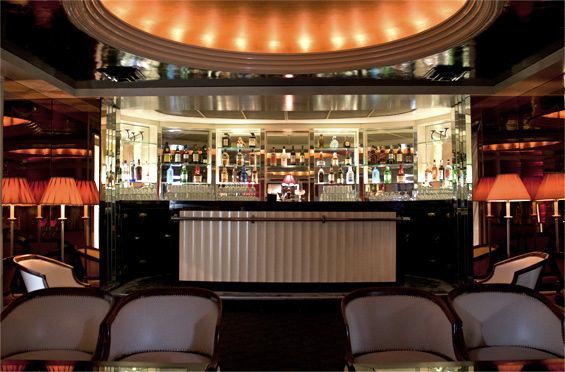
Wednesday, November 19, 2014
The storied history of the Cathedral Hill neighborhood in St. Paul includes gangsters, Prohibition, F. Scott Fitzgerald and his Gatsby, and of course W. A. Frost. The restaurant and bar (with a summer patio no one can resist) is named for the pharmacist who opened his fabled apothecary (which sold “medicinal wines and liquors”) in the 1889 Dacotah Building. Today the creative thinkers at W. A. Frost are not only purveyors of “upscale unwinding,” as Robert Crew, director of food and beverage operations describes the iconic establishment’s vibe, but history buffs as well. And they’ve hatched an exciting new program for the likeminded.
It’s called the Arcanum Secret Society: a four-part series of immersive cocktail parties in historical places. Arcanum launches on November 25, and will occur again on February 7, and in April and June at “secret” locations. The first one? Not so secret anymore: The elegant Art Deco bar in the former Commodore Hotel. Once home to the Fitzgeralds and Sinclair Lewis—and reportedly a stop for bootlegger John Dillinger—the Commodore played a leading role in St. Paul’s Roaring 20s social scene.
That historical era will be the theme of the first Arcanum event, which is also “soft opening” for the newly remodeled Commodore. Arcanum participants, Crew says, “will be among the first to see the re-imagined space. It will truly be like stepping back in time, as though you were rubbing elbows with F. Scott and Zelda.”
The ticket price ($110 per person) includes classic craft cocktails assembled in part using a Prohibition era-style white whiskey from 11 Wells. Guests also enjoy passed canapes provided by W.A. Frost and live music. “For the cost of a typically upscale dinner you'll get food and beverages—plus an unforgettable experience. It's not an everyday occasion. It's a unique opportunity,” Crew says.
The idea for Arcanum had been brewing for a while, Crew adds, and extends W. A. Frost’s singular brand. “W.A. Frost has a reputation for facilitating ‘upscale unwinding.’ It's refined, but not stuffy. That's the exact kind of vibe that Arcanum has,” he explains. “So while the events aren't necessarily at W.A. Frost (in fact, we can't tell you where they all are!), they each exhibit that signature quality.”
Arcanum is working in concert with Commonwealth Properties on the series, which owns the Dacotah Building, the Commodore Hotel and other historic St. Paul properties. “Commonwealth Properties makes a point of uncovering some of the city's most iconic architectural treasures, and making them relevant to today while preserving all of the historic detail and charm,” Crew says.
“The Arcanum event series itself is somewhat of a throwback—the intimacy and secrecy of the events evoke the speakeasy and the Prohibition Era,” he continues. “That's fitting, since all of the Commonwealth Properties served as ‘witness’ to that time in St. Paul's history. Each Arcanum event will be held at a location that has historical significance and each event will feature an immersive cultural experience.”
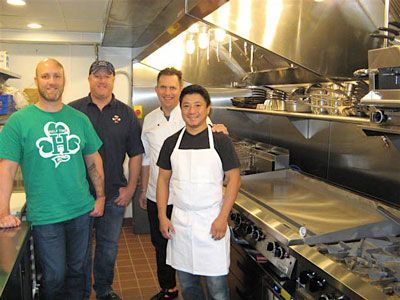
Wednesday, November 12, 2014
Goodbye frozen pizza. Hello savory shepherds pie, Irish poutine with crème fraiche and brown bread with Kerrygold butter. Josh Thoma and Kevin Fitzgerald, who elevated bar food to an art in the kitchen of the 1029 Bar in Northeast Minneapolis as a start-up to the now award-winning Smack Shack in Minneapolis' North Loop, have done it again. This time the venture is Paddy Shack at The Rec, at the Half Time Rec in Como Park in St. Paul, best known until now for bocce ball in the basement, Irish music and dancing, and a decidedly laid-back vibe with beer prices to match.
Thoma and Fitzgerald teamed up with Jack Riebel, formerly of Butcher & the Boar, to build out a kitchen at The Rec and develop an Irish-inflected menu—including a lobster and cream sauce sandwich with a dash of whiskey dubbed The Dublin Lawyer that solidifies the culinary connection with Smack Shack. The dogs come wrapped in bacon with pickled green tomatoes and jalapeños or in beer cheese sauce, macaroni and Serrano pesto. Clearly, no one needs to leave hungry anymore.
Brothers Steve Mars and Scott Mars, who co-own The Rec, haven’t forsaken the dive-bar feeling or décor, despite the food upgrade. The Rec remains a beloved neighborhood bar—with a difference.
The brothers selected St. Paul native Riebel, a 2013 finalist for the James Beard Foundation Award for best chef in the Midwest, because of his credentials, ingenuity and connections with Thoma and Fitzgerald: They’re all working on a redo of The Lexington, at Grand and Lexington avenues in St. Paul, as well. Meanwhile, The Rec’s added more than a dozen full- and part-time kitchen positions to ensure the food keeps coming.
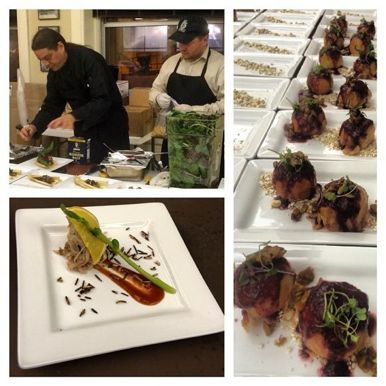
Wednesday, October 22, 2014
Minneapolis-based chef and Oglala Lakota member Sean Sherman is about to open the Sioux Chef, a first-of-its-kind restaurant that will serve locally sourced “pre-colonization” cuisine. Sherman is in the final stages of selecting a space, most likely along Seward’s Franklin Avenue or along East Lake Street. He wants to be “as close as possible to the heart of the Twin Cities’ indigenous community,” he says.
Depending on the condition of the space, the Sioux Chef’s doors could be open as early as December, but the first quarter of 2015 is more likely. When the restaurant opens, Sioux Chef will be the first in the country to serve a menu comprised exclusively of regional indigenous dishes that only use ingredients available prior to first contact with European settlers.
Sherman’s approached means no wheat, soy or other staples we currently take for granted. In addition to bison, elk, duck, perch and other fish and game species—often dried or cooked over an open flame—Sherman will incorporate such native plants as wild rice, wild turnips, chokecherries and sumac berries.
His flavors and technique are pitch-perfect. Though indigenous populations were decimated during the 19th and 20th centuries, there remains a strong cultural memory among older Lakota, Ojibwe and others. “People constantly tell me that my dishes taste like what their grandparents made,” he says.
One concession to modern realities: The Sioux Chef won’t serve wild-caught game, says Sherman, due to a lack of available processing facilities capable of satisfying health authorities. The restaurant’s bison and elk, among other species, will come from nearby ranches.
Nor will Sherman be dogmatic in his approach. “First contact” is a blurrier concept than many realize, he says. For example, dandelions probably arrived on the Eastern Seaboard with the first wave of white explorers and spread across the continent within 50 years, far faster than the Europeans who brought them. So Native Americans may have cooked with them long before setting eyes on the first settler—and that’s good enough for Sherman.
The Sioux Chef concept arose accidentally, when Sherman—then La Bodega’s executive chef—decided to write a traditional Lakota cookbook. After some digging, he realized there was very little recorded information about what the Lakota ate before Europeans arrived. Most of the recipes he found were from the Southwest. Even those “were basically Tex-Mex with some Native influence,” he says. Supposedly authentic foods from the Upper Midwest, like fry bread, only appeared after the introduction of white flour and other European staples.
Traveling extensively across Minnesota and his native Dakotas, Sherman eventually pieced together an exhaustive list—“too many to count”—of native plants, fungi and game species used by pre-colonial populations. He also researched traditional preparation and preservation techniques, like meat dehydration.
Until the restaurant opens this winter, the Sioux Chef is a mobile catering and education unit. Sherman travels to food-, health- and Native American-themed events throughout the Twin Cities and the greater Midwest, serving locally sourced dishes (some of which may appear on the Sioux Chef’s restaurant menu) and explaining his approach to pre-colonization cooking. Recent appearances include a diabetes conference and traditional medicine gathering
So far, Sherman says, support for the Sioux Chef is beyond what he expected. He was in Ohio last weekend for Roots 2014, a major gathering of celebrity chefs and nutrition experts, and “a huge deal for the Sioux Chef’s exposure,” he says.
Public enthusiasm may lead to bigger things for the Sioux Chef. “After I get the restaurant going, my ultimate goal is to hone this business model and expand with additional locations under different names,” he says. Since naturally available ingredients vary so much from place to place—“even from here to the other side of Wisconsin, the availability is totally different,” he says—the food at pre-colonization restaurants would vary widely from city to city.
“It’s funny that you can get food from almost anywhere in the world [in the Twin Cities],” he adds. “The only food you can’t get yet is the food that came from right here.” Sioux Chef will change that.
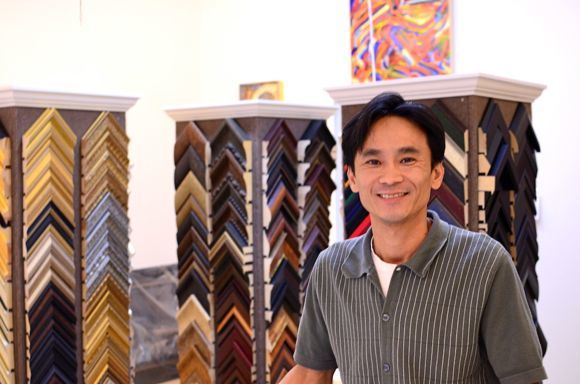
Wednesday, October 22, 2014
Within the unassuming Dow Building at 2242 University Avenue in St. Paul are studios in which more than 30 painters, woodworkers, metalworkers and photographers create their work. Now an innovative framing business with a unique model is giving the inner creativity of the Dow Building an outwardly visible face.
Khanh Tran opened Frame by Frame in the building’s storefront in September and plans to have his frame shop double as a gallery for artists in the Dow Building. Rather than take a commission on works that sell out of the shop, he charges artists a flat monthly rate to display their work. So far, 16 artists from the building have taken him up on the offer.
A frame shop needs artwork to frame and display, while artists need a clean, sleek space to show and sell their work. “It’s a win-win for everybody,” Tran says. He designed the space with crisp white walls and professional grade track lighting.
As a tenant of the Dow Building for several years, Tran had been watching the storefront space for some time. He previously rented a small studio in the building to store his framing equipment while pursuing other interests. He developed relationships with many of the artists and makers in the building during that time, making the new gallery arrangement a natural fit.
Tran credits his entrepreneurial spirit to his parents. His father was a tailor, his mother a seamstress. Together, they built Tran’s Tailors, a chain of tailor shops throughout the Twin Cities. “They worked hard for it,” Tran says. “It’s not easy to open five businesses from nothing. That’s where I get my drive.”
The Trans’ family story of success in the face of adversity began on a boat in the Pacific Ocean in 1978. Looking to escape war-torn Vietnam, Khanh’s father saved what little money he could and bought a 30-foot boat. He boarded his 4-year old son and 20 other children and 10 adults to set out for a more prosperous life. “He wanted to escape Vietnam for the better,” Tran say.
The boat arrived in Japan and the passengers were moved to a refugee camp, where eventually they were given entry visas to the U.S. The family again packed up their belongings and headed for Bloomington, Minnesota, where Khanh’s uncle lived. Khanh Tran went to college and discovered framing as a potential profession. He stopped into a local gallery and asked if they needed help. “They hired me on the spot, taught me how to frame and taught me how to sell art,” he says.
Tran went on to open his own frame shop and gallery space in the Seward neighborhood of Minneapolis in a storefront across the street from the Northern Clay Center. He then moved to Montana with his wife. There he opened a successful automobile detail shop.
Now, back in the Twin Cities, Tran feels he’s landed in the right place to pursue his first passion: framing and selling beautiful original art. “The reason I continue is I like to see the art and I like to have a hand in making that art look even better,” Tran says.

Wednesday, September 17, 2014
Following a successful summer at the Minneapolis Farmers Market, the Herbivorous Butcher is moving ahead with plans to open a brick-and-mortar location to sell its “meatless meats.”
From ropes of “pepperoni” hanging from the ceiling to the black-and-white tile lining the walls, the new butcher shop envisioned by Aubry Walch and scheduled to open next year will have all the hallmarks of an old-time butcher—except the meat.
The Herbivorous Butcher cleared the coolers during its June opening weekend at the Market. Despite consistently upping production, Walch says she’s sold out her inventory every weekend since.
“We keep making more batches and we just can’t keep up with demand,” says Walch, who started the business with her business partner and brother Kale Walch.
To better feed the demand, the siblings plan to open the Twin Cities’ first meatless butcher shop in early 2015. They’re currently working with Studio M Architects, which designed the Wise Acre Eatery, to replicate the idyllic atmosphere of a traditional butcher shop. “We hope to take people back in time when they come in,” Walch says.
Aubry Walch’s been a strict vegetarian for 18 years. Her brother Kale is vegan. After wearying of available meatless options—which are often frozen, and contain loads of sodium and long lists of unrecognizable ingredients—they began concocting their own meat alternatives from locally sourced whole food ingredients.
They decided to put their culinary acumen to the test and enlisted 10 test groups that included vegans, vegetarians and meat-eaters for an eight-week stint of food testing. The results, Walch says, were resoundingly positive.
It’s not just vegetarians and vegans gobbling up the inventory. Walch estimates that at least 60 percent of their customers are full-blooded carnivores discovering healthier meat alternatives for the first time.
The main ingredient in almost all of the products is vital wheat gluten sourced from Whole Grain Milling Co. in Welcome, MN. Even though the product is 95 percent protein, it’s extremely low in carbohydrates and fat, and is cholesterol free.
“We have people who come to us because they have heart disease or diabetes…and they can’t eat meat anymore,” Walch says. “We’re the perfect alternative for them and they seek us out.”
There’s no shortage of meat-free protein alternatives on co-op shelves in the Twin Cities, but the Herbivorous Butcher has uncovered a serious hunger for handmade and locally sourced meatless meat. Every item sold at the Herbivorous Butcher is made fresh by hand in small batches from locally sourced whole food ingredients and is never frozen.
Thus far the meatless mainstays at the Herbivorous Butcher include pepperoni, Italian sausage, barbecue ribs, deli bologna and teriyaki jerky. Once the new shop is up and running, other market specials including Mexican chorizo, maple sage breakfast sausage and beer brats will be available.
Finding the right investors has been somewhat of a struggle, Walch says. The problem isn’t a lack of interest; it’s that many see a lucrative opportunity and want the meatless butchers to automate all their production, freeze their products and distribute nation-wide. Walch isn’t willing to sacrifice the artisanal approach and reliance on local ingredients that going so big would require.
Instead, the Herbivorous Butcher is taking the crowd funding approach, and will launch a campaign later this fall.
Wednesday, August 20, 2014
Wander North Distillery recently became the latest micro-distillery to open in Minneapolis, when owner Brian Winter cut the ribbon at the new location in Northeast Minneapolis with City Councilmember Kevin Reich.
Thanks to legislation passed in 2011 that significantly lowered a $30,000 annual permit fee for distillers in Minnesota, Winter says he was able to turn his long-time interest in the history of spirits and drinking in America into a viable business.
“Liquor production is tied hand-in-hand with the rise of the United States,” Winter argues. “Unlike brewing and beer, there hadn’t been the resurgence of locally produced spirits yet.” Minneapolis’ first micro-distillery,
Norseman, opened last year.
Wander North’s first spirit, Outpost Vodka, is made from 100 percent Minnesota grown corn sourced from a supplier in Rosemount. Referencing the mutually supportive craft brewing community in Northeast, Winter says he is also pursuing plans for collaboration with local craft brewers, including Northgate Brewing, which recently expanded into a new space in the same building.
He hopes to take the wort (liquid extracted during the mashing process prior to adding yeast or hops) from Northgate’s Maggie’s Leap stout, ferment it, distill it and then age it in oak barrels. He would then hand the barrels back to Northgate to age the same beer in. “Then, sit and taste the whiskey and beer side by side,” he says. Winter is pursuing a similar collaboration with Sociable Cider Werks.
The state also passed legislation this past spring that allows for distilleries to have paid tasting rooms. The wait now is for Minneapolis to change its ordinance to allow for it, which Winter says is in the works.
Once the regulations are in place, Winter plans to launch a cocktail lounge on site. The lounge will feature two or three seasonal mainstay cocktails, along with several others that change on a weekly basis. “We’ll be limited to what is made at the distillery. But vodka is a pretty versatile starting point,” he says.
Wander North will donate at least 1 percent of its profits back to the community with an emphasis on veterans programs. Winter has served in the U.S. Military since 1993. Twelve of those years were on active duty, including as a platoon leader in Baghdad in 2004 and as a company commander in 2007. He currently serves as an assistant engineer officer with the Minnesota National Guard one weekend a month.
“A small business like Wander North is local. We pay local taxes, sell to people in the community and live in the community,” he says. “Why, if my business is successful, would I not want to give back to the community that helps me succeed?”

Wednesday, August 13, 2014
On September 14, 2,000 people will join artists and food activists at a half-mile long table down the center of Victoria Street in St. Paul as part of “CREATE: The Community Meal”—a public art project headed by artist Seitu Jones. Designed as a creative “food system intervention,” the project aims to lower barriers to healthy food access in some of city’s most densely populated and culturally diverse communities.
While a lot of work is being done in cities to address issues surrounding healthy food access, CREATE is taking a new approach. “We’re making this an artistic experience from the minute 2,000 people walk through the gate,” says Christine Podas-Larson, president of Public Art Saint Paul, which is orchestrating the project.
Everything will have an artistic touch, from the movements of the servers and hosts, which will be choreographed by Ananya Dance Theatre, to the blessing by poet G.E Patterson, right down to the 2,000 placemats handcrafted by paper artist Mary Hark using only bio-matter collected from the yards, alleyways and parks of the Frogtown neighborhood.
Spoken word artists including TouSaiko Lee, Deeq Abdi, Laureine Chang, Nimo Farah and Rodrigo Sanchez will perform original pieces with youth from Frogtown and Cedar-Riverside. Their work will investigate food traditions of the various cultures that make up the community.
Artists Emily Stover and Asa Hoyt are fabricating several Mobile ArtKitchens to demonstrate healthy food preparation around the city. They will be hosted by youth from the Kitty Andersen Science Center at the Science Museum of Minnesota and Youth Farm.
Chef James Baker, of Elite Catering Company and the Sunny Side Café—regularly voted best soul food restaurant in the Twin Cities —will prepare the meal with local ingredients grown specifically for the event by area farmers.
Guests will be presented with a healthy, locally sourced spread that includes 500 free-range chickens from a farm in Northfield, several vegetable dishes like collard greens and salad, an Ethiopian Bean dish from Flamingo Ethiopian Restaurant’s menu, corn bread and more.
Many of the growers, including those from Minneapolis-based Stones Throw Urban Farm and the Hmong American Farmers Association, are based in the Frogtown and Summit-University neighborhoods. The Minnesota Food Association is overseeing all the food production and sourcing.
“This is an opportunity for folks to meet their farmers,” Jones says. “Most of the funds are going into the pockets of farmers and artists. So this is an effort also to really pay attention to the local economy.”
Jones was inspired to put on this massive community meal while sitting in his storefront studio in Frogtown. He noticed an endless parade of people walking to the local convenience store and returning with bags of groceries. “Many times those bags would be filled not with fruits or vegetable, but with pre-packaged food,” he says.
Along with a group of local food activists, he received a grant from the USDA to do a food assessment of Districts 4, 5, 7 and 8 in St. Paul. He expected many of the obstacles the group found preventing residents from making healthy food choices, such as cost and convenience. One finding came as a surprise though.
“People don’t know how to make a healthy meal,” Jones says. “While we intuitively know what a healthy meal is, there are some folks that have lost the ability to prepare [one]…it wasn’t passed on.”
Jones began hosting small healthy community meals in residents’ homes, backyards and driveways more than a year ago, collecting “food stories” along the way. One story, told by Va-Megn Thoj, of the Asian Economic Development Association, chronicles his family’s journey across the Mekong River while fleeing oppression in Laos.
On arriving at a refugee camp in Thailand, he encountered a bright red fruit he had never seen before at a vendor’s stand. The vendor cut him off a chunk to try. The tart sweetness of every apple he has eaten since brings him back to that day, he says.
“We all have these food stories, and these stories are written in fats, carbohydrates and nutrients,” Jones says. “These stories go back for generations.”
Podas-Larson says Public Art St. Paul is also helping create community meal kits to help communities around the country host their own healthy meal events. Visit the CREATE website to donate, learn more, read more food stories and sign up to host your own table at the community meal.
“Food is so universal. Food is something that we all share, and most importantly…food defines us,” Jones says. “In many cultures, the way it’s prepared can be this act of love, and that’s what the community meal is. It is an act of love.”

Wednesday, August 13, 2014
Urban Forage Winery & Cider House is looking to join the abundance of local beverage startups in the Twin Cities. With the recent arrival of cider brewers and micro-distilleries, Urban Forage’s Jeff Zeitler is asking “Why not an urban winery?”
The answer is complicated due to national, state and city regulations. But Zeitler is forging ahead with renovations to the future home of the Midwest’s first urban winery, in the Longfellow neighborhood of Minneapolis.
Zeitler has been making wine, cider and mead with fruit and other ingredients foraged in the Twin Cities for two decades. Whether shaking mulberry trees in Como Park or plucking donated apples from a neighbor’s tree, his process leads to a product with the unmistakable terroir of the Twin Cities. His latest dandelion lilac wine was a big hit at his block’s National Night Out party, he says.
To scale the operation up to a commercial level (he wants to produce almost 6,000 gallons of product a year), he hopes to supplement what he can forage with produce past its shelf life—but still good for making wine—from local grocery stores and warehouses. He also plans to use surplus fruit from area orchards and farms. He’s going to have to clear some regulatory hurdles first, though.
To protect and promote Minnesota’s fledgling rural wine industry, the State Legislature passed the Farm Wineries Act in 2012. The statute gives farm wineries special status under Minnesota liquor laws, with a number of special allowances such as Sunday sales, self-distribution and the ability to operate a full restaurant.
The law also specifies farm wineries must be located on agricultural land—a sticking point for Zeitler’s “urban winery,” which would be located at 3016 East Lake Street in Minneapolis. He would be able to operate under a previous winery law still on the books, but wouldn’t have the many advantages allowed to farm wineries.
Zeitler spent the last year lobbying the State Legislature to even the playing field between farm and urban wineries. “Right now rural wineries have a lot of advantages…and I was trying to get urban wineries put on the same level, but there were a lot of people opposed,” he says.
If Zeitler were to mix a certain percentage of barley malt in with cider while brewing, as other cider makers in the area do, he could operate with a brewer’s license and enjoy the benefits offered to brewers under recent state and city legislative changes that have lead to the brew boom in the Twin Cities. But he’s unwilling to do so, which leaves him with a winery designation in the eyes of the federal government.
After hiring a lawyer to help interpret state statutes, Zeitler is now confident state law will allow him to sell onsite and operate the winery equivalent of a taproom. Current city regulations, however, would not.
So as things currently stand, Urban Forage Winery can produce onsite, distribute via a distributor and sell online. For now, Zeitler says, that’s enough. He will take the fight to the Minneapolis City Council.
Regardless, Zeitler plans to begin production in spring of 2015. “If nothing else, we will do production in the basement,” he says. “If we never get self-distribution or sales onsite, well, who knows how long we’ll make it? But we’re going to give it a shot.”
Wednesday, August 06, 2014
Are 8-track tapes, vinyl records or even books anachronisms? Not at Dead Media.
The new shop, which recently opened in Southeast Minneapolis, was started by famed punk rocker Paul Dickinson (of the band Frances Gumm) with Paul Pashibin, John Kass and Joey Franklin. Together they’ve curated a collection of rare, sometimes valuable and occasionally quirky media relics.
“Come in with an open mind and I bet we have something cool for you,” Dickinson says.
Dead Media isn’t just another record store catering to the digital generation rediscovering its parents’ music—though Kass has put together an extensive selection of original press and rare vinyl. Serious collectors and bargain hunters looking to establish collections will find plenty of stock to sift through.
Dickinson’s eclectic collection of books for sale is equally intriguing and expansive. In addition to being able to pick up another copy of The Sun Also Rises, shoppers will also find rare and first edition books from literary icons like Roald Dahl or Phillip Ross, along with more obscure finds like the Sociology of the Salem Witch Trials or old yearbooks featuring Vikings super stars.
Pashibin is also plastering the store with out of print and rare posters, whose artfulness defies the disillusionment of passing generations. Other formats of “dead” media for sale include cassettes and 8-track tapes. Dead Media even operates a VHS rental club.
“It’s kind of our way of laughing in the face of technology,” Dickinson says. “Everyone thought we would just be downloading everything on a computer…people have been predicting the death of books for 30 years, but people still love books.”
“We’re a store that takes it for granted that its patrons are thinking, cultured beings and not just animals programmed to buy things because they saw them on TV,” says Franklin, who helps manage the store.
Dead Media has an unmistakable anti-corporate mentality that hints at Dickinson’s punk rock roots. He used to own the all-ages rock club and arts venue Speed Boat Gallery from 1988-94, which hosted acts like Green Day and Bikini Kill before being shut down by the city. Dead Media is a more subdued endeavor, with an anti-establishment vein running through it nonetheless.
“It has the same kind of independent spirit I guess” as Speed Boat, Dickinson says of Dead Media. “We’re just trying to have fun with it and be spontaneous.”
Dead Media hopes to help cultivate community that naturally forms around the mutual appreciation of cultural objects forgotten by the “mainstream.” The store is hosting regular poetry readings from local writers and hopes to offer even more events in the future.
While the space is a bit small for large-scale music events, Dickinson says he and his partners are looking to collaborate with a to-be-announced music venue in the Loring Park area to host shows.
Hidden in the urban jungle of concrete and steel is a whole natural world waiting to be rediscovered and explored, says local artist and botanist Sarah Nassif. The new Green Line light-rail stations, she adds, are a great place to start.
Nassif’s new project, The Other Green Line, supported by Irrigate Arts, asks participants to start thinking of Green Line stations as not only jumping off points to previously unexplored businesses and restaurants, but also as trailheads leading to underappreciated natural beauty and history.
“The more you look, the more you see, and it happens really fast,” Nassif says of taking time to notice the natural world along the Central Corridor.
The Other Green Line is a field guide for amateur urban naturalists. Nassif organized the book into eight, themed nature “forays” along the Green Line.
One follows the path of a wayward black bear that took itself on a walk through the Frogtown neighborhood in 2012. Another explores the Kasota Wetlands near the Raymond Station, which are a remnant of a 1,000-acre backwater once fed by the free-flowing Mississippi.
The forays take participants through several different biomes—less identifiable today than they were 100 years ago. Lowertown was once dense forest, for instance. The area around the Victoria Station used to be prairie.
Tower Hill in Prospect Park is one of many glacial hills that once dotted the Minneapolis landscape before most were mined for gravel. Tower Hill still stands because neighbors bought the site and turned it into a park to keep it from being mined.
Tower Hill, Nassif says, “speaks volumes [about] how much the landscape changes because we’re here, and how people coming together and being aware together about nature can have a powerful effect on what’s here for future generations.”
In addition to the eight self-guided forays in the book, Nassif is leading a series of three tours. The first began at Bedlam Theater last Saturday and explored the white sandstone cliffs along the Mississippi River once used as natural refrigeration for kegs of beer, as well as pirate safe keeps and hideouts. Tour goers also noticed stones mined from area quarries and used in the Endicott Building at 141 E. 4th Street.
“It’s just interesting to stand there and realize you’re standing on what used be an ocean, that’s why the sandstone exists—it used to be the bottom of a sea,” Nassif says.
Also in the field guide are lists of area businesses for excursion supplies, and suggestions for where to cozy up to a beer and a meal when you’re finished. “There are tons of new places to explore both in the landscape and in the humanscape,” Nassif says.
Nassif’s field guide contains blank pages to draw and record what you find. You can also share your findings, sketches and stories on The Other Green Line website, where there is a list of area businesses carrying the book and information on upcoming guided tours.

A new gastronomic trend hits Minneapolis’ Eat Street area later this year. GYST Fermentations, a first-of-its-kind fermentation bar from foodie sisters Mel and Kylene Guse, will be “a celebration of all things fermented.”
GYST is a lot more than just wine and cheese—although the sisters, along with partner Jill Mott (an internationally certified and widely respected sommelier), plan to introduce plenty of rare wines and cheeses to the Twin Cities. The bar will feature everything from kombucha to charcuterie, beer and coffee, chocolate and yogurt creations and more. If fermentation is involved, and you can eat it or drink it, you’re likely to find it at GYST.
“We really want to try and bring in products that people haven’t necessarily seen here in Minnesota,” says Mel Guse.
Natives of Sioux Falls, S.D., the sisters’ experienced their fermentation initiation while living in the food-forward San Francisco area. While there, Mel also became a certified sommelier through the International Sommelier Guild. Both sisters worked for Bi-Rite Market—a progressive local foods market started by esteemed chef Sam Mogannam.
Looking to return to their Midwestern roots, the sisters moved to the Twin Cities in 2012 and Mel Guse helped get Broders’ Terzo Vino Bar up and running in Minneapolis.
GYST will feature a 14-person bar as well as table seating. Guse says they hope to cultivate a casual atmosphere reminiscent of friends hanging out with a good bottle of wine in their home kitchen.
“We just want to be welcoming and comfortable,” she says. “A place where people can come in and hang out and learn.”
GYST will offer a healthy dose of education along with fermented delicacies. Knowing what goes into what’s going into your mouth adds to the experience—whether that means stories from the farmstead where the cheese on your “motherboard” originates, or the science behind the kombucha you’re swilling at the bar. GYST will also have a spacious backroom for tasting events and classes.
“We really want to feel connected to what we’re eating and drinking,” she says. “I think you’ll enjoy [our offerings] more with the stories behind it.”
The lease is signed. Build-out plans are in place. Permits have been submitted to the city. All the sisters need now is about $40,000 to make their fermented dream a reality. More than 100 backers have already pledged almost half that amount through a Kickstarter campaign that closes July 25. Once the Guses’ raise the dough and the permits are approved, they’ll embark on a 15-week renovation of their space.
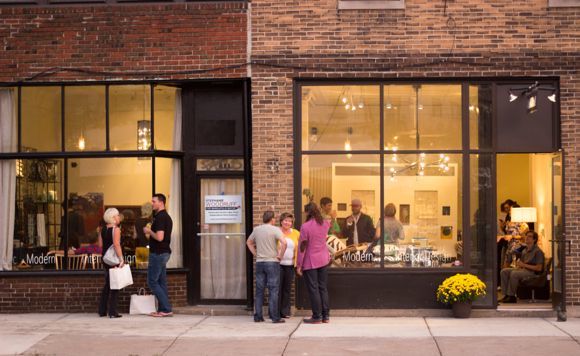
With the recent surge of new boutique businesses opening along and near Lyndale Avenue just south of downtown Minneapolis, the Lowry Hill East area is beginning to look a lot like the Uptown of yore. That is, before national chains like Apple and Urban Outfitters showed up and ran many of the mom and pop establishments out town—or a little down the road.
LoHi East, the area just south of downtown Minneapolis containing the Loring, Wedge and Lyn-Lake neighborhoods, has long been Uptown’s beloved, disheveled sibling. Now, some local businesses are seeking to rebrand the area with a catchy name referencing Lowry Hill East (just as the North Loop is colloquially called NoLo).
“There are some awesome businesses that have just opened up. It’s exactly what Uptown used to be,” says Carter Averbeck, owner of
Omforme Design. He’s leading the grassroots rebranding effort.
With a new name, and a new crowd of residents and businesses settling in, the area seems to be shedding its somewhat granola vibe for a trendier, modern-day hipster character. As Averbeck says: “We’re trading in our Birkenstocks for tattoos.”
At least nine new shops and restaurants opened in the area within the last year. LoHi East also seems to be riding the recent wave of development storming the Uptown area. A whole host of new luxury apartments like Blue on Bryant and the Murals of Lynlake, among others, are attracting a new generation of residents.
“Of course, it’s all 20- and 30-something-year-olds and the new shops are right up their alley. If you’re 27 and have a new pad, you want to fill it up with cool stuff,” Averbeck says.
Averbeck’s business—a home décor shop that specializes in reviving vintage items with singular panache—is being joined by other unique boutiques like Serendipity Road and the Showroom. The latter bills itself as a place “where fashion, jewelry, accessories, furniture and art cooperate.”
New eateries and bars like Heyday and World Street Kitchen are also help generate a livable, vibrant neighborhood where people walk and meander, instead of simply passing through.
“Every storefront that had been vacant for years is now getting snapped up,” Averbeck says. “Right now the revival is in its infancy but it’s moving fast.”
Looking to capitalize on the momentum, Averbeck says he and other business owners are putting together an event this summer that would close off Lyndale Avenue for a big runway fashion show and festival. They haven’t secured the permits to do so yet, but he says the tight-knit business community is meeting regularly with the neighborhood and other business associations to keep the renaissance rolling.

Craft brewing continues its march into St. Paul. Tin Whiskers Brewing Company opened its doors to the public last Friday. Located on the ground floor of the Rossmor Building in Lowertown, Tin Whiskers is the first brewery taproom to open in St. Paul’s urban core.
“You have this really cool historic warehouse building with this amazing space—you have artists, you have great food, you have everything you need for a great craft brewing experience,” says Jeff Moriarty, president and one of Tin Whiskers’ three founders. Restaurants like Keys Café, Sawatdee and Black Sheep Coal Fired Pizza are also housed in the Rossmor.
Moriarty is one of Tin Whiskers’ three former electrical engineers turned craft brewers. He met George Kellerman, who heads branding efforts, and Jake Johnson, the head brewer, at the school of Electrical Engineering at the University of Minnesota.
That common bond is evident throughout their branding and operations. In the electrical engineering world, the term "tin whisker" refers to a soldering error that leads to a short circuit on a printed circuit board. In the craft beer realm, it now stands for technically excellent beer, brewed with an attention to detail and process one would expect from a group of engineers.
They aren’t bashful about the nerd-factor. Everything from their robot logo, to beer names like Flipswitch IPA and Beta Batch stout evoke the trio’s engineering background, which Moriarty says partly drives their affection for beer.
“Of course, being engineers, we like drinking beer—it makes us a wee-bit more social,” he says with a laugh.
It’s been a long trip from engineering school to taproom opening. Moriarty and Johnson first started homebrewing in 2006. From Johnson’s mother’s kitchen to Moriarty’s basement, they honed their craft, kept detailed brew logs and sought to perfect the science behind the brew.
They hold an open source policy when it comes to recipes and operations. They are happy to share, within reason, what they’ve learned along the way with others thinking of starting up their own operation.
When it came time for the big move from home brewer to destination brewery, Moriarty says they knew their location would have to be in St. Paul or Roseville to keep the water supply consistent.
“The biggest local component that goes into any brew is local water,” Moriarty says. “We kinda believed in that terroir of the water, so to speak.”
The brewery currently has the equipment to pump out about 1,700 barrels of beer a year. This is just phase one, though, says Moriarty. His vision is to eventually be producing upwards of 20,000 barrels a year through a satellite production brewery in the city.
Right now they are serving up both a carbonated and nitro version of their Beta Batch stout, Wheatstone Bridge (an American style wheat beer) and Flip Switch IPA. All three beers are labeled “Beta” versions, which is engineer-speak for initial batches subject to tweaks and changes.
Their full lineup of rotating beers, including an amber ale and pumpkin ale, will be available at the official Grand Opening the first week in June..
The taproom and brewery is currently open to the public Wednesdays and Thursdays 4:00 p.m. to 11:00 p.m., Fridays 3:00pm to 11:00 p.m. and Saturdays from noon to 11:00 p.m.

The bicycling renaissance in the Twin Cities is in high gear. Minneapolis and St. Paul are both working to expand already respectable bicycling infrastructures, and more residents than ever, from all walks of life, are getting around town on two wheels. But, as Jason Tanzman of Cycles for Change in St. Paul is quick to point out, “the reality is the bike movement is a white movement.”
That’s something Cycles for Change, a nonprofit community bike shop bordering the Frogtown and Summit-University neighborhoods, is looking to change.
“Our vision is to build a diverse and empowered community of bicyclists,” says Tanzman, the director of development and outreach for the organization.
In addition to a full service retail and mechanic shop, Cycles for Change offers a host of programming designed to build a resilient and diverse community around bicycling—and it is quickly gathering momentum.
In 2013, the organization lent out 290 bikes from their Bike Library by partnering with community and civic organizations from around the metro to pair eager riders from low-income areas with new sets of wheels for 6-month leases. Riders in the Bike Library program also get a complimentary helmet and lock, and training to be confident and safe on the roads.
The Build a Bike Class brought in 120 area youth who constructed their own bikes from the ground up, learned how to maintain their bikes and mastered the rules of the road before riding out the door, according to Tanzman. Cycles for change also mentored 12 youth apprentices last year—many of them now help design and run the organization’s programs and retail shop.
Many of the people joining Cycles for Change represent populations Tanzman says are not adequately represented in the bicycling movement. The fastest growing groups of bicyclists nationwide are people of color, according to a report by the League of American Bicyclists.
From 2001 to 2009, the percent of all trips that are by bike in the African-American population grew by 100 percent. Trips by Asians-Americans grew by 80 percent and Hispanics took 50 percent more trips by bike during that period, while whites saw a 22 percent increase, according to the equity report.
When it comes to making decisions about where new bike lanes will go or advocating for how new bike trails are designed, people of color and people of low socioeconomic status aren’t adequately represented at the table, Tanzman says.
“No matter how many people of different racial groups ride bikes, there is an underrepresentation of people from low-income communities and people of color in the decision-making bodies,” Tanzman said.
In many ways, these are groups that would particularly benefit from improved bicycling infrastructure. “A bike is a way to save money,” he says. “A bike is a way to live a healthy life.
According to Tanzman, 25 percent of the households in the Cycles for Change neighborhood don’t have access to a car. “Then of those other 75 percent that do, they might have one car in the household, and maybe it’s not that reliable, maybe it costs a lot of money to gas it up every week,” he says.
“There are so many natural opportunities to build alliances and really make the bicycling movement a multi-racial, multi-ethnic movement that it’s not right now.”
Cycles for Change is hosting a Spring Celebration Monday May 19 from 5:30 p.m. to 7:00 pm at the shop, 712 University Avenue East.
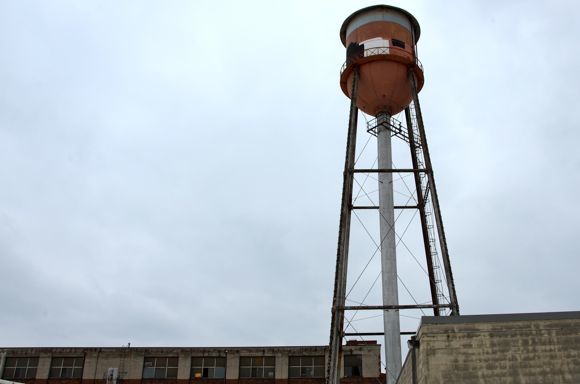
Wednesday, April 23, 2014
The innovative developer that brought Minneapolis such imaginative properties as The Broadway, Aria and Icehouse Plaza is taking on its biggest project yet with its first venture into St. Paul. First & First is moving ahead with the redevelopment of a 5.5-acre, multi-structure property at 550 Vandalia Street in the Creative Enterprise Zone to be known as Vandalia Tower—a nod to the old water tower that will become a focal point of the property.
Founder and head visionary
Peter Remes says he plans to transform the property into a dynamic campus housing an array of creative tenants from woodworkers to graphic designers, artists, architects and more. He says negotiations are also underway with potential craft brewers and restaurants. One of the defining features of the campus will be what Remes describes as a “secret garden” courtyard in the center of the complex.
“It’s a big campus, a big project by almost anyone’s standards,” says Remes, who grew up less than two miles from the site—a fact he says gives the project particular personal significance.
The 205,000-square-foot property sits one block north of I-94 and two blocks south of University Avenue where the new Metro Transit Light Rail Green Line will start running June 14. In many ways, the location speaks to another of First & First’s defining missions—to connect a place’s past, present and future; preserving it’s heritage while breaking transformational new ground.
The Midway area of St. Paul has a rich history as both an industrial center and transportation hub dating back to the end of the 19th century when James J. Hill imagined the area as a central connection point for the Great Northern Railway.
More recently, the Vandalia Tower property embodied the industrial past of the area as home to the King Koil Mattress factory. Remes plans to keep that history close to the surface as he reinvents the property as a modern mixed-use centerpiece to a neighborhood already gaining recognition as a center of creative activity and commerce.
“That’s when the magic occurs, in terms of being able to honor that past and let that history breathe, and yet infuse it with modern day amenities…and just really have this juxtaposition that occurs when you walk in that can be very thought provoking,” Remes says.
The main building is currently home to around 30 tenants including a growing community of woodworkers, artists, and other creative entrepreneurs. Some have worked out of the crumbling building for years, while others are newly recruited tenants.
Nordeast Makers moved into the building last fall. Hundreds of members use the large shared workspace—and its collection of top-of-the-line equipment—to tinker, build and create everything from art and furniture to innovative software and technologies.
Remes says these are the types of tenants he hopes to attract and cater to at Vandalia Tower. “What they bring to the table is that energy we hope to continue to build upon and to grow,” he says.
First & First hosted a meeting with current tenants last month, many of whom are worried the lofty development plans will increase rents that would price them out of their spaces. Remes says that while modest rent increases are likely, the goal is to keep as many of the creative tenants already there as possible.
“We want these people to prosper, we want them to do well, and that goes for the neighboring businesses, as well,” he said.
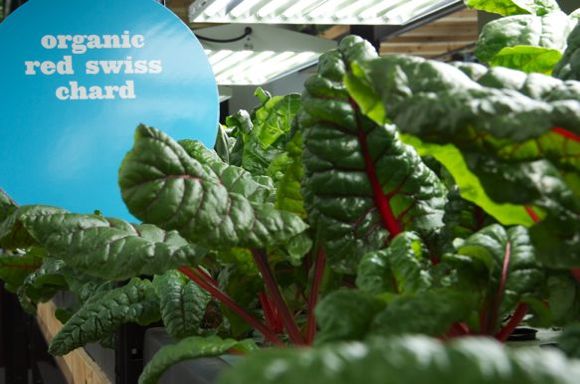
Wednesday, April 16, 2014
With the ceremonial snip of ribbon made from kale, the old Hamm’s Brewery building in East Saint Paul kicked off its new life last week as the Twin Cities first large-scale indoor organic aquaponics farm.
By combining fish and vegetables, the Saint Paul-based Urban Organics hopes to supply a steady stream of hyper-local organic fresh produce to Twin Cities’ consumers year-round.
Urban Organics utilizes an innovative closed-loop water filtration system designed by Minnesota-based Pentair. Fish raised in large tanks provide nutrients to feed the plants. In turn, the plants’ root systems clean the water before it’s recycled back into the fish tanks.
Urban Organics co-founder Fred Haberman says the system allows the operation to produce crops 40 percent faster using only 2 percent of the water traditional forms of farming require to grow the same volume of veggies. Once all six floors of the building are up and running, Urban Organics expects to produce 720,000 pounds of greens and 150,000 pounds of fish annually.
The endeavor does more than grow fresh organic vegetables that go from harvest to kitchen table in hours. Urban Organics also addresses a confluence of challenges associated with rapid population growth, as it simultaneously confronts modern concerns with the global water supply, disparate food systems, sustainable energy, and urban renewal. That confluence, Haberman says, is “outrageously exciting!”
Haberman is passionate about the economic development component of Urban Organics—one of the major motivators behind the site choice, for which the City of Saint Paul chipped in $150,000 toward the purchase price.
“This was a brewery that employed a ton of Eastsiders for a very long time,” said Saint Paul City Council President Kathy Lantry at the opening event. “When it became vacant [in 1997], it was a huge blow to the neighborhood.”
Haberman and co-founder Dave Haider both draw inspiration, and the occasional consultation, from Will Allen, a former professional basketball player who was given a MacArthur Foundation “Genius Grant” for his work spurring urban renewal through sustainable agriculture in inner-city Milwaukee, Wis.
“Will Allen really took aquaponics and used it to transform a food desert…into a food oasis,” Haberman said at the event.
It’s not the first time Haberman and Haider have pursued a mutual passion in a big a way. The duo also worked together putting on the U.S. Pond Hockey Championships in Minneapolis.
Their new endeavor is not without its challenges.
“No one’s made money at this that we know of,” Haberman said. “We know the demand for local organic produce that is fresh year round is very high. Where the challenge is for us, is being able to create enough production and grow capacity in a very expedited, efficient way so we can get the cash flow positive.”
The farm is currently growing two kinds of kale, Swiss chard, parsley, basil, and cilantro, as well as raising tilapia. Through an exclusive partnership, all of the farm’s production is currently on shelves at select Lunds and Byerly’s stores around the Twin Cities.
Haberman says they plan to continue experimenting with different leafy greens and will likely try raising striped bass as other floors of the building become operational later this year.
Kyle Mianulli

Wednesday, April 09, 2014
The vibrant blend of sights, smells, sounds, and people milling together at Southeast Asian night markets can be a vivid sensory and cultural experience. This summer, the Asian Economic Development Association (AEDA) is bringing a slice of that life to the Twin Cities.
Throughout the summer, AEDA will hold five outdoor night markets in the Little Mekong business and cultural district of Saint Paul, between the Mai Village and Little Szechuan restaurants on the 300 block of University Avenue. The first market will be held June 14, the same day the Green Line’s light-rail service begins.
The Little Mekong district is home to a high concentration of Asian residents and businesses. Of the almost 80 establishments on the five-block stretch of University between Mackubin and Marion streets, about 75 percent are Asian-owned according to a 2013 AEDA study documenting the impact of Central Corridor Light Rail Transit on the area.
Many of these small businesses were hit hard by light-rail construction over the last several years, according Theresa Swaney, AEDA’s communications coordinator. AEDA hopes to bring needed visibility, and customers, to businesses still reeling from the disruption. Swaney also hopes the night markets will help breathe new life into the area as a nighttime destination. “It’s sort of shifting the idea of what’s acceptable, and possible, at night,” she says.
Like farmers markets, the Little Mekong night markets will host local farmers selling fresh produce, but also up to 30 different vendors selling specialty food, art, and crafts. “It’s sort of this mix between a festival and a farmers market,” says Swaney. “It’s going to be a little more entertaining and a little more exciting than just getting your vegetables.” Artist organizer
Oskar Ly is planning live performances, art, and activities as part of the market.
Organizers are currently looking for businesses and vendors located from throughout the Twin Cities to participate. Unlike many markets, applicants don’t have to be established. “We’re pushing toward new vendors,” Swaney says. “We want these people to have an opportunity to sell their stuff, and if they do well, maybe draw them into opening a brick-and-mortar business in the district or along University.”
AEDA also hopes the night markets will help lay ground for a new public plaza and community gathering space at the site. A rundown building used mostly for storage currently sits in the middle of the plot. The organization recently held a series of workshops and community meetings to gather input on redeveloping the site.
Source: Theresa Swaney
Writer: Kyle Mianulli

Wednesday, April 09, 2014
Whether through images of the early English barmaid, American sitcom brewery workers Laverne and Shirley, or the Miller Lite Girls passing out promos at sports bars, women and beer have had a dynamic, sometimes complicated relationship through history.
For Deb Loch and Jill Pavlak of Urban Growler Brewing, however, it’s pretty simple.
“We happen to be women and we happen to brew beer,” Pavlak said before a screening last week of “The Love of Beer,” a documentary about women fighting to end gender stereotypes surrounding the craft beer industry in the Pacific Northwest. The film and discussion, part of the Minnesota Museum of American Art’s First Friday Film series, also showed how women are taking hold in the craft brewing industry all over the country.
According to Doug Hoverson, author of “Land of Amber Waters: The History of Brewing in Minnesota,” who led the discussion with Loch and Pavlak before the screening, temple priestesses in ancient Mesopotamia are credited with beer’s invention.
Women also brewed the family’s beer during the early Colonial era. In Medieval England, housewives would make ale and advertise their brew by hanging a broom over their door. These pop-up alehouses were so successful, the aristocracy eventually levied a tax against them, Hoverson said.
Marketing beer by using images of women is a familiar strategy. But marketing beer to women isn’t a new concept, either. One ad from the late 1960s—a time when women purchased most of the beer for the household—shows a bottle of beer nestled amongst a bouquet of pastel-colored flowers. In the 20s and 30s, Guinness was billed as a nutritious beverage for gestating and nursing mothers.
In 2011, Chick Beer ruffled some feathers with the release of “the first beer specifically for women.” The bottles, covered in labels shaped like black cocktail dresses, were packed in purse-like cases with white sequins, thus embracing a hyper-feminine stereotype. “Marketers insist on marketing beer to a particular vision of women, which doesn’t always fit,” Hoverson said.
In contrast, neither Urban Growler’s logo nor messaging identifies the company as women-owned and -run. Loch says the product appeals to women, instead, with flavorful, quality beer—sometimes with a more moderate alcohol content. The brewery opens this spring in the Creative Enterprise Zone of Saint Paul.
“We want to be pretty much gender neutral,” Pavlak said. “We have lived our lives believing we can do whatever we want to do, and have felt a lot of craft brewers are very inclusive. We want to continue that tradition.”
Pavlak and Loch aren’t the only women making suds in the industry. Deborah Carey founded New Glarus Brewing Co. in Wisconsin as a gift to her home-brewing husband, Dan, in 1993. “Dan makes amazing beer, but Deb is in charge,” Hoverson remarked. New Glarus teamed with German-based Weyermann Malting, also led by a woman, to release the Two Women American style lager in 2010.
“Hopefully,” Hoverson added, “we’ll get to the point where this will not be particularly newsworthy anymore.”
Source: Jill Pavlak, Deb Loch, Doug Hoverson
Writer: Kyle Mianulli

Wednesday, March 19, 2014
A new co-working model is joining CoCo, Joule, and other innovators in the Twin Cities’ growing co-working movement. The newcomer is Lydia’s Place, nestled in a dense pocket of nonprofits in the Creative Enterprise Zone near the new Green Line in Saint Paul.
Founded by former adman and current Lutheran pastor Scott Simmons, Lydia’s Place is co-working oriented around the common good. Simmons says he hopes to seed both a professional and faith-based community of altruists at Lydia’s Place.
The new venture aims to satisfy two modern day needs with one stroke. First, it provides office space and equipment to a workforce that is increasingly independent, freelance-based, and according to Simmons, professionally isolated. “It’s fulfilling a need that’s not being filled,” says Simmons, who worked for nearly a decade as a freelance advertising copywriter.
Secondly, as attendance at traditional faith services continues to drop, religious leaders are looking for new models to sustain worship communities. “People’s lives don’t revolve as much as they once did around religion,” Simmons says.
With backing from the Evangelical Lutheran Church in America (ELCA) and the Saint Paul Synod, Lydia’s Place is a Lutheran mission. While most of the current “Lydians,” as they call themselves, come from Lutheran backgrounds, Simmons says faith affiliation is not a prerequisite for joining the co-working community.
“This is a place where anybody, whether they’re atheists or agnostics, are welcome,” Simmons says.
In theory, Lydia’s Place isn’t all that different from other co-working spaces in the Twin Cities. When you put a group of motivated self-starters together in a communal professional environment, collaboration and mutual benefit ensues.
While many new co-working spaces seem to be gauged toward entrepreneurial and tech startups though, Simmons says Lydia’s Place is couched in the idea that some people are more motivated by helping others than the prospect of a billion dollar IPO.
“We are gifted and are called, whether by God or by our basic humanity…to use those gifts not just to improve our own lot in life, but the entire world, and that includes people at the fringe,” Simmons says.
The benefits of this type of co-working are already manifesting. Rev. Margaret Kelly recently started Shobi’s Table, which seeks to serve and empower the homeless population in Saint Paul. Kelly plans to incorporate a food truck into the new ministry, staffed and maintained by those struggling on the margins.
She is now teamed up with another Lydian, Tom Melander, who has a background in career guidance services. The two hope to incorporate workforce development into Shobi’s Table’s mission.
Eric Darling is new to the co-working community. His startup, Donormite, seeks to connect charities with donors through the gifting of specific items, rather than money. Darling is now working out of Lydia’s Place part time, and is helping connect others at Lydia's place to donated office furniture and equipment through his new online donor platform.
Lydia’s Place opened in January and is still small, but growing. Simmons says there are currently at least nine core collaborators working from the space at least occasionally, and says he is fielding more calls from interested people every day. He’s already talking about expanding into a bigger space in the same neighborhood.
There’s currently no official fee to use the space, though there is a suggested donation for those who plan to be there regularly. “At this point our model does not have to be an economic model,” Simmons says. “It’s a relational model. We want to build community.”
Simmons plans to have the space completely supported by co-workers by August 1 this year. With collaborators giving what they can, the venture is less than $100 a month short of that now.
Source: Scott Simmons
Writer: Kyle Mianulli

Wednesday, March 12, 2014
After just one year, Northgate Brewing is upgrading to new digs. The Northeast Minneapolis brewery just signed a lease on a new space at 783 Harding Street NE, which will include a 1,500-square-foot taproom.
Co-owner Adam Sjogren says neither he nor his partners anticipated the rapid growth. At around 750 square feet, Northgate’s current location at 3134 California Street NE is one of the smallest brewing spaces around. “We were very small,” Sjogren says. “There was not a lot of room to grow.”
With almost ten times the square footage, including the taproom, the new space will allow Sjogren to experiment with different brewing techniques that will be even more true to the brewery’s focus on English session ales.
“We really want to be able to have the space to do some barrel aging, some real ales—cask stuff—and be able to make some one-off batches and test them in the taproom to see what people really like,” Sjogren says.
Most English-style ales get a bad wrap in the States, Sjogren says. They don’t pack the same slap of citrusy hops and don’t have the same high alcohol content Minnesota beer drinkers have become accustomed to in their microbrews.
By nature of the ingredients and brewing process, these session ales don’t travel or store well, Sjogren adds. They have to be enjoyed fresh, and thus close to where they’re produced. He and business partner Todd Slininger grew fond of the earthy freshness these beers offer while traveling in the British Isles several years ago.
“It’s really good over there, but it gets represented poorly, we think, here in the States,” he says.
There will soon be more of Northgate’s fresh session ales. The brewery produced around 300 barrels in its first year, according to Sjogren. That was distributed between 30 different tap accounts around town and about 40 liquor stores. With the added space, Sjogren expects Northgate will have the capacity to produce around 1,500 barrels the first year.
Northgate’s new space will share a building with the soon-to-open Wander North Distillery—a new venture by Brian Winter who is looking to distill quality spirits from locally sourced grains. Winter and Northgate’s head brewer Tuck Carruthers used to play on the same rugby team, according to Sjogren.
Collaboration between the distillery and brewery is a foregone conclusion, Sjogren says. What might such collaboration look like? Sjogren says Northgate could make a “wash”—the process of rinsing the yeast used to brew a batch of beer for reuse—then give the wash to the distillery to use and age for spirits.
Sjogren attributes a good deal of Northgate’s early success to the supportive craft beer community in Northeast Minneapolis. Several other recently opened breweries have experienced similar growth and expansion in the last year and half. Indeed Brewing Co., Dangerous Man Brewing Co., and 612 Brew are among them.
“It’s as true as everybody says and most people don’t believe,” Sjogren says of the mutually supportive craft beer scene in the Twin Cities. Northgate Brewing plans to open its new space later this year.
Source: Adam Sjogren
Writer: Kyle Mianulli
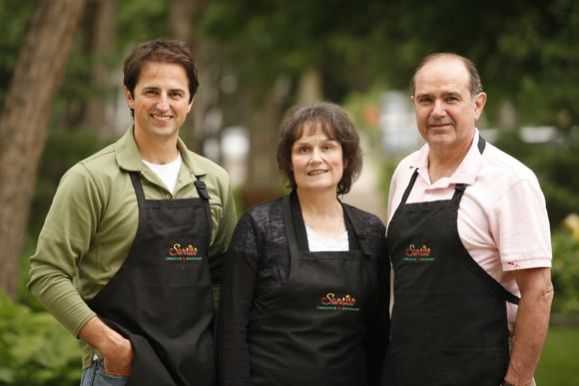
Wednesday, March 12, 2014
The grand opening of Sunrise Creative Gourmet Market on Saturday, March 8, continues a 100-year-long tradition for the Forti family of bringing hard working Minnesotans authentic Italian cuisine. The new venture at 865 Pierce Butler Route in Saint Paul includes a retail location, factory outlet, and large-scale cooperative commercial kitchen with dedicated gluten-free space.
Fourth generation owner Tom Forti is building on the foundation laid by his great grandfather in 1913, when he opened the original Sunrise Bakery in Hibbing. Guilio Forti emigrated from Rome in the early 1900s to work in the mines of southern Minnesota. Already in his 50s, he soon decided to leave the mine and return to his former craft—baking artisan Italian breads.
Sunrise Creative Gourmet holds its Italian heritage close while bringing age-old recipes into the modern age. Many of the recipes used today have been passed down from generation to generation, according to Forti. Using imported Italian equipment along with locally sourced ingredients maintains another level of authenticity while incorporating modern flare.
“It’s an emotional investment in the product,” Forti says. “We’re a very prideful family and we take great pleasure in knowing people like our food.”
That pride was reaffirmed Saturday. With more than 500 customers stopping in to sample both classic and new fare from Sunrise, the small market was bustling from open to close. “It’s great for a little shop like this…we had no idea what to expect,” Forti says. “It was a pleasant surprise.”
Forti’s father started his own spinoff of Sunrise Bakery when he opened Sunrise Deli in Hibbing, incorporating fresh pastas, Italian meats, and more to the family’s line of baked goods. He and Tom’s mother own and operate the deli today, while his aunt and cousin run the original Sunrise Bakery, both in Hibbing.
Tom Forti is now bringing a new perspective to the family business. After graduating from the University of Saint Thomas in 2001, he went to work in the food industry, spending three years working retail and restaurants in Idaho. He moved back to Hibbing in 2004 to bring a wholesaling aspect to the family business. For the past nine years he has been working for Trudeau Distributing, a specialty grocery distribution company.
Through that role, he’s formed important relationships with Twin Cities’ grocers and co-ops, he says. He’s also become a familiar sight at area farmers’ markets, where he staffs the family stand.
While the Saint Paul retail expansion is an exciting development for the family business, it’s the cooperative commercial kitchen component that has Forti’s passion cooking.
“This building is going to service as retail, but really, we’re here to produce gluten-free pasta and hopefully gluten-free entrees,” he says.
With half the space dedicated for gluten-free production, Forti is looking forward to bringing in up to 12 other small- to medium-size businesses to use the space and sell their products in the marketplace up front.
The Sunrise Market will carry products from all the family’s related businesses including, fresh, frozen and dried pastas, sauces and porketta, as well as signature potica, biscotti, and other baked goods.
Source: Tom Forti
Writer: Kyle Mianulli
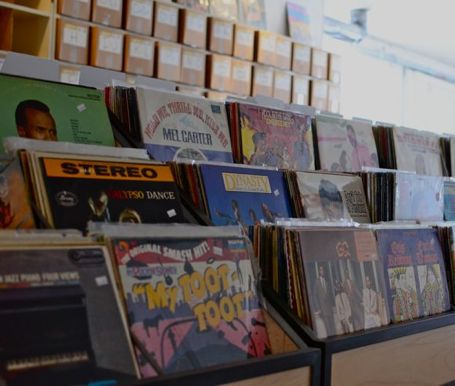
Wednesday, February 19, 2014
Vinyl aficionados can look forward to flipping through a new trove of wax when Barely Brothers Records opens later this month at 783 Raymond Avenue in the Creative Enterprise Zone on the Central Corridor in Saint Paul. Barely Brothers joins such retro and vintage shops in the area as Mid Mod Men and Succotash.
The shop’s grand opening celebration is March 22. Local music acts including Minneapolis-based Eleganza, and Matt Arthur & the Bratlanders, will perform.
Co-owner Mike Elias has spent a good part of his life digging through stacks of records. After working at various record shops for a decade, he spent 13 years at the Electric Fetus in Minneapolis. When he’s not pushing vinyl, he’s often spinning it at clubs and events around town where he performs as DJ Father Time.
Along with co-owner Spencer Brook, Elias is now bringing his erudite musical tastes to bear on this new venture. With 8,000 LPs and 20,000 45s in store, Barely Brothers will offer a “deep and eclectic” catalogue of used records along with new releases, according to Elias.
“We have a pretty good Latin Boogaloo section,” Elias says, only half joking. “People don’t even know they want this stuff yet,” Brook adds.
Just talking about music and expanding customers’ horizons is a big part of the joy of owning a record store, Elias says, while fingering through a rack of albums. “Show me what you like and I’ll show you what else you’ll like,” he says.
Elias and Brook also plan to host live performances in their new space. With movable racks, the record store by day can easily become an intimate music club by night. Elias hopes to tap local DJs—many of whom he calls friends—to spin records specifically from the store’s catalogue. The owners would eventually like to host art-show openings in the space as well.
Their eclectic inventory might attract a certain collector crowd, but Elias and Brook are non-discriminating in their music tastes. “My tastes are expansive so I really can’t discount anyone else’s…unless it’s Billy Joel,” Elias says.
Brook says they want every music fan, especially young ones, to stop by the shop and rediscover a different way of listening to music. They’re critical of today’s digital music industry, which pushes single tracks over holistic albums.
“We want people to think about the way they are listening to music, that there are better ways to do it,” Brook says. His suggestion? “Sit down and put on a record.”
Sources: Mike Elias, Spencer Brook
Writer: Kyle Mianulli
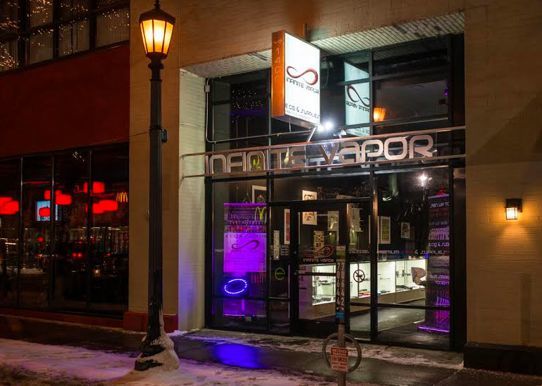
Wednesday, February 19, 2014
The fast-growing electronic cigarette trend has meant dozens of e-cig stores have been popping up around the Twin Cities. None, however, have been more artfully designed than Infinite Vapor in Uptown.
Tricia Khutoretsky, founder of the hot Public Functionary art space in Northeast Minneapolis, is curating the new shop, which currently includes a collection of screenprints from local artists such as Greg Gossel, Eric Inkala, and Adam Garcia, and a large mural by designer Mike Cina depicting wisps of vapor climbing a wall.
Longtime Twin Cities’ nightclub promoter Beecher Vaillancourt, and his friend and local mixed-martial arts fight promoter Gavin Rydell, own the shop. Anjel Vaillancourt, Beecher’s sister, is the store manager. Beecher successfully quit smoking after Rydell offered him an e-cig years ago. Anjel and the siblings’ parents also all laid down tobacco for the allegedly safer electronic option.
Beecher Vaillancourt and Rydell now have seven stores across Minnesota and North Dakota, and another starting up in Madison, Wisconsin. But the team is pouring special attention into the Uptown location, exploring how a local e-cig shop can do more than just sell supplies. They want to encourage people to quit tobacco for good, while also celebrating local community.
The store started the year with a quit-smoking campaign called “Kick It: A stop smoking movement by Infinite Vapor.” Through February, the store is also promoting a “Kick It For Love” special by offering two-for-one deals.
The shop is also working with a local organization that puts disabled veterans to work recycling e-cigarette atomizers—the piece that absorbs the liquid before it’s vaporized and inhaled.
A degree of uncertainty currently surrounds the future of e-cigarettes in Minnesota. Widespread adoption across the state has led several cities to institute limits on where people can puff on their e-cigs. A bill from DFL State Rep. Phyllis Kahn seeks to treat e-cigarettes like normal smokes under the Minnesota Clean Indoor Air Act.
Source: Anjel Vaillancourt
Writer: Kyle Mianulli
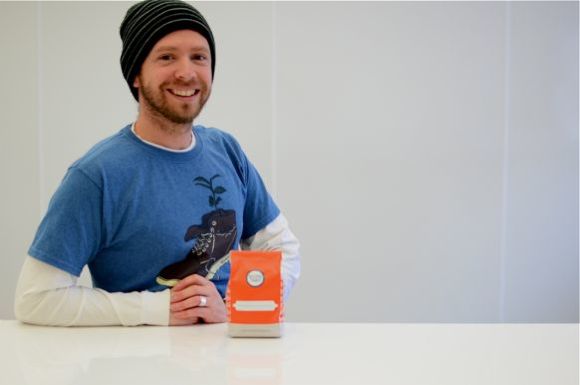
Wednesday, February 12, 2014
As the craft beer boom and local food movement have shown, the Twin Cities has developed a palate for artisanal and locally produced fare. Shawn Person, of Moonshine Coffee Co., is now looking to expand our developing taste for specialty roast coffee. In early March, he’s opening a new storefront location in the Creative Enterprise Zone next to the Green Line in Saint Paul. Roundtable Coffee Works, he says, is a “coffee roasting manufactory.”
Inspired by craft guilds and modeled after collaborative workspaces, Roundtable Coffee Works will house an array of local businesses endeavoring to create their own unique Twin Cities’ flavors of specialty coffee. “It’s really about sharing knowledge and helping each other out—establishing that kind of community,” Person says.
It might not make financial sense for a local coffee shop to purchase and maintain personal roasting equipment. But being able to rent a roaster by the hour to make a one-of-a-kind specialty roast? That’s an opportunity Person is confident coffee entrepreneurs will jump at.
After six years in the Twin Cities’ roasting scene, Person is an industry veteran, he says. He already has several local coffeepreneurs on board and a surprising number of home roasters have approached him about utilizing the space. Due to rising interest, he also plans to have dedicated hours for hobbyists to come in and roast their own beans.
“There’s a growing awareness of specialty coffee in general,” Person says. He’s also noticing “differences in ways of selling coffee. By that I mean Starbucks, Dunn Bros., and Caribou all sell coffee a certain way, and it works. But then there’s another way to sell [it], and that’s small and local, with a neighborhood focus, as well as quality focus.”
Just as people are flocking to taprooms to taste local microbrews, so are they increasingly interested in how their morning java tastes—and is made. They want to feel connected to the process, he says. “People want to see the roaster... At Thanksgiving, they want to brew some coffee in the morning and tell their family, ‘Yeah, my buddy Shawn roasted this.’”
Roundtable will have a retail component though don’t look for tables to sit at with your laptop while you leisurely sip a breve hazelnut latte. The roaster will only offer drip coffee and espresso to go, along with beans. The Roundtable brand of coffee won’t be wholesaled either.
For Person, his start up is more about serving residents of and visitors to the neighborhood. Still, eager customers can purchase Roundtable Coffee beans, mugs, t-shirts and other gear for a limited time through an online pop-up shop and similar pop-ups he’ll schedule annually.
Source: Shawn Person
Writer: Kyle Mianulli

Wednesday, February 05, 2014
Rock Star Supply Co.’s busy location, in the Creative Enterprise Zone at the corner of Raymond and University in Saint Paul, is about to get busier. The educational nonprofit—its dedicated volunteers tutor elementary- and secondary-school children on writing, algebra, and other subjects—is working with San Francisco-based tutoring company 826 National to bring one of that organization’s signature “stores” to the Twin Cities.
Rock Star is currently a lively tutoring workshop that offers “a range of programs, all free of charge…[that] focus on project-based learning, homework help, [and] extra-curricular reading, along with spectacular writing prompts and smaller writing workshops,” according to its website. This summer, Rock Star’s headquarters, as part of 826’s new franchise-style expansion initiative, will be rebranded as the “Mid-Continent Oceanographic Institute.”
What? The name does make sense. Here’s why. In its 10-plus years, 826 National has developed a clever, family-friendly approach to branding. Each tutoring center (it currently has eight, mostly in major Northern cities) doubles as a store with an unmistakable “angle.” For instance, Boston’s “Bigfoot Research Institute” sells cryptozoology books and paraphernalia.
Chicago’s “Boring Store” doubles as a “Spy Supply Store.” (The “boring” part is meant to throw passers-by off the trail.) Seattle’s “Space Travel Supply Company” sells rocket equipment, space suits, and other accessories to “freelance space travelers.” Each store plows its merchandise earnings back into its tutoring operations. So how did the Twin Cities become home to the Mid-Continent Oceanographic Institute?
“We went through an extensive ideation process to arrive at Mid-Continent Oceanographic Institute,” says Jeremy Wang, chair of Rock Star’s Executive Board. “We’re playing off the idea that, to most of the country, we’re a ‘fly-over’ state, hence the Mid-Continent. And while we have a lot of coastline, none of it is oceanic.” Wang’s thrilled at the prospect of opening a “sub shop” that doesn’t sell anything edible.
The expansion also comes with challenges. “Our biggest hurdle is to be financially stable enough to build out the storefront and sustain our current programming,” says Wang, noting that the organization has traditionally relied on donations from individuals and foundations. Razoo and upcoming Kickstarter campaigns are providing a crucial shot in the arm.
What can kids, parents, and shoppers expect from Mid-Continent Oceanographic Institute, née Rock Star Supply Co.? “I think nearly everyone involved at Rock Star Supply Co. has been inspired by the 826 model,” says Wang. “So we don't really see our programming changing a whole lot as we transition.”
That said, Wang does expect Rock Star to add more writing workshops as the transition date approaches. And there’s the issue of merging educational programming and retail activities. “Unlike other 826 sites, we started without a storefront,” says Wang. “They mostly started their programming at the storefront, then worked their way into schools.”
For now, the folks at Rock Star are working to retain their core mission without neglecting the coming transition. For Wang and the rest of the board, this means seeking help wherever they can find it. “We are always looking for tutors in any subject, especially algebra,” he says, “as we have a whole group of students that comes in for Algebra 2 on Tuesdays.” Rock star math tutors: Take note.
Source: Jeremy Wang
Writer: Brian Martucci
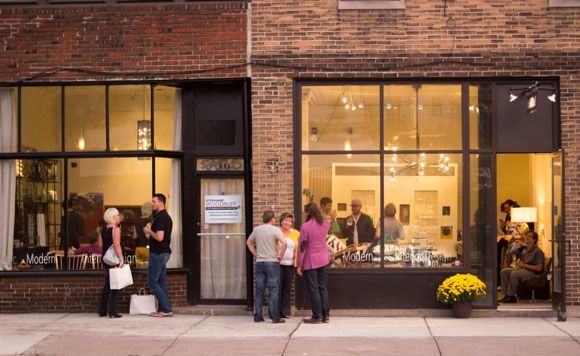
Wednesday, December 04, 2013
Omforme, a Norwegian word meaning "to transform,” is the name of a new shop at 24th and Lyndale in Minneapolis. Omforme also describes the ways in which its owner, Carter Averbeck, who is part Norwegian, gives furniture and other home goods a new lease on life.
The shop offers a mix of vintage and modern pieces that reflect every era, as well as original furnishings from local designers. Some pieces are restored to their former glory, while others get a modern update, Averbeck explains.
The shop evolved out of Averbeck’s other business, Trompe Decorative Finishes, through which Averbeck creates murals and decorative finishes for commercial and residential spaces. Often, when clients stopped by the studio, Averbeck says, they would remark on the unique furniture in the space--often pieces that Averbeck had reconditioned.
Before opening Omforme, Averbeck experimented with several pop-up shops. Those were successful, so he was able to secure a permanent home for Omforme.
From the beginning, Averbeck wanted to be near Uptown, an area that has an artistic, hip edge to it, he says.
Lyndale seemed like an ideal location. “Lyndale is moving so fast into what Uptown used to be,” with many new retail shops, restaurants, and apartments, he says. “I got lucky. It was the right space at the right time.”
Previously, the 1,100-square-foot space had been a Gothic-style hair salon. Although the place needed a lot of attention, “the building has great bones,” Averbeck says.
Averbeck took his design cues from the vintage building. Old World details blend with crisp modern shades of white and charcoal gray, while the colorful pieces for sale lend ambiance. “It’s like a high-class manner house,” in Europe, “a timeless space,” he says. “People say it’s like walking out of Minneapolis, into some place else.”
Source: Carter Averbeck, owner, Omforme
Writer: Anna Pratt
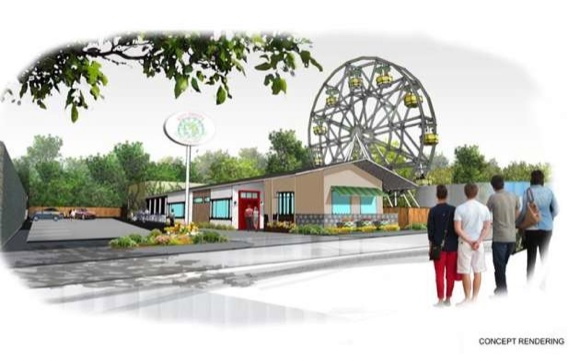
Wednesday, August 21, 2013
Betty Danger’s Country Club, a Tex-Mex restaurant featuring dining while sitting on a Ferris wheel, a mini golf course, and a “pro shop,” is destined for Northeast Minneapolis.
The restaurant plans to take over the former home of Psycho Suzi’s Motor Lounge, a retro drive-in at 2519 Marshall St. N.E., according to city materials about the project. The location has been empty since Psycho Suzi’s relocated nearby a couple of years ago.
Leslie Bock, a.k.a. Psycho Suzi, owns both places, along with Donny Dirk’s Zombie Den in North Minneapolis.
She described the personality behind Betty Danger’s in a letter to neighbors, according to the TC Daily Planet, which quotes her: “Betty is apple pie and sunshine, but sadly lives in a time warp with no sense of reality or logic. Poor Betty."
The restaurant's most striking attraction, a 60-foot Ferris wheel, will offer views of the Mississippi River, the downtown skyline, and the Lowry Bridge.
Last Monday, the city’s planning commission approved plans for the restaurant, which will also have a clubhouse, a covered terrace, an outdoor kitchen, and a full bar. The place aims to open by early next year. City Council member Kevin Reich says of the neighborhood’s reaction, “The predominant tone I’m getting is that everyone’s looking for a win-win.”
Parking is the main issue that has come up with the area’s neighborhood group. That said, it’s a solvable problem, Reich believes. “The city’s not afraid of the novelty of it,” he says, and will be breaking it down into various regulatory items and other nuts-and-bolts issues. It helps that “the community is very engaged,” according to Reich.
Bock is known as someone who is “committed to being a good neighbor, who’s very creative, thinks out of the box, and brings landmarks to the area." In terms of finding the "wow factor," Reich says, “She’s done that in a big way."
Source: Kevin Reich, City Council member
Writer: Anna Pratt
Wednesday, April 18, 2012
In recognition of the unique Asian businesses and other cultural institutions along University Avenue in St. Paul from Galtier to Mackubin streets, the area is being branded as Little Mekong.
It’s an initiative that the local Asian Economic Development Association (AEDA) launched on Feb. 25.
The name references the Mekong River, which is a major river in Southeast Asia, according to Va-Megn Thoj, who heads the AEDA. “Most businesses in the area have a connection to the river,” he explains.
In his view, “By giving a name to a destination which has existed for a long time, we can draw more people into the area.” This is especially needed during Central Corridor light rail construction, he says.
Already, as a result of construction obstacles, many of the businesses are seeing less foot traffic, he says.
With the Little Mekong branding, “We want to build on what we have,” which he describes as “an attractive destination for people to get introduced to Asian cultures and cuisine.” Although the district has been around informally for a long time, not too many people are familiar with it, he says.
Besides improving the streetscape and putting up district-related signage, Little Mekong will host a number of events, including family-friendly festivals.
AEDA is also working with businesses to create incentive programs to bring in more customers, including coupons and other deals, and to handle increased traffic. “We’re working with businesses to strengthen their operations and customer service,” he says.
The coming Central Corridor represents “a tremendous opportunity to create something of benefit to the neighborhoods and city and region," he adds.
Source: Va-Megn Thoj
Writer: Anna Pratt
After four years of sitting vacant, the space that once housed the Auriga restaurant in Minneapolis's Lowry Hill neighborhood will soon reopen with a unique deli concept.
The deli will be similar to those in Eastern Europe, but with a twist, according to Tobie Nidetz, a consultant on the project. Nidetz has helped open numerous restaurants in many locations.
Citing a shortage of delis in the Twin Cities and beyond, Nidetz, who is known as "the food guy," says there's a "pent-up demand" for such a place.
He and real estate attorney David Weinstein, who lives near the space at 1930 Hennepin Avenue South, hope to fill that void, he says.
Although specific details of the plan are still coming together, including the project's cost, physical renovations will happen mainly inside the space, while the old exterior will probably stay intact, the Southwest Journal reports.
Right now, Weinstein and Nidetz are still meeting with various designers, general contractors, and others to flesh out certain aspects of the project, including the deli's name, according to Nidetz.
However, they've already committed to a "fast casual" type of restaurant that will offer as many local, organic and sustainable products as possible, he says.
Most of the food will be made in-house. The deli will also offer desserts, coffee drinks, beer and cocktails, and more, he says.
But the signature menu item will be a variation on pastrami that's popular in Montreal.
Although the timeline is preliminary, Nidetz says he and Weinstein hope to open the deli this fall.
Source: Tobie Nidetz
Writer: Anna Pratt
Wednesday, April 20, 2011
The $4.8 million Emerge Career and Technology Center will help address a growing digital divide in North Minneapolis.
Emerge Community Development will redevelop the former North Branch Library at 1834 Emerson Avenue North, to make way for the center, which will offer a wide variety of programming pertaining to emerging careers, with an emphasis on green jobs, according to Emerge executive director Mike Wynne.
Training will deal with entrepreneurship, job skills, and career learning, while several learning labs, computer kiosks, multi-use conference rooms, and offices will be available.
So far, Emerge has secured about $3.3 million for the center. Recently the project was listed by a City Council committee as a top priority for transit-oriented design funds from the county.
In 2009, Emerge acquired the historic building from the Geneva Services Co., a salvage company that will stay in the building until the renovation starts, according to Wynne. The 13,000-square-foot building was a library from 1894 until 1977.
Calling the building an architectural jewel, he says, "It's the oldest standing building that was erected solely as a library in the state and it was the first branch library in Minneapolis," adding that the project has attracted support from historic preservation groups, government agencies, and other funders.
Emerge's fundraising campaign highlights the legacy of Gratia Countryman, who headed the Minneapolis library system for several decades in the early 1900s, according to Wynne. She was well known across the country for her work starting up children's reading rooms and the bookmobile, which originated at the branch library, according to Emerge information.
As a part of the project, the old bookmobile garage and classrooms will be repurposed for the career tech center while some of Emerge's partners will move into the building to support its operation. "This community asset needs to be returned," says Wynne, adding, "It's a purpose that's accessible" to individuals and big and small groups.
Emerge plans to wrap up the fundraising aspect in 2011 and begin construction before the year ends. "It's been a challenging time to hold a capital fundraising effort, but we continue to see progress," he says.
On a broad level, the development contributes to the revitalization of the West Broadway commercial corridor. "At a time of great disparities in joblessness in North Minneapolis and communities of color, this is a chance to bring a support mechanism that works in a very direct way."
Source: Mike Wynne, executive director, Emerge Community Development
Writer: Anna Pratt
Wednesday, April 13, 2011
Eric Brew, a St. Paul resident, has long thought about creating an arts hub where writers, painters, thespians, and others could hang out and feed off of each other.
The timing seemed right, so he recently set in motion an online kickstarter fund, to which anyone can contribute, to make it a reality.
He's eying a 4,000-square-foot space in Northeast Minneapolis, the previous home of City Salvage, which moved next door, for a combination coffee shop, bookstore, and creative outlet he's calling Brew's Coffee & Books.
To make it a go, Brew needs to raise $32,000 in start-up expenses, including the first month's rent and deposit, business licenses, permits, coffee bar, bookshelves, and plumbing.
So far, the project has received $1,575 in startup funds, according to its website. The deadline for raising the money is May 4.
Brew, who was inspired by the famous Shakespeare and Company Bookshop in Paris, wants to provide a similar feel, with a book-filled partition and plenty of nooks and crannies. "It's the complete opposite of what's there now," he says. "It has an empty floor plan."
The vacant space has hardwood floors, exposed brick walls, and a stage. Brew is looking to incorporate writing studios and a lending library, along with books for sale on consignment and dramatic performances.
He envisions a place where people can teach or attend classes, perform, and participate in discussion groups and more. "The biggest thing is having an open space available to all kinds of artists, not specifically writers or actors, but everyone."
Brew's will emphasize sustainable practices: "We promise to be as green as we can be in two environmentally taxing industries, coffee and publishing," its website states.
For starters, the café will serve specialty coffees that come from a local roaster who supports "direct trade" coffee beans that come straight from farmers through an area importer, while sustainable practices will be constantly refined, according to its website. Food will also come from local sources.
The cafe will try to use as many secondhand items as possible, Brew says. To get the concept beyond the idea stage, he's working with a couple of collaborators while also networking with artists. He hopes to open the cafe in June.
Source: Eric Brew, originator of Brew's Coffee & Books
Writer: Anna Pratt
Wednesday, December 01, 2010
A sizable rock-climbing community in the Twin Cities is underserved, according to Nate Postma, the founder and president of the locally based company Vertical Endeavors. Numerous area rock-climbing gyms have gone out of business through the years, he explains.
Vertical Endeavors runs several indoor rock-climbing gyms in St. Paul, Duluth, and Warrenville, Ill. In St. Paul, it offers indoor and outdoor lessons, youth programs, and group events, along with a pro shop, weight equipment, showers, lockers, and year round climate control, its website states.
As an indication of the sport's popularity, the St. Paul Vertical Endeavors location sees over 100,000 individual climbers a year. Many of them become repeat customers, Postma says.
For years the company scoped out various sites for a potential Minneapolis location.
Postma was pleased when Mark Krogh, the principal of Java Properties, approached Vertical Endeavors about the possibility of bringing an indoor rock-climbing gym to 26th and Nicollet Avenue in Southwest Minneapolis, as a part of a larger proposal to revamp a couple buildings on the block.
With the help of Minneapolis-based DJR Architecture, developer First & First LLC is heading the $5 million project.
The gym will go into an 11,000-square-foot space that once housed the Ice House Studio in the Whittier neighborhood.
Postma says the $2 million state-of-the-art facility will be among the largest in the country. It could be as high as 60 feet, with 25,000 square feet of climbing space. Many climbing gyms are half that size, or even smaller, he says.
It'll accommodate different styles, abilities and ages, with top-roped climbing, bouldering, and auto-belays (which allow people to go solo). "This will put Minneapolis on the map," he says, adding, "Our customers are destination-oriented."
A branch of St. Paul's well-known burger joint, the Blue Door Pub, will be the second-largest tenant next to the gym, while the popular Azia restaurant is returning to the corner with a new concept, according to Krogh. Thirteen apartments, another restaurant, coffee shop, offices, courtyard and parking are also part of the plan.
Krogh says the rock-climbing gym will draw many new people to the restaurant-filled avenue, dubbed Eat Street. "I really believe this is going to be the next Uptown," he says. "It should be exciting. I think it's going to bring a lot of energy to Eat Street."
Source: Nate Postma, founder and president of Vertical Endeavors
Writer: Anna Pratt
Wednesday, November 10, 2010
In putting together a hip new coffee shop that opens this week in South Minneapolis, the scrappy Peace Coffee team found themselves climbing atop an abandoned grain elevator, coming away with a cool door that makes for a unique menu board.
They salvaged lumber from a demolished house for custom benches. Additionally, blue and white tiles that once lined the bottom of a swimming pool now form a beautiful floor mosaic, picturing boxy, espresso-guzzling robots and monkeys.
The build-out of the Peace Coffee Shop at Wonderland Park is in keeping with the company's social responsibility ethos, inside and out. Peace Coffee peddles fair trade and organic coffee, often literally, via bicycle, from its base of operations that includes a roastery, in the nearby Phillips neighborhood.
The company had considered venturing into retail for a while, according to Peace Coffee's Lee Wallace, who goes by "Queen Bean."
It came together after a local building owner approached Wallace just over a year ago about the possibility of developing the space in the Longfellow neighborhood, which was previously a photography supply store. "This just seemed like the right partnership," says Wallace, who is leading the charge.
"It's another way to support the Twin Cities' independent coffee culture and connect with customers more directly," she says. She's looking forward to talking with people about how they source their coffees. "We want people to understand how to taste coffee and understand the story that comes with the food," which she adds goes from the farm to the cup.
At the bar, customers can watch as their drinks are being made, while a lab area provides for barista training, fair trade classes, and more.
Source: Lee Wallace, Peace Coffee, "Queen Bean"
Writer: Anna Pratt
Wednesday, November 03, 2010
One of the most unusual development projects in the Twin Cities is facing a painfully common problem this month --foreclosure.
Schafer Richardson's East Bank Mills development was designed to bring nearly 1,000 new living units to the Minneapolis riverfront but stalled once the recession hit. Now a sheriff's sale is set for Nov. 15, with urgent negotiations underway to keep the project alive.
David Frank, who has been working on the project since his first day at Schafer Richardson seven years ago, says hope for East Bank Mills' future is "tempered with a hefty dose of reality." The project's financing structure, via 24 different banks, would be "unwieldy even in good times," he says.
The developer is pressing ahead on two fronts: trying to bring new money, people, and ideas to the project; and short-circuiting the foreclosure process through talks amongst the various parties' attorneys. But time is short. As Frank noted, when the calendar flipped this week the 15th was in the middle of the page.
East Bank Mills remains an ambitious vision, even languishing on paper. Plans include renovation of the historic Pillsury A Mill, a handsome 130-year-old limestone edifice that was the world's biggest flour mill in its heyday. Designed by Minneapolis architect LeRoy S. Buffington (who had a claim as one of the earliest skyscraper designers), the A Mill towers above Main Street, the oldest street in the city. Other massive buildings in the multi-block former Pillsbury milling complex would also be reused, including a red-tile grain elevator with silos that would remain empty but would support condominiums above.
Does Schafer Richardson regret environmental, historic-preservation and neighborhood planning processes that slowed the project's process? "Not really," Frank says. To forgo those steps is "not really our style."
Source: David Frank, Schafer Richardson
Writer: Chris Steller
Wednesday, October 20, 2010
This month St. Paul held its 30th art crawl, and the semi-annual event has grown so popular that it has spawned a smaller, monthly version. Foot traffic at Saint Paul Art Crawls averages 20,000–24,000, says Robyn Priestly, executive director at the Saint Paul Art Collective, the nonprofit that runs the event.
Spectacular fall weather may have suppressed attendance at this month's three-day crawl. Priestly says reports are still being tallied from organizers at the four "clumps" of studios across the city: Lowertown and downtown; Grand Avenue; University Avenue; and the East Side.
The crawls' appeal is partly architectural, Priestly says: "Looking at the buildings is part of it because these are great old buildings, whether they're the new rehabbed buildings on University Avenue or the old warehouses down in Lowertown."
First Friday open houses occur every month in which the collective isn't mounting an art crawl. The scaled-down monthly crawls feature studios in five Lowertown buildings: Tilsner, Jax, Lowertown Lofts, Northwestern Building and the Northern Warehouse. The next First Friday, on Nov. 5, marks the one-year anniversary of the event.
One of the collective's other projects has been opening a new art gallery in the Northern Warehouse. On exhibit now (call 651-292-4373 for hours): artwork by the collective's past and present board members.
The crawls grew out of open houses held by members of the Lowertown Lofts artists' cooperative 20 years ago. For the first decade they were annual affairs before growing to a twice-yearly event that has stayed true to its original impetus. "It is a giant open house," Priestly says.
Source: Robyn Priestley, St. Paul Art Collective
Writer: Chris Steller
Wednesday, October 13, 2010
On a sunny Sunday August afternoon last year, Leo Kim waded into the stream in downtown St. Paul's Mears Park for a new angle on a scene that had become familiar to him--maybe overly so--after many attempts at photographing it.
"What if I were a squirrel?" Kim asked himself. "What would I see?"
The resulting picture--an intimate view of natural forces set into motion in the city's midst--inspired Kim to embark on a nine-month quest to capture more images of surprising serenity within the city of St. Paul.
Now he's trying to raise $24,000 to publish a book of 96 photos he's calling "Saint Paul Serenity." That's twice what his earlier photo-book of North Dakota landscapes cost, but Kim decided he wants to keep the money in the local economy by using a Minneapolis printer instead of shipping the work overseas. An event on Thursday launches his fundraising effort, which he says is so far going more slowly than did the North Dakota project. He's hoping to get enough book orders to have "Serenity" printed by Christmas.
Kim, a professional photographer, lived in Minneapolis for 15 years before a 2005 move to Lowertown near Mears Park. He found he hadn't created a cohesive series of Minneapolis images--"Someday I will," he vows--but he readily discovered the serene scenes he went looking for around St. Paul.
"The city has done a great job with the landscape," says Kim, an immigrant of Korean heritage who came to Minnesota via Shanghai, Hong Kong, Macao, and Austria--not to mention time spent studying in North Dakota. He says he aspired to become an architect or city planner but couldn't bear to be in meetings. Instead, he seeks out St. Paul's wild side, often finding "I have the place to myself, only a stone's throw from downtown.
"It's amazing."
Source: Leo Kim, Leo Kim Photography
Writer: Chris Steller
Wednesday, October 06, 2010
The unlikely pairing of local history with Segway rides has propelled tour operator Mobile Entertainment, LLC, to success in both Twin Cities. Marketed as Magical History Tours, the $80-per-person excursions are now in their seventh season in Minneapolis and second in St. Paul.
The appeal of joining the lines of "people on a stick" that snake through the downtown Minneapolis riverfront and the elevated outskirts of downtown St. Paul is a "yin-yang thing," says owner Bill Neuenschwander. People enjoy experiencing the novelty of Segways while they take in historic sights and stories.
Many people in other cities have tried to copy Neuenschwander's model but have fallen short, he says. He has tried 27 Segway tours around the country and found some to be joy rides minus the joy. Without the element of history-on-wheels, he says, riding at 12.5 miles per hour from Point A to Point B gets dull fast.
Last year, the St. Paul tours operated out of the Minnesota History Center. This year the Segways have a storefront of their own on Grand Avenue. Next year they'll move to another a couple blocks down the street. (The company will also begin offering tours focused on sculpture and architecture in downtown Minneapolis, and possibly outlying locations like Stillwater or Northfield.)
The tours have proved different in St. Paul, where the emphasis of the narrative is on the Who--colorful personages who populated the frontier town's blufftop Gold Coast, Summit Avenue. In Minneapolis, Neuenschwander says, the focus is on the What--the technological advances that built the city's industries, especially flour milling.
At 7.5 miles long, the St. Paul tour takes as much time as Minneapolis but is a mile longer--a difference made possible by full-throttle travel on the flats of Kellogg Boulevard between Cathedral Hill and the state Capitol.
Elsewhere on the circuitous St. Paul route, the Segways take an off-beat path that cars, pedestrians, and bikes wouldn't or couldn't follow, Neuenschwander says.
From a Segway perspective, he says, "St. Paul is eclectic, gnarly, and kind of bizarre."
Source: Bill Neuenschwander, Mobile Entertainment, LLC
Writer: Chris Steller
Wednesday, September 08, 2010
Sometimes an innovation is so welcome that it doesn't need branding.
When medieval Icelanders needed a name for their big invention, the world's first parliament, they settled on simply calling it the All-Thing.
This summer the Minneapolis Area Association of Realtors (MAAR) faced the dilemma of naming its invention, an online, interactive database of local real-estate activity.
The MAAR staff took the Icelandic route. They called it The Thing.
Click on thething.mplsrealtor.com and you become the master of your own real estate data. Choose a Twin Cities neighborhood, a date range and a metric such as Days on Market, and colored lines appear, stretching across a chart to tell the story you want.
The Thing grew out of a desire to do better at communicating data, says Jeff Allen, who directs research at MAAR: "We were frustrated at our own inability to explain to our Realtors what was happening in the market in a way that was digestible and understandable to them."
MAAR "stumbled onto a business model" while trying to solve that problem, Allen says. Now its data-gathering arm, 10K Research, follows 70 markets for local realtors' associations. Some prefer a members-only approach to Multiple Listing Service (MLS) data, which is included in The Thing's database, but Allen says that in the Twin Cities the attitude is that "information should be transparent."
So far Allen says the "vast majority" of The Thing's users are real estate professionals seeking market information for their customers, says Allen. But the website is open to all and may eventually draw more lay users. "It's still in its infancy," he says.
Source: Jeff Allen, Minneapolis Area Association of Realtors
Writer: Chris Steller
From the ashes of the Arise! Bookstore, which closed up shop in May, will soon rise
Boneshaker Books, in the same spot on Lyndale Avenue in Minneapolis. Boneshaker, a collective, bought the one-story building from the Arise! collective to continue an outpost of progressive publications there. But the seven-member Boneshaker crew--including some veteran members and volunteers with Arise!--also wanted to make a clean start. That meant a summer (or more) of renovations to the approximately 1,500-square-foot space.
To cover costs in the interim, Boneshaker Books is leasing the space to Storefront in a Box, an organization which in turn is offering rentals by the week to anyone with a good idea for using it--from a weeklong "Nerd Party" to a rummage-sale fundraiser for a one-woman theater production. The Women's Prison Project, which distributes books behind bars, will maintain its small space in the building. Meanwhile, Boneshaker is holding its own events at a variety of off-premise locations, including Washburn Fair Oaks Park and the Triple Rock Social Club.
Boneshaker Books' name derives from an early name for bicycles, though collective member Tom Schumacher says the association has grown diffuse and the name is now an "empty signifier" open to interpretation. The collective is calling its group of donors of $250 or more the "Skeleton Crew"--each of whom can choose a book that will stay in stock in perpetuity.
Schumacher concedes that opening a new independent bookstore is "somewhat quixotic." But he says the collective is counting on support for its niche market (progressive politics, defined more broadly than by its predecessor) as well as a solid base of support from the the neighborhood (Whittier, and across the street Lowry Hill East).
Source: Tom Schumacher, Boneshaker Books
Writer: Chris Steller
Psycho Suzi's, a popular, tiki-themed "motor lounge" in northeast Minneapolis, will move six blocks down Marshall Street to a 15,000-square foot space that used to house Gabby's, a riverfront saloon in a swirl of controversy until its recent closing.
Leslie Bock, Psycho Suzi's' owner, says she was moved to buy the expansive, 1.5-acre property because it allows more elbow room and the Mississippi River frontage holds strong appeal.
"I think tons of people are drawn to waterfront dining/drinking and we're all hoping we don't screw it up," Bock says via email. "The space and location will truly allow us to be all we can be. We need space to be creative and artsy, and obviously Northeast Minneapolis is that place."
The building will allow Bock to triple the 80-seat indoor capacity of her current location. She says she'll also be expanding the menu ("slightly"), and "adding some nonsense to keep the space interesting."
The new building is one of several commercial and residential properties along that stretch of Marshall Avenue that border the river. That's a rarity in the city, where most of the riverfront is parkland--or, in the "Above the Falls" sections of North and Northeast Minneapolis, industrial.
The short distance from the current location should make the move--now planned for the fall, close to the establishment's seven-year anniversary--easier, though still a daunting prospect. As Bock puts it, "We are excited and scared out of our pants.
"Psycho Suzi's concept was also meant to be oceanfront. What was I thinking?" she writes. "There are plenty of oceans to be had in Minneapolis ... via the Mississippi River gateway!"
Source: Leslie Bock, Psycho Suzi's
Writer: Chris Steller
The Birchwood Cafe occupies a special place in the Twin Cities--and not only because it's perfectly poised, five blocks off the Mississippi River and five blocks from each of two major south Minneapolis thoroughfares: East Lake Street and East Franklin Avenue.
The Birchwood is also the consummate neighborhood cafe in a neighborhood that, to many inside and out, is the consummate Twin Cities community: Seward.
That special perch complicates Birchwood owner Tracy Singleton's desire to expand what has become a landmark for locavores and lovers of its environmental vibe and "good real food."
The building began life in the 1920s as a dairy, becoming a neighborhood store in the 1940s that lasted until Singleton made it a cafe in 1996--with the Birchwood name a constant. Business, however, has not stayed still, and Singleton's excitement and anguish over expansion options have played out publicly in venues such as the cafe's monthly newsletter and a neighborhood blog.
A bid for a commercial building across the street to house the cafe's catering arm was aborted in the face of concern for existing tenant businesses (though Singleton promised to preserve several). Now Singleton is again contemplating an alternative that would be a blow to the personal roots she has laid in Seward: sacrificing her own home next door to the cafe.
"Last month I said that we were going to expand the Birchwood without using my neighboring house on the corner," Singleton writes in her latest newsletter. "Now it looks like we cannot achieve the breathing space we need without considering this option in the mix."
Source: Tracy Singleton
Writer: Chris Steller
Actually operating the Midwest's largest commercial rooftop farm may yet prove to be the biggest challenge for Sky High Harvest, LLC. But in the meantime, founder Dayna Burtness has discovered that finding the right location is a challenge in itself.
"It's not like there's a directory of flat roofs," Burtness says.
Burtness is seeking to turn her four years of organic gardening experience into a for-profit business, raising high-end, interesting vegetables such as heirloom tomatoes, kale, greens and root crops.
But instead of growing food in the country, as she did while a student at St. Olaf College in Northfield, Burtness wants to grow it in the city, close to the market where it will be consumed. And since Minneapolis lacks expanses of available vacant land for farming, she's looking up for a building that could support a farm. Prerequisites include an EPDM surface, at least 10,000 square feet of virgin roof surface, and two access routes up.
That last one is a toughie -- but necessary to meet the fire code if farmers are to be toiling and tilling on top of a building. So Burtness has been scanning Google Earth's aerial images of Minneapolis, looking for the telltale shadows from twin pilot houses indicating two sets of stairs, on a nice, flat roof at least a half-acre in size.
Burtness is in consultation with rooftop farmers in New York City and Chicago and says she feels it's now or never for commercial rooftop farming to take hold here, in part because of the city's current "Homegrown Minneapolis" program.
Source: Dayna Burtness, Sky High Harvest
Writer: Chris Steller
People whose mouths began watering this spring, when they heard the word that street food is finally coming to downtown Minneapolis, may want to grab a granola bar to tide them over.
The first batch of applications for food-cart licenses share two problems. First, the food-service vehicles being proposed are heavier than city staff anticipated and could damage downtown sidewalks. And the prospect of setting up and taking down big vehicles at requested high-traffic sites is presenting unforeseen logistical challenges.
Some of the more recent applicants asked for smaller carts, says Ricardo Cervantes, the city's deputy director for licensing, and they'll probably be able to start serving food this summer.
City staff are looking for alternatives that will work for bigger vehicles, including finding second-choice sites. "We've got to be creative," Cervantes says. One idea: an apparatus lighter than a truck to move cart trailers into place.
Some food vendors may be able to operate out of private surface parking lots, where they could also have the option of using the property owner's power supply. (Food carts on public right-of-ways must be able to provide their own power.)
A rough winter of freeze-thaw cycles has loosened granite sidewalk pavers on the Nicollet Mall, a prime food-cart site, making them more susceptible to damage from heavy loads.
Tony Perella, general manager at Hell's Kitchen, contacted by email on an overseas trip, says his restaurant's plans for a food cart (reportedly to be called Hell on Wheels) will probably be pushed back to 2011.
Sources: Ricardo Cervantes, City of Minneapolis; Tony Perella, Hell's Kitchen
Writer: Chris Steller
The Minneapolis Farmers' Market on the outskirts of downtown is already a seasonal sensation, a place where the chance to jostle with other shoppers past 240 stalls of flowers and food is guaranteed most summer mornings.
Now the adjoining Farmers' Market Annex, where crowds spill over to shop at 160 more vendor stalls, has turned a little-used parking lot and storage area into a showplace for home landscape and garden services called Urban Garden.
Owner Scott Barriball compares Urban Garden to a permanent home and garden show in a farmers' market setting--a sort of outdoor version of the nearby International Market Square design showplace. The offerings range from pergolas, fire pits, and bubbling boulders to handmade willow furniture, birdhouses, and tomato trellises.
Barriball says the equivalent of close to $1 million in labor and materials went into the creation of Urban Garden, transforming a site he says used to be "an underutilized mess." Vendors and contractors tore out blacktop and built landscaping attractions that include three outdoor kitchens, two waterfalls, and a rain garden.
Barriball's Annex is a for-profit counterpart to the nonprofit Farmers' Market operated by the Central Minnesota Vegetable Growers Association. Together they lay claim to having the largest selection of any market in the Upper Midwest, with an atmosphere like a European bazaar, drawing as many as 25,000 people daily.
Source: Scott Barriball, Minneapolis Farmers Market Annex
Writer: Chris Steller