Life Sciences : Buzz
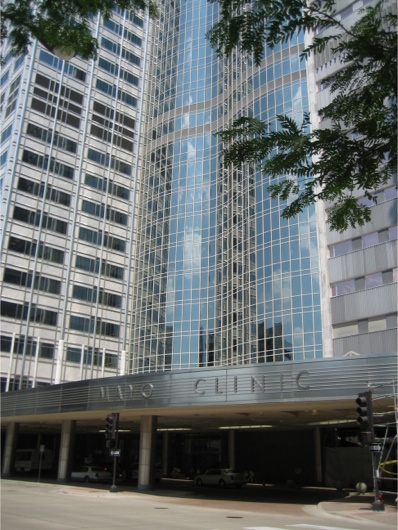
U.S. News & World Report recently released it annual Best Hospitals list, and five Minnesota hospitals were ranked high in terms of performance.
Coming in at no. 3 in the ranking, Rochester-based Mayo Clinic was highlighted in numerous categories, nabbing the "best" designation for specialties like endocrinology, gastroenterology, gynecology, and diabetes care.
The other four hospitals that made the list are Allina Abbott Northwestern Hospital, the University of Minnesota Medical Center, Allina Mercy Hospital, and St. John's Hospital.
The magazine sorted data for nearly 5,000 U.S. hospitals, looking at factors like patient safety, hospital reputation, and death rates. Only 147 hospitals were nationally ranked.
Midwest health care companies attracted $810 million in new investment, and Minnesota led the way, according to the BioEnterprise Midwest Health Care Venture Investment Report.
The report noted that Minnesota attracted $223 million in investments, followed by Ohio with $178 million and Missouri with $169 million. Tracking deals for 11 states and western Pennsylvania, BioEnterprise looked at investments in fields like health care services, biopharmaceuticals, and medical device manufacturing.
The state's largest deal last year was Entellus Medical, which raised $35 million to develop technology related to sinusitis.
Wisconsin Rapids Daily Tribune recently highlighted the benefits of CaringBridge, a free website based in Eagan that allows families to keep journals online about themselves or loved ones who are going through treatment for serious illnesses.
The newspaper spotlighted the story of a Milwaukee family that used the site to keep friends and family updated on care for a baby born with hypoplastic left heart syndrome. The child's mother noted that she used CaringBridge to give hourly updates during surgeries, to avoid multiple phone calls during an already stressful time.
CaringBridge was founded in 1997 after a close friend of the founder, Sona Mehring, developed a life-threatening pregnancy. Mehring created the website to help the family communicate news without disturbing the mother or hospital staff members. Currently, more than half a million people use the site every day.
Minneapolis and St. Paul each earned high marks in a ranking put together by Men's Health magazine.
The publication looked at factors that led to sedentary or active lifestyles, such as the percentage of households that watch more than 15 hours of cable a week, and the rate of deaths from deep-vein thrombosis, a condition linked to excessive periods of sitting.
Minneapolis came in at number 10 on the list, and St. Paul was number 13, earning both an "A-" grade. Seattle was deemed the most active, while Lexington, Ky. was named American's Most Sedentary City.
The Telegraph, a newspaper in the United Kingdom, highlighted research done at the University of Minnesota on bisin, a substance that shows promise as a food preservative.
The story noted that microbiologists at the U of M discovered bisin by accident when studying organisms that populate the human gut. Bisin is able to kill bacteria that trigger decomposition in the fresh proteins found in meat, dairy, eggs, and fish—although it doesn’t work on fresh vegetables or fruit.
It can also prevent the growth of dangerous bacteria like E.coli, salmonella, and listeria.
If the substance lives up to its promise, it could be the "Holy Grail” of the food industry, The Telegraph posited, although skeptics--like Rose Prince, the columnist doing the reporting--may need a bit more convincing.
Local biotech company Biothera has been featured in the cover story of the journal Nature for their work with beta glucans, "immunomodulating compounds [that] prime the innate immune system to protect the body," according to language in a press release about the publication.
The full text of the article is available for $32, but the article--titled Activation of the innate immune receptor Dectin-1 upon formation of a 'phagocytic synapse'--is not light reading.
Eagan-based Biothera is a pioneer in beta glucans research. Its Pharmaceutical Group is developing an immunomodulating drug that mobilizes the innate immune system to fight most types of cancer, states the release, and its Healthcare Group is a leading provider of natural immune health ingredients for nutrition markets.
Fairview Health Services in Minneapolis is singled out in a yearly analysis by Thomson Reuters as one of the top 10 health systems in the country, the Minneapolis/St. Paul Business Journal reports.
The study, which has been done every year since 1993, hones in on 2,914 short-term acute-care, non-federal hospitals, using public information, according to the Business Journal.
"These award-winning facilities demonstrate that high-quality patient outcomes can be achieved while improving efficiency," the Thomson Reuters website states.
Several other Minnesota hospitals are recognized on the list, which breaks down the data into various categories. Included are the Mayo Clinic in Rochester, Mercy Hospital in Coon Rapids, the Mayo Foundation, and Park Nicollet Methodist Hospital in St. Louis Park, the Business Journal states.
Two Minnesota companies landed on Fast Company's most innovative companies lists in March.
White Bear Lake-based Envoy Medical ranked number seven of the 10 most innovative medical companies. In a March 14 post by Ellen McGirt and Chuck Salter, Envoy is recognized for "creating the first FDA-approved surgically implanted hearing system to address hearing loss caused by aging, noise and viral infections."
And in the food category, Cargill was ranked number four "for charging into the sweetener market with a plant-based product that's aims to be eco-aware and health-friendly."
None of the 50 most innovative companies in the main list hails from Minnesota.
Plymouth-based Kips Bay Medical Inc. raised $16.5 million in its initial public offering on Feb. 18, according to an Associated Press report in Bloomberg.
That amount is lower than the $21.2 million originally expected--and far lower than expectations of $57.5 million announced in April 2010, writes Dan Haugen in a Feb. 4 MedCity News article.
The company's product, eSVS Mesh, is used to reinforce leg veins during coronary artery bypass surgery.
An English-language daily newspaper in Saudi Arabia covered a visit to Riyadh by a group of Minnesota bioscience companies earlier this month.
The Arab News report mentions a handful of Minnesota companies, including Exsulin, ODIN Industries, and Ativa, as well the BioBusiness Alliance of Minnesota, which organized the trip.
Exsulin CEO Lisa Jansa explained how the company's diabetes treatment could help Saudi Arabia, which has the third highest rate of diabetes in the world.
"We are seeking support from Saudi Arabia to ensure that more and more people will benefit from this groundbreaking new therapy," Jansa said.
The article concludes:
"All these companies hail from the US state of Minnesota, whose economy has transformed in the last 200 years to emphasize finished products and services. The economy of Minnesota had a gross domestic product of $262 billion in 2009."
Forbes Wednesday, November 17, 2010
The Twin Cities is the country's most "type B" metro area, according to Forbes Magazine, which recently put out a list of the top 40 relaxed U.S. cities based on six metrics that relate to stress.
Synthesizing data from the U.S. Bureau of Labor Statistics, U.S. Census Bureau and Centers for Disease Control and Prevention, the magazine examined cities based on how painful the morning rush hour can be, the average number of hours that people log in at work and unemployment rates. It also looked for reports of recent exercise, access to health care and medical coverage and people's general wellbeing.
Minneapolitans and St. Paulites fared well in each category.
Kathleen Grace Santor M.Ed., Ed.S., a therapist and founder of the Stress Management Center of Nevada, is quoted in the piece, saying, "Bringing the rest of the country's stress level down to that of these calm cities starts with making stress-reduction techniques an everyday practice, rather than an obscure fad."
Medical devices and diagnostics companies have historically been "the Rodney Dangerfields" of the life science industry, never getting the same respect and buzz as their biotech and pharmaceutical cousins, niche pub Life Science Leader writes in its November issue.
New innovations in software and nanotechnology may be changing that perception, though, according to Medtronic's senior vice president for medicine and technology, Stephen Oesterle. In a Q&A with the magazine, Oesterle explains the shift in thinking he's observing:
"I believe many people previously viewed medical devices as appliances, not innovative medical products. I think the notion that devices are not innovative is beginning to change. This is because devices offer a unique opportunity to incorporate nanotechnology, information technology, biotechnology, or the controlled delivery of drugs and biologics into a single product. People are beginning to realize this, and that is why interest in devices has exploded in recent years. Good examples of innovation taking place in the devices industry include targeted, controlled delivery of monoclonal antibodies and stem cells, MEMS (microelectromechanical systems) implants, and drug-coated stents."
Read the full Q&A over at Life Science Leader.
University of Minnesota professor Marla Spivak has won a MacArthur genius grant for her research into the health of bees. The Wall Street Journal featured her in an article about this year's winners:
"'It just blew me away,' said Marla Spivak, a 55-year-old professor of apiculture at the University of Minnesota. 'I thought they might have the wrong person.' She won the grant for breeding honey bees that can restore health to beehives stricken with pests or pathogens, which in recent years have devastated U.S. bee colonies. She plans to use the grant to launch new bee-related projects. ...
"'Creativity is at the heart of this' fellowship program, said Robert Gallucci, president of the MacArthur Foundation. 'The most vexing problems are not going to be addressed without creativity.'"
Earlier this month, Spivak's latest article on bees was published in the journal Environmental Science and Technology. Here is an excerpt from her highly readable article:
"Colony collapse disorder, the name for the syndrome causing honey bees (Apis mellifera) to suddenly and mysteriously disappear from their hives—thousands of individual worker bees literally flying off to die—captured public consciousness when it was first named in 2007. Since then, the story of vanishing honey bees has become ubiquitous in popular consciousness—driving everything from ice cream marketing campaigns to plots for The Simpsons. The untold story is that these hive losses are simply a capstone to more than a half-century of more prosaic day-to-day losses that beekeepers already faced from parasites, diseases, poor nutrition, and pesticide poisoning.
"The larger story still is that while honey bees are charismatic and important to agriculture, other important bees are also suffering, and in some cases their fates are far worse. These other bees are a subset of the roughly 4000 species of wild bumble bees (Bombus), leafcutter bees (Megachile), and others that are native to North America. While the honey bee was originally imported from Europe by colonists in the early 17th century, it is these native bees that have evolved with our local ecosystems, and, along with honey bees, are valuable crop pollinators.
"People want to know why bees are dying and how to help them. This concern provides a good opportunity to more closely examine pollinators and our dependence upon them. Bees are reaching their tipping point because they are expected to perform in an increasingly inhospitable world. ...
"But there is no reason to wait for research and policy to mitigate the plight of the bees. Individuals can modify their immediate landscapes to make them healthier for bees, whether that landscape is a public rangeland in Wyoming or a flower box in Brooklyn."
Read the full articles in The Wall Street Journal and Environmental Science and Technology.
Last week brought a flurry of news coverage around a proposed $1 billion fund to support a biotech park near Rochester. In the end, though, we were left not knowing much more than we did at the start of the week.
San Francisco biotech investor Steven Burrill told the Star Tribune that he was close to completing the billion-dollar deal, which would help fund the Elk Run BioBusiness Park in Pine Island, Minn.
The next day, Burrill softened/hedged/clarified his words in a press release, saying that no deal is guaranteed.
MedCityNews recaps the statements and concludes that maybe Burrill should have stuck with "We're making progress. Hopefully, we'll have a deal soon."
MedCityNews reports that Twin Star Medical, a startup that's developing micro-porous catheters, is moving in November to the Excelen orthopedic and bone research center in downtown Minneapolis.
Twin Star Medical currently leases space at the University Enterprise Laboratories. Its CEO said in a statement that the company is growing and needed a new location that could accommodate that growth. It will lease 4,000 square feet in the Excelen building, which is next to the Hennepin County Medical Center.
Minnesota's largest medical-device company is looking to get even larger.
Medtronic CEO Bill Hawkins tells Bloomberg that the company is on the hunt for acquisition targets as a way to restore its sales growth.
Hawkins tells Bloomberg the company is focusing on "tuck-in" acquisitions that plug holes in its existing businesses. But it won't rule out acquisitions as large as $1 billion if "we see something that is a good strategic fit."
"If we see something that's a good strategic fit, we have the ability to act on it," Hawkins told Bloomberg. "We're not in a reactive mode, like we have to go out and do more acquisitions now."
The "jewel of the crown" of Minnesota biotechnology wants a prominent place in China's growing biotech economy, too.
The Star Tribune reports that Techne, a Minneapolis biotech and hematology company, is seeing results from its recent expansion into China, despite challenges from knock-offs and counterfeits:
"Less than a year after its Shanghai division began operations in fiscal 2008, it made its first profit and sales grew nearly 22 percent, delivering the largest double-digit sales growth in Techne's biotech division in its last fiscal year," writes Star Tribune reporter Wendy Lee.
Techne, a growing company with 726 employees, creates proteins that are used in medicine and research, including in the development of drugs for cancer and AIDS.
Minneapolis innovation guru Uri Neren has a post on the Harvard Business Review blog about the Mayo Clinic's track record of successful innovations and the conditions that helped it occur:
"[I]n the case of The Mayo Clinic, the right conditions were in place at the very beginning. While the word 'innovation' has not always been attached to its work, the habit of developing better ways of treating patients and running its operations has been a signature trait since its founding in 1889 by brothers William and Charles Mayo."
Neren goes on to write that three key factors that have enabled innovation at the healthcare center have been diversity, connectedness--and, perhaps surprisingly, limited resources.
Read the entire Harvard Business Review post here.
The Star Tribune profiles Pete McNerney, a Minnesota venture capitalist who is co-founder of a $375 million venture fund that invests in biotech, drug, and med-tech companies nationwide.
The portfolio of McNerney's firm, Thomas, McNerney & Partners, includes Torax Medical of Shoreview and Plymouth-based Atritech. Minnesota companies typically comprise about 20 to 25 percent of the fund's investments.
Read the Star Tribune article here.
The Hill reports on testimony by Sen. Al Franken, in which he urged Congress to create incentives for medical device companies to pursue solutions to rare diseases.
"I'm concerned that we still don't have equivalent incentives for devices as we have for drugs," Franken said during a Senate health committee hearing.
Medical device companies say they need government incentives to pursue treatments for rare diseases for which the market is too small to turn a profit.
Read the entire report from The Hill here.
One of the nation's most active venture capital firms is also very active in Minnesota.
The Business Journal's Katharine Grayson notes on her In Private blog that New Enterprise Associates, which ranks second on a new ranking of the most active venture capital firms, is a major backer of med-tech companies in the Twin Cities.
NEA doesn't have an office in Minnesota, but one of its partners is a former president of Guidant's cardiac rhythm management group.
Read the entire Business Journal post here.
An interesting analysis from MedCityNews and Mass Device:
Despite the frequent complaints about the U.S. Food and Drug Administration taking longer to approve medical devices, the agency actually cleared 13 percent more cardiology devices last year than in 2008.
"If there are industries that have good reason to sweat, it's orthopedics and surgical instruments. 510(k )approvals for orthopedic devices fell nearly 14 percent last year and 10 percent for surgical devices. It took the FDA 21 more days to clear an orthopedic device (120 days vs. 99 days) and six more days to green light a surgical device (118 days vs. 112 days)," MedCityNews writes.
MedCityNews says the FDA has tightened scrutiny of orthopedic devices following a scandal around ReGen Biologics' knee cartilage implants.
Read the entire MedCityNews report here.
Medgadget editor Dan Buckland recently paid a visit to Medtronic headquarters, where he met with the company's VP of Medicine and Technology, Dr. Stephen Oesterle, for a talk about where the company and industry is heading.
The company spends about $1.7 billion a year on research and development. As a result, it's planning to release 60 new products next year. It also invests in several smaller companies that are working on products that are interesting or complimentary to its portfolio.
"In interviewing Dr. Oesterle about the future of medical devices, two main themes emerged. He believes that minimally invasive is the future for most surgeries and that everything in the body is electrically active, and hence able to be modulated. He also sees Medtronic as a company that specializes in delivery and implantation. Delivery refers to delivery of both drugs and electricity."
Read the entire post here.
A medical device trade journal has named a White Bear Lake company on its "50 Companies to Watch" list.
Medical Device and Diagnostic Industry says Envoy Medical is worth keeping an eye on since its prosthetic hearing implant device, Esteem, was approved for sale by the U.S. Food and Drug Administration in March:
The "FDA recently approved Envoy to market a 'first of its kind' prosthetic hearing restoration device. The approval follows a unanimous vote by a 15-member independent advisory panel in favor of approving the Esteem for moderate to severe sensorineural hearing loss. FDA expedited the review process, noting that it believes the Esteem 'represents a breakthrough technology.'"
Read the entire list here.
Kiplinger's has named Rochester, Minn., one of the 10 Best Cities for the Next Decade.
The personal finance magazine says it focused its list on cities that specialize in "out-of-the-box thinking" and show the three key elements for innovation: smart people, great ideas, and collaboration.
Rochester "is growing like a beanstalk--a high-tech, health-care, hospitality beanstalk," the magazine writes.
It cites the Mayo Clinic and its synergy with other civic institutions such as the Minnesota Partnership for Biotechnology and Medical Genomics and the Minnesota BioBusiness Center.
Read the entire article here.
Computerworld writes about how health care is beginning to incorporate Web 2.0 services into patient care, and the story leads with an example from a Minnesota provider.
University of Minnesota Medical Center/Fairview has 36 physicians who are trying out software that lets them video- conference and instant-message with patients online. The software is from a Boston company called American Well.
The services are available to those who carry BlueCross and BlueShield of Minnesota insurance through their employers, and can be accessed between 8 a.m. and 8 p.m. Monday through Friday and 9 a.m. to 5 p.m. on weekends for a $10 or $20 co-pay.
"We're getting very positive feedback from patients," Dr. Eric Christianson, assistant medical director of the emergency room, tells Computerworld.
Read the entire article here.