Strong Local Economy : Innovation + Job News

St. Paul-based public relations agency Kohnstamm Communications is fueling growth with the addition of four new hires, and it's likely that more team members will join the quartet in the future.
"Kohnstamm's revenue grew at more than 29 percent last year, making us one of the fastest growing [agencies] in the Midwest," says founder and CEO Josh Kohnstamm. "Yet, as a 22-year-old boutique agency with fewer than 20 people, each person must shoulder a lot of responsibility for turning results. And these are exactly the brand of PR people to succeed in that assignment."
Coming from Minneapolis-based Snow Communications is Jeff Trauring, who will join the business-to-business team at Kohnstamm, supporting agency accounts like 3M Food Safety, Nilan Johnson Lewis, and the University of St. Thomas.
Also on the B2B team with a crossover into consumer accounts will be Morgan Woodrow, who will assist with clients like Noosa Yoghurt, Fay Ranches, and MOM Brands. Two interns are part of the new hires as well.
In addition to staff additions, the agency has also announced new client relationships, such as Noosa, which joins the agency's roster of food and beverage industry clients. Kohnstamm represents Dr. Praeger's Sensible Foods, the Soyfoods Association, Way Better Snacks, Thai Kitchen, and others in the industry.
"Our agency is representing the very fastest-growing and innovative food companies in the industry today, and it is very exciting for us," Kohnstamm says.
The agency's robust growth is likely to continue for the future, particularly with these strategic hires and new clients, Kohnstamm believes.
Source: Josh Kohnstamm, Kohnstamm Communications
Writer: Elizabeth Millard
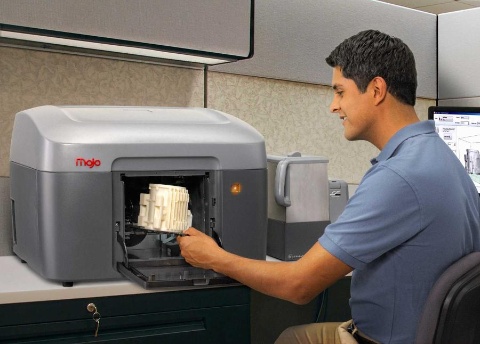
The 3-D printing industry may still be cutting edge and futuristic for most of the marketplace, but a recent acquisition by Eden Prairie-based Stratasys shows that the technology is gaining momentum, and the Minnesota company is leading the way.
The company reported recently that it just inked a deal to acquire competitor MakerBot, in a transaction worth about $403 million. If MakerBot reaches certain performance benchmarks, that amount could grow even more before Stratasys finalizes the deal.
The acquisition is an important one for the industry, and establishes Stratasys as a savvy, well-positioned company that could significantly extend its reach. Already, the firm produces 3D printers for commercial and industrial uses, and the inclusion of MakerBot technology could expand its production to smaller, more entry-level models that may be used by small businesses or even home users.
Industry analysts were quick to note that the combination of the two companies would drive faster adoption for 3D printers for multiple applications, and could bring the technology into the mainstream.
MakerBot will now operate as a separate subsidiary of Stratasys, continuing to maintain its own products and market strategy, and CEO Bre Pettis noted that the deal will continue a robust growth track.
"We have an aggressive model for growth, and partnering with Stratasys will allow us to supercharge our mission to empower individuals to make things," Pettis says. "It will allow us to bring 3D technology to more people."
In addition to the acquisition, Stratasys also announced it would add about 80 jobs by the end of the year.
Source: Bre Pettis, MakerBot
Writer: Elizabeth Millard
The summer may be off to a sluggish start weather-wise, but at the Minnesota Cup, the heat of competition just got kicked up a notch.
The annual contest, which supports the development of breakthrough ideas from across the state, just announced the start of its semifinal round, with 57 teams of entrepreneurs and inventors ready for the next stage.
Now in its ninth year, the Minnesota Cup offers six categories of innovation: energy/clean tech, general, high tech, life science/health IT, social entrepreneur, and student. Competitors are able to enter individually or as a four-person team.
The semifinal round will give those innovators a chance to buff up their ideas through exposure to mentors and business leaders, who will act as advisors for the next round. The teams and individuals will also have the opportunity to meet members of the Cup's review board.
A full list of this year’s semifinalists is available on the Cup’s site, and includes companies like Rowbot Systems, Windjuicer, Foodsby, Kidblog, Mode-sty, and Cinch Chix.
The competition is designed to bring out the best and brightest minds in Minnesota, and help those individuals to make connections that can advance innovation in the state, according to Minnesota Cup co-founder Scott Litman. He says, "The 2013 competition is no exception. We're excited to see how the many strong applicants in this year's pool will progress with mentoring and business planning this summer."
Three finalists from each division will be chosen on August 19th, and will be expected to present their business plans for a chance to nab the top prize, which will be awarded on September 11th.
Source: Scott Litman, Minnesota Cup
Writer: Elizabeth Millard
Eden Prairie-based Eagle Creek Software Services is proving that bringing IT work back onshore can lead to great results—the technology services company reports 28 percent growth in its customer base this year, with more growth likely in the near future.
"Onshoring" is a term coined recently in the IT and consultancy realms to describe a movement away from offshore strategies, which tend to move numerous tasks to other countries.
Although plenty of companies still push work out to nations like China and India, an increased focus on local resources looks like it could be the next big trend, and Eagle Creek's success is an indicator that the tactic can work well.
"Our growth is positioned around public and private partnerships in the Dakotas," says Ken Behrendt, president of Eagle Creek Software Services. "With a business-friendly state like South Dakota, and an energized university system, Eagle Creek is positioned to thrive by bringing corporate America what they so desperately need—a scalable and reliable workforce."
The company calls its strategy the "Dakota Model." Working with government agencies as well as the University of South Dakota, Eagle Creek will create about 1,000 jobs in technology centers around the state over the next five years. The company is building a $10 million technology center in Vermillion, South Dakota, and plans to staff it with students who graduate from the IT Consultant Academy at the university.
This move will triple the company's number of consultants, and put Eagle Creek in a strong position both regionally and nationally.
Source: Ken Behrendt, Eagle Creek Software Services
Writer: Elizabeth Millard
Minneapolis is about to get more connected.
DataBank, a colocation firm that's headquartered in Dallas but boasts a significant Minneapolis presence, recently announced that it will expand its footprint here, based on the acquisition of an Edina data center once owned by tech firm VeriSpace.
Planned for two phases, and with construction already underway, the expansion will boost the facility's size to about 17,500 square feet, and will include more cooling functionality and uninterrupted power supply features. The project will also involve updates to the office space areas, as well as revamped customer areas where DataBank will maintain client technology.
The company acquired VeriSpace in March, as part of an effort to broaden its reach into new markets. DataBank provides managed data center services, with a particular focus on 100 percent uptime availability for data, applications, and equipment.
Company CEO Tim Moore notes that the Edina expansion came as a result of customer demand, and that the company worked quickly to meet the need.
Although the expansion will add a significant amount of data center space to the city, Moore believes that this is just the beginning when it comes to the company's presence in the Twin Cities.
"This expansion only represents the first step in our overall process in this market," he says, "with more to come."
Source: Tim Moore, DataBank
Writer: Elizabeth Millard
Minneapolis-based architecture, interiors, and planning firm Architectural Alliance recently merged with smaller-but-prominent design and architecture company 20 Below Studio, also located in Minneapolis.
The merger fuses the two firms' client-centered experience for broader capabilities, notes Carey Brendalen, Principal at Architectural Alliance. "This is two strong organizations coming together," he says. "We've worked with different types of clients and we have different capabilities, and now we're leveraging those differences in a complementary way."
20 Below, an 8-person firm that's established a strong reputation in interior architecture and design, will partner with Architectural Alliance's 74-member team. The newly joined firms are expected to drive growth, Brendalen says.
Architectural Alliance has experience in market segments like aviation, retail, hospitality, and public sector work, and with 20 Below's expertise in interior architecture, growth should come naturally as a result of the combined energy and experience.
"Together, we will offer greater reach, creativity, and expertise in the architecture and design market," Brendalen says, adding that such a combination is especially crucial since client needs are becoming more complex. More variables, like the convergence of work and lifestyle needs, require the firms to approach projects in a new way.
"It sounds trite, but there's shared value in terms of what we can bring to customers," says Brendalen. "We're excited to see what comes out of the partnership. We think there's beauty here as well as pragmatism."
Source: Carey Brendalen, Architectural Alliance
Writer: Elizabeth Millard
Minnesota technology leaders, start your engines.
The high-profile Tekne Awards just opened for entries, and five new categories have been added: STEM education and digital learning, healthcare delivery, impact on industry, agricultural technology, and safety and security.
Innovative entrepreneurs, organizations, nonprofits, and government agencies will all compete in the award program, now in its 14th year, presented by the Minnesota High Tech Association (MHTA).
The state remains at the forefront of cutting-edge technological growth, the MHTA noted, and the robust and growing competition highlights the kind of innovation that's homegrown here, from cleantech to robotics.
Last year, winners included Nova-Tech Engineering, Ecolab, Global Traffic Technologies, Maverick Software Consulting, and Sophia Learning. The City of Minneapolis also received an award, for technology excellence in a non-profit organization, getting a nod for an emergency operations training facility that blends digital data and streaming video.
This year, the five fresh categories showcase new directions in the state's approach to innovation. STEM education, a hot topic these days, gets its own category for programs that engage K-12 students in applied learning opportunities. Healthcare delivery will award innovation in the area of medical devices, diagnostics, data management, and other areas that improve patient care.
"We are watching significant growth in the areas of mobility as well as safety and security and want to make sure the Tekne Awards reflect that," says Andrew Wittenborg, Director of Outreach for MHTA. "At the same time, we want to recognize and support the collaborative efforts that lead to Minnesota breakthroughs."
In addition to its new categories, the awards will feature well-established, competition-rich categories like software, startup, advanced manufacturing, and mobile technologies.
Applications for this year's awards will be open until July 15th, and there's no application fee, nor do applicants have to be MHTA members. Finalists will be announced in September, with an award celebration held in November.
Source: Andrew Wittenborg, Director of Outreach, Minnesota High Tech Association
Writer: Elizabeth Millard
Wednesday, February 27, 2013
The Stir
March 14
Minneapolis City Center Marriott
5:00 pm - 8:30 pm
$75
Hosted by the Women's Foundation of Minnesota as a fundraising event for the organization, The Stir is a networking event with dinner and drinks. A keynote from Jacquie Bergland, founder and CEO of Finnegans, will kick off the evening.
TechFuse
March 21
Minneapolis Convention Center
8:00 am - 5:00 pm
$349
Geared toward IT professionals, TechFuse is now in its sixth year, and going strong with a couple sold-out shows in the past few years. The one-day event covers a range of topics, from app-specific sessions on Windows 2012 and PowerShell v3 to broader discussions on change in professional development and IT as a business.
Mobile March 2013
March 21
Earle Brown Heritage Center
6155 Earle Brown Dr., Brooklyn Center
8:00 am - 6:00 pm
$115
The popular Mobile March conference should prove especially lively this year since the Twin Cities seems awash in mobile app development. Attendees will hear presentations on topics like game development, user experience, and mobile advertising, as well as case studies of local businesses that have found success in the mobile space.
Connect India
March 23
Crowne Plaza, Bloomington
5:00 am - 9:30 pm
$40 - $50, depending on membership
Over a sumptuous Indian dinner, attendees at this business event can hear speakers from the Indian-American community discuss their role in the wider economic community. Scheduled to speak are Vikas Narula, creator of Keyhubs, Marie Pillai at General Mills, and Sri Zaheer, Dean at the Carlson School of Management.
Wednesday, December 12, 2012
Minnesota exports of agricultural, mining, and manufactured products reached a record $5.1 billion in the third quarter for 2012, up by one percent compared to the same period a year ago.
According to figures from the Minnesota Department of Employment and Economic Development (DEED), this marks the eighth straight quarter of record exports in the state. Only three months ago, Minnesota reached an all-time high for a single quarter, when sales peaked at $5.4 billion.
Of the three major export categories, manufacturing has the highest sales, and is up by two percent compared to a year ago.
Ed Dieter, acting director of the Minnesota Trade Office, says that China and Europe had the biggest export gains recently, with China being especially strong. Dieter notes that sales there are up 16 percent over 2011. Other export areas that showed increases include Taiwan, Canada, Chile, and Australia.
In some other markets, sales were down when compared to last year's numbers, particularly for the United Kingdom, South Korea, and Argentina.
Given the state's strong biotech and medical device industries, it's not surprising that medical exports should see a big jump. The category increased by 19 percent during the third quarter, led by sales to China, Japan, and Belgium. The full report is available here on the DEED site.
Source: Ed Dieter, Minnesota Trade Office
Writer: Elizabeth Millard
Wednesday, November 14, 2012
Highlighting technology leaders in the state, the Minnesota High Tech Association (MHTA) announced winners for the 2012 Tekne Awards, handing out top honors to companies like MakeMusic, ReconRobotics, JAMF Software.
The award program, now in its 13th year, recognizes innovations from 2011 that impact the lives of Minnesotans, through lifestyle improvement or education. Forty-four finalists were named in fifteen categories. Winners were unveiled at a special event on November 1st.
According to MHTA president Margaret Anderson Kelliher, the awards draw attention to the breadth of innovative and competitive technology companies in the state. Greater awareness of the efforts being done here will boost Minnesota's stature as a "silicon prairie" where tech companies can thrive.
Fifteen winners show the range of businesses here, and the list includes both large companies like Seagate Technology (winner in the advanced manufacturing category) and smaller companies like Code 42 Software and SparkWeave.
Other winners included PeopleNet, Agosto, GiveMN, OrthoCor Medical, Starkey Hearing Technologies, Imation, and The University of Minnesota Rochester.
In addition to showcasing the work of technology-fueled businesses, the awards also honored seven individuals who provided leadership to advance technology and innovation in Minnesota, particularly in state government. The public officials led the effort to consolidate IT services from more than 70 state agencies into a single organization called MN.IT Services.
Speaking about all of the awards, Kelliher says, "This year's recipients, once again, raised the bar with the quality and originality of their entries and should be very proud of their accomplishments."
Source: Margaret Anderson Kelliher, Minnesota High Tech Association
Writer: Elizabeth Millard
Wednesday, October 24, 2012
Creative agency Periscope continues to keep its Human Resources department busy.
Following a steady hiring rate in 2011, the agency kept growth strong this year, adding 123 employees as of the beginning of October. That brings the company's total employee count to 475, with the majority of those staffers in the Minneapolis offices.
Lori Sharbono, Periscope's VP and Director of Business Development, notes that hiring is a result of robust business development efforts, which added some new clients and expanded some services as well. Loyalty marketing services, retail branding, and increased analytics capabilities have all been put into the agency's existing services mix of content creation, brand development, website creation, media buying, and other capabilities.
"It sounds simple and basic but what works for us is to focus on client success," says Sharbono. "We grow our capabilities based on what they need, and we try to stay a step ahead of that. In order to achieve that level of innovation, we focus on bringing in subject matter experts who can provide insight."
In addition to its Minneapolis office, Periscope also operates smaller offices in Hong Kong, New Delhi, and Toronto. Most of the new hires this year will be in the local office. Although the growth rate might make it more challenging to keep finding enough office space, it also creates a vibrant culture, Sharbono believes. "We have a very unique culture here, and that's what draws people," she says. "We have commitment to our clients, but we're also committed to creating a fun, lively culture for employees."
Source: Lori Sharbono, Periscope
Writer: Elizabeth Millard
Wednesday, October 17, 2012
Highlighting technology leaders in the state, the Minnesota High Tech Association (MHTA) announced finalists for the 2012 Tekne Awards.
The award program, now in its 13th year, recognizes innovations from 2011 that impacted the lives of Minnesotans, through lifestyle improvement or education. Forty-four finalists were named in fifteen categories.
The MHTA noted that the state remains at the forefront of cutting-edge technological growth, and the finalists show that the state's technology future is bright indeed, in areas that range from cleantech to robotics to mobile technologies.
In the startup category, finalists are Sophia Learning and Sparkweave, while those competing in the software category are Code 42 Software, Savigent Software and Third Wave Systems.
Finalists in other categories represent a range of companies, from large firms like 3M and Seagate Technology to smaller businesses like SheerWind, Digineer, and Agosto.
The awards are designed to showcase these types of companies, and draw attention to the innovative and competitive companies in the state, according to MHTA president Margaret Anderson Kelliher. They're part of the organization's larger mission to boost education and entrepreneurship along with technology development.
"We're very excited about the opportunities available to technology companies here," says Kelliher. "In general, we believe that individuals and companies in the state have more potential than they do challenges. We're proud and happy to support them in any way we can."
The Tekne Awards will be presented on November 1st at the Minneapolis Convention Center.
Source: Margaret Anderson Kelliher, Minnesota High Tech Association
Writer: Elizabeth Millard
Wednesday, October 10, 2012
Just in time for the upcoming snowmobile season, Medina-based Polaris Industries recently broke ground on a major expansion of its research and development facilities in Wyoming, Minn.
Doubling the size of its existing facility, the company is creating capacity for about 350 additional jobs, and it's likely to keep up a strong pace of hiring.
"The company has had record financial performance for a reason," says Jim Williams, VP of Human Resources. "We have profit sharing at every level, a robust bonus plan, and a super high-energy, positive culture."
The sense of collaboration at Polaris draws many candidates, Williams says, and the number of resumes zipping through the HR department can be formidable. Part of the allure is the company's generous policy on borrowing products like all-terrain vehicles, as well as receiving vehicles, accessories, and garments as rewards for good performance.
"There's a huge incentive to work here," says Williams. "We have a team made up of power sports enthusiasts, and the culture creates a tremendous amount of pride in the company."
That level of loyalty and commitment is driving growth for Polaris, he adds. The company recently announced that its one millionth product rolled off its assembly line in Spirit Lake, Iowa.
The new facility in Wyoming should allow the company to stay on its strong growth track and expand product development as well. It shouldn't be too long before Polaris is roaring toward that two millionth product mark.
Source: Jim Williams, Polaris
Writer: Elizabeth Millard
Wednesday, September 19, 2012
Anyone searching for an indicator of Minnesota's strong tech growth should take a good look at St. Cloud-based W3i.
The company has not only tripled growth for its mobile monetization business within the past year, but it's also nearly doubled its employee numbers, and there's no stopping the momentum now.
To keep pace, the company will be opening an office in the Grain Exchange building in Minneapolis, and has recently added space to its headquarters as well. Another office just opened up in San Francisco, too, to attract developers and potential employees in that technology hub.
"We're excited about everything that's happening, and the surge in revenue we've seen," says Rob Weber, who co-founded W3i with his brothers, Ryan and Aaron, in 2000. "With the growth in mobile technologies and apps, we're in a hot category, with a platform that's creating a lot of value. It's hard not to be excited when you're in that position."
The company helps app developers and publishers make a profit from their apps, through a monetization and distribution system. Services include user acquisition, media buying, and marketing solutions.
Particularly well received is the W3i Games Platform, which provides a hosted virtual goods management system. The platform allows developers to add, modify, or delete inventory items and manage their currency online.
With all the momentum, W3i is likely to keep its current, robust pace, Weber believes. There are 20 open positions in every functional area of the company, and he anticipates that the business side of W3i will get built out as much as the development side. He says, "All areas are growing here, and we're just doing our best to keep up."
Source: Rob Weber, W3i
Writer: Elizabeth Millard
Wednesday, September 12, 2012
The best breakthrough business idea in Minnesota this year is a mobile application that allows care providers, family members, and loved ones to interact with one another throughout the day.
Called PreciouStatus, the app nabbed the top prize at the lively Minnesota Cup competition, beating out over 100 competitors in the high-tech division, and about 1,000 entrepreneurs total. PreciouStatus founder Julie Gilbert-Newrai started the company about a year and a half after her husband was hospitalized with a severe brain hemorrhage when the couple's child was just eight weeks old.
"I learned firsthand how difficult communication with loved ones can be during times of crisis," she says. "The more I looked at the system at large, it became obvious how broken it was." She mapped out a tool that could provide real-time updates for those in daycare, eldercare, rehabilitation facilities, schools, and other locations.
Using the technology, care providers input updates on activities, medication, mood, and other aspects of care. This allows family members to keep up with what's happening without frequent calls to a facility.
This year's Minnesota Cup competition was closely watched, in part because it offered the highest total prize amounts in the Cup's history. One finalist from each division received $25,000 in seed capital ($10,000 in the student division), and runners-up each received $5,000. PreciouStatus will was awarded an additional $40,000 as grand prize winner.
"The Minnesota Cup is one venue that tells entrepreneurs to keep going while so many tell you that your business isn't going to work," Gilbert-Newrai says.
Source: Julie Gilbert-Newrai, PreciouStatus
Writer: Elizabeth Millard
Wednesday, August 22, 2012
Now it's down to 19.
The eighth annual Minnesota Cup continues to draw attention in announcing the division finalists, whittling the top contenders down to just three companies in each category. The contest features high tech, bioscience and health IT, clean tech and renewable energy, general, and student divisions. Four contenders are competing in the social entrepreneur category.
Finalists include OrthoCor Medical, which proposed ideas for noninvasive therapeutic devices to alleviate pain, and PreciouStatus, a mobile application that allows care providers to interact with patients' family members throughout the day.
Division finalists will deliver an eight-minute presentation to a panel of judges, and winners will be announced on August 29. The grand prize will be awarded on Sept. 6 at an event held at the University of Minnesota.
This year's competition has been closely watched, in part because it offers the highest total prizes in the Cup's history. One finalist from each division will receive $25,000 in seed capital ($10,000 in the student division), and runners-up each receive $5,000. The grand prize winner will get an additional $40,000.
Cup co-founder Scott Litman believes that the contest serves as a catalyst for innovation in the state. He notes that selecting the top ideas is always a challenge, since the Cup draws impressive applicants every year. Those who've won in the past or have been finalists went on to attract significant investment, he adds: "Our track record shows the level of intelligent and inspiring entrepreneurs in the state is truly remarkable."
Source: Scott Litman, Minnesota Cup
Writer: Elizabeth Millard
Wednesday, August 22, 2012
Minnesota Cup Final Awards Event
September 6
University of Minnesota, McNamara Center
5:00pm - 7:30pm
free
One of the liveliest entrepreneurial competitions, the Minnesota Cup has been a source of innovation and fresh ideas since its founding. (Read about this year's finalists
here.) In its final awards event, attendees will get to hear elevator pitches from the division winners and hear the announcement of the grand prize winner. The event promises to be an ideal networking opportunity for the state's entrepreneurial community.
Work/Life & Flexibility Expo
September 13
Minneapolis Marriott Southwest
8:30am - 4:30pm
$50 - $150, depending on registration type
As the economy recovers, engaging highly skilled talent will be crucial for all organizations, and employee retention will be vital. This conference offers insight and strategies for building a work environment that attracts the best talent and positions a company for future growth.
Minnesota Blogger Conference
September 22
Allina Health
Midtown Exchange Building, Minneapolis
9:00am - 5:00pm
free
The first Minnesota Blogger Conference, in 2010, was such a success that organizers decided to keep it rolling. The highly popular conference--tickets are released at strategic times, as for a rock concert--will feature speakers who've taken blogging to new levels, including turning their blogs into business opportunities. Last year's sessions also included insights on legal issues, writing topics, and video blogging.
Food + Justice = Democracy
September 24 - 26
Radisson Plaza Hotel
35 S. 7th St., Minneapolis
Ranges from $85 - $195 depending on registration type
A distinctive national meeting, this event brings together food-justice activists with the aim of pushing political leaders to prioritize a fair, just, and healthy food system. Instead of traditional breakout sessions, the meeting features "People's Assembly sessions," connecting attendees with fellow participants in order to craft elements of a national food-justice platform.
Wednesday, August 01, 2012
Online broadcast reporting service BringMeTheNews (BMTN) made some news itself recently, when the company announced that it had raised $3 million in capital from the Shakopee Mdewakanton Sioux Community (SMSC).
In announcing the funding infusion, SMSC chairman Stanley Crooks noted that the company is the face of 21st century media since it's local, social, and mobile.
The SMSC has been a sponsor of the firm for almost two years, but this major funding boost will help to spark even more growth, according to founder Rick Kupchella.
He notes that BMTN has grown to nearly 20 employees, including some notable names in the local news scene. In addition to Kupchella, who's been an Emmy-winning investigative reporter and TV news anchor in the Twin Cities for two decades, BMTN includes other high-profile news reporters and producers like Don Shelby, Eric Perkins, William Wilcoxen, and Amy Hockert.
"There's a lot to be proud of with the tremendous growth we've seen in BMTN in just three years," Kupchella notes, adding that the firm has aggressive plans for growth in the next three years.
The investment will allow BMTN to enhance the user experience of the site, he says, as well as provide the funding needed for improving the speed and relevance of the content. Also, the company is eyeing additional markets. Already, the news delivery system has been dubbed the top radio newscast in the state by the Society of Professional Journalists, and Kupchella is hoping to bring that expertise and reputation to other areas.
Source: Rick Kupchella, BringMeTheNews
Writer: Elizabeth Millard
The Minnesota Angel Tax Credit Program recently celebrated its second birthday, and boasts some impressive numbers for a two-year-old.
Since its launch in July 2010, the program has attracted more than $126 million in private investments for small, entrepreneur-led companies in the state. According to Mark Phillips, Commissioner for the Minnesota Department of Employment and Economic Development (DEED), over 100 businesses have received funding in 2012 alone. Companies attracting the most attention from investors and angel funds tend to be software, biotechnology, and medical device firms.
The program has been a tremendous help for promising businesses, Phillips believes. Some of the companies earning funds could be the state's next big high-tech success stories, leading to job growth and a more robust local economy.
Run by DEED, the program provides incentives to investors or investment funds, steering them in the direction of putting money into emerging companies, particularly those focused on high-tech endeavors. The Angel Tax Credit gives investors a credit of 25 percent for investments of at least $10,000, and the past few years have shown that plenty of investors are eager to take advantage of that incentive while helping to get innovative companies off the ground.
Over two-thirds of $12 million in tax credits allocated for this year have already gone out, Phillips noted, and DEED expects the remaining credits of about $3.3 million to be allocated by the end of August.
The program is slated to continue operation through the end of 2014, and if everything works as DEED expects, close to $236 million will have been invested in Minnesota high-tech startups by the time the program ends.
Source: Mark Phillips, Department of Employment and Economic Development
Writer: Elizabeth Millard
Forget the Olympics: for a truly ferocious competitive environment, take a look at the Minnesota Cup.
The annual competition seems to keep gaining prominence and momentum every year, and recently announced the semi-finalists for its eighth go-round.
Designed to accelerate the development of the state's most innovative business ideas, the Minnesota Cup gives applicants the opportunity to compete for a share of $200,000--up from $185,000 last year--and to network with individuals and organizations that can help turn a business plan into a reality.
Judges chose 49 entrepreneurs, inventors, and innovators for the second round of the competition, and Cup co-founder Scott Litman notes that this year is full of exciting and strong business ideas.
"We love seeing all the excitement around the program, and it does seem that we see more applications every year," he says. "Everyone is very supportive of the competition."
The range of semi-finalists is broad, from a yoga studio that specializes in pre- and post-natal classes to a holistic treatment company to a web application developer for forms processing. Companies include BuyerCurious, Omnicron Health Systems, QuadROI, and EnergyPrint.
During this round, the semi-finalists will be paired with entrepreneurial mentors who will help them refine their business plans and presentations. Finalists will be chosen in late August, and winners announced in early September.
Source: Scott Litman, Minnesota Cup
Writer: Elizabeth Millard
Twin Cities residents looking for information on urban food growing, zoning changes, permits, community kitchens and other food topics now have a one-stop online location, thanks to the City of St. Paul.
The Healthy and Local Food site is intended to aid the growing number of community organizations and individuals who are working on local food issues like food security and backyard farming.
"One of the things we kept hearing from the community was that they'd like to have a central source of information about local food issues," says Anne Hunt, the city's Environmental Policy Director. "We developed this to help people navigate all the information that's available, especially since there's such a growing interest."
Through the site, visitors can find out about permits for having chickens in their yard, for example, or the rules regarding compost on an urban property. The site also offers guidance on finding resources like gardener networks and food share programs.
St. Paul supports numerous initiatives designed to increase the production and distribution of sustainable, locally grown food. Recently, the city broke ground on the development of a huge greenhouse on Rice St. where fruits and vegetables will be grown for Twin Cities grocery stores.
The Healthy and Local Food site lists a few of these projects, including micro-farm collective Stone's Throw Urban Farm and a master plan for turning Lowertown into a massive urban farm.
"We're trying to make things really clear and straightforward for people," Hunt says. "Hopefully, this will accommodate even more access to urban agriculture."
Source: Anne Hunt, City of St. Paul
Writer: Elizabeth Millard
When it comes to predicting a product's shelf life, or detecting leaks or aromas in packaging that could affect flavor, people around the world turn to Minneapolis-based MOCON.
For over 40 years, the company has been a leader in the development of testing services and instruments, and its capabilities are impressive. Numerous clients depend on the firm for insights on packaging, cost reduction, sustainability, and food safety.
Because it's often considered the industry standard when it comes to such tests (many scientific papers note that researchers did a "MOCON test" to demonstrate a specific result), it's not surprising that the company is growing at a nice clip. Now at 150 employees, some have been brought on as the result of acquisition, while the rest were hired to meet demand.
"The packaging industry is a hidden but huge industry," says the company's marketing manager, Guy Wray. "Think about everything around you that has packaging, and you'll get an idea of the scope of this work."
MOCON's expertise lies in detecting moisture and oxygen levels within packaging, as well as other factors. Those two issues in particular can destroy food flavor, affect product safety, and significantly shorten shelf life. After all, nobody wants soggy potato chips.
About 90 percent of the company's product development is done locally, but it also relies on scientists and engineers in Germany, China, Texas, and Colorado.
"We feel very lucky to have gotten to the point we're at," says Wray. "We've become the Hoover or the Kleenex of the industry."
Source: Guy Wray, MOCON
Writer: Elizabeth Millard
Founded in 1991 by entrepreneur Tom Salonek, Intertech has grown from a one-person operation to the largest combined software-developer training company in the state.
The firm's consulting services and software development give the company an even greater edge and now with more facility space, Intertech is making a splash nationally as well as locally.
Recently, the company moved to a new building, and although it stayed in its hometown of Eagan, it nearly doubled the amount of square footage of its offices and training rooms.
In addition to expanding geographically, the company took the opportunity to boost its virtual technology as well, giving its training spaces a high-tech flair that's increased its client base as a result.
"People have greater ability to attend classes virtually, and that's significantly increased enrollment for us," says Salonek. "Also, it's driven our consulting to a higher level as well." For example, the company just signed a consulting contract with a firm in South Korea, and will conduct business via the virtual technology at the new facility.
Salonek believes that the growth will remain robust, and he predicts that the company should bring in about $12.5 million this year. Several new employees have been added just in the past month, and hiring should continue at a steady pace, Salonek notes, especially in the sales and technology departments.
"We're looking forward to building out additional offerings and bringing on more clients, in addition to serving existing clients," he says. "It's an exciting time for us."
Source: Tom Salonek, Intertech
Writer: Elizabeth Millard
Sometimes, the decision about whether to "build or buy" can lead to even greater things than a more efficient software system.
At least, that's what happened when convention and visitors association Meet Minneapolis began looking for a better database system in 2003. The organization found that a solution didn't exist that was specific to the destination marketing industry. After deciding to build their own, the phones started ringing.
"We heard from other convention bureau leaders who told us that if we built a solution, they were interested in buying it," says Mark Lynch, vice president of sales and marketing at iDSS (Internet Destination Sales System), the company that was formed to market the subsequent system.
Recently, iDSS noted a significant new enhancement that will provide destination marketing organizations with the ability to measure the economic value of an event, and calculate the return on investment to the local community. In other words, if a city wants to know how much sales tax and lodging tax a certain convention would generate, iDSS could give the answer. Other factors can also be reported, like the anticipated number of jobs created as a result of an event.
The advancement comes as part of a technology partnership with Destination Marketing Association International, the trade association for Meet Minneapolis and other convention bureaus. Lynch notes that it should help iDSS get even more traction as it continues to expand.
"We're adding new clients every day," he says. "Many organizations have been waiting for the capability that we have to offer. So, we're looking forward to what's ahead."
Source: Mark Lynch, iDSS
Writer: Elizabeth Millard
Wednesday, April 25, 2012
In a January opinion piece in TechCrunch, entrepreneur Jon Bischke suggested the most successful urban leaders are those who view cities like startups. CEOs for Cities, a national network of urban leaders dedicated to creating next-generation cities, will examine that premise at its 2012 Spring National Meeting: The City As a Startup--Creating Demand, Attracting Talent, Taking Risks, and Going to Scale.
The meeting is set for May 17-18 at Great American Ball Park in Cincinnati and is made possible with support from The Carol Ann and Ralph V. Haile Jr./U.S. Bank Foundation. Former AOL Chairman and CEO Steve Case will deliver the morning keynote and also sit on a panel conversation about Startup America.
CEOs for Cities will also release its latest City Vitals report, a framework for measuring the success of cities. Other panels include considering Songdo, South Korea as the planet's smartest city and using the collective-impact approach to catalyze social change. There will also be opportunities to tour Cincinnati attractions and examples of success.
Register here. View a draft agenda here.
Issue Media Group, the parent company of The Line, partners with CEOs for Cities in exploring new options for urban growth.
Wednesday, April 18, 2012
About 13 years ago, business partners Cameron Henkel and Dave Gooden were both looking for lake property and shared their war stories about going through newspaper listings and calling multiple realtors.
"We wondered why there wasn't a one-stop shop for that kind of thing," says Henkel. "So, we decided to create it for ourselves." The pair had been selling computer equipment online, and began adding cabin rentals on their site as well. About a year later, they had about 600 realtors and thousands of properties on their site, LakePlace.com.
They decided to expand in 2006 and become a real estate brokerage. That meant giving up their classified-ad revenue and taking a big chance. Henkel says, "We had to make a bet that being a brokerage would be better. It was hard to make that gamble, but it paid off."
They added another site to the lineup, LandBin.com, and opened offices in Brainerd, Hayward, and Wayzata. They employ 30 real estate agents and LakePlace.com has become the second most visited site in the Midwest, with 1.5 million visitors a year.
"We're growing every day, I'm not kidding," says Gooden. "Hopefully, we'll be making some exciting announcements this year. We have a solid roadmap of where to go."
The founders, who've been friends since kindergarten, foresee abundant growth through acquisitions and hiring. And for site visitors, there's finally a place to shop for cabins and land without resorting to the classifieds.
Source: Cameron Henkel, Dave Gooden, LakePlace.com
Writer: Elizabeth Millard
Wednesday, April 04, 2012
Now in its eighth year, the Minnesota Cup is ready to award $200,000 in prize money to innovative entrepreneurs, inventors, and small business owners.
Designed to award breakthrough business ideas, the competition has six main categories: bioscience and health IT, clean tech and renewable energy, general, high tech, social entrepreneur, and student. Since 2005, more than 6,000 people have participated in the competition, and finalists from the last three rounds have gone on to raise $45 million in capital.
The competition's co-founder, Scott Litman, notes that the program expands every year, which has always been one of its major goals. Also, the number of partners increases--this year, UnitedHealth Group and Proto Labs have signed on as partners, bringing more prize money to the competition.
In terms of trends, Litman says he's seen a good deal of energy around high tech ideas in the past few years, and he expects that this year should continue that trend.
The program's judges are expecting a last-minute rush--and that's meant literally. Litman says, "About 10 percent of our entries come in during the last hour of the competition, and some come in during the last couple minutes. It gets pretty intense, actually." Entrants have until May 18th to submit their ideas. The contest ends at 11:59 pm on that day.
That level of excitement is felt during all aspects of the Minnesota Cup, and Litman is looking forward to another lively round of competition. "We love seeing the entries, and watching people talk about the program over social media," he says. "This should be another great year."
Source: Scott Litman, Minnesota Cup
Writer: Elizabeth Millard
Wednesday, March 28, 2012
To say that Burnsville-based DigitalTown has school spirit is an understatement.
The enterprise, founded in 1982, purchased its first web domain in 2005, when the founder, Richard Pomije, was chatting with Kay Joyce, then the principal of Burnsville High School. They talked about how effective it would be to have a site outside the school's official website that connected parents, students, and other community members.
Pomije bought www.burnsvilleblaze.com, and then went on a buying spree. The company now owns about 20,000 "school spirit" sites, and CEO Robert Castle notes that they have big plans.
"We want to build a powerful, nationwide publishing tool," he says. "We're ready to take this to the next level."
The sites only have local sports scores right now, but Castle envisions community-provided content as well as advertising that will give half the revenue back to the schools. The advantage of a school spirit site, he notes, is that schools don't have to manage them, or deal with liability issues that might crop up.
DigitalTown has 10 full- or part-time employees, but Castle sees the potential for rapid growth, which would also include hiring. "We've done the hard work in building the sites, and now we're at the point where we'll add the content to get it the rest of the way," he says.
Source: Robert Castle, DigitalTown
Writer: Elizabeth Millard
Wednesday, February 22, 2012
To say that Minneapolis-based Code 42 Software is having a good year already is something of an understatement.
In late January, the firm announced that it had secured $52.5 million in venture funding, which will accelerate product development and greatly expand the company's sales and marketing efforts. A few weeks later, the Wall Street Journal published a lengthy, favorable review of its data backup system, CrashPlan.
"This year has started with a bang, that's for sure," says Code 42 co-founder and CEO Matthew Dornquast. "We're very happy with how it's been going in terms of growth in the past few years."
The company has added about 60 employees within the last year--bringing the total number to 86--and expects to hire more in the months ahead as CrashPlan gains an even broader customer base. In the last three years, Code 42 has experienced more than 500 percent growth.
First offered in 2007, CrashPlan was developed as a way to streamline backup. The company developed multiple versions of the product, targeting home users, private and public cloud creators, small businesses, and large enterprises.
With the new infusion of financing, Code 42 has become the recipient of the largest venture round ever for a private Minnesota-based software company. Now, that's the way to ring in a new year.
Source: Matthew Dornquast, Code 42
Writer: Elizabeth Millard
Wednesday, February 15, 2012
The Minnesota High Tech Association (MHTA) recently added three new members to its staff, with the positions reflecting a new strategic plan for the organization.
MHTA is dedicated to making Minnesota one of the country's top five technology states within the next decade, notes President and CEO Margaret Anderson Kelliher, and by boosting skills in certain areas, the group will be able to move forward on that vision.
Tim Barrett joins as STEM (science, technology, engineering, and math) Coordinator, a role that will be instrumental in meeting ambitious goals for more STEM education and outreach in the state.
The organization's previous coordinator left to go to law school, Kelliher says. With Barrett stepping into the role, the MHTA has had a chance to reformulate its position so that it focuses more strongly on STEM connections between business and education sectors.
"This is about being the voice of businesses that are engaged in science and innovation, and making that vital connection to classrooms," says Kelliher. "We want to strengthen that, and create a science and technology ecosystem that's truly dynamic."
Another position was made possible through a grant from the Minnesota Science & Technology Authority: a "SciTechsperience Program Coordinator," who will manage a paid internship program for college students pursuing STEM degrees. Becky Siekmeier, who worked in advertising and marketing at Best Buy for 16 years, will take on the role.
A third new hire, Erika McCallum, will act as the organization's Programs and Events Assistant. The three positions are aimed at increasing MHTA's effectiveness and reach, and Kelliher is excited about the direction that the group is taking.
"There are so many opportunities around science and technology here, there's so much innovation," she says. "We're happy to be fostering the connections needed to make Minnesota one of the top technology states."
Source: Margaret Anderson Kelliher, MHTA
Writer: Elizabeth Millard
Wednesday, February 01, 2012
With rising healthcare costs and growing interest in wellness and options, StayWell Health Management has become a compelling option for many companies.
The St. Paul-based firm specializes in providing programs that help to improve employee health. Although that sometimes takes the form of weight loss contests or blood pressure screening, StayWell goes far beyond those occasional events, says Lesley Lesch, the company's director of account management.
"We offer a full spectrum of health management services," she says. "What sets us apart is that we do research and use that to design very effective programs."
The company evaluates aspects of a client's overall health and wellness environment, including senior management buy-in, prevention delivery models, and follow-up programs, in order to gauge what approaches are needed. A major focus is keeping employees motivated, Lesch says, and that involves staying involved in wellness all year, not just at a one-time health fair.
"At this point, employers have seen these programs work," she says. "That's driving growth for us, and helping us to lead the industry."
StayWell has about 400 employees, but anticipates a surge of hiring in the year ahead, thanks to the success of its programs. The company will seek a range of professionals, from nurses and dieticians to health educators who can provide individual counseling to employees by phone.
"With healthcare reform and more use of incentives by employers, this is a really exciting time for us," Lesch notes.
Source: Lesley Lesch, StayWell Health Management
Writer: Elizabeth Millard
Wednesday, December 21, 2011
In the past year, the economy didn't rebound with as much bounce as anyone would have liked, but a few fascinating things are happening on the way to recovery: the Twin Cities business community seems to be getting closer, more creative, and in some ways, more relaxed. The past year has seemed less like a slog and more like a fresh start.
In covering the innovation and jobs beat for The Line, I've spoken to dozens of entrepreneurs, some CEOs of large firms, and quite a few non-profit folks, and the trends are the same across every sector. The recession delivered a blow, certainly, but rather than going right back to business-as-usual, many companies here are seeing success through different measures. They brag about flex time for employees, community-based projects, and buying locally. It's as if the economic storms brought many enterprises under the same roof, and now they've learned that rather than survive independently, they're better off thriving together.
An Incubator Boomlet
For example, look toward the business incubator boomlet, and the wealth of services for entrepreneurs, like
CoCo,
WorkAround, MOJO Minnesota, the
Economic Gardening Network,
Homegrown Business Development Center, Minnesota High Tech Association, and so many others. The University of Minnesota, in particular, is a powerhouse of advice and skill building. Even the engineering school is
teaching its students how to play well together in a business setting.
This level of closeness to each other has created a business community that supports new endeavors so enthusiastically. Look at our recent
feature on Kindred Kitchen, an effort in North Minneapolis that supports food entrepreneurs, for just one example, but there are many others. A sampling of companies that got their start this year include
Sophia,
DogWonderful,
BuyerCurious,
Pashen, and
CRAM.
Through strategic hiring and expansion of services and products, many companies are showing a sense of starting anew, even if they've been around for years. For instance, just look at
Bulk Reef Supply, an aquarium supplies service that has done such tremendous growth through increased product offerings that it landed on the Inc. 5000 list.
Companies Chillaxin'
Finally, there's the relaxation factor. Business can always be a bit of a meat grinder at times, but as companies learned to operate lean and get creative, they started to identify different measures of success, like happiness. As Chris Trifilio, co-founder of
Primordial Soup noted, "We don't want to be a 50-person firm. We want to keep going down the path we're on, because it's fun and we love it." That's a sentiment that I heard often this year, leading me to believe that if a company didn't start fresh in terms of operations, then maybe they did in terms of attitude.
In the year ahead, I predict that these trends will keep rolling strong, because they contribute to the health of the business community, and make the Twin Cities a strong and vital area. Happy, satisfied entrepreneurs and business owners are creating a business climate that's sweeping away the economic clouds of the recent past with something awfully close to a sunny outlook.
Elizabeth Millard, Innovation and Jobs Editor
Wednesday, December 14, 2011
With a central koi pond, free lunches for employees (yes, there is such a thing, apparently), and ample space in its new world headquarters, Infinite Campus might seem like a dreamy visit back to the dot-com boom days.
But the Blaine-based company is looking toward the future instead. More specifically, the firm focuses on creating cutting-edge technology for the education market, and it's being rewarded with an increasing number of contracts.
Recently, Jersey City Public Schools, Chandler Unified School District, and others chose Infinite Campus for better data management capability. Infinite Campus is also keeping ahead of technology, by releasing a mobile portal that will be the first of many mobile learning tools.
The company had its start in 1996, when a principal at Centennial High School in Circle Pines challenged his son-in-law, Charlie Kratsch, to do something meaningful for humanity. Working out of the Centennial band room, Kratsch drew on his experience with web-based medical systems to create technology that could help K-12 school districts become more streamlined, cost-efficient, and productive.
"Most of our competitors work to give districts what they want," says Karl Beach, the company's evangelist and interim marketing manager. "They gather requirements, and build the tools from there. We're different, because we build what they need. That puts them ahead on the invention curve, and it may be assertive, but it also works."
Infinite Campus has about 300 employees in its headquarters, but is doing steady hiring to fill out its space and advance its technology. The company is expanding into tools for school finance and HR departments, and plans to focus on more mobile technology as well.
"As we keep moving forward, growth is inevitable," says Beach.
Source: Karl Beach, Infinite Campus
Writer: Elizabeth Millard
Wednesday, December 07, 2011
Central Minnesota just got a little more connected.
Minneapolis-based Vaultas, a data center, colocation and business continuity provider, is expanding into the St. Cloud market, following completion of the company's newest data center facility in Alexandria.
The decision to build in the area was driven by demand, notes Vaultas president John Unger: "Outstate Minnesota really didn't have a colocation environment that local businesses could use, outside of the metropolitan area. There was one in St. Cloud, but that's somewhat private."
During the recent tough economic times, many companies throughout the state increased their use of managed services, making data center usage more popular. Rather than pay for power and cooling, as well as technology licensing, on their own, companies have been turning to data centers like those run by Vaultas to manage their data and drive down costs.
Although these types of arrangements can be utilized from anywhere—a company in Duluth could outsource to a data center in Denver, for example—there are advantages to having a data center close by, Unger believes.
"Not everyone is so eager to put data into a cloud computing environment," he says. "For some companies, it can be a high risk environment." Also, he adds, having a provider so far away doesn't give an entrepreneur or executive the ability to walk through the data center's doors and check on operations.
Factors like these are driving growth for Vaultas, which has been hiring more sales professionals and contractors in the past year, Unger says. More hiring could come in the future as well, if the provider stays on track with its goals. Unger is considering putting more data centers between Minnesota and Utah, taking advantage of the region's chilly weather to reduce overall cooling costs.
"Absolutely, we're on a growth track," he says. "We're looking forward to seeing what's ahead."
Source: John Unger, Vaultas
Writer: Elizabeth Millard
Wednesday, December 07, 2011
Eagan isn't yet known as a telecommunications hub, but that may change in the near future, when the city builds a major new data center.
Known as The Connexion, the colocation facility will be open to all telecom and Internet service providers, as well as local and regional companies that need offsite data storage and disaster recovery.
The facility will be developed and owned by Five 9s Digital, a North Carolina firm that's well versed in the complexities of building and running these types of specialized data centers.
"This is an effort to protect technology jobs and attract new jobs," says Tom Garrison, the city's communications director and the liaison to the Eagan Technology Working Group, which has been studying the city's broadband needs for the past five years.
"The Connexion isn't jobs-intensive on its own, but it will provide the infrastructure for technology companies, and that could bring them to the area," Garrison says. "We think this will go a long way toward establishing Eagan as a top technology location."
The Connexion will provide high-connectivity private data suites, route redundancy, and environmental efficiencies. Private investment in the project is estimated at between $75 million and $100 million. The new facility will provide Tier III space, which is important, given the high demand for space at that classification.
Look for the facility to get kickstarted soon, with a projected completion of mid-2012.
Source: Tom Garrison, City of Eagan
Writer: Elizabeth Millard
Wednesday, November 16, 2011
Accounting, tax, and consulting firm McGladrey is clearing plenty of desk space for the months ahead, anticipating an increase of at least 25 more people before January.
The hiring push isn't surprising, considering that the firm has been bringing on new employees at a steady clip over the past six months, adding about 100 employees since the beginning of May. Currently, the Minneapolis office has about 325 people, with most of them getting ready for the busy tax season ahead.
Growth has also come from an increase in business consulting, notes Christine Mack, Northern Plains Assurance Leader and Partner at McGladrey. She says that for the past few years, many companies have been delaying the use of consulting in areas like risk advisory and technology services, but that the demand is increasing again.
She says, "There's a subtle shift in the economy. What was put on the back burner is now coming to the front, as people recognize they need advisory services to keep their businesses growing."
Expanding the firm's employee number comes at the same time as another major effort at McGladrey: implementing a paperless tax process.
The move toward a paperless strategy was sparked by a desire to create more efficiency in the tax process, says Mike Nelson, Managing Director of Tax Services. By going paperless, McGladrey employees can be more mobile and work electronically, allowing them to access files from a client office, for example. It's an innovative approach that's already making McGladrey unique among competitors.
"It just makes sense," says Nelson. "We can be mobile, it helps the environment, and our employees appreciate the flexibility. Everybody wins."
Source: Mike Nelson and Christine Mack, McGladrey
Writer: Elizabeth Millard
Wednesday, November 09, 2011
Consumers are switching to credit unions and community banks in record numbers, and this past weekend, "Bank Transfer Day" had some financial institutions jammed full of new customers.
For Affinity Plus Federal Credit Union, that means plenty of hiring to keep up with demand.
President and CEO Kyle Markland notes that the credit union has been adding about 2,000 members per month, which is double the amount they saw a year ago. About 80 percent of those members have been referred by existing members, but they're also seeing an uptick in interest thanks to their "ditch your bank" campaign.
"We've been very public about letting the general population know that there's an alternative to large banks," he says. "Our members see the value in the type of service that we provide, and I think more and more people are looking for that level of service."
Affinity currently has 356 employees, but that number is likely to increase as the credit union sees an increase in transaction volume, Markland notes. He says that in the last five years, members have been depending on the credit union for more of their banking needs, such as loans.
Because of the growth rate, Affinity is likely to add another 100 employees over the next 12 to 18 months. Just in the past two weeks, they've brought on almost 20.
That level of hiring is likely to be tricky, Markland says, because the credit union is very particular about who joins their team. Employees have to be motivated by an environment where they're empowered to make decisions, he says, and can fit in with Affinity's service-oriented culture.
"It all comes down to finding good people who want to work with other good people," says Markland.
Source: Kyle Markland, Affinity Plus Federal Credit Union
Writer: Elizabeth Millard
Wednesday, November 02, 2011
First Tuesday
November 8
University of Minnesota
Carlson School of Management
McNamara Alumni Center
$28, includes lunch
Held for nearly 20 years on the first Tuesday of every month at the McNamara Alumni Center, the First Tuesday Speaker Series has showcased top executives and their insights about business and leadership. This month's round features John Stumpf, the Chairman, President, and CEO of Wells Fargo.
Best Practices in Leadership Effectiveness & Employee Engagement
November 10
Embassy Suites Minneapolis Airport
Bloomington
Main conference: $200 members, $300 for members of partners, $400 non-members
Put on by the Minnesota Council for Quality, this two-day event features a main conference on Nov. 10 and post-conference workshops the following day. Organizations such as Toro, US Bank, and Allina Hospitals & Clinics will share best practices in succession planning, communication, employee engagement, and other topics.
CityCamp Minnesota
November 12
University of Minnesota
Humphrey Center
free
Touting itself as an "unconference," CityCamp Minnesota aims to bring together community organizations, technology startups, social media experts, software developers, open government advocates and "everyday citizens" for a discussion about how to strengthen local communities. Although there will be breakout sessions and at least 25 different interactive discussions, the conference organizers note that the "coffee break becomes the conference."
Robotics Alley
November 17
University of Minnesota
Carlson School of Management
$145
ReconRobotics (see our previous coverage
here) teams up with the Minnesota High Tech Association to host a gathering of 250 leaders in the global robotics industry. Featuring a keynote address by renowned robotics expert Peter Singer, the program also includes a series of open-format talks on the business of robotics from experts in the financial, legal, policy, and academic sectors.
Wednesday, October 26, 2011
A new group is hoping to bring more jobs and investment to the Twin Cities, and is amping up its marketing campaign to achieve its ambitious goals.
Called Greater MSP Partnership and based in St. Paul, the organization has developed a website that contains resources for local companies that want to grow their businesses, information for firms that are considering relocation, and tools for finding commercial and industrial properties.
A news feed features upbeat items, such as recent profit increases for St. Jude Medical and Supervalu. For companies looking at the Twin Cities from other parts of the nation, Greater MSP includes information on what makes the region so noteworthy, highlighting areas like our high rate of volunteerism, the arts and culture scene, and healthy lifestyle factors.
Covering the 13-county area around the Twin Cities, Greater MSP is a public-private partnership funded by charitable donations. The partnership works with dozens of partners and intends to set a strategic vision for regional economic development, among other aims.
Helming the effort is Michael Langley, who ran an economic development consulting practice on the East Coast before coming to Greater MSP. Recently, Langley noted that there are already at least 40 projects in the works, and the hope is that the number will expand to 150 to 200 over the next year.
Source: Greater MSP
Writer: Elizabeth Millard
Wednesday, September 14, 2011
In the seventh annual Minnesota Cup competition, the top winner of $50,000 in seed capital was AUM Cardiovascular, a Northfield-based startup that developed a handheld device that can detect coronary artery disease.
The company's founder and CEO, Dr. Marie Johnson, started the firm after her husband died suddenly at age 41 while she was still a Ph.D. candidate the University of Minnesota.
Although he'd seemed to be in perfect health, Johnson's husband had suffered a heart attack, and it moved her to focus on creating a system that could identify symptoms of coronary artery disease.
Johnson estimates that she'll need about $3 million to accomplish the goal of preparing her device for market, and she believes that the award's seed money, combined with the presentation skills she learned through the award process, will help her to reach a new level of entrepreneurship.
Launched in 2005, the Minnesota Cup has become a high-profile and competitive event among entrepreneurs. Companies compete in six divisions, including biosciences, clean technology, high tech, and social entrepreneurship. There's also a student division.
This year, more than 1,000 participated, and in addition to AUM's win, several semi-finalists also received seed funding to grow their businesses. Other winners are Energy Max Panel, Naiku, Anser Innovation, Tesgen, and HOURCAR.
According to the Minnesota Cup, past participants have many notable success stories to tell. For example, the 2009 grand prize winner, 8th Bridge, raised $5 million in series A funding soon after the competition, and another $10 million in series B in 2011.
Other winners have been acquired, secured new capital, or garnered major distribution agreements as a result of their awards.
So, for entrepreneurs looking to fatten up their funding: start thinking ahead, because Minnesota Cup 2012 is likely to be even livelier.
Source: Minnesota Cup
Writer: Elizabeth Millard
Wednesday, August 24, 2011
Many times, finding room for company growth is a literal process, as Parallel Technologies recently discovered.
The technology company tripled its office size in a move from St. Louis Park to Eden Prairie, giving employees more space; about 25 were hired within the past eight months. The move also provides the company with the ability to create a more intelligent, efficient space, according to Parallel CEO Dale Klein.
He notes that the move allowed Parallel to implement green-type technologies such as software-based LED and sensor lighting networks that monitor temperature, light levels, and motion. These types of innovations—created by Parallel—will allow the company to better manage resources, he believes, and showcase the company's creativity. The new facility will include a demonstration center for clients, so they can see the company's communications and network technologies up close.
The current real estate climate was another reason for the move, Klein adds. With low interest rates, and a fair number of office properties available, it's a buyer's market right now. Most likely, it doesn't exactly break employees' hearts to be so close to Eden Prairie's myriad options for lunch and shopping, either.
In terms of business growth, Parallel is on track, notes Klein. The company has aggressive goals for reaching $50 million in annual revenue in the next five years. The plan is to reach that mark through organic growth and acquisitions in the Midwest. The new facility should help in many ways, Klein says, including a boost to employee productivity, better building utilization, and energy savings.
Source: Dale Klein, Parallel Technologies
Writer: Elizabeth Millard
Wednesday, August 17, 2011
Hennepin and Carver counties are rife with community garden efforts, but the counties are now embarking on a whole new kind of growth initiative. They're hoping to sow the seeds of business expansion, and they're currently looking for savvy CEOs to benefit from the process.
The Economic Gardening Network is an idea that came out of a project in Colorado, according to Hennepin County senior planning analyst Ron White. He notes that a large defense contractor there began struggling and was forced into layoffs, but the community came together in order to prevent widespread unemployment. They pooled their money to support local businesses in their second stage of growth.
In a similar move, the Economic Gardening Network is now looking for businesses with between 10 and 99 employees, with current revenues between $1 million and $50 million. "Statistics show that companies at this level have the most potential for job growth," says White. "They have a good chance for steady growth, and that's what we want to focus on."
Other eligibility criteria include: having maintained a business presence in Minnesota for at least the last two years, and growth in employment or revenue in two of the past five years.
The counties will be selecting 15 companies for a pilot program that includes technical assistance from a strategic research team, market research, project management, and other resources. It's an all-around education program meant to spark growth, White says.
Already, there's been a very encouraging response, he adds. The counties reached out to economic developers in various cities, then broadened their search from there. White is confident that they'll fill the pilot program, and hopefully keep gardening in the future, too.
Source: Ron White, Hennepin County
Writer: Elizabeth Millard
Wednesday, August 10, 2011
Those looking for green jobs have a powerful resource in RENEW (Renewable Energy Networks Empowering Workers), a program that trains Minneapolis and St. Paul residents for green jobs and places them in living-wage positions.
Kicked off in April 2010, the program has already had nearly 600 participants, with 350 of them earning credentials in green-related fields, and 240 gaining employment as a result of the training.
The success of RENEW led Minneapolis Mayor R. T. Rybak and Saint Paul Council Member Lee Helgen to highlight the program at a recent hiring fair, held at the Dunwoody College of Technology.
Funded by a $4 million grant from the U.S. Department of Labor, RENEW is a unique program, thanks to its strong focus on green-economy skills, notes Cathy Polasky, Director of Economic Development for the City of Minneapolis.
"Having these type of credentials is important, because it allows employers to have a tangible measure of what a prospective employee knows," she says. Even some employers that are not usually recognized as green companies have been eager to talk to program participants, Polasky says. For example, Doubletree Hotels is very interested in those who have learned environmentally-friendly tactics for housekeeping and maintenance, which allow the hotel chain to cut down on water use and streamline its operations.
Seventy different training tracks are offered through RENEW, with 12 training entities partnering with the program. Community-based service providers are also part of the effort, helping to inform low-income workers of the opportunities provided by the program.
Although the program's funding was a one-time award, Polasky and others are hoping that the Feds will come out with "a sequel" to keep the training rolling along.
"There's been such remarkable success with this, that we're really hoping to keep it going," she says.
Source: Cathy Polasky, City of Minneapolis
Writer: Elizabeth Millard
Wednesday, August 10, 2011
Trade association LifeScience Alley is looking to boost its legislative activity, with the creation of a new role: vice president of government and affiliate relations.
The group has hired Shaye Mandle, an expert on policy and coalition-building to take the post. Mandle most recently served as the executive director of the FedEx Institute of Technology at the University of Memphis, where he helmed economic development and industry engagement.
In the private sector, Mandle managed government affairs, university relations, and business strategy for the Science Applications International Corporation, a firm with extensive R&D operations in Arlington, Virginia.
At LifeScience Alley, Mandle will work to develop a public-policy strategy, and be responsible for working with key state and national groups, including federal agencies, other industry associations, and legislators.
The group is hoping to improve the regulatory and economic climate for life-science innovation, and more involvement in legislation and policy is an important next step in that effort.
"The mission of the organization isn't changing," says Mandle. "Part of our core competency is to be a voice for the industry. So, we'll be lobbying on a day-to-day basis around existing legislation, and also looking for other ways to play in the policy arena."
Mandle's first steps will be connecting with the association's membership, to determine levels of need, and what they'd like to see happening in terms of policy action.
"If you look at the evolution of our government relations, you'll see that it's been mainly reactive," says Ryan Baird, director of marketing and communications at the organization. "We've finally gotten to the point where we can take a more proactive approach, and Shaye is a big part of that."
Source: Shaye Mandle and Ryan Baird, LifeScience Alley
Writer: Elizabeth Millard
Minnesota companies account for one-fourth of the start-ups that will advance from the North-Central region and hope to compete on the national stage in this year's Cleantech Open.
The 20 semi-finalists from the 10-state North-Central region include five Minnesota companies in three of the six categories. A Cleantech Open news release describes the companies:
Green Building category
Supreme Energy Products of Lakeville--Seamless building envelope systems to enable 50-70 percent greater energy savings
Renewable Energy category
Atmosphere Recovery of Eden Prairie--Dramatic energy output increases from gas or liquid-based renewable energy processes
INVELOX of Chaska--Technology for safe, silent, low-cost and high-efficiency wind power generation
Transportation category
CleanTrack of Plymouth--Fleet fuel consumption and hydrocarbon emissions reduction system.
RoutePerfect of Minneapolis--A new fuel optimization technology for the transportation industry
In October, finalists will be chosen from the regions to compete nationally for up to $250,000 in investment and services and an opportunity to present in front of 2,000 attendees at The Cleantech Open's Global Forum in November.
Perhaps more important is the advice, education, and access to investors that each semifinalist company will receive in the coming months, including coaching from a network of business mentors, one-on-one consulting with specialists, an intensive "boot camp," and other local supporting events and training.
Win or lose, it's an opportunity to develop or perfect business plans and showcase ideas in search of capital to get a start-up off the ground
This year marks the second year of participation for the North-Central region in the competition, which began nationally in 2006. Illinois, new to the region this year, also sends five companies into the semi-final round.
In total, 163 start-ups made the semifinal round nationwide.
Source: Cleantech Open
Writer: Jeremy Stratton
After picking up speed over the last month, Minnesota's first tech accelerator is set to cruise with its first class of companies.
Following a weekend-long "bootcamp" June 10–12, Project Skyway chose eight "Skywalkers" from the field of 25 semi-finalist companies. Over the course of the weekend, the companies pitched their own and each other's ideas to fellow entrepreneurs, Project Skyway organizers, and the public. They attended roundtables with lawyers, investors, accomplished tech and software entrepreneurs, and others, and they met potential investors and customers.
"They certainly got a lot out of it," whether they moved on or not, said Project Skyway founder Cem Erdem of the 25 bootcampers. Project Skyway asked many of those not selected to apply for the next round after fine-tuning their ideas, adding a business partner, raising capital, or otherwise advancing their businesses.
After the bootcamp, the companies were rated by all involved, including each other and members of the public. In the end, eight were chosen:
COR² Technology--The company offers a cloud-based business-process and work-flow automation service to help organizations with 5 to 500 co-workers eliminate piles of paper by integrating simple applications with unlimited user licenses that power the whole organization.
Naiku--Naiku creates an affordable Software-as-a-Service that K-12 teachers use to easily individualize learning with a dashboard created by its proprietary analytics model.
Nitch--Nitch is an online platform for B2B collaboration and commerce.
Paypongo--Paypongo's service is a secure mobile payment solution that allows consumer-to-merchant transactions; consumer-to-consumer transactions; and merchant-to-merchant transactions, all through mobile devices. Transactions can originate from banking accounts or credit cards.
Qualtrx--Qualtrx is a new healthcare sales channel--an online solutions marketplace where healthcare providers publish patient-care needs, goals, and priorities, and where pharma and device vendors purchase these needs as "keywords" to make targeted needs-based proposals via the Qualtrx platform.
Telementry Web--TelemetryWeb helps makers of Internet-connected sensors and industrial devices build a new class of innovative, data-centric solutions by leveraging a ready-to-use, scalable Software-as-a-Service platform to secure, store, process, and integrate sensor data in novel ways.
Vanquish AP--VanquishAP is developing a real estate management platform that connects property managers, building owners, and tenants by creating local social communities while automating redundant tasks and centralizing logistics.
UHungry--UHungry is developing a social networking site to help college students save money and time by making it easy for them to place orders online at quick-serve restaurants with a group of friends while earning points to spend on future orders by completing tasks. This company, hailing from Long Island, was the only one not from Minnesota.
Erdem notes that the Skywalker companies are all early-stage companies, beyond the more basic start-up level.
Erdem and Casey Allen's video run-down of the eight Skywalkers gives an inside look not only at each of the companies, but at the Project Skyway decision process and model.
Cem and Casey Play-by-Play Skywalker Commentary from Casey Allen on Vimeo.
Although the accelerator class was intended to begin Aug. 1, Erdem sent an email this week informing the finalists that they would move forward now with the momentum of the bootcamp.
The class, and Project Skyway in general, will be based out of the tech accelerator's new shared space (with the co-working organization CoCo) in the Grain Exchange building in Downtown Minneapolis. Project Skyway plans a 'big party' at the end of July after the move in mid-July.
Erdem's personal email to each of the eight finalists reflects the tenor of his passion, and it sets the bar high for the participants:
"I bought into your vision," he writes, "but more importantly I bought into your purpose, your character, who you are. Our entire community will be watching you every step of the way. They are thirsty to see you succeed and bring the long lost entrepreneurial fame back to our region."
Source: Cem Erdem
Writer: Jeremy Stratton
Ximedica (pronounced "Zye-medica") is already established near one medical device hotspot (Boston) and is now expanding to another: the Twin Cities.
"Minneapolis is the hub of so many medical device companies and the hub of so many of our customers," says Sandra Weiss, director of marketing for the Providence, Rhode Island-based firm.
Ximedica provides up-front research, design, strategy, product development and introduction, and many other services to medical device and consumer healthcare companies.
The new office will be located in the University Enterprise Laboratories (UEL) Center, near University Avenue and Highway 280.
The company will be hiring locally, says Weiss--a key part of maintaining the presence and trust with local partners that the company has established on the East Coast for nearly 25 years.
"We're [hiring locally] so we can continue to maintain that service, we can continue to earn that trust locally, just like we've done in Providence," says Weiss, who notes that the Twin Cities is also a hub of academia and research related to the industry.
Ximedica does not have a solid target for the number of employees there, but it is "actively recruiting" and "aggressively hiring," says Stephanie Chamberlain, human resources manager for Ximedica.
As of mid-June, the staff count was one: Director of Human Factors Industrial Design David Copeland. His team will eventually include a director of engineering; senior level mechanical, software and electrical engineers; and program managers.
The Minnesota facility is expected to be at full capacity this fall, according to a press release, and Ximedica is also expanding its Providence location to 100,000 square feet of "integrated product development space."
Source: Sandra Weiss, Ximedica
Writer: Jeremy Stratton
The Minneapolis City Council in April approved the Homegrown Business Development Center, aimed at supporting small and start-up food-based businesses in the city.
The center is a loan program and technical assistance center, through which Minneapolis-based businesses associated with the processing, manufacturing, distribution, and marketing of local food products can apply for loans of up to $10,000 at 2 percent interest. Businesses will need to match the loan amount.
The April approval by the City Council set in motion a year-long pilot with $100,000 in total loan funds available.
The center is part of the larger, ongoing "Homegrown Minneapolis" effort, "one small piece of the homegrown pie," says Kris Maritz, loan and technical assistance specialist for the Metropolitan Consortium of Community Developers (MCCD), which administers the loans for the city. It's "another tool in the toolbox of loans that the city provides for small businesses."
Eligible businesses exist in the middle of the continuum of grower-to-consumer local foods, says Maritz. While other resources exist for local growers and retailers, the program might benefit a small producer that has been selling at farmers' markets, for instance, but wants to take the step to packaging and selling in greater volumes.
Maritz says the newly approved center has yet to receive its first application, but she has spoken to about a dozen interested companies. Maritz expects the first round of loans to go to existing companies that already have products and/or sales under their belts. That said, the loans are intended to support start-ups as well.
The center will also refer companies to other resources such as experts in food packaging or nutrition labels, says Maritz.
Such resources could be just a part of a company's preparation to apply for the loan, notes Maritz. "Just because you send in an application doesn't mean you're going to get the cash," she says. "There's a lot of legwork that has to be done before a business is even ready to apply for a loan."
Once off the ground, Maritz says she thinks the program can be very successful. "I think it can really help a lot of the food manufacturers in the city … not just the loan capital, but sending this message to food businesses in the metro. Even if you don't come to us for a loan, you can still get a lot of informational help."
More information is available in the city's Guide to Starting a Local Food Business in Minneapolis. (pdf)
Source: Kris Maritz, Metropolitan Consortium of Community Developers
Writer: Jeremy Stratton
The Minnesota Angel Network is beta-testing and fine-tuning its process in anticipation of a public launch in July.
Announced in January, the network will help companies prepare for funding by angel investors and will connect the two groups.
Right now, seven companies are beta-testing the process, says Todd Leonard, executive director of the Minnesota Angel Network. They represent various industries, regions of the state, and even stages of development--"from the whole spectrum of business," he says.
The company types include software, internet sales, biotech/cleantech firms, and animal health, and they include new startups, firms that have been through the equity process previously, and operational companies seeking outside funds for the first time.
"We're finding that even very seasoned CEOs that actually have functional, operating companies still are finding our educational process extremely helpful," says Leonard.
It's that educational process, more than connecting companies with capital, that Leonard stresses the network is about.
"Our primary concern is the educational side to this," he says. "The investment is really an additional benefit that we have, in that we have this relationship with those investors."
Investors are poised for that relationship, however, according to Leonard, and the Minnesota Angel Network is aligned with a number of other states with angel investment networks--at least 18 other network funds that "represent a significant amount of angel investment monies," he says. The network has also partnered with Rain Source Capital and other networked funds in Minnesota and elsewhere.
The network is also leveraging regional economic development organizations across the state with which it partners. While many may refer companies to the emerging program, those that sponsor the network as donors will take an early-stage role, facilitating intake and some of the training.
Those basic steps include due diligence and gap analysis, readying companies and their information for investors --an effort that mitigates risk for investors and companies alike.
The angel network also now has a full-time chief operating officer: David Wagy, a former senior director of finance for Medtronic and an angel investor.
Leonard says his own role is currently focused on fundraising. The network's goal is to not use any funds outside of donors, he says, and to be self-sustaining within its second year of operations.
Source: Todd Leonard, Minnesota Angel Network
Writer: Jeremy Stratton
On May 2, the City of Minneapolis awarded nearly $500,000 in grants to assist small businesses along its commercial corridors through the city's Great Streets Neighborhood Business District Program.
The city funded 15 proposals ranging from $5,000 to $50,000, for a total of $499,873. The funds are passed through community development organizations to the businesses.
This is the fourth year the grants have been awarded. So far, more than 250 new and existing businesses have received technical assistance in marketing, bookkeeping, product mix, licensing and code requirements, and business planning, states a press release announcing the grants. The awarded organizations also use the funds for such things as business development and recruitment, public safety initiatives, real estate/market assessment, construction mitigation, and more.
The list of awarded organizations includes nonprofits across the city.
The Neighborhood Business District grants program is part of the city's $4 million Great Streets initiative, according to Kelly Hoffman, senior project coordinator for the City of Minneapolis.
The greater initiative also includes façade improvement matching grants, real estate development gap financing loans, and marketing of the city's finance programs to help small businesses, she says.
As the program has progressed, the city is measuring progress and collecting success stories, Hoffman says, and the program allows organizations in the city's 118 commercial nodes and corridors to learn from one another.
"One of the benefits of the program being around for a fourth year is we're starting to figure out best practices and different ways for organizations to further best strategies," she says.
Source: Kelly Hoffman, City of Minneapolis.
Writer: Jeremy Stratton
Wednesday, April 20, 2011
The mayors of Minneapolis and St. Paul hope green will be gold when it comes to local businesses, manufacturing, jobs, products, and services.
Announced last summer and approved last fall, the first meeting of the Thinc.GreenMSP steering committee was convened by the mayors on April 13.
Thinc.GreenMSP is an economic-development partnership between the two cities, business, organized labor, nonprofits, and government to retain, grow and attract green-manufacturing businesses and jobs in the Minneapolis–Saint Paul region, which St. Paul Mayor Chris Coleman envisions as "the center of a burgeoning green economy" in a press release about the endeavor.
The effort involves "buying and using locally made products from green manufacturers," as Minneapolis Mayor R.T. Rybak stated in the release. The partners believe that demand will drive the need for workers to manufacture those products--and new and thriving businesses to employ those workers.
Thinc.GreenMSP involves five "strategic initiatives," according to the press release:
— a "Local Government Green Purchasing Partnership" to help grow the market for green products;
— support for local and state actions to utilize aggressive green building standards and create demand for manufacturers, vendors, and suppliers of green products and services;
— a green-business recruitment strategy to attract new businesses;
— private start-up funding to seed new, growing, or relocating businesses, with financing options to leverage public investment with private capital; and
— a program to recognize corporate leadership in green manufacturing.
The Thinc.GreenMSP initiative falls under the larger joint effort between the cities to create a metropolitan business plan--part of a pilot project by the Brookings Institute. Earlier this month, mayors Coleman and Rybak traveled to Washington, D.C. to present the plan, which aims to improve the business environment, attract companies and "human capital," and foster innovation and entrepreneurship, among other goals.
The joint press release from the two cities includes the list of individuals from business, organized labor, government and nonprofits on the Thinc.GreenMSP steering committee.
Source: City of Minneapolis, City of St. Paul
Writer: Jeremy Stratton
Wednesday, April 20, 2011
The local-government focus on fostering innovation and entrepreneurs echoes a larger effort underway at the federal level, such as the Obama administration's Startup America program, which made its stop in the Twin Cities earlier this month.
Federal officials from the Commerce Department,Patent and Trademark Office, Small Business Administration, and Office of Information and Regulatory Affairs led a number of "Reducing Barriers" roundtable discussions with local small businesses and large corporations to gauge what changes might be made to improve the environment for entrepreneurship and innovation.
Medronic hosted the event at its Fridley headquarters.
Officials intend to take the ideas that come out of the roundtable tour of eight U.S. cities back to Washington "to streamline and simplify unnecessary barriers," according to a description of the April 6 event. President Obama has given an executive order for federal agencies to "identify and take steps to eliminate or reduce regulations that are outdated or overly burdensome to entrepreneurs."
Ideas are also being collected online, where a list of strategies is growing daily.
Specifics from the Twin Cities roundtables were not yet available, but Nancy Libersky, district director of the Minnesota office of the SBA, says the ideas similarly ran the gamut-- "anything from small-government to big-government to non-government questions," says Libersky.
Likewise, changes implemented could range from the congressional level to local fixes, she said.
In similar news, the SBA held the first class this week for its
e200 Emerging Leaders Program, through which selected small businesses receive training, mentoring, and other resources. As with Startup America, the Twin Cities is one of a select group to take part in the program.
"I think that Minnesota is really on the forefront of being highlighted, and I'm really hoping that this continues," says Libersky of the momentum of the programs.
Libersky sees both as part of a larger, necessary collaboration to improve the economic atmosphere for entrepreneurs.
"I think that everybody needs to work together," she says. "I think we have a huge gap that the entrepreneurs really need to fill, and the only way that they're going to be stronger is to help them. It's these types of programs that are really helping these entrepreneurs grow."
Source: Nancy Libersky, Minnesota Office of the Small Business Administration
Writer: Jeremy Stratton
Wednesday, April 13, 2011
While web developers were
burning the midnight oil, Overnight Challenge hosts The Nerdery were putting the finishing touches on an expansion that will more than double its Bloomington headquarters.
The 8-year-old web development firm is growing like crazy; the employee count stood at 205 last week, but don't blink.
"We're pretty much adding staff all the time," says Nerdery Communications Manager Mark Malmberg. "Almost every Monday new people are starting."
The buildout will bring the headquarters to 44,625 square feet, about half of which was being occupied in daily phases this week. The rest will be ready around the turn of the year, says Malmberg, likely just in time for the approximately 100 employees they expect to add by then.
New hires have mostly been developers, but The Nerdery has also seeing smaller departments expand--both its user experience and quality assurance departments have grown from a just one or two to 10 people. The company has also been adding account executives; two-thirds of its business is for more than 200 agencies in 30 states.
The expansion includes the addition of a 220-seat theater, in which the "big hive mind" will congregate on Friday late-afternoons for its weekly Bottlecap Talk, a "peer-to-peer with beer," as Malmberg puts it--a company tradition of sharing work from the week before.
The Nerdery will also let other organizations from the web development community, such as iPhone developers and PHP and Wordpress user groups, use the space, Malmberg says. "We like to be the hub for that sort of thing," he says.
The physical and staffing expansions reflect revenue growth, of course; The Nerdery "is tracking to $30 million" this year, says Malmberg.
Source: Mark Malmberg, The Nerdery
Writer: Jeremy Stratton
Wednesday, April 06, 2011
Hey entrepreneurs: how does $50,000 sound? Good?
Well how about $30 million?
The first amount is the take-away for the winner of the 2011 Minnesota Cup competition, through which entrepreneurs pit their best ideas and business endeavors against one another in six categories.
The higher number is the amount of capital raised by companies that were Minnesota Cup finalists in 2009 and 2010.
Through May 20, the seventh annual Minnesota Cup is open for entries in six award divisions--High Tech, BioSciences, Clean Tech and Renewable Energy, Social Entrepreneurship, General, and Student--through a short online form.
Later, judges will select 8–10 semi-finalists from each division who will prepare full business plans and be paired with an industry-specific entrepreneurial mentor.
Division winners are awarded as much as $25,000 and the chance at the grand prize--another $25,000--in September.
While 50 grand and the exposure of winning is nothing to sneeze at, Minnesota Cup Co-founder Dan Mallin notes that the goal is really to "help 30 businesses get started in each category," whether a given business is just a good idea or an existing startup.
"Another good outcome is they might find out it really isn't a good idea," says Mallin.
Participants also benefit from mentorship and resources--far more of which exist in general for the state's entrepreneurs since the advent of the Cup six years ago, notes Mallin.
Two of those resources are the new 2011 partners Minnesota Angel Network and tech accelerator Project Skyway, which will offer the winner of the High Tech division a spot in its startup "boot camp."
Mallin says he sees momentum in the startup scene.
"The Cup is an attempt to be a conduit amongst the players and resources behind that momentum," he says.
That said, Mallin also sees a lot of room for improvement in state's entrepreneurial efforts. "We're being outspent by 30 other states in innovation," he says.
Source: Dan Mallin, Minnesota Cup
Writer: Jeremy Stratton
Wednesday, March 23, 2011
If you see a disconnect between Minneapolis-mainstay Freewheel Bike's urban locations and the company's newest store in suburban Eden Prairie, take a look at a bike map.??
A long line of trails--primarily the Midtown Greenway and its western extensions--connects the flagship store, opened in 1974, to the new Eden Prairie location at 12910 Plaza Drive near Eden Prairie Center, where a network of local bike trails weaves its way through the surrounding area. (Along the 17-mile journey, one would pass Freewheel's trailside store near the Midtown Global Market, added in 2008.)
Eden Prairie includes 125 miles of biking trails, according to a press release, and Freewheel cites both leisure and urban/suburban commuters in its decision to locate there, as well as "an overall vision that supports and promotes bicycle riding, for leisure or commuting, throughout the Twin Cities metro area."
Freewheel is celebrating the opening of the new 7,000-square-foot store with a week-long open house, through March 28, with promotions at all three locations, including 20 percent off all the merchandise you can fit in a Freewheel Bike tote bag.
Freewheel owner Kevin Ishaug will manage the new store, which will support 35 new full- and part-time employees, bringing Freewheel's total staff count to 85, according to a press release.
The pairing of Freewheel and Eden Prairie marks the marriage of national elites: Money magazine's "best place to live" for 2010 and a Bicycle Retailer magazine "five-star retailer"--ranking in the top 100 nationwide for five straight years (along with local competitors Erik's and Penn Cycle).
In addition to its three locations, Freewheel also offers its Mobile Repair Squad and Gear Box vending machines, which offer repair kits and snack items along several Twin Cities-area bike trails.
Source: Freewheel Bike
Writer: Jeremy Stratton
Wednesday, March 16, 2011
Minneapolis is one of the most recent additions to a list of cities hoping to boost growth in its existing small businesses through the Small Business Asministration's (SBA) e200 Emerging Leaders Initiative.
The program, administered locally by the Minnesota office of the SBA, delivers 100 hours of training to selected small businesses, as well as mentoring, networking and connections with other businesses, city leaders and the financial community.
Classes begin April 18 and run bi-weekly through November, says Nancy Libersky, district director of the Minnesota office of the SBA. Libersky compared the "high-level, very-intense training" to an MBA worth $10,000 per student. Each company selected may send one executive-level employee ("CEO, CFO--one of the Cs," says Libersky).
Space is limited. Libersky did not say how many companies could participate, only that they have received some "excellent candidates." Minneapolis businesses that generate revenues between $400,000 and $10 million, and which have been in business for at least three years, are eligible.
Minneapolis is one of 17 urban-community participants around the country for fiscal year 2011. More than 600 small businesses have been through the program since its inception is 2008, according to an SBA press release.
The class will be led by a specialized trainer hired out of Washington, D.C. who will interview and train to learn the locality and specifics of the Minneapolis program, says Libersky. The SBA has eight local business, organization and municipal partners assisting in the initiative.
Source: Nancy Libersky, Minnesota Office of the Small Business Administration
Writer: Jeremy Stratton
Wednesday, March 16, 2011
The results are in for the state's Angel Investor Tax Credit program, passed last April and launched in July of 2010.
The Department of Employment and Economic Development (DEED) delivered its report to the legislature on March 15. (The 16-page report and some of its contents are linked at the bottom of this page.)
In the last six months of the year, the program drew in $28 million in investment to 67 Minnesota small businesses (those not more than 10 years old and with fewer than 25 employees, among other qualification requirements).
Eleven separate businesses received $1 million or more through the program, including Cachet Financial Solutions, the only company to bring in more than $2 million.
The investments came from 258 certified individuals, who received approximately $7 million in Small Business Investment Tax Credits.
That amount is $4 million shy of the $11 million available for 2010--a remainder that will roll into 2011, totaling $16 million for the current year, according to DEED's Jeff Nelson.
Nelson said that activity accelerated toward the end of the last year, as the program picked up speed. That momentum is expected to continue, aided in part by the new Minnesota Angel Network, launched earlier this year.
No surprise: medical devices and equipment, software, and biotechnology accounted for more than half of the industries and businesses receiving investments, with clean technology close behind. In terms of total investment amount, biotech barely led the field:
Biotech: $5,683,000
Medical devices and equipment: $5,362,484
Software: $5,320,753
Clean tech: $4,281,002
Only six of the 67 businesses receiving investment were outside the Twin Cities metro area, a point of concern noted and addressed in the report.
Monte Hanson, DEED spokesperson, noted that more than a quarter of investors were from out of state--an aspect that differs from other states' angel-investment programs. Non-Minnesota investors receive a direct refundable credit from the state--an opportunity that encourages out-of-state participation, says Hanson.
Sources: Jeff Nelson and Monte Hanson, Department of Employment and Economic Development
Writer: Jeremy Stratton
Wednesday, March 09, 2011
Sometimes it takes the right ingredient to make a recipe work.
In the case of Baldinger Bakery and the St. Paul Port Authority, just add $19 million in New Market Tax Credits to make the dough rise.
The NMTC financing, through the Community Reinvestment Fund (CRF), will result in a new, 145,000-square-foot facility for Baldinger in the Dayton's Bluff area of St. Paul. The project, expected to be completed this year, should create 80 full-time construction jobs.
Moreover, Baldinger will hire 40 new full-time employees over the next ten years--70 percent of those from St. Paul --at a minimum of $11 an hour, according to East Side Pride.
Baldinger's roots go back to 1888, when immigrant Henry Baldinger opened his bakery in St. Paul. Nearly 125 years later, the bakery has grown into a giant commercial operation, shipping to international markets and supplying McDonald's with approximately 30 percent of its buns, along with strategic partner East Balt Bakeries out of Chicago, according to the Baldinger website.
Having grown out of its 60,000 square-foot West Side facility, Baldinger sought to stay in St. Paul through a deal with the St. Paul Port Authority (SPPA), which was looking for a tenant for the 9.4-acre site of the former Griffin Wheelworks foundry. The site is part of the SPPA's 61-acre Beacon Bluff Business Center, a redevelopment of 3M's former headquarters on St. Paul's East Side.
The deal "languished as credit remained tight and Baldinger received a generous incentive offer to move to a nearby suburb," according to a press release from Haberman for the Community Reinvestment Fund (CRF), which became a player in the game when it contributed the $19 million in NMTC financing, along with the SPPA, last year.
The Griffin site is located in a qualified low-income census tract, making the project eligible for the NMTC financing.
Baldinger's website offers a virtual aerial view of the future bakery.
Sources: David Hlavac, Haberman
East Side Pride
Baldinger Bakery
Writer: Jeremy Stratton
Wednesday, March 02, 2011
Agitators, innovators, evangelists and maybe even some angels (as in investors) gathered Feb. 23 for a MOJO Minnesota-hosted conversation on technology transfer.
At issue: how to bridge the gap between inventors and entrepreneurs and smooth the runway for the commercialization of innovations and intellectual property produced by Minnesota researchers.
The event took place on the U of M's West Bank campus. The panel of six, which was moderated by MOJO "agitator" Rick Brimacomb, represented the university (and Mayo Clinic) research side, the entrepreneur side, and someone in between: recent U of M graduate-turned entrepreneur Alex Johansson, co-founder and CTO of the startup NewWater, LLC,
Jay Schrankler, executive director of the U of M's Office of Technology Commercialization, offered some statistics about the university's improving track record of "spinning off" companies--and ones that stay in Minnesota.
From 2001–2006, said Schrankler, 14 companies spun out of the university, of which four still exist. Of the147 jobs those companies created, 111 are in California now--an example of the tech-and-talent drain that was a key topic of the MOJO conversation.
By contrast, 23 companies have come out of the U of M since 2006, he said, 21 of which are still around. They account for 50 jobs, all of which are in Minnesota, according to Schrankler.
Early conversation addressed the success or failure of tech-transfer attempts.
"Success is a deal that doesn't fall through," said Jeff Carpenter, senior portfolio manager for Development Capital Networks. He outlined mistakes he sees companies making in the process of bringing research to market.
"The companies tend to … overestimate the stage of development, and they underestimate the cost and the time to get something to market."
Lee Jones, CEO in residence at the university's Venture Center, stressed the importance of similar expectations on the parts of the researchers and entrepreneurs.
"When I hear people say 'it's hard to get technology out of [the university],' what I really hear is that they, a) don't know how to access it, or b) they have expectations that they are getting more than [the concept of the technology].
"There's expectation that the development process has already taken place, or that the inventor is going to willingly hand over all of his information," she said.
Schrankler laid out the four elements necessary for a successful start-up company: the right technology, a good market for that technology, a good management team, and, of course, capital.
Johansson hit on a key point with his advice for entrepreneurs looking to license technology from the university.
"[The university's] one concern is the revenue that's going to get generated by this technology," he said, "and by licensing it to you, they are preventing anyone else from generating revenue with [that] technology."
Schrankler followed with a breakdown of revenue return: one-third rightly goes to the inventor, he said, and the rest goes back into research.
Later, conversation turned to the potential for technology to flee the state. While the university is strong in biotech research, "If you have a biotech invention, and you want to spin off a company, where is it going to end up?" asked Carpenter. "San Francisco or Boston."
Johansson noted that, of 40 recent, top-of-their-class graduates he knows, all have jobs, and only four are in this state.
Schrankler assured potential entrepreneurs that the university is trying to not send technology out of state--despite opportunities to do so--and he asked them to be patient.
"We have more potential companies in our pipeline right now than the system can handle," said Schrankler. "Have patience with us. The longer we can keep that company inside the university and work the problem so that it can stay here…"
An audience member asked why so much emphasis was put on biotech research at the university when the Twin Cities has stronger markets for other technology.
"We are the Silicon Valley of medical devices," said the audience member.
The argument was also made that the region's concentration of med-tech chokes off the potential for growth in other areas.
To this point, Carpenter advised entrepreneurs to diversify their interests in technologies.
"There's more here than just med-tech," he said. "Maintain what you've got with med-tech, but support all the other innovations out there."
"God bless you!" responded Darren Cox, founder and "chief evangelist" of Commerce and Search for Tech Transfer (CaSTT).
Earlier on, he had given prospective entrepreneurs some simple advice:
"Be curious … and figure out what it is that you're interested in that is going on at the U. It's a huge place, and they are some of the most amazing things that I've ever seen coming out of research.
"There are gold mines here, trust me," said Cox. "There are cash machines, and entrepreneurs who ignore the university's innovations are doing themselves a great disservice."
Source: MOJO Minnesota tech transfer conversation, Feb. 23
Writer: Jeremy Stratton
Wednesday, February 16, 2011
We haven't seen a lineup like this since the last Ozzfest.
U.S. Commerce Secretary Gary Locke will headline a group of senior administration officials for a day of trade talk Feb. 17 as the U.S. Department of Commerce kicks off its multi-city National Export Initiative Small Business Tour in Minneapolis. Local opening acts Governor Mark Dayton and Minneapolis Mayor R.T. Rybak will also speak.
The tour is designed to further the Obama Administration's "New Markets, New Jobs" outreach, part of the National Export Initiative launched last year. Its goal: to create millions of new jobs by doubling exports in the next five years.
The conference will address export challenges specific to small and medium-sized businesses, which generated 20 percent of Minnesota's total exports of merchandise in 2008. Challenges include foreign competition and access to information, market research, and financing.
The daylong conference will feature panels on topics like federal resources and "lessons learned" from area businesses that have succeeded in expanding into overseas markets.
Asked to comment specifically on opportunities, resources and strategies for Twin Cities businesses, Department of Commerce officials pointed to the most recent statistics on exports, jobs, and foreign investment in Minnesota.
Some key statistics include:
— Almost 20 percent of manufacturing workers in Minnesota depended on exports for their jobs in 2008, during which 6,814 companies exported goods from Minnesota. The vast majority (88 percent) were businesses with fewer than 500 employees.
— That year, foreign-controlled companies employed 97,200 Minnesota workers — 4.1 percent of the state's total private-industry employment.
— In 2009, Minnesota's merchandise exports shipments totaled $15.5 billion. Of that, $4.1 billion (26 percent) went to Canada, our largest foreign market. Computers and electronics accounted for $3.4 billion of that total (22 percent), followed by machinery manufactures ($2.4 billion), miscellaneous manufactures ($1.9 billion), and transportation equipment ($1.7 billion).
— The Minneapolis-St. Paul-Bloomington statistical area (11 metro counties and two in Wisconsin) exported $9.3 billion in the first half of 2009 alone.
Source: U.S. Department of Commerce
Writer: Jeremy Stratton
Wednesday, February 02, 2011
There is good news both nationally and locally for those seeking jobs in information technology and health care.
Monster.com, the country's largest online jobs database, has ranked the Twin Cities (limited to Minneapolis, St. Paul and Bloomington) sixth among 28 major job markets in the country.
Nationally, IT and health care are leading the job growth by occupation. The local market reflects that trend, says Matt Henson, vice president of public relations for Monster. The Twin Cities' top three jobs in order: systems analyst, web developer and registered nurse.
State data confirms Monster's findings. Kyle Uphoff, regional analysis and outreach unit manager for Minnesota's Department of Employment and Economic Development (DEED), reports a 79 percent increase over the last 12 months in job openings for health care practitioners such as registered nurses and pharmacists. Health care and social services as a whole are up 56 percent.
Computer and IT job openings have risen even faster: 112 percent in the last year, reports Uphoff.
Those two sectors dominate the state's list of expected long-term growth by occupation, representing seven of the top 10 "growing industries." Atop the list is management and technical consulting services, with an expected 62 percent increase from 2009 to 2019. That matches a national trend toward more and more IT contractors and consultants, Monster's Henson notes.
Uphoff calls DEED's long-term projections "fairly conservative," with total overall job growth of only nine percent over 10 years--a "sluggish rate" of less than 1 percent per year.
While the Twin Cities may be hot for IT and health care, "this is not a tide that is going to lift all boats," cautions Uphoff. He notes that some sectors, like construction, may still be shedding jobs, while other recovering sectors will need to undergo substantial change in industry structure and practice before recovering.
For example (gulp): journalism.
Sources: Kyle Uphoff, Department of Employment and Economic Development; Matt Henson, Monster.com
Writer: Jeremy Stratton
Wednesday, January 19, 2011
An effort to develop a regional entrepreneurship action plan for the Twin Cities continues this week with a pair of information-gathering forums.
JumpStart Community Advisors, a Cleveland-based nonprofit, is coordinating the grant-funded effort, with support from local industry and economic development groups.
Mike Mozenter, the group's president, says they've had an advantage in the Twin Cities because the region had already started work with the Brookings Institute on a metropolitan business plan. JumpStart's program will compliment the Brookings planning and focus on identifying ways to better support entrepreneurs in the region.
The JumpStart process, which kicked off in the fall, is expected to take two years to complete. Currently it's in phase one: research and planning. The team has been interviewing local entrepreneurs, investors, and economic development officials about gaps and opportunities for creating and launching new companies in the region.
A pair of community leader meetings Wednesday and Thursday are aimed at gathering more ideas and information about how the region can better serve innovators and entrepreneurs. Mozenter says they plan to conduct an online survey as well, to help gather the input of as many people as possible. Then they'll help write a business plan aimed at capitalizing on the opportunities.
Phase two consists of a year of fundraising to turn the business plan into reality, and the third phase involves JumpStart supporting the region in getting it operational.
"I think one of the preliminary conclusions is that the region has a lot of opportunity, and people there recognize that," says Mozenter. "It's a matter of putting a vehicle in place that helps bring those together and supports those [opportunities]."
This week's community gatherings are free to attend, however, all seats were already reserved for Thursday's event. RSVP for Wednesday's event here.
Source: Mike Mozenter, JumpStart Community Advisors
Writer:
Wednesday, November 17, 2010
The Minneapolis health department is helping ten corner stores try to boost the sale of fresh produce.
The state-funded initiative is part of a broader effort to combat obesity and chronic disease by improving access to healthy, fresh foods, especially in certain underserved neighborhoods.
North Minneapolis, for example, has only two full-service grocery stores and limited transit options for getting to and from them, which leaves many residents dependent on corner stores for groceries.
Health officials realized those corner stores could be a key partner in improving food options, so they decided to design a pilot program based on similar ones in New York, New Orleans and Philadelphia. The city asked for applications from 90 corner stores, mostly on the North Side and in the Phillips neighborhood. About 15 responded and 10 were selected for the initial trial, which started this month.
"We have so many corner stores in Minneapolis, it was just a natural fit," says project specialist Aliyah Ali.
The city helped coordinate with a wholesaler, Bix Produce, to distribute fresh produce to the participating stores. It set up training for store owners on how to properly handle produce to maximize shelf life. And it came up with a specific action plan for each store involving signs, displays and store layout changes aimed at making fresh produce more visible, attractive and affordable to customers.
What makes Minneapolis' initiative unique is that the city has a ordinance to back up the program's goals. In 2008, the City Council approved the Minneapolis Staple Foods Ordinance, which requires all stores with a grocery license to carry a certain variety of fruits, vegetables, meat or protein, dairy and bread or cereal. The Healthy Corner Store Program is helping store owners comply with those rules, says Ali.
A recent review of 35 corner stores found that most were not in compliance with the ordinance and that more than a third didn't carry any fresh produce.
The city plans to track produce sales at the participating corner stores through June 2011 to see if the program boosts sales as it hopes. If it works, officials hope to expand it city wide.
Stores participating in the Healthy Corner Store Program are: Vitalife Pharmacy Rx (4151 Fremont Ave N), Lowry Food Market (628 Lowry Ave. N), One Stop Station (1604 W. Broadway), Northside Food Market (3559 Lyndale Ave. N), Glenwood Market (1501 Glenwood Ave. N), Cedar Food & Grill (2600 Cedar Ave. S), Neighborhood Grocery (814 East Franklin Ave), Shabelle Grocery (2325 E. Franklin), West Bank Grocery (417 Cedar Ave. S), and Flag Foods (2820 East 42nd St).
Source: Aliyah Ali, City of Minneapolis
Writer:
Wednesday, November 10, 2010
As the nation recovers from a recession, it's still a depression for teenage job-seekers. The unemployment rate for teenagers was a staggering 27.1 percent last month, nearly three times the overall rate.
The recession appears to have been particularly damaging to teenagers' employment prospects, as laid-off adults trade down to jobs traditionally held by students. A new Minneapolis web startup is aiming to help put some cash in kids' pockets by connecting them with odd jobs around their neighborhood.
Rock Your Block is the brainchild of Sarah Young, who took the idea to last month's
Startup Weekend event in Minneapolis, which we covered in a
video. The web app will be a place where kids can search for work and advertise their services for things like raking, shoveling or babysitting.
"I wanted to provide a quick, easy, simple way for teens to find odd jobs within their neighborhoods" and avoid the hassle of putting up fliers or knocking on strangers' doors, says Young, whose income as a kid included pay for things like babysitting and dog walking. There is no Monster.com for these kind of chores, and that's what Rock Your Block wants to be.
Young and her team are in the process of working out safety and security issues. Before a child can set up an account, they need to get an adult to vouch for them and pay a sponsorship fee and for an optional background check. When they complete a job, customers can post feedback about their work, which will appear on the teenager's job history.
The company is self-funded for now. They hope to roll out a test version of the site this year with a wider beta launch in 2011.
Source: Sarah Young, Rock Your Block
Writer:
Wednesday, October 06, 2010
A revolving, low-interest loan program by the city of Minneapolis recently marked its 1,000th loan to a small business in the city.
City officials celebrated the milestone last week with an event at the Blackbird Cafe. The restaurant was the recipient of the 1,000th loan.
"These are the right investments for government to make--and now more than ever, this is the right time to do it," said Minneapolis Mayor R.T. Rybak.
The investments consist of 10-year, 2-percent interest rate loans, which must be matched at least dollar-for-dollar by loans from private lenders. "It's definitely a way to encourage banks to not turn off the spigot, to keep the funds flowing," says Bob Lind, the city's director of business finance.
Since the program started in 1988, it's made 1,000 loans totaling $28 million, and leveraged another $87 million in private investment. The city estimates the program has helped create more than 2,000 jobs and retain another 9,300. The average loan size is $25,000, and more than 97 percent have been fully repaid.
The Blackbird Cafe used a $75,000 loan from the program to relocate after a Feb. 18 fire destroyed its previous home at W. 50th St. and Bryant Ave. S. Owners Gail Mollner and Chris Stevens hosted last week's event at their new location at 3800 Nicollet Ave.
"The whole idea was to get that investment and make sure those commercial corners and commercial nodes continue to thrive, continue to look good, continue to be occupied," says Lind.
In addition to the mayor, speakers included Robert Stephens, founder of the Geek Squad, which received financing through the program in 1998.
Source: Bob Lind, City of Minneapolis
Writer: