Shopping : Innovation + Job News
Tuesday, October 06, 2015
MSP’s rapidly growing pro-pollinator community is turning the region into an urban oasis for honeybees and other pollinating insects, raising the likelihood that future generations will know the joys of easily accessible fresh produce and biodiverse green spaces.
But plenty of intrepid pollinator entrepreneurs are focused on the here and now. Susan Brown of Mademoiselle Miel, a hyper-local sweet treats company based in downtown St. Paul, was an early evangelist for pollinator power—and continues to inspire a growing cohort of makers, chefs and educators who earn a living at the intersection of
urban agriculture, environmental stewardship and old-fashioned craftiness.
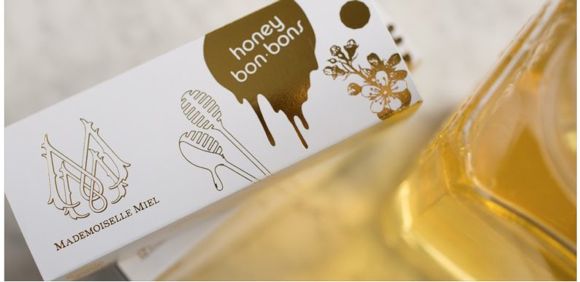
Mademoiselle Miel is a “beekeeping chocolatier” specializing in rich chocolate honey bon-bons, many wrapped in edible 23 karat gold leaf—“a brilliant union of elegance and raw nature,” according to Brown’s website. The bon-bons come in several varieties, including a decadent Scotch infusion and various seasonal flavors.
The honey for Brown’s bon-bons comes from hives situated on rooftops throughout MSP—for instance, at Union Depot (near Brown’s downtown St. Paul headquarters) and atop
Tiny Diner in Longfellow. The bees collect pollen from whatever flowers happen to be in bloom, providing Brown’s creations with an ever-changing array of local flavors.
Brown has been fascinated with bees and honey since she her youth. Ironically, though, she hasn’t always been a fan of honey’s taste. “I didn't actually like the taste of honey when I was young,” she told CityPages earlier this year. “I just started cooking with it because I was trying to eat in a way that made me feel good.”
In the intervening decades, Brown embarked on a successful cooking and catering career that found plenty of uses for the sticky substance. But she didn’t start making honey full-time until 2011, when she launched Mademoiselle Miel in St. Paul.
Hungry for a hyper-local alternative to sickly sweet candies and ho-hum storebought honey without a distinctive terroir, MSP foodies embraced Brown’s concept with gusto. Her creations quickly found their way into high-end cooking stores like Cooks of Crocus Hill and crunchy grocery outlets like Seward Co-op.
Brown’s products have since appeared in prominent hotel and restaurant properties around the area: high-end Minneapolis hotels like the Hyatt Regency, W Minneapolis and Le Meridien Chambers are customers, as is Surdyks Flights (at MSP International) and the Walker Art Center.
More exciting still, Mademoiselle Miel has lately joined a growing list of successful Minnesota exports. Brown’s sweet creations aren’t quite as well-known or widely available as SPAM and Post-it notes—yet —but they’re nevertheless available at select boutiques in New York City, Seattle and the Washington, D.C., area. More accounts could be in the works, though Brown’s production capacity is somewhat limited by bee, hive and rooftop counts.
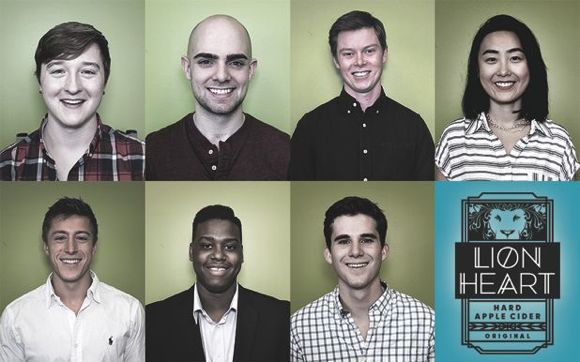
Seven recent graduates of the University of Minnesota, who met in the Carlson School’s Entrepreneurship in Action class, are taking the course’s title to heart. Within weeks of coming together last fall, the group had hatched an idea for a homegrown premium hard cider brand called Lionheart Cider.
Thanks in part to ample startup funding secured through Entrepreneurship in Action, Lionheart was a student division semi-finalist in the 2015 MN Cup — a huge leap for a concept that has yet to see its first birthday.
Lionheart closed its first production round last month and is now on shelves in about 120 liquor stores in MSP and surrounding areas, with Artisan Beer Company handling distribution. The suggested retail price on its 16-ounce can 4-packs is $7.99, which co-founder Anna Lin says is “affordable” relative to other premium craft cider brands.
Co-founder Jason Dayton, one half of an avid father-son home cidermaking team, developed Lionheart’s “not too sweet” recipe. “Lionheart is designed for people who find popular brands like Angry Orchard to sweet,” Lin says.
Lionheart’s co-founders aren’t typical startup types. Some were finance and business majors, but others focused on journalism (like Lin), agriculture and music during their undergrad years. All are first-time entrepreneurs “who don’t always know what we’re doing,” says Lin, who admits that the group has quibbled over plans and tactics.
“But the difficult periods present the greatest learning opportunities,” she adds.
Some Lionheart co-founders do have entrepreneurial pedigrees, including Lin herself. Lin’s father, a former truck driver, worked his way into the fueling industry shortly after China’s economy liberalized in the 1980s. He now owns a thriving gas station business. Not to be outdone, her mother runs two coffee shop franchises in China.
“[My parents’] hard work is why I’m here in Minnesota, speaking a second language fluently, meeting amazing people,” and learning firsthand what it takes to be an entrepreneur, says Lin.
In the near term, Lionheart’s team is looking forward to soliciting customer feedback on its original cider recipe and growing its Minnesota account base. But Dayton and the rest of the group are already mulling new flavors and styles within the “not too sweet” universe, plus an expanded distribution footprint.
“We eventually hope to have several varieties and distribute in multiple states, perhaps even nationally,” says Lin.
Lin herself may not take part in Lionheart’s long-term growth. Her current visa expires next year, and she’ll have to find work in journalism or a related field — and a sponsorship from any potential employer (Lionheart may not count) — to qualify for a longer-term work visa that allows her to stay in the United States. Given federal work visa caps and intense competition from highly qualified candidates, Lin knows she might not make the cut — though she’s eternally optimistic.
Regardless of how Lionheart’s leadership team — or the company itself — looks in three years, the experience has already been immensely rewarding for Lin and her colleagues. “It’s an amazing blessing to be able to come [to the United States] and work on a project like this,” she says. “I never would have hung out with or spoken to any of [my colleagues] were it not for Lionheart.”
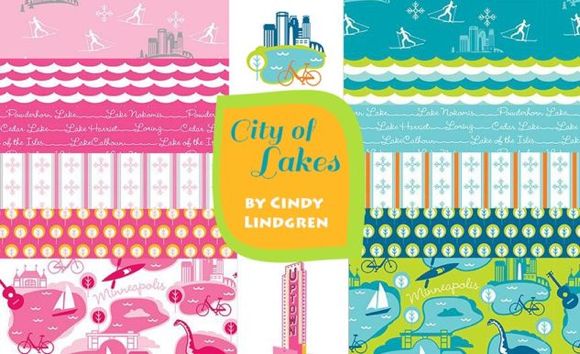
Prolific MSP artist Cindy Lindgren is teaming up with Modern Yardage, a digital fabric printing company, to launch a Minneapolis-centric fabric line called “City of Lakes.” Lindgren debuted City of Lakes this May at the International Quilt Market, a national trade show. The fabrics feature iconic Minneapolis images, including Lake Calhoun, Lake of the Isles and Lake Harriet, plus the downtown skyline, Uptown theater marquee, bikes and Nordic skis.
“City of Lakes is my tribute to the wonderful chain of lakes and all the activities we love to participate in, whether it's music, nature or biking,” Lindgren explains.
The City of Lakes concept could soon go national. “[City of Lakes] got a lot of attention” at the International Quilt Market, says Lindgren. She’s already been approached by several other U.S. cities about custom-designed hometown fabric lines. She plans to finish work on her first two non-MSP city lines — Appleton, Wisconsin, and Watkins Glen, New York — in the coming months, with an eye to snagging additional clients and selling her work in local stores.
For now, Lindgren is throwing her multi-pronged marketing operation behind City of Lakes. She sells the fabrics themselves through Modern Yardage, her preferred fabric production partner. “Modern Yardage prints fabric on demand, so it can offer niche themes to their customers,” she says, giving “designers...a lot of freedom to create unique designs not offered by other large fabric companies.”
Lindgren sells City of Lakes prints and cards at her personal Etsy shop and “various gift shops and stores around MSP,” including The Minnesota History Center, Bibelot, The University of Minnesota Book Store and The Como Conservatory. Suburban outposts, such as the Mall of America’s Afternoon Store and Edina’s West Elm outlet, offer Lindgren’s work as well.
Lindgren also maintains a fruitful collaborative relationship with The Linden Tree, a specialty fabric shop and creative hub in Linden Hills. Linden Tree staffers consulted closely with Lindgren during the City of Lakes project’s design phase, produced prototype samples and reserved ample shelf space for the finished products.
Though MSP will always be City of Lakes fabrics’ natural home, Lindgren is actively seeking licensing partnerships with printers, retailers and apparel-makers in Minnesota and beyond. Current licensees include Great Arrow Graphics, Check Advantage (a personal check printer) and Janome (pending).
Lindgren describes her artistic style as “Craftsman Nouveau,” which include such stylistic hallmarks as “rich color palettes” and clean lines.
“My inspiration comes from William Morris, Frank Lloyd Wright and the WPA-era posters,” says Lindgren. “I'm also influenced by my midwestern upbringing and choose to illustrate the places, plants, flowers and birds around me.”
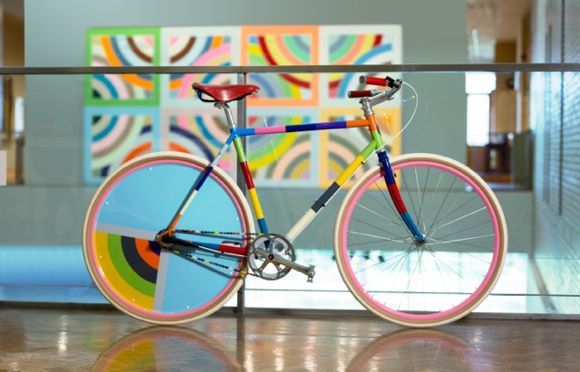
Handsome Cycles and the Minneapolis Institute of Arts have entered into what could be MSP’s coolest creative partnership so far this year. In celebration of its 100th year, the MIA commissioned Handsome to create three custom cycles inspired by works in the museum’s world-famous collection. Handsome and MIA unveiled the bikes at MIA’s most recent Third Thursday event, on July 16. The event, dubbed “Bike Night,” turned into a celebration of all things bike.
Cyclists pedaled to the event from St. Paul’s Onmium Bike Shop. When they arrived, they were invited to bike right through MIA’s front doors and into its atrium. Minneapolis’ One on One Bikes was on hand with free bike checks, and both One on One and Twin Six unveiled new bike gear at adjacent booths.
Key MSP bike advocacy groups, including the Midtown Greenway Coalition, 30 Days of Biking and Powderhorn 24, were on hand. Custom frame builders, including Peacock Groove and Prairie Cow, networked with discerning cyclists.
“[MIA’s] continued support of the bike community is absolutely amazing,” says Jesse Erickson, Handsome Cycles co-founder and COO.
The custom bike design process unfolded over the course of several months. “Handsome Cycles...shares the museum’s commitment to embracing the local and integrating great design, technology and experimentation, while staying true to its core values and community,” says Hunter Wright, MIA’s Venture Innovation Director.
Handsome Cycles took inspiration from several works in MIA’s collection, notably the 1948 Tatra T87 Sedan, a petite car housed in an MIA hall; Claude Monet’s Grainstack; and Frank Stella’s Tahkt-I-Sulayman Variation II. The finished bikes blended the inspiration works’ color schemes, shapes and themes in attractive, functional packages that looked (and rode) like regular bikes.
The MIA-Handsome partnership didn’t end on July 16. Handsome Cycles is making a limited number of “MIA bikes” available for sale in its Northeast Minneapolis store and through MIA’s gift shop. The sleek single-speed bikes, available in white or black frames, are listed at about $1,100 on Handsome’s website.
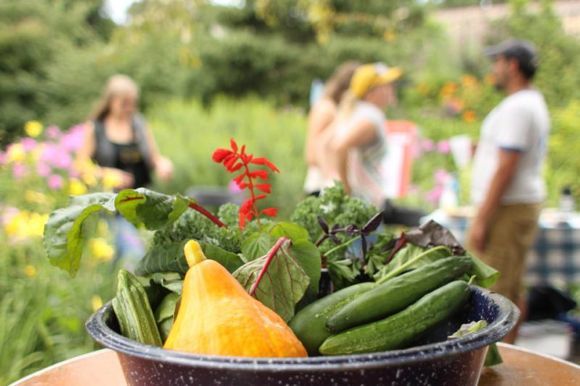
Gardening Matters, a community gardening nonprofit based in South Minneapolis, is putting on an MSP-wide seed and plant distribution event Saturday, May 16, at three locations around town: St. Olaf Lutheran Church in North Minneapolis, Waite House in South Minneapolis and Great River School in St. Paul’s Midway neighborhood.
The organization’s members can choose from three packages. Per Gardening Matters’ website, a Small Garden Package contains 12 seed packs and 12 seedlings, enough for a container garden, small plot or raised bed. With 20 seed packs and 20 seedlings, a Medium Garden Package is sufficient for a 12’ x 12’ backyard garden or community plot. A Large Garden Package, brimming with 40 seed packs and 72 seedlings, is ideal for a “very large” backyard garden or larger community garden plot.
Each package comes with a suggested membership fee, calculated at a significant discount to the seeds’ and plants’ retail value. Members can further defray their packages’ cost by participating in Gardening Matters’ work-share program, which requires at least one annual volunteer stint at a Gardening Matters event.
With snacks, kid-friendly outdoor activities and live music, each May 16 distribution hub will double as a “pop-up celebration of spring,” says Susan Phillips, Gardening Matters’ executive director — a great kick-off to the growing season after a long winter hibernation.
“Broadly speaking, Gardening Matters’ mission is to support MSP residents who want to grow their own food, either as part of a community garden or in their own backyards, while building connections and facilitating knowledge-sharing among its members,” says Phillips.
This mission is gaining traction by the month. The three May 16 distribution locations are just three of about 10 Food Resource Hubs across MSP: three in St. Paul and seven in Minneapolis, up from none in St. Paul and just three in Minneapolis when Gardening Matters launched the Food Resource Hubs program in 2011. Collectively, Food Resource Hubs serve 3,000 adult members and 3,000 kids, with about 20 urban acres under cultivation as a direct result of members’ activities.
(Incidentally, Gardening Matters is likely to rename the Food Resource Hubs program soon due to a conflict with an unrelated but similarly named federal program.)
Although Gardening Matters still plays a critical role in overseeing and organizing each hub, the organization ultimately aims for hubs to be semi-autonomous and largely self-sustaining. “Each of our hubs has a unique mix of members and a unique culture,” explains Phillips.
Gardening Matters’ hubs also serve as a focal point for education and leadership training, both critical to fostering self-sustaining networks — not to mention good gardening practices. Founded to support cooperation among community gardeners, the group’s community-building power isn’t to be underestimated: Phillips recounts the story of a Gardening Matters-affiliated North Minneapolis community garden whose members cooperated to clean up a blighted, drug-ridden property on their block.
Thanks to the connections the neighbors built in the garden, says Phillips, “they were empowered to tackle bigger issues in their community.”
Phillips is turning Gardening Matters into a force for advocacy and city-wide change, too. “Land tenure is a huge issue right now,” she says, noting that many MSP community gardens have long waiting lists. This year, Gardening Matters is launching a major push to empower renters who don’t have access to suitable outdoor plots. Container gardens, which can easily fit on porches or even windowsills, are viable solutions for thousands of land-poor urban gardeners; the challenge is educating people about how to properly set up and care for them.
Phillips is also spearheading educational programs and outreach initiatives targeting immigrant communities, particularly Latino and Hmong groups, whose first-generation members have prior agricultural experience but aren’t aware of the urban gardening resources available in their adopted city.
“In everything Gardening Matters does, the goal is to expand the number of [MSP residents] who feel empowered to grow their own food,” says Phillips.
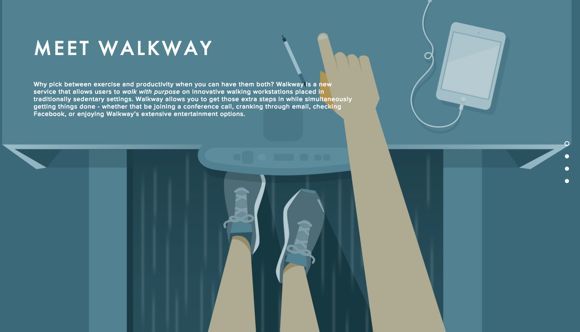
Kari Severson, a Minneapolis-based inventor and entrepreneur, has a fun, healthy, ultra-connected solution for sedentary office workers: the Walkway Workstation, a “treadmill desk designed with the purposeful user in mind.” On March 2, Severson and her team of contract designers and developers celebrated Walkway’s official launch at
Startup Venture Loft (SVL), a North Loop coworking space and startup incubator.
SVL will permanently feature at least one Walkway desk, a high-visibility win for Severson’s health-and-productivity startup.
“We’re thrilled to have the support of Startup Venture Loft’s tenants and management,” says Severson, a self-professed fitness enthusiast who juggles a full-time job at United Health Group with her entrepreneurial duties at Walkway. “It’s gratifying to see people embracing the Walkway concept so enthusiastically.”
Walkway Workstation also recently announced a partnership with MSP International Airport. Severson’s team will deliver two Walkways to Concourse C, near gate C21, and one to Concourse F, near gate F3. More could follow in other locations this year or next.
The airport partnership is apt. Severson first came up with the idea for Walkway during a hectic, travel-heavy period in her life. Because her boyfriend was enrolled in graduate school at the University of California Los Angeles, and Severson had a full-time job in MSP and was pursuing master’s program Duke University in North Carolina, she was constantly crisscrossing the country.
“With all the travel and a generally unpredictable schedule, I found myself really inactive,” she says. She came up with a concept that improved upon existing treadmill desks, which didn’t feature the amenities or built-in controls that would eventually adorn the Walkway.
Each Walkway is a self-contained unit equipped with a sturdy treadmill, ample desk space, device charging ports and a free Internet hotspot. The treadmill’s speed is capped at two miles per hour, a relatively leisurely pace that facilitates multitasking and doesn’t tire out users too quickly. The setup is ideal for individual offices, common areas in open-plan workplaces, waiting rooms and institutional public spaces, says Severson.
“The goal is to make everyday lifestyle resources available to busy people,” she says, “and to seamlessly facilitate healthy choices in a convenient setting.”
Severson offers several different Walkway configurations, each ideal for a particular end-user. A light-duty treadmill base is ideal for home offices and small workplaces; a moderate-duty base works better in medium-sized, collaborative workplaces; and a heavy-duty treadmill supports near-constant use at large corporate offices, and airports and other public spaces. Each version comes with the user’s choice of a manually or electronically adjustable desk.
Though individual buyers and small offices can purchase Walkways at market price, Severson’s team seeks sponsorships to subsidize the cost of units in heavily trafficked public spaces. In effect, each public Walkway is an interactive billboard; sponsors pay for customized user interfaces and prominent, outward-facing logo displays visible to anyone who walks by.
And a lot of people can walk by: According to Walkway’s website, about 26,000 people per day walk by the company’s two MSP airport sites.
Severson is looking at other revenue-generation ideas, too, including a “freemium” model that offers free access for an initial period, and then imposes a per-minute or per-hour rate for continued use. She’s also mulling partnerships with content providers to deliver premium music and video to users willing to pay a fee for the service.
Severson is also keen on the concept of “Walkway pods,” which would feature two, three or more Walkways facing one another — good for “walking meetings” and other collaborative activities, she says.
Tuesday, February 24, 2015
A successful Kickstarter that netted Great Lakes Clothing Company more than $20,000 will allow the custom clothing company to move into a new collaborative work space on March 1. The company will share space near the North Minneapolis riverfront with several other Minnesota companies—including
Marked Leather, Mill City Fineries, and the U.S.-made artisanal clothing and product distributor William Rogue & Co.
“We’re committed to the idea of native businesses sticking together, sharing resources and space,” says cofounder Spencer Barrett, hinting at the prospect of future apparel and branding partnerships with Great Lakes’ co-tenants. The move will roughly quadruple Great Lakes’ floor space, from 600 to about 2,400 square feet,
For now, cofounders Barrett and David Burke plan to use the expanded space to grow their inventory and make way for new hires to manage inventory, sales and the company’s expanding online presence.
Great Lakes has already shipped its branded T-shirts, crew sweaters, polos and accessories — including koozies — to 47 states, building buzz largely through word of mouth, a no-frills video marketing campaign orchestrated by Barrett, and a “brand ambassador” program that recruits college students to sport its clothing on campuses across the Midwest.
Customer service doesn’t hurt either. The co-founders include a handwritten thank-you note with every online order and send a follow-up email about a week after each customer’s order arrives.
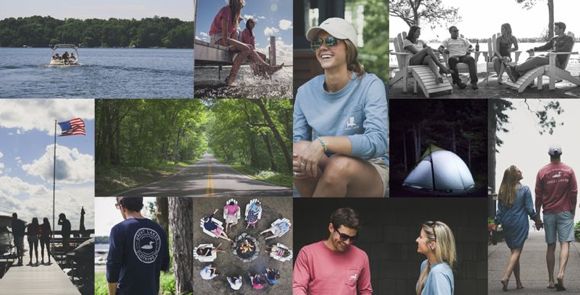
According to the co-founders, Great Lakes’ brand centers around “life at the lake,” a laid-back, nostalgic vibe that’s instantly recognizable to anyone who has spent a warm day near a body of water in Minnesota. The brand’s mascot is an understated loon, a Northern archetype that needs no introduction.
“We found a huge gap in the apparel market,” explains Burke. “No one in Minnesota, or anywhere in the Midwest for that matter, was taking advantage of our unique Northern lifestyle and fusing those ideals into a brand. We strive to create fun, useful and well-made products inspired by life at the lake.”
“We were inspired by shared memories of time spent around the water” in the Twin Cities and up north, adds Barrett. “It’s a common experience shared not just by people in Minneapolis-St. Paul and Minnesota, but by anyone who lives near fresh water.”
Another Great Lakes differentiator: Unlike many of their competitors, including similarly sized startups, Burke and Barrett are committed to a totally American-made supply chain. The pair will oversee all design work at their new Minneapolis studio, even as the company grows.
Great Lakes currently relies on a North Carolina manufacturer to supply the bulk of their unfinished shirts — “that’s where most of the American textile industry operates these days,” explains Barrett — with partners in the Twin Cities handling embroidering, printing and other final touches.
Though the online sales model is working well for now, Burke and Barrett are hoping to diversify in the months ahead. A last-minute decision to put on a popup store during the holiday season paid off big time, “blowing past our already pretty ambitious projections for November,” says Burke.
The co-founders are already exploring additional popup opportunities at outdoor events — including a “winter golf” tournament on Lake Minnetonka in mid-February — and, possibly, local brewery taprooms.
But “the dream,” says Burke, “is a flagship store that gets right to the core of the Great Lakes brand,” with an expansive retail area up front and a fulfillment center in the back.
“The popup experience has really reinforced the importance of personal connections for us,” says Burke, noting that in-store conversion rates are about five times higher than online. “We want to be as friendly and hospitable to the customer as we can.”
Tuesday, February 10, 2015
The calendar still says winter, but Tangletown Gardens is ramping up hiring, and investing in initiatives to make the popular South Minneapolis business “even better at what we grow, what we produce, and what we create for our customers and the communities we serve,” says co-founder and principal Scott Endres.
That doesn’t mean, however, that Endres and co-owner Dean Engelmann will tear up a playbook that has worked for more than a decade.
“The growth of our business has always been organic,” Endres says. “We make sure things as are as good as they can be before taking the next step. Right now, we feel there is room to grow and refine all aspects of our business without having to take on new ventures.”
Tangletown Gardens’ current ventures keep Endres, Engelmann and their staffers plenty busy. The flagship garden center at 54th & Nicollet supports a flourishing garden design and consulting business that counts some of the Twin Cities’ most notable companies, nonprofits, government organizations and individuals as clients. Off the top of his head, Endres lists the Museum of Russian Art, the Minneapolis Park Board, the Minnesota Landscape Arboretum and the U of M’s Horticulture Department as “garden partners.”
Endres and Engelmann met while enrolled in the University of Minnesota’s horticulture program. They worked in the landscape design business before setting out as partners and founding Tangletown. Careful product selection and innovative cultivation strategies play a role in their success, along with their backgrounds. According to Endres, Tangletown has “thousands of...perennial, annual and vegetable varieties,” along with “the most diverse group of unusual and hard-to-find woody plants in the Upper Midwest.”
In addition to the garden center, Endres and Engelmann run
Wise Acre Eatery, a bastion of the Twin Cities’ farm-to-fork movement, and a 100-acre farm in Plato, which supplies Wise Acre and a flourishing CSA. According to Wise Acre’s website, “80 to 90 percent of what we serve is grown sustainably” on the Plato farm.
Since opening in 2012, Wise Acre has been joined by a host of farm-centric restaurants across town. But it remains unique. “Unlike the owners of any other restaurant we know of, we are the folks sowing the seeds, nurturing plants, and tending the animals in the morning, then delivering the harvest to our restaurant’s kitchen in the afternoon,” says Endres.
Endres and Engelmann grow produce year-round in state-of-the-art greenhouses to maintain their locally grown supply. The owners also keep Scottish Highland cattle, two heritage pork breeds and free-range poultry on the farm — a self-contained food ecosystem that relies on “biology, not toxic chemicals,” says Endres.
“Healthy soil creates healthy food and gardens, which ultimately create healthy people,” adds Engelmann.
This philosophy reflects Endres’ and Engelmann’s upbringing. Though horticulturalists by training, both grew up on small working farms in the family for generations. “Our fathers, grandfathers, and great-grandfathers knew the way they treated their land would shape its future,” says Endres. “We farm today in much the same way as the farms we grew up on.”
Current Tangletown Job Listings in Minneapolis
- Garden Designer
- Container Designer
- Gardener
- Seasonal Garden Center Associate
- Seasonal Landscape Team Member
Wednesday, December 10, 2014
Twin Cities’ parents have a new source for unique, high-quality baby apparel and nursery decorations: BoomBoom Prints, an online marketplace based out of an “informal coworking space” in downtown Minneapolis. BoomBoom Prints (BBP), says Jennifer Weismann, BBP’s PR consultant, is “Etsy meets Pottery Barn.”
Fresh off a July 2014 launch, BBP already has 4,000 unique pieces for sale and about 500 participating designers—many of them based in the Twin Cities. The company has four full-time employees and three part-timers, says CEO Brett Brohl, with tentative plans to add more after the holidays.
A recently closed fundraising effort earned $400,000, a tidy sum for a startup. “Our funding round allowed us to make key hires, invest in our platform and expand our offerings,” says Brohl. BBP started as a marketplace for wall art, he explains, but now offers clothing, stationery and baby/parent accessories as well.
Founded by new dad Ryan Broshar and “serial entrepreneur” Brohl, BBP sources designs from a rapidly growing community of artists—including many in Minneapolis-St. Paul.
“I heard about the site from a friend of a friend,” says Twin Cities’ artist Kate Worum, who chose BBP as her first online sales channel. “BoomBoom Prints felt more approachable: They are local, have the artists’ interests in mind and they advertise by word of mouth.”
Worum is not alone. Another local BBP artist, John Gerber, has created such items as a bib captioned “Feed me” and a onesie that asks “Who you calling baby? Thought so.” Kate McCollow’s wall art features baby-themed fantasy scenes and serene watercolors depicting familiar Twin Cities’ landscapes.
BBP artists set their own prices, using the company’s suggested multipliers to arrive at a fair retail price. BBP then takes a cut of the sale and passes the rest on to the designer.
Though the Etsy comparisons are inevitable, Brohl points out a key difference: BBP is completely turnkey, handling every nitty-gritty aspect of selling artwork online, from printing and shipping to returns and customer contact. Etsy and other online marketplaces ask artists to do these tasks.
Worum appreciates BBP’s full-service approach. “I run a freelance illustration and design business by night, and work as a trend forecaster for apparel and accessories at Target during the day,” she says. Her hectic schedule makes it impossible to fulfill orders herself or even print her own work. “With BoomBoom Prints, all I have to do is make my art, click a few buttons and move on with my day.”
There may soon be more local “BoomBoomers” like Worum. Though about 50 percent of BBP’s designers are international, says Brohl, “we’re really concentrating our efforts on developing artists in our backyard. There’s so much artistic talent and diversity here.”
Brohl and his team often reach out directly to local artists and invite them to sell their work on BBP. With no upfront costs, they’ve already found lots of takers. “We’re excited about the future,” says Brohl. “We’re making a go of it.”
Wednesday, December 03, 2014
Outsell, based on the 32nd floor of the Capella Tower in downtown Minneapolis, is one of the fastest-growing companies in the U.S. according to Inc. Since 2010, Outsell has roughly tripled its employee base and quadrupled its revenue. The company earned a spot (#455) on the 2014 Deloitte Fast 500, a closely watched list that tracks revenue growth at public and private North American companies. According to Deloitte, Outsell is Minnesota’s third-fastest growing tech company.
And Outsell shows not signs of slowing down. The company has added 15 jobs this year, bringing its total headcount to more than 100, and predicts an equal or greater number of employees for 2015.
“Our people are our most important asset by far,” says founder and CEO Mike Wethington. “We’re constantly looking for talented, self-starting candidates, especially web developers, data analysts and marketing specialists.”
Outsell’s current office space measures about 18,000 square feet, with a variety of spaces that encourage collaboration. Depending on the pace of hiring next year and beyond, says Wethington, his company may soon need to exercise an option to expand into the Capella Tower’s 31st floor.
Outsell was started in 2004, when Wethington, a self-described “serial entrepreneur,” bought Judson Bemis’s Solv Technology, which had developed an online lead generation solution for auto dealers. Wethington and his first employees improved and streamlined the platform, developing analytics to predict customer preferences and deliver automated, high-value marketing material.
For instance, a recent car buyer might receive emails or texts advertising oil changes, tune-ups and vehicle-appropriate accessories consistent with the buyer’s past purchasing and web navigating habits. “We customize and automate everything for the dealers so they can devote more resources to selling and fixing cars,” says Wethington.
“The experience is brand-consistent, like Amazon,” he explains, allowing independently owned and franchised dealers to use the same platform and analytics as others selling the same model. Outsell currently works with about 1,000 U.S. dealers and seven automotive brands, sending out automated communications to about 10 million consumers per month.
If you’ve recently purchased a new or used vehicle from a franchised dealer, there’s a good chance Outsell is behind the marketing emails and texts it sends you.
Despite its reach, there’s room for Outsell to grow. Dealers spend well over $1 billion per year on marketing, says Wethington, and many don’t yet use automated customer-contact solutions.
Even as Outsell racks up impressive growth figures and finds new ways to improve the customer experience, the company devotes significant resources to employee retention. The company offers unlimited paid time off, with no questions asked, and no distinction between sick days and vacation time, a rarity in the modern workplace.
“We place a lot of trust in our employees,” Wethington explains. “We expect them to take care of their work and reward them for holding up their end of the bargain,” –i.e., getting their work done on time.
Outsell also offers a profit sharing program for all associates, including entry-level employees, as well as performance bonuses, a matching 401(k) and tuition reimbursements for associates looking to further their careers with advanced degrees.
In a typical year, says Wethington, Outsell devotes 3 to 5 percent of total operating income to charitable contributions. The company’s employee-led Caring Committee partners with the Minnesota Keystone Program to distribute financial resources and manpower to groups like the Make-a-Wish Foundation, Boys & Girls Clubs of America, and the ASPCA.
Giving back to the local community is a win-win experience for employees, says Wethington—just like every workday at Outsell. The company’s perks earned it a spot on a recent Star Tribune list of best Minnesota work environments.
“We love being based in the Twin Cities,” he says. “We’ve got a talented, smart, kind workforce that understands the value of hard work and doing the right thing.”
Outsell Jobs in Minneapolis
Senior Software Analyst
Senior Software Developers

Wednesday, November 19, 2014
The latest craft brew to come out of Minneapolis-St. Paul isn’t made from barley and hops. It’s Prohibition Kombucha, a fermented beverage made from high-quality teas and fruit or floral flavorings.
The tasty product of a partnership between former Herkimer brewer Nathan Uri and Verdant Tea founder David Duckler, Prohibition is the region’s first homegrown kombucha. The company’s three kombucha flavors are available at about a dozen co-ops, coffee shops and farmers markets around the Twin Cities, including Mill City Farmers’ Market, Seward Co-op, Spyhouse and Kopplin’s Coffee.
Uri has bigger aspirations, though: He’s teaming up with Minneapolis-based Tree Fort Soda to build a larger kombucha brewery at a to-be-determined location in the Twin Cities. Eventually, Uri envisions a product line available at cafes, restaurants and grocery stores throughout the country, plus satellite breweries on the East and West Coasts to supply customers in other regions.
Prohibition Kombucha’s creations are healthy -- really healthy. “Depending on the quality of tea and type of yeasts and bacteria used, there can be varying levels of amino acids like L-theanine, healthy sour acids like malic and acetic acid, B vitamins, magnesium, zinc and other nutrients,” says Uri. “Our kombucha is also low in sugar and calories, slowing the glycemic load of a meal when consumed with food.”
According to Uri, all Prohibition Kombucha varieties have less than one gram of sugar per ounce and no more than 56 calories per pint.
Popular with the counterculture movement in the Southwest and West Coast, kombucha is novel concept in the Twin Cities. “Currently, the main reason people drink Kombucha is for the probiotic content,” explains Uri, “which can be as simple as one bacteria or as many as 20 beneficial yeasts and bacteria.”
The microbes ferment a mixture of tea, sugar and other natural ingredients, producing carbonation, crisp flavors and a trace, non-intoxicating amount of alcohol. A multi-organism fermenting base is called a symbiotic colony of bacteria and yeasts, or SCOBY.
Kombucha doesn’t always taste great, though. Without naming names, Uri fingers “some other brands” that have a funky, sour, “sharkbite” flavor that’s too tangy to be pleasant. Prohibition uses high-quality black and oolong teas, plus carefully selected secondary ingredients, to achieve a “crisp, cider-like acid-sugar balance,” Uri says.
The fermenting process does produce trace amounts of alcohol -- less than 0.5% by volume. Though 0.5% isn’t intoxicating, Uri and Duckler are sensitive to sober customers’ concerns.
“We completely and unequivocally respect and support” those who avoid kombucha for any reason, says Uri. “That said, others in recovery enjoy our Kombucha without issue. It's a very personal choice and we want everyone to lead healthy and happy lives, so we label our product accordingly.”
In fact, Prohibition Kombucha probably wouldn’t exist if not for Uri’s temporary decision to quit drinking. In 2012, while living in Portland, he hankered for the sensory and aesthetic experience of a fine wine, great beer or perfect cocktail.” He tried his first “small batch craft” kombucha, loved it, and began brewing kombucha at home.
Soon realizing the importance of quality tea to quality kombucha -- many other kombucha producers use low-quality teas or “the bare minimum” of a higher-grade variety, he says -- Uri moved back to the Twin Cities and contacted Duckler, an old friend. Now, Uri exclusively uses Verdant Tea’s black and oolong teas in his kombuchas.
“Since [Duckler] sources the finest, freshest and highest quality Chinese teas available in the US, it’s a natural partnership,” he says. One that could soon bring a fermented, cocktail-quality and (almost) totally non-alcoholic beverage to your local coffee shop or grocery store shelf.

Wednesday, October 15, 2014
You no longer need to bike to the boutique to find the latest in Twin Cities fashion. With HOTROCITY, a Minneapolis-based e-shop run by model, blogger, event promoter and fashion guru John-Mark, you can shop for local designs in the comfort of your living room. Still, you may want to pedal over to Public Functionary on Friday (October 17), where HOTROCITY will be featured during an open-admission launch party.
HOTROCITY launched at the beginning of October, drawing inspiration from (among many others) local artist Jesse Draxler, “the exquisite personal style” of Twin Cities’ fashionista Sarah Edwards and the collaborative fashion blog MPLSTYLE, which John-Mark ran with locals Drew Krason and Savanna Ruedy.
HOTROCITY specializes in such items as pendants, bracelets, earrings and bags, made right here in the Twin Cities. Featured local designers include East Fourth Street, Silver Cocoon and Objects & Subjects. Some items are instantly memorable, like Silver Cocoon’s “Moon Rabbit Rice Pack Draw String” and Objects & Subjects’ “Bullet Bracelet” (yes, those are shell casings).
“At HOTROCITY, we have a very unique relationship with each individual designer,” says John-Mark. “It's been so much fun getting to know [them all]. We're pretty flexible with our designers and do our best to accommodate wherever they're at in their own journey as artists and business people.”
Though the focus is on local artists, HOTROCITY also curates designs from creatives in L.A., Chicago, Seoul and Shanghai. And John-Mark is always on the hunt for new looks, wherever they’re found.
“We have an intensive checklist of standards to ensure that we're providing our customers with high quality product, manufactured with care,” he says. To keep things fresh, he adds, HOTROCITY will add to its lineup on a monthly basis and “do an aggressive turnover of store product bi-annually.”
HOTROCITY launched after a year of “brainstorming how I could foster a greater impact on the local design community that extended beyond blogging,” says John-Mark. He paired with Irv Briscoe of VON91, a web design agency based in downtown Minneapolis, to craft an arresting website and e-commerce platform: “something notorious,” according to the website.
John-Mark expects the “relentless creativity” of the Twin Cities to seal HOTROCITY’s success. The region isn’t known as a fashion hub, but there’s enough inspiration here to support a locally focused fashion boutique.
“This is an easy job when I see all the talent we have in the local design community,” he says. “Starting a business can be scary, but I've seen enough positive growth in our design community to be confident in the sustainability of HOTROCITY.”
John-Mark is a big fan of the buy-local concept, too. “Most women make the pilgrimage to Uptown, the Mall of America or the Internet to buy clothing or accessories at least once a year, if not more,” he says. “Wouldn't it be great if that shopping also supported local artists?”

Wednesday, September 17, 2014
Minneapolis event-organizing company, GetKnit Events, is changing the way Twin Cities residents experience local businesses and attractions. On September 13, it pulled off its most ambitious and far-reaching experience yet: Rails & Ales, a self-guided tour of the breweries and brewpubs along the Green Line, from Target Field to Union Depot. Hundreds of participants sipped discounted brews, previewed special cask releases and rubbed shoulders with some of the most innovative brewers in Minneapolis-St. Paul.
For GetKnit founder Matt Plank, connecting Twin Citians with local business owners—preferably on a permanent basis—is the whole point. He and the company’s “core team” of paid employees, most of whom knew each other socially before GetKnit’s founding, are constantly looking for “ways that we [can pursue] our goal of community engagement while supporting local businesses in and around Minnesota,” says Plank.
Tickets for Rails & Ales sold out quickly, but a lucky group of several hundred attendees got their run of three establishments in Minneapolis and five in St. Paul, all within walking distance of the Green Line. (Though pedicabs were out in force to transport customers between stations and breweries, especially at farther-flung spots like
Urban Growler and
Bang Brewing.) Guests checked in at the Target Field, Stadium Village or Union Depot stations, where GetKnit staffers and volunteers handed out T-shirts, drink tokens (two per person, each good for a free pint) and “event passports” that listed participating breweries, their specials and Rails & Ales social media contests.
Other locally owned businesses got in on the act too. The Dubliner Pub, between the popular Raymond Avenue (Urban Growler and Bang) and Fairview Avenue (Burning Brothers) stops, ran all-day drink and food specials. Food trucks like Peeps Hot Box posted up outside participating breweries, tempting customers with daily specials. And even independent vendors, like the woman selling vintage glassware outside Bang, profited from the early-afternoon crush on a beautiful Saturday.
Meanwhile, the brewers themselves relished the chance to mingle with enthusiastic craft beer fans. At the Mill District’s Day Block Brewing, for instance, the head brewer handed out free pints to anyone who correctly guessed the varieties of hops laid out on the table before him. Rails & Ales wrapped up at 6 p.m., but brewery owners have to be hoping that the day provided a permanent boost in visibility.
GetKnit draws inspiration from other tour companies and event organizers, says Plank, but with a twist. Aside from the focus on locally owned business, which is lacking in some areas of the industry, the company aims for “wildly original” events “that our participants likely couldn’t do anywhere but through GetKnit.” You might be able to spend an entire Saturday riding the Green Line between breweries, in other words, but you probably wouldn’t be able to mingle with head brewers, try specially brewed cask releases or enter social media contests for free events and swag.
And unlike more bare-bones tour and event operators, GetKnit organizes well-staffed, all-inclusive events that “allow participants to turn off their brains for a day...and not worry about anything,” says Plank. For Rails & Ales, GetKnit had at least one representative at every participating brewery, in addition to staff at check-in stations. The goal was to facilitate “safe and responsible” enjoyment while showcase the ease of using local transit and “how much is accessible right off of its grid.”
GetKnit also designs bespoke events for private groups. Plank cites a recent example in which a group of Latin American businesspeople came to the Twin Cities for meetings and sightseeing. Many had never been to Minnesota, so Plank’s team set about creating the "quintessential Minnesotan experience” that included a horse-drawn carriage tour of St. Anthony Main, a brewery tour and tasting, a hands-on cooking class featuring Jucy Lucy burgers and even private curling lessons.
For now, GetKnit organizes events in the Twin Cities and greater Minnesota. But Plank doesn’t rule out the possibility of expanding the model to other regions, possibly with the help of knowledgeable locals. A recent St. Croix Valley winery tour did cross the Wisconsin border, and “we are playing with other events that might do more extensive tours of other areas in our neighbor to the east,” he says.
Wednesday, September 10, 2014
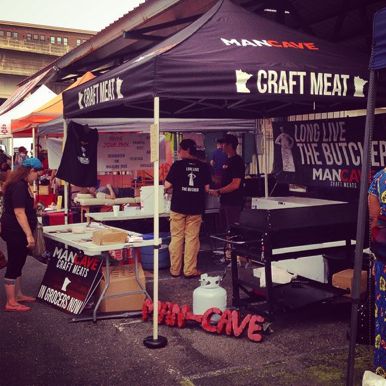
Man Cave Meats, a rapidly growing Minneapolis startup founded by a recent University of Minnesota grad and his brother, aims to do for burgers and brats what Summit and Surly have done for beer. The company sells “craft meat” processed and prepared in small batches from high-quality regional (the pork comes from Iowa and the beef from Nebraska) ingredients.
From its first 20 grocery store accounts in November 2013, Man Cave has grown to around 200 individual accounts, mostly in the Twin Cities, greater Minnesota and North Dakota. Locally, the company deals with homegrown grocers like Lunds, Byerly's, Kowalski’s and some Cub Foods outlets. In its ever-popular beer brats, Man Cave incorporates a hyper-local ingredient: Summit Pilsener.
“You can smell the beer when you cook our beer brats,” says Man Cave marketing coordinator Jessica Hughes.
Man Cave’s goal, Hughes says, is simple: to produce flavorful, high-quality and responsibly sourced meat products that don’t cost an arm and a leg. Everything but the initial butchering and processing, which needs to be done at a specialized plant, happens at Man Cave’s Twin Cities production facility. Unlike larger producers, Man Cave exclusively uses pork shoulder in its brats. Pork shoulder is a relatively lean (80/20) and flavorful cut of meat, and a far cry from the fatty cuts used in mass-produced sausages.
Man Cave also hires locally. About half the full-time staff hails from the U of M or the University of St. Thomas, and most referrals come via word of mouth. During the warm season, when Man Cave’s business picks up, the company retains 20 to 30 part-timers to do grocery store demos and to staff booths at outdoor events, like minor league baseball games, 5K runs and street festivals.
“We’re taking a page right out of the craft beer playbook,” says Hughes, citing local beer festivals like the Summer Beer Dabbler as inspiration for Man Cave’s outdoorsy promotional events. Hands-on demonstrations, preferably outdoors, are in the company’s DNA: As a U of M sophomore, co-founder Nick Beste promoted the nascent Man Cave with backyard grilling events at which guests (and passers-by) sampled brats and socialized.
Early on, the Bestes also secured a stall at the Mill City Farmers Market. “That really got us off the ground,” says Hughes. Until last year, the bulk of the company’s sales came from on-site purchases at the farmers market and the occasional backyard party.
But Man Cave has outgrown its roots. Its exponential growth in the past year is exciting for the company’s nine or 10 full-timers, some of whom started out as part-timers. Finding new markets is exciting as well: Thanks to its growing, affluent and heavily male population, Williston, North Dakota—the epicenter of the shale oil boom—is Man Cave’s most promising market outside of the Twin Cities, says Hughes.
Challenges do remain. With a tight focus on Angus burgers and flavored brats, Man Cave’s product line is heavy on the grillables. But the company has grown to the point where it needs a strong revenue stream all year long, says Hughes, so the team has redoubled its efforts to identify “winter-friendly craft meats.” One such item is Man Cave’s mini-brats. “They’re about a quarter the size of our regular brats and come in packs of 15,” says Hughes, “so they’re perfect for pigs-in-blankets and can easily be cooked in any oven.”
The company is also looking to introduce a new line of bacon. “It can’t just be your standard slice of bacon,” says Hughes. “It needs to uphold that craft theme.” Further down the road, locally sourced chicken and turkey sausage could make their way into the inventory, especially in health-conscious markets like Minneapolis and St. Paul. And the company is focused on fleshing out its online store as well.
But for now, Hughes and the Man Cave team are just happy to be part of an ambitious startup that’s putting the Twin Cities back on the butchery map—and, hopefully, making it possible for people everywhere to pair their craft beer with a craft brat or burger.
Wednesday, August 20, 2014
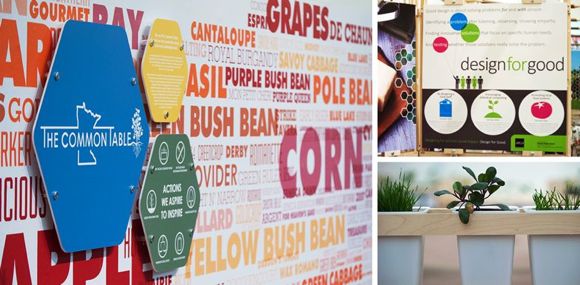
The AIGA Minnesota Design for Good initiative (#designforgood), first launched nationally by AIGA in 2011, is partnering with The Common Table for a first-of-its-kind showcase at this year’s Minnesota State Fair. The exhibit will highlight the diversity of local food systems, with input from “organic farmers, farm-to-table restaurants, nonprofits working on healthy soil initiatives and other organizations involved with sustainable agricultural initiatives,” says Sandy Wolfe Wood of AIGA Minnesota.
Among other things, the exhibit highlights Design for Good’s commitment to “design thinking,” an “iterative problem-solving process” that “has the power to find innovative solutions to our most challenging social problems,” says Wolfe Wood.
Design for Good's showcase is part of The Common Table's exhibit about local food stories in the Horticulture Building at the state fairgrounds. The Common Table enlisted AIGA Minnesota and the Design for Good initiative to design the graphic and multimedia storyboards for the 18 partner organizations. These storyboards are supported by the Storytelling Pavilion, a structure designed and constructed by The Common Table team that resembles branching trees with a canopy of airy honeycombs. The exhibit is both kid and family friendly, and will remain as a permanent exhibit at the Minnesota State Fair for years to come.
Many of the partner organizations are based in the Twin Cities. Notables include Red Stag Supperclub, Wedge Community Co-op and Birchwood Cafe. All of them source organic and sustainably farmed produce from farms near the Twin Cities.
Several producers will be on hand as well, including Homestead Gardens of Welch (an innovative plot that utilized cold-climate permaculture techniques) and Moonstone Farms. Industry thought leaders from the Institute of Agriculture and Trade Policy, Environmental Justice Advocates and the Central Minnesota Sustainability Program will participate too.
Design for Good has grown into a key initiative for AIGA Minnesota, which is one of the country’s largest AIGA chapters and one of the state’s largest design organizations. According to its website, Design for Good’s ongoing programming aims to build “a core group of designers interested in design for social impact...who want to be engaged with social change, who have ideas of what issues are most salient, and who can share stories of successful collaborations that have made a difference in the world.”
Fairgoers who aren’t affiliated with AIGA Minnesota, The Common Table or any of the exhibit’s partner organizations can still lend their time and talents to the event in exchange for free State Fair admission on the day they volunteer. The Common Table is handling volunteer scheduling here.